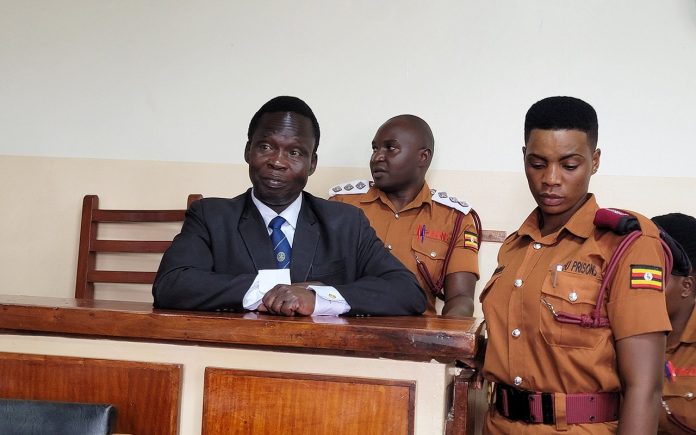
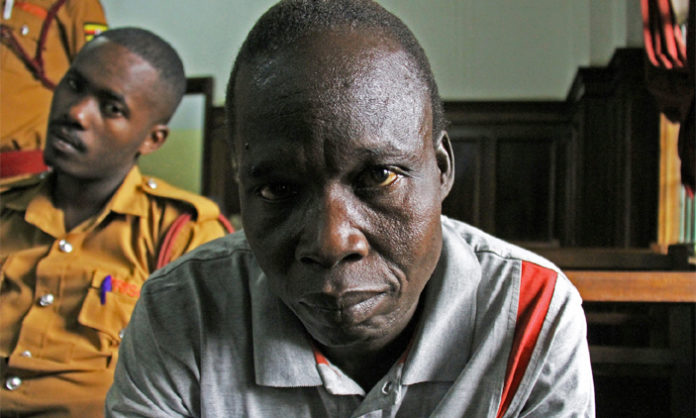
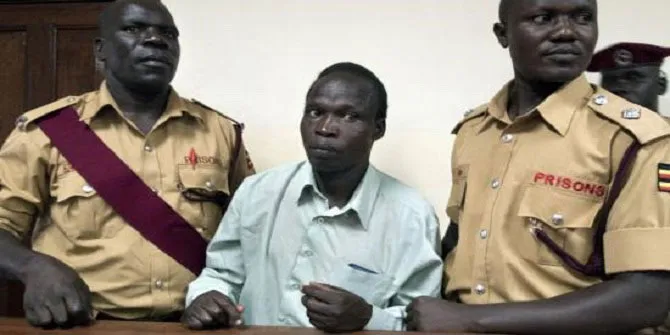
Thomas Kwoyelo, the former commander of the Lord’s Resistance Army (LRA), has revealed that the top commanders of the rebel group are soldiers of former President Tito Okello, whom President Yoweri Museveni ousted.
Kwoyelo said before the International Crimes Division (ICD) of the High Court circuit sitting in Gulu.
He told court that the former soldiers were in charge of training abductees and planning attacks. The abducted children did so because they would not consider escaping or recall directions to return home.
Kwoyelo was abducted by the LRA on his way to school in 1987, remained in captivity, and later became a colonel.
Kwoyelo is facing charges of murder, aggravated robbery, extensive destruction of property, causing serious injury to body or health, and inhumane treatment, rape, and torture, among others, that he is alleged to have committed against the civilian population of northern Uganda, southern Sudan, and the northeastern regions of the Democratic Republic of the Congo (DRC).
The worst attack of the paramilitary group that was under the leadership of Joseph Kony occurred in Haute-Hele Province (DRC) in December 2008, the so-called Christmas massacre, where over 200 people were killed and over 800 houses razed down.
The rebels split up into groups to attack the villages of Faradje, Batande, Duru, Bangadi, and Burgi. They waited until people had gathered for Christmas festivities, then surrounded and killed them with axes, machetes, and clubs.
In March 2009, Kwoyelo was injured during hostilities between the Ugandan army and the LRA in the DRC and brought into Uganda for medical treatment and subsequently into custody.
His trial, however, commenced in July 2011. Before ICD, a division of Uganda’s High Court Constitutional Court resolved that the suspect’s trial should stop as it found grounds for the failure by the DPP and the Amnesty Commission to act on Kwoyelo’s application. In 2015, the Supreme Court decided that Kwoyelo’s trial should resume.
EFRIS in full is Electronic Fiscal Receipting and Invoicing Solution. EFRIS entails the use of Electronic Fiscal Devices (EFDs), e-Invoicing, or direct communication with business transaction systems to manage the issuance of e-receipts and e-invoices in accordance with the Tax Procedures Code Act 2014.
Once a transaction is initiated using any of the solution’s components, transaction details are transmitted to Uganda Revenue Authority (URA) in real time to generate e-receipts and e-invoices.
Section 73A of the Tax Procedures code 2014, provides the legal framework for implementing EFRIS. The provision provides for the commissioner to specify by a notice in the Gazette, taxpayers for whom it shall be mandatory to use EFRIS under the various business models i.e. Business to Business (B2B), Business to Government (B2G), Business to Consumer (B2C) in Uganda to issue e-receipts or e-invoices.
It is mandatory for all VAT registered tax payers to enroll on the system. To register for EFRIS, one needs a TIN and password to the TIN.
However, those outside this category are advised to implement EFRIS and take advantage of the various benefits.
Benefits of EFRIS!
According to URA, EFRIS helps to fast track the refund claims since the information is already available in the system; enables URA avail taxpayers with prefilled tax returns in future to minimize delays and costs involved in filling tax returns; prefilled tax returns will help taxpayers avoid penalties for late or non-filing
Other benefits are: Taxpayers will be in position to track and validate business transactions in real time for efficient business management. Proper bookkeeping and sales management, and the solution eliminates the risk of physical loss of tax invoices as transactional data or copies are digitally stored in the system; as well as Fair assessments of taxpayers’ tax positions which reduce unfair competition in business.
State parasite on tax payers!
Despite URA’s stance, there is concern that the Ugandan state has become parasitic in nature, only wanting to feed on taxpayers yet it has not done much to uplift local businesses, some of which have collapsed, posing a challenge in tax collection.
Arguments from traders
According to traders in Kampala, EFRIS facilitates double taxation given that most merchandise they deal in attract VAT, and therefore see no reason to enroll on the system. Double taxation is discouraged in tax administration.
Traders see EFRIS as an inconvenience to them and their clients, and therefore government must reconsider it.
Analysts speak out on taxes and public expenditure
According to tax analysts, URA is insisting on EFRIS because they have failed to broaden the tax base and decided to impose more taxes on recorded taxpayers. The analysts say URA is desperate to raise more tax revenue to fund the big government, which include big parliament, and the big executive.
There is concern that public debt has increased partly because government must borrow domestically and externally to fund the big parliament, big executive, and the big public service sector, which has some employees doing nothing while earning billions of shillings in salaries and wages. Talk of ghost workers in government.
What must be done by government to entice Ugandans pay taxes
One of the suggestions is that the number of ministries and the number of members of parliament must be slashed since most of the money that URA struggles to get goes to these entities that are not even productive to contribute to gross domestic product (GDP) of the country.
Further, there is concern that the number of districts in Uganda which now stand at over 130 must be reduced by more than half. Most of these districts, analysts say depend on disbursements from central government as they don’t have their own sources of tax revenue to keep them afloat. The analysts claim most districts were created for political reasons as opposed to economic consideration, and thus why there is chaos when it comes to funding them.
The analysts say Uganda’s civil service is big for nothing given the existence of ghost workers that government pays. They say duplication of services must be stopped, and some departments, and ministries phased out. They say the civil service is not business-focused, as workers work for the sake of getting a salary, that is why departments meant to support local businesses are instead contributing to their death.
The public are not happy that a few people in the Cabinet, executive, parliament live a flamboyant lifestyle which depends on public money yet the citizens are languishing in abject poverty. The allowances and other emoluments allotted to serving and retired politicians must be checked. The analysts wonder why some departments and individuals in government have to depend on the public resources for accommodation, medical care, housing, security yet they get good salaries. All these discourage Ugandans from paying their fair share of taxes.
There is concern that however much Ugandans pay taxes, government officials keep on stealing the money. It is said government loses trillions of shillings to corrupt officials who have hid the money in real estate and land, thus impacting on service delivery. This is the reason the country still lacks enough schools, and health facilities, as well as medicines, and text books, or IT facilities in these places.
More so, tax analysts wonder why URA has failed to tax livestock, especially animals sold in big numbers. URA on its digital platform outlines how livestock can be paid but it is not implementing it. They should tell the public why not? Is it because it is the rich in this country that own the many animals that could be taxed when sold. Interestingly, there is also concern that Ugandans have to by animal vaccines for these same rich people that URA is shy to tax but is focused on taxing poor traders looking for school fees, and others that needed by their families not supported enough by the parasitic state!
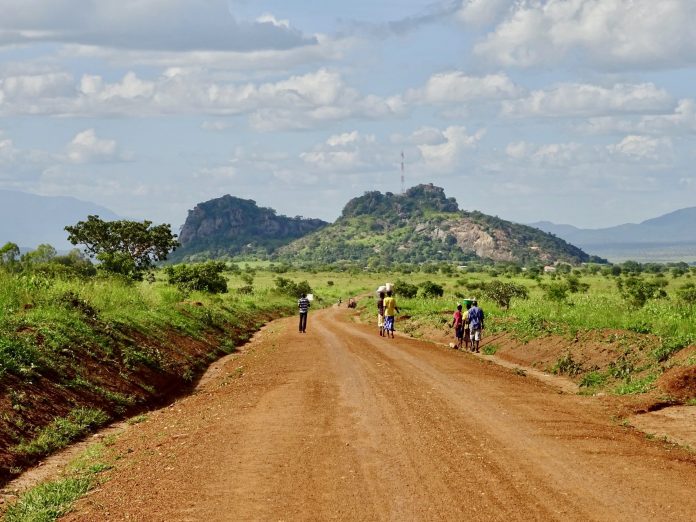
Kitgum-Karena-Kidepo road, one of the roads to be constructed with the loan.
Government is set to acquire a Shs446 billion loan from Standard Chartered Bank to finance the upgrading of the Kitgum-Kidepo Road.
The revelation was made by Amos Lugoloobi, the state minister for planning. Kitgum-Kidepo Road is a tourism route connecting Northern Uganda.
“I tabled a loan request amounting to $117.26 million (Shs446 billion) from Standard Chartered Bank to finance the upgrading of the Kitgum-Kidepo Road and a supplementary budget amounting to Shs1.1 trillion,” he said.
The loan request has been referred to the Committee on National Economy for scrutiny.
During the reading of this financial year’s budget, President Yoweri Museveni said the government is set to undertake the construction of 325 km of tarmac roads and airports in various areas to facilitate the tourism sector in Uganda.
The roads include Kitgum-Kidepo (116 km), Lake Bunyonyi-Kisoro-Mgahinga (74 km), Karenga-Kapedo-Kaabong (70 km), and Kisoro-Rubuguri-Muko (65 km). The airports will be established in Karamoja and others for the easy movement of tourists.
Currently, Uganda is deemed the best tourism destination, with various national parks such as Kidepo, Murchison Falls, Queen Elizabeth, Lake Mburo, Elgon, Rwenzori, Kibaale Forest, Bunyonyi, and many game reserves across the country. Uganda’s tourism sites rank highly among international media outlets and global tourism agencies.
In the next financial year, the government aims to strengthen wildlife conservation at Mgahinga National Park, Lake Mburo, Semliki, Kibaale, Murchison, Kidepo Valley, Katonga, Toro Semliki, and Queen Elizabeth.
The 2023 Tourism Uganda Ministry of Tourism Wildlife and Antiquities performance report indicates a surge in the number of tourists coming into the country.
According to the report, Uganda registered 1,274,210 tourists in 2023, compared to 814508 who visited the destination in 2022. Arrivals from Africa continue to dominate Uganda’s inbound tourism, with a share of 89.2%. Asia (4.4%), Europe (3.1%), and the Americas (1.9%) continue to be the biggest contributors to overseas tourist arrivals.
The growth was largely driven by an increase in arrivals from Mainland Africa and growth in the country’s traditional overseas source markets, such as the UK, USA, and India. At least 126136 tourists arrived from overseas, while 1136216 came from various African countries.
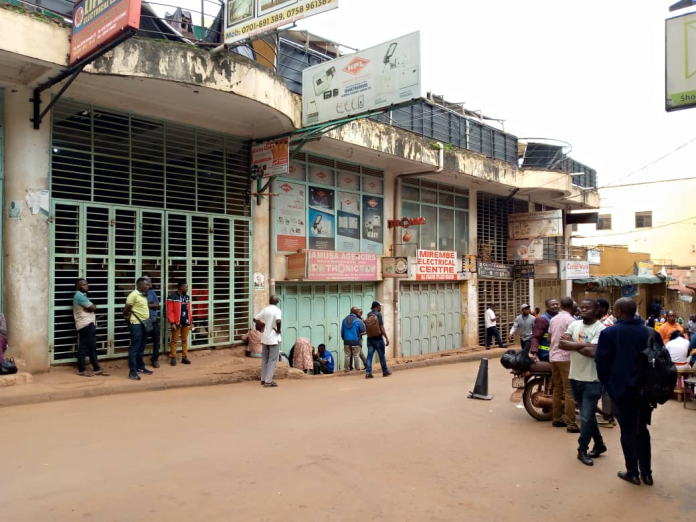
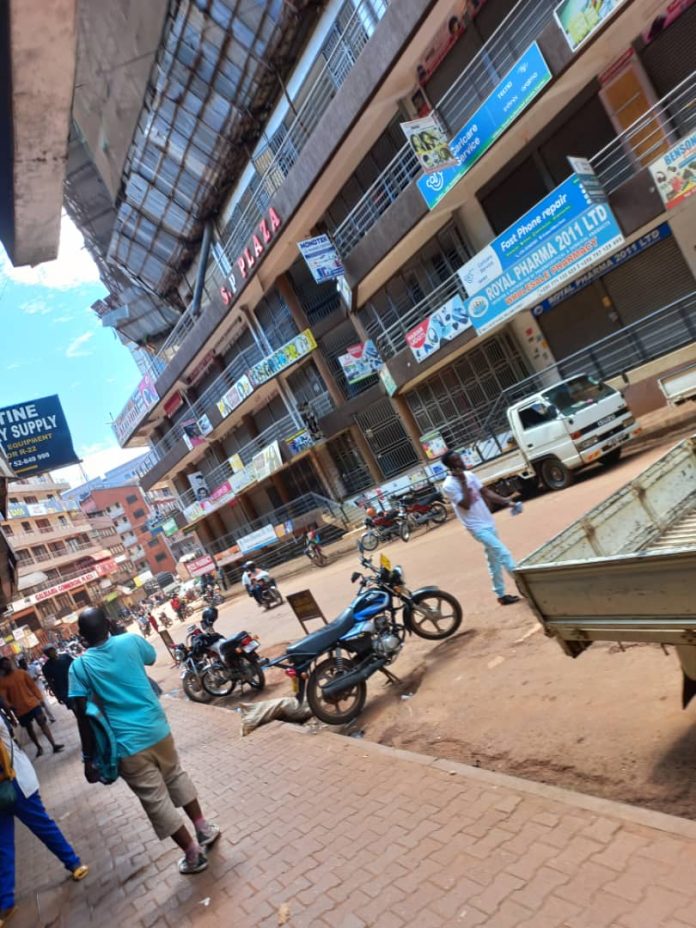
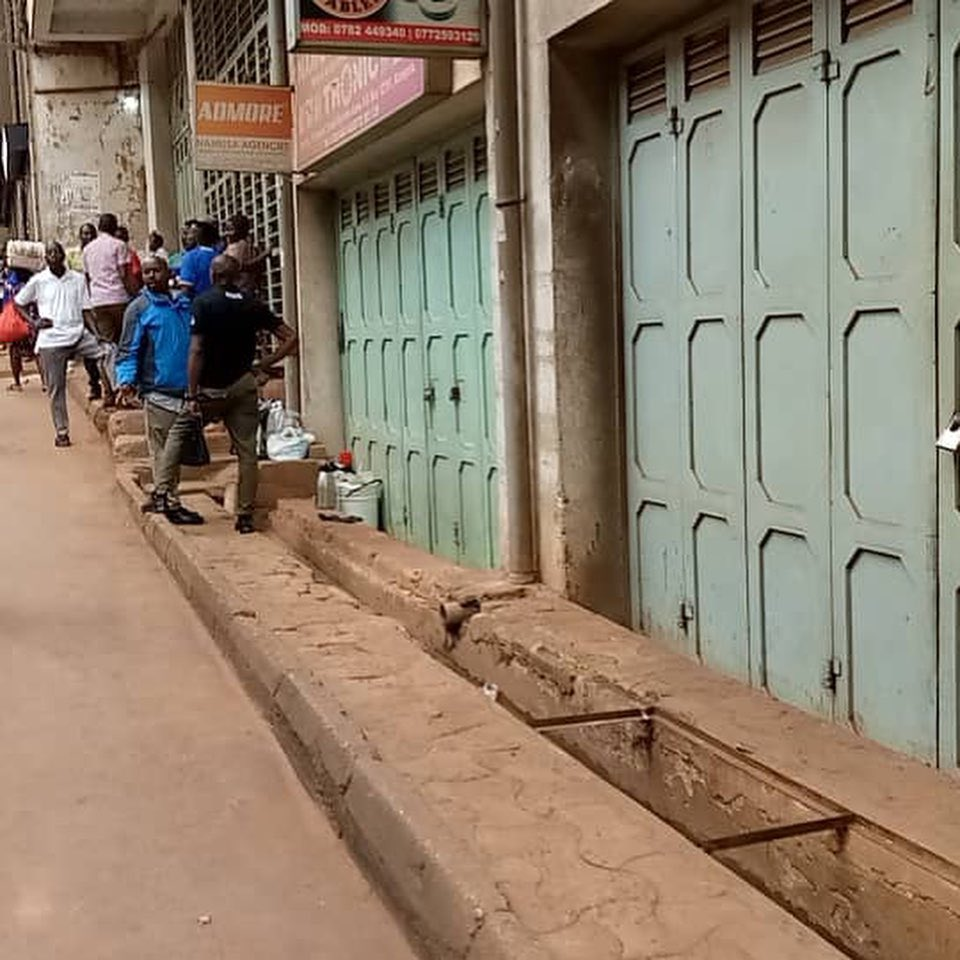
Shops remain closed and streets deserted in the ongoing strike by traders.
City traders have vowed to continue their strike despite meeting the minister of Finance and other government officials who promised to look into their concerns.
The Minister of Finance, Matia Kasaija, on Monday met the traders under their various associations and promised to study their grievances regarding taxation and policies that have led to the ongoing strike, which has paralyzed businesses in Kampala and some towns.
Kasaija in a statement on Wednesday, April 17, 2024, said his ministry will within the next two weeks, study and consult on the matter and communicate the ministry’s position taking into account the findings from the study and relevant consultations.
“It was agreed that traders shall immediately resume normal business as the Government concludes internal consultations and further engagement with the leadership of the Traders. The consultations shall be concluded within two weeks,” said Kasaija in a statement.
“URA shall continue to implement the EFRIS,” the minister said but the emphasis shall be placed on sensitization and handholding of taxpayers to appreciate the EFRIS and also ensuring that it is demystified among all taxpayers.
URA has been directed to establish an office in Kikuubo business hub that is solely dedicated to providing EFRIS support services to all traders and other taxpayers.
“[URA shall] exercise more sensitivity in the enforcement of EFRIS and shall accordingly exercise restraint with regard to the issuance and enforcement of penalties for the non-compliance to EFRIS, so as to give all taxpayers time to appreciate the EFRIS system,” explained Kasaija directing the URA Commissioner General URA to submit the list of traders currently having outstanding EFRIS penalties for possible waiver in accordance with the law.
Despite the minister’s statement, KACITA has asked the city traders to continue with the closure of shops until President Museveni meets them over the matter.
Businesses in Kampala last week and on Monday closed shop following a rallying call by KACITA Uganda and the Federation of Uganda Traders’ Association (FUTA) to protest over the implementation of EFRIS is assessing VAT, which traders say is pushing them out of business.
Tuesday marked the second day of the traders’ protest against enforcing the Electronic Fiscal Receipting and Invoicing Solution (EFRIS) by Uganda Revenue Authority (URA).
Regarding the anti-competition trade practices by manufacturers, Kasaija said the Ministry of Trade, Industry, and Cooperatives (MTIC) is finalizing the regulations to implement the Competition Law that was recently accented to by President Museveni.
The Ministry of Trade, Industry, and Cooperatives has since directed Kampala Capital City Authority, and all Chief Administrative Officers and Town Clerks to ensure compliance with the provisions of the TradeLicensing Act which prohibits the licensing of non-citizens as hawkers.
In today’s plenary, Erute South MP, Jona Odur has asked Speaker Anitah Among to prevail over the government and demand Uganda Revenue Authority to table before Parliament the regulations the Authority relied on, to make regulations on the Electronic Fiscal Receipting Solution (EFRIS) in order to allow Parliament scrutinise the provisions in the regulations and understand why the EFRIS System has been rejected by the traders.
“The contestation over the EFRIS is as a result of Section 73(a) of the Tax Procedures Code that we made here in that section, we delegated part of our responsibility to legislate to the Commissioner General of URA and he made regulations, which regulations are now causing problems for the traders. I wanted to ask that the Ministry of Trade be asked to lay before this Parliament those regulations and you can direct one of our committees to interrogate because the regulations are made under delegated authority of this Parliament,” Odur said.
He added, “If there is a problem with it (EFRIS), then we have to interrogate and see because it has penalties and so many other aspects and, in the past, we had suggested that all statutory instruments that are made for and on behalf of Parliament should be brought here, even when it isn’t mandatory so that we can ascertain whether it is the actual intention of the law that we made. This would help us to intervene in a timely manner to help the traders in the meantime, even this House if it pleases you may be able to make some advice to Government on that EFRIS.”
In response, Among called for constructive dialogue between the traders and the government in order to end the impasse.
Among noted, “We need to have a constructive dialogue to resolve the matter. We cannot have shops closed for all these days. The Minister will give a statement today. We had asked the Committees of Trade and Finance to interrogate that matter, they have not finished, so we will wait, but in the meantime as we wait for the Committee, what do we do?”
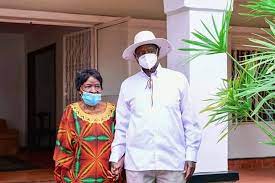
Catherine Muwanga, the wife of the late President Paulo Muwanga, is dead, EagleOnline has learnt.
Her death was confirmed by a close family member. “Mrs. Muwanga passed away yesterday at Nakasero Hospital. She has been hospitalized at Nakasero for some time”.
She is credited with donating land for Kagoma Church and other projects.
This website established that there will be a vigil at her Kololo-based home later today.
The International Crimes Division (ICD) of the High Court has dismissed an application by former LRA commander Thomas Kwoyelo to deliver un-sworn testimony in the ongoing trial.
Kwoyelo, who is facing 78 counts of war crimes and crimes against humanity committed in northern Uganda between 1987 and 2005, was set to start his defense today. Led by his lawyer Evans Ochieng, Kwoyelo had lined up 15 witnesses to defend him in court, some of whom are family members.
The nature of the testimony meant that the prosecutors would not be allowed to cross-examine the witnesses.
The panel of Judges led Andrew Bashaija, Stephen Mubiru, Michael Elubu, and Duncan Gaswaga is today expected to conclude the hearing of the matter against Kwoyelo.
Kwoyelo’s trial resumed on April 17, 2023, at the International Crimes Division of the High Court (ICD) sitting at Gulu High Court in Gulu City, Northern Uganda; however, it stalled due to a lack of funds.
Having commenced the trial on September 24, 2018, the court had its first prosecution witnesses testify in March 2019, and since then, trial sessions have been held periodically between Kampala and Gulu.
Kwoyelo is facing charges of murder, aggravated robbery, extensive destruction of property, causing serious injury to body or health, and inhumane treatment, rape, and torture, among others, that he is alleged to have committed against the civilian population of northern Uganda, southern Sudan, and the northeastern regions of the Democratic Republic of the Congo (DRC).
Kwoyelo was abducted by the LRA on his way to school in 1987, remained in captivity, and later became a colonel.
The worst attack of the paramilitary group that was under the leadership of Joseph Kony occurred in Haute-Hele Province (DRC) in December 2008, the so-called Christmas massacre, where over 200 people were killed and over 800 houses razed down.
The rebels split up into groups to attack the villages of Faradje, Batande, Duru, Bangadi, and Burgi. They waited until people had gathered for Christmas festivities, then surrounded and killed them with axes, machetes, and clubs.
In March 2009, Kwoyelo was injured during hostilities between the Ugandan army and the LRA in the DRC and brought into Uganda for medical treatment and subsequently into custody.
His trial, however, commenced in July 2011. Before ICD, a division of Uganda’s High Court Constitutional Court resolved that the suspect’s trial should stop as it found grounds for the failure by the DPP and the Amnesty Commission to act on Kwoyelo’s application. In 2015, the Supreme Court decided that Kwoyelo’s trial should resume.
Uganda National Bureau of Standards (UNBS) is hosting Partner States from the East African Community (EAC) to develop harmonized procedures for calibration and verification of road tankers, to facilitate trade. This is in line with the UNBS mandate of ensuring fairness in trade and precision in industry through reliable measurement systems.
Road tankers are vehicles with mounted measures of capacity used for the transportation of liquids for purposes of trade. These tankers are very critical in the intra-EAC trade because they are used to transport and distribute various commodities like petroleum products, Liquefied Petroleum Gas (LPG), raw materials for soap and cooking oil production.
However, each EAC partner state legislates its own regulations and procedures for the calibration and verification of road tankers, resulting in measurement variations, which may constitute unnecessary technical barriers to trade when the measurements in question traverse the different partner states.
“We need to eliminate irregularities and inconsistencies during inspections at the borders to facilitate smooth flow of goods within the EAC region which boosts trade,” said Eng. John Paul Musimami, the UNBS Deputy Executive Director in charge of Compliance.
Some of the issues reported include;
Variations in the limits of error (Minimum Permissible Errors) during verification, for example, the limit of error in Uganda is + or -0.25% for both initial and subsequent verification while the limit of error for Tanzania is + or – 0.2% for initial verification and + or – 0.5 for subsequent verification.
Inconsistency in respect to stamping dipsticks and verification charts
High chances of foul play by transporters during the delivery process such as swapping and cutting of dipsticks, alteration of calibration charts which affects the measurement accuracy, and more.
Based on the above inconsistencies, representatives from seven EAC partner States: Uganda, Kenya, Tanzania, Democratic Republic of Congo, Rwanda, Burundi and South Sudan, led by the EAC Secretariat, have converged at the Standards House in Kampala, for a week-long meeting starting 15th April 2024, to harmonise procedures for calibration and verification of road tankers, to ensure consistent measurements within the EAC region. The development is aimed at facilitating intra-EAC trade of goods transported using road tankers.
“As we harmonise these procedures, the law should guide us. We have to abide by the laws in the different member states and also close the gaps used to commit malpractices that negatively affect trade.” Said Ms Stella Apolot, the Principal Standards Officer at the EAC Secretariat.
The Member states thus agreed to harmonise procedures for stamping of the measures (Dipstick Stamping and Name Plate Stamping), treatments of boosters and airbags, Calibration Charts information, Verification provers and Limits of error (Minimum Permissible Errors) for initial and subsequent verification of road tankers, among others.
Besides developing a draft EAC procedure for calibration and verification of road tankers, the annual EAC Metrology Committee Meeting will also be held to review and develop the East African Metrology work plan for Financial Year 2024/2025.
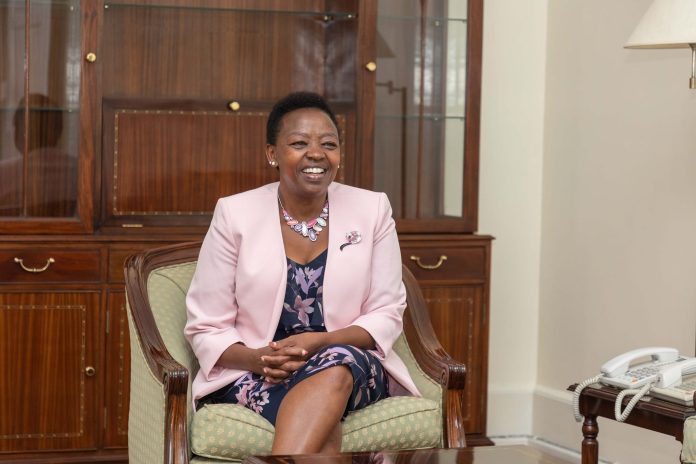
Kenya's First Lady, Rachel Ruto says Uganda is blessed with fertile soils due to East African Revival Prayers in the early 1930s.
Kenya’s First Lady Rachel Ruto has claimed that Ugandans no longer plant their crops with fertiliser because the country is not only fertile but also receives enough rainfall throughout the year.
Speaking during a thanksgiving service at KICC on Monday, Rachel further claimed Uganda has been blessed because of the East African revival that swept the country in the 1930s, where ‘God blessed them with fertile land and rains.’
It’s these prayers, according to the First Lady, that saw Ugandans start planting their crops without fertiliser.
“In Kenya we see our President talk about fertilisers for our farmers. In Uganda, they don’t use fertilisers. Their land is very fertile and there is enough rain. I came to discover one thing; it is the East African Revival that swept Uganda and some parts of East Africa,” Mama Rachel said.
She narrated how in 2022 she visited Uganda and found the country very green, while Kenya was dry and people were suffering.
The First Lady said she went down on her knees and prayed for rain.
She urged attendees of the Thanksgiving service to embrace prayer and always thank God for everything.
Further, Rachel wished that, just like Americans have a Thanksgiving holiday, Kenya will one day have such a holiday to pray and give thanks.
The trial of Thomas Kwoyelo, a former commander of the rebel Lord’s Resistance Army (LRA), has kicked off at the International Crimes Division (ICD) of the High Court in Gulu.
The defense has lined up fifteen witnesses to defend Thomas Kwoyelo, led by Evans Ochieng. The witnesses will defend him against 78 counts of war crimes and crimes against humanity.
Submissions by the witnesses are expected to be completed within three days, before the three-judge bench delivers their judgment within three weeks.
Kwoyelo’s trial resumed on April 17, 2023, at the International Crimes Division of the High Court (ICD) sitting at Gulu High Court in Gulu City, Northern Uganda; however, it stalled due to a lack of funds.
Having commenced the trial on September 24, 2018, the court had its first prosecution witnesses testify in March 2019, and since then, trial sessions have been held periodically between Kampala and Gulu.
Kwoyelo is grappling with 78 of the 93 counts of murder, aggravated robbery, extensive destruction of property, causing serious injury to body or health, and inhumane treatment, rape, and torture, among others, that he is alleged to have committed against the civilian population of northern Uganda, southern Sudan, and the northeastern regions of the Democratic Republic of the Congo (DRC).
Kwoyelo was abducted by the LRA on his way to school in 1987, remained in captivity, and later became a colonel.
The worst attack of the paramilitary group that was under the leadership of Joseph Kony occurred in Haute-Hele Province (DRC) in December 2008, the so-called Christmas massacre, where over 200 people were killed and over 800 houses razed down.
The rebels split up into groups to attack the villages of Faradje, Batande, Duru, Bangadi, and Burgi. They waited until people had gathered for Christmas festivities, then surrounded and killed them with axes, machetes, and clubs.
In March 2009, Kwoyelo was injured during hostilities between the Ugandan army and the LRA in the DRC and brought into Uganda for medical treatment and subsequently into custody.
His trial, however, commenced in July 2011. Before ICD, a division of Uganda’s High Court Constitutional Court resolved that the suspect’s trial should stop as it found grounds for the failure by the DPP and the Amnesty Commission to act on Kwoyelo’s application. In 2015, the Supreme Court decided that Kwoyelo’s trial should resume.
Traders in Kampala under their associations, Federation of Uganda Traders Associations (FUTA) and Kampala Capital City Traders Association (KACITA), say they will not reopen their businesses for five days until URA reverses the use of EFRIS and President Museveni meets their leaders.
Today morning, shops in downtown Kampala were closed, with police and the military seen patrolling the area. Kikuubo Business Operating Area was also closed but security officers ordered that it reopened.
The same situation has been reported in Jinja Luweero and Masaka City where shops remained closed.
Some of the traders could be seen seated outside their closed shops. Some attempted to burn tyres in the protest but security quickly put out the fire and arrested others.
Kampala Central Mayor Salim Uhuru voiced his support for the traders protesting the Electronic Fiscal Receipting and Invoicing Solutions (EFRIS) system by URA. He said despite his affiliation with the ruling party, he acknowledges the tax system’s negative impact on the business community.
Commotion erupted at Arua Park, Kampala, after a police patrol car (UP 00005) allegedly knocked a boda rider only identified as Onviti, while he was seated on his motorcycle. Onviti was rushed to the hospital for treatment. Traders, angered by the incident, attempted to confront the police driver, who fled to the Nile Coach Police Post within Arua Park for safety.
Issa Ssekito, Spokesperson of KACITA, said EFRIS is a victim of circumstance and that the government has been ignoring their other concerns.
“There have been issues that have not been solved and EFRIS is just a switch to the light on those issues. We have been talking about how garments are being taxed in kilograms. We also raised the issue of the Chinese who are the manufacturers but bring goods to town and also set up shops that compete with the traders,” he said.
“If EFRIS had been implemented by the guidelines that were given to us, this EFRIS wouldn’t have been bringing problems like it is,” he added.
Ssekito also revealed that the traders were meeting the Minister of Finance over the matter.
“Seems we have been meeting juniors. We can meet with the President after to inform him about what we have been discussing,” he added.
Pamela Natamba, the Partner and Head of Tax, PwC Uganda, said: “People have not understood EFRIS and that’s a challenge. If the sensitization through TVs has not worked, let’s try another method but more sensitization is needed. EFRIS is the tip of the iceberg. There is a lot that has been going on. Traders need to understand tax and know that EFRIS is just a mechanism. Do they understand that?”
But Twaha Kayondo, the Domestic Tax Officer at URA, said: “On the side of URA, we are willing to have a dialogue and we always dialogue with the traders but some issues can’t be solved by us rather the line ministry, Ministry of Trade.”
URA has continued to enforce EFRIS, saying it has led to an increase in tax collection in the central business district by 500 percent and has also reduced incidents of underreporting sales by many traders. Kacita has planned their strike to start next Thursday.
However, Speaker Anitah Among has called for dialogue to resolve the current stand-off between city traders and government over the implementation of EFRIS.