Stanbic Bank
Stanbic Bank
19 C
Kampala
Stanbic Bank
Stanbic Bank
Home Blog Page 289

Museveni appoints Former VP Gilbert Bukenya as Presidential Advisor on environment and sanitation

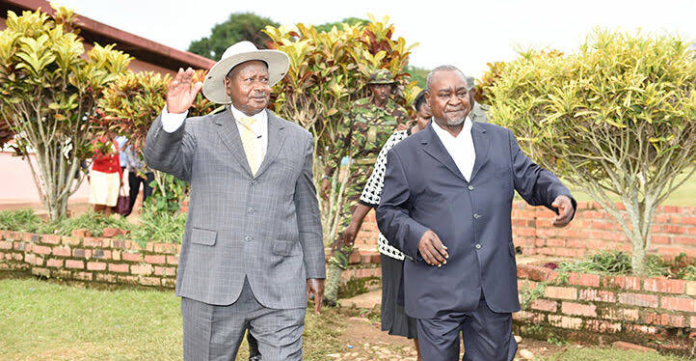
President Yoweri Museveni has appointed former Vice President Professor Gilbert Balibaseka Bukenya as his Senior Presidential Advisor on Environment and Sanitation.

The appointment was confirmed in a statement released by the State House on Wednesday, February 28, 2024, through the Presidential Press Unit (PPU).

“The Presidential Press Unit (PPU) wishes to inform the general public that H.E. the President of the Republic of Uganda, Gen. (Rtd.) Yoweri Kaguta Museveni has appointed H.E. Prof. Gilbert Bukenya as the Senior Presidential Advisor on Environment and Sanitation,” the statement read.

Bukenya, 75, a retired Ugandan politician served as the seventh vice president of Uganda from May 23, 2003, until May 23, 2011.

He also represented the constituency of Busiro County North in the Ugandan Parliament from 1996 until 2003 when he became Vice President, replacing Specioza Wandera Kazibwe.

In 2011, Bukenya stood for the post of Secretary General of the NRM but unfortunately lost to Amama Mbabazi.

In May 2011, he was replaced as Vice President of Uganda with Edward Ssekandi.

Bukenya’s surprise appointment as Museveni’s Senior Presidential Advisor comes against the backdrop of an impending cabinet reshuffle which has been making rounds in recent months.

The former Vice President and Bukoto Constituency legislator has in recent times been an ever-show at various state functions, and this perhaps explains why the President probably offered him the juicy role.

Mr Museveni has been appointing former Cabinet Ministers and Vice Presidents government officials as his Senior Presidential advisors, as the position attracts the benefits of a cabinet minister.

Stories Continues after ad

Common Card Payments Myths and Misconceptions by Ugandans Debunked

The landscape of financial payments in Uganda is rapidly evolving as consumers increasingly prioritize convenience and speed in their payment methods. The surge in demand for digital payment services reflects this trend, with mobile money transactions experiencing a notable 7.7 percent increase in volume and a 2.9 percent uptick in value, soaring to UGX 62.2 trillion in the quarter ending December 2023. In contrast, the value of debit card transactions remains relatively modest with an increase from UGX 532 billion to UGX 58 billion within the same period.

Amidst this shifting landscape, the benefits of card payments (convenience, security and zero transaction fees among others) provide another viable option for payments given the significant rise in bank account ownership from seven million in 2016 to over 23 million today. However, several myths and misconceptions among Ugandans continue to hinder their full adoption and usage in comparison to received channels like mobile money. 

In recognition of this challenge, Visa, in collaboration with the Ugandan Bankers Association, an umbrella organization for at least 34 supervised financial institutions, launched the Sasuza campaign in 2021. This initiative aims to create awareness and consumer education on the benefits and convenience of Visa card payments by encouraging consideration and trial. In this blog, we debunk the common myths that Ugandans have about card payments. 

1. Card Payments are Expensive

One of the most common misconceptions about card payments is that they are expensive. Some Ugandans believe that using cards for transactions comes with hidden fees and extra charges from merchants that make them less cost-effective than cash.

However, this is not true. Unlike mobile money transactions, all Visa payments attract zero transaction fees for every payment made by a card user. Visa, in collaboration with the Uganda Bankers Association, is educating customers about zero transaction fees as well as the Bank of Uganda’s circular banning the addition of surcharges by merchants for any card payments. 

1. Card Payments are Insecure

Another myth that surrounds card payments is the belief that they are not secure. Some people worry that using their card online or at a point-of-sale terminal puts their personal and financial information at risk of being stolen by hackers or fraudsters.

While it’s true that there are risks associated with any form of digital transaction, card payments are highly secure when proper precautions are taken. Globally, Visa has invested more than $10 Billion in technology upgrades to reduce fraud and enhance security which led to over $27.1 billion worth of attempted fraudulent payments across 122 million transactions, stopping fraudsters in their tracks in 2022 alone.

Furthermore, Visa is partnering with banks and merchants to implement these security features and educate consumers about best practices for card security.

1. Card Payments Are Only for Large Purchases

The misconception that card payments are only suited for large purchases overlooks the versatility and convenience they offer for transactions of any size. From buying a morning cup of coffee to investing in major appliances, card payments streamline the purchasing process for both consumers. 

Moreover, the widespread adoption of contactless payment technology has further facilitated the use of cards for small transactions, allowing for quick and hassle-free payments. As consumer preferences shift towards digital transactions, the notion that card payments are exclusively for significant expenses is rapidly becoming outdated, highlighting the adaptability and accessibility of card-based payment systems in today’s economy.

1. Card Payments Lead to Overspending

The myth that card payments lead to overspending is rooted in the misconception that the ease of swiping a card fosters impulsive buying. However, the reality is that responsible spending habits are independent of the payment method. Whether using cash or cards, it’s the individual’s discipline and financial literacy that dictate their spending behaviour.

Effective budgeting techniques, such as setting spending limits, tracking expenses, and prioritizing needs over wants, are crucial for managing finances responsibly regardless of payment method. With conscious efforts to cultivate self-control and financial awareness, card payments can be harnessed as practical tools for staying within budget and achieving financial goals. Thus, rather than blaming the payment method, empowering individuals with financial education and sound money management practices is key to fostering responsible spending habits in the digital age.

1. Card Payments are Only for High-Income Individuals

The prevailing belief that card payments are exclusively reserved for a select group of individuals perpetuates a misconception that undermines the widespread adoption of cashless transactions in Uganda. However, a closer examination of the accessibility and user-friendliness of card payment systems reveals a far more inclusive and accommodating landscape than commonly perceived.

Contrary to the notion that card payments cater only to a privileged few, most financial institutions under the Uganda Bankers Association offer debit cards to customers as a standard feature upon opening an account. This means that whether one is a seasoned professional, a small business owner, or a student embarking on their financial journey, the accessibility of debit cards serves as a gateway to a more convenient and secure mode of conducting transactions. 

Moreover, the user-friendly nature of card terminals and point-of-sale systems further enhances the accessibility of card payments to individuals across different technological proficiency levels. Designed with simplicity and intuitiveness in mind, these systems empower users to navigate the transaction process with ease, regardless of their familiarity with digital technology.

1. Contactless Payments Are Less Secure Than Traditional Swipe Methods

Contactless payments, allowing consumers to tap cards or mobile devices on terminals, have surged in popularity for their speed and convenience. Despite their rising acceptance, concerns linger about their security and vulnerability to interception or unauthorized access. compared to traditional swiping methods.

In reality, contactless payments employ advanced encryption and tokenization (a process of replacing the traditional payment card account number with a unique digital token in online and mobile transactions) which safeguard sensitive data against interception and fraud while ensuring data protection throughout customer transactions.

While no payment method is risk-free, the benefits of contactless payments—faster transactions and enhanced security—far outweigh perceived vulnerabilities. With ongoing advancements and industry adherence, contactless payments redefine convenience and security in modern finance, inviting consumers to confidently embrace their efficiency.

With these common myths and misconceptions debunked, we hope that you can freely and securely use a Visa card for your next payment – whether as small as UGX 5,000 for a cup of coffee or any higher transaction online as we progress to a cashless economy.

Stories Continues after ad

Gen. Otafiire summoned over relocation of Luzira Prison

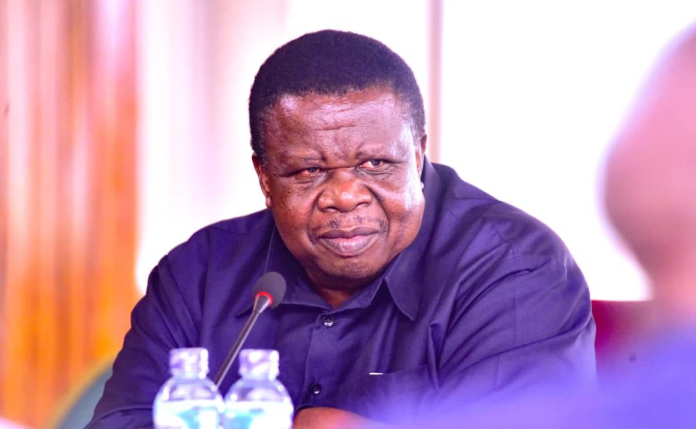
Gen. Otafiire.

Speaker Anita Among has asked Premier Robinah Nabbanja to summon Minister of Internal Affairs Gen. Kahinda Otafiire to come to Parliament and clarify on the reported relocation of Luzira Prison, after some legislators raised concern over integrity of this process, citing Otafire’s implication in several land grabbing scandals in Uganda.

The matter was raised by Mwatekamwa Gaffa (Igara West) seeking for guidance on the letters circulating on social media with signatures of President Museveni and Otafiire on supporting a Chinese Investor to construct a five-star Hotel at Luzira Prison land.   

“I have seen letters about relocation of Luzira Prison going through social media, but we have not had any Minister coming to Parliament to tell us if it is true or not. As we talk, the Minister Kahinda Otafiire is well known to be a land grabber,” Mbwatekamwa said.

However, Among first challenged the legislator whether the letter copied to him and if he is aware of the law in regard to leakage of official documents.

Mbwatekamwa who rose as whistle blower, said that the letter is no longer a secret rather it is in public domain and is supposed to table in the House.

Among later highlighted that though the issue of official Secrecy applies, if the statement is true, the Minister will come and give an explanation to this house. But giving an instruction that the prison should be shifted has no problem, but what has a problem is the process. Is the right process going to be followed is what is the issue?

In a letter dated July 2022, President Museveni expressed support for the idea of granting the land currently occupied by Luzira Prison to Tian Tang Group, a Chinese investor, for the construction of a luxury hotel. Minister Otafiire subsequently initiated negotiations with Tian Tang to proceed with the plan.

In another letter dated February 22, 2024, Minister Otafiire requested a consultative meeting on March 6 to discuss the matter further. He mentioned that the Uganda Prisons Service has identified land in Buikwe District for the relocation, with plans to purchase a portion of it. 

However, legal complications related to the ownership of the land have arisen, as the family of the late Antonio Lutwama Kabogoza, the original landowner, has not obtained letters of administration since his passing in 1928. Despite this, they have agreed to sell their interest in the land for the prison’s relocation

Stories Continues after ad

Dei Group Director Dr. Magoola awarded PhD from International University of France

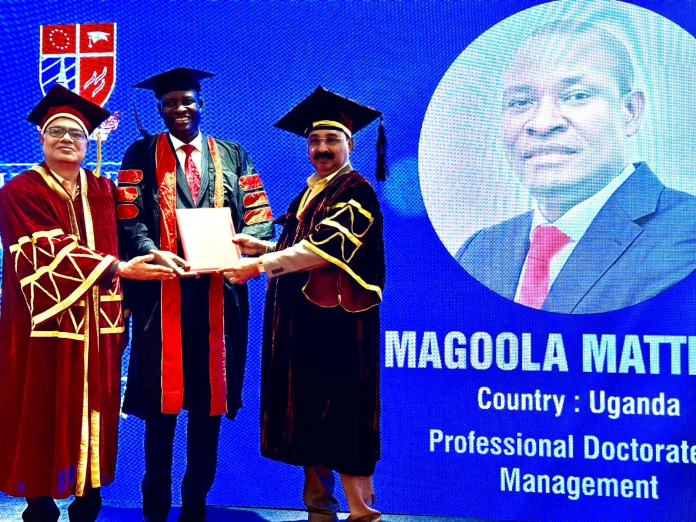
Doctor Matthias Magoola, the founder and Chief Executive Officer of Dei Group of Companies has been awarded a professional doctorate in management by the European International University of France.

Magoola however says President Museveni deserves praise for such achievements by a Ugandan scientist because, without his support, such milestones would not be possible.

He applauded Museveni for standing up for Ugandan scientists in the face of several hurdles they face to innovate.

“It is fair that we thank and credit him for these achievements,” Dr. Magoola said while applauding President Museveni, for supporting the Dei Biopharma drugs and vaccines manufacturing plant, being developed in Matugga, Wakiso district near Kampala, the first-ever biotech facility in Africa.

“These achievements are for Uganda and specifically for our dear President, for he has always stood up for the scientists in this country,” he said.

Dr. Magoola’s PhD award was announced by the University based in Paris, France, on February 19, 2024, at the 10th International Excellence and Global Leadership Award by Fame Times International Excellence Awards in Bangkok.

Dr. Magoola was recognized at the coronation ceremony as the leading entrepreneur of Africa, who is creating thousands of professional jobs and is a published advanced therapeutics researcher and innovator, who has established the largest pharmaceutical manufacturing and also the first biotechnology products company in Uganda.

He has also established manufacturing for mRNA, gene therapy, and other novel biological therapies for the first time in an African country.

Dr. Magoola, a trained biochemist, has led the Dei Group over the years to birth a portfolio of sub-companies across diverse sectors, including the current development of the flagship biological drugs and vaccines manufacturing facility in Matugga, Wakiso District, in Uganda, being spearheaded by Dei Biopharma Ltd.

Dr. Magoola is recognized for his visionary success and achievements for innovative discoveries in advanced therapies, including the first US-patented chemical drug using N-Isobutyl-3, 4-methylenedioxy-trans-cinnamate compositions to treat malaria, the first mRNA universal vaccine against malaria, among other mRNA vaccines against neurodegenerative disorders, diabetes, HIV/HPV (“mNRA-Based Vaccine Composition for Inducing Immune Response Against HIV and HPV” patented under certificate number 63921929 in the USA and ten more for untreatable diseases — all inventions patented in the USA.

Dr. Magoola, in the latest development, will next month lead a team of fellow scientists for a meeting at the US FDA to discuss their first product submission on innovation to treat cancers and severe anemia.

Dr. Magoola has also started technology transfer, and facility finalization in Uganda which will come within a few months.

Upon completion, the Matugga-based drugs and vaccines manufacturing plant, whose total cost is $1.1 billion, a relatively minimal cost compared to similar ventures conducted elsewhere, will produce a wide range of medicines and vaccines, including anti-cancer drugs and therapeutic proteins.

Stories Continues after ad

Buganda Kingdom, Airtel launch 11th Edition of Kabaka Birthday run focused on ending HIV/AIDs by 2030

Buganda Kingdom in partnership with Airtel Uganda has launched the 11th Edition of the highly anticipated Kabaka Birthday Run under the theme; “Ending HIV/AIDs by 2030”, reflects the collective efforts to fight one of the most pressing global health challenges”.

The launch held at Bulange, Mengo on Tuesday, February 28, 2024, was presided over by Owek. Charles Peter Mayiga, the Katikkiro of Buganda who spoke about the vision the Buganda Kingdom has for the initiative.

“Our vision is to bring about social and economic transformation for the people in the kingdom and for Uganda. We want our people to have a happy and decent livelihood, but the major factor that is going to determine social and economic transformation is health, especially that of the ordinary person because it is the ordinary person that contributes significantly to the growth of any country. We therefore join the efforts of the international community, UN AIDS, Uganda AIDS Commission, and all people involved in promoting our health in the fight against HIV AIDS. And we should all be happy because the Kabaka is a good ambassador for the African continent,” Katikkiro Mayiga said.

He also recognized Airtel’s positive contribution towards the 11th edition of the Kabaka Birthday Run which has become one of the most successful marathons held in the country and a dear event to the people of Buganda.

“So, we welcome the partners who share our vision, partners like Airtel Uganda, partners like I&M Bank, partners like Nivana Water, UN AIDs, Uganda AIDs Commission.” Owek. Mayiga noted.

The Kabaka Birthday Run has become a hallmark event on Airtel Uganda and the country’s annual calendar in celebration of the Kabaka of Buganda, Ronald Muwenda Mutebi II, birthday which champions noble causes that resonate with the community. Just like the previous year, this year’s theme, “Ending HIV/AIDs by 2030”, reflects the collective efforts to fight one of the most pressing global health challenges.

Airtel Uganda Managing Director, Manoj Murali, challenged Ugandans to join in on the marathon for the betterment of our communities.

“This year, as we lace up for the Kabaka Birthday Run, let’s run for a cause close to our hearts: ending HIV/AIDS. Together, let’s channel the spirit of community and run in solidarity with those affected by this global epidemic. Proceeds from the run will directly support the fight against HIV/AIDS, aligning with the theme “Ending HIV/AIDS by 2030.” This theme embodies our collective vision of a world free from HIV/AIDS and serves as a powerful platform to raise awareness, mobilize resources, and champion action towards achieving this goal,” he said.

The 10th edition of the Kabaka Birthday Run which was held last year sold over 100,000 kits to participants and was rated as one of the most successful marathons. Same as this year, last year’s edition was also garnered towards the fight against HIV/AIDs by 2030.

Buganda Kingdom also hosts other initiatives such as the BIKA Cup and Masaza Cup that strive to groom grassroot talent among the youth across the kingdom and also bring Ugandans together for social and economic reasons.

The kits are available at select Airtel Uganda shops like Thobani center, Ben Kiwanuka street and the New Tax Park, and they can use Airtel Money to purchase them by dialing, 185. Select option 5 then select KABAKA RUN.

Stories Continues after ad

Finance Ministry launches new five-year framework to manage public debt

The Ministry of Finance, Planning, and Economic Development has launched a five-year Public Debt Management Framework aimed at managing public debt and other financial liabilities.

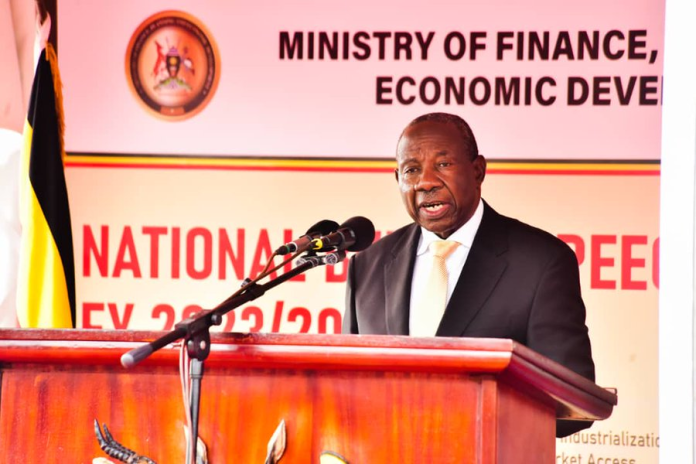
Finance Minister Matia Kasaija revealed that the framework, which replaces the one drawn in 2018, lays down strategies that balance the need for borrowing with the need for sustainable debt levels.

“Over the next five years, the focus will be on ensuring that public debt is maintained at manageable levels, while also investing in critical infrastructure, social programs, and other important initiatives that will drive economic growth and development,” Kasaija said.

Government established a number of institutional, legal, and policy frameworks to direct responsible debt management and acquisition in Uganda. These include the Charter for Fiscal Responsibility, Public Debt Management Framework and the Public Finance Management Act.

However, debt servicing has in the past continued to exert pressure on domestic revenues breaching the 2018 Public Debt Management Framework threshold of 12.5 percent of domestic revenues. Official data shows that the debt stock has over the last three years fluctuated between 48 and 52 percent of the value of the country’s economy (GDP), with experts warning that anything beyond this level could be dangerous. Public debt includes money borrowed externally and domestically, as well as arrears or financial claims on the government through delayed payments for services supplies, and other obligations.

Kasaija admitted that the government has broken several public debt safety points, which he says they want to correct through the new five-year Public Debt Management Framework.

 The new framework also plans to build strong relationships with international lenders and investors for low-interest capital, enhance risk management practices to mitigate the impacts of potential shocks, strengthen debt reporting and monitoring systems for transparency, and explore innovative financing solutions, including the use of green and sustainable bonds, to support our environmental and social goals.

As of the end of June 2023, the stock of domestic arrears, excluding local governments, was validated at 2.714 trillion Shillings.

“Arrears have increased under each expenditure category; the key areas being court awards, pensions, salaries, general goods, services, and development expenditure,” he said.

Under PDMF 2023, the government commits to strive to maintain a ratio where the total amount of interest paid on both domestic and external debt should not exceed 20 percent of the government’s total revenue, excluding grants.

The total debt service to revenues threshold should aim at reducing from 32.9 percent as of the end of June 2023 to 2 percent by the end of the framework. At the end of each fiscal year, there will be a full year-end review of debt management performance, in line with best international practice, and thereafter, the results published.

Regarding domestic debt, the Domestic Debt to GDP ratio will not exceed 15 percent. This was a high 18.7 percent last financial year. The domestic interest payments as a ratio of total revenues excluding grants is set at a maximum of 15 percent in the Framework. The broader objective of this PDMF is to secure government financing needs while considering the cost-risk trade-off, ensuring debt sustainability over the medium to long term.

“The introduction of benchmarks and limits in the 2023 PDMF assesses the cost and risk of the external and domestic debt portfolio, as well as contingent liabilities,” said Ramathan Ggoobi, the Permanent Secretary and Secretary to the Treasury.

The Framework also gives the government specific principles and commitment to managing borrowed funds, some of them already laid out in other policies, regulations, and plans.

Among these, a ministry, department, or agency shall not be allowed to borrow from external financing for any project that requires government contribution if the funding is not earmarked or provided for in the Medium-Term Expenditure Framework. The PDMF also states that the government shall not take on pre-financing unless the funds are accommodated and committed in the multi-year budget for repayment and there are no encumbrances on site.

Also, the government will not consider an Alternative Financing Modality unless the contractor fulfills the financing modality guidelines. On external debt, the Framework provides that the government shall continue to pursue concessional and non-concessional borrowing under strict measures. “Social and Human Capital Development projects shall be financed at concessional terms with a grant element of at least 35 percent,” it says.

Non-concessional loans with a grant element of less than 35 percent shall be contracted on condition that the projects provide an economic rate of return greater than the interest rate charged, while the project’s economic net present value and the internal rate of return is greater than 12 percent. “The effective interest rate on the cost of financing at any given time should be less than or equal to the applicable benchmark rate plus 250 basis points,” it adds.

The Framework also limits the value of any non-concessional external borrowing to 10 million dollars. MDAs will not be allowed to access new external financing if more than half of the ongoing projects under its supervision have exceeded the initial project period.

Where additional financing for a project is sought, the MDA shall be required to have disbursed at least 70 percent of the same project. The external commercial financing for the general budget will not exceed 3 percent of the previous fiscal year’s domestic revenue collection. In the five years of this framework, the government shall not issue a Eurobond on the international financial market.

Eurobonds are a financial instrument issued by the borrowing country or company in another country, and in a currency other than the issuer’s domestic currency. While Eurobonds are an easy way to acquire debt, they are dreaded because of the likelihood of rising interest rates along the way. This is because the interest rates can be influenced by the macroeconomic changes in the country where it is issued, including rising foreign exchange and interest rates.

Stories Continues after ad

Crisis as experts’ poke holes in infant Wendi Mobile Wallet

Ramathan Ggoobi, the Permanent Secretary, Ministry of Finance

The crisis at the Post Bank has deepened as the bosses are entangled in meetings with Finance Ministry technocrats to defend the suspicious mobile wallet, Wendi, that is likely to dent President Museveni’s agenda to increase household incomes and improve the quality of life through Parish Development Model.

Whereas the architects of Wendi seem to be convinced that their infant and not properly tested Mobile Wallet with only 430,000 subscribers (including PDM non-beneficiaries and hackers/scammers) think the scheme can work effectively, the finance experts have pointed out the system’s loopholes. The 2000 Wendi agents Post Bank prides themselves on across the country cannot in any way transact and satisfy 10594 identified parishes. 

In order to disburse the first phase batch effectively, the PDM supervisors in conjunction with Ministry of Finance technocrats reached out to the beneficiaries across the country using 13 banks that include Dfcu, Opportunity Bank, DTB, Equity Bank, Finance Trust Bank, Bank of Africa, Post Bank, Housing Finance Bank and Pride Microfinance Bank. However, out of blue, the technocrats at the Finance Ministry changed their mind and connived with individuals at Post Bank to adopt a new mobile wallet, Wendi.

The representation of the three government financial institutions with only 109 branches cannot be compared to the networks of the 13 banks that have over 700 branches as well thousands of agents countrywide. The payment of Shs200 billion to 20,000 beneficiaries as indicated in the Post Bank’s release last week is not accurate since some of the funds reportedly went to fictitious beneficiaries as evidenced in the piloted districts of Sironko, Kampala, Bugiri and Kaliro where the government has already registered a financial loss of close to Shs300 million.

Relatedly, the Wendi system which came with the booting of the 10 banks which were used in the first phase will automatically render a good number of financially trained ‘Bazzukulu’ jobless.

Last week, Post Bank confirmed developing the mobile wallet despite reports that the software was clandestinely designed by Chinese gurus whose address is hitherto obscure.

And in order to silence the political cohorts and operate smoothly despite hiccups, the Wendi master planners at finance ministry and Post Bank strategically launched its operations in the districts of Kakumiro (Prime Minister Robinnah Nabanja’s constituency) and Bukedea (Speaker Anita Among’s constituency).

Although the Post Bank bosses claim that Wendi is an innovative, secure and robust Financial Application to serve customers better, the financial seers think contrary.

Post Bank imposed their generated mobile wallet on the independent (Housing Finance and Pride Microfinance) banks claiming they are in the partnership but the implementation is wanting since there are no feedback channels from the Sacco Chairpersons and beneficiaries to the latter banks.

In the superficial media release last week, Post bank directed that all inquiries about Wendi be channeled through Post Bank’s verified customer feedback channels which include Twitter, Facebook, Linkedin, Instagram, WhatsApp, and Toll-Free number 0800 217 200. One wonders the motive and how Post Bank will answer queries on behalf of the other independent banks. Besides, 90 percent PDM beneficiaries are computer illiterate and don’t even own smartphones yet the bank’s communication channel requires them to be tech savvy.

The expert finance seers think this is very cosmetic and detached from the reality on the ground.

The cancellation of the old tested financial channels where the beneficiaries would access the PDM money on the supervised bank accounts and introduction of e-banking itself restricts the recipients to only one option. The beneficiaries will be spending much time since Wendi has few or no agents at all in most areas including Kakumiro where it was launched.

Post Bank’s pattern-ship with other mobile wallets (MTN, Airtel) is very expensive and warrants double charges. After Wendi charging its transaction fee of Shs3750 – Shs4000 from every beneficially, the other mobile wallets will also charge Shs25,000 to make it Shs29,000 and this will be deducted from Shs1m contrary to the presidential motive. Previously the cost was less in the banks or not there at all for the beneficiaries who received cash.  

In the new Wendi system, group saving is very difficult since all the transactions are done on the financially illiterate Sacco chairperson’s phone. There is no trust at all and the chairperson can easily divert the funds to other businesses or to the beneficiaries of his choice.

The new Wendi digital system is likely to exclude 39 percent of the PDM beneficiaries who have just been introduced to the money economy. Statistically only 21 – 25 million people (including non-PDM beneficiaries) own mobile phones and some areas in Uganda have poor or no networks at all. This is a big challenge within the mandate of Wendi to deliver money to the target population and one wonders how the subsistence beneficiaries with no mobile phones but possess national IDs will access their money. The issue of poor phone networks, no float, no Wendi agents in some areas may force the beneficiaries to travel longer distances. Evidently there is only one Post Bank based in Kotido in Karamoja region, this means the Sacco executive leaders and some beneficiaries with complaints will cross various districts bypassing other banks to benefit from the government initiative. 

The motive of excluding the local leaders is hitherto questionable. The February 7, 2024 letter signed by the PSST Ramathan Ggobi to the three selected banks directed that all funds received by the banks be transferred to sacco Wendi Accounts which are controlled by sacco leaders and this MUST be done within 24 hours of receipt. By empowering the sacco leaders to get funds under their Wendi Accounts, the FIs and the Local Government have no control over what actions or errors the sacco leaders take and this is likely to put the government at a risk of incurring heavy losses.

Whereas the accounting officers, RDCs, OWC officers, DISOs, Parish Development Committee (PDC) members and elected leaders at all levels were previously working together to enforce compliance with the PDM conditions, the PSST’s letter trashes their relevance and gives all the authority and responsivity to the less trained and illiterate sacco leaders. This disbursement method reflects a potential conflict of interest with a hidden agenda.

Besides, it creates room for the third-party contrary to the presidential directive. The banks receiving money on suspense accounts (3rd party) for only 24 hours and transfer to the Sacco Chairperson’s account leaves no room for clear traceability and accountability since the other stakeholders have no space in the Wendi system.

The management of the money will be very complex and the system makes the recovery of the money very difficult in case of any loss. 

It should be noted also that Wendi was rolled with no financial literacy apart from giving guidelines (to three sacco executive leaders) and onboarding money to their accounts. The said people are not only ignorant about the system but also have insufficient knowledge on e-banking and handling huge sums of money. There is a very big risk with putting government funds under the control of the sacco chairperson without any chicks and balances.

Under the current arrangement other local government leaders (the Parish Chiefs, Sub County Chiefs, Community Development Officers, Commercial officers, and the Chief Administrative Officers) won’t participate in the selection and approval of qualifying beneficiaries as per the government objectives.

The Sacco leaders are not government employees, do not hold government offices and have no contracts with the government. It is therefore extremely risky to trust people who cannot be held accountable with Shs1 Trillion of taxpayer’s money.

The government equally has no Indemnity from the owners of Wendi against any losses that will arise as a result of technology failures. And with the exclusion of key government technocrats and political representatives from the process to support Wendi, the government is heavily exposed to significant financial losses that cannot be audited or traced should the Wendi system be compromised by fraudsters or if it crashes.

It is also observed that, withdrawing from Wendi accounts, requires an area to have a Wendi agent, however, the regional coordinators of the PDM secretariat confirm that some regions have no agents.

The implementation of PDM has been using the Parish Development Information Management System and Financial Inclusion System (PDMIS-FIS) and as per now, Wendi is not integrated with PDMIS-FIS which was locally developed by the Ministry of ICT. Therefore, members at the secretariat are wondering whether the investment in PDMIS has been written off so as to support Wendi.

The Local Government and PDM line Minister, Raphael Magyezi summoned a meeting to understand the origin of Wendi and its motives on February 16, 2024 but all the invited members from the Ministry of Finance and Post Bank shunned it. This raised further suspicion on the institution of the new mobile wallet.

In the same meeting, the minister refuted the claims that Wendi was instituted by the Cabinet minute and implored the National Policy Committee to assess its performance and advise on the appropriate way forward.

Stories Continues after ad

Victoria University unveils state-of-the-art facilities

Victoria University has unveiled state-of-the-art facilities in a bid to create a new standard for higher education and provide clear path for a brighter future of students in Uganda

The institute via its X handle revealed that when they shared the vision of creating a new standard for higher education in the country, skepticism was widespread however; they have defied odds by fulfilling their promise.

“We were confident that with genuine quality education, state-of-the-art facilities, and a fresh direction for higher education, we were on the path to forging a brighter future for everyone here,” the institute noted.

Victoria University alerted Ugandans to forget about dreaming of the classic facilities in Harvard University yet they are already in Kampala serving the same purpose. 

“If you have doubted our mission or perhaps weren’t aware of our efforts, let us show you what state-of-the-art really means. This is not an art room at Harvard University, but its Victoria University—think of it as bringing Harvard’s essence to Kampala,” the institute revealed. 

Stories Continues after ad

Brig James Kaija appointed as Operation Wealth Creation Chief Staff Officer

The former UPDF Defence Attaché to the United Kingdom Brig Gen James Kaija has been appointed as the new Operation Wealth Creation (OWC) Chief Staff Officer (CSO) at the offices Headquarters in Kamwokya – Kampala.

As he presided over the function, the Deputy Chief Coordinator of OWC Maj Gen Sam Kavuma told both the Incoming and Outgoing CSOs that transfers are healthy for the good performance of the organization.

“As you take over office to prepare space for other comrades who will take over from you, there’s no transfer aimed at malicing anyone, these are routine military procedures,” said Maj Gen Kavuma.

 He thanked the outgoing CSO Brig Gen Akiiki Rugadya for his contribution towards the success of OWC and congratulated the incoming CSO Brig Gen Kaija upon his new appointment and wished him success.

Operation Wealth Creation is a presidential initiative and a Military Operation other than war responsible for Coordinating Government Ministries, Agencies, and Departments (MDAs) for the socio-economic transformation of Ugandans.

Brig Gen Kaija takes over from Brig Gen Akiiki Rugadya, who has served as the Chief Staff Officer of OWC for the past seven years.

During the handover ceremony at OWC headquarters, Brig Gen Rugadya acknowledged gaining vast experience during his tenure and served to the expectations of the appointing authority.

In his acceptance speech, Brig Gen Kaija expressed his zeal for the new role, which encompasses both administrative and operational responsibilities within the institution.

OWC plays a crucial role in the oversight of government programs and policies and provides coordination mechanisms with MDAs.

He acknowledged that their duties often involve working with limited funding and resources but expressed confidence in UPDF’s ability to deliver quality results despite challenges.

He further noted that he would make valuable contributions to the institution’s effectiveness.

Stories Continues after ad

Speaker Among mourns fallen Daniel Bbosa

Speaker Anita Among.

Speaker of Parliament, Anita Among has led Parliament in paying tribute to Engineer Daniel Bossa, Head of Ndiga Clan in Buganda who was shot dead over the weekend and urged all Ugandans with financial capacity to install CCTV cameras in their homes.

“I want to call upon the relevant security agencies, to thoroughly investigate the cause of this incident and in addition, we need to ensure that Police makes sure that all the CCTV cameras installed around are operational, we may just be looking at CCTV cameras when they aren’t working,” Among said.

Speaker also asked the Government to put in place incentives in order to make CCTVs affordable for everyone in Uganda.

“We want to urge these people to ensure all the CCTV cameras are working so that we may be able to follow it up. And I want to plead with all Ugandans who are able to afford CCTV cameras to equally put cameras around their homes but the Government should also come with an incentive by reducing the cost of the CCTV cameras so that everybody is able to have the CCTV,” Among urged.

In addition, Among said that there is need to preach tolerance to all Ugandans and no amount of disagreement should warrant the murder of a person.

“I urge the Uganda Police Force to expand the coverage of the national CCTV network and ensure that the existing ones are functional. To encourage private individuals to install CCTV at their premises, I urge the Minister of Finance to consider tax incentives to promote the importation of CCTV cameras and related devices,” Speaker said.

Speaker mourned, “On behalf of the Parliament of Uganda and on my own behalf, I convey heartfelt condolences to His Royal Highness the Kabaka of Buganda, the people of Buganda and all Ugandans.”

However, Enanga Fred, Police Spokesperson has stated that ihile the shooting is still under investigation, and the motive undermined, it appears to be a targeted incident and is reviewing all CCTV footage, both public and private in the area, as part of investigations.

“Our task team of detectives have forwarded the killer gun to the Ballistic experts, to conduct an urgent trace of the origin of the killer gun, when, where and to whom it was allocated. We are also analyzing all pieces of information available to us and continue to gather more leads,” Enanga said.

He added, “We expect more information from the suspect at Mulago once he gains total consciousness. We have further established that one of the suspects, Serunkuma Enock, is a resident of the local area. We thank the community for their vigilance, especially the bodaboda movement, who courageously pursued the assailants. It is a testament to good community vigilance and a commitment to the neighborhood watch. We still have more work to do on how to prevent acts of mob justice, after arrest, because it negatively impacts our leads including the motive of the suspects and identification of other perpetrators, to the violent crimes.”

Enanga further said that the suspect was in hospital, underwent a CT scan, and was found with no head fracture or bone injury and is now conscious and guarded at the Hospital.

Stories Continues after ad