Stanbic Bank
Stanbic Bank
18.6 C
Kampala
Stanbic Bank
Stanbic Bank
Home Blog Page 290

Not all funds allocated to State House are used by Museveni as a person- Minister Musasizi

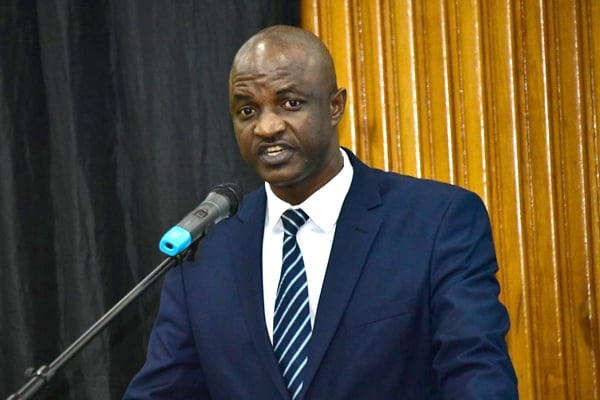
Henry Musasizi, Minister of State for Finance made a case for the loan.

Henry Musasizi, Minister of State for Finance, has denied allegations that the Presidency that comprises 1,757 staff and 666 vehicles is operating a bloated budget, saying not all the funds allocated to State House and Office of President are consumed by President Museveni as a person.

“We would like to correct the impression which was created out there, that all expenditures under the State House are expenditures incurred by the person of the President in his House. These are institutional expenditures just like we do with our votes,” said Minister Musasizi.

Henry Musasizi clarified this following the Opposition’s decry over wasteful expenditure within the government wondering why the President should have 1,757 staff, yet only 14 out of the 28 beds in the Intensive Care Unit of Mulago Hospital are functional, due to shortage of staff.

“Can you justify the president employing 761 staff in his office and 996 staff at his residence? Our leader employs at his residence at taxpayers’ expense 51 cleaners, 52 cooks/chef/ catering officers, 80 gardeners, 29 housekeepers, 10 dhobi and laundry attendants, 106 private secretaries, 14 room attendants, 22 presidential assistants, 59 waitress/waiters and 14 presidential advisors. If this is not wastage, what is it? And these days the main work at State House is organizing birthday parties & wedding anniversaries,” Ssemujju noted.

Ibrahim Ssemujju Nganda also called out the government for discrepancies in figures on Uganda’s public debt portfolio, saying the NRM is now just borrowing for fun, which explains why loans worth Shs14.5 trillion remain unutilized and yet these are attracting interest.

Interjecting into the matter, Jessica Ababiku, Chairperson Presidential Affairs Committee also denied allegations by the Opposition that State House’s top activities include holding weddings and birthday parties, saying as the Committee that oversees State House, no funds have ever been provided for such activities.

“As a Committee that oversees the State House, we have clear activities of the Presidency and this is provided for under article 98 of the constitution. We have never requested support for any activities like weddings and birthday parties, so I request that this is removed from the report unless there is evidence that we requested for these activities,” said Ababiku.

Ababiku also cited that some of the names included in the list of presidential advisors Klaus Holderbaum and Deo Nsereko are dead, while Judyth Nsababera Muthoni is an ambassador deployed in China saying, “Unless there is evidence that there is an expenditure for ghost staff, we disassociate ourselves with this list and I can cite this person has died and we don’t have evidence of ghost expenditure under salary.”

Stories Continues after ad

Uganda Airline plane that is pitting Nairobi against Kampala

All isn’t well in the diplomatic and intelligence circles between Kampala and Nairobi as operatives in Kenya are having sleepless nights over a flight journey between Nairobi and Kinshasa.

It also started when former Kenya president, Uhuru Kenyatta boarded a Uganda Airline plane from Jomo Kenyatta International Airport to Kinshasa for swearing ceremony.

Kenyatta arrived in Congo for the inauguration ceremony of the president-elect Félix Antoine Tshisekedi Tshilombo and on board with him was Maj. Jessica Alupo, the Vice Presidnet of Uganda who escorted him

Despite the former Kenyan President being a Facilitator of the East African Community -led Nairobi Peace Process, nothing is being left unturned as operatives are seeking answers.

However, what is intriguing Nairobi operatives is the motive of Uhuru choosing to fly Uganda Airline plane despite his country having their Airforce planes and Kenya Airways. Which he is supposed to be provided with by a mere fact that he is an immediate former head of state.

Nairobi is also intrigued by the mere fact that Uhuru was escorted by Ugandan Vice President and yet there was a Kenyan delegation in Kinshasa led by their cabinet Prime Secretary Musalia Mudavadi ahead of President William Ruto’s arrival for same function.

Stories Continues after ad

Magoola’s Dei BioPharma set to start producing medicine in May

Matthias Magoola’s Dei BioPharma Limited Company is set to start producing medicine in May this year after the government resolved to inject $600 million (Shs2.3 trillion).

The Dei group was given Shs77.6 billion last month to undertake immediate interventions and speedup the production of essential drugs such as antimalarials, cardiovascular drugs, diabetes and hypertension.  

While meeting Magoola, the government promised to acquire a stake in the company and release the required money with the second batch expected to be injected in the next financial year.

The initial release of the first batch was to ensure the company is financially stable following the agreement between the government of Uganda and Equity Bank and Dei Group International. The ministers described the partnership as ‘a stitch in time saves nine and talked of a life-saving company that has been going through financial challenges.

In the supplementary budget passed by Parliament last year in December, the company was given Shs77.6 billion as an initial investment in the vaccines which the Minister of Science, Technology and Innovations never disclosed.

Dr. Musenero confirmed the partnership deal and said, “When we are investing, you don’t put in the money at once., so the government after realizing that Magoola had put in a lot of money, had to also come and rescue him from the financial struggles he was in, support him and acquire stake.”

In an interview with Magoola with Eagle Online, he confirmed the government’s acquisition of shares and revealed that the company is now financially stable no matter the misinformation and sabotage from people who have been fighting the project.

Magoola added that the total cost is $1.1 billion and so far, the money invested is $500 million. Money has been invested in infrastructures.

“Dei group has put its money plus Equity bank which put $100 million, Uganda Development Bank put about Shs200 bank and then Uganda government,” Magoola revealed.  

Magoola further said that while in negotiations, the government will get a stake in the company, get Equity Bank in business because this is going to change the way manufacturing of drugs in Uganda and abroad.

The company was launched in July, 2021 by President Museveni and Kenyan Vice President, (the now President, William Ruto and is expected to produce high quality and affordable medicines that will save lives of millions of families across Africa.

The owner has obtained more than 3000 formulations.

“The pharmaceutical is the biggest in the region and is capable of producing MRN medicines with a 400-500kgs granulation process. We thank the government led by the president and we want to assure the public that this is a reality,” Magoola said.

When fully completed, the facility will also produce other biological solutions such as Filgrastim, Erythropoietin and Trastuzumab.

“The facility is very unique and meets the European standards and the world health organization and we anticipate exporting drugs,” Magoola said. Adding, “We intend to employ 95% local people.”

Stories Continues after ad

UBOS, UN launch joint program for quality data, statistics in Uganda

Dr. Chris Mukiza.

The Uganda Bureau of Statistics (UBOS) in partnership with 11 United Nations (UN) agencies have launched a three-year joint programme that will lead to collection and analysis of data and statistics which are geared towards improving planning and budgeting in Uganda.

The programme, which will cost $41.8 million (about Shs160 billion), is expected to produce timely and quality data and statistics that will also support the implementation of Sustainable Development Goals (SDGs).

Speaking at the launch in Kampala on Tuesday, January 30, 2024, the Executive Director of UBOS, Dr Chris N. Mukiza, said the programme is a fundamental step in bringing the entire National Statistical System (NSS) to the same wavelength and appreciation of the need for quality data at all levels.

He said the programme will help the government to create public awareness on the various data and statistical programmes, disseminate the findings of the status review of data and statistics in Uganda, re-affirm the critical role of data and statistics in tracking and accelerating progress on SDGs in Uganda and consolidate existing and build new partnerships along the statistics value chain.

“Quality data is a key prerequisite for the achievement of the Sustainable Development Goals (SDGs) targets. Similarly, the National Development Plan is reliant on quality statistics to inform the government of its performance and where necessary to inform policy review or redirection of resources to achieve maximum economic gains. These efforts will hugely gain from the roll out of an implementation plan of this joint programme,” Dr Mukiza said.

The participating UN organisations in the launch of the programme are UNDP, UN Women, UNICEF, UNAIDS, WHO, UNCDF, UNGP, FAO, UNEP and IOM.

The UN Resident Coordinator, Ms Susan Ngongi Namondo, said it took three years for the partner agencies to come up with the programme. She, therefore, challenged the government to take a new approach towards data collection and utilisation through building synergies across its different ministries and departments for effective development.

State Minister for Finance (Planning) Amos Lugoloobi said the initiative will revolutionise the national statistical system to tap into mainstreaming administrative and citizen generated data into the realm of official statistics.

“This initiative comes at a time when we are planning to conduct our 11th National Population and Housing Census. The results and outcomes from the Census undertaking should provide a firm baseline on which the monitoring of all major statistical indicators should be anchored,” Mr Lugoloobi said.

Prime Minister Robinah Nabbanja, in her speech read by First Deputy Prime Minister and Minister of East African Affairs Rebecca Kadaga, hailed the UN agencies for supporting Uganda in improving its capacity to collect data that is necessary for planning.

She said the programme comes at a time when the government is implementing SDGs and various wealth creation projects that require data for effective planning and resource allocation.

“We, therefore, cannot wait longer to have the outcomes of this programme to support us in managing the equitable allocation of resources and informing evidence-based policy and decision making,” she said.

Ms Nabbanja, however, appealed to technocrats to make the programme user-friendly for various stakeholders such as local government leaders and the general public.

“…statisticians and demographers are not any different when they start talking about the ‘coefficients of variation’, ‘geometric mean’, ‘GDP deflators’, ‘degrees of freedom’ etc.,” she said.

“Therefore, in dealing with the phenomenon of statistical data, it is important that the data to be managed and subsequently disseminated meets the basic tenets of good data/information,” she added.

Stories Continues after ad

Court sets dates for hearing of Katanga murder suspects’ bail application

Prime suspect, Molly Katamba.

The Criminal Division of the High Court in Kampala has further remanded Katanga murder suspects pending the hearing of their bail applications.

Last week, Nakawa Magistrate’s Court committed Molly Katanga to High Court for trial. She is accused of killing her husband, Henry Katanga.

The businessman was allegedly shot dead by his wife on November 2, 2023, at their home in Mbuya, Nakawa Division, Kampala City.

Her two daughters, Martha Nkwanzi and Patricia Kakwanza, are accused of tampering with evidence at the crime scene, rendering it unidentifiable for judicial proceedings, while George Amanyire, a shamba boy, and Charles Otai, a health worker, are accused of assisting others involved in the crime.

Through their lawyers, led by Jet John Mwebaze, the suspects applied for bail. Appearing before Justice Isaac Muwata, the hearing of their bail application was further pushed after Assistant Director of Public Prosecution (DPP) Samali Wakoli failed to respond to the application.

Subsequently, the court set February 12, 2024, for further mention on whether or not the sureties presented by the suspects linked to the murder of city businessman Henry Katanga are substantial enough to grant them bail.

Stories Continues after ad

Dfcu bank launches “Ggwa Mu Bintu” campaign to support customers with accessible and affordable loan products

Bryan Katamba, the sector head of Education and Health at Dfcu

Dfcu bank has launched an ambitious loans campaign, “Ggwa Mu Bintu,” aimed at supporting the dreams and financial needs of its customers across Ugandans through the provision of ‘accessible and affordable loan products’.

As part of the “Ggwa Mu Bintu” campaign, Dfcu bank has unveiled a range of loan options tailored to meet the diverse needs of its customers as they start the New Year.

In anticipation of the upcoming first term of the school year, the bank is introducing the Dfcu School Bridge Loan to support educational institutions with their first-term operational costs. This unsecured short-term loan offers schools a boost of up to Shs00, 000, 000/- with competitive interest rates. The bank has streamlined the loan approval process, to ensure a quick 48-hour turnaround time from application to disbursement.

“This initiative aims to alleviate financial burdens for schools, enabling them to focus on providing quality education to students,” the bank said.

Dfcu bank is offering Unsecured Personal Loans to individuals in pursuit of their goals and aspirations. These loans are designed to ease the transition from the festive season that involves a lot of spending.

The Bank also offers the Dfcu Mobi Loan service through Dfcu QuickBanking, providing customers with convenient access to instant financing. With the Dfcu MobilLoan, customers can access up to two million Uganda shillings within five minutes, subject to pre-qualification. In particular, this initiative will enable parents to easily access finances for school fees and purchase of scholastic materials. As an added incentive, the bank is running a promotion where parents who use Dfcu’s range of channels including SchoolPay and Dfcu QuickBanking to make school fees payments stand a chance to win a cashback prize of Shs500,000/-.

Mr. Bryan Katamba, the sector head of Education and Health at Dfcu bank, noted the bank’s commitment to empowering Ugandans through a range of financial solutions. “We are dedicated to transforming lives and businesses in Uganda by providing loan products that meet the evolving needs of our customers. The “Ggwa Mu Bintu” campaign reflects our commitment to empowering the country’s education sector, right from the parents/ guardians to the school owners. We’re offering an assortment of solutions which will ensure that everyone along the education sector value chain is anchored, both for the short and long-term. 

With the launch of the “Ggwa Mu Bintu” campaign, Dfcu bank reaffirms its position as a trusted financial partner, dedicated to the transformation of lives and businesses across Uganda

Stories Continues after ad

Police manhunt Abim ex-soldier over attempted murder of his wife

Patrick Owiny alias Ocaya wanted for attempting to murder his wife.

The Territorial Police in Kidepo region and Abim CPS are on a serious manhunt for a 53-year-old retired soldier over the attempted murder by shooting after he shot his wife’s right eye with a bow and arrow and robbed her shop of Shs7 million in the process.

Patrick Owiny alias Ocaya is said to have injured his wife, Grace Apio, aged 51, using a bow and arrow in an incident that happened on January 24, 2024, at around 11pm, in Abim West Cell in Abim District.

According to preliminary facts gathered, it is alleged that on the fateful day of January 24, 2024, both Owiny and one David Ongom were gambling at the shop of the victim Grace Apio when Ongom won all the money from Owiny the husband of the victim.

In a fit of jealousy and anger, Owiny started a fight with Ongom, demanding for the refund of his money and in the process, the wife intervened.

“The suspect picked a bow and arrow, so as to shoot at Ongom, but when his wife tried to stop him, he diverted the bow and arrow, towards his wife and shot her in the right eye. He further robbed Shs7 million, from his wife’s shop and disappeared with it,” SCP Fred Enanga, the police spokesperson said.

In the aftermath of the shooting incident, Enanga says the victim was rushed to Abim Hospital and thereafter, referred to St. Mary’s Lacor Hospital in Gulu for further management.

“She is currently out of danger. However, the arrow blinded her right eye, after it penetrated her eye socket and remained embedded there. Both the victim, her children and the community are traumatized by the assault,” stated Enanga.

“The incident shows the level of violence in domestic settings. We further call upon persons living under vulnerable domestic settings to always contact the Child and Family Protection Officer at the nearest police station,” he added.

Stories Continues after ad

Gov’t releases Shs4.974t for the third quarter of the financial year 2023/24

Ministry of Finance PS, Ggoobi.

The Ministry of Finance, Planning, and Economic Development has released Shs4.974 trillion for the third quarter of the financial year 2023/24. 

According to the Permanent Secretary and Secretary to the Treasury, Ramathan Ggoobi, the funds will cater for critical capital expenditures, including people’s salaries, gratuities, pensions, security-related expenditures, and social sectors such as health and education.

“Shs90.211 billion has been provided to National Medical Stores to meet the obligations for the purchase of essential drugs and medicines, and Shs57.955 billion to referral hospitals and cancer and heart institutes,” he said.

Shs336.3 billion has been provided to kick-start the process of ensuring the renewal of the National IDs project (Shs192 billion). Recently, Rosemary Kisembo, the Executive Director of the National Identification and Registration Authority (NIRA), said the renewals of IDs were scheduled to start in August 2023 up to August 2025, targeting 17.2 million citizens who have never been registered and 20 million Ugandans who wish to renew their national IDs.

Kisembo is short of Shs666.85 billion, which is needed to start the exercise. In the same way, Shs144.3 billion has been released towards the purchase of tablets that will be used in the National Population Census and other votes.

“Shs550.859 billion has been released for the operations of security institutions, i.e., the Ministry of Defense (Shs403.082 billion), Police (Shs71.374 billion), Prisons (Shs41.427 billion), ISO, and ESO (Shs34.975 billion). Shs1.912 trillion, or 26.2% of the wage budget, has been provided based on payments made in the first half of the financial year,” Ggoobi said.

He said Shs117.567 billion was given to educational institutions, including the Ministry of Education and Sports (Shs28.076 billion to cater to instructional materials, student loan schemes, and examination bodies), public universities, UMI and LDC (Shs84.537 billion), and UBTEB (Shs4. 594 billion) for supervising, conducting, and managing exams.

Shs230 billion has been released for statutory votes in Parliament (Shs150.962 billion), the Electoral Commission (Shs9.459 billion), and the Judiciary (Shs44.88 billion), among others. Shs296.578 billion has been released for pension and gratuity for quarter three. This includes the requirement for pensions and gratuities for local governments.

Shs249.294 billion has been released for local government grants, including a capitation grant of Shs136.5 billion to ensure the timely opening of the first school term.

Stories Continues after ad

Countdown Begins as 2024 iKon Awards nominations are unveiled

Out of 203 compelling submissions, the official list of nominations for the 2024 iKon Awards has finally been unveiled.

The second edition of the awards is slated for March 32, 2024 and will aim to honour and celebrate exceptional people and entities in the Ugandan cinema and television industries while providing a forum for constructive change.

Voting for this year’s awards will be conducted online by last year’s winners who make the Ikon Awards Academy.

The list is as follows:

Best film

The Kitara Chronicles – Yiga Sadat, Kizito Sudaisy Sebbowa

The Passenger – Meddy Sserwada, Hadijah Nakanjako

Unheard – Polly Kamukama, Joseph Ken Ssebaggala

All for Love – Okurut Nego Paul

Best director

Joseph Ken Ssebaggala – Unheard

Hadijah Nakanjako – The Passenger

Yiga Sadat – The Kitara Chronicles

Patrick Lorimo – Maid of Honor

Best actress in a leading role

Fauziah Nakiboneka – Maid of Honor

Jackline Katusiime – Unheard

Rehema Mutesi – Ganyana

Tania Shakirah Kankindi – All for Love

Best actor in a leading role

Kenneth Rukundo – All for Love

Fenando Kamugisha – The Fallen Advocate

Henry Nathan Katongole – The Passenger

Masadde Isa Yusuf – The Kitara Chronicles

Best actor in a supporting role

Joseph Kahirimbanyi – Unheard

Mathew Kavuma – Maid of Honor

Blair Koono – Enkuba

Sulait Mulimira – Ganyana

BEST ACTRESS IN A SUPPORTING ROLE

Edith Baganda – Maid of Honor

Allen Musumba – The Passenger

Diana Kahunde – All for Love

Florence Naiga – Ganyana

Best director of photography

The Fallen Advocate – Benson Kamau Muigai

The Passenger – Izaek Ekuka

Unheard – Kitsha Kyasi Joseph

The Kitara Chronicles – Kizito Sudaisy Sebbow

Best screenplay

The Kitara Chronicles by Yiga Sadat, Masadde Isa Yusuf

The Passenger by Meddy Sserwada

Maid of Honor by Patrick Lorimo

Unheard by Polly Kamukama

Best sound

Elly Musinguzi – Nkwanzi's Slip

Simon Agola, Michael Kavuma – Maid of Honor

Isiko Abubaker – The Passenger

Kaz Kasozi – Unheard

Best editor

Emma Daka Waira – The Passenger

Joseph Ken Ssebaggala – Unheard

Derrick Taremwa – Enkuba

Okurut Nego Paul – All for Love

Best costume design

Nabanja Hikmah, Lukwago Paluku, Tumusiime Jackie – The Kitara Chronicles

Kyosiima Ginny – Unheard

Matilda Kavuma – Maid of Honor

Julian Kirabo, Ali Musinguzi, Isaac Kyakoonye, Patricia Nabirye – The Tale of Our Times

BEST MAKEUP AND SPECIAL EFFECTS

Esther Nakaziba – Maid of Honor

Rose Lily Kebirungi – Unheard

Lisa Sonia, Shadia Nakaddu, Cathy Kyokunda, Joana Nabakiibi – The Tale of Our Times

Hikmah Nabbanja, Patience Nakibuka Shadia – The Kitara Chronicles

Best production design

Francis Byaruhanga – Unheard

Rutaro Abel – The Tale of Our Times

Yiga Sadat – The Kitara Chronicles

Imran Musabeh – The Passenger

Best visual effects

Cruz Abdullah, Faisal Mukalazi, Patrick Chris Black – The Tale of Our Times

Tusingwire Alex – The Kitara Chronicles

Wavamuno Caeser, Suuna Abubakar – Enkuba

Best short film

Taama – Arthur Nsubuga

Ziwa – Samuel Tebandeke

Building 62 – Hakim Zziwa

The Last Shoemaker – Ali Musoke

Best documentary

The Shadow Pandemic – Ssekandi Jimmy

The Land of Peace – Ali Kibirige, Herbert Jjuuko, James Twino

Dear Queen – Jamir Jamal Musenze

BEST ANIMATION FILM

The Guardian – Denis Junior Dhikusooka

Herderboy – Raymond Malinga

Lost – Ashiraf Mulima

BEST TV SERIES

Prestige – Nathan Magoola

Damalie – Doreen Mirembe

Beloved – Nathan Magoola

BEST ACTOR IN A TV SERIES

Raymond Rushabiro – Prestige

Dennis Kinani – Damalie

Symon Base Kalema – Prestige

BEST ACTRESS IN A TV SERIES

Doreen Mirembe – Damalie

Sally Elizabeth Bwamimpeke – Prestige

Faith Kirabo – Beloved

Best student film

Find Me Online – Brian "Vons" Mukisa

I Sold Me Out – Lubeera Saphina

Scolds Bridle – Ssemwogerere Nurudeen

Silent Scream – Otim Gerald

Ikon rising star

Faith Kirabo

Joseph Kahirimbanyi

King Missy Ochola

Stories Continues after ad

gnuGrid CRB and Airtel mobile commerce Uganda limited (amcul) launch Uganda’s first-ever mobile credit scoring system

GnuGrid CRB, Uganda’s first and only indigenous credit reference bureau to be licensed by the Bank of Uganda and Airtel Mobile Commerce Uganda Limited, a provider of affordable and secure financial services in Uganda have unveiled Uganda’s first-ever mobile credit scoring system.

Aptly named, Mobile Credit Score, the solution has been developed with the support and regulatory guidance from the Bank of Uganda and the Uganda Microfinance Regulatory Authority.

Unlike the traditional and more conservative credit reports available on the market today, which rely only on credit history supplied by regulated financial institutions, the more innovative and proactive gnuGrid CRB and AMCUL Mobile Credit Score goes beyond that and relies on over 400 alternative data points such as client mobile financial behaviour to create a more comprehensive and inclusive credit score.

“The future of lending is undeniably digital, at gnuGrid CRB we are at the forefront of this transformation. The use of alternative data, complemented by a hybrid of conventional banking data, forms the backbone of our approach. This ensures a holistic and inclusive evaluation of individuals’ creditworthiness, opening doors for a broader spectrum of borrowers who may have been overlooked in traditional lending models,” David Opio Obwangamoi, the Executive Director of gnuGrid CRB told stakeholders at the breakfast launch held at the Kampala Serena Hotel.

“One of the profound impacts of this credit scoring system is its ability to enhance reputational collateral; we understand that a good credit score is not just a number, it is a reflection of financial responsibility and trustworthiness. By providing lenders with a comprehensive and accurate assessment of creditworthiness, we are not just facilitating loans; we are building a foundation of trust within the financial ecosystem. This, in turn, will empower individuals to establish and strengthen their financial identities,” Mr. Opio added.

The solution will enable millions of Airtel subscribers to access affordable credit. The service will subsequently be extended to Airtel’s lending partners and all lenders within Uganda’s financial ecosystem, which includes Tier I-IV financial institutions as well as Non-Bank Payment Service Providers and Payment System Operators licensed under the National Payment Systems Act, 2020.

Under the Uganda National Financial Inclusion Strategy (NFIS) II (2023 – 2028), which aims to reduce poverty and promote economic growth through affordable and quality financial services, the government seeks to increase access to formal financial institutions (banks, non-banks, including mobile money) from 66% in 2021 to 75% by 2028 as well as increase private credit bureau coverage from 6.9% of adults in 2019 to 15% by 2028.

According to the World Bank’s Global Findex Database 2021 (Findex 2021), 66% of Ugandan adults are estimated to have access to a regulated financial account – a rise that has been driven by the penetration of mobile money. The report also notes that close to 77% of Ugandans borrow money – but only 31% borrow from a formal financial institution.

Findex 2021 also notes that while digital financial services (DFS) have enabled more Ugandans to access formal financial services – payments are the most prominent formal financial transaction at 64%. Formal saving and borrowing remain low, at 32% and 29% respectively.

One of the stumbling blocks to catalysing the immense potential of digital lending has been how to innovatively work around the classic way of assessing creditworthiness and other challenges such as lack of access to collateral, especially for women and the youth. Alternative data-driven credit scoring and other innovative digital lending models such as those being heralded by this new mobile credit scoring system have emerged as strong alternatives for effective and efficient loan origination, risk assessment, disbursements, repayments as well as performance tracking.

Efficient and cost-effective borrowing and lending

Commenting about the Mobile Credit Score, Japhet Aritho, the AMCUL Managing Director, said: “For AMCUL (Airtel Money Uganda), this partnership signifies a leap towards financial inclusion, empowering more people with access to credit. It’s about recognising the potential in each of our customers and supporting their aspirations. It’s about being a catalyst for growth and development in our communities”.

“As we embark on this exciting journey, we are not just offering a service; we are unlocking potential. We are creating opportunities. And most importantly, we are building a future where financial barriers are reduced, and dreams are within reach,” Mr. Aritho added.

Benefits to lenders include enabling the filtering out of high-risk borrowers; supporting business sustainability by minimising credit defaults as well as supporting the creation of tailor-made new products that will grow customer bases and clientele. Lenders will also be able to reduce the operational costs of lending, such as risk assessment and insurance. The resulting efficiency and cost reduction are expected to translate into reduced cost of money in the medium term, especially for genuine and credit-worthy borrowers.

Borrowers will also be able to know their creditworthiness/financial health instantly; which will in turn help them to improve their creditworthiness, access credit faster, as well as sustainably grow their loan limits.

“Financial inclusion is not just a goal; it’s a journey that empowers individuals, communities, and entire economies. With the introduction of our mobile credit score, we aim to extend the benefits of financial services to last-mile users, especially focusing on the youth and women of Uganda. We believe in the potential of every individual to contribute to the economic growth of our nation. Through this innovative credit scoring system, we are breaking barriers and providing opportunities for those who have been traditionally underserved,” Opio reiterated.

“This innovation is a testament to our commitment to fostering financial inclusion, a cause that resonates deeply with our mission at gnuGrid CRB,” he concluded. 

Stakeholders speak out

Speaking at the launch event, several government and private sector stakeholders, hailed the Mobile Credit Score as a transformative and ground-breaking development in the financial landscape of Uganda as well as a significant milestone in the journey towards financial inclusion up to the last mile person.

The Commissioner, Financial Services at the Ministry of Finance, Planning and Economic Development and the guest of honour at the launch, Mr. Moses Ogwapus said that the Mobile Credit Score was a “ground-breaking development that aligns seamlessly with the broader national core principles of financial inclusion, responsible lending, and the use of technology for economic empowerment”.

“The focus on financial inclusion, especially reaching the last mile customers, youth, and women, is a key pillar of our national economic development strategy. Microfinance institutions, particularly Tier IV, are crucial in delivering financial services to these underserved populations. The mobile credit scoring system unveiled today has the potential to revolutionise the way these institutions operate, making them more effective in reaching the grassroots and contributing to poverty alleviation”.

Pascal Mukisa, the Head of CRB Services, in the Department of Non-Banking Financial Institutions at the Bank of Uganda, said the use of alternative data in credit scoring, “creates a 360-degree understanding of who a prospective borrower is and what is his or her ability to repay”.

“As a regulator overseeing the sector, we recognise the importance of these advancements and the contribution they make to the stability, efficiency and inclusivity of our financial system. Let us celebrate this milestone and recognise the potential of alternative data and alternative credit scoring in transforming our financial lives and driving economic progress,” he said.

He hailed gnuGrid for standing out as the only indigenous CRB.

“Initially, we thought that credit information sharing was only a space for international companies from developed countries. But I’m glad and excited to present a local initiative that started from scratch and surprisingly, within a very short period, is now driving the innovation that we’ve all been waiting for,” he added.

Wilbrod Owor, Executive Director of Uganda Bankers’ Association (UBA), said that the partnership between GnuGrid CRB and Airtel Mobile Commerce Uganda Limited will unlock and unleash the huge untapped potential at the bottom of the pyramid. 

“For a long time, we used to have a perception, and perhaps we still do, that borrowers down there are very risky and the majority are in agriculture. If we maintain this perception without a solution, it means that our country will remain underdeveloped forever because that’s where the biggest portion of our population is,” Mr. Owor said.

“There is a huge potential, an opportunity to unlock potential at the bottom of the pyramid that credit scoring, using alternative data, is bringing out. The power of partnerships and collaboration brings out the power of synergies, technology and data that can be harnessed to scale up access to credit,” Owor aded..

Edith Tusuubira, the Executive Director of Uganda Microfinance Regulatory Authority (UMRA) applauded the credit score as a good step forward in unlocking financial access, especially for the youth who are the biggest consumers of digital financial services.

“Our mean age is 15.7 years. Most Ugandans are below 30 years; 77% of Ugandans are 25 years and below. They have moved away from paper transactions. Digitising access to financial services, especially bringing it to their mobile phones, is one step ahead in many right directions. I would like to thank and commend this partnership between gnuGrid CRB and Airtel Mobile Commerce Uganda Limited,” she said.

“The World Bank has already recognised credit rating and scoring as a crucial part of expanding access to finance. This is just one of the right steps in a good direction,” she added. 

Giles Aijukwe, the Chief Executive Officer at Letshego Uganda, said that the Mobile Credit Score will help the financial services industry address the problem of lender-customer information asymmetry.

“We in the financial services space, especially the lenders, are in the business of risk. In the past, the lender and the borrower treated each other with suspicion, yet we are supposed to be in a very symbiotic relationship. We give you a hand as a borrower, and you then have a responsibility to pay back,” he said.

“The first thing that this mobile credit scoring has done for us the lenders, especially those of us lending to the bottom of the pyramid is to solve the challenge of information asymmetry. That’s the biggest risk we deal with. Lenders are not sure that the information they are getting from borrowers is sufficient enough to make a decision. With this Mobile Credit Scoring, there are many data sets that this application can bring together and do a triangulation and assign a weight/rating based on your transaction behaviour with your telecom provider. Because we already have about 40% of information from other KYC channels and the traditional credit reference bureau information, this gives us a very reasonable amount of information on how to deal with the customer. It covers the gap of information asymmetry,” added Mr. Aijukwe.

Quoting the World Bank figures, Patrick Oketa, the Executive Director of Financial Sector Deepening Uganda (FSDU), said that previous methods of credit scoring only favoured the 9.1% of the population that have had access to credit before leaving out the other 90% that haven’t.

“The 90% who are unborrowed is a massive market. GnuGrid and Airtel Mobile Commerce Uganda Limited are demonstrating that alternative credit scoring is the way to go. Because this is the only way that we’re going to be able to bring the 90% that aren’t included, for access to formal credit,” said Mr. Oketa.

He added that FSDU is closely working with the MasterCard Foundation, “to enable as many of the grassroots players through Micro, Small and Medium Enterprises (MSMEs) to be able to access credit at market rates.

“Our role is to enable as many enterprises that will bring work to youth, and women down at the grassroots to be able to have access to credit, grow their businesses, and grow this economy,” he added. 

On his part, Arnold Byarugaba, the Country MSME Lead at Mastercard Foundation said that the Mobile Credit Score would complement the Mastercard Foundation’s work of enabling financial access to the last mile of the population, especially the women and the youth, who do not have access to physical collateral. 

“The traditional banking models and how credit is essentially assessed, is largely dependent on collateral, financial records etc. Yet, if you think about the typical person, at the last mile, they are very comfortable saving money on their phone. They are also very comfortable saving their money within SACCO or Village Savings and Loan Associations. A large population, up to 90%, is accessing credit through that mechanism. Alternative data is demystifying that because it is telling us that there are many ways you can assess someone, especially one who hasn’t accessed formal financial services before such as borrowing,” he said.  

Stories Continues after ad