Stanbic Bank
Stanbic Bank
18.4 C
Kampala
Stanbic Bank
Stanbic Bank
Home Blog Page 291

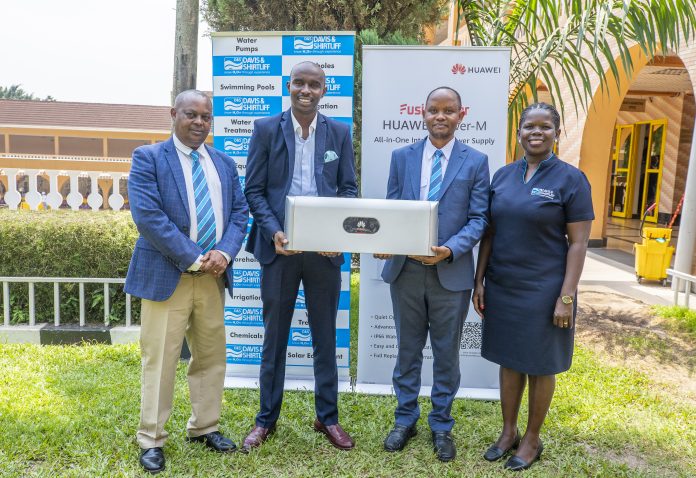
Davis & Shirtliff, Huawei partner to provide affordable high-end solar products in Uganda for clean energy transition

In a significant stride towards advancing Uganda’s roadmap towards sustainable power and commitment to clean energy, Davis & Shirtliff and Huawei Technologies have entered into a strategic partnership to increase the availability of affordable high-end solar and digital power solutions to accelerate the transition of Ugandan homes and businesses to clean renewable energy.

The leading supplier of water and energy equipment in the East and Southern African region will distribute Huawei’s solar products, including Grid Connect Inverters, Luna, and Power M backup solutions. Davis & Shirtliff robust distribution channels and extensive knowledge of the local energy market will be leveraged on to deploy Huawei’s innovative solar technology throughout the region.

“This partnership will accelerate the adoption of renewable energy in the country while reducing overall power costs to consumers in the long run, resulting in direct returns, especially those in the commercial and Industrial space,” said Davis & Shirtliff Uganda MD, Patrick Mufwoya.

“The prolonged lifespan of solar installations, combined with minimal operational costs, positions these systems to self-fund within a few years, providing sustained cost savings,” he added.

This pivotal alliance will also see the provision of comprehensive training and support programs to ensure the installation and maintenance of products are of the highest quality, thereby increasing their efficiency and lifespan.

The primary focus is on delivering integrated solutions for electrification projects in both urban and rural areas, leveraging Huawei’s capabilities to enhance energy management and improve energy efficiency.

“Our collaboration with Davis & Shirtliff is important because it represents a harmonious union of vision and deployment of capabilities. Together, we aim to reshape the renewable energy landscape and provide cleaner, more efficient and affordable energy for the Ugandan market,” Collins Mulei Mutua, Technical Service Manager, Huawei said.

In Uganda, the demand for clean and reliable power sources is driving the adoption of solar products. The adoption rate is the highest in areas where grid connectivity is either unstable or non-existent, with rural and peri-urban communities at the forefront of this growth. This will therefore go a long way in supporting the government’s initiative in developing mini grids in areas that are not served by the main grid.

Statistics show that around 50% of the country’s population has access to any form of electricity and about 24% have access to electricity for more than four hours per day. Out of its total energy supply, 92% is derived from renewable sources which are commendable and a sizable number of rural homes have been equipped with solar home systems.

“Rural areas have seen growth due to solar products being a primary source of electricity, while urban areas are adopting solar solutions for cost savings and energy independence,” said Davis & Shirtliff MD, Patrick Mufwoya.

Numerous commercial entities are currently focusing on sustainable energy solutions to secure power supply and manage electricity costs more effectively. At the same time, there is a growing number of institutions and public-sector projects that are embracing large scale solar installations to meet their energy requirements in an eco-friendly manner.

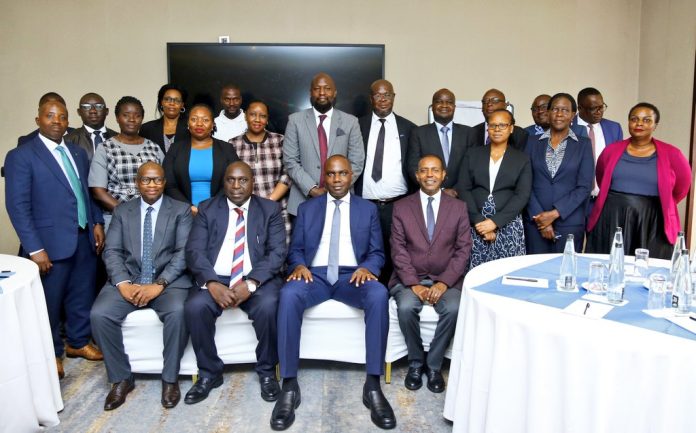
“Moreover, this partnership is primarily aimed at EPC contractors who need reliable and high-quality solar products for their end-to-end solar installation projects,” he said during the partnership launch at the Hotel Africana in Kampala.

Stories Continues after ad

 Uganda gets off the Financial Action Task Force Grey List

Uganda has gotten off the Financial Action Task Force’s (FATF) Grey List, marking a significant milestone in the country’s dedication to enhancing financial transparency and combating money laundering and terrorist financing.

The FATF, an intergovernmental organisation that sets global standards for combating illicit finance, placed Uganda on its Grey List in February 2020 due to concerns regarding deficiencies in anti-money laundering and counter-terrorism financing (AML/CFT) measures. Since then, Uganda has implemented a series of rigorous reforms and demonstrated substantial progress in aligning its financial regulations with international standards.

The decision to delist Uganda from the Grey list was disclosed by FATF President Raja Kumar while announcing the outcomes of the fifth plenary meeting, which took place in Paris, France, on February 21–23, 2024.

During the period when Uganda was under close monitoring by FATF, the government initiated key AML/CFT reforms intended to improve the robustness of Uganda’s systems to deal with money laundering (ML) and terrorism financing (TF). The said reforms include:

Following the announcement, Samuel Were Wandera, the Executive Director, Financial Intelligence Authority (FIA) Uganda, emphasised the importance of this achievement, stating, “Uganda’s exit from the FATF Grey List is a testament to our unwavering commitment to fostering a transparent and secure financial environment. It reflects the concerted efforts of our government and regulatory authorities to strengthen our AML/CFT framework and safeguard our financial system from illicit activities.”

“When the country was placed on the grey list, it made a high-level political commitment to work with FATF and the Eastern and Southern Africa Anti-MMoney Laundering Group (ESAAMLG). “The government of Uganda has been actively working to strengthen the effectiveness of its anti-money laundering and counter-financing of terrorism (AML/CFT) regime to implement the action plan agreed to with the FATF, which comprises 22 action items,” he said.

The FIA Executive Director assured the FATF delegates, Ugandans, and the international community of Uganda’s commitment to consolidating the highlighted achievements attained during the period and to further strengthen the AML/CFT/CPF regime.

He confirmed the entity’s commitment to effectively coordinate an all-government approach to the crimes, increased engagements with the private sector to aggressively embrace the various AML/CFT measures, including dealing with the identified risks, and strengthened the capacity of the institutions involved in the fight against ML/TF crimes.

Uganda’s successful exit from the FATF Grey List not only reinforces the country’s reputation as a responsible member of the global financial community but also enhances its attractiveness to investors and facilitates greater access to international financial markets.

The Financial Intelligence Authority expresses gratitude to the FATF for its constructive engagement and guidance throughout this process. Uganda remains committed to sustaining momentum in its efforts to strengthen its AML/CFT framework further and contribute to global efforts to combat financial crime.

Stories Continues after ad

Parliament pension scheme pays Shs9.135b in retirement benefits to its members

Speaker Anita Among

The parliamentary pension scheme has paid Shs9.135 billion in retirement benefits to its members in 2023.

The revelation was made during the 12th Annual General Meeting (AGM) taking place at Parliament.

Established through an Act of Parliament, the scheme is a contributory hybrid cash balance retirement benefits plan for Members of Parliament and staff of the Parliamentary Commission.

According to the annual report and financial statements for 2023, the scheme boasts 1,398 members, with members’ contributions of Shs48.291 billion and a net asset value of Shs425.260 billion.

“In 2023, the scheme paid out retirement benefits to members amounting to Shs9.135 billion, death benefits of Shs437 million, and disbursed Shs18.69 billion as loans to 170 members,” the report indicates.

The scheme is aimed at providing pension and other retirement benefits to Members of Parliament and staff of the Parliamentary Commission on permanent and pensionable terms and relief to the dependents of the deceased participants.

The scheme is governed by the Board of Trustees appointed in accordance with Section 18 of the Parliamentary Pensions Act, 2007 and regulated by Uganda Retirement Benefits Regulatory Authority (URBRA).

Stories Continues after ad

Museveni urges district leaders to prioritize politics of interest

President Yoweri Museveni has urged district leaders to focus on promoting politics of interest because it is crucial to the prosperity of Ugandans.

Museveni made the remarks while addressing 472 district leaders at the closure of the Transformational Leadership Development Course at the National Leadership Institute (NALI) at Kyankwanzi yesterday. The course ran under the theme: “The role of local leaders in the implementation of government programmes and projects”

According to President Museveni, after getting independence, Uganda faced a lot of challenges which were caused by leaders who wrongly diagnosed the problems affecting the citizens.

“When we got independence in 1962, people were less concerned, and each one diagnosed the problem in their own way whereby some emphasised the politics of identity in the form of federalism. Even up to now, they are still talking about it, yet it promotes underdevelopment. Four years after Independence, the country had already encountered a lot of problems which included the abolishment of the constitution by Obote, and then we entered into wars, Amin, among other challenges. All that was caused by the “doctor who wrongly diagnosed the patient”,” he stressed.

President Museveni explained that when the National Resistance Movement (NRM) came into light, it rightly diagnosed Uganda’s problems, thus coming up with the four core principles to deal with the challenges.

He said, the four core principles of the NRM; – Patriotism, Pan- Africanism, socio-economic transformation and democracy are aimed at promoting the prosperity of Ugandans.

“Like in my area in Rwakitura, to be prosperous I will need a person to buy my milk, meat and bananas. If I get those who buy my products continuously, I will be prosperous. But when you emphatically look around, you realise that the Banyankore in Ankore don’t buy my milk, meat and bananas because they also produce the same products like me and when we meet along the way, we greet each other in our local language. Unfortunately, that greeting cannot build a house for me; to build my house, I will need money and I can only get that money from the other people who buy my products and most of those people are not Banyankore,” he urged.

He continued “When you go to Kampala, and you look at a Muganda in a shop, the people who buy from his shop are not only Baganda. Therefore, Uganda as a whole will help us to get prosperous not the identity based on tribes and religions. That is why, we say patriotism- you love your country because you need it for your prosperity.  Poverty, or any other challenge affects all of us the same way irrespective of our tribe or religion. All our problems are the same, so that is why we said our politics will stand on the interest of the people. And to achieve this we needed patriotism which is the NRM principle number one.”

President Museveni added that when the country is peaceful and produces more, it needs an external market to ensure the prosperity of its citizens.

“You will realise that the Ugandan market is not enough and to solve this, we need East Africa and Africa at large. That is why we add Pan- Africanism. We need all these principles because we want to be prosperous,” he noted.

“This place was so underdeveloped but when we came into power, we came with the gospel of wealth creation with “ekibaro”. When you accepted to rear cows for milk production, you now see that Uganda produces a lot of milk more than what we consume. We now produce 5.3 billion litres of milk annually, yet here we consume only 800 million litres, so we have a surplus of more than 4 billion litres of milk. That is why we need an external market. For maize, we produce 5 million tonnes annually, yet here we only use 1 million tonnes; therefore, we have a surplus of 4 million tonnes.”

On socio-economic transformation, the President said leaders should ensure that their people work towards transforming themselves through wealth creation and free education for all.

“Through those two avenues, the welfare of our livelihoods will change. If you work for the stomach alone and you forget about the pocket, you cannot get out of poverty,” he emphasised.

President Museveni further advised that Ugandans should fight poverty through the four-acre-model form of agriculture.

“On one acre grow coffee, fruits on the other acre, on the third acre grow pasture for zero grazing, on the third acre grow food crops. At the backyard, rear poultry, pigs and fishponds. Those seven activities are a medicine to the poor Ugandan to fight poverty. But then, there are industries, services and ICT. This will also help us to make money,” the President said.

“The fourth principle which is democracy is clear,” he added before assuring the leaders that he will consider setting up a SACCO to support them.

The Prime Minister, Robinah Nabbanja revealed that the training was informed by the issues that were identified from the local leaders and residents during the meetings they held in the many districts across the country.

“Your Excellency, following your guidance to H.E the Vice President and me on September 6, 2021, we have been spearheading the implementation of government programmes and projects and we found out that some local leaders lacked knowledge of their roles and needed NRM ideological orientation and accordingly, I organised this transformational leadership development course for 472 local leaders from the seven districts,” Nabbanja said.

Nabbanja also directed the Minister of Health, Dr. Jane Ruth Aceng to upgrade Kyankwanzi Health Center II to III to improve health services to the locals.

The Minister of Works and Transport, Gen. Edward Katumba Wamala urged leaders to utilise the Shs1 billion sent to them to work on the roads in the districts.

He also assured leaders that the merging of Uganda National Roads Authority (UNRA) will not in any way affect the operations of road works across the country.

“In the near future, districts will receive graders for road rehabilitations. This shows that His Excellency gives infrastructural development priority,” Gen. Katumba said.

The Director of NALI, Brig. Gen. Charles Kisembo said the leaders comprised District Executive Committee Members of the NRM, LC3 Chairpersons, NRM Chairpersons of Sub counties and town councils, leaders of the youth and people with disabilities as well as cadres.

Brig. Kisembo asserted that during their stay at the institute, the participants were taken through ideology and leadership, time management, introduction to Patriotism studies, ways of thinking and understanding reality, transformative discipline and revolutionary methods of work, Parish Development Model, among other lectures.

“Your Excellency, we are certain that the course participants have gained knowledge which will enhance their performance levels and at the same time, help them to mobilise their people for government programs implementation,” he said.

He also lauded Nabbanja for being able to mobilise the participants in large numbers and also finding NALI worthy to train Ugandans in the effort of training Ugandans for socio-economic transformation.

Stories Continues after ad

DTB, TerraPay, partner to ease global money transfers in Uganda

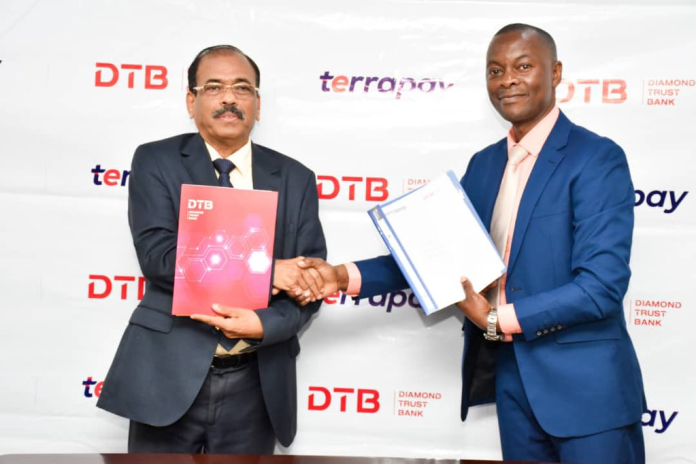
Diamond Trust Bank has partnered with payment services company, TerraPay, to cut by more than half the cost of sending money from other countries to Uganda.

Currently, it costs an average of 6.2 percent to send money between countries, and about 7.3 percent to Uganda, excluding transfers from Tanzania which pushes the cost to 11 percent, according to the Global Forum on Remittances, Investments and Development.

The United Nations under the Sustainable Development Goals as well as the G20 group of countries have set a goal to reduce the costs to 3 percent or less by 2030.

The deal between Dutch-based firm TerraPay (Terra Payment Services) and DTB is poised to significantly narrow the financial inclusion gap, streamlining the processes of money transfer, savings, and credit accessibility for individuals.

It will enable the money sent from anywhere in the world to be directly deposited to the recipient’s DTB bank account almost instantly, according to Samuel Muyingo, TerraPay Country Manager, East, and Southern Africa.

He says that with TerraPay, money can be sent to Uganda from at least 210 countries, and the transaction is completed in a minute, which makes it convenient for those in the diaspora to send money back home.

On the cost, Muyingo said their costs are flat, at not more than 1.8 dollars per transaction irrespective of the value, which makes it even less than the targeted UN average of 3 percent per transaction.

This initiative is mainly expected to benefit customers residing in Qatar, Canada, Europe, Kenya, Germany, the United Arab Emirates, the United Kingdom, and the United States, and grant them the capability to execute real-time money transfers to recipients in Uganda.

Varghese Thambi, DTB Uganda Managing Director said they now have partnerships with four money transfer firms, but that this adds another advantage of low cost and swift completion of the transaction.

He said that many Ugandans find the fast transfer services too expensive, yet they are also limited in reach, while with this, the recipients can get money from any of the DTB branches and bank agents.

This strategic partnership is set to fuel the anticipated growth in digital transactions within Uganda, a market projected to surge to a staggering $1.3 billion by 2027.

Thambi says this is also expected to encourage more people to open bank accounts because it makes even withdrawing money cheaper, unlike the other services and systems which take long processes and paperwork.

“We are confident that this partnership will be a success and will help promote financial inclusion in the region by simplifying global money movement for both individuals and businesses, making it easier than ever to connect with loved ones and also, empower global commerce,” said Willie Kanyeki, TerraPay’s Vice President East and Southern Africa.

Stories Continues after ad

Defence Minister applauds UPDF for the professionalism exhibited in Somalia

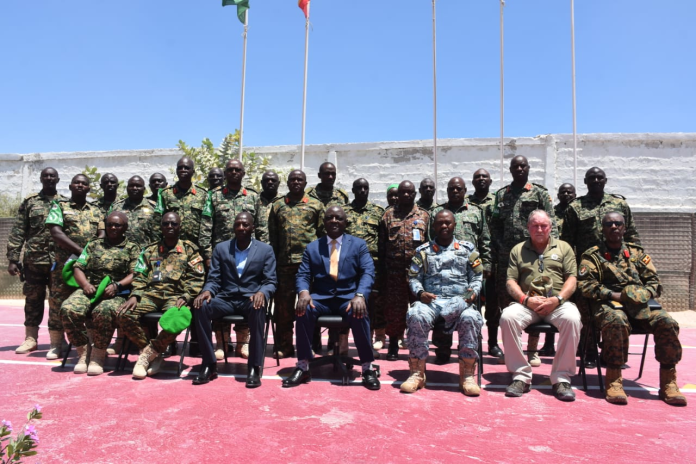
The Minister of Defence and Veteran Affairs, Vincent Bamulangaki Ssempijja, has applauded the Uganda Peoples’ Defence Forces for their efforts in Somalia as part of the African Union Transition Mission in Somalia (ATMIS). He commended them for creating a conducive environment for Somalia’s socio-economic and political transformation while exhibiting the Pan-African spirit.

 “The Pan-African spirit that brought us to Somalia has yielded tremendous results. Thank you for persevering and changing the face of Somalia. The discipline and professionalism you have shown have earned UPDF International accolade,” Ssempijja said.

During a courtesy visit to the UPDF (Sector One) headquarters in Mogadishu, Ssempijja acknowledged the rapid growth of Mogadishu city, Seaport, and Aden Abdulle International Airport traffic as evidence of the UPDF’s hard work and professionalism.

 He also commended the President and Commander-in-Chief, H.E. Yoweri Museveni, for his vision and strategic leadership in the fight against the Al-Shabaab at the source, which has helped protect Uganda from attacks.

Regarding the ATMIS drawdown, the Minister revealed that the Commander-in-Chief and the High Command are assessing the way forward and emphasized the need for guaranteed force protection in the mission area.

In his briefing, Brig Gen Anthony Lukwago Mbuusi, the Sector One Commander, highlighted the forces’ achievements and said that they had established a conducive atmosphere for the political processes while ensuring the functionality of the government of Mogadishu.

“The annual increased volume of Airport operations presently accommodates over 8,533 international flights, 18,166 domestic flights and 1,686 mission flights, the improvement in infrastructure and social services are a result of our persistent provision of security,” said Brig Gen Mbuusi.

The Minister of Defence and Veteran Affairs has been in Somalia for the last three days conducting meetings with high-level officials of the Federal Government of Somalia.

Stories Continues after ad

Legal Affairs Committee halts consideration of rationalization bills

The Legal and Parliamentary Affairs Committee has halted the consideration of rationalization bills under its docket, after Members of Parliament discovered that the certificate of financial implication issued by the Ministry of Finance did not indicate the cost implication of abolishing or merging some agencies.

This followed a concern raised by Ibrahim Ssemujju Nganda (Kira Municipality) who pointed out that although section 76 of the Public Finance Management Act 2015, stipulates that a certificate of financial implication must include the revenue estimates any bill would have on the economy, but the certificates issued by the Ministry of Finance on rationalisation bills didn’t indicate any cost implications, yet there will be need to compensate the affected staff.

Ssemujju remarked, “You see the framers of this law, even when you are winding down a parastatal, there will be costs, there are people you are compensating, there are domestic arrears to deal with, you simply can’t walk to Parliament and say there will be zero costs and tomorrow you present a budget, I mean, Parliament must be respected. The certificate before us is actually not a certificate under section 76 of the PFMA.”

Attorney General Kiwanuka Kiryowa asked the Committee to make further consultations on the matter noting that he is not the author of the certificate of financial implication.

“I can’t quite answer the questions raised to me, these questions must be raised to the Ministry of Finance, I will be happy to explain to you my part of the legal aspect and you can go on with the issue of Finance, then the Committee can go on with its own decision,” Kiwanuka said.

The legal and Parliamentary Affairs Committee has several constitutional amendment bills and other bills for consideration during the rationalization process among which include the move to merge the Equal Opportunities Commission with Uganda Human Rights Commission.

Stories Continues after ad

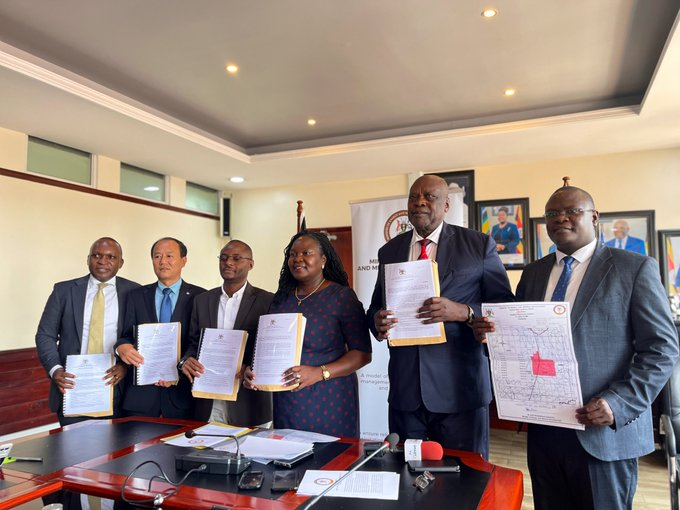
Sunbird Resources gets a license to mine limestone in Moroto District

Sunbird Resources Limited has been granted a 21-year large-scale mining license to excavate 8000 metric tonnes per day of vital limestone in Rupa Sub-county, Moroto District.

The licence was granted by Ruth Nankabirwa, the Minister of Energy and Mineral Development. Over six years of meticulous exploration have revealed an impressive 67 million metric tonnes of clinker-able limestone, positioning Uganda as a key player in cement production.

According to the minister, Sunbird Resources Limited. will partner with West International Holdings Limited., a subsidiary of Hong Kong-listed West China Cement Limited. Together, they are establishing a 6,000-tonne per day clinker lime and a one million-tonne per year cement factory at Nadunget Sub-County, Moroto District.

President Yoweri Museveni laid the foundation for the cement factory in September 2023, emphasising the government’s commitment to fostering economic growth and development.

The project is set to generate substantial employment opportunities, with 600 direct and 3000 indirect jobs, contributing to the economic development of Uganda.

“The mining activities and subsequent cement production are estimated to result in royalty payments exceeding Shs160 million per day of operation, contributing significantly to the consolidated fund,” she said.

The former Kibogo District woman legislator said upon completion, the cement factory aspires to be the largest in Uganda, striving for import substitution by reducing reliance on the import of 2.4 million metric tonnes of clinker annually, valued at over $700 million.

“We, at the Ministry of Energy and Minerals Development, express our delight in granting the mining lease and pledge continued support to Sunbird Resources Limited in achieving its objectives,” she said.

Stories Continues after ad

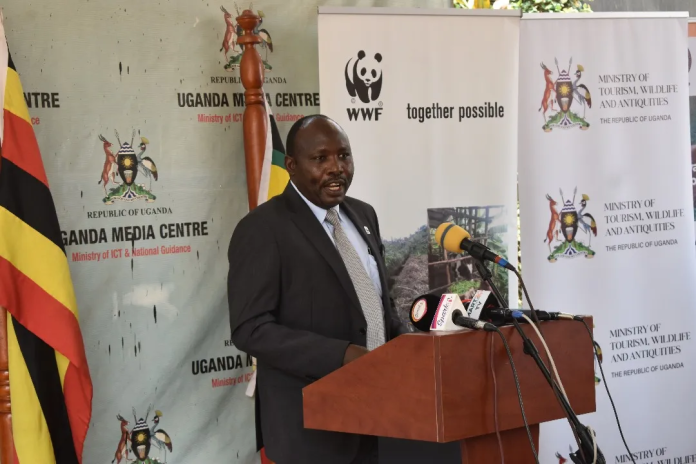
World Wide Fund for Nature calls for more technology use to boost wildlife conservation

The World-Wide Fund for Nature has called for more use of technology and digital innovations in a bid to carry out wildlife conservation in the country ahead of World Wildlife Day.

“Digital innovations facilitate streamlined awareness creation by providing new channels and tools for communication, education, and engagement. Platforms like websites, blogs, social media, VR, AR, mobile apps, webinars, and online courses contribute to educating the public about biodiversity loss, habitat destruction, and climate change impacts on wildlife populations,” said Simon Peter Weredwong, the Conservation Programs Manager at WWF.

“Digital innovations contribute to cost-effective monitoring of key wildlife species, real-time responses to human-wildlife conflicts, enhanced tourism, and easy conservation information exchange. Inclusiveness is promoted as everyone, regardless of location, can participate in conservation efforts,” he added.

He was addressing journalists at the Uganda Media Centre in Kampala ahead of the World Wildlife Day to be celebrated in Kyenjojo district on March 3.

Weredwong said WWF has in the past focused on capacity building, knowledge exchange, and partnerships for digital innovation in wildlife conservation adding that in the coming years, they will install camera traps, and drones among others.

“These technologies have been key in monitoring glaciers in Mt. Rwenzori NP, identified many species (previously not seen in the area) an aspect that is critical for enhancing the tourism potential of the parks,” he said.

He called for strategic partnerships to facilitate the rolling out of digital innovations for conservation

“We equally urge the government to provide an enabling environment for rolling out innovation. Policy reforms such as data sharing protocols and incentives for digital innovations equipment shall be critical.”

The 2024 World Wildlife Day theme is “Connecting People and Planet: Exploring Digital Innovation in Wildlife Conservation”.

He said digital innovations offer unique opportunities to redefine the connection between people and the planet.

“Exploiting the potential of technologies can lead our World to a sustainable future, establishing a harmonious relationship between the environment and its inhabitants,” Butime said.

“Digital technology has significantly transformed traditional wildlife conservation strategies. While we cope with human-induced conservation challenges, digital innovations such as drones, satellite tracking, DNA barcoding and social media have become critically relevant to the contemporary practice of wildlife conservation by improving our understanding of wildlife behavior, tracking illegal wildlife trade and trafficking, predicting biodiversity threats, and informing effective conservation strategies,” he added. 

He said this year’s World Wildlife Day celebrations will therefore focus on raising awareness about the application of digital technologies and interventions to promote wildlife conservation and management and sharing emerging positive impacts on ecosystems and livelihoods in Uganda.

“The celebrations will highlight new technological tools and related developments to complement Uganda’s efforts in safeguarding biodiversity and harnessing benefits from wild animals and plants. They will highlight key examples of digital innovations that have been used to enhance wildlife conservation efforts and, hence, could inspire practitioners to strengthen ongoing efforts to protect wildlife.”

According to the minister, this year’s celebrations will largely target the youths and leverage partnerships with other key stakeholders like schools, communities, civil society organizations, and political leaders to disseminate information on the use of technology in wildlife conservation and the need for enhanced collaboration.

Stories Continues after ad

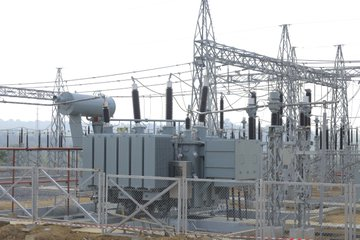
Gov’t commissions 132-kilovolt electricity transmission project

The State Minister for Energy, Okaasai Opolot, has commissioned the 132 kV Gulu-Agago Achwa Transmission Project at the Agago Substation in Pader District.

Initiated in September 2021, the project included two lots of substation extensions and the construction of a transmission line. The substation extension was executed by Larsen Toubro Limited, while the transmission line was constructed by KEC International Limited.

This line was completed and energised on November 18, 2023 and evacuated 83 megawatts of power from Achwa.

The project was financed through a loan of EUR 40 million from the German government through Kreditanstalt für Wiederaufbau (KfW). The money covered the cost of the transmission line and associated substations. The Government of Uganda, however, financed the supervision, land acquisition, and resettlement action plan (RAP) implementation costs.

Following the commissioning of the project, the minister said there would be no more load shedding in Gulu and the neighbouring areas.

“This newly commissioned Gulu-Agago Transmission Line supports the energy policy 2023 and the Energy Development Programme of the NDP, Phase III, to ensure the power generated is evacuated and consumed.” Okaasai said.

The minister said with the Gulu-Agago Transmission Project online, Uganda moves closer to achieving its energy goals, enhancing economic growth, and improving livelihoods through reliable electricity supply.

Joshua Karamagi, the Chief Executive Officer (CEO) of Uganda Electricity Transmission Company Limited (UETCL), said the commissioning of this line will save the Government of Uganda deemed energy costs worth $2.5 million per month and will directly benefit the people of Northern Uganda by ensuring the supply of reliable and stable power.

UETCL’s role encompasses bulk purchases from power generators and bulk sales to distributors through high-voltage transmission lines, operating the High Voltage Transmission Grid (HVTG) above 33 KV, and managing the National Control Centre.

Stories Continues after ad