Stanbic Bank
Stanbic Bank
17.2 C
Kampala
Stanbic Bank
Stanbic Bank
Home Blog Page 295

Geo-mapping of households in final stages ahead on the national census

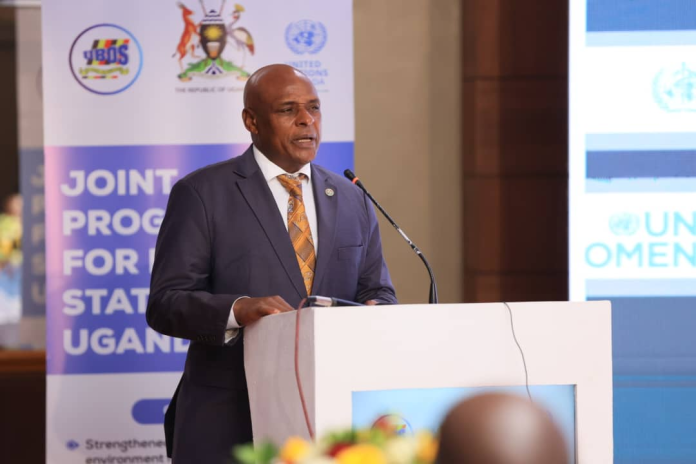
Dr. Chris Mukiza.

The Uganda Bureau of Statistics (UBOS) has revealed that the geo-mapping of household and enumeration area boundaries stands at 90.3%. Geo-mapping is aimed at creating an interactive map that will be used in the census exercise.

The technologically driven National Population and Housing Census (NPHC) 2024 will be carried out from May 10–19, 2024. The first day of enumeration, which is set for May 10, 2024, was approved a Census Public Holiday by the Cabinet and declared by the President to ensure easy recall of the Census Night during the period of enumeration.

“The field teams are currently mapping up the areas that were previously not covered and the cities around the country. The team is set to complete the exercise in the Greater Kampala Metropolitan Area (GKMA), comprising Kampala, Mukono, and Wakiso districts, by the end of March 2024,” Chris Mukiza, the Executive Director of UBOS, said.

He said the development of digital maps is now underway to generate area maps for the whole country. The area maps will facilitate an understanding of the area boundaries.

The National Population and Housing Census was last conducted in 2014. At that time, Uganda had a population of 34 million people. The census is carried out every 10 years, and this year’s exercise was expected to take place on August 24 and 25, but it was postponed due to the delayed procurement of tablets.

UBOS needs 120000 tablets costing Shs132 billion to carry out the national census. After the census, 30000 tablets will be given to the National Identification Registration Authority (NIRA) for mass registration of people and verification of voters by the Electoral Commission.

Local governments will retain others to pick up data for community information systems. This will later be picked up by UBOS for the generation of statistics for better planning for the country.

Currently, Uganda is estimated to have 45 million people. The figures can only be verified after the national census. Currently, the Uganda Bureau of Statistics (UBOS)

Stories Continues after ad

BrighterMonday Uganda, PRAU announce strategic partnership to expand job market opportunities and collaborations

BrighterMonday Uganda, the leading talent and recruitment company has unveiled its strategic partnership with the Public Relations Association of Uganda (PRAU). This collaboration aims to foster mutual growth, enhance public relations practices, and contribute to the overall development of the employment sector in Uganda.

Through this strategic partnership, BrighterMonday Uganda and PRAU will collaborate on various initiatives to promote employment opportunities, facilitate networking opportunities, and share valuable resources with job seekers and employers. This collaboration will include joint events, workshops, and knowledge-sharing sessions, all aimed at empowering individuals in their job search and enhancing the overall recruitment process.

As a prominent player in the job market, BrighterMonday Uganda has been dedicated to connecting job seekers with prospective employers, facilitating career growth, and driving economic development in Uganda. With this partnership, BrighterMonday Uganda seeks to leverage the expertise and network of the Public Relations Association of Uganda to further elevate its position as a trusted source for employment solutions.

Arnold Akampulira, Marketing Manager at BrighterMonday Uganda, expressed his enthusiasm about the partnership, stating, “We are thrilled to align our efforts with the Public Relations Association of Uganda. This collaboration presents an exciting opportunity to synergize our strengths and promote the growth of the job market in Uganda. By combining our resources and expertise, we aim to provide even greater value to job seekers and employers alike.”

The Public Relations Association of Uganda (PRAU) is a professional body that represents public relations practitioners in Uganda. PRAU plays a vital role in promoting the highest standards of public relations practice, offering professional development opportunities, and facilitating knowledge sharing among its members. By joining forces with PRAU, BrighterMonday Uganda aims to benefit from their wealth of experience and industry insights, ensuring that their communication efforts are aligned with best practices and industry standards.

Through this strategic partnership, BrighterMonday Uganda and PRAU will collaborate on various initiatives to promote employment opportunities, facilitate networking opportunities, and share valuable resources with job seekers and employers. This collaboration will include joint events, workshops, and knowledge-sharing sessions, all aimed at empowering individuals in their job search and enhancing the overall recruitment process.

Tina Wamala, President of the Public Relations Association of Uganda, added, “We are delighted to work hand-in-hand with BrighterMonday Uganda, a leader in the employment sector. This partnership will enable us to create a positive impact on job seekers and employers through improved communication strategies, networking opportunities, and knowledge exchange. Together, we can empower individuals to achieve their career goals and contribute to Uganda’s economic development.”

Both organizations are eager to begin this collaboration and are confident that their joint efforts will strengthen the employment landscape in Uganda, foster professional growth, and drive positive change within the job market.

About PRAU;

PRAU was founded in 1976 as a membership-based professional body of Public Relations (PR) practitioners in Uganda. The association is affiliated to regional and global bodies such as the East African Public Relations Association (EAPRA), the African Public Relations Association (APRA) and the International Public Relations Association (IPRA).

PRAU’s mission is “To nurture and advance PR excellence through training, mentorship, and enforcement of a professional code of conduct.” while it’s vision is to create “A community of Public

Relations practitioners that uphold the highest standards of professional practice in Uganda”

About BrighterMonday Uganda;

BrighterMonday Uganda was established in 2014 and has grown to become Uganda’s leading recruitment and HR services platform. We have numerous candidates and employers, successfully using the platform to get access to the right opportunities.

At BrighterMonday Uganda, we fully understand the Ugandan market and have developed a portfolio of relevant and value-adding products that make recruitment simple, quick and effective. We ensure that we find the perfect match for our users.

Stories Continues after ad

Over 14000 students fail 2023 UCE examinations

Candidates during a UNEB exam

Over 14000 students failed 2023 examinations, the just-released Uganda Certificate of Education (UCE) results indicate. The UCE results were reported by Janet Museveni, the Minister of Education and Sports.

According to the results, 364,469 students sat for the 2023 examinations, compared to 349,459 in 2022. The candidates came from 3,808 examination centres. Of these candidates, 118,633 were USE beneficiaries. Of all the candidates, 180,471 were male and 183,998 were female.

In 2023, 361,695 candidates (179,032 males and 182,663 females) appeared for the examination, compared to 345,695 candidates who appeared for the examination in 2022.

According to Dan Odongo, the Executive Director of the Uganda National Examinations Board (UNEB), 64,782 passed in division one, 85,566 in division two, 83,545 in division three, 112,923 in division four, and 14,879 failed.

“There is a significant improvement in the English language, religious education, mathematics, and biology. Noticeable drops were recorded in history, agriculture, and physics. In the English language, the presentation of crammed passages from texts in response to the question on original composition writing has greatly reduced, hence explaining the significant improvement in the candidate performance,” he said.

He said performance in the sciences continues to be a cause for concern, with less than 20 percent of the candidates obtaining credit pass levels in physics and chemistry and 40 percent or more unable to pass. It is worth noting, however, the upturn in performance in biology, which has been recording a steady decline.

“Examiners have attributed the low achievement levels in science subjects to a number of factors, the main among which are inadequate teaching, manifesting in the inability of the learners to master the basic scientific concepts; lack of practical teaching, manifesting in the learners’ inability to manipulate science apparatus, carry out the procedures prescribed in the examination papers, and interpret any readings or observations that could have been made. There are schools that have been reported to have no science teachers, which exacerbates the problem,” he said.

Odong said Cases of examination malpractice have continued to reduce. Most of the ones reported in this examination were external assistance given in the examination rooms, affecting mostly physics and chemistry practical examinations and mathematics. Affected schools whose results are withheld will be notified through their portals. They will also be notified of the dates of the hearings.

Stories Continues after ad

KCCA top officials summoned over Outdoor Advertising Ordinance failure

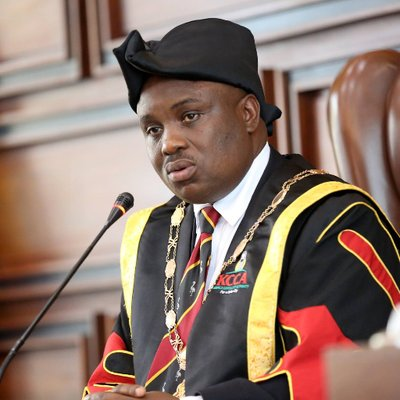
The Parliament’s Statutory Authorities, and State Enterprises (COSASE) has summoned the top leadership of Kampala Capital City Authority (KCCA), led by Lord Mayor, Elias Lukwago to explain why the Council has failed to operationalize the 2019 Outdoor Advertising Ordinance that would mandate KCCA to collect revenue from billboards around the city.

“Is it your duty to pass ordinances, is it an audit query?  And do you agree with me that this isn’t the first time it is raised? Do you also agree with me that there is a court ruling which made us lose money? How will you explain it? For that reason, the standard practice is going to be, when you come here, to account, we want your political leadership. I will not be prejudiced by what I hear and know regarding the politics at KCCA, but here everybody must come here and carry their cross,” noted Medard Lubega, Chairperson COSASE.

Dorothy Kisaka, Executive Director-KCCA however said that it is not her duty to invite Lukwago and his Council to Parliament meetings because the practice has been for the technical and political wings of KCCA to receive separate invitation letters to Parliament.

“The practice has been that we receive an invitation which is addressed to the Executive Director and the Executive Director comes with the senior management team to Parliament. We haven’t received an invitation to the political side, usually, they receive their own invitation and it isn’t the Executive Director who invites them, but if there is an invitation, we have no objection whatsoever” said Kisaka

This followed the failure by the political leadership of KCCA, to attend a meeting called by COSASE for the Authority to respond to several audit queries raised in the December 2023 Audit report, yet there were queries faulting the Authority for putting in place advertising ordinance that would enable KCCA  to collect revenue from outdoor advertising.

National Outdoor Advertising and Contractors Association Ltd dragged KCCA to court protesting the decision by KCCA to impose advertising rates on their business, describing the practice as illegal, irrational, and unlawful and also asked the Court to force KCCA to refund Shs13.226Bn collected from advertisers since 2011.

Court ruled in favour of the advertisers & in December 2020, Shs8.228Bn was formally proved in court as decretal, Shs2.653Bn as taxed costs and interest thus bringing total to Shs10.882Bn and since April 2020, KCCA hasn’t collected revenue from advertisers in the city.

Stories Continues after ad

At least 10 golfers set off for the 2024 Magical Kenya Open

Ronald Rugumayo (L) and Michael Segwaya - Absa Bank Uganda's Executive Director and Chief Finance Officer (R) pose for a picture with a dummy cheque.

At least 10 Ugandan golfers have left for the 2024 Magical Kenya Open. The contingent’s participation in the prestigious tournament will happen next week, from February 21st to February 25th, at the Muthaiga Golf Club in Nairobi, Kenya.

The team of one professional and nine amateurs emerged as the best performers during the Absa-sponsored Pro-Am tournament of the 2023 Uganda Golf Open. The continent’s flights and accommodation for the qualifying amateurs and some of its clients are financed by Absa Bank. The professional will receive a total contribution of USD 4,745 to cover his early travel to Kenya for practice and to participate in the full tournament programme. The bank has injected Rs. 130 million.

Michael Segwaya, Absa Bank Uganda’s Executive Director, said, “We are proud of the many accomplishments made by Uganda’s golf community as our players continue to demonstrate Uganda’s golf potential on the world stage. We are once again honoured to support their professional growth as part of our commitment to the advancement of the game of golf in Uganda in line with our purpose, which is to empower Africa’s tomorrow together, one story at a time.”

The golfers include: Michael K. Musiime, Paul Habyarimana, Ivan Arinaitwe, Patricia Mbabazi, Emma Tayebwa, Wendy Angu’deyo, Michael Tumusiime, Alex Mango, and Bob Matsiko. The amateurs will play on February 21, 2024, at the Pro-Am, while Ronald Rugumayo, the only professional golfer in the group, will play in the men’s professional tournament from February 22 to February 25, 2024.

Rugumayo is qualifying for the tournament for the second year in a row and is set to depart for Nairobi to commence his practice rounds on February 14, 2024, and the rest of the team will join him on February 21, 2024, at the Pro-Am.

He qualified for the Magical Kenya after posting a stellar performance in the just-concluded Safari Tour at the Karen Golf Club in Nairobi last week, bringing him to a total of 112 points after completing four out of the six tournaments in the tour.

Rugumayo expressed optimism for his performance in this year’s Magical Kenya Open and appreciated the bank for once again covering his and the rest of the contingent’s participation costs.

“I am very much looking forward to this year’s tournament, as I took this last year to perfect my game so as to represent Uganda to the best of my ability. We are excited for the opportunity to give it our best and make the nation proud,” he said.

Stories Continues after ad

January prices rise amidst falling staffing costs

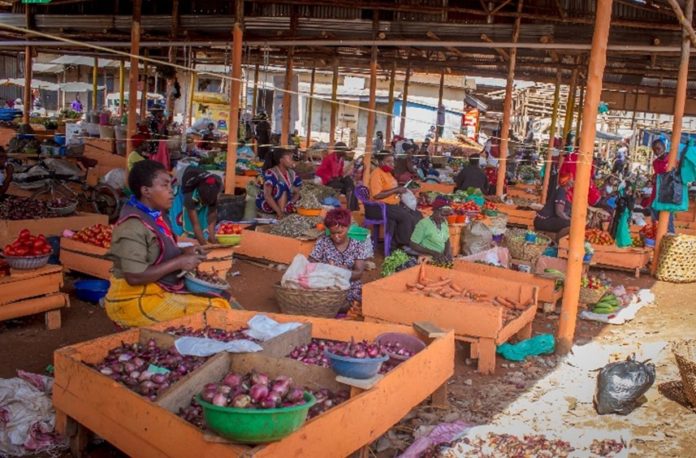
Market Women in Uganda

January purchase prices increased on the back of higher costs for construction materials and food products, but staff costs decreased for the first time in almost 17 months as the headline Stanbic Purchasing Managers’ Index (PMI) slipped to 54.0 in January from 54.8 in December.

Readings above 50.0 signal an improvement in business conditions on the previous month, while readings below 50.0 show deterioration.

Christopher Legilisho, Economist at Stanbic Bank said, “Uganda in January continued its streak of strong PMI outcomes, now a 15-month trend of growth in private-sector activity. Output and new orders have increased over the last 18 months due to increased customer numbers, with growth recorded in agriculture, construction, industry, services and the wholesale and retail categories. Ugandan firms increased hiring for a tenth month running, albeit marginally, with firms also employing temporary staff to handle the overflow. There were backlogs amid increased new orders, particularly in agriculture.”

The Stanbic Bank PMI is compiled by S&P Global from responses to questionnaires sent to purchasing managers in a panel of around 400 private sector companies. The sectors covered by the survey include agriculture, mining, manufacturing, construction, wholesale, retail and services. Data was first collected in June 2016.

The PMI is a weighted average of the following five indices: New Orders (30%), Output (25%), Employment (20%), Suppliers’ Delivery Times (15%) and Stocks of Purchases (10%).

Legilisho said “On pricing, Ugandan firms kept output prices unchanged in January as staffing costs declined for the first time in 17 months – this was despite an increase in input prices, especially related to construction materials. Overall, firms remain optimistic about the outlook for customer demand and output over the next 12 months. Indeed, Ugandan firms have increased inventories and quantities purchased to match robust customer demand.”

According to the survey, anecdotal evidence highlighted the positive impact of rising customer numbers on the private sector in January, with firms linking this to the latest increases in output and new orders. In both cases, expansions have now been recorded on a monthly basis throughout the past year-and-a-half.

Sector data pointed to increases in activity across agriculture, construction, industry, services and wholesale & retail.

The expansion in total new business across the Ugandan private sector was supported by a renewed increase in new export orders. January’s rise was the first in three months and the strongest since mid-2023.

Efforts to keep on top of workloads following a rise in outstanding business in December meant that some firms took on temporary workers at the start of the year, thereby leading to an increase in employment. This job creation helped lead to a reduction in backlogs in January.

Meanwhile, improving customer demand fed through to increases in purchasing activity and stock inputs. Despite rising demand for inputs, suppliers responded well to requests for faster deliveries and lead times shortened for the second month running.

Higher purchase prices were recorded in January, with panelists signaling rising costs for construction materials and food products. On the other hand, staff costs decreased for the first time in 17 months.

With overall input costs increasing, companies raised their own selling prices again in January, although the vast majority of respondents kept their charges unchanged from the previous month.

Business sentiment remained positive at the start of 2024, with companies expecting customer numbers to continue to rise over the coming year, feeding through to expansions in output. More than 82% of respondents predicted an increase in activity over the next 12 months.

Stories Continues after ad

UNEB to release UCE results tomorrow

The Uganda National Examinations Board (UNEB) has announced that the Uganda Certificate of Education (UCE) 2023 examination results will be released tomorrow Thursday, 15.

“The Minister for Education and Sports Mama Janet Museveni has confirmed that she will release the UCE2023 results tomorrow, Thursday, February 15th, starting at 11:00am and the venue will be State House, Nakasero,” UNEB announced.

UNEB added that the release of UCE 2023 followed a briefing session by UNEB to the Minister today morning.

A total of 349, 459 candidates registered for the 2023 UCE Examination as compared to 364, 467 in 2022.

UNEB further revealed that the 2023 candidates were the last cohort of learners that sat for the UCE examination under the old curriculum and during tomorrow’s release the committee will announce arrangements to facilitate the smooth transition from the old to the new curriculum.

This is the second batch of the national examinations to be released by the minister and the Uganda National Examination Board (UNEB) after releasing the Primary Leaving Examinations (PLE) results last month.

Stories Continues after ad

Coca cola celebrates women in science and technology

To mark International Day for Women and Girls in Science, Coca-Cola Beverages Uganda (CCBU) celebrates the achievements of women in Science, Technology, Engineering and Maths (STEM) by recognising leading women taking part in its Women in Leadership programme.

Commenting on the programme which aims to help talented women grow into leaders through training and support, Catherine Gita, CCBU People and Culture Director said, “As an organisation grounded in innovation and driven by a commitment to sustainability, CCBU recognises the crucial role that women play in shaping the future of STEM and is actively addressing this imbalance through various initiatives”.

A government report in 2014 showed that fewer girls in Uganda were passing biology and maths exams. The 2018 Gender in Education Policy aims to change this by getting more girls into science classes and training teachers to teach STEM subjects better. To support this, the aim of the programme is to close the gender gap and increase female representation in leadership roles, including STEM-related departments.

Some of the exceptional women whose accomplishments exemplify excellence and resilience in STEM include among others Doreen Namuyiga,Barbra Namanyi and Anisha Namugabo.

Doreen Namuyiga, a Quality Assurance Technologist, ensures CCBU’s products meet the highest standards, driven by her passion for understanding the science behind food and beverage production.

“Pursuing a career in STEM has not been without its challenges, but I am grateful for the opportunities to learn and grow, both personally and professionally. Through perseverance and determination, I have overcome obstacles and continuously struggle to expand my knowledge and expertise in the dynamic field of quality assurance.”

Barbra Namanyi, a Raw Materials Planner, coordinates procurement and inventory management, leveraging data analytics and supply chain principles. Barbra’s journey in STEM began with a curiosity for problem-solving, demonstrating the diverse opportunities within these fields.

“Young women and girls need to appreciate the different fields under STEM so they can embrace them boldly.

Anisha Namugabo, a Quality Controller, envisions a future where every girl has equal opportunities in STEM. She advocates for more female role models and mentors to inspire the next generation of women leaders and innovators.

“International Women in STEM Day serves as a call to action to advocate for gender equality and to empower young girls and women to pursue their dreams in STEM. It is a day to reflect on the progress made in creating a more inclusive and equitable world where every individual has the opportunity to thrive and make a meaningful impact, regardless of gender.”

Through their achievements, CCBU’s women in STEM embody innovation, resilience, and empowerment.

Stories Continues after ad

Federation of Uganda Employers calls for enforcement of pre-employment medicals

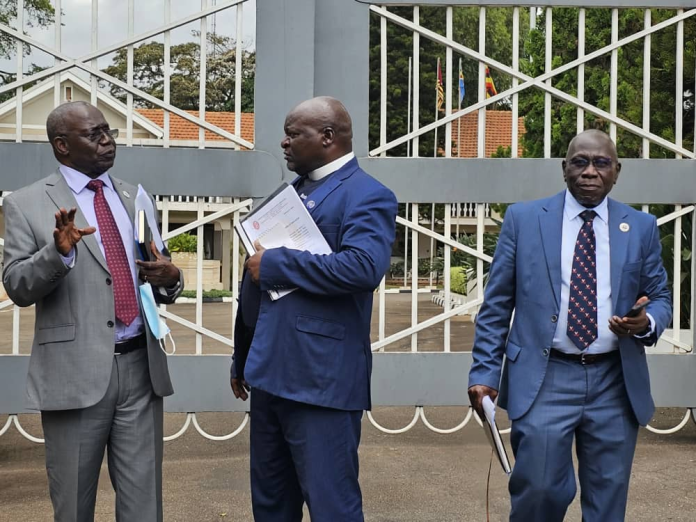
Dr. Silver Mugisha, President at the The Federation of Uganda Employers

The Federation of Uganda Employers (FUE) has called for enforcement of pre-employment medical tests to minimize workplace health and safety hazards. The suggestion comes in as Parliament processes the Occupational Safety and Health (Amendment) Bill, 2023.

The federation argued that employers have been dragged into endless court cases and the resultant court fines, for employing workers who are not fit for certain duties and end up with adverse health conditions.

“As it is with the military, the law should ensure that employers especially those in high-risk sectors such as the extraction, take on workers who are fit to work, otherwise employers will be subjected to unnecessary costs,” said Dan Okanya, Head of Policy and Research at FUE.

The federation made this recommendation while appearing before the Committee on Gender, Labour and Social Development on Tuesday, 13 February 2024 with Workers’ Representative, Hon. Charles Bakkabulindi, as acting chairperson.

FUE was concerned that the Bill does not adequately spell out what constitutes occupational and safety hazards, citing mental health as a critical health hazard that should not be left out.

“Mental health is a common emerging issue, our member organisations tell us that over 20 percent of staff has mental health challenges, some of them have best practices that we should pick from,” Okanya said.

The federation proposed that the Bill should prescribe mandatory training for all employees in safety issues such as first aid and that the employer should freely provide such training.

Henry Saaba, a specialist in occupational safety and health at FUE said the law should push for an increase in health inspectors on the ratio of one inspector per region.

According to Saaba, there are less than 20 occupational health inspectors who cannot ably supervise the entire country.

“Although the ideal is to have a health inspector per district, we are saying let government recruit an inspector for each region to enforce the law,” Saaba said.

Hon. Bakkabulindi was concerned with the federation’s position when it questioned the requirement in the Bill for all employers to have a safety committee, saying the law should be fair for all sizes of organisations.

“We are not going to protect those with 50 employees and leave those with two, the law should treat them equally,” said Bakkabulindi.

Bakkabulindi asked FUE whether its members were not affected by the emerging use of technology which he said, is likely to outcompete employees. He charged FUE to conduct a wider analysis of the Bill, observant that it is the national representative of employers.

Workers’ Representative, Hon. Margret Rwabushaija, warned that the Bill should cater for the interests of both workers and employers.

The Occupational Safety and Health (Amendment) Bill, 2023 seeks to expand the scope of the principal Act cognisant that since its enactment in 2006, there has been significant change in the workplace dynamics such as teleworking, virtual jobs outsourcing, and contracting.

The existing law does not address the rapidly evolving sectors such as extractive industry and telecommunication which the Bill intends to legislate for.

Stories Continues after ad

Police SACCO ordered to stop compulsory deductions of officers’ salaries as savings

Parliament has directed the Uganda Police Forces’ Exodus Savings and Credit Cooperative (SACCO) to stop mandatory deduction of personnel salaries as savings.

The Committee on Defence and Internal Affairs discovered that the SACCO’s management is violating the Cooperatives Societies Act by denying them the option of voluntary saving.

This was contained in the committee’s report on the inquiry into the operations of the Uganda Police Force Exodus SACCO that was presented by the chairperson, Hon. Wilson Kajwengye, during plenary sitting on Tuesday, 13 February 2024.

“The committee reiterates that the Registrar of Cooperatives Societies proceeds over the SACCO under Section 2 (2) of the Cooperatives Societies Act and immediately stops mandatory deductions on officers’ salaries and contributions for members’ savings until a comprehensive membership register is compiled on the condition that only willing members are registered,” said Kajwengye.

He added that the stopped deductions should only apply to savings and not loans, stating that all members with outstanding loan obligations should continue to pay the SACCO.

Kajwengye said that the SACCO’s financials are not being managed in adherence to sound accounting principles and standards.

“It is the committee’s considered opinion that inconsistencies in data compilation is the major cause of discrepancies and unreliable financial positions which has significantly affected the members’ savings,” Kajwengye said.

The committee also recommended that all deductions that were or are being made in the form of retirement benefits should be refunded with interest to the affected personnel, saying that the deductions are contrary to the Pensions Act.

The committee further urged Parliament to direct the Office of Registrar of Cooperatives and Bank of Uganda to institute an independent forensic audit on the Exodus SACCO, as mandated by law.

“Effectively, the Minister of Trade, Industry and Cooperatives should move the Registrar of Cooperatives to initiate the process,” read the report in part.

The report further discovered that the unchecked role of District Police Commanders outside Kampala in transmitting the membership returns to headquarters in Kampala was a severe risk.

“The SACCO had no systems to effect deductions from source. Due to the inadequate verification process of membership contributions and insufficient records from inception, the SACCO management could not comprehensively update the members’ register,” said Kajwengye.

As a result of this lapse, the committee observed that each member’s percentage shareholding and savings cannot be reliably established.

The report also recommended that the SACCO management should develop a policy on claiming the savings of a departed member after a discovery that the management of the SACCO savings, shares and loans of the deceased members are maintained as if the members are still active.

Busia Municipality MP, Hon. Geofrey Macho, who raised the matter, questioned the integrity of the Registrar in ensuring that the mandatory deductions that were made will be recovered.

“It is the same Registrar and ministry queried for disappearance of SACCO money,” he said.

Hon. Gilbert Olanya, (FDC, Kilak South County) said that the SACCO management goes as far as deducting the personnel’s salaries as soon as they start their initial training in the Force.

“You come from training and a percentage is taken from your salary. You will never withdraw this money but they keep saving,” said Olanya.

The Minister of State for Internal Affairs, Gen. David Muhoozi, justified the mandatory deductions, saying that it is aimed at improving the welfare of the officers, just like is the case with the Army’s SACCO.

“Granted, we had issues at the beginning of management, some of the issues still subsist but I want to urge members that rather than stampede a crash of this SACCO why we don’t, maybe, approach with caution and convince people to stay. I could see some sentiments – people saying, get your money and go,” said Muhoozi.

He agreed with the recommendation to institute a procedure on access of benefits of the deceased by their next of kin. “This money is theirs and they are entitled to it,” said Muhoozi.

Deputy Speaker Thomas Tayebwa, however, disagreed with the minister, saying that mandatory deductions of members’ salaries contravene the law.

“It is very imperative that immediately you stop mandatory deductions. It is supposed to be voluntary; you cannot do much about it unless you change the law. This money of theirs is hard earned,” Tayebwa said.

He directed the Minister of Internal Affairs to present an action taken report within three months.

Stories Continues after ad