Dokolo District Woman Member of Parliament Cecilia Barbara Atim Ogwal has passed on. Ogwal died of a cancer-related illness at a hospital in India.
She has been a member of Uganda’s legislature continuously since 1996.
Detailed to follow.
President Yoweri Museveni has pardoned the former Managing Director of the National Social Security Fund (NSSF), David Chandi Jamwa.
Jamwa was released along with 10 other people including; Ntale Vincent, Drabo Nelson, Omirambe James, Aliama Samuel, Leku Francis, Kabila Joseph, Yoha Ayitia alias Samu, Kato Fred and Owino Jackson.
Jamwa was found guilty of causing financial loss to NSSF in February 2011 and subsequently sentenced to 12 years by the Anti-Corruption Court.
Through his lawyers, Jamwa applied for bail and was later released pending the hearing of his petition in the Supreme Court over the lower court’s decision that convicted him and sentenced him to 12 years in prison.
His bail was, however, canceled d January 2018 after appellant court judges Kenneth Kakuru and Opiyo Aweri upheld the anti-corruption court’s decision.
Subsequently, Jamwa, who had been on bail for seven years, was sent back to Luzira prison. However, in prison, he didn’t relent; he petitioned the high court and lodged his bail application. The application was dismissed.
Jamwa was convicted of corruption and sentenced to 12 years in prison after anti-corruption Judge John Bosco Katutsi found him guilty of selling National Social Security Fund (NSSF) bonds to the now-defunct Crane Bank before their maturity date, resulting in a financial loss of Shs3.1 billion. He also banned him for 10 years from holding any public office.
South Sudan has joined the Non-Aligned Movement (NAM). The East African member state was announced by Yalchin Rafiyev, Deputy Minister of Foreign Affairs for Azerbaijan, and the current chair of NAM.
Under the theme: Deepening cooperation for shared global affluence, the five-day summit kicked off on Monday at Speke Resort Munyonyo, Kampala.
“I wish to congratulate the Republic of South Sudan for becoming the new member state of the NAM. South Sudan has become the last African country to join NAM,” Yafiyev said.
He said it is a history of making that South Sudan will be joining the movement, 12 years since the last African country joined. South Sudanese’s remarkable decision makes it the newest country to join the movement after Russia in 2021.
For a country to join NAM, it should have adopted an independent policy based on the coexistence of states with different political and social systems and on non-alignment, it should have supported national independence movements in a consistent manner and a member of a multilateral military alliance concluded in the context of great power conflicts.
“If the country has a bilateral military agreement with a great power or is a member of a regional defense pact, the agreement or pact should have not been concluded deliberately in the context of great power conflicts,” indicates the NAM website.
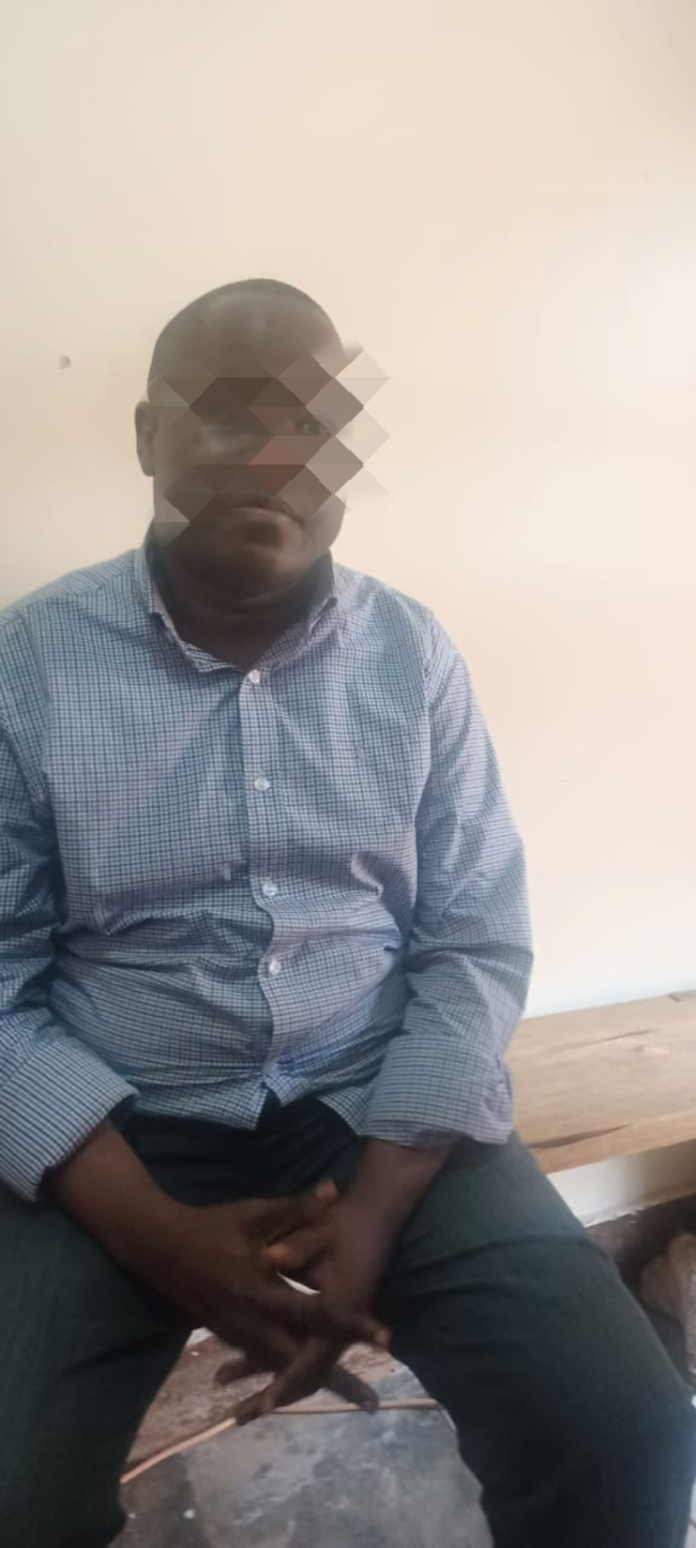
The Kanyanya Territorial Police is currently detaining Mr. John Kato Ssenfuma, a 40-year-old teacher at a school in Mityana, residing in Mukono District. Mr. Ssenfuma was apprehended on allegations of attempting to defile a 15-year-old girl, a student at the same school where he teaches.
ASP Luke Owoyesigyire, Deputy PRO Kampala Metropolitan Police said that the arrest follows a complaint lodged by Ms. Sheilah, 26 years old, a resident of Kyebando Erisa Zone in Kawempe Division, Kampala District, who is the guardian of the 15-year-old student.
“Ms. Sheilah reported that the family became aware of Mr. Ssemfuma’s communication with the juvenile through WhatsApp, prompting his invitation to their premises. On January 13, 2024, Mr. Ssemfuma traveled to the designated venue and was subsequently apprehended upon arrival. An examination by a police surgeon confirmed the well-being of the victim, as the intended activity did not transpire,” Owoyesigyire revealed.
The Kanyanya Police issued a statement, indicating that the case file has been submitted to the office of the Resident State Attorney. The police have received guidance on the next steps, and the file is pending resubmission for sanctioning. The suspect will face charges as determined by the prosecution.
This development adds a legal dimension to the incident, highlighting the gravity of the allegations against Mr. Ssenfuma. The case will now proceed through the legal system, with further details expected to be provided in due course.
Social media posters have put a lot of criticism on the arrest of Senfuma saying that there was no offense but the parents are to blame.
“As a student of law, I am seeing loopholes in the case and the suspect may win it. Going by your statement, there is connivance by parents and inducing the alleged crime. The fact that the suspect was arrested immediately he entered; you can’t determine his actions before he starts,” one Nesta Larry posted on X.
A one lawyer, Ferdinandius posted, “So attempted defilement suffices by mere possession of condoms and text messages which means that “flirting” is an offense. Secondly, defilement requires age: she must be below 18: the facts aren’t clear on that: further, for attempted defilement to occur, he must have done all that is necessary and is only prevented from doing the actual act. Otherwise possession of condoms and text messages is mere preparation. See how judges interpret attempted defilement.”
The detectives found two boxes of unused ‘Kiss’ condoms and a Shs1,000 in teacher John Senfuma’s pockets after he had sneaked into her female student’s home for sex before being caught by the girl’s parents.
Legislators on the Budget Committee have called for prioritization to construct Akii-Bua Stadium as one of the arenas to support the 2027 Africa Cup of Nations (AFCON) games. The demand was made as they received the report of the Committee on Education and Sports on the Budget Framework Paper for the sector ministry on Tuesday, 16 January 2024.
The Chairperson of the Committee on Education and Sports, Hon. John Ntamuhiira in his presentation said that the Ministry of Finance should commit additional funding of Shs100 billion to the National Council of Sports to facilitate construction of Akii-Bua Stadium in Lira and Buhinga Stadium in Kabarole.
“The committee was informed that after failure by the government to secure a grant from the Republic of China to construct the two regional stadia, there is a need for the government to secure funding for their construction,” Ntamuhiira said.
According to the PAMOJA bid where Uganda will co-host the Africa Cup of Nations tournament in 2027 with Kenya and Tanzania, Akii-Bua Stadium is listed as one of the stadiums to host the games.
FUFA Stadium in Hoima City is another stadium that will host 2027 AFCON games following a presidential directive for its construction for the tournament, to boost Namboole and Nakivubo Stadiums in Kampala.
Paul Omara (Indep., Otuke County) raised concern that the proposed Akii-Bua Stadium has not been given priority in the budget.
“I want us to have it equivocally decided here that in your proposed budget, Akii-Bua and Hoima will come as stadiums that will be built for AFCON 2027, not relegated as something and we shall insist on it,” Omara said.
Maxwell Akora (UPC, Maruzi County) raised concern about the cost for construction of the 15,000-seater Hoima Stadium estimated at Shs380 billion compared to the 30,000-seater Akii-Bua stadium estimated at Shs180 billion.
“Can you see the anomaly, the inflation? The North has always been marginalized and they used the name Akii-Bua because it sells, to win the PAMOJA bid and after that, they changed their mind. There is a big uproar in Lango, Acholi and West Nile about this decision of the government,” Akora said.
The Education Committee also recommends that a provision of Shs110 billion for the construction of 11 training grounds for the 2027 AFCON games be made.
Ntamuhiira also recommended additional funding of Shs114 billion to cater for commitment fees under the PAMOJA bid.
“This is necessary for Uganda’s fulfillment of requirements by Confederation of African Football (CAF), to avoid revocation of the AFCON bid,” he added.
The Minister of Science, Technology and Innovation, Dr. Monica Musenero, has written to the chairperson of the Coffee Investment Consortium Uganda (CICU), Nelson Tugume, asking him to account for Shs37b received from the government to promote the coffee value chain.
In a letter dated January 15, 2024, Dr Musenero said the directive is from President Museveni.
“His Excellency the President is requesting for an update on how far we have gone following the disbursement of the funds worth Shs37b towards the coffee value chain,” she said.
“In that regard, the Science, Technology, and Innovation Secretariat is in the process of putting together the technical financial report for the above-mentioned subject,” she added.
This comes after coffee farmers led by former New Vision CEO Robert Kabushenga accused Tugume of misappropriating $10m received from the government to promote exports of value-added coffee in foreign countries such as Serbia.
While Tugume through his lawyers has issued an intention to sue Kabushenga, accusing him of defamation, the latter has continued to use his social media handle to attack the former.
The former New Vision CEO welcomed the directive.
“Seriously, a step in the right direction that a written demand for accountability has issued. One more area where public civic action can work in this case is to demand that the bank where Coffee Investment Consortium received public funds and swindled it be quizzed for money laundering. You can start by naming them. Over to you guys, for now. Kind regards,” he posted on X.
Last year, President Museveni directed the Finance Ministry to set aside $10 million (Shs37 billion) as a coffee export fund to allow exporters access to the required capital to procure large quantities of coffee from farmers for value addition and export.
MPs had rejected this idea, saying the project was a non-starter.
The Chief of Defence Forces, Gen Wilson Mbasu Mbadi has held a bilateral meeting with representatives of the International Committee of the Red Cross (ICRC) at the Ministry of Defence and Veteran Affairs Offices, in Mbuya-Kampala focused on improving the working relationship between the UPDF and the international humanitarian body that has been operating in Uganda since 1971.
In his remarks, Mr. Christoph Sutter, the ICRC Head of Regional delegation pointed out that ICRC values its relationship with Uganda and was happy to note that Kampala hosts the regional office that covers Uganda, Rwanda and Burundi.
“We are happy to have made the choice of Kampala for the regional office because it allows us to interact closely with our ICRC colleagues in DRC, South Sudan, Sudan, Somalia and Ethiopia.” Sutter said.
He explained that the gist of their meeting with the UPDF Chief of Defence Forces was to seek advice on how best ICRC can improve its activities, especially in engaging with UPDF and the Government of Uganda to promote international humanitarian law that cherishes impartiality, neutrality and independence in the region and to systematically seek to have a bilateral and confidential dialogue with authorities in charge.
“We always value the advice of Uganda and the analysis that Uganda can share with us on the regional dynamics on what is happening in these countries, especially in Eastern DRC,” the head of the regional delegation added.
He further explained that ICRC values discretion rather than public positioning as a feature that is valued by Uganda authorities. He expressed his strong conviction that ICRC is carrying out much-required activities in DRC especially to restore links of children separated by armed conflicts with their parents as well as family-to-family reunion. The international body also carries out training activities and re-deployment preparation of the UPDF deployed in conflict areas.
Additionally, the ICRC also interacts with local organisations for example the water project with National Water and Sewerage Corporation (NWSC) in Kisoro which is a huge project offered by the international community.
He expressed appreciation for the good collaboration with UPDF especially CMI’s permission for them to access detainees, find minors lost in DRC, trace their families and reintegrate the children with them. He was very happy about his organisation’s collaboration with UPDF in managing refugees in Kisoro. He reminded the meeting that ICRC would soon finalise a Memorandum of Understanding with UPDF on their operations and interaction with their colleagues in the DRC. He was appreciative of how UPDF values the ICRC presence in Uganda.
In response to the issues raised by the ICRC regional head, Gen Wilson Mbasu Mbadi the Chief of Defence Forces expressed satisfaction that for the time ICRC has collaborated with UPDF in the observance of humanitarian law, they have always coordinated well on what they plan to do, and sought for the same information flow in Eastern DRC where operation Shujaa is ongoing. He explained that Congo is a sovereign country independent of Uganda.
“Congo is not our country. We are only there to fight a common enemy against whom the two countries met and agreed to a joint operation”, the CDF stated.
He was quick to add that ICRC can always reach out to the nearest UPDF leadership in Operation Shujaa for any notifications such as movement of their aircraft across areas of Joint operations and Vehicles passing through UPDF Unit deployments in DRC.
He was happy to note that since Operation Shujaa the situation in Eastern Congo is better. In Boga and Chabi in Ituri province, the locals had disbanded the UN camp and decided to return to their homes, re-opened schools, churches and gardens. He noted that children captured and forcefully recruited and radicalised were happy to return home. Those liberated are very appreciative of the UPDF for the new peace they now enjoy.
The CDF advised the ICRC to use the fastest way to notify UPDF of the activities they plan to carry out in the conflict zones and wished the UN could do the same. “Notify the commanders on ground who will seek clearance from the UPDF leadership where they find it challenging”, he emphasised.
The CDF wondered if ADF were mentally sick in their concept of radicalisation based on religion which makes it hard for dialogue as there is no one to talk to.
“The only option to stop such terrorist groups from continuing to kill people, especially children, is to destroy them since it is difficult to know what they are fighting for, whether their war can be justified or not,” he reiterated.
On the issue of South Africa and SADC troops in DRC the CDF stated that DRC was in a better position to explain this presence but was quick to note that more troops means the country is ready for an armed Conflict, people are disturbed more and Uganda shall have more refugees. He asked ICRC to prepare more facilities in Kisoro and Kabanda for obvious reasons.
Asked about arrests and detentions of errant UPDF in the DRC, the CDF explained that all soldiers in the UPDF are regulated by the UPDF Act and the MoU with DRC.
“Any soldier that deviates from the Standard Operating Procedures (SOPs) and engages in acts like rape, killing etc is handled by the law. Luckily, enough soldiers deployed on such missions are subjected to pre-deployment training where even IHL is part of the curriculum. The UPDF Act and MoU with the DRC regulate the conduct of officers and provide rules of engagement,” he said.
“Even with the ADF we differentiate between the misleaders and misled, especially children forcefully conscripted or persuaded on lies. We don’t kill those who surrender. ADF leader Njovu who was captured alive is in our prisons. However, we cannot avoid having a few errant individuals who we have handled and continue to handle with our law and vibrant justice system,” Mbadi said.
The CDF stated that International Humanitarian law was now in the school curriculum highlighting the dos and don’ts in war and conflict areas. He encouraged the ICRC to continue contact with the UPDF, which was already doing very well.
On the issue of Prisoners Of War captured in DRC, Gen Mbadi explained that those needed by DRC Government are handed over to the Government, and for those that Uganda is interested in, Uganda seeks permission from DRC to bring them to Uganda Prisons and justice system, depending on the interest of the joint operation and the same courtesy is reciprocated where DRC government has an interest in those we capture on the Ugandan side.
“We don’t work to impress we are in for peace and stability in our country and interventions that will bring peace and security in the region. We cannot be an enclave of peace in a sea of hostility”, Gen Mbadi explained.
The CDF thanked the ICRC for being a group that focuses on neutrality, impartiality and for realising that they are here in an independent state which has its interests.
“If you continue with the three principles ICRC will continue to be Uganda’s friend because Uganda says what it means and means what it says”, the CDF added.
He encouraged the ICRC to continue talking to UPDF through the UPDF spokesperson to be able to have the correct position of the force on any issue.
Pesapal, a leader in building payments and business tools for Africa, has released a new feature that allows customers to add a tip directly on its Point of Sale (POS) devices.
This new feature will be available on all Pesapal Sabi POS terminals and aims to make tipping easier and more convenient as cashless transactions continue to grow across East Africa.
Speaking on the announcement, Maureen Namoma, Country Manager, Pesapal Uganda Limited acknowledged the influence of a culture of appreciation within the service industry and highlighted how the introduction of the Pesapal Sabi POS machine would contribute to enhancing transparency and efficiency across the sector.
“We are dedicated to fostering a culture that recognizes and appreciates outstanding services provided by staff across various companies. This approach not only uplifts their motivation but also significantly contributes to their overall job satisfaction,” said Maureen Namoma.
By utilizing the Pesapal Sabi POS machine, customers are empowered to express generosity and appreciation seamlessly, recognizing exceptional service in a convenient and hassle-free manner. This initiative plays a pivotal role in promoting transparency within the service industry.
Mrs. Namoma also drew attention to the prevailing practice in advanced countries, where service staff often augments their incomes through tips, leading to an improved standard of living. Pesapal Uganda Limited aims to cultivate a spirit of generosity towards great service, nurturing it over time.
The Pesapal Sabi POS machine stands as a tangible manifestation of this commitment, providing a streamlined means for customers to recognize and reward exemplary service, fortifying the ethos of appreciation within the Ugandan service industry.
According to McKinsey Global Payment Map, Africa’s domestic e-payments market is expected to see revenues grow by approximately 20 per cent per year, reaching around $40 billion by 2025. With this new feature, customers can now effortlessly include a tip to their total bill amount right on the POS machine, eliminating the hustle of searching for cash tips.
“We are responding to the current dynamics of the payment landscape that has seen a surge in digital payments. Tipping is a great incentive for attendants to provide great service, but it has become more difficult in the post-covid era as most consumers migrate toward cashless transactions,” Pesapal Group CEO Agosta Liko said.
The introduction of this new feature makes the checkout process simple for both the merchant and their customers. When the customer is ready to pay, the POS will display the total amount due, along with options for adding a tip. Customers can choose from preset tip percentages or enter a custom amount.
The tip amount is then added to the total bill, and the transaction is complete. The tip will then be directly transferred to their mobile wallet.
In recent years, merchants across multiple industries, including hospitality, retail, service, entertainment, healthcare, and fuel stations, have embraced digital technology. Advances in payment acceptance have led to transformative results, and the digital tipping experience will be an extension of that push to digitize these industries.
Merchants who already have the terminal can easily activate the feature through a simple software update.
The Appointments Committee of Parliament has vetted Justice Simon Byabakama as the Chairman of the Electoral Commission.
Justice Byabakama was re-appointed by President Yoweri Museveni last week following the expiry of his seven-year term.
Justice Byabakama, who served at the court of appeal, was named on November 18, 2016, as the Chairman of the Electoral Commission of Uganda, replacing Engineer Badru Kiggundu, whose 14-year, two-term reign had ended.
Chaired by Speaker Anita Among, the committee also vetted other presidential nominees for the electoral commission.
The nominees include Hajjat Aisha Lubega, who was reappointed as the deputy chairperson; Other nominees include Hajjati Aisha Lubega, who was reappointed as the deputy chairperson; James Emorut; Stephen Tashobya, a commissioner; Anthony Okello, the former Kyoga County Member of Parliament; Dr. Ssimba Ssali Kayunga, a lecturer at Makerere University; and Caroline Bainamaryo.
However, there was confusion when two lists with different names seem to have been tabled
Pamela Etonu Okudi, the Acting Head of Administration at the Electoral Commission; Dr Ssimba Ssali Kayunga, a lecturer at Makerere University; and the former Nansana municipality legislator, Robert Kasule Sebunya weren’t vetted.
The team is scheduled to run in the 2026 elections. According to the 2026 election route, the nomination of candidates for the 2026 presidential campaigns is set to take place between October 2 and October 3, 2025.
Demarcation of the electoral areas will be done by July 2024, and a general update of the National Voters’ Register will be done by January 2025. Elections are set for January 12 to February 9, 2026.
Police have nabbed the third prime suspect implicated in the murder of Dr Jino Abiriga, the former District Health Officer for Masindi.
The late Abiriga was killed on January 7, 2024, and his body was dumped 50 metres from his house. The suspect is called Joshua Namureng, a resident of Tarobya village, Amanang Sub County, Bukwo.
This now brings the total number of suspects to three, including Betty Cherotic, a wife to the deceased, and Martin Kipsang, alias Chesebe, a carpenter from Roruk village in Bukwo District. The trio conspired and murdered the doctor.
The facts gathered indicate that the couple started staying together as husband and wife in 2019 and were blessed with a nine-month-old baby after the loss of their firstborn and the miscarriage of twins. It was established that the plot to murder the deceased began after Cherotic learnt about a second relationship her husband had with Susan Atuhura in Masindi. As a result, she hatched a plot to kill her; the first attempt was by setting fire to her house, which was put off by the neighbours.
On December 11, 2023, she hired Kipsang at a cost of Shs2.5 million to help her kill her co-wife, and on December 18, 2023, the suspect Kipsang travelled to Masindi after receiving a deposit of Shs500,000 to kill Atuhura Suzan. The murder plot failed after the intended victim failed to appear at the location that they expected her to be.
It was as a result of the two failed murder plots against her co-wife that she shifted and plotted to murder her husband, whom he accused of the death of their firstborn, the miscarriage of their twins, and for constantly insulting her as a bad performer sexually. She therefore, tasked Kipsang to find a second person to help her murder her husband. On December 26, 2023, Kipsang and Namureng came to accomplish their mission, which failed after the doctor woke up and closed the door upon hearing some movements outside that had been left open by his wife.
The two contracted killers returned to Bukwo and returned on January 6, 2024, after much pressure from Chesang for them to execute their mission. They travelled from Bukwo, reached Masindi, and booked at Valentine Guest House.
She alerted them and invited them to the house when her husband was asleep. The suspects were armed with two huge hoe sticks and a knife. They found gate opened, she led them to the bedroom, where her husband was sleeping. They hit the victim with a hand hoe stick on the head and dragged the body to the floor, where they slit his throat with a knife, killing him instantly.
The three suspects cleaned the dead body, dressed it in red T-shirt and blue trousers, carried it on a small ladder, and dumped it 50 metres away from his house. The two male suspects returned to Valentine Guest House, where they dumped the blood-stained clothes in a pit latrine and left.
Both Martin Kipsang and Joshua Namureng were tracked down, arrested in Bukwo, and transferred to Masindi for further court action. All three suspects admitted to having participated in the murder, and the scenes were reconstructed.
Several tangible exhibits were recovered, which included two hoe handles recovered from the Bulyasojo cell, shoes of the deceased, a black sports bag, clothes of the suspect, a bag retrieved from the latrine with a pillow cover, a mopping rug, a work ID for the deceased, and other blood-stained clothes. All samples were submitted to the Forensic Directorate for further analysis.