Stanbic Bank
Stanbic Bank
26.9 C
Kampala
Stanbic Bank
Stanbic Bank
Home Blog Page 315

Uganda scoops seven trophies in EAC games in Kigali

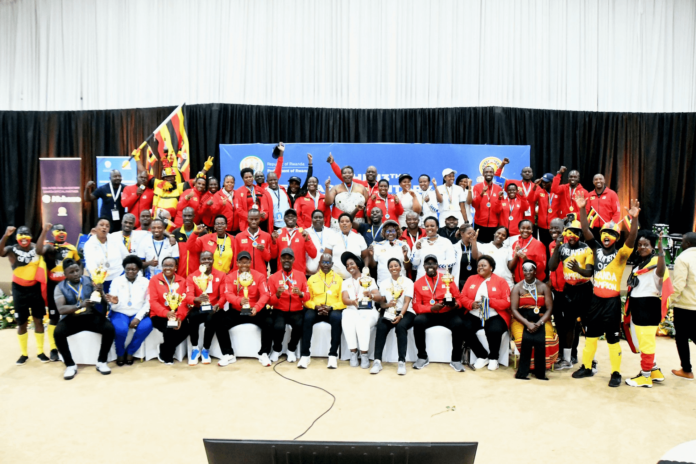
The two-week-long East African Community (EAC) Inter-Parliamentary Games came to a successful end in Kigali, Rwanda on Monday, 18 December 2023 where Uganda scooped seven trophies in all competitions.

The closing ceremony that took place at Kigali Conference and Exhibition Village was climaxed by the award of medals in recognition of the best East African parliaments and outstanding individual performances in the annual sports tournament that kicked off on 08 December 2023.

Uganda, the defending champions from last year, once again emerged as the overall winner of the 13th Edition of the EAC Games.

In athletics, Uganda was the overall best performer with a cumulative 36 medals, 23 of which were gold medals, eight silver, and five bronze. Tanzania and Kenya settled for the second and third positions respectively.

Captained by Hon. Moses Magogo (NRM, Budiope East County), Uganda’s Parliament football team was crowned champions of soccer after an unbeaten campaign with a maximum of 15 points, scoring a record 32 goals and conceding only two.

The golf team led by the Deputy Speaker, Thomas Tayebwa emerged the best ahead of other EAC parliaments with 270 and 268 points for men and women respectively.

The men’s basketball team, captained by Hon. Mwine Mpaka (NRM, Mbarara South Division) took the winner’s trophy, while the women’s team settled for the second position behind Tanzania.

The women’s volleyball team took the first slot, while the netball side took the second spot after Tanzania who emerged as the best.

Uganda also scooped several medals in tug of war and darts bringing home a total of seven trophies.

The Chairperson of the Joint Planning Committee of the EAC Games, Hon Francine Rutazana lauded the hosts, Rwanda for the conducive environment for the member states to participate in the games, adding that this year’s tournament has been a success with high levels of compliance to rules.

“The disciplinary committee received only three cases [of indiscipline], this is a surprising tournament because, in the last tournament, there were at least five cases of indiscipline reported every day. This means that there has been more compliance to the rules and there is a need to maintain the spirit,” Rutazana said.

In his remarks, Deputy Speaker, Tayebwa urged East African countries to use sports to build bridges for peace and cohesion.

“Let us make sports part of our lifestyle because our work is so stressful, we sit for long hours… Sports can help us build our countries, liberate families, and build friendships,” Tayebwa said.

He is also hopeful that the 14th edition of the EAC Games that will be hosted in Nairobi, Kenya will bring on board all the East African countries.

“We must make EAC work, we have no option. Our forefathers have done their part…In the next tournament, I hope all East African countries will participate,” Tayebwa said.

Hon. Tulia Ackson, the Speaker of Tanzania’s National Assembly and also the Chairperson of the Bureau of Speakers of the EAC challenged East African parliamentarians to enhance youth participation and address pushing African problems.

“As parliamentarians, you need to make youths part of the decision-making process in your countries. Let us also work together to ensure we have People with Disabilities in our parliaments and also advise our governments on issues of poverty, climate change and environmental degradation,” she said.

The Inter-Parliamentary Games tournament is an annual sporting event that brings together members and staff of various parliaments in the EAC.

The tournament is a key aspect of building relations between the East African Legislative Assembly (EALA) and EAC National Parliaments in line with Article 49 (2)(a) of the Treaty for the Establishment of the East African Community. EALA mooted the idea in 2001 to enhance interaction with the EAC Partner States and as a mode of sensitization and popularization of the integration process.

Stories Continues after ad

Gov’t overshoots November spending by Shs3.3 trillion

Government of Uganda spent a total of Shs3.378.46 trillion in November 2023 against a programmed expenditure of Shs 3.197.40 trillion, the latest report shows.

According to the Performance of the Economy Report for November 2023, the higher than programmed spending (by 5.7%) was registered under both recurrent and capital expenditure categories.

“Expenditure on the recurrent items of the budget was 6.1% higher than initially planned for the month. This followed a supplementary budget that was approved in Q2 for both wage and nonwage recurrent expenditure, implying an upward revision in the initial plans. Development spending was also higher than planned by 14.8% owing to a substantial increment in funds released in Q2 to compensate for the low release in Q1 for this category,” the report states.

Uganda government fiscal operations in November 2023 resulted in a deficit of Shs1.159.78 trillion which was higher than the Shs789.73 billion that had been anticipated, a new report shows.

According to the report, the higher deficit was due to a combination of lower than targeted domestic revenues and higher than programmed government expenditure for the month.

Domestic revenue collections amounted to Shs2.131.41 trillion in November 2023. This was lower than the Shs2.251.41 trillion target for the month mainly on account of shortfalls in tax revenue which more than offset the surplus in non-tax revenue.

Tax revenue collections were Shs1.938.48 trillion, against a target of UShs 2.065.93 trillion, resulting in a shortfall of Shs 127.45 billion.

According to the report, most of this shortfall was recorded under taxes on international trade transactions, while indirect domestic taxes also contributed to a smaller extent. A total of Shs797.92 billion was collected from international trade transactions. This was against a target of Shs910.59 billion, implying a shortfall of Shs112.67 billion.

“This was mainly attributed to lower than projected imports on which VAT and excise duty are levied,” the report states.

Indirect domestic tax collections totaled Shs 476.45 billion against a target of Shs531.09 billion as both Value Added Tax (VAT) and excise duty were below their respective targets for the month by Shs30.29 billion and Shs24.35 billion.

On the other hand, direct domestic taxes continued to perform well, registering a surplus of Shs41.91 billion (6.7% above target of Shs621.62 billion) in November 2023. Particularly, withholding tax on treasury instruments and rental income registered a surplus against their target.

Stories Continues after ad

Unlocking Mental Health Support: Stuart Kasule’s Urgent Plea for Suicide Prevention Models in Uganda

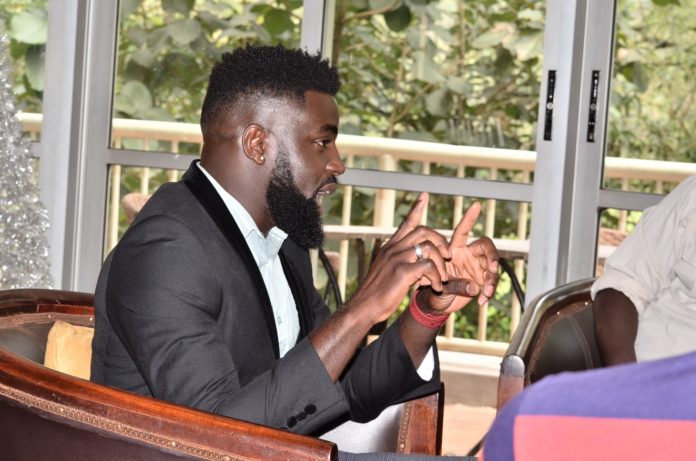
In a compelling effort to address mental health challenges, Stuart Raymond Kasule, a 29-year-old suicide prevention trainer and mental health advocate based in Australia, is urging Uganda’s Ministry of Health to prioritize the implementation of effective suicide intervention and prevention models. Speaking to the press in Kampala, Kasule emphasized the need for mental health awareness campaigns that tackle the issue without perpetuating stigma.

Uganda’s current suicide ranking, 17th globally with 18.67 per 100,000 deaths attributed to suicide, underscores the urgency of Kasule’s call. He highlighted the necessity of training healthcare professionals to identify and respond to mental health and suicide issues appropriately. Kasule urged the Ministry of Health to actively support safe talks and awareness initiatives in public spaces and schools, equipping people with the knowledge to combat stigma effectively.

Citing alarming statistics from the World Health Organization’s global suicide report, Kasule stressed that one person dies by suicide every 40 seconds, making it a leading cause of death, particularly among the youth. He recommended the adoption of suicide intervention and prevention models from Living Works Australia, endorsed by the World Health Organization, with an emphasis on adapting them to Uganda’s local and cultural context.

Dr. Hafsa Lukwata, head of the mental health division at the Ministry of Health, expressed support for the decriminalization of suicide, ensuring victims can access essential services without fear of legal consequences. Kasule’s appeal aligns with the broader call for practical mental health models at all levels, from households to the national stage, to effectively address the challenges faced by those dealing with mental health issues.

Andrew Kyamagero, a prominent male activist, emphasized the critical need for comprehensive data to understand the extent of mental health challenges in Uganda. He called for the integration of mental health discussions into community health strategies, ensuring health workers are equipped to address mental health and suicide issues effectively at all levels of the healthcare system. Kyamagero underscored the importance of scaling mental health initiatives to reach all segments of society.

Stories Continues after ad

Notorious city robber Sobi killed in Gomba

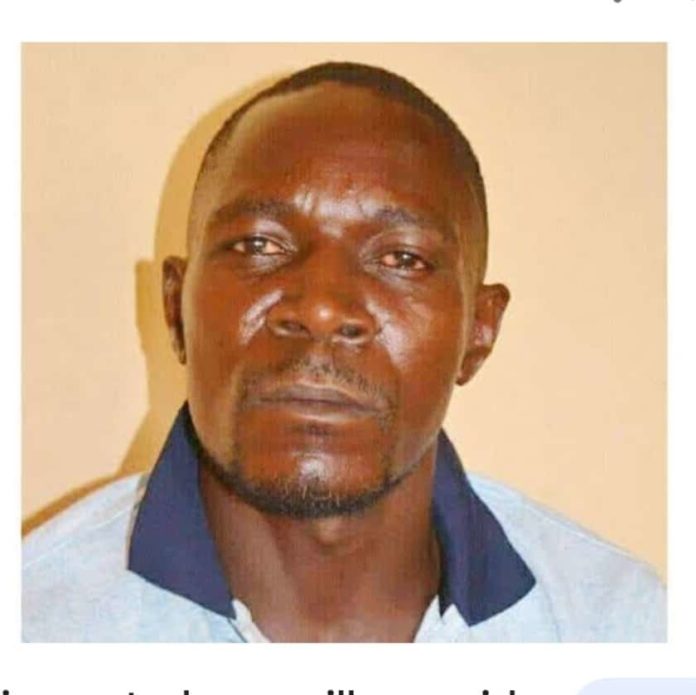
Notorious Kampala city robber Paddy Sserunjogi, alias Sobi has been killed in land wrangle.

According to security sources, Sobi was killed in Gomba district. Sobi came to prominence after he carried out deadly robberies in the city that left many injured and some dead.

Paddy Sserunjonji aka Sobi, first seized the media spotlight in 2017 as a self-confessed leader of Kifeesi, a criminal gang, which terrorized Kampala then and now, three years later, he commands a safe house on Lwamayuba island in Kalangala, a former prisoner there has said.

He was subsequently taken on as an informer by the then Director General of Internal Security Organisation Col. Kaka Bagyenda.

He was killed in Kibaale village, Kigumba parish, Maddu Sub-County.

BRIEF FACTS

It’s alleged that today the December 18, 2023 at around 12.30 pm at the land belonging to one Kalisa of the same area kibaale village, Kigumba parish Maddu Sub-County, Gomba district, a group of around 50 people armed with sticks,pangas, spears attacked another group of people who claimed the same land belongs to them and ended up killing one known as Sobi.

The land in question was bought by Kalisa at Shs100 million and paid only Shs20 million in 2007 but it’s claimed that he bought from a wrong person.

Another group of people who claimed to be the children and grandchildren of the now late Paul Kibi led by Deborah Nagadiya and Barton Kiweewa emerged with land titles claiming the same land belongs to them.

The issue went up to court and before it was sorted, the second group also brought thugs from Kisenyi Kampala to stay on land as they cleared the unwanted bushes.

Eagle Online understands last night,Kalisa’s people hired their people from other areas and they met at his son’s house as they planned to attack the other group.The same group is alleged to have killed more others though only one body has been recovered with  cut wounds on leg and neck.

Police at Gomba are said to have responded to the scene with the team that included; Oc stations Gomba and Maddu, D/OC CID, SOCCO and Crime Intelligence , other uniformed personnels from Gomba, Maddu and kigezi police.

Stories Continues after ad

Uganda waives visa requirements for DRC citizens

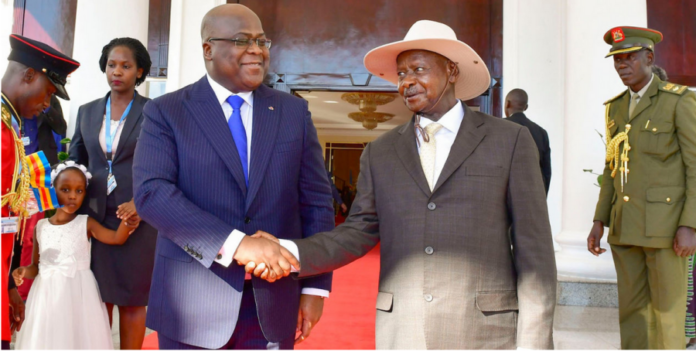
President Museveni and Félix Tshisekedi of DRC.

Uganda has scrapped-off visa requirements for citizens of the Democratic Republic of Congo (DRC), taking a significant step towards facilitating regional integration.

The decision was confirmed by Lt Gen Joseph Musanyufu, the Permanent Secretary Ministry of Internal Affairs. This follows discussions held during the 8th Joint Permanent Commission in Kinshasa, DR Congo, in October this year in which it was agreed to waive visa requirements in adherence to the EAC protocol on free movement.

Lt Gen Musanyufu clarified that this visa exemption will commence on January 1, 2024 and it is expected that the Democratic Republic of Congo will also grant Ugandan citizens visa-free entry in return.

After the Democratic Republic of Congo was officially admitted to the EAC, businessmen, and traders in Uganda are excited about the potential it brings.

Congo adds more than 90 million people to 177 million East Africans. In the region, Uganda is the second largest exporter to Congo, after Rwanda. Sources say though Rwanda is not known for manufacturing and growing much food stuffs, it is said the country would buy goods from other states in the region and then export to Congo.

East Africans can now freely go to Congo if the trade and movement barriers such as the $50 visa fee are removed. The DRC shares borders with all the East African countries except Kenya.

Uganda’s main exports to DRC include cement, palm oil, rice, sugar, refined petroleum, baked goods, cosmetics and iron materials.

Formal and informal traders along Uganda’s border points with DRC at Bunagana and Aliwala have complained about high tariffs and extortion by officials from the Uganda Revenue Authority (URA), which allows smuggling to thrive.

Uganda and the DRC have three road projects. The first road will run from Kasindi to Beni (80km) and the second will integrate the Beni-Butebo axis (54km). The third will stretch for 89 kilometres from the border town of Bunagana, through Rutshuru to Goma.

Stories Continues after ad

Stanbic Uganda Holdings, USADF offer entrepreneurs Shs1.5b in seed funding

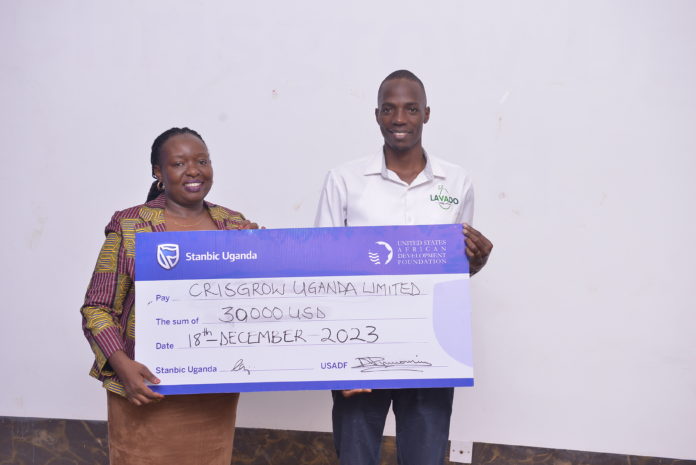
Twelve entrepreneurs have been awarded $400,000 in seed funding following a partnership between the United States African Development Foundation (USADF) and Stanbic Uganda Holdings Limited (SUHL).

The five-year $2 million partnership is to provide development grants to Micro, Small and Medium sized enterprises (MSMEs), Cooperatives, and producer groups in Uganda, to help them address gaps in their internal systems and capabilities to 100% meet investment requirements by commercial investors.

USADF is pooling resources with SUHL’s anchor subsidiary Stanbic Bank. Stanbic Business Incubator Limited (SBIL), also a subsidiary of SUHL, is the implementers of the project.

Emma Mugisha, the Executive Director and Head of Business Banking at Stanbic Bank said, “Through this partnership, we are motivated and excited by the prospect of supporting Small and Medium Enterprises(SMEs) in the process of investment readiness through provision of grant capital and technical assistance.”

“Our aim is to catalyse agricultural growth in Uganda by empowering SMEs, cooperatives and producer groups operating within the agricultural sector for this first cohort. We shall support other mainstream sectors including but not limited to Energy, Health, construction, and other professional services that are aligned to Uganda’s National Development Programs,” Mugisha added.

Each partner will be contributing $200,000 (Shs756 million) over each of the five years. This investment ceiling will be reviewed every year with possibilities of increasing it to $500,000 (Shs1.8 billion) per year by each party.

Timothy Nzioka, the Director of Program Operations for Africa at USADF said, “This accelerator program is basically meant to make these SMEs investor ready by providing the necessary tools that help them address the challenges.  We are looking at SMEs that are able to provide employment opportunities, those that are able to do value addition, amongst others.”

The program will fund MSMEs whose past investment proposals to financial institutions have been declined. The primary aim is to help the MSMEs address the gaps and challenges they face in qualifying for investments, link them to Stanbic Uganda and other financial institutions for potential follow-up on post grant commercial investment.

Each grant under the partnership will be valued up to $440,000 (Shs150 million) per MSME and will be implemented within a period of 12 to 24 months.

Officiating at the award ceremony, Robert Mukiza, the Director General of the Uganda Investment Authority (UIA) said, “As SMEs, look beyond the Ugandan market.  In Uganda, we are about 45 million people on average but we are part of the East African Community and Africa at large, which have bigger market bases.  You can end up becoming global leaders if you harness the huge market in Africa and beyond.”

Since its inception in 2018, Stanbic Incubator has contributed to the growth of over 3,800 SMEs around the country.

Tony Otoa, the Chief Executive at SBIL said, “As Stanbic Uganda Holdings, we believe that Uganda is our home, we drive its growth. Therefore, as the Incubator, we are proud to be part of Uganda’s economic growth through supporting SMEs who are the main revenue contributors to the country’s economy.”

Stories Continues after ad

Parliament gifts Kadaga, Sekandi with brand new cars

Speaker Among and her predecessors

Parliament has handed over vehicles to four former Speakers of Parliament and their deputies, the vehicles are worth Shs3 billion.

The four include Rebecca Kadaga, Edward Kiwanuka Sekandi, Francis Butagira, Al Hajji Moses Kigongo, and Prof. Edward Rugumayo.

While handing over the vehicles, Speaker Anita Among revealed that Parliament will be giving the former Speakers new cars every five years, and the cost of fuel, maintenance, and salaries of the drivers of the vehicles will be paid by Ugandan taxpayers.

“You will be required to bring your own driver, whom we will recruit as parliamentary staff; Parliament will pay that driver of yours. The car remains a property of the government of Uganda. The Parliament will maintain and fuel these cars. But Parliament will, every five years, give you a new car. Or in between, when the car gets a problem, you will bring it back, and we will give you a new car. You are property of the government of Uganda, so we are supposed to look after you,” she said.

She also noted that the recent enactment of the Parliamentary Pensions Act expanded the beneficiaries to include all Speakers who served Uganda since 1979, thus entitling President Museveni, Chairman of the National Resistance Council (NRC) from 1896–1996; Edward Rugumayo, Speaker and Chairman of the National Consultative Council  (NCC) from 1979–1980; Francis Butagira, 1980–1985; Al Haji Moses Kigongo, Vice Chairman of the NRC from 1986–1996; and Edward Ssekandi, 1998–2001, Deputy Speaker and Speaker of the 7th and 8th Parliament, to these cars every five years.

Francis Butagira, served as a Member of Parliament and as Speaker of the Ugandan Parliament (1980–1985). He has also served as Ambassador to Ethiopia, Kenya, Germany, Austria, and the Vatican. He also served as the Permanent Representative of Uganda to the United Nations.

Sekandi served as the Deputy Speaker of Parliament from 1996 to 2001. He was elected as Speaker in 2001, a position he held until 2011. He was replaced as Speaker by Rebecca Kadaga, the first female Speaker of Parliament in Uganda’s history.

Kadaga was elected as Deputy Speaker of Parliament in 2001, a position that she held until May 19, 2011, when she was elected Speaker of Parliament.

Other who served as Speaker but departed are James Wambogo Wapakhabulo, Francis Ayume, Jacob Oulanyah, Narendra Pat el and John Bowes

Stories Continues after ad

UPDF hands over Parliament and State House protection to Somalia security forces 

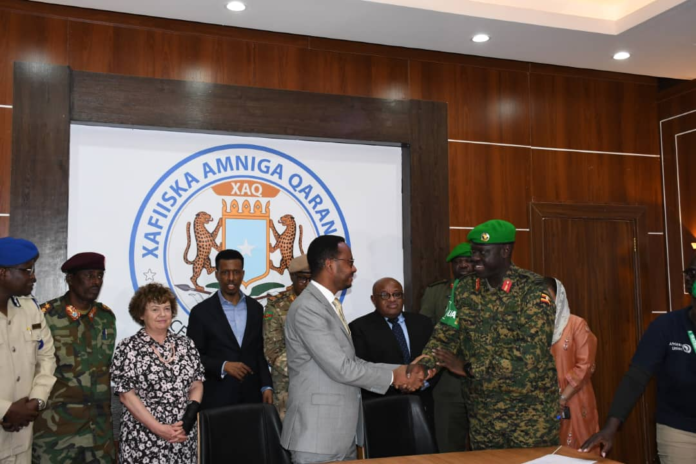
Officials witnessing the handover of vital installations.

Uganda Peoples’ Defence Forces (UPDF) serving under the African Union Transition Mission in Somalia (ATMIS) has handed over Villa Somalia (State House) and Parliament security responsibility to Somalia Security Forces.

The grand ceremony took place at Villa Somalia in the presence of United Nations representatives, Officials from the Federal Government of Somalia (FGS), and ATMIS.

The National Security Advisor to the President Hussein Sheikh Ali Maalim welcomed the dignitaries, noting that the handover of the two vital installations is a significant milestone not only to the Federal Government of Somalia but also to the people of Somalia.

He elaborated that the government is sending a big message to the public that it is capable of taking charge of Somali security and people are gaining confidence that they are being protected by their own government.

“This is a historical day. The takeover of these vital installations is a testimony by the government to the public who are now seeing the Somalia government as being serious in protecting their own. It is a milestone not because AMISOM is leaving but it shows the government is serious in protecting its citizens,” explained Hussein Maalim.

The Chief of Staff office of the President Abdihakim Mohamed Yusuf, in tandem, reminisced the sacrifice from the brothers and sisters of all Troop Contributing Countries (TCCs) who have helped in rebuilding Somalia.

 He acknowledged that Somalia is fighting the most sophisticated terror group in the world – Al Shabaab.

“The fact that we are taking over security responsibility of these vital installations, shows that we are defeating them. We are now fighting Al-Shabaab 500 to 800 kilometers away from Mogadishu. We shall forever remain grateful to your sacrifice. Our cooperation and partnership will not end here but this is the beginning. Thank you TCCs particularly Ugandan forces who have been here for the last 16 years. We share this bond and we will remain grateful,” remarked Abdihakim.

The Special Representative of the Chairperson of African Union Commission and Head of ATMIS Mohamed Al-Amine Seouf noted that the handover of State House and Parliament security was a significant step in the resumption of ATMIS draw down of phase two. He stated that the handover of the two state institutions was previously central to the ATMIS mandate which now becomes a critical move in the transition process.

He said: “We are now fulfilling the United Nations Security Council Resolution 2710 (2023) mandated to reduce troop presence of 3000 by December 2023, adding that this will contribute to the ongoing Somalia Security transition plan.”

Meanwhile, the Sector One commander Brig Peter Gaetano Omola, informed guests that sector one is greatly honoured and privileged to handover the most vital installations which they have fervently been protecting for the last 16 years.

 He enumerated UPDF successful operations right from March 2007, which include: dislodging Al-Shabaab in various locations to protecting vital installations, and providing VVIPs protection, among others.

“We have diligently and proudly offered VVIPs security protection to five Presidents, entire state house staff and to some extent the presidents of the Federal Member States,” said Brig Omola.

He reported that Somalia Security Forces (SSF) is effectively manning the FOBs that were handed over in phase one ATMIS draw down. This is a testimony for the continued confidence that the SSF will be in position to take over security responsibility of their country.

He concluded by thanking the Somali community for the hospitality and cooperation exhibited through the years that has enabled the forces to perform.

 Special appreciation went to FGS Head of State for the confidence, trust, cooperation and commitment and guidance extended to UPDF from time to time.

Stories Continues after ad

Gov’t seeks Shs79b to compensate 2,200 staff affected by merging of agencies

Public Service Minister, Muruli Mukasa.

The Ministry of Public Service is seeking for Shs79.3 billion in its 2024/25 budget, to compensate the 2,200 staff that is set to be laid off by the Government after the rationalization and merging of several public agencies.

The money is contained in the National Budget Framework Paper (BFP) for financial year 2024/2025 amounting to Shs52.7 trillion, which was tabled in Parliament last week. According to the Public Finance Management Act, the government should table the budget framework paper before Parliament by December 31, 2022, and by February 1, 2023, the House should have approved the budget framework paper.

Among the agencies to be merged include; Uganda National Roads Authority (UNRA), Uganda Coffee Development Authority (UCDA), National Information Technology Authority of Uganda (NITA-U), Cotton Development Authority (CDA), Dairy Development Authority and Uganda Meteorological Authority.

According to the rationalization of government agencies (Repeals and Amendments) Bill gazetted on October 6, 2023, the Uganda National Roads Authority Act, 2006 (Act 15 of 2006) will be amended to “mainstream the functions of UNRA established under the Act into the Ministry responsible for roads.”

The Government proposal to disband and merge departments and agencies is aimed at slashing annual public administration costs which as of 2021 amounted to Shs1.3 trillion.

According to Public Service Minister Muruuli Mukasa, the proliferation of agencies had created mandate overlaps and jurisdictional ambiguities among the agencies.

“Additionally, the high cost of administering the agencies has drained the national treasury at the expense of effective service delivery,” said Muruuli, adding, “This has overstretched the capacity of the Government to sustain them.” Dr Gerald Karyeija, the Dean of the School of Management, Uganda Management Institute, supports the merging of government agencies, saying it falls under the principle of new public management, which emphasizes a lean government.

However, he insists that the restructuring should also move to Cabinet and other government departments.

“I generally consider it as a good move to reconfigure the structures of the government. It (re-organisation) should move to other administrative areas such as the cabinet and local governments. The intention (of re-organisation) should not be to save money but improve service delivery.”

Karyeija said, “The reason for reforms in government and the agencies should not be to save money, but to get value for money. When you retreat from a state, it feels like it has been kidnapped, what the government is doing is to recapture the kidnapped state, increase its control on the direction of government service delivery,” Dr Karyeija added.

However, Mr Jude Kamuganga, a lawyer/advocate and policy associate at Envirosure Consulting, says whereas it is brainy to merge certain agencies, there is need to take caution on certain mergers, specifically those in the energy sector.

He explained that the foundation of the electricity sector reforms in Uganda was the Electricity Act, 1999, which unbundled the sector to form Uganda Electricity Distribution Company Ltd (UEDCL), Uganda Electricity Generation Company Limited (UEGL) and Uganda Electricity Transmission Limited (UETCL), under one regulator in Electricity Regulatory Authority (ERA). The vertical unbundling to separate generation, transmission and distribution segments allowed private actors under concessions, hence competition.

There has been efficiency, transparency and good governance in the sector, to a large extent, which could be undone by the unbundling of these agencies.

Stories Continues after ad

Africa’s gaming market is expected to cross the $1 billion mark in 2024

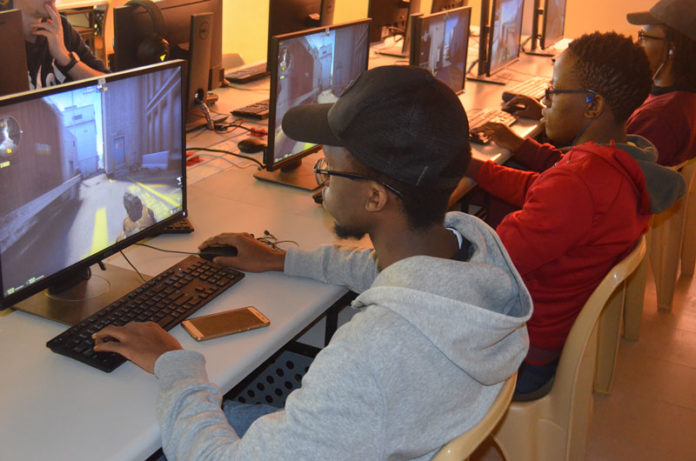
The gaming industry in sub-Saharan Africa is expected to see significant growth until 2024, when it will generate more than $1 billion in revenue, according to recent data. This information, compiled by Dutch research firm Newzoo for African startup Carry1st, indicates that the gaming market in Africa is thriving despite the economic challenges the region is facing.

What the gaming market in Africa has achieved

While economic growth in sub-Saharan Africa has slowed due to inflation, difficult financial conditions, and high debt levels, the gaming industry is generating significant revenues. World Bank data shows that economic growth in the region is expected to fall from 4.1% in 2021 to 3.6% in 2022 and is forecast to fall even further to 3.1% in 2023.

However, despite these economic challenges, the gaming market in Africa is showing growth. According to Newzoo, video game sales in the region will reach $862.8 million in 2022, an 8.7% increase from the previous year. This shows the significant interest in gaming in Africa and the potential for further growth in the sector.

Experts note that the gambling industry is also growing. Many casinos are not only targeting Canada, Europe, and other countries but are also canvassing users from Africa. According to www.topcadcasinos.net, many casinos are giving new customers free money to start playing, thus attracting them to play.

Despite the decline in video game activity worldwide due to COVID-19 and the rising cost of living, the African gaming market continues to grow. Konvoy, a company specializing in investments in the gaming industry, predicts significant growth for this market in Africa in the coming years. Internet and the proliferation of smartphones are pushing this growth, especially among the region’s young population. The GSMA organization predicts that 87% of the population in Sub-Saharan Africa will own a smartphone by 2030, up from 51% in 2022. This data shows the promise and potential of the African gaming market.

Smartphone usage has played a key role in the growth of gaming in Africa, as Newzoo’s data shows. Mobile games generated revenue of $778.6 million in 2022, accounting for about 90% of total game sales. The figures by region are as follows:

  • Leading the way in terms of annual gaming revenue is Nigeria, which generated $249 million.
  • It is followed by South Africa, which generated $236 million in revenue. Previously, South Africa was the largest market for video games in the entire continent.
  • Kenya ($46 million), Ethiopia ($42 million), and Ghana ($34 million) also saw significant revenue.
  • Especially impressive is the growth of mobile games in Ethiopia, which grew 13% year-on-year.
  • On the other hand, the gaming market in Uganda is growing at a slightly slower rate of just 6%.

Thus, the gaming industry is booming in Sub-Saharan Africa, presenting significant opportunities for investors and game developers. This constantly evolving and expanding market could be an important factor for economic development and diversity in the region.

Stories Continues after ad