Stanbic Bank
Stanbic Bank
19.6 C
Kampala
Stanbic Bank
Stanbic Bank
Home Blog Page 36

Salva Kiir orders house arrest for sacked VP Bol Mel

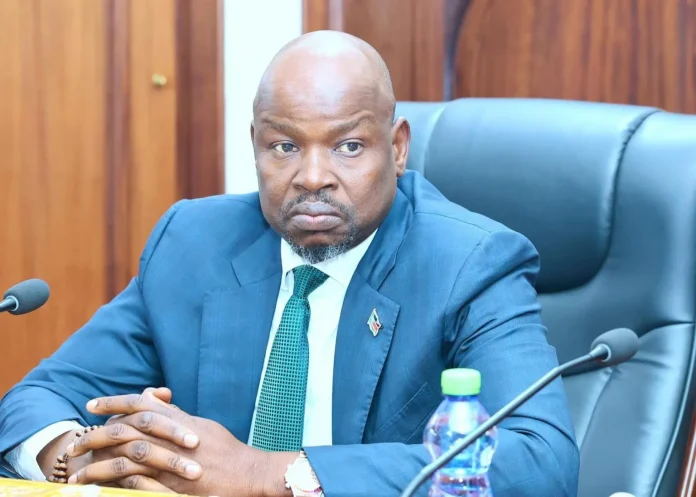
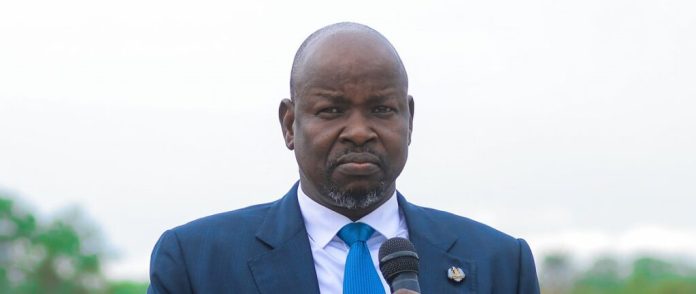
Sacked South Sudan Vice President Benjamin Bol Mel, who has been placed under house arrest.

South Sudan’s former Vice-President for Economic Cluster, Dr Benjamin Bol Mel, has been placed under house arrest in the capital, Juba, hours after he was dismissed from office by President Salva Kiir Mayardit.

Witnesses and aides told Radio Tamazuj on Thursday morning that security forces surrounded Bol Mel’s residence in the Jebel neighborhood on Wednesday evening after his dismissal. His relatives and staff were barred from visiting him until Thursday morning, according to one of his aides.

“Security forces from the army and military intelligence were stationed around the house, and relatives were told to stay away. The roads leading to his home were blocked,” the aide said.

Another associate alleged that security agents entered the house, seized documents, laptops, and an unspecified amount of money.

“They just went on a rampage and took things from the house,” the aide added.

The same source said that all of Bol Mel’s personal security guards had been withdrawn and replaced with new personnel, who have since placed him under house arrest.

Other sources close to the former vice-president denied reports that several senior officials linked to him, including Simon Akuei, former revenue authority boss, Eng. Deng Lual Wol, Undersecretary at the Ministry of Petroleum, and Dr Addis Ababa Othow, former Central Bank governor, had also been detained.

President Kiir on Wednesday night dismissed Bol Mel from his positions as Vice-President and First Deputy Chairperson of the ruling Sudan People’s Liberation Movement (SPLM).

The decree, broadcast on state television, also demoted Bol Mel from the rank of general to private in the National Security Service (NSS), effectively expelling him from the institution.

The move marked a sharp political break between Kiir and one of his closest allies, who had been widely viewed as a possible successor.

Bol Mel, 52, was appointed vice-president and head of the government’s economic cluster in February, replacing veteran politician Dr James Wani Igga. In May, he became First Deputy Chairperson of the SPLM, consolidating his influence within the ruling party. His rapid rise continued in September when Kiir promoted him to the rank of full general in the NSS — a move that intensified speculation about his growing political clout.

Kiir’s decree gave no reason for Bol Mel’s dismissal, which followed hours of speculation in Juba after his official security detail was withdrawn earlier on Wednesday.

Bol Mel has been under U.S. sanctions since 2017 for alleged corruption. A UN report in September accused companies linked to him of receiving $1.7 billion for road construction projects that were never completed.

He has not publicly responded to the allegations. When the U.S. Treasury imposed sanctions, it described Bol Mel as President Kiir’s “principal financial adviser,” a claim the president’s office denied.

Bol Mel’s removal also coincided with the dismissal of several top officials seen as close to him, including the Central Bank governor and the head of the National Revenue Authority.

The developments come amid reports of power struggles and growing tensions within South Sudan’s government, including disputes over the management of oil revenues between July 2024 and November 2025, during which millions of U.S. dollars are alleged to have disappeared from government accounts. South Sudan, which gained independence from Sudan in 2011, remains mired in economic hardship and political divisions more than a decade after a civil war that killed an estimated 400,000 people between 2013 and 2018.

Stories Continues after ad

EAC trade hits Shs146t in Q2 2025 as exports surge and deficit narrows

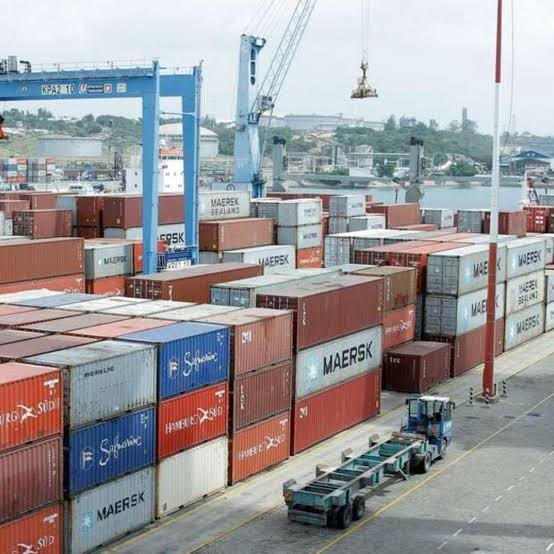
Containers at Mombasa sea port.

The East African Community (EAC) has posted a remarkable rise in international merchandise trade during the second quarter of 2025, thus demonstrating the region’s growing strength and competitiveness in global commerce.

According to the latest EAC Quarterly Statistics Bulletin, total trade climbed by 28.4 percent to $38.2 billion (about Shs146 trillion), up from $29.7 billion (about Shs113 trillion) in the same period last year. This impressive performance was mainly fueled by exports, which jumped 40.5 percent to $18.6 billion (about Shs71 trillion), reflecting increased global demand for EAC products.

Imports grew at a slower pace, rising 18.8 percent to $19.6 billion (about Shs75 trillion). Consequently, the region’s trade deficit narrowed sharply from $3.2 billion (about Shs12 trillion) to just $0.9 billion (about Shs3.4 trillion), marking a significant improvement in the balance of trade.

Trade with other African countries expanded by 42.9 percent to $9.3 billion (about Shs35 trillion), accounting for nearly a quarter of total trade. Intra-EAC trade alone grew by 24.5 percent to $4.6 billion (about Shs17.6 trillion), showing steady progress toward deeper regional integration.

The bloc also strengthened its commercial ties with COMESA and SADC, which contributed 9.9 percent and 15.2 percent, respectively, to the overall trade portfolio.

Exports were largely supported by demand from China, the United Arab Emirates, South Africa, Hong Kong, and Singapore, which together absorbed 62.8 percent of total exports—up from 40.1 percent a year ago. Malaysia and South Africa posted the highest quarter-on-quarter growth rates in EAC exports.

The top five export commodities; copper, precious stones and metals, coffee and tea, mineral fuels, and ores; accounted for nearly 80 percent of the region’s total exports, up from 77.2 percent in the same period last year, underscoring the EAC’s growing specialization in high-value goods.

China remained the region’s leading import partner, supplying goods worth $4.7 billion (about Shs18 trillion) or 24.2 percent of total imports. The UAE, India, South Africa, and Japan also featured prominently, jointly contributing over half of the region’s total import bill.

Key imports included petroleum products worth US$4.1 billion (about Shs15.6 trillion), machinery valued at $1.8 billion (about Shs6.8 trillion), vehicles worth $1.5 billion (about Shs5.9 trillion), and precious metals worth another $1.5 billion (about Shs5.9 trillion), alongside plastics and iron and steel products—reflecting ongoing investments in infrastructure and industrial development.

The Bulletin notes that short-term interest rates increased across most EAC Partner States during the quarter, except in Kenya, where the 91-day Treasury bill rate dropped by 70 basis points to 8.2 percent. Uganda and Burundi posted the highest Treasury bill rates at 11.2 and 8.6 percent, respectively.

Lending rates fell in Kenya and Tanzania but rose in Uganda by 140 basis points. Deposit rates remained stable or declined in most countries except Tanzania, which recorded a 70-basis-point increase. South Sudan registered the widest interest rate spread at 13.7 percent, while Tanzania maintained the narrowest at 6.5 percent.

“The EAC money supply (M3) grew by 19.1 percent year-on-year in Q2 2025, driven mainly by a 19.2 percent rise in credit to the private sector,” the Bulletin reveals, signaling continued monetary expansion across the region.

Overall, the EAC’s trade performance highlights a vibrant and resilient regional economy. The combination of rising exports, a narrowing trade deficit, and expanding intra-African trade reflects strong progress toward economic integration and sustainable growth across Partner States.

Stories Continues after ad

All roads to Speke Resort Munyonyo this Saturday for magical Christmas Tree Lighting ceremony

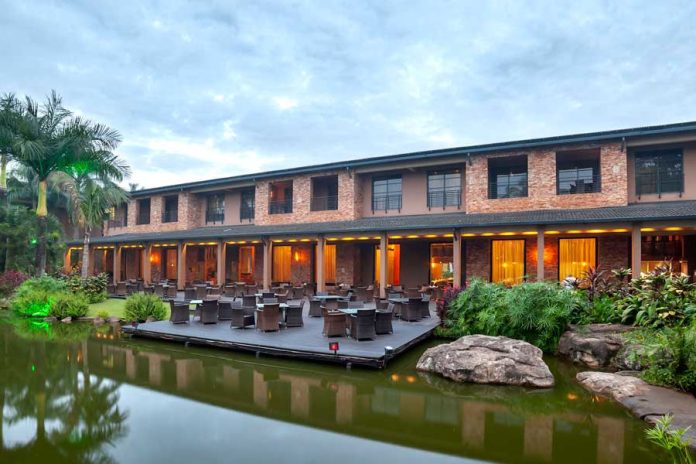
Speke Resort Munyonyo.

All roads lead to Speke Resort Munyonyo this Saturday, November 15, as the lakeside haven lights up the festive season with its much-anticipated Christmas Tree Lighting Ceremony. 

The elegant resort promises an evening of magic, warmth and celebration the perfect way to usher in the holiday spirit.

The event will feature a live choir, cocktails for resident guests, a chance to meet Santa, kids’ movie night, and Christmas tree decorating activities designed to bring families and friends together. 

Room packages start from $120 for a single room and $149 for a double, making it an ideal weekend escape filled with luxury and festive cheer.

“This Saturday, we invite everyone to join us for an evening that captures the true spirit of Christmas joy, love, and togetherness,” a resort representative said. 

He added,“It’s a beautiful time to relax, reflect, and celebrate with family as we light up the season.”

Beyond the glamour of the holiday celebration, Speke Resort Munyonyo continues to cement its position as Uganda’s leading hospitality and conference destination. Sitting gracefully on the shores of Lake Victoria, the resort offers over 300 luxurious rooms, state-of-the-art conference facilities and world-class amenities that blend leisure and business in perfect harmony.

Over the past year, the resort has hosted several high-profile events, reaffirming its status as a preferred venue for international conferences, summits, and corporate retreats. The Christmas Tree Lighting Ceremony now adds a festive touch to its growing reputation for excellence.

The event is expected to attract both leisure travelers and corporate guests eager to experience the joy and comfort that have become synonymous with Speke Resort Munyonyo. It also offers an opportunity for families to indulge in the warmth of the season while enjoying the scenic beauty and hospitality that define the resort.

As the countdown to Christmas begins, all eyes turn to Munyonyo where sparkling lights, festive melodies and joyful laughter will fill the air. For many, this ceremony marks the official start of the holiday season in Uganda and Speke Resort is set to make it unforgettable.

For reservations and inquiries, guests can contact +256 752 711 714 or email reservations@spekeresort.com

Stories Continues after ad

Tensions escalate in Juba as Bol Mel is sacked from VP post

South Sudan’s President Salva Kiir has dismissed Vice-President Dr Benjamin Bol Mel from his position and removed him as First Deputy Chairman of the Sudan People’s Liberation Movement (SPLM), hours after his security detail was withdrawn from his residence and office in the capital, Juba, amid rising political tensions.

In a presidential decree broadcast on state television late on Wednesday, President Kiir dismissed Mel without naming a replacement. The government has not provided a reason for the removal.

Earlier in the day, several of Mel’s close associates told Radio Tamazuj that security forces assigned to the vice-president had been withdrawn without prior notice. It remains unclear whether Dr Bol Mel is under any form of restriction, and officials have not commented publicly on the developments.

Sources have reported growing tensions within the government, including alleged power struggles and disputes over the management of oil revenues between July 2024 and November 2025, during which more than $700 million is alleged to have vanished from government accounts.

Dr Bol Mel, 52, was appointed vice-president and head of the government’s economic cluster in February, replacing veteran politician Dr James Wani Igga. In May, he was also named First Deputy Chairman of the SPLM, a move seen as strengthening his influence within the party.

President Kiir promoted him to the rank of full general in the National Security Service (NSS) in September — his third major elevation within a year. The promotion fuelled speculation that he was being groomed as a potential successor to Kiir, particularly after First Vice-President Riek Machar was charged with treason earlier this year.

Kiir also issued a decree this evening demoting Bol Mel from the rank of full general to private in the NSS and dismissing him from the service.

Other decrees

In separate decrees, Kiir removed Prof. Paul Logale Jumi as SPLM Secretary General, appointing Akol Paul Kordit as his replacement.

The president also dismissed Dr Addis Ababa Othow as Governor of the Bank of South Sudan, naming Yeni Samuel Costa as his successor. Simon Akuei Deng, Commissioner General of the South Sudan Revenue Authority (SSRA), was also removed, with William Anyuon Kuol appointed as the new head of the agency.

The dismissed officials are widely believed to have been appointed by President Kiir under the influence of Bol Mel.

Stories Continues after ad

BoU maintains Central Bank Rate at 9.75% for November as economy strengthens

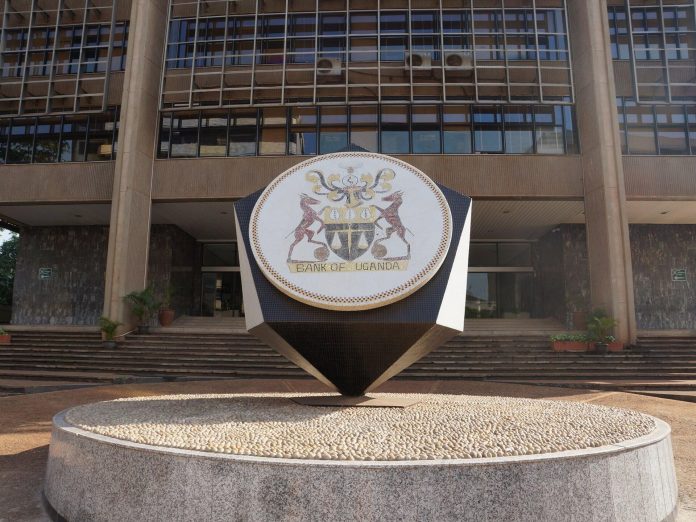
The Bank of Uganda (BoU) has maintained the Central Bank Rate (CBR) at 9.75 percent for November 2025, hence showing confidence in the country’s improving economic performance while exercising caution amid global uncertainties.

In a statement released on Wednesday, the Central Bank said the decision was based on the continued stability of inflation and sustained growth momentum across key sectors of the economy.

“This decision reflects confidence in the improving domestic economic environment while remaining cautious about global risks,” BoU noted.

According to the statement, core inflation averaged 3.9 percent over the past year, while overall inflation stood at 3.6 percent. The Bank attributed this subdued price growth to prudent monetary policy, a stronger shilling, and favorable energy prices.

“Low inflation was largely driven by prudent monetary policy, a stronger exchange rate, and favourable energy prices,” the statement added.

Economic activity has also remained robust, with growth reaching 6.3 percent in the financial year 2024/25, compared to 6.1 percent the previous year. BoU said the expansion was supported by higher agricultural and industrial output, as well as increased household consumption and investment.

“The domestic economy continues to strengthen, supported by coordinated monetary and fiscal policies that have anchored investor confidence and maintained macroeconomic stability,” the Central Bank observed.

Looking ahead, the Bank projects that core inflation will range between 4.0 and 4.5 percent in the 2025/26 financial year, slightly below the previous forecast of 4.5 to 4.8 percent.

Meanwhile, economic growth is expected to rise further to between 6.5 and 7.0 percent in FY2025/26, and to average about 8 percent in the medium term, supported by large-scale infrastructure projects, sustained private investment, and improved global financial conditions.

However, the Bank cautioned that potential risks remain. Factors such as heightened geopolitical tensions, poor weather affecting food production, and weaker capital inflows could exert upward pressure on inflation. On the other hand, strong oil-sector foreign exchange inflows and favorable weather conditions are expected to help moderate prices.

While optimistic about Uganda’s growth trajectory, BoU warned that rising trade barriers, tight global financial conditions and increased policy uncertainty could constrain the pace of expansion if not well managed.

The Central Bank reaffirmed its commitment to maintaining macroeconomic stability and ensuring inflation remains close to its medium-term target of 5 percent, a key objective in fostering sustainable growth.

“Bank of Uganda will continue to closely monitor developments and stands ready to take appropriate action to ensure that inflation remains around the 5 percent target while supporting economic growth,” the statement read.

Stories Continues after ad

UBOS to celebrate Africa Statistics Day with focus on innovation and inclusivity in data production

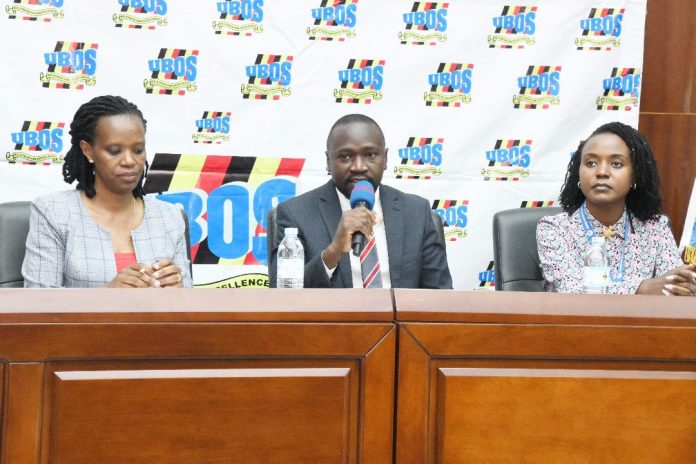
UBOS team

The Uganda Bureau of Statistics (UBOS) has announced plans to join other African National Statistical Offices in celebrating the Africa Statistics Day on November 18, 2025, with a series of events dedicated to promoting innovation and inclusivity in data production.

Speaking ahead of the celebrations, UBOS Executive Director and Chief Statistician Dr. Chris N. Mukiza said the Bureau remains committed to ensuring that statistics continue to play a central role in Uganda’s development agenda.

“This year’s theme, ‘Leveraging Innovations in Data and Statistics to Promote a Just, Peaceful, Inclusive, and Prosperous Society for Africans,’ echoes with UBOS’ commitment to harness modern data production technologies to generate quality statistics for evidence-based planning and decision-making,” Dr. Mukiza stated.

The Bureau has lined up a weeklong calendar of events designed to engage stakeholders, promote collaboration, and showcase the transformative role of data in society.

“We aim to highlight innovations, promote inclusivity, foster collaboration, and empower communities by emphasizing the importance of quality statistics in national development,” Dr. Mukiza noted.

Among the planned activities for the Africa Statistics Week are the dissemination of the National Governance, Peace and Security Survey report, media engagements, blood donation drives as part of the Bureau’s corporate social responsibility, the celebration of Geo-Information Systems (GIS) Day, and the Annual Gender Statistics Forum, among others.

The celebrations will also serve as a platform for government institutions, the private sector, academia, civil society, and the general public to discuss the role of data in achieving sustainable development goals.

“By bringing together data producers, users, and stakeholders, we hope to strengthen partnerships and enhance effective data utilization across all sectors,” Dr. Mukiza emphasized.

UBOS confirmed that the events will be streamed live on television and social media platforms, while physical attendance will be strictly by invitation.

Stories Continues after ad

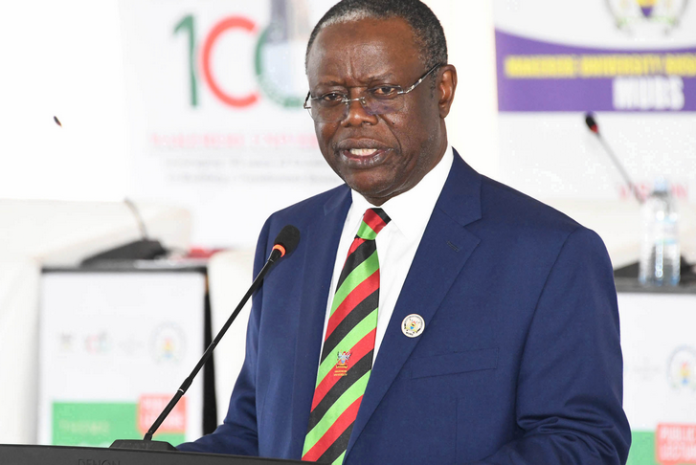
Relief as DPP withdraws abuse of office charges against former MUBS principal, Prof Waswa Balunywa

Prof. Waswa Balunywa.

The Director of Public Prosecutions (DPP), Jane Frances Abodo, has formally withdrawn all criminal proceedings against former Makerere University Business School (MUBS) Principal, Professor Waswa Balunywa, and his co-accused, Jacqueline Namaganda, who had been facing multiple counts of abuse of office and neglect of duty.

In a withdrawal form dated November 7, 2025, addressed to the Chief Magistrate of Nakawa Court, DPP Abodo stated, “The Director of Public Prosecutions has decided to discontinue proceedings against A1, Professor Waswa Balunywa, A2, Namaganda Jacqueline, charged with 3 counts of abuse of office c/s 10(1) of the Anti-Corruption Act Cap 166, 3 counts of neglect of duty c/s 101 of the Penal Code Act Cap 128.”

The case had been registered under DPP Case No. HQS-CO-004-2025 and Police Case No. CIDHQTRS E/070/2025.

The withdrawal relieves Professor Balunywa who was remanded to Luzira Prison by the Anti-Corruption Court over allegations of irregular recruitment and misuse of office.

He was accused of arbitrarily recruiting three administrative assistants, James Arike, Nimrod Kakayi, and Nathan Niwagira, between March 18 and 28, 2023, despite knowing that they did not meet the minimum academic qualifications. The prosecution alleged that his actions caused ineligible costs to the government.

In that case, he was jointly charged with Namaganda, the acting Human Resource Director at MUBS, who was accused of failing to verify the eligibility of the recruits. The second case file alleged that between 2020 and 2023, Balunywa abused his office by irregularly recruiting about 200 staff members, a role that is reserved for the institution’s appointments committee.

When the charges were first read, Balunywa pleaded not guilty. His lawyers argued that the offences were bailable and that he had voluntarily appeared before the court after learning about the case through media reports. The defence presented prominent individuals, including his brother and senior professionals, as sureties during the bail hearing.

The prosecution objected to the bail application, citing doubts about the sureties’ capacity to ensure his attendance in court. The magistrate later remanded Balunywa to Luzira Prison, pending a ruling on his bail application.

The two were among a group of 30 people accused of causing a total financial loss of about Shs53 billion to the government through various irregularities in public institutions.

The DPP’s decision effectively halts further prosecution unless new evidence emerges. No public explanation was provided for the withdrawal.

Stories Continues after ad

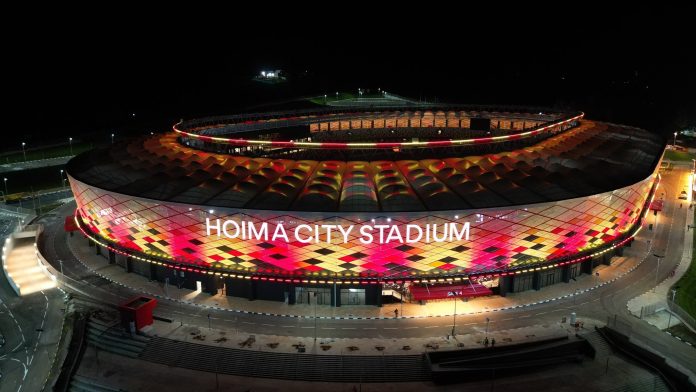
Hoima Stadium earns five-star status after independent site assessment

The state-of-the-art Hoima City Stadium has achieved a five-star rating following an independent site assessment conducted on November 5, 2025. The evaluation gave the stadium pitch a perfect score of 115 out of 115 points, reflecting outstanding standards across all measured parameters.

According to Minister of State for Sports Peter Ogwang, the assessment focused on three core performance categories: Playing Quality, Physical Quality, and Turf Quality, all of which met the highest international standards.

“Following an independent site assessment conducted on November 5, 2025, the Hoima City Stadium pitch achieved a 5-star rating, scoring a perfect 115 out of 115 points,” Minister Ogwang said.

“The evaluation focused on three main performance categories, Playing Quality, Physical Quality, and Turf Quality. I thank all the stakeholders, including the contractor SUMMA, for this landmark sports infrastructural milestone,”he added. 

The contractor, SUMMA Construction Company of Turkey, completed the project ahead of schedule, with works beginning in mid-2024 and finalized by October 2025. The completion marks a major step in Uganda’s sports infrastructure development, particularly as the country prepares to co-host the 2027 Africa Cup of Nations alongside Kenya and Tanzania.

The Hoima City Stadium is set to serve as one of Uganda’s premier venues for national, regional and international tournaments. It will not only host football matches but also support athletics, community events and youth development programs, contributing to sports excellence and economic growth in the western region.

As the stadium awaits its official commissioning by President Yoweri Kaguta Museveni, final certification by continental football bodies is expected to follow soon. Once commissioned, the stadium will officially transition into full operational status, positioning Hoima as a key sports hub.

Stories Continues after ad

25th EAC MSMEs Trade Fair underway in Nairobi

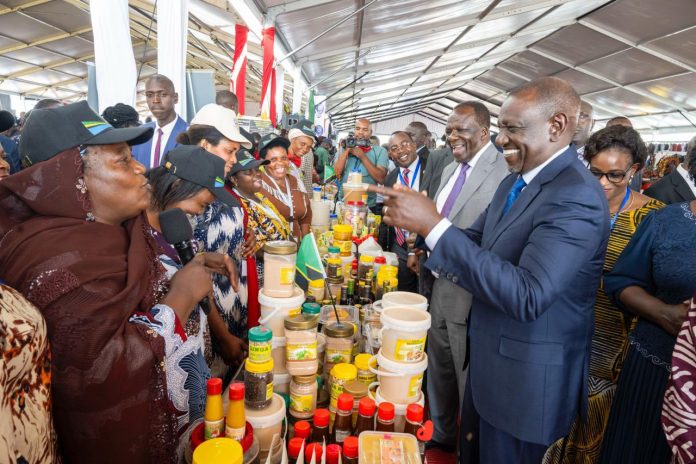
President William Ruto join exhibitors at the 25th East African Community Micro, Small and Medium Enterprises Trade Fair.

The 25th East African Community (EAC) Micro, Small and Medium Enterprises (MSMEs) Trade Fair is underway at Uhuru Gardens in Nairobi, attracting more than 2,000 exhibitors from across the region. 

The ten-day fair, which began on November 7, will run until November 16, 2025, under the theme “25 Years of EAC Integration: Advancing Innovation and Regional Value Chains for Competitive and Sustainable Development.”

The regional exhibition, formerly known as the EAC Jua Kali/Nguvu Kazi Fair — was officially opened yesterday by Kenya’s President William Ruto, who reaffirmed his government’s commitment to supporting small businesses and regional trade integration.

“We are supporting micro, small, and medium enterprises by expanding access to affordable credit and financing,” President Ruto said.

He added, “The Hustler Fund, for example, has disbursed over KSh80 billion to 26.7 million people since 2022, offering dignified credit to those previously excluded from formal finance.”

He explained that Kenya’s focus is on empowering entrepreneurs to innovate and create sustainable jobs across all sectors.

“Through the NYOTA programme, we are empowering 110,000 young entrepreneurs with training, mentorship, and start-up grants to drive innovation and job creation,” President Ruto added.

He further noted that Kenya is prioritizing value addition, agro-processing and industrial development, all aimed at enhancing regional trade competitiveness.

“We are also investing in value addition and agro-processing through County Aggregation and Industrial Parks in all 47 counties and developing special economic zones in Busia-Nasewa, Naivasha, Eldoret, Kirinyaga, and Dongo Kundu to attract investment and boost industrialisation,” he said.

“We recognise that the sector drives the economy, creates jobs, and builds wealth for our people,” President Ruto emphasized during his address at Uhuru Gardens.

The Kenyan leader also welcomed the International Trade Organisation’s decision to set up its regional hub in Nairobi, describing it as a vote of confidence in Kenya’s leadership in trade and investment.

The fair brings together exhibitors from all EAC Partner States, showcasing a wide range of innovations and locally made products including leather goods, agro-processing machinery, herbal products, textiles, wood crafts, metal fabrications, and handmade furniture.

According to the Ministry of East African Community Affairs (MEACA), the exhibition provides a crucial platform for entrepreneurs to connect, share technologies, and access new markets within the region.

“This Trade Fair provides MSMEs in the region with an opportunity to network, share innovations, and learn from each other through business-to-business linkages and symposia,” MEACA stated.

Officials said the ongoing event also encourages cultural exchange and unity among East African citizens through national day celebrations, music, dance, and art exhibitions.

Uganda has a strong delegation of entrepreneurs mobilized through the Ministry of Trade, Industry and Cooperatives (MTIC) and the Confederation of Micro, Small and Medium Enterprises of Uganda (CMSEO).

“We are working closely with local governments through district commercial officers to ensure MSMEs actively participate and benefit from this fair,” MEACA noted.

The ministry cited Uganda’s past success in previous EAC fairs, which helped local producers secure new export markets.

“Ugandan-made metallic hospital beds have seen high demand in Kenya following earlier trade fairs,” the ministry added, pointing to other products such as bark-cloth crafts, kanzus, and furniture that have gained popularity across the region.

So far, Kenya, DRC, and Somalia Days have been celebrated with colorful showcases, while Burundi Day and the EAC Product Quality Awards are scheduled later in the week. A special side event for Women in Business Champions will also take place before the fair closes on November 16.

Each evening, the venue transforms into a vibrant cultural bazaar, featuring traditional performances and exhibitions that celebrate the spirit of East African unity.

Stories Continues after ad

Victoria University: Victoria She Crocs promoted to NBL after dominant series win over Makerere Sparks

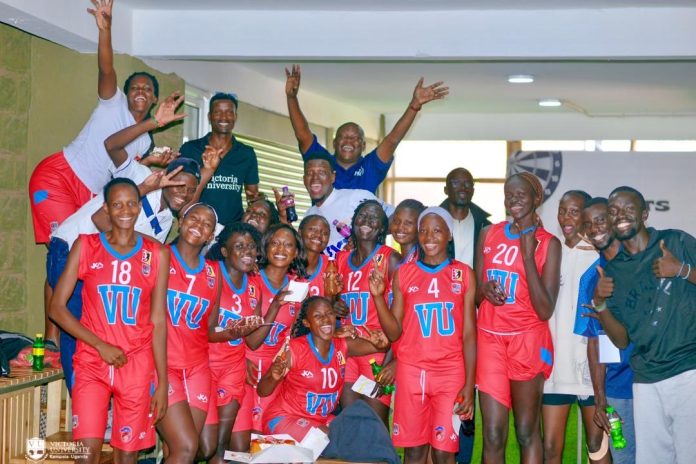
Victoria University’s women’s basketball team.

Victoria University’s women’s basketball team, the She Crocs, has earned promotion to the 2026 National Basketball League (NBL) Premier Division after defeating Makerere University Sparks 3-1 in a thrilling semifinal series.

In their debut season, the She Crocs showed exceptional resilience and teamwork to seal their place among Uganda’s basketball elite. After the series was tied 1-1, Game Three became a turning point as Victoria came out firing to claim a convincing 59-41 victory at Hams Stadium.

The She Crocs dominated early, outscoring Makerere 21-6 in the opening quarter. Despite the Sparks’ improved play in the later stages, they couldn’t recover from the early deficit. Falidah Kadondi and Viola Nakazibwe were instrumental in the win, each recording a double-double. Kadondi posted 19 points, 16 rebounds, five steals, and two blocks, while Nakazibwe contributed 12 points, 15 rebounds, and two steals. Notably, 42 of Victoria’s 59 points came from inside the paint, highlighting their physical dominance.

In Game Four, the Sparks came out determined to extend the series, racing to a 13-2 lead within the first five minutes. However, the She Crocs clawed back to close the first quarter at 21-14 and took control in the following quarters. By the third quarter, Victoria had edged ahead 40-38, capitalizing on Makerere’s missed opportunities.

A 9-0 run by Victoria to open the fourth quarter sealed the fate of the contest. From that moment, there was no way back for the Sparks as the She Crocs powered to a 62-45 victory to clinch the series. Thelma Toskin led the way with a game-high 19 points, while Bisoboka Naluyima added 13.

The triumph not only secured Victoria University’s promotion but also underscored the team’s remarkable growth and cohesion throughout the season. Their blend of strong defense, rebounding prowess, and efficient offense made them a formidable side in the playoffs.

With their promotion confirmed, the She Crocs now set their sights on the League Finals, where they will contest for the championship crown before gearing up for their first-ever campaign in the NBL Premier Division in 2026, a historic milestone for both the team and Victoria University’s sports program.

Stories Continues after ad