Stanbic Bank
Stanbic Bank
26.5 C
Kampala
Stanbic Bank
Stanbic Bank
Home Blog Page 37

Museveni orders appointment of Allan Kasujja as Uganda Media Centre ED

Mr Allan Kasujja.

President Yoweri Museveni has directed the immediate appointment of Allan Kasujja as Executive Director of the Uganda Media Centre, a move aimed at addressing management concerns at the government communication agency.

In a letter dated December 27, 2025, addressed to the Chief of Defence Forces, Gen Muhoozi Kainerugaba, the President said he had received communication highlighting internal developments at the Media Centre, noting that he had not previously been aware of the ongoing manoeuvres.

“I have received your letter dated November 27, 2025, regarding the Media Centre. I was not aware of the ongoing manoeuvres,” Museveni wrote.

The President said the appointment of Kasujja had earlier been discussed with Gen Muhoozi and that he had since issued firm instructions to formalise the decision.

“However, some weeks ago, we had discussed the idea of Allan Kasujja with you. I have already directed Dr Chris Baryomunsi to appoint Allan Kasujja as Executive Director of the Media Centre,” Museveni stated.

Museveni added that once Kasujja’s appointment is concluded, government will proceed to review the rest of the leadership structure at the Media Centre.

“We can, then, look at the others,” he said.

In the same directive, the President instructed the Minister of ICT and National Guidance, Chris Baryomunsi to immediately initiate the administrative procedures required to effect the appointment and to assess suitable candidates for the deputy position.

“By the copy of this letter, I direct Dr Chris Baryomunsi to initiate the procedures of appointing Allan Kasujja and, additionally, assessing the others as to who could be the Deputy,” Museveni directed.

The letter, copied to the Minister of ICT and National Guidance, reveals Museveni’s need to stabilise leadership at the Uganda Media Centre, an institution responsible for coordinating official communication and public information.

Kasujja is a seasoned journalist with extensive experience in regional and international media.

Stories Continues after ad

FUFA explains football academy licensing process, extends registration deadline

FUFA Football Development Director, Bashir Mutyaba.

The Federation of Uganda Football Associations (FUFA) has extended the football academy registration deadline, giving stakeholders additional time to comply with the licensing framework set out under the FUFA Technical Master Plan.

Speaking on the extension, FUFA Football Development Director Bashir Mutyaba said the move was aimed at ensuring all academies have sufficient opportunity to complete registration.

“It was important to extend the deadline to give an opportunity to all our stakeholders to register their academies,” he said.

Mutyaba noted that the extension was prompted by challenges encountered during the registration process, including technical system issues and gaps in information dissemination.

“We looked at the challenges we had, including technical issues with some systems, and the fact that information may not have reached some very important individuals,” he explained.

The extension has been well-received by academy stakeholders, many of whom have welcomed the extra time to regularise their operations.

“They have been happy because the extension has given room for most of them to actually register their academies,” Mutyaba said.

Academy registration forms a key part of FUFA’s elite football development strategy, outlined in the Technical Master Plan launched in 2023. Mutyaba stressed that properly structured and regulated academies are critical for nurturing football talent in Uganda.

“Registering academies gives us an opportunity to guide them, align them and ensure that we have the right human resource so players are developed in the right environment,” he said.

To improve efficiency and accessibility, FUFA has transitioned to an online registration system. The platform allows academies to submit documents remotely, centralises data, and reduces the need for physical visits to FUFA headquarters.

“The online system eases the registration process and helps stakeholders share documents from wherever they are,” Mutyaba noted.

In addition to registration, FUFA has established a seven-member experts panel tasked with inspecting academies and assessing compliance with required standards. Only academies that meet the set criteria will be recommended for licensing.

 “The experts panel will ensure that only academies that qualify and meet the necessary requirements are recommended,” he said.

The process is guided by the National Sports Act, which mandates the National Council of Sports to licence sports academies. FUFA has been authorised to approve and recommend football academies that meet these requirements for licensing.

Mutyaba also outlined FUFA’s four-tier academy structure. At the top is the National Football Academy, managed directly by FUFA, followed by Grade 2 academies run by Uganda Premier League clubs and private entities, Grade 3 regional academies and Schools of Excellence, and Grade 4 foundation academies at the community level.

“This grading system allows us to identify and nurture talent from the district level up to the National Academy,” he said.

To ensure smooth compliance, FUFA has appointed an Academy Licensing and Compliance Officer to provide guidance, handle queries, and support academies throughout the registration process.

“This will help academies navigate the requirements and ensure compliance with ease,” Mutyaba noted.

Stories Continues after ad

Speke Resort Munyonyo ready to receive Valentine lovers

Speke Resort Munyonyo.

Speke Resort Munyonyo is inviting couples to celebrate love on Valentine’s Day along the shores of Lake Victoria. The luxury resort has unveiled a range of romantic room packages designed to turn the special day into an unforgettable experience.

The Resort has promised more than just a stay as each package has been thoughtfully crafted to ensure every moment counts.

“Escape with your special someone and enjoy our Valentine’s Room Packages, designed to turn every moment into a lasting memory,” the resort said.

Couples seeking a simple yet intimate experience can opt for the Classic Room Package, which includes a one-night stay in a Deluxe Room, welcome drinks on arrival, and a buffet breakfast the following morning. The package is priced at $149 (about Shs 540,000), offering comfort and luxury in an affordable setting.

For those wishing to elevate the romance, the Romantic Escape Package is available at $235 (about Shs 850,000). It includes deluxe accommodation, welcome drinks, a romantic candlelit dinner, a hearty breakfast, and late checkout, allowing couples to enjoy a leisurely and memorable time together.

Couples looking for the ultimate indulgence can choose the Luxury Valentine’s Escape, priced at $300 (about Shs 1.08 million). The package provides a deluxe room stay, special in-room amenities, a romantic couple’s massage, breakfast in bed, a candlelit dinner, and late checkout, blending relaxation, luxury, and romance in one seamless experience.

Beyond the room packages, the resort’s expansive grounds create an unmatched Valentine’s atmosphere. Couples can stroll through lush gardens, unwind by the pool or take in breathtaking sunsets over Lake Victoria. Spa treatments and wellness experiences are available to help deepen relaxation and connection, while evening lighting and elegant dining areas transform the resort into a romantic sanctuary.

The resort promises that every detail from arrival to departure will speak the language of love, making it a perfect escape for couples seeking an unforgettable celebration.

Stories Continues after ad

ICT Ministry seeks Shs45b to digitize PDM services, launch smart city project

President Yoweri Museveni.

The Ministry of ICT and National Guidance has asked Parliament for an additional Shs45 billion to support the automation of the Parish Development Model (PDM) and the rollout of the Smart City project in a bid to digitize government services and clean up urban infrastructure.

The funding request was presented to the Budget Committee on Wednesday, January 28, 2026, by Iddi Isabirye, the Vice Chairperson of Parliament’s Committee on ICT, as the committee defended its report on the 2026/27 National Budget Framework Paper for the digital transformation programme.

“The Committee was informed that the Ministry has a plan to further automate and roll out electronic government services, including PDM and smart city solutions, and the requirement for this financial year 2026/27 is Shs45 billion,” Isabirye told the Budget Committee.

He added that although the ministry had already been allocated Shs34 billion, this still left a funding shortfall of Shs11 billion.

“However, only Shs34 billion has been allocated, leaving a funding gap of Shs11 billion,” Isabirye said.

However, today (Thursday, 29), while presenting the December 2025 Annual Audit Report to Speaker of Parliament, Anita Among, the Auditor General, Edward Akol revealed that only Shs9.340 billion has been recovered from the 18,105 beneficiaries in 709 Savings and Credit Cooperative Society (SACCOs), in 30 Local Governments (LG) of the 2022 lot, that started the voluntary recovery of the Parish Development Funds (PDM) out of the Shs3.258 Trillion released cumulatively by Government to 10,589 PDM SACCOs.

He highlighted a number of challenges affecting the implementation of the PDM including; funding of non-existing (ghost projects), delays in disbursement of funds to households, implementation of ineligible projects, diversion of funds and duplicate recipients.

The proposal, however, raised scrutiny from several legislators who questioned the justification for additional funding, particularly for the automation of the PDM, which already operates on a digital platform.

Paul Omara, the Otuke County MP, wondered why the government was seeking more funds for PDM automation when the WENDI system is already in place and functional.

“We have had this thing called WENDI, which is the PDM payment platform, and it has already been rolled out. I think it is functioning well,” Omara said.

“So, when you say that the committee recommends that Shs11 billion be provided to enable the government to automate PDM and facilitate smart city solutions and other e-government services, maybe you would expound more,” he added.

Achia Remigio, the MP for Pian County, also questioned the recurring requests for funding by the ICT ministry, citing similar allocations made in the current financial year.

“In the 2025/26 national budget, the Ministry of ICT budgeted for Shs16.1 billion to undertake continuous automation and rollout of government services, but only Shs6.51 billion was provided, creating a funding gap of Shs9.59 billion, which was later allocated,” Achia said.

He noted that for the 2026/27 financial year, the ministry is now seeking Shs45 billion, of which Shs34 billion has been provided, leaving another gap of Shs11 billion.

“So what has the other Shs16.1 billion done? They told us they needed that money and we gave it to them. Now the appetite has gone through the roof,” Achia said.

“Shs34 billion is twice what they requested in the current financial year, and they are still not satisfied. Please interrogate these ministries further and ask them what they did with what was given to them,” he added.

Moses Magogo, the MP for Budiope East, supported funding for the Smart City initiative but faulted the ICT Committee for combining it with the automation of the PDM.

“When you talk about these cables which are scattered all over, we need a centralised way of moving them. You find telecom companies and even government agencies all putting up optic fibre lines in the air, and then we talk about smart cities,” Magogo said.

Musa Noah, the Koboko North MP, sought to clarify the scope of the Smart City project, explaining that it goes beyond automation of government services.

“One of the components is cleaning up cities by removing the optic fibres that are all over the place and putting them into service ducts where every provider can run their fibres,” Noah explained.

He added that the project would also cover traffic management, waste management and other urban services, alongside broader automation of government systems.

“In automation of government services, we are talking about a whole range of services such as e-procurement, the PDM system, education management systems and other government e-platforms,” Noah said.

Stories Continues after ad

UNEB to release 2025 PLE results tomorrow

Education Minister, Janet Museveni.

The Uganda National Examinations Board (UNEB) is set to release the 2025 Primary Leaving Examination (PLE) results tomorrow, Friday, January 30, 2026, release the much-anticipated results of the 2025 Primary Leaving Examinations (PLE), officials have confirmed.

The results will be officially unveiled during a ceremony at State House, Nakasero, where the Minister of Education and Sports, Janet Kataha Museveni, is expected to preside over the release and present the national performance overview.

A total of 817,885 candidates sat for the 2025 PLE, according to UNEB statistics. The exams were conducted under the theme “Embracing security and holistic assessment of learners in a dynamic environment.”

The candidature represented an increase from 797,444 candidates in 2024, representing a 2.5 percent rise.

A total of 817,885 candidates are set to sit for the 2025 Primary Leaving Examinations (PLE) which officially commence today, Friday, October 31, with the briefing of candidates across the country.

Out of the total candidates, 389,529 (48%) are male, while 428,356 (52%) are female. The 522,039 candidates, representing 64 percent, wee funded under the Universal Primary Education (UPE) program, while 295,846 (36%) are privately sponsored. Among them were 61 inmates from Upper Prison School Luzira — 7 female and 54 male who also sat for the national exams.

3,644 candidates with special needs received the necessary assistance and special arrangements during the examination.

UNEB has indicated that the marking, verification and quality assurance processes were completed successfully and within the planned timelines, paving the way for the timely release of results. The board is also expected to provide a detailed breakdown of performance by grades, subjects and regions during the official announcement.

As in previous years, the release of PLE results will guide placement of candidates into Senior One, with schools and education authorities preparing for the next stage of the academic calendar.

UNEB is also expected to issue guidance on access to results, collection of statements and procedures for candidates seeking clarification on their grades.

Stories Continues after ad
Finance Trust Bank to operate as credit institution after BoU approval

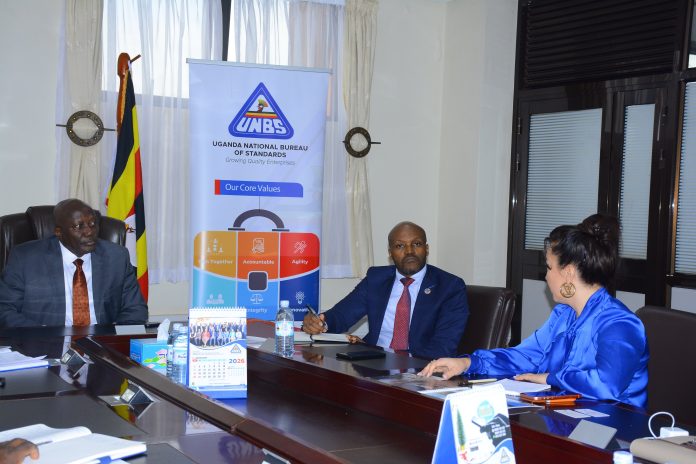
The Bank of Uganda has formally authorised Finance Trust Bank Limited to transition from a Tier I Commercial Bank license to a Tier II Credit Institution license, effective 1 April 2026 with an aim to reposition the institution to better serve its core clientele.

In a statement issued on Thursday, 29 January 2026, the Bank of Uganda Director of Communications and Public Relations, Kenneth Egesa, said the central bank had granted Finance Trust Bank a three month transition period running from 1 January to 31 March 2026 to enable a smooth adjustment.

“Finance Trust Bank Limited has been authorised to transition from a Tier I Commercial Bank License to a Tier II Credit Institution License effective 01 April 2026,” Egesa said.

He explained that during the transition period, the bank will phase out products and processes that require a Tier I commercial banking licence, a measure designed to protect customers and safeguard stability in the financial sector.

“The transition period is intended to ensure a smooth service transition for its customers and to mitigate any disruption to financial sector stability,” Egesa noted.

According to the central bank, the change in status follows a decision by Finance Trust Bank’s Board of Directors to undertake a strategic shift, refocusing the institution on its traditional market segments, particularly micro, small and medium enterprises, women-led businesses and individual borrowers.

“The change of status to a credit institution follows a decision by Finance Trust Bank’s Board of Directors to adopt a strategic shift and reposition the institution to serve its core customer base better,” Egesa said.

Bank of Uganda further assured the public that Finance Trust Bank remains financially sound, adding that the institution is adequately capitalised and fully meets the minimum capital requirements for a Tier II Credit Institution licence.

Finance Trust Bank, which has operated in Uganda’s banking sector for more than three decades, has built a strong footprint in inclusive finance, with a wide branch network and a focus on savings, loans and financial services tailored to underserved communities. As a credit institution, the bank will continue to offer deposit taking and lending services, albeit within the regulatory framework governing Tier II institutions.

The central bank used the opportunity to reaffirm its oversight role and commitment to financial stability.

“Bank of Uganda reassures the public that it remains committed to ensuring the stability of the financial system,” Egesa said.

Stories Continues after ad
Gov’t to spend less in 2026/27 financial year– Finance Ministry

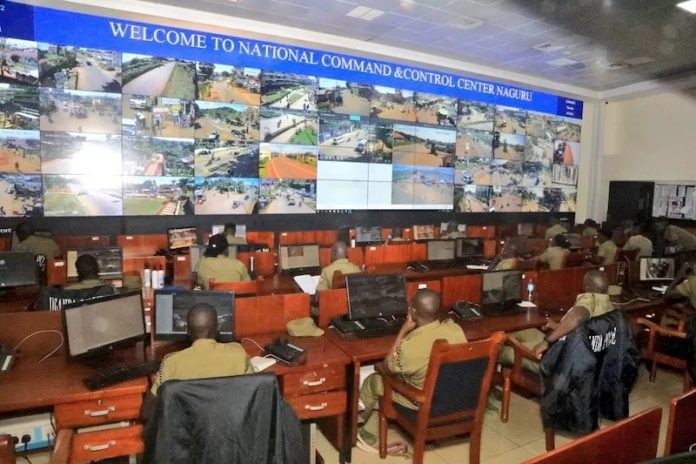
Finance Minister, Matia Kasaija, and his deputies.

The government, through the Ministry of Finance, Planning and Economic Development, has reduced the preliminary resource envelope for the 2026/27 financial year to Shs69.399 trillion, reflecting a tighter fiscal stance even as efforts intensify to boost domestic revenue and reduce reliance on borrowing.

According to the Finance Ministry’s Budget Framework Paper, the preliminary resource envelope for FY2026/27 stands at Shs69.399 trillion, down from Shs72.376 trillion in the current FY2025/26, reflecting a deliberate move to rein in expenditure amid constrained financing conditions.

Despite the reduced budget size, domestic revenue is projected to rise to Shs40.090 trillion in FY2026/27 from Shs36.806 trillion this financial year, signaling stronger emphasis on tax administration reforms, improved compliance and expansion of the revenue base.

“Much effort will be put on implementing strategies to boost domestic revenue mobilisation and increase foreign direct investments,” the ministry states.

Government discretionary spending, net of arrears, interest payments and domestic debt repayments, is projected at Shs 31.059 trillion, down from Shs 32.480 trillion in FY2025/26, underscoring continued pressure on available fiscal space.

Domestic borrowing is expected to decline sharply to Shs8.952 trillion from Shs 11.381 trillion in the current financial year, while domestic debt refinancing through roll-overs is projected at Shs9.68 trillion, slightly lower than the Shs10.028 trillion recorded in FY2025/26.

External financing is also set to reduce, with budget support from external sources projected to fall from Shs2.084 trillion in FY2025/26 to Shs330.97 billion in FY2026/27. Similarly, external project financing is expected to decline to Shs10.018 trillion from Shs11.327 trillion.

“The budget for FY2026/27 will be financed through a mix of domestic and external resources which include tax revenues, domestic and external loans, and grants,” the ministry notes.

The government says it will prioritise concessional borrowing to support social sector investments, while leveraging innovative financing mechanisms with competitive terms to fund infrastructure projects with high economic returns.

“We will also maintain sound fiscal and monetary policies to ensure macroeconomic stability and improved credit ratings,” the statement adds.

The proposed spending framework signals the government’s intent to balance fiscal discipline with growth supporting investments as Uganda navigates a challenging global and domestic economic environment.

Stories Continues after ad

Spanish Researchers discover cure for Pancreatic Cancer

Pancreas-cancer-illustration.

This week, good news hailing from the science community in Spain speaks of a cancer breakthrough after several trials managed to produce astounding results not only for the research team led by a one Doctor Mario Barbarcid, one of the most influential cancer reaschers in the world.

The news was well received by the science community and the larger community, but most especially patients battling pancreatic cancer. With the highest mortality rate, cancer of the pancreas remains one of the deadliest diseases, with a survival rate of just 13%.

One of the pioneering Cancer scientists, Dr Barbarcid and his team through a series of trials were able to eliminate aggressive pancreatic tumors in mice through a triple-drug therapy targeting the KRAS pathways as reported by the National Academy of Sciences (PNAS).

The preclinical results, although promising, have not yet been tested on humans, as early trials only consisted of mouse models. However, this targeted therapy against the most-common type of cancer comes equally as a breakthrough and a step closer to eliminating cancerous diseases and malignancies.

Stories Continues after ad

UPDF elects 10 new military representatives to Parliament

Brig Gen David Gonyi, Chief of Staff, Air Force one of the newly elected army representatives to parliament.

The Uganda Peoples’ Defence Forces has elected 10 new representatives to Parliament for the 2026–2031 term following a Defence Forces Council electoral college sitting held on Wednesday, 28 at the Land Forces headquarters in Bombo, Luweero District.

The election, conducted in line with the Constitution and the Parliamentary Elections Act, positions the UPDF among the country’s recognised special interest groups represented in Parliament, alongside women, workers, youth, and persons with disabilities.

According to the Acting Director of Defence Public Information, Colonel Chris Magezi, the exercise was overseen by the Electoral Commission under the leadership of its chairperson, Justice Simon Mugenyi Byabakama.

“The Electoral Commission presided over the election exercise, which was conducted by the Defence Forces Council electoral college at the Land Forces headquarters in Bombo,” Magezi said.

The EC returning officer, Ms Diana Kateeba Tumusiime, announced the winners after a lengthy and meticulous tallying process. 

The newly elected UPDF representatives to the 12th Parliament are Lt Gen Sam Okiding, Lt Gen Sam Kavuma, Lt Gen James Mugira, Maj Gen Henry Masiko, Maj Gen James Kinalwa, Maj Gen Joseph Ssemwanga, Brig Gen David Gonyi, Col Night Ikiriza, Col Sylvia Meeme, and Col Christine Nekesa.

Three of the elected legislators are women, reflecting the military’s statutory commitment to gender representation within Parliament.

The Defence Forces Council meeting was chaired by the President and Commander in Chief of the UPDF, General Yoweri Kaguta Museveni, and was attended by members of the UPDF High Command, senior serving and retired officers, service chiefs, commanders of training institutions, brigade and battalion commanders, as well as representatives of the reserve forces.

“The Defence Forces Council brings together senior leadership of the UPDF to carry out key constitutional mandates, including the election of military representatives to Parliament,” Magezi noted.

Earlier in the day, President Museveni also commissioned three officer cadets who recently completed their military training abroad. The newly commissioned officers are Second Lieutenant Bazalaki Tikula, who trained in Sri Lanka, and Second Lieutenants Moses Ekoi and Piloya Vivian, both of whom trained in Tanzania.

Congratulating the successful candidates, the UPDF said it was confident they would effectively represent the interests of the armed forces in the 12th Parliament.

“The UPDF congratulates the newly elected and re-elected representatives and wishes them success in their tour of duty,” Magezi said.

Stories Continues after ad

Gaming Board, FUFA collaborate to protect football integrity

National Lotteries and Gaming Regulatory Board, led by the Chief Executive Officer, Denis Mudene engaging the Federation of Uganda Football Associations to strengthen cooperation on football integrity and responsible gaming.

The National Lotteries and Gaming Regulatory Board have held a high-level stakeholder engagement with the Federation of Uganda Football Associations (FUFA) to strengthen cooperation on football integrity and responsible gaming.

The engagement, led by Gaming Board Chief Executive Officer Denis Mudene, comes amid growing interaction between football and sports betting as the game continues to attract more public interest.

“Today’s engagement focuses on aligning regulatory oversight and football governance to protect the integrity of the game and promote responsible gaming,” Mudene said.

The Gaming Board and FUFA discussed joint approaches to emerging risks, including underage betting, illegal betting activities, and potential threats to sports integrity. The two bodies agreed to pursue prevention, close collaboration, and coordinated action to address these challenges.

The meeting shows shared commitment by the Gaming Board and FUFA to safeguard Ugandan football while promoting responsible gaming across the country.

Last week, on January 22, the National Lotteries and Gaming Regulatory Board delegation, comprising William F. Blick, Farida Bahemuka, and Estta Akul, alongside Chief Executive Officer Denis Mudene, engaged global regulators and industry leaders at ICE Barcelona 2026.

ICE Barcelona 2026 is a major international exhibition for the regulated gambling and gaming sector, bringing together operators, suppliers, technology providers, and regulators from multiple jurisdictions. The event showcases both land-based and online gaming products, platforms, and services, while promoting dialogue on sustainable gaming through regulatory compliance, player protection, technology and innovation.

Gaming Board delegation meeting in Barcelona.

Key discussions at the event focused on digital gaming policies and regulatory reforms, regulatory best practices, institutional credibility and global trends, with a strong emphasis on integrity, transparency and accountability in gaming operations. The overarching goal was to set and share clear regulatory standards, promote consistent enforcement and encourage a competitive, fair, safe and responsible gaming industry.

As part of the engagement, the Board participated in a high-level roundtable discussion on gaming in Africa, bringing together operators, industry leaders and regulators from across the continent. The discussions reinforced the view that pan-African collaboration is essential for effective regulation of the gaming sector.

Through these engagements, the Board aims to strengthen its oversight mandate and foster a more coordinated, effective and responsible gaming regulatory environment in Uganda and beyond its jurisdiction.

Separately, the Gaming Board’s Regulatory Compliance team also held a stakeholder engagement with the Uganda Revenue Authority’s Gaming Unit to align on the National Central Electronic Monitoring System. The collaboration is intended to strengthen transparency, system integration, accurate revenue collection, and regulatory compliance across the gaming industry.

Stories Continues after ad