Stanbic Bank
Stanbic Bank
25.1 C
Kampala
Stanbic Bank
Stanbic Bank
Home Blog Page 364

Court remands Bukedea DPC, RDC for negligence to prevent crime

Bukedea RDC Wilberforce Tukei and DPC SP Charles Okoto in the dock. B

Bukedea Resident District Commissioner Wilberforce Tukei and District Police Commander SP Charles Okoto have been remanded to Bukedea prison.

Appearing before Bukedea Magistrate Court the two have been charged with neglect to prevent a felony and subsequently remanded until July 26, 2023.

The two were arrested in relation to unlawful and criminal acts that took place during the LCV chairperson by-election which was won by the National Resistance Movement (NRM) candidate Mary Akol.

Several leaders including Bukedea Town Councilor Dan Malinga have since been nabbed and charged before the Bukedea Magistrate Court for allegedly mobilizing and leading the goons who assaulted and robbed Omagor Steven. Sources say that the duo were acting on orders of a powerful politician from the district.

Last month, President Yoweri Museveni directed Brig. Henry Isoke, State House Anti-Corruption Unit boss to investigate criminality and vote rigging that were reported in the by-election.

According to the statement which was released by Museveni, he says he got some disturbing information about the recent by-election in Bukedea for LCV Chairperson where ‘our NRM’ candidate won with 91% and the voter turn-put was 87%.

He said he was happy for his party to perform so well. However, he got information from government officials on the night of the nomination, who invaded the house of Mr. Omagor, confiscated his academic papers and stole Shs163 million from him so that he would be able to be nominated the following morning.

“The EC had extended the nomination days when he appealed. Even then when he went for nomination, he was attacked at the gate of the Electoral Commission. Come election morning, Government officials invaded the polling stations and voted on behalf of the voters. This sounds like a film.” he said.

“I want to be sure that Uganda does not go back to the crime of 1980, with the Muwanga elections that forced us to go to the bush. Therefore, investigate these claims and if any criminality was committed, take action and report back. I am, therefore, directing you to handle the criminals,” he said.

Stories Continues after ad

FDC holds consultative meeting amid unresolved Besigye, Amuriat wrangles

FDC party leader, Eng. Amuriat and founding leader Kizza Besigye.

The Forum for Democratic Change (FDC) stalwarts led by the party President Patrick Amuriat are holding a National Consultative Meeting ahead to the intra party elections. The elections were scheduled to take place from July 17 to 20.

According to Boniface Toterebuka Bamwenda, the elections have since been postponed to a later date. The FDC members were supposed to elect Village/ Cell branches, parish/ ward chiefs across the country.

The meeting is among others aimed at redirecting members to the core values of the party. Ssemujju Nganda, the party spokesperson said the party leadership has the duty to cause the return of every party member. Many of them are stranded where they are. We must also make everybody who is a leader and member of FDC comfortable.

“Internal elections help political parties renew themselves. Unfortunately, our internal elections, which provide an opportunity to present ourselves, again, are being selfishly bungled,” he said at Nsambya Sharing Hall.

The meeting comes at a time when there are intra party fights. The fights originate from led by Budadiri West MP Nandala Mafabi and the party president Patrick Amuriat. The two are accused of declining to remit 50% of all the income to districts to implement the resolutions and popularizing the party.

There is also an ongoing battle between the Amuriat and the former party President Dr Kizza Besigye. Besigye accuses Amuriat of getting money from unknown source to finance his campaigns. In tandem, Amuriat asked Besigye to table the source of the $400,000 he gave to Nandala Mafabi ahead of the 2021 elections.

According to a source, the party launched an investigation and the report is ready to be tabled about the accession between the two FDC stalwarts.

“At the time of tabling the report, Besigye had flown out to the US so we were waiting for him to return. The Report was scheduled to be released to FDC top leadership earlier this month,” the sources said.

The source claimed that Besigye is trying to push Amuriat out of the race for the party presidential elections for the lord mayor Ssalongo Eria Lukwago. The worst thing about Besigye is that he wants to dominate the party even when he is out of the leadership positions. He claims to be one of the founding members of FDC but is not. If he is, let him table proof. He is none of them.” he said.

The source said you can’t see Amuriat and Besigye in one place because the two are on different agenda.

Stories Continues after ad

Uganda to hike fuel prices, other imports after Kenya’s new tax measures

Uganda is bracing for high fuel prices after Kenya amended its petroleum act, increasing tax on its petroleum products.

Kenya’s Finance Act 2023, which came into force on July 1, raised the Value Added Tax (VAT) on petroleum products from eight percent to 16 percent. This has increased a litre of petrol in Kenya from around Shs4, 700 to Shs5, 000; diesel from Shs4,300 to Shs4,600 and kerosene from Shs4,100 to around Shs4,400. 

And now Uganda, which gets most imports coming through Kenya’s Mombasa Port, is bracing for an increase in prices of the petroleum products as well as other products.

Currently, a litre of petrol in Uganda costs around Shs5,000.

Mr Thadeus Musoke, the chairman of Kampala City Traders Association, said the cost of transporting goods from Kenya is going to go higher due to the tax changes in Kenya.

“All this is going to increase the cost of doing business in Uganda. Even the prices of some products made in Kenya are going to increase,” he said.

For instance, he said, transporting a 20ft container from Mombasa to Kampala costs around $3,000 (about Shs11 million), which is expected to increase.

Mr Stephen Asiimwe, the chairman of the Uganda Private Sector Foundation, admitted that they are nervous about Kenya’s tax changes.

“It is going to impact the cost of logistics and transport as well as those industries that use diesel to power machines,” he said.

The new law that was signed last month also introduces a 1.5% housing levy for all employees and raises the top personal income tax rate to 35%.

The tax increases are expected to raise an extra 200 billion shillings ($1.42 billion) a year

Kenya President William Ruto, while justifying the increase of taxes, said the government has to reduce borrowing. The government is struggling with a public debt of 9.4 trillion shillings ($67 billion) and is classified by the World Bank as being at high risk of debt distress.

Stories Continues after ad

Political Economy of Plastic in East Africa

Mr Christopher Burke

By Christopher Burke

Invented less than a century ago, plastic is today ubiquitous in all walks of life around the world. Plastic is inexpensive, durable and convenient. According to a 2018 United Nations Environment Programme (UNEP) report, East Africa consumed approximately 300,000 tons of plastic annually. The report projected plastic consumption across the region would triple by 2030.  The vast majority of this plastic is imported in the form of construction, pipes, containers and packaging including bags and bottles. Only around two percent enters as virgin plastic and is used to manufacture plastic goods here.

All of the imported plastic, however utilized, is eventually discarded after use and less than 10 percent of this waste plastic is collected and recycled. The rest ends up in landfills or in the environment. The discarded plastic bottles are linked to health issues including cancer, respiratory problems and hormonal disorders and are directly responsible for economic losses in tourism, fishing and farming livelihoods. Plastic waste litters streets, contaminates soils, clogs drains and waterways, and harms marine and other wildlife. The political economy of plastic across East Africa is complex and multifaceted, reflecting the competing interests of governments, corporations and civil society groups.

As issues relating to the environment and climate change gain salience around the world, civil society groups and activists in East Africa are working to raise awareness and push for stronger and more comprehensive regulations and policies to address plastic pollution. They advocate for more sustainable waste management systems including recycling and the promotion of alternative products and materials that are less harmful to the environment.

Rwanda introduced a ban on plastic bags as early as 2008. Kenya followed in 2017 and Tanzania in 2018. Uganda introduced bans on multiple occasions since 2007, but implementation has been erratic. Rwandan representatives publicly campaigned for region-wide plastic bag bans from 2011 and in 2016 the East African Legislative Assembly (EALA) passed the East African Community (EAC) Polythene Materials Control Bill to provide a framework that prohibits the manufacture, sale, importation and use of polythene materials. Although the Bill is still awaiting assent by the EAC Heads of State, governments across East Africa responded with the implementation of stronger regulations and policies to reduce plastic waste.

While East African governments were among the first in the world to ban the use and sale of plastic bags, legislation on waste management in general and plastic recycling in particular remains extremely limited across the region. The bans have had some success in reducing plastic waste, but enforcement of these regulations has not been comprehensive. Countries such as Kenya and Rwanda that are heavily reliant on tourism are more sensitive to external criticisms associated with the environment. The impact of corruption and the influence of corporate interests also varies across the region. A joint regional approach to plastic waste management is essential in view of the porous borders throughout the region.

The plastic industry in East Africa is a significant source of tax revenue and the production and sale of plastic products provide employment and income for some communities. There are fears that banning or restricting the use of plastics could lead to job losses and economic challenges. Balancing the need to protect the environment and the tourism with the need for sustainable economic development is a key challenge in the politics of plastic in East Africa. Multinational corporations play an important role in the politics of plastic in East Africa. Several produce and sell large quantities of single-use plastics. They argue plastic products are essential for economic development and job creation.

The beverage industry ranks among the largest producers of plastic bottles and has been severely criticized for contributing to plastic pollution. However, one example of an effective private sector response is the recent launch of the Producer Responsibility Organisation (PRO) comprising Coca-Cola Beverages Uganda (CCBU), Mukwano Industries, Harris International, Uganda Breweries Limited and PepsiCo/Crown Beverages (CBL) that have joined forces to establish a non-profit initiative to strengthen the management of plastic waste. 

Coca-Cola has established collection centres for used bottles in Kenya, Tanzania, Uganda and Rwanda. These initiatives have proved very effective in recovering up to 80 percent of the used plastic bottles. The bottles are sorted, cleaned and ground into plastic flakes. The challenge however is identifying markets for these flakes. Currently, there is a glut and companies are struggling to identify new markets for the plastic flakes.

The equipment and technology required to add value to scrap plastic and utilize the plastic flakes is expensive. A subsidiary of the Kenyan based Megh Group, T3 (EPZ) is currently awaiting the delivery and installation of a PET bottle-to-bottle recycling line for its new plant in Athi River. This will be the first of its kind in the region. The company wants to strengthen its contribution to the development of a circular economy that will have a positive impact on both the environment and the country. T3 says the recycled PET resin to be produced by the new equipment will produce high quality plastics that meet global standards.

The politics of plastic in East Africa are complex and multifaceted, reflecting the competing interests of governments, corporations and civil society groups. It is critical to balance economic development objectives with the protection of the environment and natural resources. While there are no easy solutions, there are steps that can be taken if all stakeholders sit down together and agree on a way forward.

Christopher Burke is the managing director of WMC Africa, a communications and advisory agency in Kampala, Uganda.

He has over 25 years’ experience working on communications, development, the environment, resilience, governance and peace-building in Asia and Africa.  

Stories Continues after ad

UPDF Airforce soldier shoots two colleagues’ dead, injures one

Cpl Avugo Lomuro of Mountain Division Signal Department attached to the Air Force Evacuation Component has shot and killed two colleagues and injured the other in Fort Portal, Kabarole District.

Uganda Peoples Defence Force (UPDF) Deputy Spokesperson, Akiiki Deo made the announcement and regretted the incident by the soldier. However, the names of the dead and the injured have been withheld as per the UPDF policy of reporting to the family.

“We received an incident report about one Cpl Avugo Lomuro of Mountain Division Signal Department attached to the Air Force Evacuation Component who shot and killed two colleagues and injured the other. (Name withheld as per UPDF policy of reporting to the family),” Akiiki stated.

He added that the hunt is on for the soldier who is on the run and will definitely be brought to book to answer for his crimes.

The UPDF condemned the act of the soldier in whatever circumstances. Adding, “We have a clear and well-defined mechanism of handling internal grievances and the killer soldier should have followed them. May their souls rest in peace.”

Stories Continues after ad

COSASE moves to meet URA board over discrepancies in recruitment and promotions

The Committee on Commissions, Statutory Authorities and State Enterprises (COSASE) is set to meet the board of the Uganda Revenue Authority (URA) to address concerns on discrepancies in recruitment and promotions.

The committee will also interface with Finance Minister who supervises the authority over the same. The matter came to light during an interaction between URA officials and the committee which is investigating the irregularities highlighted in the Auditor General’s Report for 2021/2022.

In a meeting, members of COSASE raised concerns of corruption, irregular recruitments, promotions and cases of nepotism within the authority.

The committee had previously requested URA under the leadership of Commissioner General John Musinguzi to provide a comprehensive list of the over 3,000 staff members employed by the authority. It was during the review of this list that MPs raised their queries.

The chairperson of the committee, Joel Ssenyonyi, said that out of the eight highest ranking officials, six were found to hail from the same single region, which directly contradicts the principles of equal opportunity.

While acknowledging that the officers may be well educated and highly trained, Ssenyonyi stressed the importance of regional balance and diversity within the management structure.

He stated that it was unjustifiable to have a concentration of personnel from one particular region or sub-region.

“It’s a concern that members are raising; we must make sure we keep the country together. Things like these become problematic and this one is not even a partisan issue, it is not a representation of Uganda,” he said.

Musinguzi, in response to the committee’s concerns, urged the members to delve deeper into the issues at hand.

He suggested that some of the raised concerns could be attributed to staff who were resistant to the changes and restructuring implemented within the organisation.

“Let us interrogate these issues deeply and we will understand either the historical perspective or the importance of how we end up here. Just going by the names and where they come from does not paint a national character, but there are reasons to this, they can be explained,” he added.

Stories Continues after ad

More than 200 SMEs in Western Uganda get skilling in financial literacy

Participants at the training

A total of 300 SMEs in Masaka, Mbarara, and Fort Portal have received training in entrepreneurship and financial literacy from Absa Bank Uganda, in partnership with Enterprise Uganda.

The training programme saw the SMEs taken through modules such as business leadership and corporate governance, people and human resource management, customer care, and financial management.

They were also taken through an exploration of various sources of capital, case studies from other SMEs, and personal exercises.

While speaking during the training conducted at the Mountains of the Moon Hotel in Fort Portal, Albert Byaruhanga – Absa Bank Uganda’s Business Banking Director said, “Small businesses all over the country face similar hindrances to their growth and expansion; however, those outside the capital city usually receive less attention with regard to the critical business development support that they need to thrive. This is why we are so pleased to have had this opportunity to engage and train with this important community of entrepreneurs. We have an obligation to ensure that we try to get out of Kampala to impact even more SMEs nationwide. This is one of the ways that Absa Uganda is delivering on its promise to empower Africa one story, one person at a time.”

The training in Fort Portal is part of a more extensive partnership between Absa and Enterprise Uganda that began on April 3, 2023 to empower over 1,000 MSMEs from Jinja; Mbale; Lira; Gulu; Arua; Hoima; Fort Portal; Mbarara; Masaka, and Kampala to boost their entrepreneurship awareness, business growth, and sustainability.

So far, over 530 SMEs have benefitted from the training under the program, with the Arua, Hoima, and Kampala training sessions coming in the following months.

Ronald Mukasa, the Director of Research and Learning at Enterprise Uganda, said, “The specific modules we chose – such as those regarding people management and governance – are relevant to most of the SMEs upcountry, most of which are run informally. We believe that with more training programs like this, we shall help bolster the country’s SME sector towards the nation’s positive socioeconomic transformation.”

Absa’s Byaruhanga added, “Many cities outside Kampala are experiencing a high growth rate. Fort Portal, for example, is a major tourism hub primed to grow as part of the Rwenzori region’s projected oil sector development. As a result, the SMEs in this region need to be prepared to tap into and benefit from those opportunities. Our ability to facilitate this growth speaks to our commitment to empowering Africa’s tomorrow together, one story at a time.”

Stories Continues after ad

Court vacation to commence tomorrow

All Courts at the level of High court and Magistrates’ court country wide will tomorrow, July 15 commence their annual vacation and end on August 15.

The Judiciary’s Public Relations Officer (PRO) Jameson Karemani , revealed in a statement that during this period, courts handling criminal cases will continue operating normally because the court vacation does not apply to this category of cases.

He added that for the Supreme Court and Court of Appeal, their vacation will run from August 1 to August 31.

“The Court Vacation is mandatory and is provided for by The Judicature (court Vacation) Rules S.I. 13-20. This is a period between the end of one term of court and the beginning of another, specifically for civil cases,” Karemani stated.

Karemani added that this period is utilized by Judicial Officers to write judgments and rulings and that in case of urgent matters, the parties have to move court by applying for a certificate of urgency to allow the matter to be heard during the vacation period.

He further revealed that this time, all court registries will remain open for filing of cases and attending to other registry-related services.

Stories Continues after ad

Letshego Uganda and Turaco join forces to provide Letsgo Health insurance for letshego customers

Letshego Uganda CEO Giles Aijukwe addresses press during the launch of their dynamic and resourceful LetsGo Insure solution in partnership with Turaco Insurance- earlier today at their head offices in Kololo.

Kampala, Uganda, July 14, 2023 – Letshego Uganda, a subsidiary of Letshego Holdings Limited (“Letshego Group”), has partnered with Africa’s leading insurtech Turaco Insurance Brokers Ltd T/A Turaco, to provide affordable health insurance coverage to Letshego customers. The partnership aims to help mitigate health-related financial risks in line with Letshego’s mission of empowering the underbanked and driving financial inclusion in Africa.

With a mere 1% of Ugandans currently covered by formal insurance plans, the partnership will help bridge that gap. Letshego customers will now be able to safeguard themselves and their families against unforeseen medical-related expenses. The insurance product named LetsGo Insure”will be an embedded and enhancement for clients of Letshego’s Deduction at Source solution. With Turaco’s proprietary technology, qualifying Letshego customers will be automatically signed up for LetsGo Insure as part of their loan onboarding process.

LetsGo Insure has two benefits: Hospital Cash and Last Expense Cover (Funeral benefit). Hospital Cash acts as income replacement upon hospitalisation with a Shs1,000,000 benefit, while the Life Cover (funeral) benefit provides financial relief of Shs2,000,000 to the insured’s family in the unfortunate event of their passing, easing the burden of funeral expenses during a difficult time.

Giles Germany, CEO, Letshego Uganda, highlighted the significance of this partnership in empowering Letshego customers to protect themselves. He stated, “At Letshego, we are committed to providing our customers with holistic financial solutions that meet their evolving needs. Partnering with Turaco to offer LetsGo Insure is a significant step towards achieving our goal of “Improving Lives” in Uganda. We believe that this collaboration will not only offer our customers essential protection but also enable them to thrive and pursue their aspirations with greater confidence.”

L-R Giles Aijukwe (CEO Letshego Uganda), Vanessa Muhwezi (UMRA Manager Compliance), Hamza Mutebi (GM Turaco Insurance) and Kevin Katete from IRA pose for a photo after Letshego unveiled its latest LetsGo Insure solution.

“Most Ugandans today remain unreached by mainstream insurance, leaving them incredibly vulnerable to financial shocks caused by illness, accidents, and death. Strategic partnerships like this one remain critical in enabling Ugandans to access affordable and valuable insurance providing them a financial safety net and, ultimately, peace of mind. We extend our sincere appreciation to Letshego Uganda for embarking on this journey with us, driving mass-market insurance adoption in Uganda.” expressed Hamza Mutebi, General Manager, Turaco.

Letshego customers can now take advantage of this LetsGo Insure offering merely by continuing to borrow from Letshego. By joining forces, Turaco and Letshego Uganda are committed to ensuring that affordable and tailored insurance options are accessible to all, contributing to the overall financial resilience and protection of the people of Uganda.

Letshego Holdings Ltd (“Letshego Group”) is a truly African multinational organisation, headquartered and listed in Botswana and focused on delivering inclusive finance solutions to underserved populations across its 11 sub-Saharan Africa footprint.  With a staff complement of over 3,000 – including both direct and indirect sales agents – and more than four hundred thousand customers, Letshego is synonymous with leveraging innovation and technology to improve the lives of individuals who have limited access to traditional financial services.

Stories Continues after ad

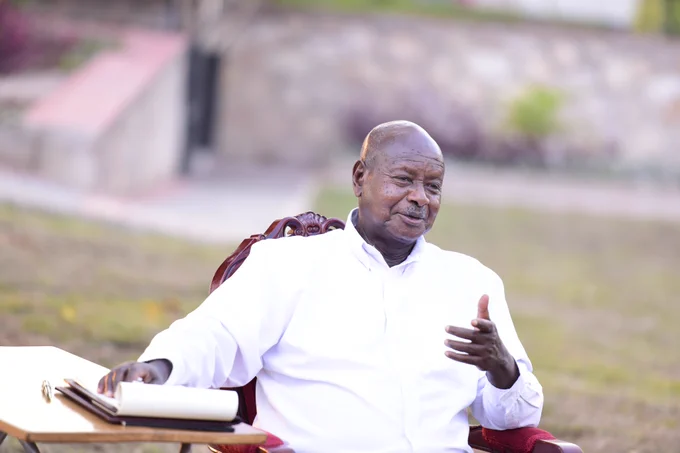
Museveni blames attack on Nyabugaando on relaxation by the security forces

President Museveni.

Last night, President Yoweri Museveni blamed the attack on Nyabugaando Secondary School, a private school near Lhubiriha River, on relaxation by the security forces.

On June 16, 2023, a group of Allied Democratic Forces (ADF) armed with machetes attacked Nyabugaando and killed 42 including 37 students.

“Condolences on the death of the 37 students of Nyabugaando Peter Hunter Secondary School at the hands of the terrorists of ADF, possibly working with other criminals, because I hear that school had some wrangles about it. I extend condolences to the families and the whole country,” he said.

 “This was most tragic and, as usual, despicable and condemnable. Attacks like this are on account of the relaxation in the area by the security forces because the area had been peaceful for a long time,” Museveni said during a televised address to the Nation.

He said the attack on the children at Nyabugaando by ADF, does not mean strength, but 42 great weaknesses. They cannot attack an Army detachment, they cannot attack a police station and they cannot attack soldiers on the move. The only people they can attack are unarmed people. This new atrocity by the elements of the ADF is criminal, desperate, terrorist and futile. It will not save them.

Museveni said what they do is reprehensible, inhuman and so unfair to the victims and should not happen.

He said working with the countries of the region, using military, intelligence and diplomatic means will help to stop these brutalities.

Last month, police spokesperson Fred Enanga confirmed the arrest of over 20 people in connection with the Lhubiriha school attack including the Director as well as the Headmaster of the school to help in investigations.

Stories Continues after ad