Stanbic Bank
Stanbic Bank
22.7 C
Kampala
Stanbic Bank
Stanbic Bank
Home Blog Page 369

Dfcu’s Investment Club App emerges as Platinum Winner for Infosys Finacle Innovation Awards 2023 under the category of Business Model Innovation

Dfcu’s Investment Club App has emerged as the Platinum Winner for the Infosys Finacle Innovation Awards 2023 under the category of Business Model Innovation, following a successful outcome from over 200 nominations across 10 categories that were received by Infosys from around the world.

The winners were selected by a panel of esteemed experts, consisting of global leaders in banking and technology, and the Dfcu App emerged as winner in its respective category.

Investment Clubs are widely used in Uganda for pooling peer group savings and pursuing possible investment opportunities. At its core, the Dfcu Investment Club App simplifies the day-to-day management of Investment Clubs, SACCOs and Saving Groups by providing a real-time view of all financial activities.  The App helps members track their contributions, manage their group lending and collections; effective reporting and general administration anytime, anywhere.

The App, which was ideated by Dfcu Bank’s Innovation team, is also a by-product of collaborative work with Modefin; an award-winning Digital Banking and Fintech Solution provider to Banks across the globe. In its vision to bank the under and unbanked Savings Groups, Dfcu worked with Modefin to create a digital solution that is easy to access and use across multiple operating systems.

Speaking on the win, Amarnath Choudhary, MD at Modefin noted that “We have shown what can be accomplished when two influential, purpose-driven organizations come together to deliver exceptional results. Kudos to the Dfcu Bank and Modefin teams for their vision, dedication, and commitment to creating a future-centric app that is changing the game in Digital Banking.”

Veronica Sentongo, Chief Change and Innovation Officer said… “We are delighted that our partnership with Modefin has yielded this state-of-the-art Innovation which has taken its rightful place in the realms of excellence. At Dfcu Bank, delivering exceptional value to our customers through technology is a strategic priority. Thus, our cutting-edge platform has empowered over 40,372 clubs & SACCOS in Uganda, by optimizing their Savings Group operations and allowing seamless convenience through its intuitive interface.

This achievement also showcases the versatility and reliability of Finacle as a Core Banking system over which the App operates. This provides a solid foundation for our ground-breaking customer solution.”

Stories Continues after ad

IMF approves $120m loan to Uganda amidst challenging environment

The International Monetary Fund (IMF) Executive Board approved a disbursement of $120 million to Uganda under the Extended Credit Facility arrangement despite the country not observing certain conditions.

The development brings the aggregate disbursement under the ECF arrangement to US$750 million

“The Executive Board of the International Monetary Fund (IMF) today concluded the fourth review of Uganda’s Extended Credit Facility (ECF) Arrangement,” the IMF said in a statement.

The Board said it granted a waiver of non-observance of a performance criterion on the ceiling on net credit to the government from the Bank of Uganda (BoU).

Mr. Kenji Okamura, Deputy Managing Director and Acting Chair, said Ugandan authorities remain firmly committed to their economic program amidst a challenging environment.

“Most quantitative targets were met in December 2022 and March 2023. The Quantitative Performance Criterion (QPC) on the ceiling on the Bank of Uganda (BoU) net credit to the government (NCG) was missed by a very small margin in March 2023. All structural benchmarks due between March and June 2023 have been met,” he said.

The ECF Arrangement for Uganda for about $ 1 billion was approved by the Executive Board on June 28, 2021, aiming to support the near-term response to the COVID-19 pandemic and boost more inclusive private sector-led long-term growth. Reforms focus on creating fiscal space for priority social spending, preserving debt sustainability, strengthening governance and reducing corruption, and enhancing the monetary and financial sector frameworks.

Despite repeated external shocks and tighter financial conditions, IMF observed that the economy is projected to grow by 5.5 percent in FY 22/23 and 6 percent in FY 23/24 and that inflation has been declining and is expected to reach the BoU’s medium-term target of 5% core inflation by end-2023.

“The improved near-term outlook (growth in FY 22/23 has been revised up slightly, and inflation projections are marked down for FY 23/24) reflects the impact of more favorable weather conditions on domestic harvests, the softening of global commodity prices and easing of global demand-supply imbalances, and the lagged effects of monetary and fiscal policy tightening,” IMF said.

Okamura said: “The full implementation of the Domestic Revenue Mobilization Strategy (DRMS), including the additional tax administrative measures identified by the authorities, is crucial to help maintain the debt-to-GDP ratio on a declining path and allow for an increase in social spending over the medium term. Increasing the pace of Public Financial Management (PFM) reforms is essential to enhance the capacity to execute social spending in a timely manner. The tax exemption rationalization plan remains an important component of the revenue mobilization effort.”

The IMF added that Uganda’s banking system is well-capitalized and liquidity has rebounded, but the asset quality of some banks has deteriorated. Against this backdrop, IMF said, safeguarding financial stability and strengthening the supervisory framework remain paramount.

“The current monetary policy stance is appropriate, but the BoU should stand ready to resume its tightening if signs emerge of a slower-than-expected disinflation. Exchange rate flexibility remains crucial to preserve external buffers,” the Fund said.

“Accelerating the momentum on structural reforms is essential to unlock Uganda’s growth potential and requires more proactive efforts. Priorities include enhancing domestic revenue mobilization, strengthening the anti-corruption framework and the AML/CFT regime, advancing the financial inclusion agenda, and climate adaptation measures. The authorities should sustain efforts to improve transparency of implementation of the asset declaration framework including sanctions enforcement for violations.”

Ramathan Ggoobi, the Permanent Secretary at the Ugandan Ministry of Finance said the loan spurs Uganda’s path to full recovery, sustained growth, and reform for socio-economic transformation.

Stories Continues after ad

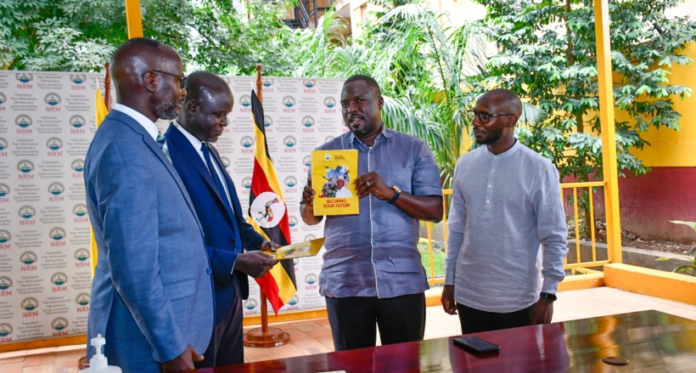
Ojara Mapenduzi signs MoU with NRM party

In a significant development, Martin Ojara Mapenduzi, the Bardege-Layibi Division Member of Parliament, officially signed a Memorandum of Understanding (MoU) with the ruling National Resistance Movement (NRM) party. The historic signing took place during a courtesy visit to the NRM Head Offices in Nakasero.

The Secretary-General of the NRM, Richard Todwong, commended Mapenduzi’s decision to align himself with the party, calling it a bold and wise move. He emphasized the importance of unity and togetherness among leaders.

“This only acts to show that leaders are trying to appreciate the purpose of unity and togetherness, and it’s a generational call that I urge all other leaders to embrace.”

Todwong also congratulated all independent Members of Parliament who have signed MoUs with the NRM, acknowledging their commitment to working together. He added, “We don’t look at other members from different political parties as our enemies but as partners in the struggle to develop our country, Uganda.”

Mapenduzi expressed his excitement and belief in the power of collaboration as he stated, “In my entire life, I have looked at leadership not as a position but as a responsibility, and so I have always taken seriously what I am supposed to do and done it in the spirit of impacting positives in the lives of others. As we sign this relationship and cooperation agreement, I have the strongest belief that it is in the spirit of doing good and serving the people, and I am privileged to have signed it.”

Hamson Obua, the Government Chief Whip, praised the signing of the MoU as a significant achievement for the NRM Parliamentary Caucus in Parliament. He emphasized the value of Mapenduzi’s contributions, saying, “We are pleased to have Mapenduzi on board, and we believe that his contributions will be valuable to the party.”

The signing of the MoU signifies a deepening relationship and cooperation between Mapenduzi and the NRM. It reflects the belief that leadership should transcend party affiliations and focus on the common goal of serving the nation. This step reinforces the NRM’s commitment to inclusivity and collaboration, where members from diverse backgrounds come together for the collective benefit of Uganda.

The signing ceremony was conducted by the NRM’s legal officer, Counsel Enoch Barata, ensuring the MoU’s legal validity and cementing the agreement between Mapenduzi and the ruling party.

With the MoU signing complete, Mapenduzi now stands as an official member of the NRM, empowered to participate in party activities and contribute to the formulation of policies that shape Uganda’s future. The NRM welcomes him on board and anticipates his valuable contributions to the party’s endeavors.

Stories Continues after ad

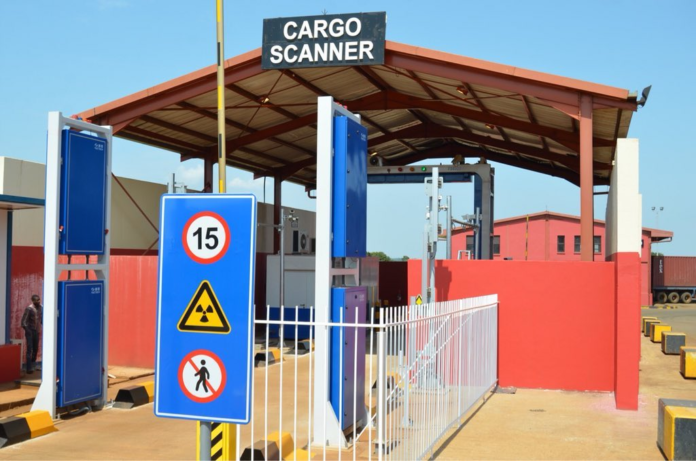
Fixed cargo scanner at Katuna one-stop border post to be complete in September

Mr. Stephen Ojambo, the supervisor for the western region has revealed that the fixed scanner at Katuna one-stop border post will be complete by September this year.

Uganda Revenue Authority (URA) is banking on improved tax administration to meet its target and the fixed scanner will play a key role in this. The use of a mobile scanner has been in play ever since the Katuna/Gatuna border post was closed because of diplomatic reasons.

He said the construction process of the fixed scanner will be complete by September this year.

“The construction works of a fixed goods/vehicle scanner at Katuna one-stop border has started and it will take 3 months to have it fully operational. The government will spend about Shs3Bn on the construction and installation process,” Mr Ojambo said.

Ojambo said better administration practices would see URA collect extra revenue.

The new scanner will be connected to existing systems like the Asycuda World, a customs system that is used by importers and exporters in different parts of East Africa to clear goods even before they reach their destination.

He also revealed that revenue collection at Katuna has increased from about Shs500m at the time when the border was re-opened in March last year to Shs1Bn to date.

“The total number of cargo trucks cleared at Katuna border post has increased from 90 trucks per day at the time when the border was re-opened to 165 per day as of now. We hope the number of cargo trucks cleared per day and revenue generated will increase the fact that Rwandan authorities have stopped charging money for covid 19 testing,” Mr. Ojambo said.

He said that the mobile goods/vehicle scanner they have been using at Katuna one-stop border post will be released to offer the required services at the other border posts of Kamwezi in Rukiga and Busanza in Kisoro districts besides offering mobile required services for transit goods.

“Plans are underway to construct similar fixed goods/vehicle scanners at Mirama Hills Border post in Ntungamo district, Bunagana border post, and Kyanika in Kisoro district. These fixed goods/vehicle scanners will also offer weighing services to ensure that only the required tonnage are allowed to use the Ugandans roads,” Mr Ojambo added.

The clearing agents in Kigezi sub-region welcomed the establishment of the fixed goods/vehicle scanners in the area arguing that the mobile one at Katuna one-stop border post has been slowing down their services because of regular breakdowns.

“We welcome the establishment of a fixed goods/vehicle scanner with hopes that it will offer sufficient services, unlike the mobile scanner that has been characterized with regular breakdown thus affecting our daily works of clearing goods and services,” The vice chairman for the Katuna border clearing agents association Mr Stephen Kiwanuka said.

Mr Kiwanuka also emphasized the need for establishing offices of the Uganda National Bureau of Standards and specialized offices that issue certificates of analysis that are required by the Rwandan customs officials before Ugandan goods are received.

“Before being allowed to export local produce like Irish Potatoes to Rwanda through the Katuna/Gatuna border, the local trader is required to get an export permit and certificate of analysis from Kampala which are not easy to get. We appeal for simplified local export entry like it’s done on Malaba and Busia for traders that export local produce to Kenya. The Single customs tertiary entry demanded at Gatuna border post by the Rwandan officials is not favoring local traders. UNBS clearance for the exporters is done by the officials at Mirama Hills and Mutukula border posts yet the one-stop border post has enough facilities to house them. These barriers to cross-border trade must be addressed,” Mr Kiwanuka said.

Stories Continues after ad

Chipper Cash Launches in Rwanda at Financial Inclusion Conference in Kigali

Chipper Cash, a leading fintech company serving more than five million customers across Africa, is delighted to confirm its official launch in Rwanda, further expanding its presence and commitment to provide trusted and accessible financial services across the continent and beyond. Chipper Cash celebrated its entry into the Rwandan marketplace at the inaugural Inclusive Fintech Forum, the global platform on financial inclusion and fintech for good, which was held at the Kigali Convention Centre.

Chipper Cash offers a user-friendly and innovative mobile application that enables Africans to send and receive funds cross-border, pay globally with cards and invest. With the launch in Rwanda, Chipper Cash aims to connect the Rwandan population by facilitating seamless and secure transactions, promoting easy access to financial services and driving economic growth.

Today, the platform allows Rwanda users to transact in multiple currencies and facilitates hassle-free international remittances. The next products to be introduced into the country will be the virtual Chipper Card, offering people an easy way to shop, stream and subscribe online, and Chipper for Business, supporting SMEs to operate efficiently in the global marketplace.

Speaking about the company’s expansion, Chipper Cash Country Director in Rwanda, Jovani Ntabgoba, said: “Rwanda is at the heart of Africa and is known as one of the most important financial hubs in the continent, making it an ideal market for Chipper’s latest expansion. We are delighted to launch Chipper Cash in Rwanda, an innovative and forward-thinking market that embraces technology. With our customer-centric approach, we aim to empower individuals, entrepreneurs and businesses by providing seamless access to the financial ecosystem.”

Ham Serunjogi, Co-Founder and CEO at Chipper Cash, commented: “Chipper Cash is committed to unlocking global opportunities to connect Africa – and launching in Rwanda is an important step towards delivering on our vision. As one of the largest consumer fintech companies in Africa, Chipper is excited to participate and invest in Rwanda’s vibrant marketplace while democratizing access to our world-class products and services.”

Stories Continues after ad

​NGOs requests AFreximbank to stop support for fossil fuel projects In Africa

THE NGO’s led by Environment Governance institute, the undersigned environmental and human rights civil society organizations working to promote environmental conservation, human rights observance reached out the 30th Afreximbank Annual General Meeting that took place between 18th – 21st June 2023 to address a matter of utmost importance, concerning environmental sustainability and the vital role that financial institutions play in addressing the climate crisis in Africa.

During the AGM, they emphasized the urgent need for stronger environmental commitments and actions within the financial sector. The impacts of climate change are increasingly evident across the continent, with vulnerable communities and ecosystems bearing the brunt of these effects, and yet
financial institutions such as Afreximbank have continued to invest in the further expansion of fossil fuel projects, thus accelerating the climate emergency.

Specifically, they said they have noted with great concern that across the region, Afreximbank has continued to support or finance fossil fuel projects, which
contravenes and affects the environment.

“We urge you, similarly to other governments worldwide that signed the COP26 Statement on International Public Support for the Clean. We as well call for the immediate attention of Afreximbank to immediately stop all the projects that distract the environment in Africa”. Asks the NGOs stakeholders.

NGO’s further highlighted some of the problematic fossil fuel projects Afreximbank supported recently: – In 2021, Afreximbank approved $1.04 billion to the Nigerian National Petroleum Corporation (NNPC) for petroleum exploration activities.

This decision faced strong opposition from civil society organisations and local communities due to serious environmental concerns. – In July 2022, Afreximbank signed a project preparation facility financing agreement to advance the floating liquefied natural gas project in Nigeria, with a capacity of 1.2 million metric tons per annum.

They emphasised that this project does not align with the commitments made during COP26, as it promotes the use of gas, which remains a significant contributor to greenhouse gas emissions and is not considered a transition fuel.

In October 2022, Afreximbank signed a $635 million reserve-based facility term sheet with Amni International Petroleum Development Company. The primary purpose of this funding is to support the capital expenditure required for two oil and gas fields in Nigeria, with the goal of doubling oil production from approximately 10,000 to 25,000 barrels per day.

In August 2020, Afreximbank committed $400 million to the Mozambique LNG project. This project is surrounded by and has been linked to extreme violence in the province of Cabo Delgado.

Also, the project will not increase energy access for communities but will escalate human rights violations as well as increase greenhouse gas emissions. – In October 2022, Afreximbank approved $200 million towards the financing of the East African Crude Oil Pipeline.

This pipeline has been highly controversial due to its actual and potential environmental and social impacts, as well as its contribution to the climate change emergency.

The above-mentioned projects have had significant socioeconomic impacts, including land grabbing, displacement, loss of livelihoods, increased poverty, and gender- related issues such as teenage pregnancies and gender-based violence.

Local conflicts, militarization, and growing instability have also been observed, indicating the adverse consequences of these projects. The environmental impacts resulting from these projects have equally affected communities in and around the project areas.

These impacts include land and water pollution, biodiversity loss, and 3 the disruption of vital ecosystems. Such environmental degradation directly contributes to undermining the progress towards achieving the Sustainable Development Goals (SDGs), particularly SDGs 1, 5, 8, 10, 14, 15, and 16. We firmly believe that financial institutions like Afreximbank have a significant responsibility to support sustainable development and contribute to climate change mitigation.

Stories Continues after ad

A section Keith Muhakanizi’s burial service providers not paid

A section of suppliers who provided services during and after the burial of former economist and Permanent Secretary in the Office of the Prime Minster Keith Muhakanizi are up in arms demanding for their delayed payments.

Government offered PS Muhakanizi an official burial and according to sources, and about Shs500 million was used in the entire burial arrangements. However, insiders at OPM told this website that the figure could have been much higher as the matter is getting out with reports that police is probing claims that some money could have ended up in peoples’ pockets.

Earlier this website reported that a Commissioner in charge of Human Resource in the Office of the Prime Minister, Patrick Okello was under investigation by Criminal Investigation Department.

It is alleged that Mr. Okello who oversees training in the OPM diverted part of the funds released for burial of form Permanent Secretary Keith Muhakanizi. Sources at CID, told this website that Mr. Okello appeared before them for questioning as police digs in.

Okello who later on ran Eagle Online denied the allegations but instead insisted that his publication retracts or deletes the story. “Come to my office and we sort the matter because that isn’t true. I don’t want to sue you people like the other man did to the other paper, just come we resolve” Mr Okello pleaded.

Inside sources at OPM further reveal that the leadership of the institution wasn’t pleased and hence she summoned late evening meeting and warned her troops against fights and leaking documents. In the subsequent article, this publication will publish in details the list of service providers who are demanding for payment.

Stories Continues after ad

 FlexiPay, TotalEnergies partner to ease prepaid customer card top-ups 

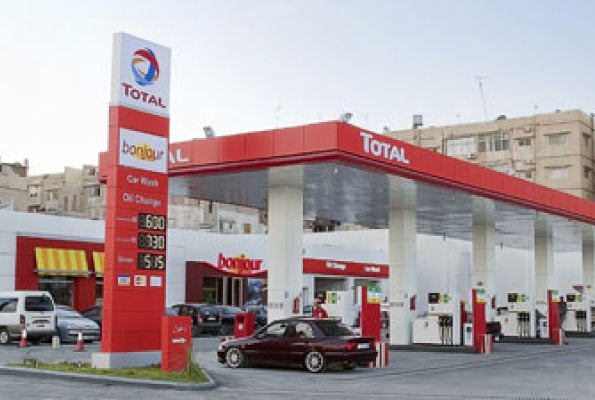
Individuals buying fuel and enjoying other TotalEnergies products through their TotalEnergies card can now easily load credit to their cards using FlexiPay, a digital payment solution offered by Stanbic Bank.

TotalEnergies’ prepaid card owners have hitherto had to physically visit a Service Station or a Stanbic Agent to reload their cards with credit. With the partnership, these prepaid card customers will enjoy enhanced convenience enabled by the seamless card top-ups from their FlexiPay wallet to the card, and don’t necessarily have to own a Stanbic Bank account to use the service.

Apart from fuel, the credit on the cards can also be used to pay for periodic car service, lubricants, and any other services at TotalEnergies’ Service Stations across the country, said Paul Muganwa, Executive Head of Corporate and Investment Banking (CIB) at Stanbic Bank Uganda.

“Our aspiration is to transform the service experience for our customers and this partnership with TotalEnergies Marketing Uganda is aligned with what we wish to achieve. We are excited because we can demonstrate that solutioning for our customers is much easier and efficient through strategic partnerships such as this one,” said Muganwa.

FlexiPay is available on both USSD at *291# and App; it doesn’t require users to have a Stanbic Bank account although those with one have added advantages from the platform.

As of December 31, 2022, FlexiPay had over half a million subscribers amassed in a short period after its market launch as a more cost-effective platform that enables users to pay merchants and utility bills at much lower or no charges at all.

‘‘Our partnership with Stanbic bank is our response to feedback from our customers who have been asking for more convenient ways to load or reload the credit on their fuel cards because our customers are at the heart of everything we do.’’ said the TotalEnergies Marketing Uganda Finance Manager Omotesele Josephine AKINPELU.

Omotesele added; ‘‘We are doing this because we believe our consumers’ time must be respected and they need control over their hard-earned money, which they can use to purchase essential quality products like the TotalEnergies Excellium at any of our 200+ stations across the country.’

Fuel payment is among the leading hard cash transactions in the country and a key target in Uganda’s quest to become a cashless economy and this has since seen the Parliament amend the National Payments Act to safeguard consumers from harm that may arise from using e-payments.

Stories Continues after ad

Stanbic commits to supporting Western Uganda farmers 

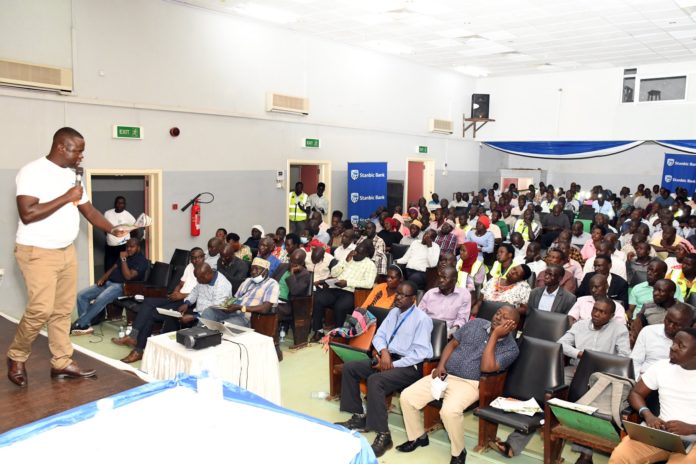
Stanbic Bank's Mathias Jumba addressing sugarcane farmers in Jinja

STANBIC Bank Uganda Limited is committed to continuing to support farmers with financial and non-financial solutions to be able to yield tangible results from their farming activities. This revelation was made by Patrick Twinamatsiko, the Manager in charge of the bank’s Sacco financing.   

Twinamatsiko was speaking at the inaugural Seeds of Gold/Farm Clinic event held at NARO – Mbarara Zonal Agricultural Research and Development Institute on May 27.

This is the second farm clinic happening at this research facility since Nation Media Group (NMG) and partners started implementing the initiative. Seeds of Gold event aims at training farmers in the best farming practices.

The annual event also brings together companies in the agriculture value chain to showcase their products before farmers.

The initiative is implemented alongside many partners including Stanbic Bank, an anchor subsidiary of Stanbic Uganda Holdings Limited (SUHL).  

This year’s event in Western Uganda targeted farming groups and individuals engaged in coffee, dairy, apiary, goats, passion fruits, bananas, and more.

Agricultural experts from NARO and other entities facilitated classes on the different crops/farming activities in a bid to improve farmers’ knowledge and skills – with the ultimate goal of increasing production and productivity.

Twinamatsiko said, once farmers are empowered with farming knowledge, Stanbic comes in to offer financial solutions including SACCO loans, vehicle and asset financing, and related facilities. The Bank has also partnered with other entities like aBi Trust to power SACCOs with solar systems and digital devices to improve their operational efficiency in Western Uganda and beyond.

In addition, Stanbic Bank’s sister company, Stanbic Business Incubator (SBIL) engages farmers in sessions aimed at helping them to improve their business management skills. 

Twinamatsiko said there is a total of 1924 groupings (SACCOs, Village Savings Loans Associations) in Uganda, out of which 283 are cooperatives.

“It is easy for us to support SACCOs with unsecured loan facilities because they are accountable to themselves than dealing with individual members,” Twinamatsiko said.  He added that the loan repayment rate for the SACCOs they deal with is very good at 97% – which is good for us who are following our money.

He also said the Seeds of Gold partnership has provided an opportunity for Stanbic to understand the farming dynamics and get feedback from farmers about Stanbic’s products.

“We have understood over time that the farmer wants credit at a lower interest rate which is why we are giving facilities at 10% – the lowest in the market,” he said.

Benson Turamye, a farmer said by his visiting the Stanbic booth to make inquiries about financial facilities offered would inform his investment decisions.

“I want to get a loan for my farm equipment. I am here to ask these people of Stanbic whether they can help me,” he said in an interview. “It is a good chance for me to interact with the bank but to also learn new farming practices during this event,” Turamye added.

Gilbert Alinda, a Business Banker at Stanbic Bank – in charge of branches of Mbarara, Ntungamo, Kabaale and Kisoro said agriculture is a backbone of Uganda’s economy which is why it is important for Stanbic to join hands with NMG to promote Seeds of Gold annual activity.

“We are here to give a hand in the economic growth of the country. Stanbic comes in to finance through the Bank of Uganda’s Agriculture Credit Facility and other solutions,” Alinda said.

He said that Stanbic believes that by lending to farmers’ groups at an affordable interest rate they are empowering them to invest and make a profit which in the end contributes to social-economic transformation.

According to the Head of Ecosystems at Stanbic Bank, Mathias Jjumba, the Bank has rolled out a number of products that are designed specifically to address the farming sector which to date remains un-catered for in many sectors of banking.

Last month, Jumba met sugarcane farmers in Busoga sub-region where the bank rolled out a Sugarcane farmers Customer Value Preposition. Jumba told farmers there that the initiative is designed to help cane farmers cover their grower expenses or expand acreage to enhance their output and meet rising demand for sugar both locally and across East Africa.

He explained that the new products for farmers are designed in the Stanbic spirit of making true their purpose—Uganda is our home, we drive her growth,” by providing a variety of personalized services and products to help farmers manage their finances as they start the journey towards accomplishing their dreams. 

Alinda also said most individual farmers do not have collateral yet they are willing to borrow. “We continue to advise the farmers to form groups to be able to access finance solutions from us,” he said. He also said Stanbic’s support for these groups aligns well with government poverty eradication programmes like the Parish Development Model, Emyooga targeting women, youth, and other vulnerable groups.

Joseph Mutaka from the Bank of Uganda Agriculture Credit Facility, said, farmers should have the courage to engage with Banks to access the ACF which comes at an affordable interest rate of 12% interest per annum.

“The ACF has been around since 2009 and the money is channeled through commercial banks which the Bank of Uganda regulates,” he said.

Dr. Imelda Kasahaija from Director General’s Office at NARO applauded the partners for implementing the Seeds of Gold initiative saying, teaching the people good agricultural practices would improve production, and productivity and uplift the majority of the population out of poverty.

“This is a good initiative. It is practical which is good for yielding results. I am happy and please tell others to attend similar events,” she said, adding “Things like value addition cannot happen when the farmer is not supported.”

Stories Continues after ad

NSSF, UNRA partner to sensitize contractors in road sector

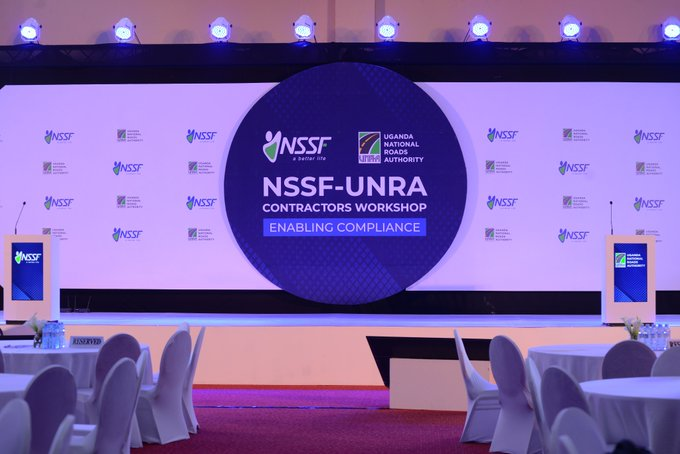
The National Social Security Fund (NSSF) has partnered with Uganda National Roads Authority (UNRA) to conduct a sensitization workshop for all contractors in the road sector, aimed at exploring the intricacies, opportunities, implications, and compliance guidelines associated with the new NSSF Amendment Act 2022.

While speaking at the event, Patrick Ayota, the NSSF Acting Managing Director, said: In 1929, the Great Depression resulted in the stocks collapse. Businesses failed, and unemployment rose dramatically. Banks failed and life savings were lost, leaving many Americans destitute. With no job and no savings, thousands of Americans lost their homes.

“To recover from the great depression, the US government spent billions on public works projects including roads. These not only created interconnectivity between regions but more importantly, created jobs,” Ayota said.

Ayota added that the Fund intends to grow social security coverage across the country from 10% to 50% by 2035 by increasing willingness to save through education and awareness, partnerships that target large groups of workers e.g. UNRA leveraging technology to make the process easier and law enforcement.

“As UNRA, your role is to focus on enabling a savings culture for all your employees and subcontractors, this is good for the economy and this will be good for your business,” he urged.

Hon. Betty Amongi, Minister of Gender Labor and Social Development stressed the need for stakeholders’ engagement in achieving compliance and expanding coverage for social security.

“At least one-third (1/3rd) of the subsistence workers are excluded from the employment statistics deliberately. In very simple terms this is exploitation. We can even be more dramatic and call it slavery!! Yes, this is happening today in Uganda and one of the sectors where it is most prevalent is construction,” Amongi said.

She added, “We also observe that when it comes to what we refer to as “casual labor”, the absence of formal contracts is such that many workers are “employed” but left without work for significant periods of the time they have available to work. In this sense, they are denied benefits for forgoing time they would have spent being productive.”

Hon. Amos Lugoloobi, Minister of State for Finance, Planning and Economic Development said that in 2017, the Managing Director of the International Monetary Fund visited Uganda and gave a keynote address. She started her speech by commending Uganda for achieving threefold increase in GDP per capita over the past generation – a feat of just a handful of countries that halved poverty by 2015.But she also turned the members’ attention to the challenges holding them back as a country. She cleverly used the now famous movie “Queen of Katwe” as a metaphor to make some important points. Quoting directly from the movie, she asked: “Can you do big things from such a small place?”

“I will make use of this metaphor to emphasize the important role of mobilization of resources to drive our development agenda. In a literal sense, it is very difficult to do big things from a small place. And the first small place we need to address is: Tax-to-GDP Ratio: Uganda’s tax-to-GDP ratio is 12.5% (2021/22) compared to 15.3% (Kenya), and 16.9% (Rwanda). The average for Sub-Saharan Africa is about 16%- significantly higher than Uganda’s. Much of our inability to collect tax is exacerbated by the depth of informality of our economy – including hiring workers without contracts and paying them in cash, rather than through the formal financial systems,” Lugoloobi said.

He added, “Secondly, Savings to GDP Ratio: Uganda’s long-term saving to GDP ratio is 12%, of which 11% is accounted for by NSSF – where less than 1 million workers are actively saving. There is a “magic threshold” of 35% that the Asian Tigers crossed, after which they accelerated their socio-economic transformation buoyed by the ability to finance larger portions of their budget with local resources. Our budget of UGX 52 Trillion this FY will commit UGX 17 Trillion to debt service. The opportunity cost of this money on furthering our development agenda is huge.”

Lugoloobi said that the same question can equally be flipped in our favour.“Can we do big things from such a small place?” The answer can indeed be yes!! The answer is found in two concepts that can be thought deeply about;

“Leverage, if the returns are competitive, we can use leverage to accelerate our infrastructure assets in a sustainable manner. This is how PPPs can work for us, and NSSF, as a long-term Fund, can work with strategic partners to avail patient and local capital to the Government to accelerate its infrastructure development in a win-win manner. The opportunities for NSSF to participate in these partnerships include the development of transport infrastructure such as Toll Roads, and the development of strategic infrastructure for our nascent Oil and Gas Sector among others,” He revealed.

He further noted that Catalytic Financing is the second solution where big things can be done from small places. “Since we are discussing roads today, we can relate the discussion of catalytic financing to one of 3 core road management roles: Policy Setting, Financing, and Works Implementation (where UNRA is the key driver). When it comes to financing, in 2008 the Road Fund was born with a mandate to provide adequate and stable financing for maintenance of 80,000km of public roads in Uganda using a road-user-charges model.”

The Fund operates semi-autonomously and with a private sector leaning board. It also endeavors to operate in a customer-centric manner and lifts considerable budgetary responsibility off the shoulders of the Government.

Lugoloobi urged the partners to deploy the similar model to work with the private sector players involved in road development and maintenance to build the capacity of small businesses involved in the sector – such as the Contractors who are present today.

Stories Continues after ad