Stanbic Bank
Stanbic Bank
19.3 C
Kampala
Stanbic Bank
Stanbic Bank
Home Blog Page 392

Uganda’s Elison Karuhanga to discuss EACOP at Invest in African Energy Forum in Paris

Elison Karuhanga, Partner at Kampala Associated Advocates.

The African Energy Chamber (AEC) has confirmed that Uganda’s Elison Karuhanga, Partner at Kampala Associated Advocates, will speak at the Invest in African Energy Forum next month.

The event will take place at the Westin Paris Vendome in France on the of June 1, where Karuhanga will showcase Uganda’s oil and gas sector and share insights on the East African Crude Oil Pipeline (EACOP), making a strong case for investments into its development.

With a strong focus on litigation and energy law, Karuhanga’s impressive career spans various sectors. Working in the Litigation and Energy Law Department, he has successfully represented numerous local and international clients across diverse industries, including oil and gas, telecommunications, construction, banking, as well as public bodies and government agencies.

His wide-ranging experience has contributed significantly to shaping Uganda’s energy sector and legal landscape.

Karuhanga ‘s specialized expertise as an Oil and Gas lawyer, coupled with his LLM (Oil and Gas Law) from the University of Aberdeen, has equipped him with a profound understanding of the intricacies of the energy industry.

His active involvement in the Association of International Petroleum Negotiators has further expanded his knowledge and network within the sector. Moreover, his membership in GOXI, a program within the World Bank Institute’s Governance for Extractive Industries Program, highlights his commitment to strengthening governance in Uganda’s extractive industries.

Additionally, Elison’s membership in the Uganda Chamber of Mines and Petroleum showcases his dedication to fostering cooperation and development within the sector, demonstrating his comprehensive understanding of the legal and regulatory frameworks essential for the sustainable growth of Uganda’s energy sector.

Additionally, Karuhanga’s expertise and extensive knowledge in energy law, particularly in the oil and gas sector, establish a strong link to the EACOP project. His involvement in comparative research has contributed to the analysis of the legal regime governing oil and gas law in Uganda. This expertise positions Karuhanga as a valuable contributor to discussions surrounding the legal framework and regulatory aspects of the EACOP pipeline.

The EACOP pipeline, spanning 1,443 km, will play a crucial role in connecting Uganda’s oil fields in Lake Albert to the Tanzanian port of Tanga, unlocking immense potential for increased export earnings and the creation of new economic possibilities.

In an article written by Karuhanga, he states, “The EACOP project represents a significant opportunity for Uganda and Tanzania to address the challenge of climate change. The governments will be able to use the revenue from taxes and royalties to support the development of renewable energy sources, reduce greenhouse gas emissions, and promote energy efficiency. This will help to ensure that the countries’ energy sectors are more sustainable and that the benefits of the EACOP project are shared with future generations.” 

By prioritizing sustainable practices and investing in renewable energy, Uganda and Tanzania can pave the way for a greener and more resilient energy future while maximizing the socio-economic benefits derived from the EACOP project.

Regarding local content practices, Karuhanga has emphasized its importance in the EACOP project. By collaborating with local communities, the project can address social and environmental challenges and support sustainable development and economic growth. More work is needed to promote fair contracts for indigenous companies and encourage active participation from businesses, including small enterprises, to ensure a level playing field and equitable distribution of benefits. Karuhanga’s perspective highlights the ongoing efforts to enhance local participation and foster inclusive growth in the EACOP project.

“Having Elison Karuhanga speak at the Invest in African Energy Forum in Paris is crucial for Uganda’s energy sector and the EACOP pipeline. His expertise in oil and gas law, along with his involvement in precedent-setting cases, brings valuable insights to the table. His presence at the upcoming Invest in African Energy Forum in Paris signifies the AEC’s commitment to partnerships and the success of transformative projects like the EACOP in Africa’s energy landscape,” states NJ Ayuk, Executive Chairman of the AEC.

Stories Continues after ad
Stanbic Bank launches free financial literacy classes for salary earners

Sylvia Atuhairwe, Head of employee value banking. Photo-Eagle Online.

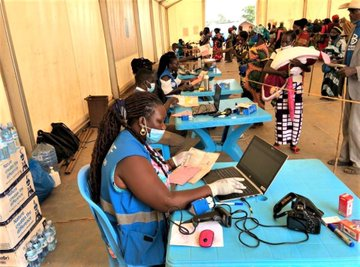
Stanbic Bank has launched a campaign that will solely focus on providing quality financial education and money management training to salary earners.

Sylvia Atuhairwe, head of Employee Value Banking directorate at Stanbic says that the three months tailored-made campaign will look at different money aspects including borrowing, investments and saving for retirement age.

“We know the economic situation is quite volatile at the moment where people are living in a situation where interest rates have been going up in the market. We have therefore come up with this campaign, specifically for salary earners to be able to get financial management training,” Ms Atuhairwe said at the launch, saying the campaign will go through Human Resource managers.

Atuhairwe added that the training helps look at different aspects of adjustment that the salary earners should go through from the time of earning their salary until retirement. We need to train them on how to earn money but also how to save, invest and spend it wisely.

“We have come up with affordable loans but also to teach the salary earners to borrow for something responsible and something they have carefully thought about. We are not an institution that just gives people money. We have extended our loan tenure to 84 months to help those struggling with paying too many loans to consolidate them into one and pay flexible installments which reduces the stress on their end.”

Ms. Atuhairwe expressed that as part of efforts to bolster its relations with borrowers, the bank has extended the loan tenure to 84 months to help those struggling with paying too many loans to consolidate them into one and pay flexible installments to reduce the stress on their end.

On her part, Damalie Kairumba, the Manager for Home Loans at Stanbic Bank said the bank has equally designed products to help address the housing gap in the Ugandan real estate market.

“We have done research and over 48% of the customers who take loans now do so to either buy land or construct. Therefore, our home loan offering is to be able to make go to customers whose need is construction which comes with flexible loan tenure of up to 25 years. This means you can be able to get more money and can do something you can start and complete as opposed to running into several cases to borrow money and end up being stressed.”

Stories Continues after ad

Finance Ministry registers increased export earnings from gold, coffee and maize

Coffee has been one of the leading cash crops for Uganda.

The Ministry of Finance Performance of the Economy Report for April 2023 indicates that Uganda exported merchandise worth $674.54 million in the month of March 2023, a 90 percent increase from $349.44 million exported during February 2023.

The increase was mainly on account of higher export earnings from mineral products, tobacco, maize and cotton registered during the month.

For instance, coffee exports during the month amounted to $71.54 million, an 8.4 percent increase from $66.03 million in February 2023.

“This growth was mainly attributed to exporters who off-loaded coffee from their warehouses for sale to benefit from the rising international price of Robusta coffee,” the report states.

In comparison to the same month in 2022, merchandise exports grew by 85.4 percent from $363.74 million in March 2022 to $674.54 million in March 2023.

This was largely attributed to increased export earnings from mineral products, maize and tobacco during the month, the report states.

Gold products increased significantly following the resumption of gold trade in August 2022.

According to the report, the EAC remained the top destination of Uganda’s exports in March 2023, accounting for 35.7 percent of total exports for the month.

This was followed by the Middle East at 32.3 percent and Asia at 14.6 percent. It is worth noting that Uganda’s export earnings from the Middle East significantly increased from $21.41 million the previous month to $217.99 million in March 2023, owing to the growth in exports of mineral products to the region.

The value of merchandise imports increased by 41.6 percent from $ 647.09 million in February 2023 to $916.47 million in March 2023.

“This growth was mainly attributed to higher private sector imports particularly mineral products (excluding petroleum products), vegetable products, beverages, fats and oils, as well as animal products,” the report states.

Comparison with the same month last year shows that merchandise imports grew by 39.6 percent from $656.69 million in March 2022, to $916.47 million in March 2023. This increase was mainly driven by increased import volumes for mineral products (excluding petroleum products), machinery, equipment and vehicles, among others.

In March 2023, Asia remained Uganda’s largest source of imports accounting for 31.4 percent of the total imports. Within Asia, China and India were the major contributors, accounting for 71.6 percent of the total imports from the region. Other notable regions included the EAC, the Rest of Africa, and the Middle East, which accounted for 24.5 percent, 20.1 percent, and 15.5 percent of the total imports, respectively.

 
Stories Continues after ad

Letshego Uganda nominated for Afawa bank of the year award in Egypt

Letshego Uganda has been nominated by the African Gaurantee Fund for the AFAWA Bank of the Year Award at the African Banker Awards set for Sharm-El-Sheikh Egypt on May 24, 2023 .

The African Banker Awards are a landmark annual event for African Banking that celebrates excellence and best practices in African banking recognising the personalities and banks that are driving Africa’s rapidly transforming financial sector. They celebrate the achievements of those who are driving growth, development and creating new economic opportunities for citizens and communities all over the continent and inspire new generations of bankers who are shaping Africa’s future.

Women’s economic empowerment and financial inclusion have been recognized as key to achieving the 2030 agenda for Sustainable Development. This year’s Awards gala is poised to accentuate the theme of gender equity in the industry. In partnership with the African Development Bank (AfDB) and African Guarantee Fund, a fresh accolade has been instituted to acknowledge and encourage initiatives aimed at propelling financial inclusivity for “Women across the African continent”. The AfDB’s AFAWA (Affirmative Finance Action for Women in Africa) is a Pan-African initiative to bridge the $42billion financing gap facing women in Africa.

Letshego Uganda CEO Giles Aijukwe said, “At Letshego, we spotlight financial literacy because we have realized the power that financial education provides; basic skills related to earning, spending, budgeting, borrowing, saving and seizing growth opportunities. Today, nearly a billion women around the world are unserved or underserved by the formal financial sector and unable to reach their full economic potential. If you brought all these women together, they would make up the third-largest country in the world.”

Given the might of financial institutions, be it, mainstream banks or MFIs (Microfinance Institutions) – they’re a powerful instrument for women empowerment. Women’s ability to save, borrow and control their own money and assets- reduces poverty and promotes inclusive growth. Unequal gender roles have implications for the most basic aspects of self-determination, dignity and freedom, which in turn influence financial inclusion – or lack thereof.   “Financial inclusion requires that low-income people have a convenient way to send money and make payments. We have prioritized this in Uganda with our Group Lending products (women as primary beneficiaries) alongside digital channels usage of USSD (*287#) and our Letshego Digital Mall (Omni-functional App or by following this linkwww.letsgo.letshego.com) that eases access to financial services accessible through mobile phones. This is a commendable and timely nomination for Letshego Uganda,” Aijukwe emphasized.  

Stories Continues after ad

CTI Foundation launches campaign to fight Sickle Cell Disease in Uganda

CTI Foundation has launched a campaign aimed at raising awareness and preventing Sickle Cell Disease (SCD).

Sickle Cell Disease poses a significant health burden on millions of people around the globe, necessitating comprehensive initiatives to address its challenges. CTI Foundation recognizes the urgency of the situation and is committed to making a lasting impact. By fostering collaboration among experts, advocates, and affected individuals, CTI Foundation seeks to effect profound change and improve the quality of life for those living with SCD.

Speaking about the launch, Isaac Okello, the Executive Director of Uganda, said: “We are incredibly proud to announce the launch of CTI Foundation and to take a stand against Sickle Cell Disease. This debilitating condition affects millions of individuals and families worldwide, imposing significant challenges on their daily lives. With the establishment of CTI Foundation, we are taking a crucial step forward in the fight against SCD, aiming to improve the lives of those affected and create a lasting impact on a global scale.”

Okello said CTI Foundation embodies this belief, as it seeks to empower communities, foster groundbreaking research, and raise awareness about Sickle Cell Disease. By joining forces with experts, advocates, and affected individuals, we can make a real difference in preventing this condition. Let us stand united in our mission to eradicate sickle cell disease. Together, we can bring about a world where sickle cell disease is nothing but a distant memory, and future generations are free from its grip.”

CTI-LifeHealth CEO, Dr. Michelle Barry, said “in the modern era, it is truly disheartening to witness the continued existence of this debilitating condition, especially when we possess the knowledge and tools to combat it effectively. Sickle cell disease not only inflicts immense suffering on individuals and families but also places an enormous burden on societies and healthcare systems. Its effects are felt across the globe, with millions of people enduring excruciating pain, life-threatening complications, and a significantly reduced quality of life. Moreover, the economic impact of sickle cell disease is staggering, hindering productivity and perpetuating cycles of poverty in affected regions.

“It is our moral obligation to address this unnecessary disease head-on, as no one should be condemned to a life of pain and hardship due to their genetic makeup. However, eradicating sickle cell disease requires a multifaceted approach, and one of the critical pillars is ensuring access to simple trait testing, especially in low-income and underserved communities. By identifying individuals who carry the sickle cell trait, we can proactively educate them about the potential risks and provide appropriate counseling regarding family planning options. Early intervention and informed decision-making empower individuals to make choices that can prevent the transmission of this disease to future generations.”

“Unfortunately, the lack of access to trait testing has disproportionately affected disadvantaged communities, exacerbating health inequities and perpetuating the cycle of disease. This injustice cannot be tolerated any longer. We must work to remove the barriers that hinder access to simple trait testing, such as cost, geographical limitations, and limited healthcare infrastructure. Collaborations with healthcare providers, governments, non-profit organizations, and research institutions are crucial in expanding screening programs, ensuring affordability, and raising awareness about the importance of testing.”

“By eradicating sickle cell disease, we not only alleviate human suffering but also create a more just and equitable society. No individual should be denied the chance to lead a healthy life due to the circumstances of their birth. We will tirelessly strive to mobilize support, raise awareness, and work collaboratively to eliminate this unnecessary disease.”

Stories Continues after ad

UPDF hands over Pte Wilson Sabiiti’s body to his relatives

UPDF soldiers overseeing the construction of the grave for late Pte. Sabiiti.

KABAROLE-Uganda People’s Defence Forces (UPDF) has handed over the body of Private Wilson Sabiiti, who killed the former State Minister for Gender, Labour and Social Development, Late Col Okello Charles Patrick Engola.

Private Sabiiti later on took his own life.

Engola was on May 2, 2013 shot and killed by his bodyguard, Pte Sabiiti at his residence in Kyanja, a Kampala suburb. The killer fired several shots at close range before fleeing the scene up to the trading center where he entered a salon and shot himself dead.

The body was delivered earlier today at 5:00am by UPDF. Burial arrangements for Pte Wilson Sabiiti are underway at his ancestral home in Mubali Village, Kijura Town Council in Kabarole District. In a turn of events, the army is conducting the burial arrangements as opposed to the earlier stance that they wouldn’t partake in Sabiiti’s burial.

Last week, Col. Deo Akiiki, the Deputy Spokesperson of UPDF said they delayed releasing Sabiiti’s body because it was part of the Investigations.

“The body is still part of the investigations so we can’t release it unless investigators clear us. He killed his boss so they have to go to the brain and understand whether he was in his psychological mind or he had a problem,” he said last week.

Akiiki said it is too early to determine whether UPDF will compensate the proprietors of the Salon where Sabiti murdered himself. “That and all other issues will be worked on based on the recommendations of the investigators”. 

Stories Continues after ad

Museveni launches Uganda’s joint bid to host African Cup of Nations tournament

President Museveni and First Lady who is also Minister for Education at launch of the bid.

President Yoweri Kaguta Museveni on Monday, 22 launched Uganda’s joint bid to host the African Cup of Nations (AFCON) tournament at State House, Entebbe.

“Sports are very good, and it has now transformed from mere games to employment. This is good, let’s take advantage of it but don’t confuse the youth that it is the only thing,” the President said.

President Museveni welcomed the idea to host AFCON in 2027 but warned that the youth should not be lost in sports and forget other income generating activities.

“Add sports to the ancient sources of income like agriculture, manufacturing, hotels and others,” President Museveni told the National Council of Sports (NCS) officials who had paid a visit to him at State House, Entebbe.

President Museveni said that sports promote good health and keep people fit.

“Sports help you to burn calories and fight getting fat,” The President remarked.

He also noted that sports are also a source of entertainment for both the players and the spectators which is better than going to the bar and indulging in other bad behaviors. 

President Museveni further said that for East Africa to come together and host the African Cup of Nations in 2027 is a good idea because it is another dimension to promote and publicize East Africa and also promote tourism.

“People who do not know East Africa, will know and come,” he said.

The First Lady Mama Janet who doubles as Minister of Education and Sports said that Sports, particularly football, fuels patriotism and encourage responsible citizenship among youth. It now also serves as a global economic driver, creating jobs and stimulating national development.

“This presents an excellent opportunity for us to demonstrate our organizational capabilities, as we have done in previous international events hosted in the region, such as Uganda’s 2007 Commonwealth Heads of Government Meeting,” Janet said.

The East Africa Pamoja Bid, supported by the founding nations of the East African Community, is a timely initiative to strengthen regional integration, enhance trilateral relations, and celebrate collaborative initiatives such as EACOP and the East African SGR.

Janet Museveni commended Ogwang, FUFA, and their Kenyan and Tanzanian counterparts for their robust presentation to the Confederation of African Football (CAF) Secretariat. Uganda is committed to providing the promised infrastructure, including stadiums, enhanced IT and aviation facilities, and encouraging private sector engagement in hotel expansion.

Stories Continues after ad

Thanks Mr. President for restoring Uganda into international files of honor

Ambassador Henry Mayega.

By Henry Mayega

The New Vision publications of May 10 – 11, 2023 carried stories that resonated with President Yoweri Museveni’s cherished subjects of social economic transformation, Pan-Africanism as well as household incomes.

One of the stories revealed that plans were underway for the DRC to join the EACOP project and another reported a legion of business opportunities that would accrue to Ugandans in terms of food and beverage supplies, security needs, leisure requirements etc, all stemming from Uganda’s oil industry maturation.

Those stories, put together, speak to the visionary leadership of Yoweri Museveni; who deliberately, after the discovery of commercial oil reserves in the Albertine Graben, identified, lined up, prioritized training and deployed Ugandans in the nascent sector in order to maximize national benefits by using local content in all possible senses rather than relying on pricey foreigners with the requisite expertise; that capacity building, which severally included an element of understudying successful oil stories elsewhere, is largely the reason why our country is atop the game.

In an act of intellectual dishonesty, Uganda’s recessing opposition prefers to keep the following good news away from the public domain; that an international airport and Uganda’s most modern city are developing in the Albertine Graben thence booming the local economy at breakneck speed is retrogression to them; it is forecasted that over 5000 Ugandans are going to be, initially, employed in various fields in the oil industry- a major boost to the insular economy with indisputable spin offs in far flung areas and for the country.           

The EACOP regional project, in line with the spirit of Pan – Africanism and initially a joint venture of Uganda, Tanzania and others, is bountifully attracting additional participation from the neighborhood as stated earlier – the DRC being the newest; who knows, others may board in due course.

After this President – Uganda’s best so far since independence, in a starling fashion and without ambiguity, steered the country away from the effects of the insecurities and the tumultuous state spells of the 1960s1970s and 1980s. In addition, he successfully circumvented the numerous regional political rapids and fully restored Uganda into the international files of honour despite that being labour intensive and intellectual resources consuming; gone are the political whirlwinds of the past. The persisting rebellions are in Uganda’s extra-boundary environments.

Earlier, the Common-Wealth Heads of Government Meeting (CHOGM) was successfully held in Kampala in 2007 – confirming Uganda’s re-admission into the international community.

Relatedly, various international convocations are due to take place in Uganda later this year and the next in a quick succession. They include the Non-Aligned Movement (NAM) Summit – which is comprised of 60% of the UN’s membership, the G77 and the China Conference. All these events will pour colossal sums of forex into Uganda’s economy, employ multitudinous folks in the leisure industry and food sector and above all, buoy up Uganda’s global image as a first-rate and sublime tourist destination as well as apolitical heavy weight.

Uganda’s international standing has fully rebounded; for instance, and unknown to some with a cognitive deficit, this President is regularly consulted on regional security matters; a role the less sagacious have habitually portrayed as a global north’s preserve. Intellectual dishonesty peddlers recall Uganda’s internationally approbated involvement in Sierra Leon, the CAR, South Sudan, Somalia and lately, in Sudan – the President, in a bid toplocate Sudan, met that country’s special envoy of the Transitional Sovereignty Council, Dafallah Al-Haj Ali at Entebbe. And, Yoweri Museveni is one of the few African leaders selected to placate the Russo-Ukraine conflict.

This scale of eventful happenings has cancelled out our dark and indelibly blighted past. And what about the President’s opponents and their hyperbolic outbursts? Well, aided by their fractiousness, mutinous mode and the commanding parliamentary/local council majorities the NRM enjoys to legislate, his nemeses are headed for obliteration at the 2026 polls because there is no evidence that the group is re-charging its political batteries. The jury – the voters are out there waiting to humiliate them once more.

At the behest of this President, Uganda’s best since independence in 1962, coupled with a few like-minded regional leaders, the East African Community is robustly growing in size and numerical strength; Ethiopia and Somalia will be part of the community soon adding to the grouping’s population size a whopping 139.4m people. Moreover, the region boasts of, according to global trends, the fastest growing economies on the African continent with an average growth of 6.7%between 2013 and 2017 – double the African average; analogously, folks are living longer and healthier lives according to the Intergovernmental Committee of Experts (ICE) for Eastern Africa.

Amb. Henry Mayega

Consul General

Uganda Consulate

Dubai, UAE

Stories Continues after ad

Victoria University rubbishes story on expired programs

Victoria University

Kampala-Victoria University has rubbished rumors circulating on social media of offering expired academic programs to the students.

In a memo dated May 22, the Academic Registrar stated that news making rounds on social media is fake and the University’s academic programs are all accredited and meet the required standards.

“The academic programs of Victoria University are always submitted on time to NCHE for re-accreditation and meet the required standards,” read part of the memo.

“We have contacted the NCHE and established that the document being circulated is fake news and should be treated as such. We are not running any expired programs,” added in a statement.

The list of expired degrees indicates that almost all the academic programs (courses) offered by universities and other tertiary institutions have since become obsolete and unacceptable in advanced countries abroad.

The issue of expired programs came in of recent as the University of Bristol in the United Kingdom reportedly declined to admit an alumna of Makerere University, who had studied for a Bachelor of Biomedical Laboratory Technology, to pursue an advanced degree and unfortunately the program was accredited on March 26, 2010, to March 26, 2015, and it expired in 2015

In this case an expired degree or diploma program is one not duly accredited for teaching by the National Council for Higher Education (NCHE), the sector statutory regulator.

Granted a charter in December 2021, Victoria University has been committed to playing a leading role in bringing and developing high-quality education, student-centered learning opportunities based on standards of excellence that are unique, innovative, and difficult to match.

Stories Continues after ad

Uganda opens E-Passport enrolment Centre in Beijing

The Directorate of Immigration and Citizenship Control (DCIC) has opened an E-passport enrolment centre at the Embassy of Uganda in Beijing.

Simon Mundeyi, the Internal Affairs Ministry spokesman, said the centre will enrol Ugandans living and working in China and the accredited countries of the Socialist Republic of Vietnam, Kingdom of Cambodia, the Democratic People’s Republic of Korea and Lao People’s Democratic Republic.

Internal Affairs Minister Gen Kahinda Otafiire, and the ambassador of Uganda to China H.E Oliver Wonekha presided over the launch.

“The DCIC embarked on the diaspora rollout program at the beginning of 2022 starting with London, Washington DC, Abu Dhabi and Pretoria. Passport Centres have subsequently also been opened in Ottawa, Copenhagen and now Beijing,” he said.

Mundeyi said Ugandans in China and the stated accredited countries now no longer need to travel back to get their passports as they can apply online at www.passports.go.ug, get personalized and pick their passports when ready at the embassy.

The Government of the Republic of Uganda started issuing the international E-passport to the citizens on 7th Dec 2018 and as a result, stopped the issuance of the old type of Machine-Readable passports.

Government-issued a notification of a 2-year transition period to phase out the old Machine-Readable passport by 31st January 2022. However, due to the restriction by the Covid-19 pandemic, the deadline for phasing out was extended to 4th of April 2022.

Old Machine-readable passports (Dark-blue) are also no longer used even by returning Ugandans living in the diaspora making this Passport Centre very timely.

“The Government of the Republic of Uganda calls upon all its citizens living in China and the accredited countries to take advantage of this newly opened centre to apply to renew their passports to avoid any inconveniences related to this phase out,” Mundeyi said.

The ordinary passport fees will cost Shs250,000, service passports at Shs400,000 while diplomatic passports will cost Shs500,000.

Stories Continues after ad