Stanbic Bank
Stanbic Bank
19.3 C
Kampala
Stanbic Bank
Stanbic Bank
Home Blog Page 393

FXPesa Academy opens its first financial education centre in Uganda

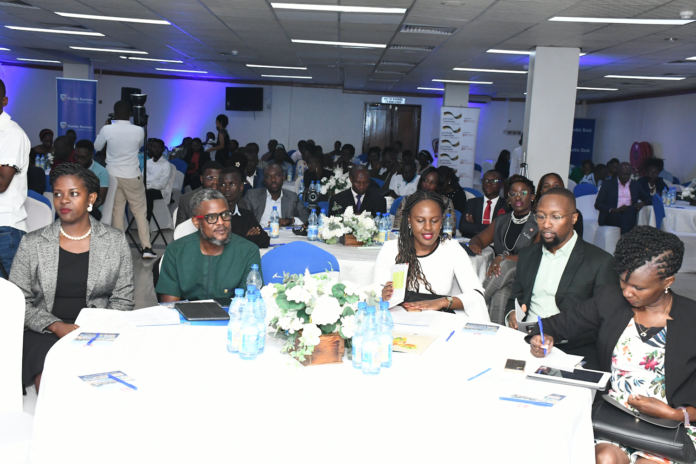
FXPesa, part of the global Equiti Group in Europe, United Kingdom, Middle East, Africa and Asia Pacific, has opened its first financial education centre in Uganda.

Located at Lumumba Avenue’s Rumee Building, the academy will primarily focus on providing quality and free financial education seminars and money management training, according to proprietors.

Speaking at the launch, Samwel Kiraka, the CEO, EGM Securities, Kenya subsidiary said the centre will also offer a wide range of valuable educational tools that will give Ugandans the knowledge they need to improve their financial literacy levels and empower them with practical skills to access and trade on the global markets.

Moonika Jurgenfeldt, the Commercial Director for Equiti Group in Africa, told reporters that the Ugandan FXPesa outlet would help the country’s initiatives to uplift the quality of life for its people through improved levels of financial literacy.  “Through FXPesa’s education programmes, we want to equip Ugandans to make informed financial and economic decisions that improve their income levels and drive economic growth.”

“FXPesa’s expansion into Uganda is in line with Equiti Group’s global growth strategy and investment in Uganda and the rest of Africa. As we expand our operations across Africa, we remain committed to providing accessible and reliable financial knowledge to communities across the continent.”

Norbert Kiiza Barigye, Education Lead for FXPesa Academy in Uganda, said: “We are thrilled that FXPesa Academy chose Uganda to launch their latest centre in Africa.

“Ugandans are very excited at the opportunity to learn more about financial literacy related to improving their wealth. The learnings will include risk controls, how to generate income by online trading and the convenience of safe deposits and withdrawals using mobile money.

“The numerous programmes offered by FXPesa will empower Ugandans with the right tools – as well as knowledge – to take sustainable decisions in the financial markets space.”

FXPesa, part of the global Equiti Group in Europe, United Kingdom, Middle East, Africa and Asia Pacific, has opened its first financial education centre in Uganda.

Located at Lumumba Avenue’s Rumee Building, the academy will primarily focus on providing quality and free financial education seminars and money management training, according to proprietors.

Speaking at the launch, Samwel Kiraka, the CEO, EGM Securities, Kenya subsidiary said the centre will also offer a wide range of valuable educational tools that will give Ugandans the knowledge they need to improve their financial literacy levels and empower them with practical skills to access and trade on the global markets.

Moonika Jurgenfeldt, the Commercial Director for Equiti Group in Africa, told reporters that the Ugandan FXPesa outlet would help the country’s initiatives to uplift the quality of life for its people through improved levels of financial literacy.  “Through FXPesa’s education programmes, we want to equip Ugandans to make informed financial and economic decisions that improve their income levels and drive economic growth.”

“FXPesa’s expansion into Uganda is in line with Equiti Group’s global growth strategy and investment in Uganda and the rest of Africa. As we expand our operations across Africa, we remain committed to providing accessible and reliable financial knowledge to communities across the continent.”

Norbert Kiiza Barigye, Education Lead for FXPesa Academy in Uganda, said: “We are thrilled that FXPesa Academy chose Uganda to launch their latest centre in Africa.

“Ugandans are very excited at the opportunity to learn more about financial literacy related to improving their wealth. The learnings will include risk controls, how to generate income by online trading and the convenience of safe deposits and withdrawals using mobile money.

“The numerous programmes offered by FXPesa will empower Ugandans with the right tools – as well as knowledge – to take sustainable decisions in the financial markets space.”

Stories Continues after ad

Uganda Human Rights Commission commended for socio-economic issues

The Uganda Human Rights Commission (UHRC) has been commended for capturing socio-economic issues in their 25th annual report.

Breaking away from the tradition of focusing solely on political and civil rights, the report sheds light on critical concerns such as hunger, landslides, disease outbreaks, environmental challenges, and access to essential resources like water and fishing.

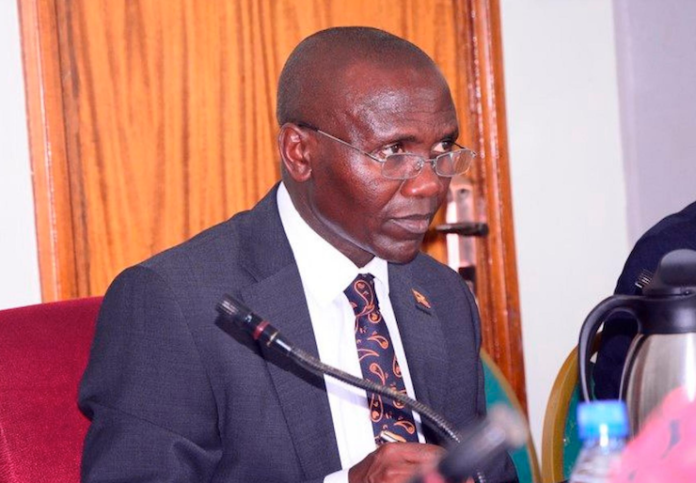
Kasaija praised the commission’s comprehensive approach, stating that the report acknowledged critical challenges that had been previously overlooked.

He also commended the UHRC for addressing concerns such as hunger, famine, landslides, and disease outbreaks, including the impact of ebola and COVID-19.

“I saw you mentioning things like fuel prices, talking about famine, talking about environment, social security, ebola, this for me is impressive because you are tackling the real issues that affect the people,” he said.

The report also delved into environmental issues and recognised access to water and fishing as fundamental human rights. Additionally, it highlighted the adverse effects of fuel prices on the lives of Ugandans.

The Clerk expressed his appreciation for the commission’s ability to inspect places of detention, which he viewed as good for democracy.

Wangadya highlighted the increasing number of complaints from citizens. 4,370 complaints were registered in 2022 compared to 3,624 in 2021. Out of the complaints, 691 cases were registered.

“We believe that our recommendations to the government , if complied with, will strengthen the promotion and protection of human rights in the country. We urge the Committee on Human Rights to consider the report with the importance they deserve,” she said.

Wangadya called upon the government to provide adequate funding for the commission, emphasising the urgent need to improve their salaries and address the depleted fleet of motor vehicles.

She also stated that currently they are heavily reliant on donor funding, and yet UHRC requires sustained support from the government to carry out its statutory obligations effectively.

Stories Continues after ad

Outrage as Bigirimana and family bid to train migrant workers

Bigirimana Pius

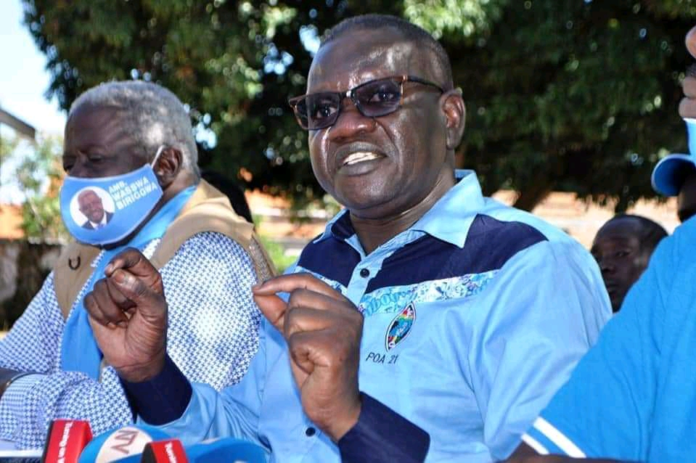
The Permanent Secretary to the Judiciary Pius Bigrimana and his family have applied for accreditation to train migrant workers in the country.

Bigirimana is one of the directors of Vision House Ltd and is the immediate former Permanent Secretary of the Ministry of Gender Labor and Social Development , an entity mandated to oversee the labor export business in the country.

According to an advert published in the New Vision, Stakeholders of Vision House Ltd include; Pius Bigirimana, Elizabeth Bigrimana, Simon Paul Ngabo, Claire Ngabire Hilda Patricia Kampire, Dorothy Kamikazi, Elizabeth Precious Bigrimana, Euzbia Maria Kaze, Peter Kimenyi Bigrimana, Cyprian Kirunga Bigrimana and Pius Mugesera Bigrimana.

Bigrimana was the Permanent Secretary Office of the Prime Minister at the time when Geofrey Kazinda diverted Government funds for personal benefits.

Bigrimana is not the only controversial civil servant engaging in the labor export business. One of the ministers in the Ministry of Gender owns a labor export firm despite the continuous mistreatment of Ugandan Migrant workers in the Middle East. Others are security officers in the UPDF, Iso who pays attention to earnings other than the welfare of the people they export.

Stories Continues after ad

Can Delta 8 Flower Enhance Your Performance In Your Next Tennis Game?

If you’re an athlete, you’ve likely heard of supplements or plant-based remedies that claim to enhance your performance. One such product is Delta 8 flower, derived from the hemp plant and often used for its calming and relaxing effects. With its non-intoxicating properties and reported benefits, some tennis players are turning to Delta 8 Flower to help them perform better on the court. But can it enhance your performance in your next tennis game? Let’s explore the science behind how is delta 8 flower different from cbd flower.

Can Delta 8 Flower Enhance Your Performance In Your Tennis Game?

First off, let’s talk about what a Delta 8 flower is. Delta 8 flower is a compound found in the hemp plant, and it’s similar to Delta 9 THC, the compound in marijuana that gets you high. However, unlike Delta 9 THC, Delta 8 flower has lower psychoactive properties, meaning it doesn’t produce the same intense high. Instead, it has a milder effect, often described as calming and relaxing. Some tennis players report that Delta 8 Flower may help them stay focused during games.

But does Delta 8 Flower enhance your performance on the tennis court? According to research, there is currently no evidence to support this claim. While some players may feel that Delta 8 Flower improves their game, its effects on performance are mainly subjective and not backed by scientific evidence. The U.S. The Anti-Doping Agency has deemed Delta 8 Flower a prohibited substance for athletes in competition, meaning it’s prohibited in professional sports.

Delta 8 Flower May Boost Confidence In A Tennis Game

When it comes to the game of tennis, it’s not just about physical prowess but also mental agility. Confidence is critical to performing your best and getting the winning edge. That’s where Delta 8 flower comes in. This unique cannabinoid has become increasingly popular in sports as more and more athletes discover its potential to boost mood and relaxation. Delta 8 flower may create a sense of calm and focus, allowing players to stay present at the moment. With this, players may step up to the court with a newfound sense of energy boost and take on their opponents with renewed energy. So whether you’re a seasoned pro or a weekend warrior, consider incorporating Delta 8 flower into your pre-game rituals. It is the missing ingredient to take your tennis game to the next level.

Might Help During High-Pressure Moments

The Delta 8 flower helps athletes zone in on their game during high-pressure moments, ultimately giving them an edge over their opponents. Delta 8 flower is also known to enhance a person’s ability to concentrate and remain calm even when faced with competitiveness. This may be particularly helpful during games involving precise movements, such as tennis, where a player’s focus is critical to success.

Concentration

If you’re an avid tennis player looking to up your game, consider trying Delta 8 Flower. While not intended to cure ailments or provide health benefits, some users report that Delta 8 may create a feeling of heightened focus and improved concentration. This could be especially helpful in a sport like tennis, where quick reflexes and split-second decision-making can make all the difference. It’s important to note that Delta 8 should only be used by adults in states where it is legal and that it is always wise to consult a doctor before taking any new substance. But it may be worth exploring further for those curious about this potential aid to their game.

How To Choose The Perfect Delta 8 Flower For You?

Delta 8 flowers have gained popularity in recent times in the world of cannabis. While the Delta 8 effects vs Delta 9 THC, it is far less overwhelming, making it a much more enjoyable experience. However, with the increasing variety of Delta 8 flower strains available, choosing the perfect one for you can be challenging. It’s essential to familiarize yourself with the different types of Delta 8 flowers to help narrow down your options. Start by researching the strains you’re interested in and read other users’ reviews, keeping an eye out for their characteristics, effects, and flavors. This will give you a clearer idea of which strain might suit you best. Consider your preferences in flavor, potency, and overall effects to ensure your best choice.

Is Delta 8 Flower Safe?

As the popularity of the Delta 8 flower continues to rise, many people are curious about its safety. While there isn’t a lot of research on Delta 8 flower specifically, early indications suggest that it could be a safe and effective alternative to traditional cannabis products. While Delta 8 flower is a form of cannabis, it has a much lower level of THC than conventional cannabis products. Many users report feeling calm and relaxed after using Delta 8 flower, without the paranoia or anxiety that can sometimes come with higher levels of THC. However, it’s important to note that, like any substance, Delta 8 flower may have side effects. Hence, starting with a low dose and talking to a healthcare professional before trying it is essential.

Legality

Another concern around Delta 8 Flower is its legal status. While Delta 8 Flower is permitted at the federal level, it’s still a gray area in some states. Some states have banned Delta 8 flower altogether, while others have yet to regulate it. Tennis players should know their local laws and regulations before trying Delta 8 Flower.

The Bottom Line

While some tennis players swear by Delta 8 flower for its calming effects and perceived performance benefits, the science doesn’t fully support its use for enhancing athletic performance. Additionally, before trying Delta 8 Flower, it’s essential to do your research and consult with a healthcare provider or coach to determine whether it’s right for you. Additionally, athletes should be aware of local laws and regulations regarding the use of Delta 8 flowers.

Stories Continues after ad

BoU, UBA commit to promote financial empowerment and Inclusion

Bank of Uganda, Uganda Bakers Association (UBA) Dfcu Bank and other financial institutions have reaffirmed their commitment to promoting financial empowerment and inclusion through its active participation in the ‘2023 Savings Challenge’ campaign.

The one-year Savings Challenge, scheduled to run until October 31, 2023, aims to empower individuals across Uganda to start small, save consistently, and grow their money to achieve specific goals. Aligned with the theme of the 2022 World Savings Day, “Start Small, Grow Big; Be Green Smart,” this challenge emphasizes the significance of making sustainable financial decisions.

Goretti Masadde, CEO of the Uganda Institute of Banking and Financial Services, expressed gratitude to Dfcu Bank for its participation in the Savings Challenge. Masadde acknowledged the opportunity to enhance financial awareness and capability, particularly given the financial shocks caused by the COVID pandemic. She stated, “With the participation of approximately 35 organizations, the Savings Challenge has already collected over Shs10 million; marking a promising start towards achieving the initiative’s objectives.”

Charles Mudiwa, CEO and Managing Director of Dfcu Bank, conveyed heartfelt appreciation to UIBFS and other financial sector stakeholders for spearheading an initiative aimed at cultivating a savings culture among the citizens of Uganda. Mudiwa emphasized that Dfcu Bank’s mission of transforming lives and businesses is deeply rooted in the importance of savings. He expressed concern about the prevailing inclination towards instant gratification, which often hinders individuals from fully embracing the rewarding journey of saving.

Mudiwa further commented, “As a responsible financial institution, Dfcu Bank recognizes our role as stewards of the world for future generations. We understand the importance of considering the long-term implications of our financial decisions. Through initiatives like the Savings Challenge, we aim to foster a sustainable approach to saving and investing, empowering individuals to make wise choices that not only benefit their own financial well-being but also contribute to a greener and more prosperous future for all.”

Tilda Nabbanja Turyagyenda, Team Leader of Financial Literacy at the Bank of Uganda, and Tibbs Orikiriza, UMRA Manager for SACCOs, acknowledged the challenges of saving while emphasizing the profound impact that small, intentional actions can have on our financial well-being. They emphasized the importance of taking gradual steps in the right direction, highlighting that even modest efforts can lead to significant improvements in our financial lives.

 As part of the competition, participating savers are required to share a 30-second video clip or a captioned image of their experience on popular social media platforms such as WhatsApp, Facebook, YouTube, Twitter, TikTok, using the hashtags #BOU, #UIBFS, #UBA, #DfcuBank, and #SavingsChallenge. A panel of three to five esteemed members will review and select the best stories and top savers, who will be awarded monthly prizes, culminating in the World Savings Day Convention on October 31, 2023.

Stories Continues after ad

Anita Among urges EAC speakers to reject homosexuality to protect African values

Speaker Anita Among

Speaker of Ugandan parliament Anita Among has urged her counterparts in the legislative assemblies of the East Africa Community (EAC) to support the Anti-Homosexuality Bill, (Amendment), 2023 in order to protect and preserve African values.

Anita Among revealed this at the Bureau of Speakers of National Legislatures and the East African Assembly held in Arusha-Tanzania on Friday, May 19.

“As you may all be aware, the Parliament of Uganda, which I am delighted to Chair, passed the Anti-Homosexuality Bill, which now awaits the President’s assent. The Bill was received with mixed reactions, especially from our foreign donors. However, as a People-centered Parliament, we stood for what majority of the populace wants,” Among said.

She added, “Our culture and values are rapidly eroding, because of the vice of homosexuality that is now taking a toll on our children. It is therefore my humble appeal to you all to join the fight to protect values.”

Anita Among said that the Bill will heavily contribute to the overall target of sustaining unity within the East African region.

 “Our culture and values as a Community are our identity, and it is what affords us due recognition. We must preserve and protect it,” Among said.

She however apologized for her inability to physically join the meeting due to the constitutional timeline within which the Parliament of the Republic of Uganda has to pass the National Budget.

“I am thankful that our gathering here today is an affirmation of our unwavering commitment to an East African Community that works for everybody, more especially, the common East African,” she appreciated.

The key agenda Items for the meeting were;

The Draft Bill on the Establishment of the Bureau as an Organ of the Community

Enhancement of cooperation between EALA and National EAC Legislatures

She noted that the Bill may require an amendment to Article 9 (1) of the treaty for the establishment of the EAC, given the absence of clear provisions in the Treaty of EAC providing for establishment of new organs.

“In the meantime, it will be grossly beneficial for us to have a Secretary General of EAC to engage with the EAC Heads of State on the sidelines of the subsequent Summit’ Among said.

She further revealed that since its inception, the East African Parliamentary Institute is yet to realize its full potential. Its growth and development is dependent on member legislatures meeting their subscription obligations. The parliament of Uganda reiterates its full support for a vibrant responsive and credible East African parliamentary institute.

She said Uganda is ready to host the institution in case no member state applies. Adding, “I hope that in our subsequent meetings, we will be able to review the recent East African Inter-Parliamentary Games held in Juba, South Sudan.”

“Honorable Colleagues, I underscore the need to form functional relationships between our National Legislatures, in line with passing resolutions, especially those that protect and serve the interests of our people,” she concluded.

Stories Continues after ad

Low awareness and control hamper hypertension fight in Africa

Hypertension

 Fewer than a third of people living with hypertension in the African region are on treatment, and only about 12% have the life-threatening condition under control, an analysis by World Health Organization (WHO) shows.

Globally, around 21% of adults aged over 30 years have hypertension under control, and 42% are taking medication for the condition. Hypertension is a major risk factor for stroke and heart attack—the cardiovascular diseases responsible for most deaths due to chronic illnesses in the African region.

In Africa, diagnosis, care and control of hypertension are constrained by low awareness about the condition, limited access to health services, overburdened health systems, health workforce challenges, lack of access to affordable medicines and non-compliance with drug regimens. Rising obesity rates, unhealthy lifestyles, along with insufficient patient education, compound the threat.

“Tackling this serious health threat requires stronger investment to increase access to health services to detect and manage the condition. It’s also vital to further raise awareness about hypertension and promote measures to address its modifiable risk factors,” said Dr Matshidiso Moeti, WHO Regional Director for Africa. “Across the region, we’re supporting countries to anchor initiatives aimed at decentralizing diagnosis, treatment and care of noncommunicable diseases, to improve well-being and curb deaths.”

WHO has prioritized its work with governments, partners and civil society to address the threat of hypertension and other noncommunicable diseases. Twenty-seven countries have been supported, through an approach known as WHO-PEN, to decentralize the management of noncommunicable disease, including hypertension, at primary health care level. Services include screening and diagnosis, treatment, lifestyle modification, patient education and self-management.

Building on WHO-PEN, in 2022 African countries adopted a strategy known as PEN-Plus. This approach aims to reinforce the capacity of district hospitals and other first-level referral facilities for early diagnosis and subsequent management of severe noncommunicable diseases, including complicated hypertension, to lower deaths.

The PEN-Plus strategy has shown promising results in Liberia, Malawi and Rwanda, with a significant increase in the number of people accessing treatment for severe chronic diseases.

WHO is also working with partner organizations to support countries in the African region to develop and implement regulatory standards and fiscal measures to promote healthy diets, physical activity and other positive behaviour changes. Tobacco and alcohol use, as well as being overweight or obese, are significant risk factors for hypertension.

 “Although targeted initiatives are delivering success, further efforts are needed to lower the high burden of noncommunicable diseases in Africa,” Dr Moeti said. “Primary health facilities, which are on the frontline of healthcare and so ideally positioned to deliver health promotion and prevention services, must be fully supported and strengthened.”

Stories Continues after ad

Money Markets: Dollar dominates major currencies throughout the week

Dollars

The currency has maintained trading within a narrow range between the 3717 – 3730 trading range as corporates remitted mid-month taxes during the week, Catherine Kijjagulwe, Head of Trading at Absa Bank Uganda said.

The flows from NGOs and commodity exporters were comfortably balanced by the demand tickets that filtered into the market. End-of-month inflows should start trickling into the market during the week and unless there is significant activity on the demand side, the unit is anticipated to maintain trading within a narrow range between the 3680 – 3770 trading levels.

She said Money Markets were fairly liquid during the week with overnight yields trading within the 10.00% -11.50% trading levels. Bank of Uganda held a 5-year and 20-year Treasury Bond auction on Wednesday and yields cleared at averages of 14.750% and 16.250% respectively in an auction that was well subscribed. Bank of Uganda is scheduled to hold a Shs185 billion Treasury Bill auction on Wednesday May 24, 2023.

The Kenya shilling remained weak overall during the week with continued requirements by dollar buyers. Inflows from the tea sector gave very minimal reprieve. The unit is still likely to trade within the 137.00-140.00 trading levels in the coming days.

“The dollar remained strong overall against most major currencies during the week as markets monitor progress on the US debt ceiling negotiations. A fall in US jobless claims to 242k from 264k was also dollar positive,” she said

The Euro touched highs of $1.0847 (Shs4058) on Thursday but later closed weaker at the $1.0769 (Shs4029) level.

The Pound briefly touched highs of $1.2492 (Shs4673) on Thursday but later settled at the $1.2408 (Shs4642) level.

Brent crude traded at $76.53 (Shs286,331) a barrel and West Texas Intermediate at $72.45 (Shs271,066) a barrel – trading marginally higher with optimism about the debt ceiling negotiations and possible improvement in global demand in the coming months.   Gold traded at $1966 (Shs7.3 Million) an ounce.

Stories Continues after ad

Museveni urges private sector to invest in untapped tourism resources

President Museveni

President Yoweri Museveni has urged the Private Sector players to invest in the development of untapped tourism resources in Northern Uganda especially Fort Patiko and other historical sites.

Museveni also cautioned the private sector to put in place educational recreation services in all museums located in the entire region adding that the move shall make our country attractive not only to international tourists but also to domestic tourists.

He made the call in a speech read for him by Vice President Jessica Alupo during celebrations to the mark the International Museum Day 2023 in Gulu city organized under the theme, “Museums our Heritage”

Museveni further said that the improvement of connectivity through the development of tourism roads, the revival of the national carrier, Uganda Airlines, the conservation of our heritage as well as the promotion and showcasing of the potential of museums will diversify Uganda’s tourism offering, thus accelerating the national socio-economic growth.

He reiterated that the development of museums is a firm foundation for the dissemination of skills, knowledge, and information inherited from our great-grandparents in the advancement of civilization and technological innovation such as herbal medicine, architecture, and creative and performing arts which were used to solve societal problems, promote cultural tourism and empowerment of citizens to live in harmony.

He implored new cities like Gulu, Lira, Arua, Soroti, Fort Portal among others, to develop leisure and sports facilities that accommodate infrastructural developments of museums, to enable tourists to explore the country and equally helps in showcasing the cultures of this country.

This is why our national theme is; Museums, Our Heritage, the president emphasized.

Museveni further noted that museums in this country should be centers of showcasing our beautiful environment, memory, diversity, inclusivity, and socio-economic transformation.

He stressed that Uganda stands alone as a beautiful country endowed with diverse natural and cultural heritage.

Museveni said in northern Uganda, there are several tourism sites like Fort Patiko, Murchison Falls National Park, Aruu Falls, Tututuru hills, and Kabalega-Mwanga sites with rich ancient historical and archaeological information to be packaged for tourism development.

He told the congregation that the Government has now prioritized the development of supportive infrastructure to catalyze investments and the development of these sites.

He noted that the NRM Government has rolled out the Parish Development Model (PDM) to every Parish in this country to help fight household poverty.

He said NRM is extending the wealth creation programme country-wide, and maximizing prosperity everywhere, which will truly lead to broad-based peace among people and the nation.

“I am reliably informed that through sustainable conservation of Nature and Cultural Heritage, communities through PDM can benefit from the creation of one village, one product model, based on iconic heritage sites within our villages/parishes. For instance, I encourage the local communities to come up with handcrafts unique to their clans or totems that can be sold at these heritage touristic sites,” he said.

The Minister of Tourism, Wildlife and Antiquities, Col. Tom Butime explained that the Tourism Programme is alive to the 2021-2026 NRM manifesto which recognizes tourism as an important source of growth with great potential for employment creation and foreign exchange earnings.

Evidence available indicates that Tourism has been growing consistently since the restoration of peace and security, and the sector continued to be the leading foreign exchange earner contributing $1.37 billion, as well as Shs6.17 trillion to Uganda’s GDP and employing over 6% of Uganda’s labor force.

Butime explained that the aim of the Museums and Monuments Act 2023 passed by Parliament this year, will consolidate and reform the law concerning the conservation of natural and cultural heritage; strengthen the management of cultural and natural heritage, classify museums, preserve and develop museums and monuments, the tangible and intangible heritage and also collect creative works of art.

He said Article 15 (1) provides for the establishment of city, regional, and district museums in Uganda.

“Therefore, our purpose for celebrating this year’s International Museum at Gulu city is to lay the foundation for the cities in Uganda to embrace developing museums as products for cultural tourism attraction,” Butime said.

A day earlier, in commemoration of the day, various high Value Tourism Opportunities in Northern Uganda had been highlighted.

Doreen.S. Katusiime the Permanent Secretary in the Tourism Ministry mentioned

Fort Patiko, which is within the vicinity of Gulu City marks a very important slave trade trail, which includes Fort Dufile (Moyo District) and Fort Wadelai (Nebbi District); in West Nile. “All the three sites host adequate land for top-notch tourism concessions”, she said.

The PS also made special focus on the Soroti Museum with four (4) acres for tourism concessions. “The most important factor to note; is that the Soroti Museum sits on prime land in the heart of the Soroti urban centre”, Katusime said.

Other high-value land for tourism concessions for Rock Art Sites are in Nyero (Kumi District), Mukongoro (Kumi District), Kakoro (Palisa District), Komuge (Bukedea District), Kapir (Ngora District).

The designation and inclusion of Napak (Karamoja region) in the first 100 International Union of Geological Sciences (IUGS) Geological Heritage Sites was also highlighted.

Stories Continues after ad

Education Cannot Wait announce Shs15.3b grant towards escalating influx of refugees

Education Cannot Wait (ECW) has announced a $4.1 million (Shs 15.3 billion) grant in response to Uganda’s evolving and escalating influx of refugees.

The 12-month grant will be delivered by UNHCR and Save the Children and reach out to over 130,000 children and adolescents in the areas of Uganda that have been most affected by recent influxes of refugees, including Nakivale, Rwamwanja, Palabek and Rhino Camp.

The new investment aligns closely with the Government of Uganda’s Education Response Plan for Refugees and Host Communities.

“With more refugees seeking safety in Uganda, we must fully support the Government of Uganda’s Education Response Plan and ensure children and adolescents can quickly access protective learning environments, mental health and psychosocial services, school meals, scholastic materials, classrooms and teachers. Their education cannot wait as this is a protracted situation and their needs, as well as their rights, are our priority. I urge world leaders and public and private sector donors to enable Education Cannot Wait to support the collective, coordinated and urgent response in Uganda,” said Yasmine Sherif, Executive Director of Education Cannot Wait, the United Nations global fund for education in emergencies and protracted crises.

Uganda hosts the largest refugee population in Africa and the third largest in the world. With armed conflicts, climate change and other crises affecting neighbouring countries, the number of refugees arriving in Uganda has jumped substantially in recent years. In 2022, over 140,000 refugees entered Uganda, primarily from the Democratic Republic of the Congo and South Sudan. UNHCR expects an additional 120,000 will arrive this year.

While the Government of Uganda has taken substantial steps to provide access to essential services including education to refugees’ schools are crowded, resources are strained, and girls and boys face increased risks of child marriage, early pregnancy, hunger, dropping out, post-traumatic stress and other challenges.

“Many refugees arrive in Uganda having experienced several cycles of violence, with urgent protection and life-saving assistance needs. Children and youth require education services to resume a sense of normalcy, acquire numeracy, literacy and life skills, while minimizing the risk of violence and exploitation caused by displacement,” said Matthew Crentsil, UNHCR Country Representative. 

“I laud Education Cannot Wait for availing this much-needed First Emergency Response funding contribution, which will support children’s access to quality education through upgraded infrastructure, additional teachers, and scholastic materials. The ongoing refugee influx has led to a significant increase in the number of school-age population, resulting in constrained education services.” he said.

 ”Save the Children appreciates the contribution by Education Cannot Wait towards ensuring that newly arrived refugee children are provided with learning in safe environments. We are committed to work with partners and support the Government of Uganda in ensuring that girls and boys who are affected by humanitarian crises recover from the impact of conflict and have continued access to their right to quality education,” said Dragana Strinic, Save the Children Country Director, Uganda.

The investment will increase the capacity of early childhood development centres, non-formal education, and primary and secondary schools across the targeted areas, supporting the enrolment of additional learners and new arrivals.

There will be a particular focus on girls and children with disabilities. As new arrivals have lived through truly horrific ordeals, including losing their homes and their loved ones, many suffer from post-traumatic stress. The investment will help learners to manage stress and conflict, and improve their self-confidence, self-esteem, and social skills with direct mental health and psychosocial support services.

To improve the quality of education, the investment will provide learning materials, teacher training, language programmes and other support to foster safe and protective learning environments. 

Stories Continues after ad