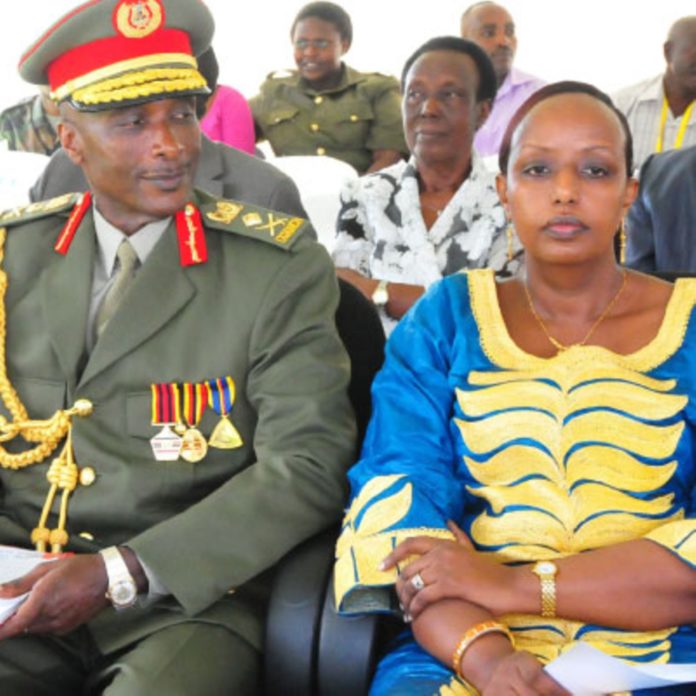
Gen.Kayihura and wife at the past piping ceremony in Mbuya.
The former powerful Inspector General of Police Edward Kalekezi Kayihura aka Kale Kayihura is set to be retired from army in July.
According to documents seen by EagleOnline, the four-star army general will retire with 10 other generals from Uganda Peoples Defence Forces (UPDF).
Those that are due for retirement are generals, senior officers, junior officers whose pending retirement with batch 13 was shown against their names including dates of retirement.
Gen. Kayihura whose army number is RO/00513 is currently battling with charges in the military court for failing to protect war materials between 2010 and 2018 by issuing arms to unauthorized persons. However, his closeness with First son and Senior Presidential Advisor on Special Operations Gen. Kainerugaba Muhoozi could save him from case at court martial
Another notable soldier to retire is Lt. Col. Juma Serown Seiko. Seiko has been a long serving Aide de Camp (ADC) of Gen Salim Saleh.
The army leadership plans to retire 261 generals, senior officers and junior officers in July. The list has 23 Colonels, 16 Lieutenant Colonels, 79 Majors and 64 Captions on the list to be discharged from service in July with the lowest rank being that of Lieutenant.
Lt. Gen. james Nakibua Lakara RO/01567 will be second highest ranking officer after Kayihura to retire at the same event and the two will be retired at Ministry of Defence headquarters in Mbuya.
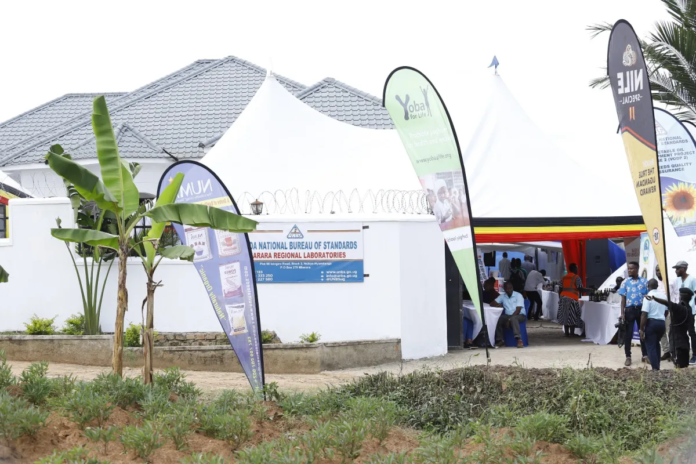
The Uganda National Bureau of Standards (UNBS) has commissioned a state of the art food and safety laboratory in Mbarara City.
The first of its kind facility in the region, the lab will handle all technical aspects of acquiring certification.
Speaking at the launch, the UNBS Executive Director, Mr. David Livingstone Ebiru, said since lab testing is one of the key components of conformity assessment, standards compliance and quality assurance, it is important that UNBS decentralises its laboratories to take services nearer to the people.
“Initially all businesses were seeking UNBS certification from the head office in Kampala. However, UNBS has decentralised testing services to Northern region, Eastern region and now Western region in order to reduce the cost of doing business,” Ebiru said.
“We have started with labs in Gulu, Mbale and now Mbarara. Next in line is the Rwenzori region; Hoima to support oil and gas; then West Nile; Arua because of the volume of cross border trade that happens in this region,” he added.
The Laboratory Equipment worth USD 4,455,283 was donated by Trade Mark Africa funded by the Danish Government.
“We want to appreciate the government of Denmark through TradeMark Africa who invests in quality infrastructure. We thank you for the support in enabling the decentralisation of UNBS Testing services to different parts of Uganda,” Ebiru said.
Danish Ambassador to Uganda Signe Winding Albjerg said the decentralisation of lab services is always paying off.
“Following the previous UNBS Labs launched in Mbale and Gulu, we have seen a reduction in turnaround time of testing products. We have seen increased consumer protection due to an increase in the number of products tested in the labs and increased cross border trade of the tested products,” Ambassador Albjerg said.
“I call upon the business community to take advantage of the western region labs to further grow their businesses for their local market and the international market,” she added.
The lab is located along Isingiro Road, Block 2, Nsikye-Nyamitanga.
The area LC1 Chairperson, Mr. Kabagambe Ignatius, urged UNBS to curb sub-standard goods in the Western region by sensitising manufacturers that UNBS is not against them but it exists to help boost their businesses.
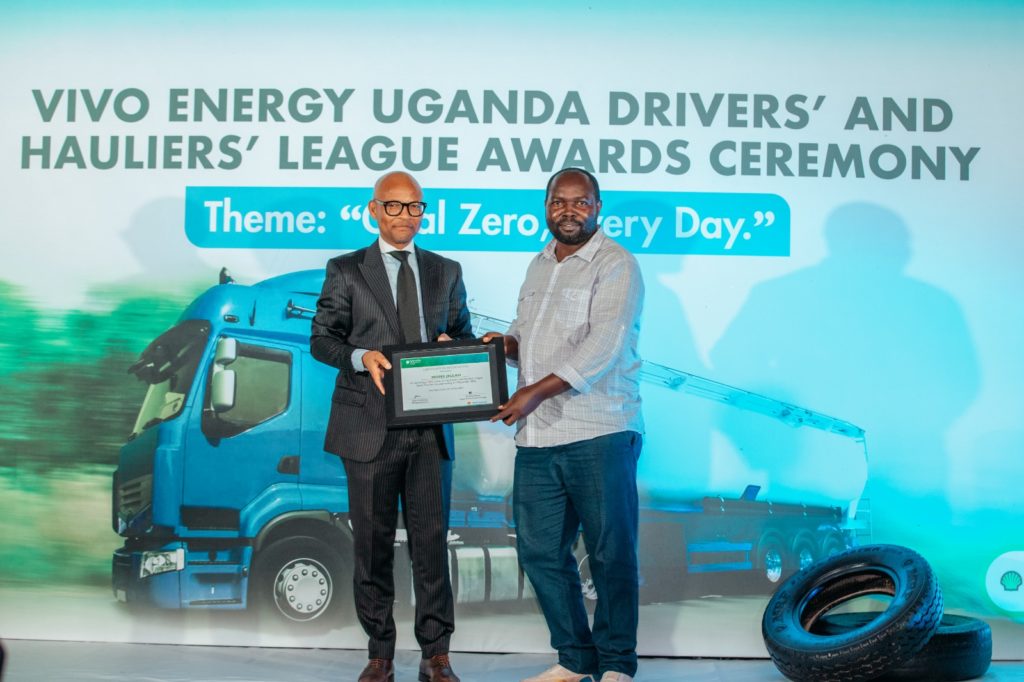
Vivo Energy Uganda, the distributor and marketer of Shell-branded fuels and lubricants in Uganda, has today awarded over 400 of its high performing truck drivers and six (06) transporter companies at its annual Drivers’ and Haulier’s League award ceremony held in Kampala, under the theme: “Goal Zero, Every day.”
The Drivers’ and Hauliers’ League awards, now running for more than 20 years in Uganda, is a structured process for measuring the performance of the drivers’ road safety behaviour and compliance. The drivers’ performance is scored every month, with quarterly awards that culminate in an annual recognition. The drivers are categorised into classes A, B and C, depending on how they perform.
The award ceremony is an opportunity for Vivo Energy Uganda to recognise and motivate the drivers’ commitment to health and safety on the road and is also a celebration of the safety record upheld by the transporter companies annually. Road transport accounts for most of the importation of fuel products. The drivers demonstrated outstanding professionalism as they delivered Shell fuels without any road transport incident in the year 2022.
According to the Vivo Energy Uganda Managing Director, Johan Grobbelaar, “The Drivers League programme seeks to ensure that our drivers observe high professional conduct and operate the highest road safety standards. In so doing, our products are safely delivered to the country and to our customers. This is in line with the objective of UN Decade of Action for Road Safety which is to prevent at least 50 percent of road traffic deaths and injuries by 2030.”
“The League also aims to reinforce our target of Goal Zero, which is our continuous commitment to run our business without causing any harm to people, assets and the environment. We thank the government for the continuous support and our transport companies for adherence to the best road safety practices to ensure that we meet our Goal Zero ambition,” he added.
The overall best driver, Mr. Moses Jellah, works with AOB Transport Company Limited. Jellah scored 100 percent for his hard work, operational excellence and adherence to the company’s road transport safety protocols. He did not register any traffic violations or accidents during the year.
The other drivers awarded were Fred Kayanja from Uganda Transport Agencies Limited, Ssegawa Nathaniel Rogers Ssegawa (Fuels driver) and Joseph Ssenyonga (Lubricants driver) from Fred Sebyala Transport, Ronald Wanyonyi (Fuels driver) from SIBED Transport Company, Ibrahim Mohammed Ali from Dakawou Transporters Limited and Anthony Kamande Ngugi from Multiple Hauliers East Africa Limited. Over 400 other drivers were also recognized for exemplary performance and achieved the Class A category.
Speaking at the ceremony, representing the Guest of Honour, Hon. Gen. Edward Katumba Wamala the Minister of Works and Transport, Mr Karim Kibuuka – Principal vehicle Inspector hailed Vivo Energy Uganda for its role in championing road safety in its operations and the community through its campaigns such as ‘Tweddeko’ Every Life Matters. He urged all stakeholders in the transport industry to benchmark the best practices to avoid accidents and save lives.
“The high rate of road crashes in Uganda is mainly attributed to human error followed by the poor state of motor vehicles. The government has, through various initiatives, continued to advise all motorists to observe the basic road safety rules while on the road. Adherence to these basic tips shall enable us to reduce further the road crashes experienced currently,” he advised.
Slum settlement in Kampala that are occupied by urban poverty.
There was little progress in poverty reduction in Uganda during much of the decade leading up to 2019/20. Numerous shocks not only reduced economic growth, they also hampered the ability of households to increase their income, says a new World Bank poverty assessment report, Strengthening Resilience to Accelerate Poverty Reduction in Uganda.
According to the report, released today in Kampala, about 30% of Ugandans were poor in 2019/20, a percentage only slightly lower than 31% in 2012/13. The poverty rate used in the World Bank study is based on revisions made to the poverty line by the Uganda Bureau of Statistics in 2021.
Joseph Enyimu, Acting Commissioner in the Ministry of Finance, Planning and Economic Development, has described these revisions as expanding the scope of Uganda’s poverty measurements to cater for the cost-of-living in the country within the context of modernizing societal aspirations and rising standards of living.
Shocks have disproportionately affected Uganda’s poor and rural residents, according to the report, with 40% of rural and 30% of urban households experiencing at least one since 2013. About 90% of farmers report that climate conditions have grown worse for agriculture over the last decade.
Given the limited amount of social assistance available in Uganda and the low resilience of households, “the poor were more likely to use detrimental coping strategies, such as reducing food consumption, which could have negative consequences for their human capital in the long run,” said Mukami Kariuki, the World Bank’s Country Manager in Uganda. “As a result, at least 50% of Ugandans remain vulnerable to the risk of falling back into poverty in next two years.”
“Productive economic opportunities outside agriculture build resilience but these were not easily accessible to the poor,” said Nistha Sinha, a World Bank Senior Economist and one the report’s two lead authors. Strategies that are known to increase people’s incomes—such as the transition from subsistence agriculture to non-farm activities and migration from rural to urban areas—proceeded at a faster pace among the wealthier and more educated but were not readily accessible to the poor. #Covid-19 slowed down this structural change and pushed many people back into subsistence agriculture.
“Education, health, and access to basic services are crucial for building resilience and for equipping a fast-growing population with the opportunities and skills needed to earn higher incomes,” said Aziz Atamanov, World Bank Senior Economist and the other lead author.
The report demonstrates that access among children to such basics as electricity, education, sanitation, water, and health remains far from universal. The #Covid-19 pandemic stalled the progress Uganda had been making in improving human capital growth, particularly in education.
The study also examined telecommunication services, an increasingly important factor in people’s lives and in income-earning prospects. Closing the digital infrastructure gap stimulates economic growth and is especially relevant given Uganda’s large population of youth. Yet the sector is held back by limited competition, which gets in the way of making digital services more affordable for existing users and discourages take-up by new users, who are typically less well-off.
The report calls for a two-pronged approach to poverty reduction. The first part of the approach is to raise productivity and income-earning opportunities by investing in the development of human capital. Targeting lagging regions and the country’s most vulnerable groups, reducing barriers and costs to non-farm opportunities, and increasing competition in the telecommunications sector are all seen as vital to this. The second part is to strengthen household resilience both by addressing deficiencies left in human capital and by expanding safety nets for both Ugandans and refugees to lessen their vulnerability at household level. Ideally, social protection programs should also be accompanied by policies to promote the sort of non-traditional insurance and savings schemes that could prove viable in the large informal sector in Uganda.
A police officer has shot and killed Uttam Bhandari, a money lender from TFT Financial Services.
He was killed at Financial Services offices on Raja Chambers along Parliamentary Avenue.
The murdering of Bhandari was confirmed by Kampala Metropolitan Police Spokesperson, Patrick Onyango.
Onyango said the shooting incident happened in Room 4 in the basement. The killer who is also a police officer had come to verify his loan balances. The killer officer who is currently on run has been identified as Ivan Wabwire.
“The Deceased was shot at using an AK47. After the shooting, he jumped on a boda and rushed to CPS Kampala where he abandoned the killer gun. Efforts are being made to have the suspect arrested for further inquiries,” he said.
“The police officer came to the TFT Financial Services offices yesterday trying to get the calculations of his loans. He acquired two loans in 2020. The first loan was coded directly from his salary whereas the second loan is not coded. He used to pay every time he got money,” Onyango said.
He said when they calculated for him, he said TFT Financial Services was demanding him Shs2.1 million. A team of Police officers led by KMP Commander SCP Steven Tanui responded and cordoned off the scene.
“Relevant statements were recorded from key witnesses and some of the workers of TFS financial services. The body was conveyed to Mulago city mortuary. We condemn the act of using guns to solve problems. Instead security personnel should use peaceful means to manage conflict,” Onyango said.
Banks play a critical role in the economy by providing loans and financing to businesses and individuals. However, the downside of lending is the risk of borrowers defaulting on their loans, leading to non-performing loans (NPLs). NPLs can tie up a bank’s capital, reduce its profitability, and damage its reputation.
Loan default is mainly caused by charging high interest, increases in business operating costs, poor risk assessment, and poor loan monitoring.
The Bank of Uganda Quarterly Financial Sector Review report indicates that as of September 2022, the industry ratio of non-performing loans (NPLs) to total loans (NPL ratio) for banks, which is a key indicator of credit risk, remained stable at 5.2 percent compared to 5.3 percent in June 2022.
The use of professional debt recovery agencies can be an effective way for banks to reduce their non-performing loans, improve their financial performance, and manage their credit risk more efficiently.
Firstly, professional debt recovery agencies have specialized tools and techniques to locate and negotiate with defaulters. They have expertise and experience in recovering debts from customers who have defaulted on their loans. Debt recovery agencies have trained staff who use various methods to track down the defaulters, including skip tracing and credit bureau reporting. They can also negotiate with defaulters to come up with a repayment plan that works for both parties.
Secondly, debt recovery agencies have legal knowledge and expertise in handling debt recovery cases. They understand the legal procedures involved in recovering debts and can help banks avoid costly legal mistakes. This is particularly important in countries with complex, ever-changing debt recovery laws and regulations.
Thirdly, engaging a debt recovery agency can be more cost-effective than trying to recover the debt in-house. Banks can save time and money as they don’t have to invest in training employees or purchasing tools and software. By outsourcing debt recovery services to a professional agency, banks can focus on their core business and leave the debt recovery process to experts.
Fourthly, using debt recovery agencies can help banks preserve customer relationships. Banks can maintain a professional relationship with their customers by hiring a third-party debt recovery agency. This is because the agency acts as an independent third party, and the bank is not seen as the aggressor. This can help minimize the risk of damaging relationships with customers who may be struggling to repay their loans.
In conclusion, the use of debt recovery agencies can be a valuable tool for banks in managing their non-performing loans. By engaging a professional debt recovery agency, banks can improve their debt recovery process, reduce costs, and maintain good relationships with their customers. This can help banks reduce their credit risk, improve their financial performance, and strengthen their position in the market.
The writer is a debt recovery expert and Managing Director at Smart Skills Limited
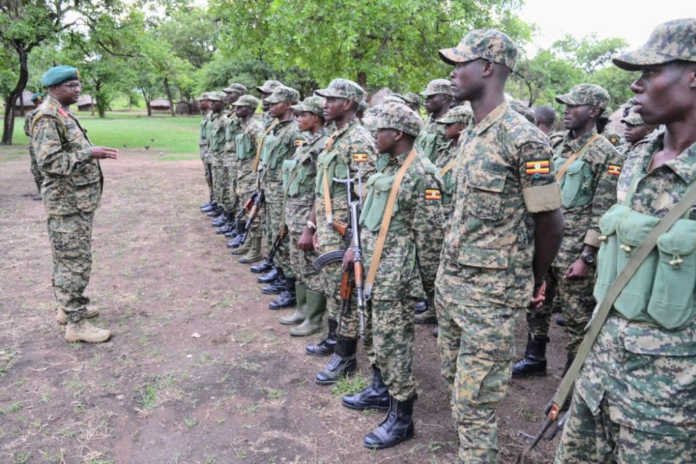
The Uganda Peoples’ Defence Forces (UPDF) has deployed additional troops in the 3rd Division, Karamoja sub-region to maintain peace.
The 501 Infantry Brigade under the command of Col. Bernard Kashemeza is headquartered in Abuku, Abim district whereas the 81 Infantry Battalion commanded by Maj. Stephen Omonyi which previously operated in Abim was re-adjusted to cover Agago district.
This follows a recent joint security assessment of the situation led by Brig. Felix Busizoori, the Deputy Division Commander who pitched camp in the district last month.
“Based on the security situation and assessment, we have tactically deployed and re-adjusted troops for peace to prevail. Peace in Abim means peace to Otuke, Agago and parts of Kitgum,” Brig. Busizoori said in a meeting with district leaders.
The Brigade size troops are tasked to conduct decisive operations to secure Abim district while 81 headquartered at Labworodwong barracks will take charge of Agago district.
James Shilaku, Resident District Commissioner (RDC) Abim, said district leaders and residents welcomed the new deployments stating, “The UPDF has given us good shape and commitment to change the previous situation to a peaceful one.”
He noted that previously the security situation in the district was characterized by isolated incidences of murder, cattle thefts, arson and kidnaps by some criminal elements yet Abim is a non-raiding community.
The RDC appealed to the residents to cooperate with security forces in providing timely and accurate information regarding criminal elements for a prompt response.
Capt (Rtd) Yuventine Omara, the LCV Chairperson thanked the UPDF leadership for honoring the district’s request for additional deployment of troops.
The Chairperson explained that the Abim district council passed a resolution and offered UPDF 300 acres of land in Arerek sub-county. He asked the Division leadership and Military Land Board to closely work with the district to expedite the title process.
Omara called on the local council system to work as a team and desist from charcoal burning vice as it depletes forestry cover and worsens environmental degradation.
The deployed Brigade was received and oriented by Col. Wilberforce Karate Sserunkuma, the acting deputy 2nd Division Commander and outgoing 405 Brigade Commander.
Col Karate is a seasoned and historical senior officer who has commanded troops in various battle engagements including foreign missions and stood the test of time. He was elevated in the recent army appointments and will soon hand over the command mantle to his incoming counterpart, Col. David Byaruhanga.
President Yoweri Museveni has revealed that Uganda is ready to work with the government of Algeria to develop her energy sector.
H.E Museveni on Thursday met a delegation from Algeria led by their Minister of Energy and Mines Mr. Mohamed Arkab who called on him at State House Entebbe. These were in Uganda to follow up on the memorandum of understanding signed when President Museveni visited Algeria in March this year 2023.
The two energy ministries discussed collaboration and partnerships in four (4) areas that included among others Oil Refinery, financing the East African Crude Oil Pipeline and Electricity Generation.
President Museveni thanked his Algerian Counterpart H.E Abdelmadjid Tebboune for responding very well to the signed memorandums and noted that the four areas agreed upon “are all very good and important for us,” Museveni said.
“We need the refinery because it solves our problem 100% and we will be happy to work with the Algerians,” Museveni noted.
The President said the East African crude oil pipeline is not only good for Uganda but also the region in what he termed as the Pan-African spirit since it will also transport the petroleum of Congo and Tanzania.
On electricity generation, H.E Museveni said Uganda needs more support in solar power generation, wind power, geothermal and nuclear in some other places now that Uganda is targeting to have 52,000 megawatts by 2050.
“Anything you pick to work with us will be adding to our capacity,” Museveni said.
The Algerian delegation together with Uganda’s Energy Ministry also discussed the possibility of working with Uganda National Oil Company (UNOC) to develop the Kasurubani block near the central processing facility that is being constructed at Tilenga and UNOC has already got the license from the Minister of energy.
“They seem to agree that it would be good to have an African government coming in to help an African government taking in consideration the pressure that we’re having where we’re seeing banks pulling out from supporting developments of petroleum products,” Ruth Nankabirwa, Uganda’s energy Minister said.
Minister Nankabirwa informed the President that the transmission line that will enable Uganda to trade with South Sudan has not got support and it’s an area where the Algerian partnership comes in handy.
Algerian Minister of Energy and Mines Mr. Mohamed Arkab thanked President Museveni for accepting to work with Algeria in the energy sector and described his engagement with Uganda’s energy ministry as fruitful.
“We have shared and discussed what you need. Well try to work on this commitment before the arrival of our technical teams next month in June,” Mr. Mohamed Arkab.
On the other hand, President Museveni was happy to learn that Algeria has allowed Uganda to export milk into their country and that negotiations with Ugandan milk processing companies were in high gear.
Rachel Rwakatungu has been appointed the new Credit Director at Absa Bank Uganda.
Rwakatungu is a seasoned banker with a wealth of experience in the banking and financial services industry, business, and regulatory risk. She brings significant sector experience to her new role and has also worked in Tanzania and South Africa.
Prior to joining Absa Bank Uganda Ltd, Rwakatungu worked as Senior Credit Manager at Stanbic Bank Uganda Limited where she was responsible for the end-to-end risk management process, credit approval, and steering risk.
She also worked at Standard Chartered Bank in various capacities such as Senior Credit Analyst, Relationship Manager under Corporate Banking, and the Head of the Client Service Group.
As the Credit Director, Rwakatungu will be responsible for overseeing the credit risk management function of the bank. This includes developing and implementing credit risk policies, procedures, and strategies, as well as ensuring compliance with regulatory requirements.
Speaking on her appointment, she said, “I am excited to be joining Absa Bank Uganda Ltd at such a crucial time in its growth journey. I look forward to working with the team to drive the bank’s credit management function, and to ensure that we continue to provide our customers with innovative and tailored credit solutions.”
Mumba Kalifungwa, the Managing Director of Absa Bank Uganda Ltd, said, “We are delighted to welcome Rachel Rwakatungu to our team. Her vast experience and expertise in credit risk management will be invaluable as we continue to grow and strengthen our position in the market. We are confident that she will play a key role in driving our credit risk management function to new heights.”
Rwakatungu holds a Master’s degree in Business Administration from Eastern and Southern Africa Management Institute (ESAMI), Postgraduate Diploma in Financial Management from Uganda Management Institute (UMI), various credit certifications including Credit Skills Assessment Program, Corporate Credit Curriculum, and a Bachelor of Statistics from Makerere University.
She is also certified in Valuation and Corporate Strategy from the Erasmus University of Rotterdam, Negotiation from the University of Michigan, and International Trade Finance from the London Institute of Banking and Finance.
M1911 Pistol: Kampala rich are seeking to acquire guns because of insecurity
An assailant has shot and killed an Indian businessman at Raja Chambers along Parliamentary Avenue. The incident happened at around 1:20 PM. The area has since been cordoned off. Developing story.