Stanbic Bank
Stanbic Bank
20.5 C
Kampala
Stanbic Bank
Stanbic Bank
Home Blog Page 433

Tayebwa flags off road safety awareness campaign

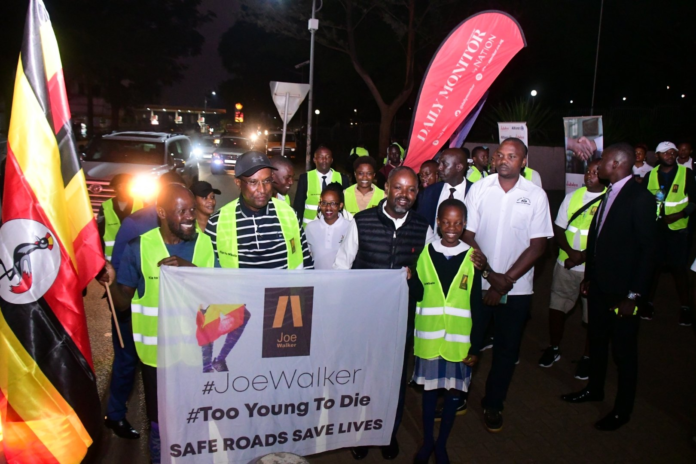
The Deputy Speaker of Parliament Thomas Tayebwa has on Monday, February 6, 2023, flagged off a 225km road safety awareness walk where Mr. Joseph Beyanga, will be walking from Kampala to Mbale City.

Mr. Beyanga, who is the head of Kfm radio under Nation Media Group Uganda (NMG-U), was flagged off at Independence Monument Speke Road, at 6:30 am.

Tayebwa who sanctioned the second edition of the walk, dubbed, Joe Walker said the cause Mr. Beyanga is championing is a concern ‘for all of us’.

“Recently I lost a brother-in-law in an accident; we lost our brother and wife, Hon. [Patrick] Okabe, and very many other people we might not know. What he is doing, he is doing it for us. He is not just doing it for himself. He is bringing core issues to the fore and this brings to the fact that every citizen has an obligation,” Tayebwa said.

The Deputy Speaker added that road safety should be a concern of everybody and that it requires mass mobilization.

“You don’t need to be occupying a position of responsibility, but from whoever you’re, whether you’re an ordinary citizen, or you’re a so-called VIP, there are matters which require public mobilization. Accidents, issues of the environment, these are issues [that] you can’t shoot down with a gun,” Tayebwa noted, also listing poor time management among the leading causes of accidents on the road.

“I think one of the biggest causes of accidents and traffic jams in Uganda is because we don’t respect time. As someone knows that I have to go to a certain duty, I need around one hour of traffic jam but they choose to come around 30 minutes late then they start fidgeting on the road, some of them even abandon their cars and just jump on boda bodas and sometimes knocking people along the way. It’s very important to keep time in whatever we are doing.”

Tayebwa said Mr. Beyanga had challenged parliament as an institution to do much more in terms of legislation, appropriation, and ensuring that it passes laws that are implementable.

“This gives us a challenge as a parliament, that if someone can sacrifice, to do all this walk, then it also puts us under pressure to do much more in terms of legislation, appropriation, and ensuring that we have laws that work and are implementable,” he added.

Mr. Beyanga said his walk, themed; ‘Too Young to Die’ mainly targets the young people who are the most casualties.

“For starters, this year, we are focusing on young people and our theme is too young to die. More than 60 of the people who perish in road clashes are aged between 25 and 44. So, we are raising awareness to say that each one of us has a role to play in the issues of road safety,” Mr. Beyanga said.

He also called on the government to put road safety at the center of infrastructure development. “Let us create roads that are safe for all of us to use.”

Mr. Beyanga expects to spend between five to six days on the road.

Stories Continues after ad

Migration is safety net for vulnerable and poor households

Abdallah Kayonde

By Abdallah Kayonde

When the diplomatic code under the Ministry of Foreign Affairs has to best defend all its possible interest in the name of the country they represent including Economic Sanctions, Economic Statecraft, Foreign Assistance, Trade Policy or coffee, oil and gold deals Armed Force, Deterrence, arms Control, Peacekeeping, Intelligence and Covert Actions.

Don’t expect the Minister of state for Foreign Affairs, Okello Oryem, to remember rights of national migrant workers especially in the gulf region or not to contradict in defending National interests of which migrant workers exportation is one!  Call it a labour export business!

No wonder the continued suffering of Ugandan migrant workers in Saudi Arabia, the minister comes out bluntly to expose the country’s compromise in the suffering of its nationals and failure to protect them even though they cannot avoid the business.

The minister wants to assert that there is nothing wrong with Uganda labour employment regime and he makes it worse when he disclaims the government not having a responsibility of protection of its nationals abroad by the embassies and missions abroad!

The minister exposed his bones when he seriously detached government from the deployment of Ugandans to Saudi Arabia through its duly licensed recruitment agencies with a full regulation in which it uses to yield the enormous returns and the most popular one being $30 (Shs 115000) cut per head sold in job orders cleared by ministry of gender labour and social development!

Okello Oryem seemed disconnected from the real life Situations happening in Uganda especially when he lamented wondering what really drives the migration of Ugandans to the Gulf as if all the school dropouts, graduates and the rest of the country youths have been all able to be employed by the country with a better minimum wage to attract them stay home!!

However, migration in Uganda today has remained a protective strategy, essentially a safety net for very many vulnerable/poor households. Migration has become the last resort or a response to a severe shock presents a dilemma for the theory of social protection.

We can think of migration as social protection as fulfilling promotion, preventive and protective elements of social protection. Some individuals may migrate in order to improve their life chances or incomes. 

This would be a promotion strategy. Others use migration as an insurance or risk diversification strategy (preventive).That is a family strategy may be to send one or more of its members abroad or from a rural to an urban setting, but the whole family will only move once the migrants have secure livelihoods though for Uganda it has been migration for short term contracts and come back to either start up a life or reunite to support to support their families home. 

By diversifying their activities the family reduces vulnerability through both income diversification (agricultural and non-agricultural for instance) and informal insurance (retaining a livelihood at origin represents a fallback position for the migrants in case they are unsuccessful in the destination location). 

The World Bank’s Social Risk Management Framework has failed to address one which is the ‘risk coping’ category of the dilemma which hinges on the distinction between migration as a forced reaction to shock or severe vulnerability and migration as a voluntary social protection choice.

Before one could think of migration as a reaction to flooding or severe poverty, for instance the seasonal flooding which occurs in Kasese and landslides in Bududa. 

As the migration represents a reaction to negative conditions, it cannot at the same time be argued to be part of a strategy (which requires at least a little forward planning). Similarly it is problematic to categorise the movement as a coping strategy as often migrants move from a very bad situation to an even worse one. 

For these reasons, Migrant Workers’ voice does not consider unplanned forced migration as a social protection strategy, but rather focuses on the social protection needs for this situation. 

The second case, migration as a choice in the context of extreme shock or vulnerability/poverty–clearly falls within the previous definition of social protection.

The distinction between migration as a coping strategy Ugandans and migration as social protection can be made still clearer by considering the role of remittances in migration. 

Way forward

The development of two models, using insurance and investment as the main alternative for migrants to send remittances back to their families: 

The first model is premised on an insurance contract between the household and the migrant. The decision for a member or several members of a household to migrate may be motivated by insurance and social welfare fair arrangements recognising workers’ efforts to join associations and trades.

Abdallah Kayonde

President migrant WORKER’S VOICE

Stories Continues after ad

URA customs team arrests notorious smuggler in Mutukula

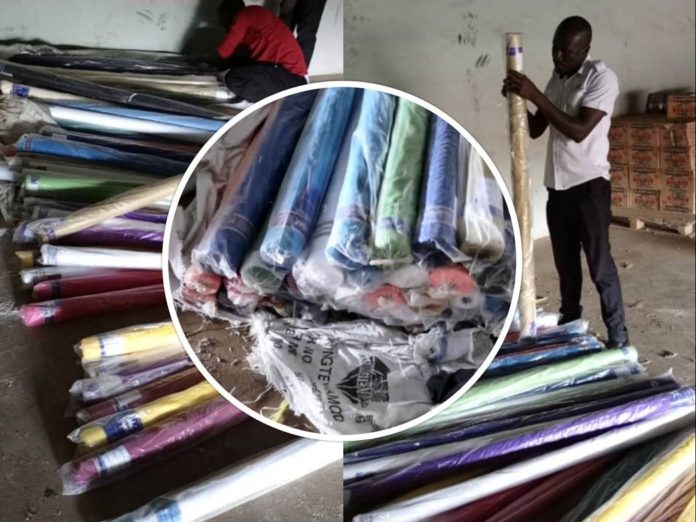
The Uganda Revenue Authority (URA) enforcement team in Mutukula has seized 180 kilograms of polyester lining material that had been smuggled into Uganda. The 90 rolls of polyester were impounded at Minziro, on the Uganda – Tanzania border.

The culprit, a one Kebirungi Eunice Scovia was caught unaware as she waited to transport the smuggled apparel to Kampala.

According to John Lubakwida, the in-charge enforcement Mutukula One Stop Border Post, the 34-year-old had been on their radar for some time and her luck had run out.

Lubakwida explained that Minziro is one of the porous border points to and from Tanzania within Kyotera district and many smugglers have been intercepted as they tried to cross into Uganda.

He added that the polyester lining material is imported from China, offloaded at the Dar-es-Salaam port in Tanzania, and loaded on to Kampala bound buses. Once the buses approach the borders, the goods are offloaded to be transported into Uganda through porous borders.

Kebirungi has been one of the most wanted smugglers in this territory and according to Lubakwida, she will have to pay tax arrears amounting to Shs9,660,824.

Her goods were found to contain 90 rolls X 50 yards X 59 of polyester lining material, 3 kg per roll. Consequently, a one month notice of seizure was issued to her to collect them.

Stories Continues after ad

NWSC set to investigate on meter reading fraud

The National Water and Sewerage Corporation (NWSC) is set to investigate a few random accounts that have indicated that some big water consumers have been tampering with meters to suppress consumption.

Officials say the development which is being carefully reviewed touches big water consumers including top government agencies especially in Kampala that use underhand tricks like magnates to reverse actual meter readings.

“For every 100 units of water we put in the system in Kampala, only 60 percent is returned for billing, meaning 40 is lost in the system,” NWSC Managing Director Dr. Silver Mugisha said at the weekend.

An internal NWSC audit conducted after a police inquiry discovered that seven random accounts had suppressed meter readings, and blamed billing employees for trying to reverse the fraud using unconventional methods, hence facing disciplinary proceedings.

NWSC, in the audit also reasoned that they did not establish any conspiracy among the staff to defraud or engage in deliberate abuse of office.

While speaking to journalists at the weekend, Dr. Mugisha revealed that the problem was a double edged sword for the affected staff while they acted in good faith to correct the situation, they had used unconventional methods which was not acceptable, and played in the hands of the unscrupulous customers tampering with meters.

Dr. Mugisha said the water utility body has since ordered ultrasonic meters to clamp  down the tampering.

The development allows the NWSC to establish the water billing system that is being hampered by hidden magnets.

“We have also ordered for real time automatic reading devices to put on meters to give us information in real time. If you try to tamper with it, we will know,” Dr. Mugisha said.

According to the NWSC billing data, each cubic meter of water (1,000 litres) costs Shs1,060 at the public standpipe.

For the domestic customer, each cubic metre goes for sh3, 727. For institutions or government entities, each cubic meter costs Shs3,771.

NWSC sells each cubic meter to commercial properties that use less than 1,500 cubic meters per month for Shs4,473.

For those commercial premises that use more than 1,500 cubic meters per month, they buy each cubic meter at Shs3,573.

For industrialists that use less than 1,000 cubic meters per month, NWSC charges Shs4,473 per cubic meter, while industrialists that use more than 1000 cubic meters per month are charged Shs2,500.

NWSC officials indicate that there’s no reason why consumers should steal water, reasoning that at Shs100 for a 20 litre  jerry can for commercial consumers and Shs84 for the same charge to institutions, the charges are affordable.

Additionally, domestic users are charged Shs83, while water users at public stand pipes are charged Shs25 — all per 20 litre jerrycan.

Stories Continues after ad

CTI-LifeHealth to offer market women new access to healthcare

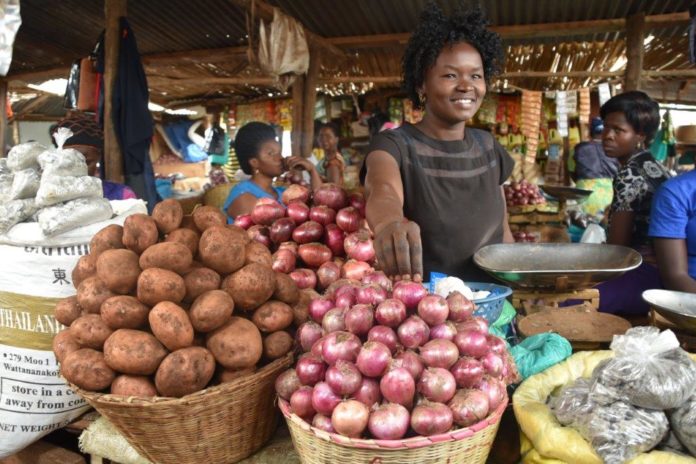
Market Women are the ubiquitous vendors who populate local markets throughout Uganda and sub-Saharan Africa. In many ways, they are the lifeblood of most African economies – in Uganda, the “informal sector” accounts for 75% of the total working population – making sure that food and many other household items get from farms, factories, and importers to the families who need them.

These vendors, the vast majority of whom are women, often work up to 16 hours a day. Their businesses typically demand their time and attention to the exclusion of most other activities, including health care.

A 2022 research study, conducted by the Institute for Social Transformation (IST) and CTI-LifeHealth, found that most market women ignore their health and wellness needs, relying on OTC drugs until the cause of pain or discomfort is often beyond cure.

One of the respondents told a typical story: “I fear going to the hospital because the waiting lines are (so) long that most times it takes a whole day, and you still fail to see a doctor. This makes you lose money. So, I don’t waste my time unless the situation is beyond the painkiller.” For many market women, the delay is disastrous, often fatal.

Another interviewee in the study found out, too late, that she had severe diabetes, and lost both hands to the disease. “How I wish I had friends who are doctors,” she said. “How I wish I had balanced my time for work and access to health services for regular health checks.”

In the hand-to-mouth existence of most African market women, however, life/work balance is unheard of, or a dream. In Uganda today, the doctor-patient ratio is approximately 1:25,000, a mere 4% of the internationally recommended standard, according to the World Health Organization. To make matters worse, the IST-CTI survey found that women’s access to health services is 21% less than men’s.

Now, all that is about to change…

For a number of years, IST has been working to identify and address the challenges faced by Uganda’s market women, access to health services being primary. CTI has now joined the initiative, bringing its ground-breaking LifeHealth digital infrastructure platform directly to bear on the problem.

LifeHealth applies a patient-centric approach to personalized, precision-oriented medicine, incorporating online medical consultation, detailed patient information, artificial intelligence, digital diagnostics, and data management and analytics. All the key stakeholders are part of the platform, including patients, hospitals, doctors, nurses, insurance companies, diagnostic labs, and pharmacies.

In announcing the alliance, IST’s Executive Director, Moureen Wagubi, said, “Access to affordable health services by market women is not a luxury. Health is the source of women’s development. So, given the enormous role market women play in Uganda’s economy, when their health is jeopardized, the economy will crumble. Therefore, priority should be given to ensure that market women have full access to affordable health care services.”

Dr. Michelle Barry, the CEO of CTI-LifeHealth, added, “Enabling women with technology to help manage their and their children’s health has, until now, been a privilege. Our patient-centric digital health platform will make it easy and affordable for these hard-working but underserved women to receive quality health services and education to improve their well-being. That, in turn, will inevitably raise their socioeconomic status, which will uplift Uganda’s future.” Eventually, Dr. Barry noted, the program will expand to urban and rural areas throughout Africa and beyond, bringing better health and welfare to underserved populations everywhere.

Stories Continues after ad

Sam Ssimbwa unveiled as head coach at Big League side Kitara FC

Ssimbwa (in black) was presented to the fans by the club president Deo Kasozi Aheebwa

Kitara Football Club on Sunday evening officially presented to their fans at Kigaaya playgrounds, CAF A license holder Sam Ssimbwa Bamweyana as their new head coach for the rest of the season.

Ssimbwa, who was appointed following the suspension of Mark Twinamatsiko last month, will have the opportunity to renew his contract after expiry should he guide Kitara back to the Uganda Premier League.

Before a packed Kigaaya playground, the club president Deo Kasozi alongside his predecessor Godfrey Bamwenda and CEO Joshua Atugonza, unveiled the experienced gaffer together with his entire technical team and four new players who joined in the just concluded January transfer window.

George Lutalo, Hamza Muwonge and Nicholas Ssengoba will work with Ssimbwa as assistant, goalkeeping coach and physiotherapist respectively to steer the Royals to success.

Lutalo has previously worked with Ssimbwa as an assistant at URA football club while Hamza Muwonge played under the latter who was then Mohammad Abbas’ assistant on the national team in 2005.

Speaking on his appointment, Deo Kasozi told Kitara FC media, “Sam Ssimbwa’s resume speaks for itself; he is proven and experienced enough to guide our club to the top flight next season.”

The former Cranes assistant coach has had an illustrious coaching career, winning two Uganda cup titles with Mbale Heroes and Express FC before winning the league title for the Red Eagles in 2012.

He has also managed Sofapaka in Kenya, Atraco FC of Rwanda, KCCA, Police, Simba, URA FC among others.

Ssimbwa expressed his delight during his first interview, “we are excited to be here and promise to work as a team; with my players and administration to make sure we bring success to Kitara.”

“One of our roles is to get the best from the players while the most important thing is winning games away from home which has been a challenge if you look at the first round, thus we must work hard to improve that record inorder to qualify to the Uganda premier next season.”

Meanwhile, Richard Makumbi and Denis Kiyimba were appointed as head and assistant coach respectively of the Kitara U-17 team.

Relatedly, the new quartet of Paul Mucureezi, Godfrey Lwesibawa, George Ssenkaba and Farouk Katongole were also unveiled to the fans before being unleashed in a 3-1 win over Kagadi United in a practice match.

Stories Continues after ad

Police investigates double murder incident in Katwe

Crime scene

Police in Katwe are investigating the double murder of UPDF officer Moses Mubangizi and security guard Huron Otim.

According to the Kampala Metropolitan deputy police spokesperson Luke Owoyesigyire, the incident happened on February 4, 2023, at around 11PM when Otim picked a fight with UPDF officers at a bar and went back to his beat to retrieve his gun.  

“Mubangizi fought with Otim and disarmed him, giving the gun to another security guard, Wana Simon. Otim then attacked Wana, took the gun back and returned to the bar where he shot and killed Mubangizi. The mob then beat Otim to death,” Owoyesigyire said.

The police responded to the scene and recovered one gun and one bullet, but the magazine is missing.

“The bodies were taken to KCCA city mortuary for postmortem, and Wana has been arrested and is being held at Katwe police division for further investigations,” Owoyesigyire confirmed adding that the public is asked to inform the police promptly of any incidents involving private security guards.

Stories Continues after ad

Are Digital Wallets Popular on the African Continent?

There are now more ways to pay for goods and services online and offline than ever before, and digital wallets are becoming increasingly popular in Africa.

Digital wallets, which are also called e-Wallets, web wallets, or electronic wallets, are classed as Alternative Payment Methods (or APMS) and can be stored on your smartphone, tablet, laptop, or desktop computer.

They eliminate the need to carry credit or debit cards with you, and they also eliminate the need to carry physical cash (banknotes, coins, and cheques).

What are digital wallets and are they popular in Africa?

A digital wallet is an online payment solution that can be used to send and receive money anywhere in the world. It can also be used to pay for goods and services online and offline at the checkout of hundreds of thousands of global merchants.

You can also use your preferred digital wallet to store various things, such as your identification, membership cards, gift cards, coupons, concert tickets, hotel reservations, car keys, plane, train, and bus tickets, and so much more.

More people in Africa are paying for things on websites or with their mobile devices, and there has been a need for alternative payment methods, such as digital wallets. Today, digital wallets in Africa are extremely popular.

Paypal, Skrill and NETELLER – all top casino deposit methods

The two main types of digital wallets are ‘open’ wallets and ‘closed’ wallets. Open wallets can be used to buy goods and services anywhere that particular method is accepted, whereas closed wallets can only be used at one or two sites. For example, you couldn’t use the Walmart Pay wallet to pay for goods on the Spotify website.

Digital wallets have become one of the top casino deposit methods for African players, and the good news is that they are free to sign up to. When you deposit and withdraw at some of today’s best African online casinos, you can generally choose from a wide range of perfectly secure digital wallets.

Examples of today’s most popular digital wallets that many of you will already be familiar with by now are the following tried & tested methods:

Honourable mentions

Some of the other reliable online payment solutions that players can use to deposit and withdraw at numerous fully licensed African online casinos are Apple Pay, ClickandBuy, Comepay, Dotpay, Ecobanq, ecoPayz, Flexepin, Jeton, Klarna, Moneta, Trustly, MuchBetter, and Neosurf.

Some African casino sites also now accept one or two major cryptocurrencies. Depending on which African nation you are based in and which online casino you sign up to will determine exactly which digital wallets you will be able to use.

For example, the digital wallets that are popular in South Africa might not be popular in Ghana, and the digital wallets that are popular in Nigeria might not be popular in Kenya, and so on.

Also, you may find that one particular African casino site might accept PayPal, whereas one of its rival casino websites might not accept PayPal. It varies from one casino to the next.

This is why you should always check to see if your preferred payment method is accepted at the casino before signing up. There’s nothing worse than signing up only to find that the casino doesn’t accept your preferred digital wallet when you log in to deposit.

Is it safe to deposit and withdraw at online casinos using digital wallets?

Yes. It’s perfectly safe to deposit and withdraw using digital wallets at today’s best African online casinos. Just make sure that you only ever use a trusted digital wallet. Also, make sure that you only ever sign up to a fully licensed African casino site that’s controlled by a trustworthy operator with a superb reputation.

Finally, today’s best African online casinos are protected by 128-bit or 256-bit SSL (Secure Socket Layer) encryption technology. This technology works around the clock to keep your money, banking details, and personal information closely guaranteed and protected from hackers, which means you have nothing to worry about.

Final note

If you live in South Africa and are looking for a secure online casino to sign up to, the official New Casinos website is one of the best sites to visit. This trusted site has a complete list of fully licensed African online casino sites worth signing up to in 2023, all of which accept a wide range of popular African digital wallets.

The website also has further information about some of today’s most popular African online payment options that were mentioned above.

Stories Continues after ad

Committee exposes petitioner against NSSF as a front for Minister Amongi

Minister Betty Amongi and Job Richard Matua, the petitioner

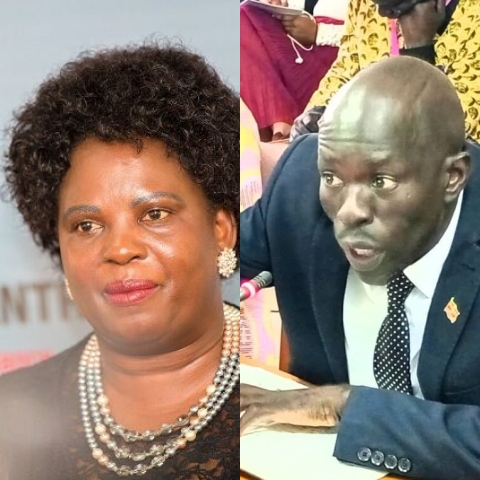
Job Richard Matua, the hitherto petitioner who  claimed to have petitioned the Minister of Gender, Labour and Social Development Betty Amongi has been exposed by the Parliament Committee investigating corporate governance at NSSF as having obtained documents from the same minister he claims to have petitioned.

He was appearing before the Parliament Select Committee investigating issues of corporate governance at the Shs17.8 trillion National Social Security Fund (NSSF).

Upon being questioned by the Committee Chairman Committee Mwine Mpaka, who is also the Member of Parliament for Mbarara City South, Mutua said that he received all documents from the Minister of Gender, Labour and Social Development Amongi.

“Before we let you go, can you tell us the source of this information and documents that you have given us?”  Mwine asked.

He claimed that he wrote to the Minister of Gender, Labour and Social Development Among to avail him all the documents.

However, upon further questioning by the Committee Chairman and other members of the committee, he could neither produce a letter he wrote asking for the documents, nor could he produce a letter from the minister responding to his request.

As soon as the committee ordered him to produce the letters in a few hours, he claimed that he was “sick”, and could not return to the committee.

Experts are now wondering how a so-called petitioner and whistleblower could petition and whistle blow to the same minister who gave her documents including correspondences between the ministry, the NSSF Board Chairman, and the NSSF officials.

The committee allowed him to submit his ‘evidence’ but wondered how and where he got all the official correspondences between the Fund’s officials including the Board Chairman and Managing Director among others.

Sources said that President Yoweri Museveni was persuaded to allow an investigation based on information from the ‘petitioner’. The Inspectorate of Government is also investigating the Fund because of information provided by the petitioner.

It is also evident that after the board and MD Richard Byarugaba rejected the Shs6 billion request by Amongi, she resorted to underhand methods including blackmail and alleging that there were petitions by whistle-blowers against Byarugaba in person. She further exonerated his Deputy Patrick Ayota whom they have worked together and named his acting MD against the directive of the president and the prime minister.

Other members of the committee include Workers MP  Charles Bakkabulindi, Karim Masaba (Industrial Division, Mbale City), Michael Kakembo (Entebbe Municipality), Fortunate Nantongo (Kyotera District Woman), Hon Laura Kanushu (Persons with Disabilities), and Hon Amos Kankunda (Rwampara County).

Stories Continues after ad

Chief Justice to ask for dismissal of Ssegirinya, Ssewanyana murder case

Chief Justice Alfonse Owiny-Dollo

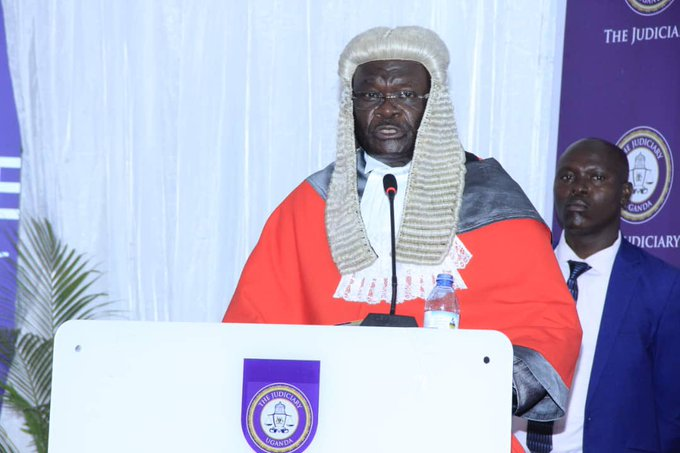
Chief Justice Alfonse Owiny-Dollo has vowed to ask for dismissal of the murder case against Kawempe North MP Muhammad Ssegirinya and Makindye West legislator Allan Ssewanyana. Dollo said during the opening of the New Law Year 2023 at the Judiciary headquarters.

He said the trial of the two legislators and their co-accused kicks off this year and he will ask for a case to be dismissed if the State is not ready.

“This year the trial of MPs will begin and there will be no games. I will ask the trial Judge to not entertain any nonsense during the trial. If the State is not ready, we shall dismiss the case,” he said.

The two MPs and four other suspects including; were arrested in September 2021 over Masaka gruesome killings.

Ssewanyana and Ssegirinya were arrested in August 2021 together with other suspects; Mike Sserwadda, Wamala Bulo, Mugerwa John, Wilson Ssenyonga aka Tony Nyonga and Jackson Kanyika and they have spent more than a year in jail for several charges including murder, attempted murder and financing the killings in the Greater Masaka region that left 26 people dead.

Prosecution states that on August 2, 2021, they allegedly killed Joseph Bwanika, a resident of Kisekka Village in Kisekka Sub County in Lwengo District. It is further alleged that on August 23 at Ssettaala Village in Masaka City, the MPs and their co-accused persons killed Francis Mugerwa Kiiza aka Nswa, Sulaiman Kakooza and Tadeo Kiyimba.

The High Court in Masaka set the 13th, 14th and 15th of February 2023 to start hearing the bail application.

Stories Continues after ad