Stanbic Bank
Stanbic Bank
24.6 C
Kampala
Stanbic Bank
Stanbic Bank
Home Blog Page 438

Pope decries conflicts and economic colonialism in DR Congo

Pope Francis shakes hands with President Felix Tshisekedi

In his first speech upon his arrival to the Democratic Republic of Congo, on Tuesday, Pope Francis decried the conflicts that continue to ravage the country, and the reckless exploitation of its immense natural resources by foreign forces.

Meeting with government authorities, civil society, and the diplomatic corps in the garden of the “Palais de la Nation” in Kinshasa, after his courtesy visit to Congolese President Felix Tshisekedi, the Pope urged the Congolese people to take their destiny into their own hands by rejecting violence and hatred.

He explained that his visit is born from his desire to bring them “the closeness, the affection and the consolation of the entire Catholic Church”, and that he is coming “as a pilgrim of reconciliation and peace”.

Likening the DRC to a diamond, one of the many riches of the country, the Pope noted that the Congolese people are “infinitely more precious than any treasure found in their fruitful soil.”

He remarked that beyond the abundance of natural resources, they also have a “spiritual wealth” to be found in their hearts from where “peace and development are born”, for which, he said, every Congolese should “feel called to do his or her part.”

Pope Francis went on to lament the exploitation that DRC and the whole African continent continue to endure today in the form of “economic colonialism” which, he said, is “equally enslaving”, making the Congolese people “foreign” to their own land.

“The poison of greed has smeared its diamonds with blood,” the Pope denounced, calling on the world acknowledge the “catastrophic” injustices committed in the past, and for an end to the ongoing plundering of its natural resources.

Pope Francis then turned to the international community which, he said, “has practically resigned itself to the violence devouring” DRC, calling for a renewed effort to support development and peace in the African nation.

“The current peace processes, which I greatly encourage, need to be sustained by concrete deeds, and commitments should be maintained,” said the Pope.

He expressed immense gratitude to the countries and the organizations that are providing substantial aid in this regard, helping to combat poverty and disease, supporting the rule of law and promoting respect for human rights.

Going back to the image of the diamond, Pope Francis noted that the richness of the Congolese society stems from its “polyhedral” character, which must be therefore preserved “avoiding any form of regression to tribalism and hostility.”

“The problem,” he remarked, recalling a Congolese proverb, “is not the nature of ethnic and social groups, but the way in which they choose to live together: their willingness or not to encounter one another, to be reconciled and to start anew makes the difference between the grimness of conflict and a radiant future of peace and prosperity.”

In this regard, Pope Francis emphasized the crucial role that religions and civil society are called to play in contributing to this richness by committing to building peace and of fraternity in DRC.

Continuing with the metaphor of the diamond, Pope Francis focused on transparency in civic and political life, noting that what “dims the light of goodness in a society is often the darkness of injustice and corruption.”

In this regard, he underscored the crucial importance of promoting transparent and credible elections and greater participation in the peace processes and of pursuing the common good and people’s security, rather than personal or group interests.

Also, he said, the presence of the State in every part of the territory should be strengthened and the many refugees and displaced persons should be cared for.

Pope Francis went on to stress the urgent need to invest in education in order to make the “its most precious diamonds shine”. He lamented in this regard that all too many Congolese children still do not attend school, and are instead exploited and subjected to servile labour in the mines.

Bringing his long address to a close, Pope Francis recalled the shared responsibility to be “good stewards of creation”, to protect the natural environment, and highlighted the need for long-term international support to improve the life of Africans, going beyond emergency interventions.

Pope Francis concluded by urging the Congolese people not to give in to “discouragement” and “resignation”, but to engage in “courageous and inclusive social renewal” of their country.

The current conflicts and challenges in DRC were also the focus of President Felix Tshisekedi’s address to the Holy Father, in which he thanked the Pope, on behalf of all the Congolese people, for the interest he has always shown for the situation in the country, and for “fervently praying for peace in its eastern provinces”. He also expressed gratitude for his willingness to meet a delegation of internally displaced persons from these provinces.

Stories Continues after ad

Stakeholders propose tougher restrictions in Alcohol Bill

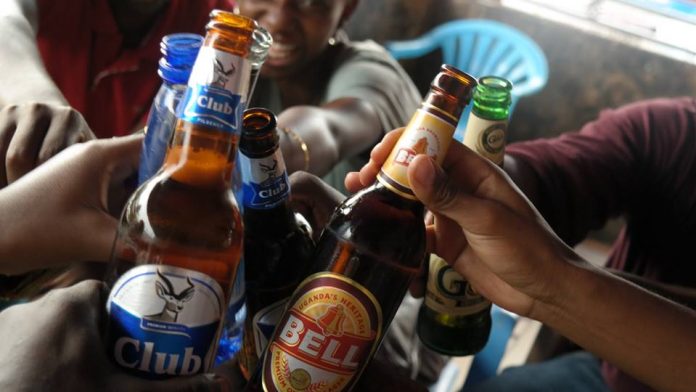
beers (photo; courtesy)

Stakeholders have proposed tougher restrictions to regulate the sale and consumption of alcohol.

This was during the stakeholders meeting organised by the Parliamentary Department of Legislative and Procedural Services regarding the proposed Alcoholic Drinks Control Bill on Tuesday, 31 January 2023.

The bill seeks to regulate the manufacture, importation, sale and consumption of alcoholic drinks and also provide for the licensing of persons trading in alcoholic drinks and premises.

The bill also seeks to prohibit the sale of alcohol to specified persons and regulate the promotion and advertisement of alcoholic drinks.

Whereas clause 12 of the proposed bill seeks to regulate the time of sale of alcohol from noon to 6.00 am, stakeholders think this proposed timeline is ‘good for nothing’ in terms of regulating the consumption of alcohol.

“There are mandatory duties that we need to perform as parents. Therefore, 12.00 pm to 6.00 am is not good enough to consume alcohol. I am proposing that the time for alcohol consumption should be from 4.00 pm to 10.00 pm because at this time some of the working class would have left their workstations,” Pastor Julius Oyet said.

Pastor Joseph Sserwadda of Victory Christian Church Ministries thinks alcohol should not be sold or consumed beyond midnight.

“Let us set the time of sale of alcohol from at least 4.00 pm and close by midnight. I believe that if somebody has taken a little alcohol just to make them happy and by midnight they go to bed, then they can wake up by 5.00 am or 6.00 am to get ready for office the next day,” he said.

Isharaza Mwebaze, the Chairperson of Addiction, Prevention and Rehabilitation Association of Uganda suggested that the time of sale of alcohol should be restricted to 4.00 pm onwards to restrict underage drinkers.

“Most of the addicts started using these substances as underage drinkers and this usually happens during working hours. Therefore,  drinking hours should be adjusted to 4.00 pm onwards when parents are back home and are able to regulate these children,” Mwebaze said.

Dr Hafisa Kasule from World Health Organisation advised Parliament to consider benchmarking in Kenya which recently passed the Alcoholic Drinks Control Act that prohibits the sale of alcohol in bars before 2.00 pm on weekends and 5.00 pm on weekdays. She also proposed a new clause to regulate volumes of alcohol consumed.

On November 8, 2022, Tororo District Woman Representative, Sarah Opendi, was granted leave to introduce a private member’s bill.

Opendi has since embarked on drafting the bill which she hopes to table for first reading by end of February or early March 2023.

She also allayed the fears of the public that the bill intends to stop the consumption of alcohol.

“The bill does not stop the consumption of alcohol because we do not have the capacity to do that. We want to come up with a bill that is comprehensive enough to deal with the challenges that have been with us for a long time,” she said.

The bill also proposes to prohibit the sale of alcohol in passenger service vehicles as a measure to curb road accidents.

Further, the bill proposes a fine of Shs4 million and imprisonment for a term not exceeding six months or both.

A fine of Shs20 million or 10 year imprisonment is proposed in the bill for a person who is convicted of selling alcohol outside the stipulated time.

Stories Continues after ad

Resurgence of cattle rustling worries Karimojong

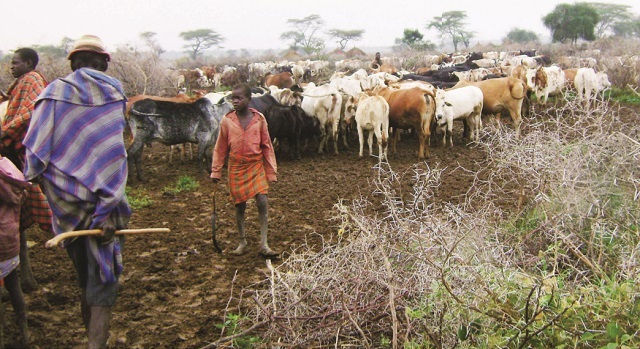
The resurgence of cattle rustling in Karamoja is threatening the re-opening of schools in the region, according to Agago County Member of Parliament David Lagen.

Lagen raised the concern during the plenary sitting on Tuesday, 31 January 2023 chaired by the Deputy Speaker, Thomas Tayebwa.

“The rustlers have grabbed gardens, burnt houses, abducted women, beaten 10 people and shot one person. This has caused many to abandon their homes,” Langen said.

He said that the rustlers attacked the area between the 18 and 27 January 2023 leading to food insecurity.

“We have been talking on the Floor of Parliament for a very long time, my members are tired. Community members are saying, come 2026 they will not vote because of insecurity,” Langen said.

Ndorwa County East MP, Wilfred Nuwagaba, also said that the locals along the Uganda-Rwanda border are living in fear of attacks from neighbouring Rwanda.

“Rwandan soldiers at the border are killing innocent Ugandans largely because of cross border trade. Unfortunately, we have not heard any statement from government on what they are doing to protect people from being killed in cold blood,” Niwagaba said.

The Minister of State for Defence, Jacob Oboth, said that the ministry is aware of the resurgence of cattle rustling and it will be addressed. 

“We take every complaint about cattle rustling very seriously. There is hope that we are going to surmount. We have taken note and we are going to handle this matter,” he said.

He also pledged that the alleged security threats along the Uganda-Rwanda border will be investigated.

Stories Continues after ad

UBL commissions Shs39.9b production line

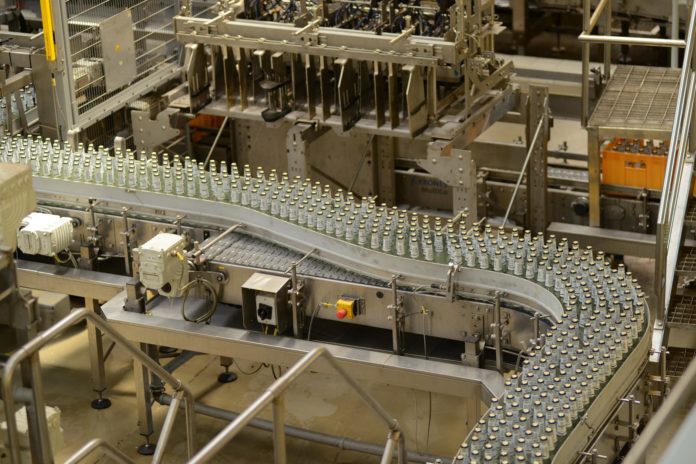
Uganda Breweries Limited has commissioned Shs 39.9 billion production line that will increase the brewer’s production capacity to 30,000 330ml Bottles Per Hour and 25,000 500ml Bottlers per hour averaging Best – in Class efficiency of 94%. 

The new line which is manned by atleast 65% women will supplement a Shs 44.4 billion state-of-the-art bottling line that was launched in 2010 that doubled the production capacity of the beer bottling plant. 

The commissioning was presided over by a delegation from the Ministry of Finance led by the State Minister of Finance for General Duties – Hon. Henry Musasizi, accompanied by the Permanent Secretary and Secretary to the Treasury – Ramadan Ggoobi and Moses Kagwa – the acting Director of Economic Affairs. 

Andrew Kilonzo, UBL’s Managing Director  said, “As a 76-year business, this milestone stands as a testament to the fact that our quality Ugandan products – made from quality Ugandan inputs – are well-received in the country and the region, which translates into our growing impact on the lives of the over 38,000 farmers and over 200,000 farmer households that supply the raw materials that feed our production processes.”

He said the line averages a Best-in-Class Efficiency of 94% and that despite the increased demand for UBL’s products, the brewer continues to promote a culture of responsible consumption of adult beverages through campaigns targeted at promoting moderation, dissuading drink driving in the strictest terms and also ensuring the communication of zero tolerance to underage drinking. 

The new line brings UBL’s total capital expenditure in Uganda to over Shs 7.8 trillion since the brewer commenced operations in 1946, and it has since grown to become one of the country’s top 5 taxpayers contributing atleast Shs 430 billion in taxes annually. 

While addressing guests, Hon. Musasizi hailed UBL for believing in Uganda’s economic potential by increasing its investments in the country. 

“Uganda Breweries and the larger hospitality industry have been instrumental in the economic recovery of the country following the COVID-19 pandemic. New investments like these give us more hope in the full recovery of the manufacturing sector and are evidence that the Ugandan economy is sound as evidenced by the trust and appetite of investors like these.” 

Uganda’s manufacturing sector has the potential to drive the country’s post-COVID recovery through the government’s encouraging the uptake of local raw materials to promote local manufacturing towards import substitution and export promotion. 

Output from Uganda’s manufacturing sector was $6.66B in 2021 – a 12.15% increase from 2020, and the sector employs more than 1.3 million people, contributing 18.6% of the nation’s GDP, 19% of the total exports and 14% of the tax revenue collections.

Japheth Katto – UBL’s Board Chair, thanked the Minister and the Ministry in general – for maintaining an open-door policy with the private sector that encourages dialogue and collaboration towards contributing to the country’s economic growth. 

“As a company, we have shown our commitment to growing with Uganda through being a diligent taxpayer, employing thousands of people in transport, distribution, processing, manufacturing and so on, and we thank your ministry and the government for creating a favourable climate for business all towards realising the immense potential that lies within Uganda,” he said. 

Stories Continues after ad

Uganda ranked 142 out of 180 as it gains efforts in fight against Corruption

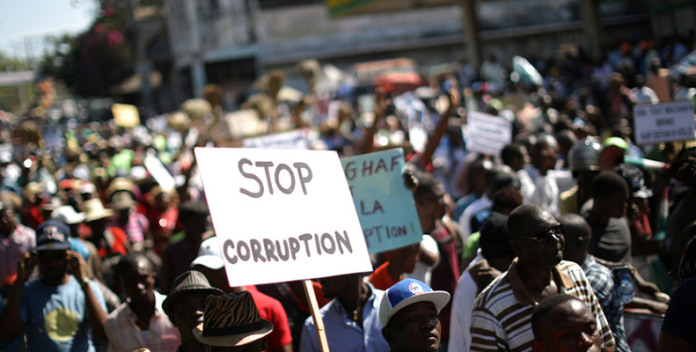
The 2022 Corruption Perceptions Index (CPI) released today by Transparency International shows that most of the world continues to show less significant progress in fighting corruption: 95 per cent of countries have made little to no progress since 2017.

The Global Peace Index shows the world continues to become a less peaceful place. There is a clear connection between this violence and corruption, with countries that score lowest in this index also scoring very low on the CPI.

Governments hampered by corruption lack the capacity to protect the people, while public discontent is more likely to turn into violence. This vicious cycle is impacting countries everywhere from South Sudan (13) to Brazil (38).

This year’s CPI report once again puts Uganda’s Anti-Corruption efforts on the spot. Having stagnated at the score of 27 for two years, the country has now dropped a point to a new score of 26/100 ranking 142/180 from 144/180 in the previous CPI 2021 report.

GLOBAL HIGHLIGHTS

The CPI ranks 180 countries and territories by their perceived levels of public sector corruption on a scale of zero (highly corrupt) to 100 (very clean).

The CPI global average remains unchanged at 43 for the eleventh year in a row, and more than two- thirds of countries have a serious problem with corruption, scoring below 50.

  • Denmark (90) tops the index this year, with Finland and New Zealand following closely, both at 87. Strong democratic institutions and regard for human rights also make these countries some of the most peaceful in the world according to the Global Peace Index.
  • South Sudan (13), Syria (13) and Somalia (12), all of which are embroiled in protracted conflict, remain at the bottom of the CPI.
  • 26 countries – among them Qatar (58), Guatemala (24) and the United Kingdom (73) – are all at historic lows this year.
  • Uganda (26) the country had maintained a score of 27 for the past two years. However, this score has been dropping from 28 in 2019. In the East African Region, Uganda ranks 4th after Rwanda, Tanzania and Kenya.

Since 2017, ten countries significantly declined on their CPI scores.

  • The significant decliners are: Luxembourg (77), Canada (74), the United Kingdom (73), Austria (71), Malaysia (47), Mongolia (33), Pakistan (27), Honduras (23), Nicaragua (19) and Haiti (17).
  • Eight countries improved on the CPI during that same period: Ireland (77), South Korea (63), Armenia (46), Vietnam (42), the Maldives (40), Moldova (39), Angola (33) and Uzbekistan (31).

CORRUPTION, CONFLICT AND SECURITY

Corruption, conflict and security are profoundly intertwined. The misuse, embezzlement or theft of public funds can deprive the very institutions in charge of protecting citizens, enforcing the rule of law and guarding the peace of the resources they need to fulfil that mandate. Criminal and terrorist groups are often aided by the complicity of corrupt public officials, law enforcement authorities, judges and politicians, which allows them to thrive and operate with impunity.

  • The Russian invasion of Ukraine in February 2022 was a stark reminder of the threat that corruption and the absence of government accountability pose for global peace and security: kleptocrats in Russia (28) have amassed great fortunes by pledging loyalty to President Vladimir Putin in exchange for profitable government contracts and protection of their economic interests. The absence of any checks on Putin’s power allowed him to pursue his geopolitical ambitions with impunity. This attack destabilised the European continent, threatening democracy and killing tens of thousands.
  • After decades of conflict, South Sudan (13) is in a major humanitarian crisis with more than half of the population facing acute food insecurity – and corruption is exacerbating the situation. A Sentry report from last year revealed that a massive fraud scheme by a network of corrupt politicians with ties to the president’s family siphoned off aid for food, fuel and medicine.
  • The combination of corruption, authoritarianism and an economic downturn has proved especially volatile in Brazil (38), where President Jair Bolsonaro’s term was marked by the dismantling of anti-corruption frameworks, the use of corrupt schemes to favour political allies and amass political support in the legislature, disinformation and attacks on civic space. In January, after Bolsonaro lost his re-election bid, his supporters launched a violent attack against the parliament, supreme court and presidential palace, threatening the lives of police officers and journalists and vandalising buildings, with the goal of disrupting the peaceful transition of power to newly elected President Luiz Inácio Lula da Silva.
  • Complaints of corruption sparked civil war in Yemen (16) eight years ago. Now, the state has collapsed, leaving two-thirds of the population without sufficient food – one of the worst humanitarian crises in the world.
  • Even in countries with relatively strong measures against corruption, the defence sector often remains secretive – opening the door for undue influence and other forms of corruption. According to the Government Defence Integrity Index, only nine countries out of the 85 assessed have a low or a very low risk of corruption. This is particularly troubling as many governments prepare to ramp up their military spending in response to emerging threats and in response to the war in Ukraine. In Germany (79), for example, the government has set up a new 100 billion euro fund to revamp its military, but such simplified procurement opens up significant risks for corruption. However, a new national security strategy currently being debated within the government could help to strengthen integrity and transparency mechanisms if adopted.
Stories Continues after ad

Court sentences Kafta Queen to three years in prison

Kira Court Chief Magistrate Roseline Nsenge has sentenced Kafta Queen to three years in prison over aggregated torture of her 15-year-old friend Pretty Nicole and inflicting grievous bodily harm.

On January 9, 2023, Kafta Queen appeared in a viral video beating up Nicole with her friends over a man.

The Tanzanian national was later arrested. On Tuesday January 17, 2023 she was arraigned before Kira Magistrate’s Court in Kampala and charged with aggregated torture and inflicting grievous bodily harm on Pretty Nicole.

“I know it is my fault, and I admit that but I request that Nicole finds space in her heart to forgive me. For the time we have been friends, I have done a lot for her, including helping her to have a place to sleep at the time when her parents banished her from their home,” Kafta pleaded.

Appearing before court, Kaftah was found guilty of the accusations which violate section 2 (1) (b) and 5 (a) (h) (j) (k) of the Prevention of Prohibition of Torture Act 2012.

She was subsequently sentenced to three years in prison.

Stories Continues after ad

Uganda ranked fourth of the 26 surveyed markets in Africa

(L-R) Jeff Gable, Keith Kalyegira, Prof. Samuel Sejjaaka, Prof. Pamela Mbabazi, Patrick Ayota & David Wandera during the panel discussion

The newly released 2022 Africa Financial Markets Index indicates that Uganda has registered strides ranking fourth out of 26 surveyed markets in Africa.

Uganda’s overall score in the Absa Financial Markets Index increased by six points to 66 this year, moving the country up to fourth from sixth place in the rankings. This is alluded to strong data reporting standards and new environmental, social and governance incentives.

Uganda is ranked fourth from sixth position in 2021. It is currently rallying behind South Africa, Mauritius and Nigeria. It is however ranked first in the East African Community, followed by Kenya in the eighth position; Tanzania, eleventh; Rwanda dropping from to 17th position and DRC in the 23rd position.

The report shows that Market transparency, tax and regulatory environment registered the largest increase to 81, from 60 in 2021. This was largely due to an improvement in ESG initiatives and standards after the Bank of Uganda launched a strategic five year plan from 2022-27 which focuses on the ‘sustainability of the financial system and climatic risk.

“Access to foreign exchange, Uganda’s score increased to 84 from 65 which was mainly due to an improvement in foreign exchange interbank liquidity. The score for FX reserves adequacy also rose. This indicator stayed relatively stable at four months of imports in Uganda in 2021, while it deteriorated more significantly in other AFMI economies,” the report indicates.

Despite tumult in the global economy and slightly worsening inflation, Uganda’s solid growth prospects and relatively strong macroeconomic data standards ranks it third behind only Egypt and Botswana.

Speaking at the launch of the report Gable, the Head of FIC Research and Chief Economist Absa said the economic growth in Uganda is progressively robust post-pandemic recovery.

“Inflation was painful in 2022, but should ease significantly during 2023.Moderating grain, fertilizer and oil prices, copied with easing supply chain constraints and improved weather conditions, should help bring inflation down. Fiscal consolidation is a theme across Africa as financial conditions have become more challenging and some countries face debt distress,” he said.

Mr. David Wandera, the Executive Director and Head of Markets at Absa Bank said their Interbank FX turnover increased by 20% year on year. This is a reflection of the confidence of the world in our country and prospects of future growth in trade.

He said despite the challenges faced our gross domestic product growth has been good ranging at 4.4% annually over the past years and it’s forecasted to rise to 5.9% over the next five years.

“There has been some good work done under legal standards and enforceability. Currently BoU is working on a way forward to improve use of master agreements and encourage a more liquid interbank market,” he said.

Mr. Michael Atingi-Ego, Deputy Governor of Bank of Uganda said the annual assessment of Africa Financial Markets Index (AFMI) is vital for policymakers, regulators, users and providers of capital to learn from challenges  and milestones in pursuing our national and continental advancement.

“We are grateful to Absa for shining a bright light on the African continent, increasing investor interest and encouraging us to learn from one another across several pillars to nature deeper capital markets,” he said.

He said through assessment of the Africa Financial Markets Index, we will be able to demonstrate our efforts towards answering our present challenges nationally.

Mumba Kalifungwa, the Managing Director of Absa Bank said; “We believe financial markets are vital to Africa’s growth, providing an opportunity to tap into domestic capital and be better positioned to access global capital.”

“We are grateful to policy makers and regulators and market practitioners whose input was essential to the findings presented under the index. Uganda’s ranking has steadily improved over the years. In 2021 we ranked 6th to currently a rank of 4th out of 26 markets surveyed,” he said.

Ramathan Ggoobi, Permanent Secretary to the Treasury, Ministry of Finance, Planning and Economic Development said the improvement Uganda has made on the Africa Financial Markets Index, is commendable however we still have massive work to do especially on market depth and capacity of local investors.

Stories Continues after ad

Police issues guidelines ahead of schools reopening

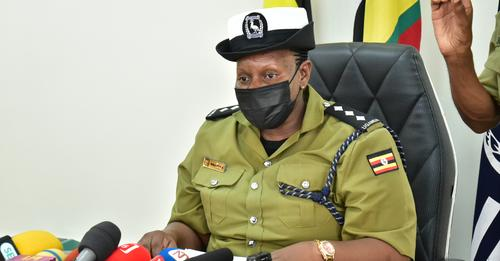
ASP Faridah Nampiima

The Directorate of Traffic and road Safety in the Uganda Police Force has come out to issue guidelines to be followed by road users as parents and guardians all over the country are preparing to send back their children to school for the first term of 2023.

Schools will officially open on 6 February 2023, the season of sending pupils and students back to school is normally characterised by increased movement of people hence causing a lot of traffic on roads. During that period, people are always moving up and down almost at the same time to do shopping and also to take children back to school.

“All road users should expect heavy traffic flows on the roads, so we advise you to plan your journey earlier to avoid rushing and reckless driving since most of you will be moving almost at the same time,” Faridah Nampiima the PRO Traffic and Road Safety said.

Nampiima reminded all drivers of Passengers Service Vehicles (PSVs) including taxis, coasters and buses to respect road signage, to have discipline while using the road and avoid reckless driving. She also reminded passengers to always wear seat belts.

She noted that the traffic Police will have on spot checks on vehicles during this season, explaining that drivers tend to carry excess passengers and also rush on the road.

“We need to ensure that you arrive safely, we shall do snap checks to check on how people will be ferried on the roads during this season,” Nampiima said.

Police warned all drivers not to load any excess passengers in the vehicles, not to rush students as they are offloading their luggage from the vehicles. Taxi operators were also cautioned not to load luggage beyond the height of the rails on top  of the taxis.

The Traffic Police PRO urged all passengers planning to use taxis and buses to board only from gazette parks and terminals to ensure the safe travel of learners back to school.

Vehicles operating on long routes were also advised not to make return journeys. Boda boda riders were also reminded to be careful as they ride students back to school.

All school owners were reminded by Police to take their school vans for mechanical checkups and repair since they were parked since the schools broke off.

Stories Continues after ad

MPs want sports facilities placed under NCS

NCS Chairperson, Ambrose Tashobya

The Committee on Education and Sports has proposed that the National Council of Sports (NCS), be granted right of ownership of all sports facilities in the country. 

While considering the National Sports Bill, 2021, legislators were dismayed that the majority of the sports facilities are run down with local governments delegating the maintenance of the facilities to politicians.

“Some of us own football clubs; now the town clerk of my district was tasking me to take over maintenance of sports facilities,” said the committee chairperson, John Ntamuhiira.

MPs said that with the right of ownership, the council will cease to depend on the meagre funding from government as it will collect revenue from the different events hosted in the sports fields.

“National Council of Sports must own land for all the sports fields as it is the case with the neighbouring countries; in that way, you will be able to collect fees from events that take place in stadia. We want to see an enterprising council that is self-sustaining,” said Busia Municipality MP Geoffrey Macho.

Kalungu West MPJoseph Ssewungu, elaborated that when the facilities are handed over to the NCS, they will be able to get alternative funding.

“If the council gets these properties, they can apply for loans even from government and mobilise funds externally. Once we grant ownership to the council, you will see the sports flourishing in this country,” Ssewungu said.

Legislators were also concerned about the continued grabbing of the land belonging to the different sports federations around the country.

“The land in Tororo District that was donated to the sports sector by the government of former President, Idi Amin has been taken away by a politician. We want the council to take full charge of these properties, Uganda Investment Authority owns all land under its jurisdiction, Uganda Manufacturers Association owns land tittles, the council must also own land,” said Macho.

The Secretary General of the NCS, Bernard Ogwel, said he was been advised by the Attorney General, that ownership of public land according to the constitution is vested in the Uganda Land Commission or the district land boards.

MPs, however, shunned the Attorney General’s guidance saying other government entities own land.

The NCS Chairperson, Ambrose Tashobya, said the council was on course with the upgrade of Lugogo Indoor Stadium to international standards.

“Every time we want to host sports as a region, we end up with Rwanda because we do not meet international standards,” Tashobya said.

Stories Continues after ad

Namuganza petitions Court challenging her Censure

Minister of State for Housing, Persis Namuganza

The Minister of State for Lands, Housing and Urban Development, Persis Namuganza, has filed a petition before High Court challenging Parliament’s move to censure her.

In a plenary presided over by the Deputy Speaker Thomas Tayebwa on Monday January 23, 2023, Namuganza was censured over derogatory remarks and disrespectful conduct. “…the matters raised in the interview [which Hon Namuganza gave to various media houses] was obnoxious, reckless, insufferable, beyond the pale and in per incuriam,” a Mwine Mpaka led Committee established.

In a tally of 356 votes, 348 voted to have the minister censured, five MPs voted no with three abstentions.

“Upon a vote of censure being passed against a Minister, the President shall, unless a Minister resigns his or her office, take appropriate action in the matter,” reads Article 118(2) of the Constitution.

Namuganza has since filed a High Court petition for judicial review before the President appends his signature.

She declined to appear and defend herself in both the committee and in the House, choosing to instead say the matter is before court and therefore sub-judice, a view repeated by her lawyers who sought to halt the proceedings on the same ground.

“An order of Certiorari doth issue quashing the findings and recommendations of the Select Committee of Parliament on the Motion for a resolution of Parliament to Pass a Vote of Censure against the Applicant and any resolution of Parliament based or arising from the same,” Namuganza seeks in a petition suing the Attorney General.

“An order of Certiorari doth issue quashing the resolution of Parliament censuring the Applicant from office of a Minister in the Government of Uganda.

“An order doth issue expunging the impugned report of the select committee on the motion for resolution of parliament to pass a vote of censure against the Applicant from the records of Parliament of the Republic of Uganda.

“A permanent injunction doth issue stopping the Respondent and all its agents from executing the said resolution of Parliament and the report of the select committee to censure the Applicant.

“General damages be paid to the Applicant.

“Costs of the Application.

“Any other relief as court may deem fit.”

Censured ministers do not necessarily lose their seats, although the Constitution envisages that the minister against whom such a motion is carried resigns. Namuganza however retains her rightful seat in Parliament as the elected Bukono MP.

Stories Continues after ad