Stanbic Bank
Stanbic Bank
22.7 C
Kampala
Stanbic Bank
Stanbic Bank
Home Blog Page 460

KCCA announces new leaders to manage the Boda-boda industry in Kampala

KCCA announce new Boda-boda leadership

Kampala Capital City Authority (KCCA) has named the new interim leadership to lead boda boda operators from all the five city divisions.

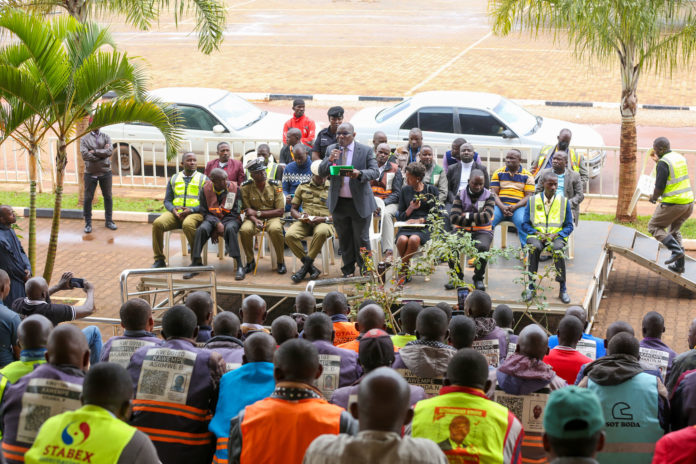
This was revealed at the final sensitization event organized by KCCA at the Kololo ceremonial grounds. The event was graced by the KCCA Deputy ED, the Deputy RCC for Lubaga Division, officials from traffic police, NIRA and the Ministry of Works and Transport among others.

The KCCA Deputy Executive Director Engineer David Luyimbazi noted that key on the agenda for this final sensitization and training event was to introduce the interim leadership to the boda boda operators.

“The new interim leadership was arrived at through consensus amongst all boda boda leaders from the five divisions” Luyimbazi said.

The new interim leadership committee is headed by Frank Mawejje as the chairperson, Siraji Mutyaba as the vice chairperson and other members chosen by this leadership.

Eng. Luyimbazi noted that KCCA has been doing sensitization and training of all boda boda operators in all the divisions as a way to help streamline and organize the transport industry in Kampala. During these trainings, the boda boda operators have been educated on the processes through which they can acquire different requirements for riding in the city like the driving permit, the national ID, the gazetted stages and more as guided by KCCA.

The Deputy RCC for Lubaga Division Burora Anderson thanked KCCA, Ministry of Works and Transport, the Prime Minister’s office and other stakeholders for the strides taken to streamline and address the challenges in the boda boda industry.

“We must agree that over time boda boda has been used by wrong elements to achieve their goals but this is no more, KCCA, The Ministry for Kampala Capital City and Metropolitan Affairs, the RCCs office wants nothing but to organize the boda boda industry,” Burora said.

Burora further cautioned the riders to desist from always being on the wrong side of the law but rather abide by the law to avoid arrests and penalties.

Burora asked the new interim leadership to revive the Emyoga and PDM saccos so that riders can benefit and also be able to buy themselves motorcycles other than running to money lenders.

Frank Mawejje the incoming interim committee chairperson thanked the riders and their leaders in different divisions for entrusting him with the responsibility to lead them.

“We are presented with a huge challenge of organizing ourselves but also organizing and professionalizing our job which is the boda boda business,” Mawejje said.

“I kindly request my fellow riders to allow and we work together to streamline our job because this is the job that has paid school fees for our children, taken care of our families and more, therefore we have to organize it to a level where our children and other people are not ashamed of introducing us as boda boda riders,” Mawejje said.

Mawejje thanked KCCA for recognizing their interim leadership and affirmed to his subjects that this was the start and way to the good things.

“We have missed so many opportunities because we were not organized and did not have leadership but now we are and we can easily get recommenders,” Mawejje said.

Stories Continues after ad

Karamoja, Teso sub-regions push for continued co-existence

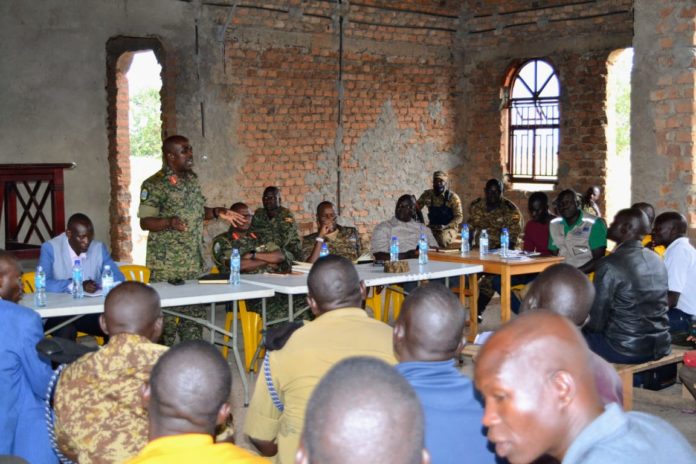
Senior Civil, Political and Security leaders from the districts of Nabilatuk, Napak, Kapelabyong and Katakwi held an inter-district security coordination meeting at Olilim, Katakwi District.

Presiding over the meeting the Deputy Resident District Commissioner (D/RDC) for Katakwi, and chair explained the purpose of the joint meeting as an effort to harmonise the security of the two subregions that share a common origin. “We have convened to iron out man made security challenges between the two subregions”, remarked Mr. Okwi Vincent.

Mr. Okwi mentioned that the people of Teso and Karamoja Sub regions share the same origin and have similar interests which call for peaceful co-existence. “With a sober mind, we are on the right truck to find solutions to cross livestock criminality” he said, adding that natural resource sharing requires natural justice to avoid any eventuality.

The 3rd Division Commander of the Uganda Peoples’ Defence Forces (UPDF) Brig Gen Joseph Balikudembe said that the joint meetings seek remedies and foster harmony among the people of the neighboring districts in the two regions. “We need to have a turning point and solutions to livestock recovery, identification and harmonious co-existence,” remarked Brig Gen Balikudembe.

He cautioned leaders against multiple rebranding of livestock and delay to expedite hand over of recovered animals, a vice which turns security forces into victims of circumstances.

The Division Commander recounted a number of significant operational achievements which resulted in the calm enjoyed in the last one and a half years.

Brig Gen Felix Busizoori, Deputy Division Commander appealed to leaders at all respective levels to mobilize and sensitize communities to embrace the prevailing peace and conditions necessary for socio-economic transformation.

Commissioner of Police, Elias Kasirabo the commandant of Anti Stock Theft Unit (ASTU) implored leaders to correctly exercise their authority to regulate animal movements. “Animals movements from villages or any locality must be sanctioned by the local leadership as road check points augment on regulatory efforts”, CP Kasirabo told the leaders.

“Last week, ASTU reinstated check points in the area of operation to scrutinize animal documents, letters of no objection, movement permits issued by veterinary officers in order to curb livestock thefts on transit and markets”, the ASTU commander explained.

The Chairperson of LC V for Napak, Mr. Kodet Paul asked fellow leaders to always communicate, coordinate and cooperate with security forces whenever there are any animal thefts for ease of trucking and subsequent recovery.

He appealed to leaders not to mix issues of administrative boundaries with the political will to fight criminality for the sake of their people.

The Chairperson LC V for Kapelabyong district, Mr. Akorikin Francis re-echoed the good news of the prevailing relative calmness ushered by security forces and supported by district authorities as compared to the early months of 2022.

He recognised the inter-connectivity of the people socially, economically and advised pastoralists to buy land in Kapelabyong district, water animals and settle rather than move unnecessarily which makes them lose out on some ingredients of life such as health and education among others.

Mr. Omolo Geoffrey, the Chairperson LC V for Katakwi and his counterpart, Mr. Lokol Paul for Nabilatuk district requested top commanders to further enhance deployments and secure grazing borderline belts (pink line) between Teso and Karamoja Sub regions.

They called for improvement on the security roads surface (mostly in affected sub counties) in order to enhance troops’ deployments and movement of civilians.

The inter-district security coordination meeting for four local governments and top security commanders settled for a number of workable strategies and resolutions to sustain peace and harmonious co-existence between Teso and Karamoja sub-region.

Stories Continues after ad

Three more Kenyan athletes banned after failing drug tests

Athletics track

Three Kenyan athletes have been banned for a collective period of eight years after breaking anti-doping rules.

The Athletics Integrity Unit (AIU) has banned marathon runners Alice Jepkemboi Kimutai and Johnstone Kibet Maiyo for three years, and sprinter Mark Otieno for two.

Otieno, 29, tested positive for the banned anabolic steroid Methasterone moments before the 100m heats at the Tokyo Olympic Games.

It meant he was not allowed to compete.

Otieno, a three-time national 100m champion, will have his ban backdated from the Games and end in July 2023.

The suspension for November’s Porto marathon winner Kimutai – who tested positive for the male hormone testosterone – began on 16 November.

Maiyo’s ban started on 20 July for returning a positive test for erythropoietin (EPO).

Last month the east African country avoided a sanction by governing body World Athletics – despite having 55 athletes serving suspensions – after committing to spend $25m over the next five years to combat doping.

Kenya’s sports minister Ababu Namwamba then announced they intended to criminalise doping in athletics in an attempt to bring an end to a string of cases in the sport.

Stories Continues after ad

DTB joins hands with MasterCard to deepen financial inclusion in the West Nile region

Diamond Trust Bank has announced its partnership with Mastercard to increase financial inclusion in the eleven districts of Uganda’s West Nile region. These districts include Arua, Koboko, Yumbe, Zombo, Maracha, Nebbi, and Adjumani among others.

The drive intends to increase the usage of formal banking services in the region through use of affordable banking services backed by state of the art DTB Platinum Debit Mastercard.

Communities in Uganda’s West Nile region will be transformed to appreciate and utilize formal banking services with minimal cash handling while doing business or any form of financial transaction. Customers will be utilizing the DTB Platinum Debit Mastercard to make payments locally and internationally.

The DTB Platinum Mastercard offers a vast array of benefits to cardholders namely, access, security, convenience, control, and lastly recognition. The DTB Platinum Debit Mastercard offers more distinguished and personal services that have been hand-picked for its customers, including lifestyle, travel, and peace of mind benefits.

Speaking during the drive event at Hotel La Confidential, Arua, Uganda, DTB Managing Director, Varghese Thambi, revealed that over 50 people have been recruited to sensitize and enroll communities in the region into formal banking. These will be signed up on the DTB Digital Banking savings account which will automatically give them a DTB Platinum Debit Mastercard.

According to Thambi, this partnership and drive aligns with the bank’s commitment to ensuring quality banking services and access to everyone in the West Nile Region and Uganda at large.

“We believe financial inclusion and access to banking service is a right that everyone should enjoy. The products we are introducing in the region are accessible through over 22,000 agents on a shared banking platform, ATM, POS and usable by everyone. These will change your financial experience as they are very affordable for all to utilize,” said Varghese Thambi, Managing Director, DTB.

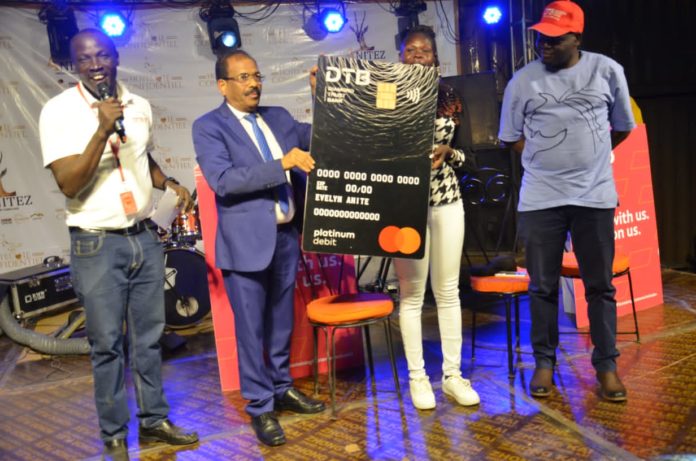
Hon. Evelyn Anite, Minister of State Privatization, and Investment was present during the drive roll-out event where she signed up as a customer and received a DTB Platinum Debit Mastercard. Hon. Anite urged communities in West Nile to embrace banking services and utilize cash free facilities like Mastercard for ease of doing business that are secure for customers.

According to Shehryar Ali, Country Manager for East Africa, Mastercard, the collaboration with DTB comes at a time when access to useful and affordable financial products and services that meet the needs of individuals and businesses is more critical than ever as we move towards the advancement of a cashless society. This further supports Mastercard’s goal of including 1 billion people and 50 million micro and small businesses into the digital economy by 2025.

“Mastercard is committed to providing digital solutions that help customers make safe and seamless transactions. We are proud to collaborate with DTB Uganda to enhance the drive to access financial services enabling more people to enter the digital economy. The cards space is fast-evolving globally, and as a leader in the payments technology industry, we will continue to innovate to always provide our customers with the best solutions and experiences,” said Shehryar Ali, Country Manager for East Africa, Mastercard.

As part of the peace of mind feature of the card, DTB provides some of the most comprehensive protections to take care of their cardholders both at home and away, including an array of travel insurances (inconvenience & cancellation, medical, lost luggage) as well as purchase protections (extended warranty and price protection).

Customers who sign up for the launched services will be able to access financial services at over 22,000 agents across Uganda, 34 DTB Branches and other Bank ATMs branded with Mastercard. Mastercard service is available in over 210 countries.

Diamond Trust Bank Uganda (DTBU) is an affiliate of the Aga Khan Development fund. DTB has presence in Kenya, Tanzania, and Burundi. DTBU has 34 branches, 51 ATMs and over 600 agents across the country. Founded in 1946, DTB is regulated by the Bank of Uganda and offers an array of banking services to the population. DTB’s mission; Make the customers prosper, staff excel and create value for their stakeholders.

Mastercard is a global technology company in the payments industry. Its mission is to connect and power an inclusive, digital economy that benefits everyone, everywhere by making transactions safe, simple, smart, and accessible. Using secure data and networks, partnerships and passion, their innovations and solutions help individuals, financial institutions, governments, and businesses realize their greatest potential. 

Stories Continues after ad

St Kizito marks annual Fish Festival

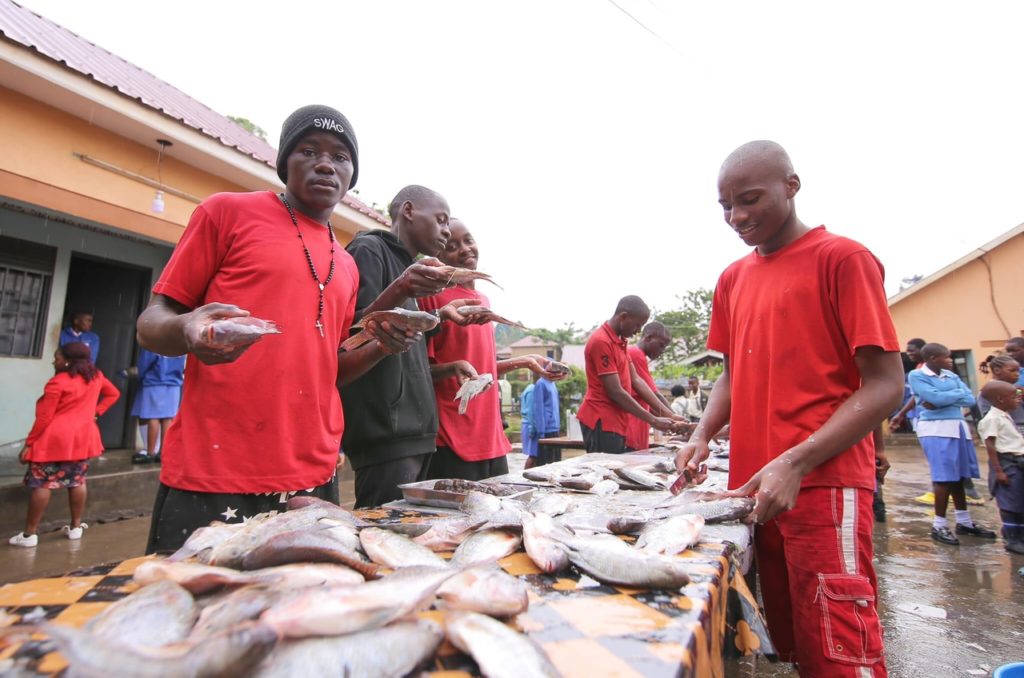
St. Kizito High School Namugongo has marked its annual Fish Festival. Known for its culture of recycling, the School organized the event to showcase what they are up to with the students in terms of skilling.

In its ‘Taasa Obutonde’ November documentary, students showcased factory-scale production of carbonized briquettes for institutional cooking. Making briquettes from organic waste saves trees/forests and improves municipal sanitation. They also showcased toothpaste made from charcoal briquettes. These briquettes are made from wastes.

The backyard and off-ground gardening; promote smart-urban farming. Composting is done to produce organic soil nutrients that facilitate urban farming.

“They also showcased their Solar-powered irrigation that is done using water harvested from rain and water tapped from underground springs,” the head teacher Ezekiel Kazibwe said.

Food waste recycling included; Food waste is used to farm Black-Soldier-Flies whose larvae constitute nutrients for animal feeds. A solar food drier preserves food remains. The dried food waste is powdered and mixed with nutrients to make feeds for livestock/fish.

He said non-organic waste is recycled into ornamental crafts and tools. A Fish Resort is one of the recreational gardens at school created through the recycling of non-organic waste.

They in tandem showcased the reusable sanitary towels made by the students.

Kazibwe said the festival is meant to empower and skill the students with life skills that can help them during their holidays to make some money.

Dr. Fredrick Kakembo, the director of the school applauded all parents for trusting the school with their children and encouraged more parents to bring in more students to gain both knowledge and skills.

Stories Continues after ad

FUFA hands 15-year ban to referee for match-fixing

FUFA logo

The Federation of Uganda Football Associations (FUFA) has banned referee Mr. John Bosco Kalibala from taking part in any kind of football related activity at national level (administrative, sports or any other) for a period of fifteen years over match-fixing.

“Upon critical analysis of the evidence on the file and the submissions of  Mr. Kalibala, the Committee found the referee guilty of infringement of Article 31 of the FUFA Ethics and Disciplinary Code (Duty to report) and Article 44 of the FUFA Ethics and Disciplinary Code (Manipulation of football matches or competitions),” reads part of the statement released by FUFA.

Kalibbala was found guilty on two accounts (matches) that were played in 2021.

“The Ethics and Disciplinary Committee analysed the evidence on the file namely the CAF Match Integrity Report for Match No. 59 Tooro United v UPDF played on 30th November 2021, investigation into Match No. 90 Gaddafi FC Vs Onduparaka FC played on 21st December 2021 as well as his own admissions and established that in the matches mentioned above and on other numerous occasions, Mr. Kalibala received financial gain in return for influencing the outcome of the matches,” the statement adds.

The decision was based on FUFA’s zero tolerance against all kinds of match manipulation and or match fixing, the need for sanctions to serve as a deterrent to other individuals, the need to maintain the integrity of the sport, and the threat match fixing poses to sports competitions.

In this respect, the Committee stressed that Mr. Kalibala was subject to the strongest sanction the Committee could impose.

Stories Continues after ad

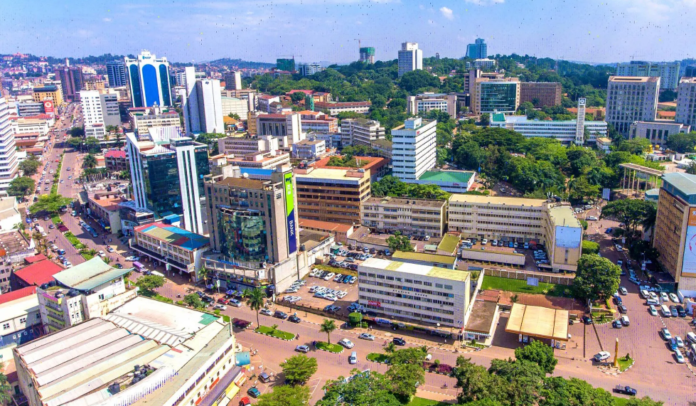
Top 5 places to visit in Kampala this Christmas

By Justus Kiprono

The capital city of Uganda, Kampala, is one of the most mesmerizing cities in Africa, fittingly packed with breathtaking sights to feast your eyes on this Christmas.

This vast metropolitan area that covers Kampala Central, Kawempe, Makindye, Nakawa, and Rubaga divisions beckons both domestic and international tourists with its modern architectural marvels, stunning landscapes, and idyllic historical monuments alongside vibrant multicultural avenues.

For adventurous pursuits, there are plenty of vacation spots and fascinating things to do in Kampala. To help you out, here is a list of the best five tourist attractions in Kampala that should be on your bucket list this festive season:

1. Uganda National Museum

Along Kira Road, on Kintate Hill, four Kilometres from Kampala City, you’ll find Uganda National Museum – the biggest and oldest museum in Uganda, founded in 1908 by the then Deputy Governor of the British protectorate George Wilson who later became Chief Colonial Secretary.

This well-stocked museum that displays Uganda’s finest collections of artifacts, sure to impress history buffs and art aficionados, was first situated at Old Kampala Hill before shifting grounds to Makerere University and lastly to Kintate, where it sits to date.

Uganda Museum is one of the best places to visit when you are around Kampala to follow the fascinating story of the Buganda people, their culture, and leaders, and more so, learn about the country’s colorful past.

2. Bahai Temple

On January 15, 1962, the doors of the Bahai Temple on Kikaya Hill in Kampala were opened, after almost four years of construction, to serve as a safe space for those seeking mystical experience, spiritual awakening, or learning more about the Bahai faith, which was introduced in Uganda in 1951.

This marvelous temple is an eccentric art piece built with a unique but elaborate architectural design to give a dome shape at its canopy that glistens in the sunlight high above Kikaya. The temple’s striking interior bursts with blue and beige colors and incorporates a set of masterly encrusted murals to fabricate a distinctive wallpaper pattern.

Still, inside, the Bahai Temple has nine colossal pillars and 27 smaller ones, with each pillar telling a different story of the faith introduced by Persian educator Baháʼu’lláh in the 19th century.

In many ways, the Bahai Temple is a place to visit in Kampala to experience a divine vision. Its 52-acre land is filled with magical things that satisfy innate human desires. It features incredible forms of flora and many more bird species to offer unforgettable experiences to visitors.

3. Kabaka’s Lake

When it comes to man-made wonders, Kabaka’s Lake, which straddles the sparkling Kampala metropolis, takes some beating. It is the largest artificial lake in Uganda, covering almost 2 square kilometers and reaching depths of 200 feet.

This place of clear fresh waters with no inlet rivers was dug out in 1880 following the order of Kabaka Mwanga II, who wanted an escape route to his Mulungu Hill Palace in Lake Victoria when the wars of conquest had intensified ensuing British arrival in Buganda.

Kabaka Mwanga ordered all the 52 clans of Buganda to participate in its creation, not excluding parish chiefs and other royal members. Visit Kabaka’s Lake to learn more about its awe-inspiring history. A tour of this lake will also grant you a chance to enjoy its serene environment if you are a birdie.

4. Ndere Cultural Centre

Kampala is the beating heart of African culture with hallmarks of great cultural diversity. This hotbed of performing arts hosts the Ndere Cultural Centre at Ntinda – Kisaasi Road, founded by Rwangezi Stephen in 1986 to infuse traditional heritage with music creativity, bringing into play contemporary acts to educate and unite people.

The Ndere Cultural Centre has its own Ndere Troupe, which handsomely caters to art lovers when they stop by this flourishing art scene to watch one of the most avant-garde artistic expressions while enjoying local cuisines and exceptional reception.

Consider adding the Ndere Cultural Centre to your bucket list for a soul-stirring experience.

5. Nakasero Market

Markets are the best places to visit if you want to fully experience the local culture and interact with people as they get through their day. For instance, Nakasero Market in Kampala, at the foot of Nakasero Hill, is a popular street market with a diverse community of vendors and a great dining destination if you want a taste of inventive dishes in a multifaceted atmosphere.

It is one of the oldest markets in Kampala, established in 1895, where you’ll find almost everything from fruits, meat, vegetables, spices, textiles, and electronics, among many other items, at an affordable price.

You should definitely stop by this market and buy a Christmas gift for your loved one!

Stories Continues after ad

Eschew Monopoly in Telecom sector and grow the economy – Ugandans urge Parliament

Airtel

A cross section of Telecommunications Services Consumers has urged the Ugandan parliament to take urgent necessary steps to forestall the spectre of monopoly in the nation’s Telecommunications sector.

Similarly, the Alliance Against Monopoly (AAM), a Pan-African anti-monopoly group has advised Uganda and other countries of Sub-Saharan Africa on the need to utilise the opportunity of the expanding telecommunications (telecoms) industry to fast-track their pace of development. One-way of achieving this is through the creation of a level playing field and equal opportunities for all comers.

The Alliance Against Monopoly (AAM) observed that Telecoms is about the most sustainable source of foreign direct investment (FDI) in the emerging countries who are tapping into the opportunities to boost their economies. Uganda, the Pan-African anti-monopoly group, noted cannot be lagging by offering to toe the wrong path of monopoly which Buccaneer players create to keep the country behind.

It condemned recent developments in Uganda’s telecoms industry, calling on responsible government agencies to properly interrogated the sore before it festers. Specifically, AAM pointer to the deleterious merger plan between American Tower Corporation (ATC) and Eaton Towers being considered by the COMESA Competition Commission deserves a critical examination. It, opined that the plan, contains the killer grits of monopoly that will be detrimental to the over all interest of Uganda.

It further urged parliament and relevant agencies of government not to discard the numerous reports of infractions and breach of contracts by industry players as to do so will militate against the economic development of Uganda. AAM described as regrettable the case of infractions by ATC, which business model is considered antithetical to development of Uganda that was ignored. It cautioned that monopoly in many ways destroys the market and creates distortions that work against economic development. The organization therefore urged the Ugandan parliament and people to checkmate the growing menace of monopoly in Uganda.

Stories Continues after ad

Uganda is one of the Countries having the most promiscuous Women

Caxton Peter Kasozi with his wife.

By Caxton Peter Kasozi, caxton26@yahoo.co.uk

Promiscuity within Ugandan females domiciling in the UK hits a record high. In the UK, Ugandan females, who are submitting their bodies, to foreign men, hit a record number high.

Each human is free to live life as wishes, as long as does not bring into dispute the reputation of Uganda and the family from which that person comes. Every Ugandan on leaving Uganda and goes to another country is valued as an unappointed ambassador representing Uganda. That is why in the UK, the British people have a perception that Nigerians are Scammers, Jamaicans are drug dealers, and Ugandans are drink-drivers offenders. Now Ugandan females are construed that to be easy to take home kebab to eat (fuck). West African men are attending nightclub bars known as places Ugandan females often go to for ravelling. All they need do is buy a bottle of Courvoisier, which is sold in the range of £80 – £100 in a nightclub bar but outside sold by a retail shop in the range of £27.99 – £38.99.

The norm of the day nowadays is that West African men unite in many, for instance, two to five numbers, and go to a nightclub bar. Each one contributes £20 to a money collection kitty, totalling £100, the nightclub bar allocates to them a table to sit on, it is called booking a table with a bottle of Hennessy or Courvoisier served, adding on cans of Coca-Cola, bottled water and RedBull drink cans. When the Ugandan females sight such, they believe those guys are cash loaded. The Ugandan females end up easily telling those guys their phone numbers or leaving the night bar with those guys to their homes for a night sleepover. You know what happens when the woman is gone to a man’s home. Men from Sierra Leone, Nigeria, and Caucasians were saying to me that my sisters, meaning females from Uganda, are taken away from nightclubs and bars very easily and compared them to how grasshoppers are easily honey-trapped, netted, and taken away for eating.

l considered it to be a mere conversion chat talk. But l decided to go to different DJ Playing bar restaurants in the United United Kingdom. l was shocked witnessing how Ugandan females were whisked away from the bars by foreign men taking them to the men’s homes for coitus.

To establish a clear picture in your mind, I refer to the situation in Uganda, Rwandese females are seen taken from nightclub bars by men for coitus. That situation is hit its height in the UK, with Banyankole females leading in the number rate of being a meal of foreign men the Caucasians and West African men from Sierre Leone and Nigeria.

Some of them are recognizable and have chosen a sex-worker role. Others are pursuing getting a settlement to stay in the UK alleging to be spouses of a settled person in the UK. Others money source is from the West African and Caucasian men they are bonking with.

l wondered, how really dignity -pride, self-esteem, and arrogance a bygone amongst the generation of females from Uganda to the UK faded away.

Presently, whenever l am asked which country I am from, l hesitantly mention that l am from Uganda.

The pattern-behaviour of loose females became drawn to the attention of foreign men through Facebook usage. European men were hooking up with females in Uganda. The men would travel to Uganda to have coitus with those females.

The number of Europeans coming to Uganda’s nightclub bars hit an all-time high because the Europeans who had visited Uganda once returned to Europe spread the news to fellow men that the hot spot for sleeping around loose females is found in Uganda.

Parents are in Uganda with the thought that their daughters are in the UK, right behaving; not knowing their daughter is the UK shagged by a caucasian man or Serre Leone man to be able to live a life the parents see as quite an upgrade from the life their daughter was living prior boarded a plane to the UK. The parents not knowing their daughter continued in the UK the dark life she was living while she was in Uganda, going to nightclub bars and ending up sleeping with the so-called, tourists.

Often the end is seeing those females the age between 30 and above, giving birth to a child of a man who is Italian or Sierre leone, no more sight able of him, gone and his whereabouts not known. Speaking to the men, l am left emotionally moral ethic heartedly broken hearing those men say the females were just weekend pussy pick-up females that lived a promiscuous whore life. Those are the females you find living alone, aged forty and above, and having had children.

l checked the background of the Mums of those females and found out their Mum too had pregnancies from different men who were of different nationalities or tribes from their Mum. The adage, which says: ‘like the mother like the daughter’ spun in my brain.

ln my days, coming into contact with a university-attended female, pride, self-esteem, arrogance, and pride values were written all over her. But nowadays, it is a norm of the day, campus university females are romping bonking with bodaboda-riders, taxi drivers, and barbers. ls, the mindset of class belonging, league belonging to, a bygone value. The talk heard around is “nze nkola kinyumila. Ndi mukunoonya money. Ndi kaana ka mbata akali mu kwetakulira.”

The Nigerian movies and West African music videos played on television could have had an impact brainwashed Uganda’s females to believe the life of people from those countries are wealthierandan males and that West African countries are better to live in than Uganda. Unlike in Uganda where it is not easy for music artists or Movie actors to easily be permitted to use outstanding-looking premises in Uganda such as Serena hotel, Munyonyo Resort Beach and etcetera, in West African Countries it is the opposite, hotels, bungalows, resorts beaches are easily permitted to used making a music video or movie video.

In the recorded videos therein is shown money thrown at the newly wedded bride, this has had an impact on the remotely grown or down the village grown female Ugandans to perceive that money is easily picked from trees. This is what l refer to narrow reasoning. Because a female having wider reasoning will see that even the cars those guys are driving are old. Wealth measurement is not determined based on a man buying a Hennessy bottle for £100 in a nightclub when the actual price of that bottle if bought from a retail corner shop is between £35 – £47, it is irresponsible spending.

Quite often, those guys l meet them outside the nightclub bar when it is time to go home after ravelling when they are stranded run out of petrol, and without money to refuel their car. They approach discreetly asking for assistance. l enter my new Mercedes and drive to my bought-owned home with laughter all over my face.

What also mesmerises me is the fact that on getting to know that I am a Ugandan, they evaluate me as I am in the same life basket pot as them, that I came from a troubled no jobs country Uganda like them and that I am in the UK struggling like them to make ends meet. Yet I came from a wealthy family in Uganda and ranked five best schools in Uganda throughout my education. While in the UK, attended an outstanding university, and completed a law with accounting, I completed professional examinations and presently I am a legal counsel. The men they are romping and bonking with are barbers, and -cab-taxi-drivers in the UK. But our Ugandan females on seeing in the club those men before them a bunch of liquor, our sisters are allured to assume that those men are rich-gang-group.

Our sisters need to be reminded that what you sow, is what you harvest, later in life. It is a matter of time elapsing, Ugandan men to know you were shagged by Sierre leone, caucasian men, etcetera.

Stay reading this paper, because soon l will start releasing their photos to see for yourself our sisters being whisked away from Cool Cozzy West African Restaraunt on Southampton Way London SE5 7SX and Ibb’s Sierre Leone Restaraunt Bar on Walworth Road, London SE17 2AP.

The writer is a Ugandan sociologist researcher domiciled in the UK, who has seen what he has published. WhatsApp contact number: +447424380944

Stories Continues after ad

Ruparelia Group recognised at 2022 FMU Awards

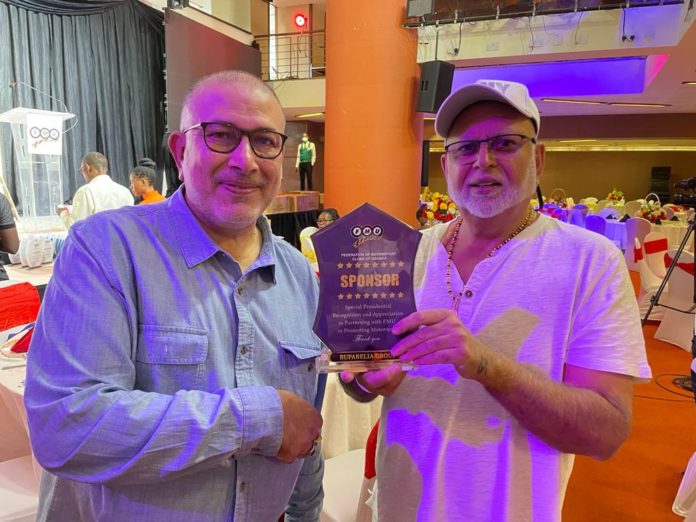
Ruparelia Group has been recognised and honoured as the Federation of Motorsport Clubs of Uganda (FMU) Main Sponsors during the 2022 awards event that took place at Kabira Country Club in Bukoto.

Owned by Businessman Dr Sudhir Ruparelia, Ruparelia Group was recognised for its child companies; the Speke Group of Hotels, the Ruparelia Foundation and the Kabira Country Club, for always supporting the FMU rally championships and other motocross events.

FMU president Dipu Ruparelia said; “These awards have come a bit late given the challenges the federation has faced before arising from Covid and many more. But we are thankful that we managed to organize this big event and award all our champions.”

All motocross, autocross, Enduro, and national rally champions from 2019 to this year were awarded at the glamourous event that had not been organized in almost three years.

The Katende and Blick brothers, Filbert Muwonge, Gift Sebuguzi, Sharifah Kateete, Kylan Wekesa picked up the most awards for their achievements in their respective motocross classes since 2019.

Godfrey Nsereko (2019), Ibrahim Lubega (2020/21), and 2022 winner Oscar Ntambi were crowned two-wheel drive champions.

Ibrahim Lubega also received his 2019 Clubman Rally Championship award sharing the stage with Muhammed Bwete who is the reigning champion in the category.

Yasin Nasser and Ali Katumba ended their wait to be confirmed as the 2019 National Rally Champions. The Moil crew also received their 2021 African Rally Championship Group N champions award.

Duncan Mubiru and Musa Nsubuga were also awarded the 2021 champions.

However, the award for the 2022 national rally champions were put on hold following a petition placed by two crews of Jonas Kansiime and Ponsiano Lwakataka challenging the championship points.

The 2022 national sprints champion will be announced after the final event in Busiika on 26 December.

Stories Continues after ad