Stanbic Bank
Stanbic Bank
19.8 C
Kampala
Stanbic Bank
Stanbic Bank
Home Blog Page 463

Slow uptake of foreign scholarships riles MPs

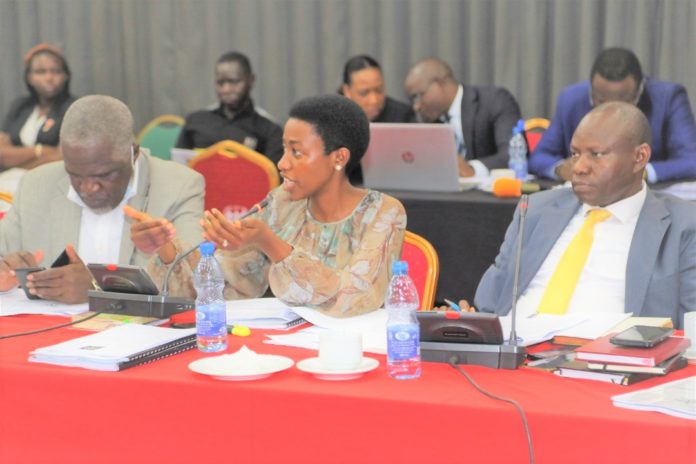
Hon. Eddie Kwizera (L), Hon. Juliet Kinyamatama and Hon. Fredrick Angura during the interface with the education ministry officials

The low uptake of scholarships offered to Uganda has become a major concern to legislators on the Public Accounts Committee (PAC – Central Government).

A review of scholarships offered to Uganda in the last three years laid bare that out of 280 scholarship slots provided, only 162 are filled, resulting in an under absorption of 42 per cent.
 
While meeting the technical team from the Ministry of Education and Sports led by the Permanent Secretary, Ketty Lamaro, on Thursday, 15 December 2022 on the audit report for the financial year ended 30 June 2021, MPs asked for proper management of both government and bilateral scholarships for full absorption to maximise benefits.

“One of the hindrances on [bilateral] scholarships is when the beneficiaries are asked to pay for their own accommodation or medical care [which they cannot afford]. The education ministry needs to improve on their budgeting to cater for all these,” said Tororo South MP Fredrick Angura.

The permanent secretary blamed this on budgetary cuts and inadequacies resulting from the recent COVID-19 pandemic.

Tororo District Woman MP Sarah Opendi urged the ministry to fast-track the process of developing a scholarship policy to address gaps in the management of scholarships as advised by the Auditor General.

“You claim to be giving out scholarships, but where are these adverts put? People are being asked to pay money in exchange for scholarships. We need a policy which should come before the law and once the law is out then we shall need guidelines to operationalise the law. So people [at the ministry] are sleeping on the job,” Opendi said.

The Auditor General in his report had indicated that Uganda’s lack of a policy on scholarships had limited the country’s ability to advance the interest of the ministry when negotiating for bilateral scholarships.

According to Lamaro, the ministry has already drafted a policy on scholarships and awaits submission to cabinet for approval.
 
Tasked by the committee chairperson, Busiro East MP Medard Sseggona to explain why the education ministry did not have records of the number of students who have benefited from bilateral scholarships, the Commissioner for Admissions, Scholarships and Students’ Affairs at the ministry, Muzamil Mukwatampola, said the Ministry of Foreign Affairs is best suited to know the exact beneficiaries.

“The bilateral scholarships come to us through the Ministry of Foreign Affairs; we rely on what they send us. So we cannot claim to know all scholarships because we do not handle bilateral issues,” he said.

Stories Continues after ad

MPs investigating sports council asked to summon players

Bugiri Municipality MP, Asuman Basalirwa

The Bugiri Municipality MP, Asuman Basalirwa has tipped the select committee investigating the operations of the National Council of Sports (NCS) to summon players of the different national sports disciplines, saying their experiences could cure the alleged mismanagement.

“Speak to the players, the referees and umpires, you will be shocked. You will understand their challenges with the council and the sports federations,” said Basalirwa who was appearing before the select committee as a key witness on Thursday, 14 December 2022.

The select committee, chaired by the National Woman Representative for Persons with Disabilities, Hon. Laura Kanushu, is investigating the reported mismanagement of funds at the council, following a motion moved by Basalirwa on 10 November 2022.

The alleged financial crisis, characterised by delayed releases, budget cuts has seen the national soccer team withdraw from key international contests such as, the  African Nations Championship (CHAN) in early 2023 in Algeria.

Basalirwa described the withdrawal as an international embarrassment, and a move that will not only drop the rankings of Uganda Cranes internationally but also attract sanction.

 “We are now facing a national scandal – that Uganda Cranes is withdrawing from CHAN. But how can we withdraw from a continental competition? This story and that of She Cranes in Australia will be big international embarrassments,” said Basalirwa.

He said he found out that the finance ministry is largely liable for the ‘crises in the sports sector, saying they do not appropriate budgets as approved by Parliament.

“The finance ministry is the becoming a very big obstacle to the sports sector, Parliament appropriates money but the ministry sits somewhere and makes budget cuts; this is unconstitutional,” Basalirwa added.

He also faulted the National Council of Sports which he said was not releasing funds to the different sports federations as appropriated by Parliament.

“We also found out that the National Council of Sports was not giving federations money as appropriated by Parliament. When they make releases they go to non-priority areas; you find payment of contractors is made promptly but financial commitments to federations were not being made promptly, yet they are key in management of sports.

The Minister of State for Planning, Amos Lugoloobi, who also appeared before the same committee said his ministry has only released 36 per cent of the budget as opposed to the desired 50 per cent release by this year.

“The ministry has so far released a total of Shs 17.61billion to the council to facilitate wages and the various sports federations. This presents 36.83 per cent of the approved budget,” said Lugoloobi.

Legislators were irked that the sports sector’s potential is being crippled and proposed that henceforth, each sports federations’ budget is ring fenced and coded at the level of appropriation by Parliament, as it was noted that currently it’s the council that decides the allocation to federations.

Hon. Iddi Isabirye (NRM, Bunya County South) said the persistent delays in release of funds is questionable since the sports calendars are static. He noted that the sports federations revealed to the committee that at times, they are forced to borrow money to participate in some crucial games.

“The federations were crying, some of them reach to the extent of borrowing money from money lenders. Sometimes players travel abroad without money, only to be provided in the middle of the games,” said Isabirye.

The committee has so far interfaced with the Federation of Uganda Football Associations, Uganda Boxing Federation, Federation of Uganda Basketball Associations and the Uganda Paralympic Committee.

Stories Continues after ad

Finance Ministry calls for a supportive tax system for easy finance accessibility

Moses Kaggwa, Director Economic Affairs

The Ministry of Finance, Planning and Economic Development has called for a tax system that supports the strategic objectives of Financial Sector Development Strategy-FSDS.

According to the Ministry, the objectives are financial services for all, financial services for markets and financial services for growth.

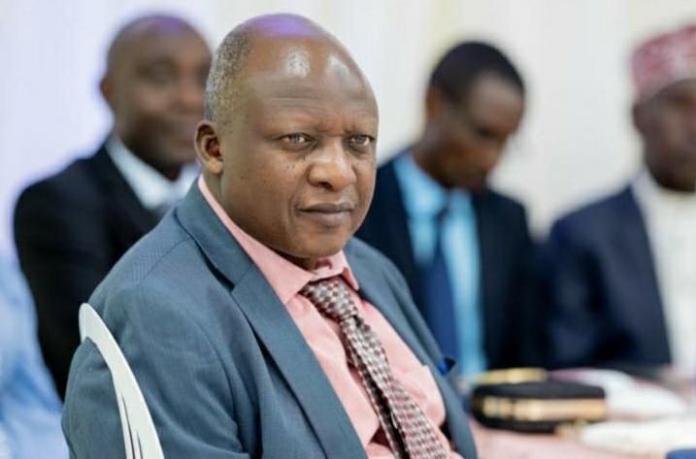
Moses Kaggwa, the Director Economic Affairs in the ministry, said that the four areas of intervention can help in increasing access to and use of finance especially in long term finance.

The Director Economic Affairs delivered these remarks on the behalf of the Permanent Secretary of ministry of Finance, Ramathan Ggoobi in a conference about reshaping the tax system to support FSDS at Sheraton Hotel, Kampala.

According to him, other intervention areas can include strengthening financial innovation, supporting financial market infrastructure and strengthening financial stability and integrity.

He also revealed that Financial Sector Development Strategy also seeks to strengthen framework for Anti- Money Laundering and combating financing of terrorism.

John Musinguzi Rujoki, the Uganda Revenue Authority Commissioner General welcomed the call and vowed to support the ministry for effective delivery of services to Ugandans.

The Commissioner General has said that digitalization of financial services is one of the tax systems that can support the strategic objectives of Financial Sector Development Strategy to be beneficial to the economy and will positively impact financial inclusion which is one of the objectives of the Financial Sector Development Strategy.

He further reiterated the need for effective tax policies to encourage financial inclusion.

“The digitization of the financial services is beneficial to our economy, and will positively impact financial inclusion, which is one of the objectives of the Financial Sector Development Strategy” He noted.

He said digitalization provides a conducive taxation environment, due to the wealth of business data, which can give insights on incomes, persons for tax compliance.

Also he revealed that digitalization of the financial sector facilitates e-commerce, reduces cash economy and thus impacts the informal sector, and also said there is a direct relationship between digitalization of financial services and financial inclusion.

Musinguzi also noted that there is a need for effective Tax policies that will encourage the inclusion and uptake of the financial services, as well as positively impact the revenue administration, adding that the regulators and key players should be willing to share data, for purposes of tax compliance management.

Michael Atingi-Ego, the Deputy Governor of Bank of Uganda said that an efficient and effective banking system is critical for powering enterprises and smooth functioning of the economy. He said the financial system promotes economic growth and development by mobilizing, structuring and allocating savings to productive sectors.

The conference was co-hosted by the ministry of Finance, Planning and Economic Development, the Digital Research Program of the International Centre for Tax and Development-ICTD and TaxDev, Think Change and Institute for Fiscal Studies, funded by Bill, and Melinda Gates and UKAID.

Stories Continues after ad

EC relocates head office to new premises

The Electoral Commission (EC) is to finally relocate to its new premises tomorrow Friday, December 16.

According to a statement issued by the Commission’s Secretary, Leonard Mulekwah, the old offices along Jinja road are to be closed to the public from tomorrow to allow them undertake the relocation process.

“The closure will enable the Commission undertake the process of relocating the head office from the current premises on Plot 55 Jinja Road, Kampala to the following new address; Plot 1-3/5, Seventh Street, Industrial Area, Kampala (formerly head office of the National Housing and Construction Company Ltd),” Mulekwah noted.

He said the Registry at the new offices will be open on week days except the public holidays.

“The commission regrets any inconveniences that you may encounter during the process of the new office relocation,” he stated.

Mulekwah added that the new premises located on 7th street, Industrial Area will be open to the general public starting Monday January 16, 2023.

Stories Continues after ad

Over 800 complete E-learning courses in South Sudan

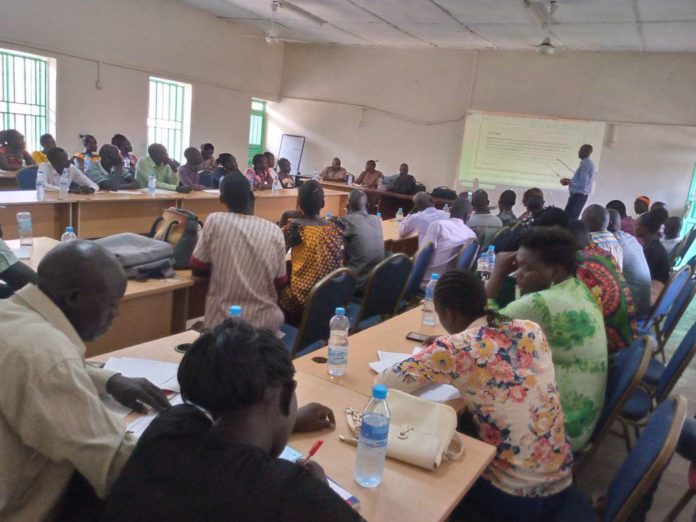
Over 800 South Sudanese benefitted from the Digital and Innovations Skills Hub (DISH), an e-learning platform that provides access to youth as well as women to develop employment skills.

The project, implemented by Community Empowerment for Progress Organization (CEPO) with support from the Dutch organisation for internationalisation in education (NUFFIC), had four online training courses.

“The objective of DISH is to increase enrolment in certificate education in order to increase employment possibilities. Especially since the outbreak of the COVID-19 pandemic, youth and women face challenges to find employment, while employers struggle to employ people with matching skills in fast-growing sectors in the employment market,” said Peter Bidali Elias, CEPO’s officer in-charge of the project.

He added, “The opportunities and sectors of employment have been identified through research by the partners in earlier programmes which identified key employment sectors for youth”.

Through DISH, online short certificate courses, which included Business Administration, Information and Communication Technology (ICT), Peace Building and primary school teaching, were created and made available.

According to Bidali, these three-month certificate courses increase the employability of youth and women because they link to key emerging sectors in employment and contribute to stability, peace and resilience.

“This is to increase enrolment in certificate education in order to enhance employment possibilities in youth and women across the country,” he said.

The certificate in Business Administration course attracted 431 students, Peace Building had 386, Primary School Teaching with 161 and ICT got 88.

Perina Juye, a Business Administration student, said she learnt a lot from the course, especially key considerations when one intends to open a business.

“My advice is that learning sessions should be more interactive,” she urged.

For his part, Martin Seree, a student of Basic ICT said the e-learning platform will provide access to youth as well as women to develop employment skills.

“During the course, I was able to acquire a lot of networking skills, learned operating systems and other IT related skills that I lacked,” he explained.

Since the outbreak of the COVID-19 pandemic, youth and women faced challenges in employment as employers struggled to find skilled people.

The latest World Population Review ranks South Sudan as the third lowest in literacy rate in world and thus anticipated that DISH courses will bridge that gap by focusing on low-threshold e-learning courses, which can be used in online and offline digital learning on a variety of devices and settings. 

Stories Continues after ad

Sir Apollo Kaggwa Schools proprietor is dead

Hajji Musa Sewava

The Director of Sir Apollo Kaggwa Schools, Hajji Musa Sewava is dead. Sewava passed on earlier in the morning.

According to a source related to his family, the entrepreneur died of a stroke. He will be laid to rest at his ancestral home at 4pm in Buloba, Mityana Road.

Hajji Musa was the proprietor of Sir Apollo Kaggwa Schools spread across Kampala, with branches in Kisasi, Mengo, Nakasero, Kitintale, Kireka and other places.

Stories Continues after ad

MSF epidemiologists take on the new Ebolavirus variant

It has been over two weeks since the last confirmed Ebola case a stillborn baby of a mother who survived the disease was reported in Uganda.

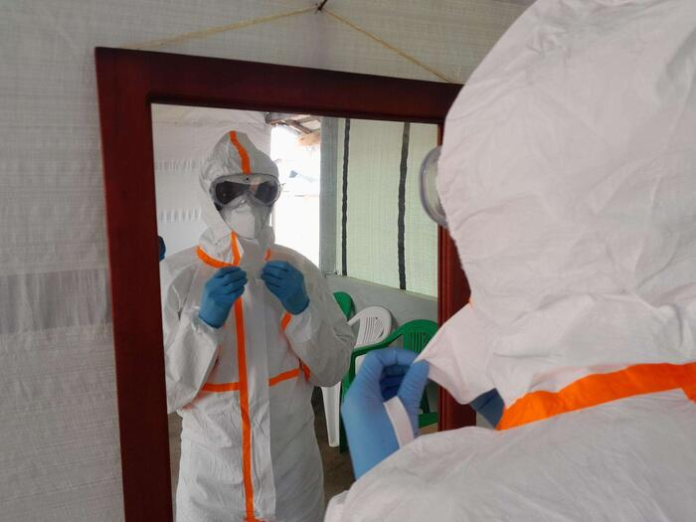
Doctors Without Borders/Médecins Sans Frontières (MSF) has been responding to the rare outbreak of the Sudan Ebolavirus variant since it was declared on September 20 by building Ebola treatment centers and treatment units, providing support to the Ugandan Ministry of Health for case management in these facilities, and conducting community outreach activities like health promotion and infection protection and control measures in health facilities where known patients went prior to diagnosis.

Denis Ardiet works for Epicentre, MSF’s epidemiology division. He currently coordinates a team of seven epidemiologists involved in the ongoing Ebola response in Uganda. His job involves rigorous analysis of the epidemiological situation and the possible scenarios of this outbreak to help inform how MSF and the Ugandan Ministry of Health can respond accordingly.

What is the current trend of the outbreak in Uganda?

In terms of trends, we saw two important peaks in the outbreak. The first one was in September in the Mubende district, which was the first epicenter of this outbreak and then another in the neighboring district of Kassanda. While cases in these two districts alone represent 80 percent of all cases detected so far in this outbreak, a total of nine districts in the country were affected. Historically, this is the largest geographic spread of Ebola that Uganda has ever faced.

After a steep rise of cases in October (86 cases over 4 weeks), the outbreak slowed in terms of number of new confirmed cases in recent weeks (14 cases in 4 weeks in November). However, we are very concerned that we had several Ebola cases that were not linked to any known chains of transmission—this means they had acquired the infection from an unknown source, which means those cases couldn’t be tracked through contact tracing and follow-up. This led to two new districts being affected, Masaka and Jinja.

It’s extremely important to follow up with case contacts. When we identify all the people who were in contact with a confirmed case in time, we can monitor their health and help them to seek care swiftly at the right health facility in case Ebola-related symptoms develop. Yet according to the Ministry of Health data, only around 64 percent of case contacts initially received follow-up, pointing to gaps in this crucial part of the response. While the overall epidemiological trend is now positive, we remain concerned and vigilant about what could still happen.

What are possible future scenarios?

Anything is still possible. Scenario one is that we see a continued downward trend and no more new cases as we approach the end of the epidemic. Scenario two is that occasional new cases emerge here and there, perhaps in different districts. And scenario three is that there is an increase in new cases moving toward another peak in transmission.

All of these different scenarios will require corresponding operational responses from MSF teams and Ministry of Health teams that we work with very closely. We rely very much on their data, especially since we do not run our own laboratory testing or our own case investigations.

How MSF can best support the Ugandan health authorities depends on the needs of the situation. We must evaluate what makes the most sense and we might switch to a smaller-scale rapid-response team approach. This could be a more community-based approach closer to where patients live rather than having sizeable treatment centers set up within the districts.

It is also essential to ensure that non-Ebola care continues in the affected areas and that curative and preventive management of malaria cases is in place, given that initial symptoms for Ebola and malaria are similar. We support the Ministry of Health in reinforcing case detection and isolation capacity in existing health facilities so they can react promptly to any new alert or case and quickly reduce the chances of wider spread. On the community side, the Ministry of Health sustains health surveillance to make sure there is no ongoing transmission. All these efforts must be vigilantly maintained until the epidemic is officially declared over after 42 days without new cases, or twice the Ebolavirus incubation period of 21 days.

We never know everything about the epidemiological puzzle, and we can only make sure we gather as much relevant information as possible. We are aware of the epidemiological situation, and we see that the epidemic curve has descended, which is good. But behind this curve, there may be events and information we don’t know and that is the difficult part to uncover. Regardless, we have to be prepared and reactive to respond to any alert or new case.

Is a rapid decrease in cases unusual in Ebola outbreaks?

It has been observed during other outbreaks, even though it remains surprising considering all the unknown elements at play in the Uganda outbreak. Such a decrease may reflect that transmission has stopped through a combination of several factors, including the outbreak response and community actions. This outbreak reminds me a bit of those in Conakry in Guinea in 2015 or Beni in the Democratic Republic of Congo in 2020. The health authorities and their partners, including MSF, also had difficulties in following up all case contacts back then and despite decreasing trends, the final few cases popped up sporadically for some months.

It is important to mention that the initial low rate of case contact follow-up in Uganda has in fact improved over the last weeks in several districts. While that is a good sign, it still seems that the response often focuses on demanding community adherence to follow-up either through obligatory quarantine or home isolation and daily calls which can scare people when empathetic and comprehensive health messages that explain the rationale of these measures are not shared. Health promotion and community outreach activities play an essential role to bridge this trust gap and ensure that people have sufficient information about the Ebolavirus to protect themselves and their communities, and to better understand the measures.

Usually as can be the case in any outbreak and as we also saw with COVID-19 there is a lot of fear around the prospect of being removed from your family and friends, isolated and sent to an Ebola treatment unit. Health promotion and community engagement help to counteract rumors and fears while supporting the prevention of community transmission.

Stories Continues after ad

Construction of UNICEF, WFP joint premises kickoff

The United Nations Children’s Fund (UNICEF) and United Nations World Food Programme (WFP) today held a ground-breaking ceremony to kick off the construction of their multi-million-dollar joint office premises in Mbuya, a Kampala suburb.

The UNICEF and WFP joint premises will enable the two agencies to reduce long-term operational costs while giving their staff a safe and healthy work environment so that they can be more productive to serve the most vulnerable populations in Uganda.

The joint premises will strengthen WFP and UNICEF partnership and make it easier to implement programmes that the UN agencies are delivering jointly, including social protection for refugees and host communities, school feeding and addressing malnutrition in Karamoja.

“These joint premises are a reflection of our commitment in Uganda to deliver as one UN, working together to maximise the use of our resources while giving our best to the people we serve,” Susan Ngongi Namondo, the UN Resident Coordinator in Uganda said.

Situated on a UNICEF leased land of 2.6 acres, the premises will feature parking space, health amenities, gender-sensitive services such as breast-feeding rooms, green gardens and a separate conference facility. Special focus will be given to making sure the premises are energy efficient, making maximum use of natural light and using renewable energy sources such as solar. It will also provide for sewage treatment, water recycling and rainwater harvesting.

The building has been designed and will be built to save 20 percent on energy use, water consumption and material used in the building. This will afford the building an EDGE (Excellence in Design for Greater Efficiencies) certificate from the IFC-World Bank, a global standard for green building.

This will be achieved by a combination of measures that will include solar power in the building, improved insulation of the wall, natural ventilation of the offices, water recycling, rainwater harvesting and sewage treatment. The scheme also targets to retain over 50 percent of the greenery and trees in the landscape, while minimising the building’s carbon footprint. The building will feature energy-efficient installations and water appliances.

“UNICEF Uganda has been working towards positive climate action and with this new construction we show once again that we walk the talk,” M. Munir A. Safieldin, UNICEF Uganda Country Representative, said. “UNICEF is proud of today’s achievement. When we move into the premises, we shall be able to save on rent and operational costs. Money should be spent on ensuring safe and healthy future for boys and girls in the country.

As the multi-million-dollar project goes into procuring construction materials and paying for services, the project will contribute to the national economy. It will create jobs for an estimated 200 people, including women and young people, will be involved in both technical construction work and providing services such as preparing food. UNICEF and WFP aim to use locally available construction materials and will ensure that the building is easily accessible by all staff and visitors including those with disabilities.

“We are building premises that will reflect our values as an inclusive and environmentally conscious United Nations. The United Nations is already a great place to work, and these premises will create an even better environment for our staff – enabling them to deliver on the UN goals no matter what,” WFP Uganda Country Representative, Abdirahman Meygag said. “Whether it is our pregnant and breastfeeding staff and clients or people with disability, we are committed to creating an inclusive workplace while minimising our carbon footprint.”

Stories Continues after ad

NRM’s Richard Todwong urges Gen Muhoozi to be humble

The NRM Secretary General, Richard Todwong has asked former Commander of Land Forces in the UPDF, Gen Muhoozi Kainerugaba to be more measured in his public comments after his recent attacks on the ruling party.

The senior presidential advisor on special operations has in the past few months directly attacked the ruling party describing it as being reactionary.

“I am listening to the outcry of our people for change. I am with the people! Whatever NRM has become certainly does not represent the people of Uganda,” Muhoozi tweeted.

He added, “I believe in Jesus Christ, and I believe in my father, General Kaguta Museveni. I certainly do not believe in NRM. In Marxist terms, it is probably the most reactionary organization in the country.”

The comments have since drawn mixed reactions from members of the public.

Giving his end of the year address on Wednesday, the NRM Secretary General didn’t hold back on asking the First Son to go slow on the ruling party.

“As a party, we warn anybody that not even the chairman of the party can insult this organization. Not even the founder. The party is bigger than all of us and we must respect it. This could have been a misguided opinion about the party. We might need to help those who don’t understand how the party works so they understand how we do things , how we communicate, understand social issues and how you can offer yourself to be a  leader .There are things we need to help other people understand,” Todwong said during a press briefing.

The NRM Secretary General suggested that as a serving officer of the UPDF, the army will take the much needed measures to restrain “one of their own” from breaking the army code of conduct.

Todwong said whereas the criticism by the First Son was not taken in bad faith, the way it came was insulting.

“We don’t take it in bad faith. A revolutionary party must accept criticism. Such criticisms are good for us to look internally and reflect on some of these things.  As you criticize, remember that the English say, step the shoes but don’t spoil the shine. Criticize but don’t insult. Criticize but respect. Step the shoes but don’t spoil the shine.”

He insisted that the ruling NRM party is bigger than any individual, noting that it costs nothing in this world for any person to be humble.

“This party is not something anybody can play around with or easily abuse and go away with it. The party is massive and mega. You attack the party and you will have attacked the real core of what many Ugandans believe in.”

“We warn all those individuals that humility can’t remove anything but rather adds something on to you. Be humble. NRM supporters should be humble, respect people and speak with courtesy. Don’t speak like you have authority over people. The authority was given to you by ordinary people.”

Todwong’s comments come on the backdrop of similar comments by the NRM director for mobilization, Rosemary Sseninde who asked Gen Muhoozi Kainerugaba to speak responsibly.

“MK also has his freedom to say what he wants but of course, he must be conscious of what is going to hurt the government, what is going to hurt the party and what is going to hurt the country. Because I believe much as we have freedom to speak, we speak things that probably will cause problems for the country,”Sseninde said last week while speaking to the NRM party members and leaders in Bunyanbagu district.

The First Son’s comments in the past months have left many, especially in the ruling NRM with tongues wagging for fear of reprisal.

Stories Continues after ad
24 Ugandan referees to hold FIFA badges in 2023

FIFA Referee badge

World Football governing body, FIFA has confirmed a list of Ugandan referees approved to receive FIFA badges for the calendar year 2023.

Uganda now has 24 FIFA certified referees, an increase by one on the current list – with three new badge holders.

The list submitted by FUFA to FIFA was released with 24 names including 8 Centre Referees and 10 Assistant Referees for the eleven-aside football.

Futsal maintains two slots from this year just Beach Soccer that will remain with four slots.

The only increment to 24 comes from main football where Uganda has earned another slot, taken by Lucky Razaake Kasalirwe.

The budding centre referee is one of the three new names on the annual list. The other two are assistant referees Timothy Gumisiriza Karusigarira and Elizabeth Nassolo.

Full List

Male Centre Referees: Mashood Ssali, Ali Sabilla Chelangat, William Oloya, Lukcy Razaake Kasalirwe and George Olemu

Male Assistant Referees: Ronald Katenya, Okello Lee, Isa Masembe, Hakim Mulindwa, Emmanuel Okudra, Timothy Gumisiriza Karusigarira

Futsal Referees: Brian Emmy Nsubuga, Isaac Sengendo

Beach Soccer: Ivan Kintu Bayige, Muhammad Ssenteza, Kennedy Kawagga Bazirio and Joel Chote Munyendoh.

Female Centre Referees: Shamirah Nabadda, Habiba Naigaga and Diana Murungi

Female Assistant Referees: Lydia Nantabo Wanyama, Marex Nakitto Nkumbi, Jane MutonyMutonyi and Elizabeth Nassolo

Stories Continues after ad