Stanbic Bank
Stanbic Bank
23.3 C
Kampala
Stanbic Bank
Stanbic Bank
Home Blog Page 476

SafeBoda exits Nigeria

Safe boda riders

Ugandan bike-hailing startup, SafeBoda is reportedly exiting Nigeria.

According to Techpoint.Africa, SafeBoda wants to focus on “bringing the company to profitability by deepening its core transportation offering” in Uganda, its largest market.

Recall that SafeBoda also exited Kenya in November 2020, less than two years after expanding its services to the country.

The company said this was due to the negative effects of COVID-19 on its operations.

SafeBoda is reportedly exiting Nigeria because the “current state is not economically viable and unfortunately requires significant investment at this challenging time in the global economic landscape.”

Officially launched in Kampala, Uganda in 2017, SafeBoda claims to be upending the offline market for local motorcycles known as boda-bodas in Uganda and Okadas in Nigeria.

It launched in Ibadan, Nigeria, in December 2019 but began operations in March 2020.

This March, the company announced that it had completed over 3 million rides, and 50,000 deliveries with over 10,000 riders and 100,000 passengers.

In August 2022, SafeBoda announced a car-hailing service, SafeCar, in Kampala and one month after, it also launched in Ibadan, Nigeria.

It is, however, unclear at the moment whether its exit from Nigeria will also impact its car-hailing service.

Stories Continues after ad

Pope Francis to visit DRC, South Sudan in January 2023

Pope Francis

Pope Francis has confirmed his delayed trip to Congo and South Sudan for 31 January to 5 February 2023, cutting out a stop in Congo’s conflict-ravaged east but fulfilling a years-long wish to accompany other Christian leaders to the young nation of South Sudan.

The Vatican on Thursday published the itinerary of the trip, which had originally been scheduled for last July but was postponed because Pope Francis was undergoing therapy for his strained knee ligaments. The 85-year-old Francis is still using a wheelchair, but has made other foreign trips in the meantime, suggesting that he can go through with even challenging itineraries.

The new itinerary roughly matches the original, with one significant exception: Initially the pope had planned to celebrate Mass in the eastern Congolese city of Goma en route to South Sudan. Now, Francis will meet in the Congolese capital, Kinshasa, with a delegation of faithful and “victims” from Goma.

Tens of thousands of Congolese have been displaced, with many heading toward Goma, amid renewed clashes between government soldiers and M23 rebels in Congo’s mineral-rich east. A cease-fire to end the latest round of fighting was supposed to go into effect last week.

After the Congo leg of the trip January 31 – February 2, Francis will be joined by the archbishop of Canterbury, Justin Welby, and the moderator of the General Assembly of the Church of Scotland, the Right Rev. Iain Greenshields, for a first-ever ecumenical peace trip by the leaders of the three Christian churches, to Juba, South Sudan, from Feb. 3-5.

 There, the three will celebrate an ecumenical prayer service together, and meet with displaced South Sudanese.

 The visit seeks to boost a 2018 agreement aimed at ending civil war. It has been in the works for years, but has been repeatedly postponed because of the security situation on the ground, and then in July because of Francis’ health.

 Welby and Greenshields both welcomed word that the trip would go ahead.

 “I am genuinely humbled at the opportunity to support our brothers and sisters in South Sudan in the search for peace, reconciliation and justice,” Greenshields said in a statement, which noted that the Church of Scotland had been invited to “represent the Presbyterian family due to its strong partnership with the Presbyterian Church of South Sudan.”

 Welby, for his part, added that all three leaders shared a desire to “stand in solidarity” with the people of South Sudan.

 In one of his more memorable gestures, Francis in 2019 invited South Sudan’s rival leaders to the Vatican for a prayer and knelt down and kissed their feet in begging them to make peace.

Stories Continues after ad

Maintaining reform momentum is essential to strengthen pension systems, says OECD

NSSF Lubowa houses.

The current financial and economic uncertainty, as well as the rising cost of living, may lead policy makers, regulators and supervisors to postpone reforms that could improve their pensions systems. However, delaying needed reforms would put at risk the well-being of current and future pensioners. Policy makers should continue to improve pension systems, according to a new OECD report.

The OECD Pensions Outlook 2022 says that pension arrangements in which retirement savings are invested to accumulate assets that will finance pensions (asset-backed pension arrangements) have been growing in the last two decades in most OECD member countries. Total assets earmarked for retirement represented just over 100% of total OECD GDP at the end of 2021. These arrangements play a key role in diversifying the sources of retirement funding.

“Strong retirement systems will be important to protect the living standards of our aging population as demands on these systems continue to grow,” OECD Secretary-General Mathias Cormann said. “The challenges are global, with jurisdictions all around the world facing similar challenges in the context of lower growth, high inflation and financial market uncertainty while responding to the implications of population ageing. We will need to continue to develop and strengthen a multi-pillar system that combines different types of pension schemes which supplement one another and diversify risks.”

To help countries improve the robustness of retirement systems and build peoples’ trust that their best interests are considered, the report includes a series of recommendations on how to introduce, develop and strengthen asset-backed pension arrangements. These schemes should complement, and never substitute, pay-as-you-go public pensions, and be designed to diversify the sources to finance retirement and make pension systems more resilient to the challenges they face, such as ageing populations.

These guidelines, building on the February 2022 OECD Recommendation of the Council for the Good Design of Defined Contribution Pension Plans, recognise the importance of occupational and personal pension arrangements that are increasingly an integral part of most countries’ overall pension system, and in some countries, the main component.

Employers can play an important role in the provision of asset-backed pension arrangements, according to the report. Reinforcing their role requires balancing the advantages, such as designing plans that fit the needs of employees, with the potential challenges, such as cost, complexity and administrative burden.

Improving their design also requires promoting low-cost and cost-efficient arrangements that will be reflected in the fees charged. However, policy makers and regulators need to consider the impact that different fee structures may have on individuals saving for retirement and on providers.

This edition of the Outlook also highlights the need for regulators and supervisors to ensure the appropriateness of mortality assumptions, as these are crucial to ensure the sustainability of lifetime retirement income for pensioners. It also provides policy guidelines on how to design, introduce, and implement non-guaranteed lifetime retirement income arrangements, which protect members from the longevity risk of outliving their savings without obliging further contributions from the sponsor to maintain benefit levels.

Working with over 100 countries, the OECD is a global policy forum that promotes policies to preserve individual liberty and improve the economic and social well-being of people around the world.

Stories Continues after ad

Gov’t plans to rationalise tax incentives next year

State Minister for Planning, Amos Lugoloobi (right) and the Permanent Secretary/ Secretary to the Treasury, Ramathan Ggoobi, appearing before the House Committee on Finance.

The Ministry of Finance, Planning, and Economic Development has assured Parliament of Government plans to rationalise tax incentives to realize its efficient and effective implementation. 

This was revealed by officials from the Finance Ministry led by the State Minister for Planning, Amos Lugoloobi, who were appearing before the Committee on Finance over Uganda Tax Expenditures Report for FY 2020/2021 to 2021/2022 on Thursday, 1st December 2022. 

Over time, Parliament has been concerned about the rising tax expenditures and called for a legal tax review and comprehensive evaluation of the benefits of tax exemptions given to investors for the last 10 years. 

The Permanent Secretary/ Secretary to the Treasury, Ramathan Ggoobi, told the committee that government is implementing a Tax Expenditures Rationalisation Plan over the medium term to streamline tax incentives. 

“We are aware of the weaknesses we have been having in the way we have been managing these tax expenditures and we have put in place a tax expenditure rationalization plan with the help of our development partners, specifically the International Monetary Fund,” Ggoobi said. 

According to Ggoobi, the rationalisation plan will entail criteria of choosing beneficiaries, timeframe, and the purpose of the tax incentive and also sunset clauses which will inform the investors who intend to benefit of their obligations which must be met on time.

“This rationalisation plan will also help in cost-benefit analysis. We shall be able to tell the number and nature of jobs provided through the tax incentives and also contribute to our import substitution strategy,” he said.

However, Ggoobi noted that this tax expenditure rationalization plan is not to stop tax incentives, but to ensure that they are actually effective and beneficial to the economy. 

In FY 2023/2024, Government proposes to review tax expenditures on capital incomes, unify tax rate on capital income, and review exemptions on supplies of some machinery, tools, and input suitable for use in agriculture. 

For the last three financial years, Government has forgone revenue amounting to Shs11.7 trillion on tax incentives. According to the Finance Committee, this is extremely high and could be disastrous to the country’s Gross Domestic Product (GDP). 

“We need the Ministry of Finance to lay evidence that we are having benefits as a result of these tax expenditures. We need to reduce tax expenditures like Kenya has done so in the past five years,” Committee Chairperson, Keefa Kiwanuka, said.  
 
Minister Lugoloobi said since Government introduced tax incentives in the 1990s, key objectives of the Domestic Revenue Mobilisation Strategy have been met such as reduced importation of products, employment, and an increase in locally manufactured products among others. 

Pakwach district MP Jane Avur Pacuto said whereas the rationalization plan is a move in the right direction, the Ministry of Finance needs to tighten the grip on investors who receive incentives but do not show tangible results over time. 

Stories Continues after ad

UPDF supply free safe water to Carshanley IDP camp in Somalia

The Uganda Peoples’ Defence Forces (UPDF) Battle Group XXXV serving under the African Union Transition Mission in Somalia (ATMIS) have supplied free safe water to residents of Carshanley Internally Displaced Persons (IDP) camp in Barawe lower Shabelle region.

This comes as a relief to residents who were evicted from Deruwun by Al-Shabaab militants in Somalia.

Carshanley is an informal IDP camp with about 1000 people in the outskirts of Barawe town. The nearest safe water point to this camp is almost 8Km away with a very insecure road.

Residents from the IDP camp appreciated the water, saying this will save them from contracting water borne – related diseases and other associated risks that arise from trekking long distances in search for water.

“The water supply is a gesture that UPDF is a true People’s Army, you have saved us from contracting diseases like Cholera, typhoid, dysentery and others that have been a problem here due to contaminated water. We appreciate your good heart and support to us and we pledge our support to your fight against Al-Shabaab who evicted us from our homes,” remarked an elder from the IDP camp

The UPDF BG XXXV Civil Military Cooperation (CIMIC) officer in Barawe Maj Majid Anguyo said UPDF troops will continue distributing water on a weekly basis until a permanent solution is reached.

He advised them to report any Al-Shabaab activity to the security forces. “Al-Shabaab militants have evicted you from your homes, you are now homeless with no safe water and food. Therefore report any of their activities so that we can fight them to enable the return to your homes,” Maj Anguyo noted.

Carshanley IDP camp also faces problems like poor health care, poor accommodation and lack of food, among other challenges.

Stories Continues after ad
URA impounds another truck with smuggled garments

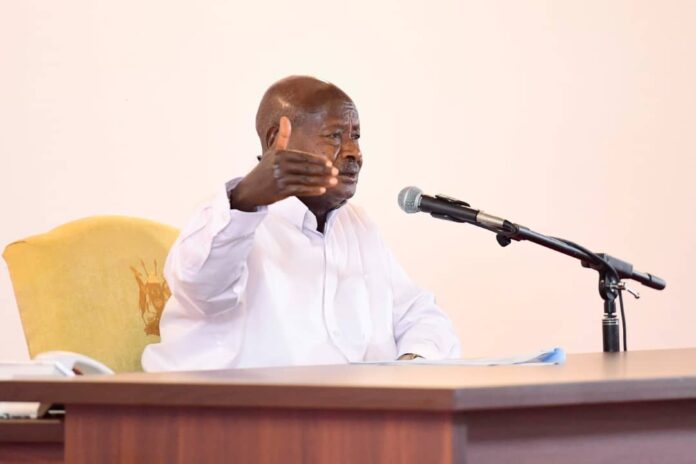
The Uganda Revenue Authority (URA) enforcement team has impounded a truck, registration number UAX 249D loaded with smuggled garments en route to the city centre.

URA had received intelligence reports of smuggled garments that had been conveyed in the suburbs of Nsambya.

The smugglers had successfully loaded goods from the Eastern region and hidden them in a home in Nsambya and were now already visualizing their profits as they drove to the city centre to distribute the goods.  

Unfortunately, this excitement was cut short by the enforcement team that intercepted their truck UAX 249D at clock tower.

The truck was driven to URA head office in Nakawa for further investigations and verification of the goods they were carrying.

The items discovered in the truck were; 1,192 pieces of assorted T-shirts, 1,232 pieces of assorted jeans & Khaki Trousers, 1,032 pieces of ladies Leggings, 1,136 pieces of ladies dresses, 354 pieces of shirts, 300 pieces of men’s warm Jackets and 296 sets of kids wear.

Stories Continues after ad
Africa’s advances in maternal, infant mortality face setbacks – WHO report

A slowdown in the progress made during the past decade against maternal and infant mortality is projected in the African region, a new World Health Organization (WHO) report released today finds.

The Atlas of African Health Statistics 2022 assessed the nine targets related to the Sustainable Development Goal (SDG) on health and found that at the current pace, increased investment is needed to accelerate progress towards the targets. Among the most difficult to achieve will be reducing maternal mortality.

In sub-Saharan Africa, it is estimated that 390 women will die in childbirth for every 100,000 live births by 2030, the Atlas 2022 reports. This is more than five times above the 2030 SDG target of fewer than 70 maternal deaths per 100 000 live births, and much higher than the average of 13 deaths per 100 000 live births witnessed in Europe in 2017. It is more than the global average of 211. To reach the SDG target, Africa will need an 86% reduction from 2017 rates, the last time data was reported, an unrealistic feat at the current rate of decline.

The region’s infant mortality rate stands at 72 per 1000 live births. At the current 3.1% annual rate of decline, there will be an expected 54 deaths per 1000 live births by 2030, far above the reduction target of fewer than 25 per 1000.

“Africa has scored some of the fastest reduction rates globally in key health objectives, but the momentum is waning. This means that for many African women, childbirth remains a persistent risk and millions of children do not live long enough to celebrate their fifth birthday,” said Dr Matshidiso Moeti, WHO Regional Director for Africa. “It is crucial that governments make a radical course-correction, surmount the challenges and speed up the pace towards the health goals. These goals aren’t mere milestones, but the very foundations of healthier life and well-being for millions of people.”

Although the region is witnessing a decelerating momentum towards key health objectives such as vaccine coverage, it has made remarkable progress in some areas during the first decade of the 21st century. Under-5 mortality fell by 35%; neonatal death rates dropped by 21%; and maternal mortality declined by 28%. In the last decade, advances in all three targets have flatlined, particularly for maternal mortality. While Africa has advanced on family planning, with 56.3% of women of reproductive age (15-49) having their family planning needs satisfied with modern contraceptive methods in 2020, the region is still far below the global average of 77% and the worst performing.

The slowdown has been exacerbated by the disruptive effect of the COVID-19 pandemic. Crucial health services such as postnatal care for women and newborns, neonatal intensive care units, and antenatal care services, immunization services were disrupted during the pandemic. Since 2021, Africa has also faced a resurgence in vaccine-preventable disease outbreaks. Measles cases rose by 400% between January and March 2022 compared with the same period the year before.

Inadequate investment in health and funding for health programmes are some of the major drawbacks to meeting the SDG on health. For example, a 2022 WHO survey of 47 African countries found that the region has a ratio of 1.55 health workers (physicians, nurses and midwives) per 1000 people, below the WHO threshold density of 4.45 health workers per 1000 people needed to deliver essential health services and achieve universal health coverage.

In the African region, 65% of births are attended by skilled health personnel – the lowest globally and far off the 2030 target of 90%, according to the Atlas 2022. Skilled birth attendants are crucial for the well-being of women and newborns. Neonatal deaths account for nearly half of all under-5 mortality. Accelerating the agenda to meet its reduction goal will be a major step toward reducing the under-5 mortality rate to fewer than 25 deaths per 1000 live births.

The Atlas 2022 also presents the latest data for more than 50 health-related indicators of the SDGs and provides comprehensive country-level statistics for the region.

Stories Continues after ad

Kenya’s Hamza Anwar to test his Ford Fiesta R5 at the FMU Boxing day Sprint

Hamza-Anwar

Kenya’s reigning (ARC3) Junior African Champion Hamza Anwar, is set to debut his long awaited Ford Fiesta R5 car in Federation of Motorclubs of Uganda (FMU) Boxing day Sprint event. The Sprint will be held in Busiika Motorsports Arena, Luwero district on 26 December.

The young Kenyan sensational driver will be accompanied by his father, Asad Anwar the former Kenyan National rally Champion not as a co-driver but will also participate in the event driving the unspecified Mitsubishi car.

Hamza Anwar will debut his Ford Fiesta R5 car which was rumored to have been bought two months ago.

It’s not yet known but rumors have it that this Ford Fiesta R5 is the car Hamza Anwar expects to enter with in the 2023 ARC races. This is all thanks to Amaanraj Rai and Rajiv Ruparelia efforts that Hamza Anwar is set to take part in the Sprint.

Hamza made his debut on Ugandan soil this year in the Pearl of Africa Uganda rally 2022 where he registered a DNF but enjoyed the Ugandan crowds; for this reason, he has chosen to return and thrill rally fans.

The Sprint will be the last event of the 2022 NRC and will score on the NRC under CRC category and 2wd.

With Hamza Anwar, Mark Lubega and Mike Mukula jr participating in the Sprint expect spirited fights between the three sons of Motorsports legends of Kenya versus Uganda.

Stories Continues after ad
South Africa president Ramaphosa faces impeachment threat

President Cyril Ramaphosa

South African president Cyril Ramaphosa is facing a possible impeachment threat over the “Farmgate” scandal.

The president has been accused of covering up a $4m (£3.3m) theft from his farm in 2020, including kidnapping and bribing the burglars into silence.

A leaked report from an independent panel has found that Mr Ramaphosa abused his position and may have broken an anti-corruption law.

He has denied wrongdoing, and said the money was from selling buffalo.

The panel’s findings have been handed to parliament, which is set to examine them and decide whether or not to launch impeachment proceedings next week.

Mr Ramaphosa is less than a month away from a conference which will decide if he can run for a second term with his party, the African National Congress (ANC), in 2024. The incident could be particularly damaging as Mr Ramaphosa ran for office on an anti-corruption ticket.

The ANC will hold a meeting with its executive on Thursday, where it is expected that the issue will be discussed.

The Farmgate scandal erupted in June, when a former South African spy boss, Arthur Fraser, filed a complaint with police accusing the president of hiding a theft of $4m from his Phala Phala farm in the north-east of the country in 2020.

Mr Fraser, who is a close ally of former President Jacob Zuma, alleged that the money could have been the proceeds of money-laundering and corruption, and accused the president of kidnapping and bribing the burglars.

Holding such a large amount of money in dollars could violate foreign exchange control laws.

Mr Ramaphosa has confirmed a robbery, but said the amount stolen was less than that alleged, and denied attempting to cover it up.

Some $580,000 which had been paid in cash for buffalo was stolen from under sofa cushions in the farmhouse, he said.

“I did not ‘hunt’ for the perpetrators of the theft, as alleged, nor did I give any instructions for this to take place,” he wrote in a submission to the panel’s report, according to AFP news agency.

The panel concluded that there were many unanswered questions, calling it a “very serious matter”.

Little information was kept about the man who supposedly paid the money for buffalo, it said, adding that he had still not collected the animals two and a half years later.

The panel also said it was strange that the money had been kept hidden in a sofa, rather than in a safe until it could be lodged in a bank account.

“We think that the president has a case to answer on the origin of the foreign currency that was stolen, as well as the underlying transaction for it,” the report said. It added: “The president abused his position as head of state to have the matter investigated and seeking the assistance of the Namibian president to apprehend a suspect.”

Namibian president Hage Geingob has previously denied any involvement in the incident.

Stories Continues after ad
WHO urges global community to equalize the HIV response

HIV treatment

On 1st December, World AIDS Day 2022, the World Health Organization (WHO) is calling on global leaders and citizens to boldly recognize and address the inequalities that are holding back progress in attaining the global goal to end AIDS by 2030.

WHO is joining global partners and communities in commemorating World AIDS Day 2022 under the theme “Equalize” – a message highlighting the need to ensure that essential HIV services reach those who are most at risk and in need, particularly children living with HIV, key populations to HIV and their partners.

“With global solidarity and bold leadership, we can make sure everyone receives the care they need,” said Dr Tedros Adhanom Ghebreyesus, WHO Director-General.

He added that World AIDS Day is an opportunity to re-affirm and refocus on our shared commitment to end AIDS as a public health threat by 2030.”

HIV remains a major public health issue that affects millions of people worldwide. But our response is at risk of falling behind.

Of the 38 million people living with HIV, 5.9 million people who know they have HIV are not receiving treatment. A further 4 million people living with HIV have not yet been diagnosed.

While 76% of adults overall were receiving antiretroviral treatment that help them lead normal and healthy lives, only 52% of children living with HIV were accessing this treatment globally in 2021. 70% of new HIV infections are among people who are marginalized and often criminalized.

However the transmission has declined overall in Africa, there has been no significant decline among men who have sex with men a key population group in the past 10 years.

This World AIDS Day, WHO recommends a renewed focus to implement WHO’s 2022 guidance to reach the HIV and related health needs of key populations and children,.

“People must not be denied HIV services no matter who they are or where they live, if we are to achieve health for all,” said Dr. Meg Doherty, WHO Director of the HIV, Hepatitis and STI programmes.

He added, “In order to end AIDS, we need to end new infections among children, end lack of treatment access to them, and end structural barriers and stigma and discrimination towards key populations in every country as soon as possible.”

With only eight years left before the 2030 goal of ending AIDS as a global health threat, WHO calls for global solidarity and bold leadership from all sectors to ensure we get back on track to ending AIDS and, with that, end new pandemics, such as the recent mpox global outbreak.

Stories Continues after ad