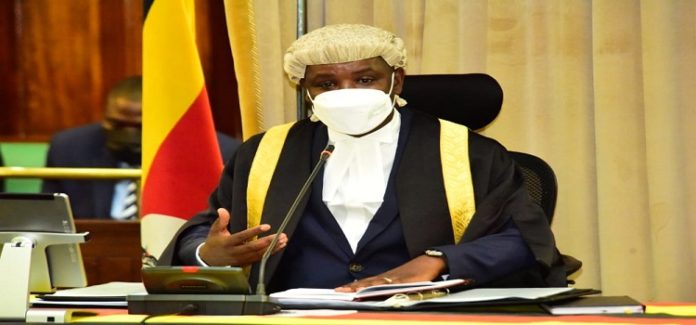
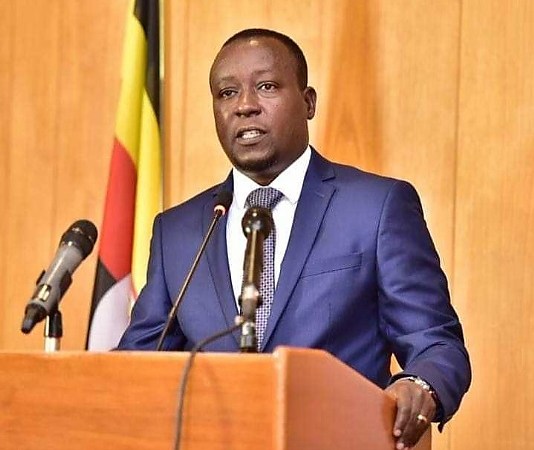
The Deputy Speaker of Parliament Thomas Tayebwa has directed the management of Uganda Cancer Institute (UCI) to investigate reports that staff were sending patients to buy medicines from private pharmacies
Tayebwa who was on a guided tour at Uganda Cancer Institute on Tuesday, November 29, said he had received concerns that the Cancer Institute, a fully government facility was frequently sending patients and caretakers to private facilities to buy specialized cancer medicines yet government provides funding for free medicines.
“We have received very many complaints from patients here who say you send them out to buy very expensive medicines yet I have been told that the medicines are free and that we have all of them,” the deputy speaker said, directing UCI to investigate and punish all those involved in extortion syndicates at the hospital.
“I want to send a message to Ugandans who are complaining that I have confirmed today that government has provided all the funding necessary to buy the medicines for cancer for the patients who come here,” he said.
Tayebwa also urged the government to regulate some of the medicines in the country.
During the tour at the Institute, the deputy speaker said he had been impressed by the ongoing works at the facility and said Parliament would appropriate accordingly to address the funding gaps raised by officials.
Prof William Bazeyo, the UCI board chairperson admitted that money is being charged from patients but only at a VIP wing of the facility.
“We have a VIP [wing] where we charge a minimum fee but it is your choice to go to that wing,” Prof Bazeyo said, noting that, “for every patient that comes to the institute for all their laboratory tests, X-rays, chemotherapy or drugs, are all free,” Prof. Bazeyo said.
He also said that there’s no consultation fee for consultants because they don’t operate as private.
“Ugandans should know that we have free services. At this cancer institute, we received patients from all over the country and those who are saying that they’re charged, they should come out instead of hiding under social media.”
Patients at UCI compete for space with some sleeping in corridors and outside while others share wards despite their sex.
Over 80 percent of cancer patients in Uganda die due to late diagnosis.
By the time they are found to have cancer, it has spread and ground to stages it can’t be treated and a life saved.
Dr. Jackson Orem, the UCI Executive Director told reporters that lack of funding is delaying the efforts to decentralize cancer treatment in Uganda.
He said that until they have regional centers where some patients can be attended to, they cannot turn away patients seeking treatment.
Currently, the government is expanding care infrastructure at the Mulago campus with the construction of a new 8-level inpatient building, a six-level two-block with funding from the African Development Bank-ADB.
When complete, Dr Orem said the facility will house a cancer laboratory, MRI, cancer surgical suites, outpatient clinics, and Intensive Care Unit-ICU among many other facilities to improve patient care
“The building that we have already started which we need to complete will help to house inhouse patients and a theatre,” Dr. Orem said, adding that funding is very critical.
The Uganda Cancer Institute is a public, specialized, tertiary care medical facility owned by the Uganda Ministry of Health.
The Institute offers; chemotherapy, childhood cancer treatment, adult cancer treatment, cancer screening, cancer surgery, radiotherapy, palliative care, imaging, and cancer information. The UCI diagnoses over 30,000 new cases of cancer in the country every year.
The most common cancers in Uganda include; cancer of the breast, cancer of the cervix, kaposis sarcoma, cancer of the prostate, cancer of the ovary, cancer of the liver, leukemia, cancer of the colon, burkitts lymphoma, and others.
Ministry of Health and Doctors without Borders have scaled up their response against the Ebola outbreak in Uganda.
The outbreak of Ebola was declared on 20 September. The outbreak is increasingly alarming as new cases were detected that cannot be traced back to the initial patients. This indicates that transmission of the disease is taking place within the larger community a particularly worrisome situation in the highly populated capital of Kampala.
Ebola is a deadly disease with a mortality rate of up to 90 percent. According to the ministry of health, 136 cases have been confirmed; 53 people have died from the disease and 61 people have recovered.
Responding to the current outbreak is challenging for many reasons, including limited access to medical tools, the critical need for patients to seek care in the early stages of the disease, and the common nature of Ebola’s initial symptoms.
MSF has responded to many Ebola outbreaks in the last decade, including the West Africa outbreak that devastated Guinea, Liberia, and Sierra Leone from 2014 to 2016 and an outbreak in the Democratic Republic of Congo from 2018 to 2020. These epidemics were caused by the Zaire strain of the disease, and the medical response there produced two vaccines and an antibody treatment approved for use.
The current outbreak in Uganda is caused by the relatively rare Sudan strain of Ebola. Vaccine candidates and antiviral treatments for the Sudan strain exist but are in the experimental stages. Two vaccines are headed for clinical trials, but until those trials have been conducted and an effective vaccine has been identified, health providers must rely on symptom management and intensive care, along with prevention.
MSF has opened Ebola treatment centers and smaller Ebola treatment units in several parts of the country. “Patients might be able to walk a bit when they first come to the treatment center then they deteriorate fast,” said Ruggero Giuliani, a doctor at MSF’s Ebola treatment center in Mubende.
“When patients arrive late in the disease progression, it’s very challenging. This is why it’s important to receive people early and be aggressive in their clinical management. This is key in the survival of the patient.”
In Mubende and Kampala, along with providing treatment, MSF teams are focused on prevention through health promotion sharing timely information about infection prevention and control with health workers, local leaders, and residents. MSF is also conducting contact tracing activities and offering support for people who have to self-isolate.
Educating people on how to identify potential Ebola symptoms is also important. Initial symptoms of fever, fatigue, headaches and a sore throat are similar to those of many other illnesses. Sampling and laboratory capacities need to be close to where patients are to enable quick transportation of the samples and rapid test results.
“It’s very hard when you realize that your patient will not survive,” said Giuliani. “On the other hand, every time you have a survivor, it’s a joy. We discharged six survivors earlier this week. In terms of a coping mechanism, this helps a lot.”
Tullow Oil has recorded a decrease of Shs 30 billion in net financing costs, the just-released half Year results for the period ended 30 June 2022 indicate.
The net financing costs decreased to $149m (Shs 570b) from $157m (Shs 600b). The decrease in financing costs is alluded to $19 million (Shs 72.7b) fees incurred in the first half of 2021 in relation to the refinancing of the RBL facility, a decrease of $5 million (Shs 19b) in interest on obligations under finance leases due to a decrease in a lease liability position, offset by a $14m (Shs 53.5b) increase in interest on borrowings.
Net financing costs include interest incurred on the Group’s debt facilities, foreign exchange gains or losses, the unwinding of discounts on decommissioning provisions, and the net financing costs associated with lease assets. These costs are offset by interest earned on cash deposits.
The results indicate that the company saw an Shs 176 billion increase in debts. The company’s debt increased from $2.2billion (Shs8.8tr) to $2.3billion (Shs 8.9tr). The Sales revenue increased from $ 727m (Shs 2. 8tr) to $846m (Shs 3.2tr), Gross profit increased from $ 321m (Shs 1.2tr) to $620m (Shs 2.3tr) and Profit after tax jumped from $93m (Shs 355b) to $264m (Shs 101b).
Free cash flow shot up from $ 86m (Shs 329b) to $205m (Shs 784b). The Free cash flow guidance includes the $75m (Shs Shs 287b) contingent consideration in relation to Tullow’s sale of its assets in Uganda to TotalEnergies.
In August 2019, Tullow announced its farm-down to Total and CNOOC lapsed following the expiry of the Sale and Purchase Agreements (SPAs). The expiry of the transaction was a result of being unable to agree on all on aspects of the tax treatment of the transaction with the government of Uganda which was a condition precedent to completing the SPAs.
On 23 April 2020, the Company announced that it had signed a Sale and Purchase Agreement with Total Uganda with an effective date of 1 January 2020, in which it agreed to transfer its entire interests in Blocks 1, 1A, 2, and 3A in Uganda and the proposed East African Crude Oil Pipeline (EACOP) System to Total. In closing, Tullow received $500 million consideration and a further $75 million after the Final Investment Decision was made earlier this year.
The half-year results show that the total group working interest production averaged 60,856 Barrels of oil equivalent per day (BOEPD) from 61,230 BOEPD. The marginal decrease in production primarily resulted from the 15-day maintenance shutdown of the Jubilee facility, the natural decline in TEN, and the sale of Equatorial Guinea and the Dussafu asset in Gabon in 21, offset by increased Jubilee production outside the maintenance shutdown period.
Speaking about the results, Rahul Dhir, Chief Executive Officer, Tullow Oil plc said, “The turnaround of Tullow has gained momentum in the first half of 2022, with solid production from our West African portfolio driving stronger financial performance. We added material, unhedged production in Ghana through the pre-emption of the Kosmos-Oxy deal, and took over the Operations & Maintenance (O&M) of the Jubilee FPSO to ensure that we can sustain the good operating performance and deliver further operating cost improvements. Our drilling program has been very efficient and at current performance levels we will be able to deliver our planned program of wells through next year with just one rig.”
Dhir said the Tullow Board is committed to the merger with Capricorn which continues to be recommended by both the Tullow and Capricorn Boards on the current terms.
“We firmly believe that the proposed merger has the potential for material value creation by implementing a combined business plan which accelerates investment in key projects and delivers very significant synergies.”
“We have a high quality, opportunity-rich portfolio, a clear and disciplined growth strategy, and an improving balance sheet. The Board looks to the future with confidence, and I look forward to sharing further details at a capital markets day,” he said
Merger with Capricorn Energy
On 1 June 2022 Tullow announced that it had reached an agreement with Capricorn Energy on the terms of an all-share merger to create a leading African energy company with a material and diversified asset base and a portfolio of investment opportunities delivering visible production growth.
The recommended merger will enable the new company to develop and implement a new business plan that accelerates the development of new, material opportunities, realize meaningful cost synergies, and deliver a combined group with robust cash generation and a resilient balance sheet.
The combined group will also have a sustainable capital returns program and a deep commitment to environmental stewardship, social investment, development of local content, and its national workforces.
Tullow expects to host a Capital Markets Day for investors and issue a circular and prospectus in connection with the recommended merger in the fourth quarter, ahead of a shareholder vote, followed by completion of the transaction before the end of the year.
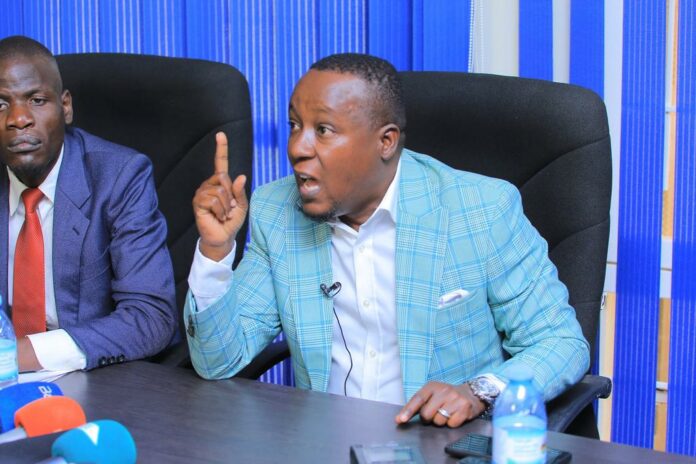
The former presidential candidate, Joseph Kiiza Kabuleta has been charged with promoting Sectarianism. The charges have been confirmed by the deputy police spokesperson Nabakka Claire.
Kabuleta was arrested from National Economic Empowerment Dialogue (NEED) offices in Bugoloobi. He was picked by Toyota Hiace commonly known as drones and is currently detained at the Directorate of Criminal Investigations (CID), Kibuli.
Nabakka said Kabuleta was arrested for failure to honor a Police summons issued to him to report to Kampala Metropolitan Police Headquarters on 3rd November 2022 for an interview and statement recording on charges of Promoting Sectarianism.
“Police general inquiry began on the 14th June 2022 to verify allegations that Joseph Kabuleta and others still at large, made utterances which were likely to create alienation or despondency, raise discontent or disaffection and promote feelings of ill will or hostility among members of the public,” she said.
It is averred that on 30th May 2022 in Kampala District, Joseph Kabuleta and others held a press conference under their Political Party, NEED, where they alleged that social service delivery in Mbarara is based on ethnic lines of the Tutsi, Bahima, Bakiga and Banyakore. Kabuleta and others shall be charged with Promoting Sectarianism contrary to section 41(1) of the penal code Act.
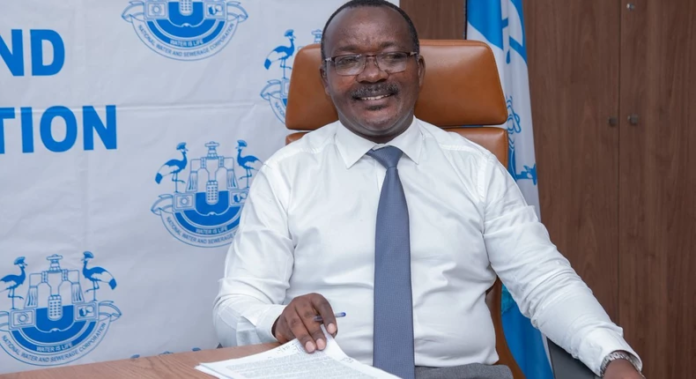
National water and Sewerage Corporation (NWSC) has threatened to disconnect 10 government ministries, departments and agencies due to failure to clear their water bills amounting to a whopping sh45b.
The NWSC public relations officer, Sam Apedel, said that they issued a fourteen-day notice to the Ministry of Finance, but no response has come from them.
“We issued a fourteen-day notice to the finance ministry but didn’t get any response from them. We plan on disconnecting the agencies if the water bills are not cleared as soon as possible,” he said.
In a letter dated October 20, 2022, Silver Mugisha, the managing director of NWSC, told the finance ministry that they appreciated their support towards settlement of water consumption charges in various MDAs on a quarterly basis, but that the funds the ministry is releasing are not enough to clear the huge water bill.
“The funds being released are not sufficient enough to clear all water bills and as a result, the bills have accumulated,” the letter read.
Mugisha said as of June 30, 2022, Uganda Police Force had outstanding arrears of over sh20b, Ministry of Defence and Veteran Affairs sh14.5b, Uganda Prisons sh8b, Nebbi Hospital sh763.8m, Arua Hospital sh 224.2m and Ministry of Health sh1b, Masaka Hospital sh185.8b.
Others were Hoima Hospital sh148.9m, China-Uganda Friendship Hospital sh1b, Entebbe Hospital sh 385.1 and Jinja Hospital sh1b.
NWSC requested that sh7b be deemed paid and be offset from the current Value Added Tax (VAT) obligations on a monthly basis for the next 3 months.
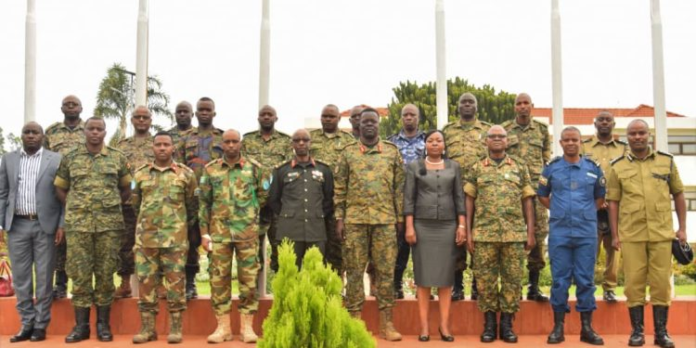
The Uganda Peoples’ Defence Forces Chief of Staff – Land Forces, Brig Gen Bob Ogiki has reiterated Uganda’s commitment towards the cause of the Eastern Africa Standby Force and other International organizations.
Brig Gen Ogiki made the remark while addressing a delegation of the Eastern Africa Standby Force (EASF) at the Ministry of Defence and Veteran Affairs headquarters in Kampala.
The delegation is in Uganda on a Verification of Pledge Capabilities by the Republic of Uganda.
“We are very committed to this and we share the cause as one of the pillars of our ideological orientation as a country, which is Pan-Africanism. Uganda believes in Pan-Africanism and we have been involved in trying to mitigate the impact or even stop conflicts around the globe,” said Brig Gen Ogiki.
He noted that Africa still faces a number of conflicts and re-echoed that out of the over 295 conflicts after the Second World War, 30 of the major conflicts have been in Africa in form of civil crises, or inter-state conflicts, while some of them have been enjoined for over 2 decades.
Brig Gen Ogiki further noted that African problems need African solutions, hence the emergency of regional security blocs.
He added that it was against this background that regional leaders resolved that the Eastern Africa Standby Force came into effect, which called for Partner States to pledge what they would contribute towards the Force.
The EASF Force Commander Brig. Gen Vincent Gatama, in his remarks, thanked capability commanders for their impressive and professional presentations that gave the delegation a feel of the capabilities of Uganda’s capacity towards its contribution to the Eastern African Standby Force.
He added that each Partner State is required to show its commitment to the Eastern Africa Standby Force and demonstrate political will , among others.
The meeting was also attended by Brig Gen Stephen Kashure, Col Dr Ambrose Oiko, the Senior Human Resource Officer at the MODVA Mr. Erias Mparana, Commissioner of Police Denis Namuwoza, UPDF and Uganda Police Officers.
The Eastern Africa Standby Force currently consists of 10 member States; and these include: Burundi, Comoros, Djibouti, Ethiopia, Kenya, Rwanda, Seychelles, Somalia, Sudan and Uganda.
It’s one of the five blocs of the African Peace and Security Architecture, that is developing a Standby Force, as a component of the African Standby Force.
The controversial former presidential candidate, Joseph Kiiza Kabuleta has been arrested. Kabuleta was arrested from National Economic Empowerment Dialogue (NEED) offices in Bugolobi, Kampala. Kabuleta, who was whisked away by armed men in a Toyota Hiace commonly known as ‘a drone’, is detained at CID Kibuli. Since the 2021 general elections, Kabuleta has been criticizing President Yoweri Museveni’s government and the first family over the gripping corruption and levels of poverty in the country.
In September 2020, Kabuleta was arrested on charges of offensive communication against President Yoweri Museveni. In October this year, Kabuleta launched National Economic Empowerment Dialogue (NEED) as a political party in Uganda. Last year, Kabuleta launched NEED as a political organization that would carry an ideology in a bid to take over the leadership of this country.
NEED transitioned from the People’s United Movement (PUM), a political party that was established in October 2005. The party symbol, a cow was changed to maize. The party colors have remained black and white. During the delegate’s conference which was held at NEED offices in Bugolobi, Kabuleta was elected the party president. He is deputized by Evelyn Rakel. Kabuleta named Asuman Odaka as the party Secretary General, and Mulangira Juuko Nakibinge as the Secretary of publicity.
The government of Uganda has welcomed the new penalties posed by the United Arab Emirates (UAE) government against individuals, rogue labor recruitment companies and employers under the revised domestic labor laws.
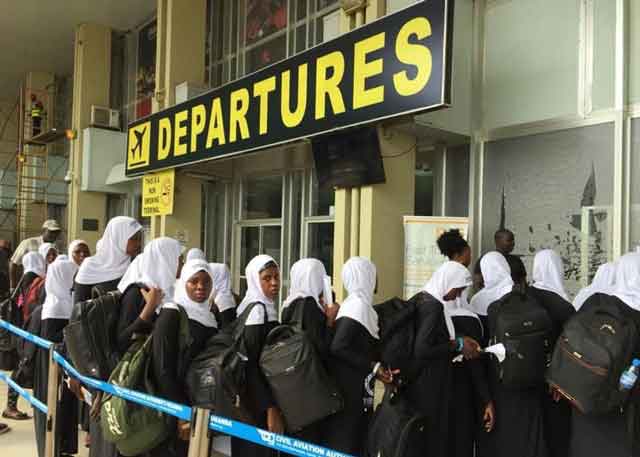
Recently the UAE Government deported over 1000 Ugandans who had been detained at Al Awir, Al Warasan and 19 other immigration centers. The group which comprised mainly women had been jailed over accumulated fines arising from expired visas and sundry.
Effective October 06, 2022, the UAE government blacklisted Ugandans and Nigerians. They are now required to have a certificate of good conduct and about 5,000 dirhams (Shs 5.3 million) in their bank account.
In tandem, the UAE government announced a visa ban on Ugandans and 20 other nationalities. The source said that from October 18, 2022, nationals from Nigeria, Rwanda, Benin, Ghana, Democratic Republic of the Congo, Sierra Leone, Sudan, Comoros, Cameroon, Liberia, Republic of Guinea, Gambia, Togo, Senegal, Dominican Republic, Ivory Coast, Congo, Burkina Faso, Burundi, and Guinea Bissau will not be granted 30-day visas till further notice.
Ugandans had turned into crooks, thieving banks, sleeping on streets and indulging in other illegal activities to survive. They were allegedly lured to travel to UAE with the hope of getting jobs during the Dubai Expo, restaurants and others had sneaked out from their places of work over mistreatment. Nearly half of them had their passports confiscated by their former bosses and others were trafficked.
According to a source at Uganda’s Embassy in Abu Dhabi, the amended law will come into effect on December 15 and it is aimed at protecting employees who include; house maids, cub drivers, gardeners and sundry in the Arabian Country.
“The Ministry of Human Resources and Emiratisation said is keen on building on the UAE’s achievements in supporting domestic helpers by committing to its role in overseeing the enforcing of laws, decisions, and legislation that would regulate recruitment and employment of domestic helpers in line with international best practices during the contractual period,” the source said.
LINEUP FINES
According to a source at Uganda’s embassy in Abu Dhabi, the lined-up fines include Dh20, 000 (Shs 20.8Million) and Dh100, 000 (Shs 104million) and up to six months in prison for individuals who provide false information or fake documents to employ domestic helpers.
Employers who hire unlicensed workers, recruit staff but do not provide a job, or use permits for domestic workers for purposes other than those for which they were issued, will be fined a minimum of Dh50,000 (Shs 52million) and a maximum of Dh200,000 (Shs 208million). The same penalty applies to those who close recruitment agency operations without settling wages owed to domestic workers.
The law stipulated that individuals who employ a worker under the age of 18 years or assist a worker to abscond or shelter absconding workers with an aim to exploit them in illegal activities face fines of up to Dh200,000 (Shs 208 million).
“Dh200,000 (Shs 208million) and Dh1 million(Shs 1billion) and jail time of one year will be given to employers for attempting to employ a worker on a full-time or temporary basis without a permit and misusing login credentials for the ministry’s online portal,” She said.
The penalties related to employing unlicensed workers will be increased based on the number of workers, up to a maximum of Dh10m (Shs 10 billion). Penalties will be doubled for repeat offenders.
GOV’T SPEAKS OUT
Interviewed for this story, Okello Charles Engola Macodwogo , the Minister of State for Labor, Employment, and Industrial Relations said the UAE government is right if you traveled on a visit visa, why do you start looking look for jobs? These are the things we should be sensitizing Ugandans on. Go through the right channels or licensed labor recruitment agencies mandated to get jobs for Ugandans.
“The government of Uganda will accordingly advise the UAE government on where they feel that the law is not favoring Ugandans. We should as well sensitize Ugandans about the laws in the countries they travel to for work to avoid being caught on the wrong side of the law,” he said.
The revised law will help to reduce the number of Ugandans trafficked into the UAE and improve the employer and employee relationship thereby meeting all the contractual obligations.
Eagle Online contacted Betty Amongi, the Minister of Gender Labor and Social Development for a comment but she couldn’t pick up nor return our repeated calls.
Ambassador Henry Mayega, Uganda’s consul general in Dubai was not available for comment. Recently he told Eagle Online that Uganda signed a memorandum of understanding (MoU) with the UAE government to streamline labor externalization and it will soon be implemented.
He said the MoU will see Ugandans take up professional jobs in the teaching, engineering and other sectors. Most Ugandans in the UAE are employed in the informal sector as housemaids, gardeners, cargo handlers and other jobs.
“We need to tighten controls on the companies that do labor externalization. The consulate is mobilizing the Diaspora to do all manner of things that contribute to the development of Uganda,” he said.
recently Ambassador Mayega and Consul General of Kenya Ambassador Peter Mwendwa met and discussed how they can upgrade the existing labor externalization Memorandum of Understandings (MoU) with the United Arab Emirates (UAE) to benefit the nationals of the two countries.
REACTION TO THE UAE LAW
Speaking to Eagle Online, Abdallar Kayonde the president of Migrant Workers Voice welcomed the new changes in the labor laws; they indicate that there is light in the tunnel. This is a good gesture toward the advocacy against human rights violations in UAE.
“What we are asking for is full freedom. Still, the employees are not allowed to create worker’s unions or organizations. We wish to see workers more empowered to bargain and exercise their liberty other than relying on a sponsor or a middleman. The punishments will work but the best way is to give freedom at both ends to exercise a tripartite structure s it is recommended in international labor standards,” he said.
“When it comes to amnesty about the overstay people, we want the UAE government to give a complete package because who he repatriates foot the bill other than throwing them into deportation centers, we only pray that they look into this. Besides that the workers contribute to the GDP of UAE as immigrant workers,” he said.
He said the continuous mistreatment of Ugandans in UAE and the country’s decision should serve as a lesson to the government of Uganda to form good policies, plan and employment for its people. The good policies will favor Ugandans to stay other than seek migrations as the last resort. Government should be considerate of Ugandans in Diaspora. They need cash back, a backup. They should get a soft landing when they get home because they remit a lot of money.
Interviewed for this story, Ronnie Mukundane, spokesperson of the Uganda Association of External Recruitment Agencies (UAERA) said the new penalties apply only to labor export companies in UAE.
“The hefty fines will apply to labor export companies in UAE which had taken advantage of employing individuals who accessed UAE on tourist visas. They had gone to visit but when they reached UAE, they embark on looking for Jobs. So UAE is stopping companies from recruiting those people,” he said.
“What those companies were doing was illegal because they were not incurring any cost in terms of sponsoring or transporting those people. It was cheap to recruit them but the status of the employees is illegal, they came to visit not to work,”
He said UAE is grappling with a huge number of people on overstay, a vice which was encouraged by labor recruitment firms in the UAE. “Our People are cleared officially and regularly travel after getting employment visas and contracts. The new laws will affect people who go on their own hoping to get jobs,”
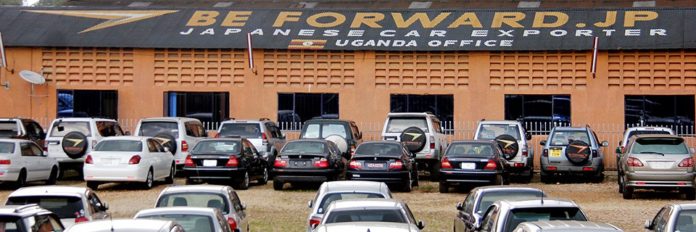
The Uganda Police is investigating a Japanese Car dealer company/agent Beforward for allegedly defrauding would-be buyers of millions of shillings after making orders through its agents in Uganda.
The scam, which prompted a slew of police complaints, has seen the company close its offices in Kampala, with some of its agents now on the run as Police begin to hunt for them in their hideouts.
Over 50 people have come out to accuse the company, and some of them have filed cases at the Jinja Road Police Station.
“I paid for a car which has a BMW reference number BM 5252205. I deposited the full amount which is $94,000, I haven’t received the vehicle up to now,” said Gilbert Arinaitwe, one of the victims.
Another victim: “I got the vehicle from Beforward online. From there, I started looking for ways to get my car. My vehicle was supposed to be in transit to Congo. They gave me an invoice of over $47,500. I haven’t received the car,” Ramathan Okumu.
“I have lost close to Shs252 million after making several orders. I was paying for two tracks and a Range Rover,” said Manyire Steven, another victim.
The Kampala Metropolitan Police spokesperson, Patrick Onyango, confirmed the alleged fraud.
“True, some people have come forward to report Beforward over fraud. We are investigating these fraud claims,” he said.
Onyango also said they have so far made some arrests to help them with investigations.
“We have arrested some 2 staff of Beforward and recorded their statements. The 2 directors at the company are on the run,” he said.
World football governing body Fifa has confirmed lifting the indefinite
ban previously slapped on Kenya following government interference.
“We would like to inform you that the situation of the FKF was submitted to the Bureau of Fifa Council for consideration and the decision on November 25,” reads part of the letter to Federation of Kenyan Football (FKF).
“In view of these circumstances, the Bureau of the Council decided on November 25 to lift the suspension of the FKF with immediate effect.
“Upon the lifting of the suspension, a Fifa-Caf mission team will be deployed to Nairobi in order to define the next steps for FKF and to also meet with the newly appointed Cabinet Secretary for Sports.”
The ban meant Kenya were barred from taking part in the 2023 Africa Cup of Nations qualifiers while the women’s team – Harambee Starlets failed to play in two-legged qualifiers for the World Cup against Uganda.
The ban on Kenya came last November when the then Cabinet Secretary for Sports Amina Mohamed ordered for an audit of FKF accounts.
This saw the federation President Nick Mwendwa implicated with misappropriating money meant for the sport and was arrested and arraigned in court.