Stanbic Bank
Stanbic Bank
24.7 C
Kampala
Stanbic Bank
Stanbic Bank
Home Blog Page 487

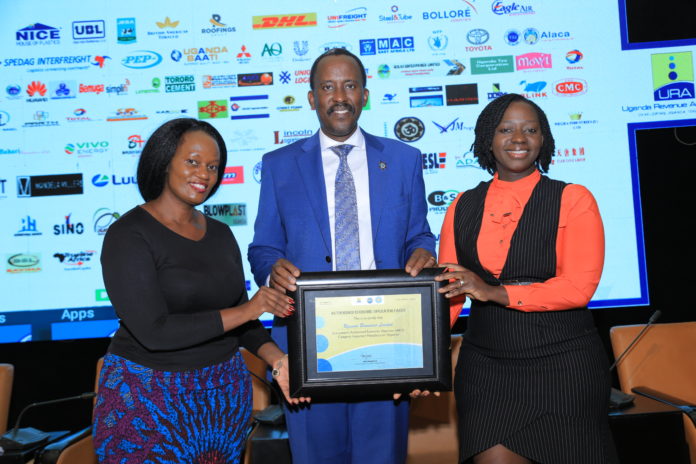
Uganda Breweries Limited gets Authorized Economic Operator status

Uganda Revenue Authority (URA) has granted Uganda Breweries Limited (UBL) Authorized Economic Operator (AEO) license, during an event held at Speke Resort Munyonyo on November 11th 2022. 

AEO is a trade facilitation program on the international movement of goods that have been approved by or on behalf of the Customs administration that complies with the World Customs Organisation. 

According to URA, AEO facilitates trade and promotes the security of the international trade supply chain. 

“Under this status, businesses which comply with customs laws and regulations will benefit from customs preferential treatments such as fast clearance of their goods through simplified procedures, reduced inspection authorized company in Uganda is therefore eligible to apply and join the EAC AEO regional program and thus when authorized, can now enjoy the regional benefits which apply equally in all the five EAC countries.” 

“Uganda Breweries Limited will be in a position to perform electronic declarations without attaching supporting documents, ability to make pre-clearance or pre-arrival declarations and automatic renewal of withholding tax exemption,” Jackie Tahakanizibwa, UBL Corporate Relations, Public Policy, and Regulatory Affairs Manager said

“The long wait is over; we have been granted AEO status. I thank the team at URA for this development and all we can promise our clients and regulators is increased efficiency and improvement in production, “she said. 

Other benefits include priority treatment when Customs select the goods for examination and improved cargo handling efficiency at the seaport that results in quick container and truck turn-around time to minimize demurrage and truck detention costs. 

The primary targets for AEO are manufacturers, customs clearing agents, bonded warehouse keepers, importers, exporters, transporters, and freight forwarders. 

“Under the AEO program also, there is an arrangement called Mutual Recognition Arrangement (MRA); where other customs administrations recognize the AEO program of their counterparts. This can be at a bilateral, sub-regional or regional level.”  

According to data from the East African Community (EAC), AEO tackles these challenges by shifting the perspective, so that instead of focusing on the goods themselves, Customs focus on the traders. 

This implies that Customs can handle the consignments of such companies with fewer controls compared to others. That way the AEO program is an instrument for growing compliance.

“The AEO program is therefore looked at as one of the programs that will help Customs within the EAC improve efficiency and effectiveness in securing the international trade supply chain while at the same time facilitating trade.” 

AEO status also reduces the cost associated with the movement and clearance of goods, opens the doors for unlimited opportunities, and is the key to unlocking the potential of your businesses. 

Stories Continues after ad

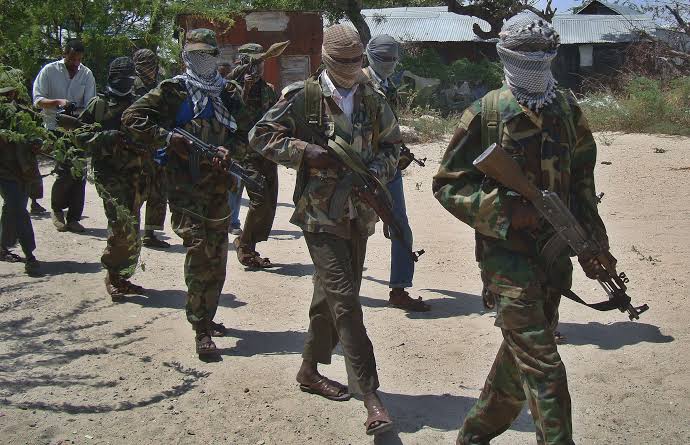
U.S. offers Shs37.5 billion in rewards for information on Al-Shabaab key leaders

The United States Department of State Rewards for Justice (RFJ) program has announced reward offers of up to $10 million (Shs37.5 billion) for information leading to the identification or location of al-Shabaab key leaders Ahmed Diriye, Mahad Karate, and Jehad Mostafa.

According to the RFJ website, the U.S. is also offering a reward of up to $10 million for information leading to the disruption of the financial mechanisms of al-Shabaab. This announcement marks the first time that the Department has offered a reward for information on al-Shabaab’s financial networks.

Al-Shabaab is al-Qa’ida’s principal affiliate in East Africa. Al-Shabaab is responsible for numerous terrorist attacks in Somalia, Kenya, Uganda and neighboring countries that have killed thousands of people, including U.S. citizens.

The U.S. Department of State designated al-Shabaab as a Foreign Terrorist Organization (FTO) and Specially Designated Global Terrorist (SDGT) in March 2008. In April 2010, Al-Shabaab was also designated by the UNSC’s Somalia Sanctions Committee pursuant to paragraph 8 of resolution 1844 (2008).

Ahmed Diriye, al-Shabaab’s emir since September 2014, was designated by the Department as an SDGT on April 21, 2015 and by the UNSC’s Somalia Sanctions Committee on September 24, 2014. He was seen in a video meeting with al-Shabaab fighters prior to the January 2020 attack on Camp Simba in Manda Bay, Kenya, that killed one U.S. Army soldier and two U.S. contract personnel and wounded three additional U.S. personnel and one Kenyan soldier.

Mahad Karate was designated by the Department as an SDGT on April 21, 2015 and by the UNSC’s Somalia Sanctions Committee on February 26, 2021. Karate is al-Shabaab’s second or shadow deputy emir and continues to lead some al-Shabaab operations. Karate maintains some command responsibility over Amniyat, al-Shabaab’s intelligence and security wing, which oversees suicide attacks and assassinations in Somalia, Kenya, and other countries in the region, and provides logistics and support for al-Shabaab’s terrorist activities.

Jehad Mostafa is a U.S. citizen and former resident of California. Mostafa has served as a military instructor at al-Shabaab training camps, a leader of foreign fighters, a leader in al-Shabaab’s media wing, an intermediary between al-Shabaab and other terrorist organizations, and a leader in al-Shabaab’s use of explosives in terrorist attacks. In December 2019, he was indicted in federal court on charges of conspiring to provide material support to terrorists, conspiring to provide material support to al-Shabaab, and providing material support to al-Shabaab. The FBI assesses Mostafa to be the highest-ranking terrorist with U.S. citizenship fighting overseas.

Al-Shabaab continues to rely on financing and facilitation networks to sustain their operations and plan terrorist attacks globally. 

The Department of State is offering rewards for information leading to the identification and disruption of significant sources of revenue for al-Shabaab, including its exploitation of local natural resources, financial contributions by donors and financial facilitators, financial transactions by financial institutions and exchange houses, any businesses or investments owned or controlled by al-Shabaab or its financiers, international activity by front companies tied to al-Shabaab, criminal schemes involving its members and supporters – such as kidnapping-for-ransom operations, illicit financial schemes, and transfers of funding and material by al-Shabaab to its terrorist and militia proxies and partners.

Anyone with information on al-Shabaab’s key leaders, Ahmed Diriye, Mahad Karate, and Jehad Mostafa, and its financial mechanisms can contact Rewards for Justice via Signal, Telegram, or WhatsApp at +1-202-702-7843.

Since its inception in 1984, the program has paid out in excess of $250 million to more than 125 people across the globe who provided actionable information that had helped resolve threats to U.S. national security.

Stories Continues after ad

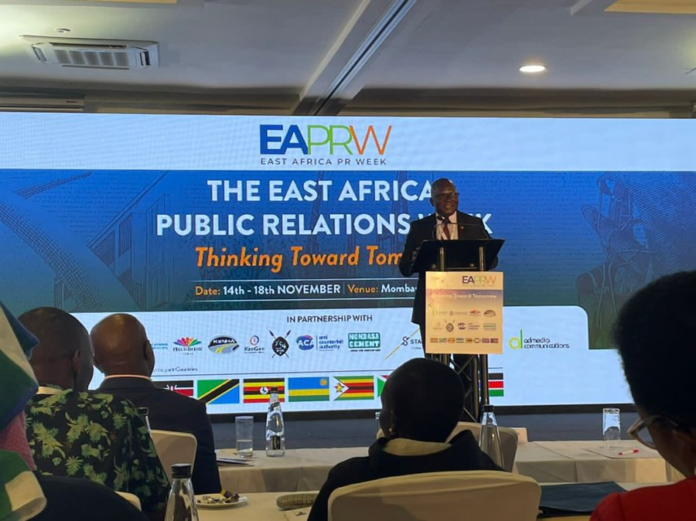
East Africa Public Relations week kicks off in Mombasa

Stephen Mwanga, PRAU President

The first-ever East Africa Public Relations Week has kicked off today in Mombasa, Kenya under the theme “Enhancing Sustainability Through Communication”. 

This is a five day event that will run up to November 18th.

Speaking at the inaugural East Africa Public Relations Week in Mombasa, Stephen Mwanga, Public Relations Associations of Uganda (PRAU) President said, “It is refreshing to have PR practitioners all over East Africa in one place discussing key trends and issues.”

“PR professionals should be the ones running with the sustainability agenda in organizationS,” Mwanga urged.

The event is set to bring together some of East Africa’s brilliant minds in the communications sector in order to reinforce lasting partnerships among the participating countries, building on the goal to foster sustainable practices in line with the United Nations Sustainable Development Goals.

This event is an initiative of the Public Relations Society of Kenya (PRSK), and will be jointly hosted with other communications umbrella bodies in Tanzania, Uganda, South Sudan, Rwanda, The Democratic Republic of Congo and Burundi.

Some key topics will feature discussions on sustainability, climate change reporting, the blue economy, the post-pandemic workplace, and impactful partnerships.

The event will also commemorate the 50th anniversary of the Public Relations Society of Kenya- PRSK. Formed to guide and bring together PR practitioners in Kenya, the association will be celebrating different milestones achieved over the past 50 years, which include establishing a student-focused organization, establishing a Code of Ethics that guides the profession in the country, and creating the certification program which will be the most essential credential in the public relations world.

Stories Continues after ad

African region tops world in undiagnosed diabetes

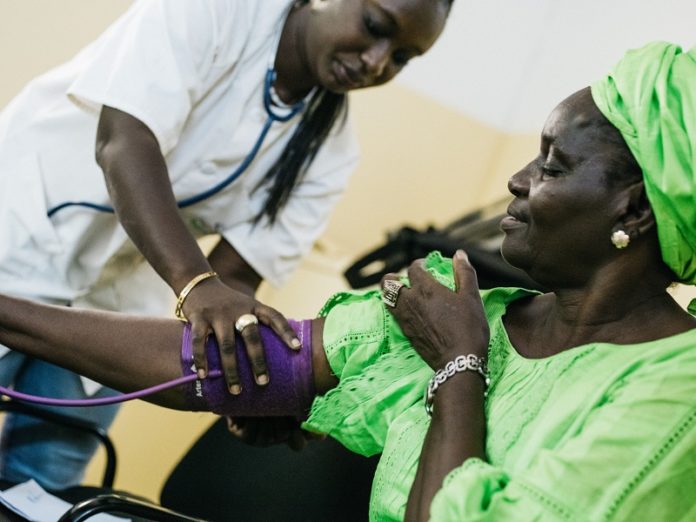
A doctor meets with a diabetes patient for a routine check-up.

Only 46% of people living with diabetes in the African region know their status, raising the risk of severe illness and death, potentially worsening the situation in the region which already has the world’s highest mortality rates due to the disease, a new analysis by World Health Organization (WHO) shows.

Globally, 55% of people with diabetes know they have diabetes. In the African region, a lack of testing facilities and equipment, an inadequate number of trained health personnel, poor access to health facilities and a lack of awareness about diabetes are some of the barriers to diabetes testing. Currently, 24 million adults are living with diabetes in Africa. The figure is projected to rise by 129% to 55 million by 2045.

In the African region, premature deaths from diabetes (defined as deaths occurring before the age of 70) stands at 58%, higher than the global average of 48%, while the region’s age-standardized death rate (a mathematical adjustment of different populations to have the same structure) for diabetes is 48 per 100 000 population, more than double the global rate of 23 per 100 000. In the region, only one in two people living with type 1 diabetes—the most common form of pediatric diabetes—has access to insulin treatment.

 “One of the greatest challenges to diabetes care is lack of diagnosis. Without testing, diabetes becomes a silent killer,” said Dr Matshidiso Moeti, WHO Regional Director for Africa. “While countries face several barriers to tackling diabetes, the rising prevalence of the disease is a wakeup call to reinforce health care, improve diagnosis, access to life-saving diabetes medicines and prioritize diabetes as a major health challenge.”

This year’s World Diabetes Day, which is being marked today under the theme “Access to Care” calls for better access to quality diabetes care as well as the importance of prevention and response.

For the first time ever, countries agreed in May 2022 to key global targets to improve diabetes diagnosis, and access to equitable, comprehensive, affordable, and quality treatment and care. The goals, contained in the WHO Global Diabetes Compact, aim to have 80% of people living with diabetes diagnosed; 80% of people diagnosed with the disease have good control of blood pressure and blood sugar.

Additionally, countries should strive to ensure all those diagnosed with type 1 diabetes have access to affordable insulin and blood glucose self-monitoring and that 60% of people with diabetes aged 40 years and above have access to cholesterol-lowering drugs. People living with diabetes have a higher risk of hypertension and are prone to high cholesterol—a risk factor for cardiovascular disease—than those without diabetes.

For people living with diabetes, access to affordable treatment, including insulin, is critical to their survival. Limited access to insulin puts their lives in danger. In rural Mozambique, for instance, the life expectancy of a child with type 1 diabetes is as low as seven months. Type 1 diabetes is due to the body’s inability to produce enough insulin, a hormone that regulates blood sugar.

Between 2011 and 2021, the region recorded a five-fold rise in type 1 diabetes among children and teenagers below 19 years, with cases surging from 4 per 1000 children to nearly 20 per 1000.

WHO is supporting African countries to improve their diabetes response. In August 2022, African health ministers endorsed a WHO-led initiative called PEN Plus to increase access to diagnosis, treatment and care of severe chronic diseases such as diabetes, cardiovascular diseases and mental and neurotological disorders.

The strategy calls on countries to adopt measures ensuring that essential medicines, technologies and diagnostics are available and accessible at district hospitals. Only 36% of countries in the African region have essential medicines for chronic diseases in public hospitals, according to a 2019 WHO survey.

Stories Continues after ad

Gunmen attack Kensington police post in Kyanja

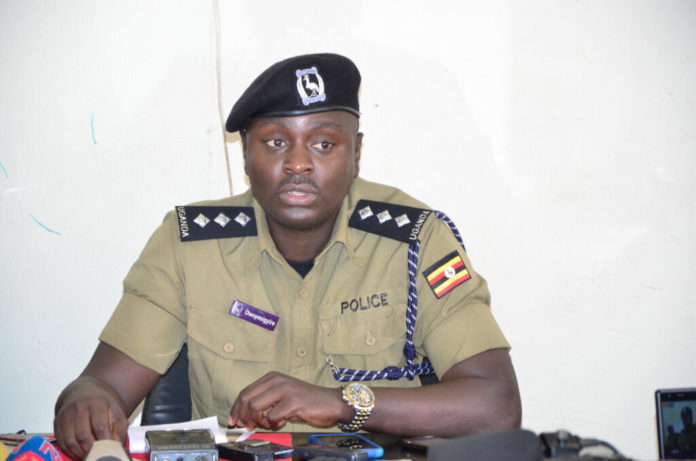
Luke Owoyesigyire, KMP Deputy police publicist.

Gunmen riding on a motorcycle have reportedly attacked Kensington Apartments police post in Kyanja. The attack was confirmed by Luke Owoyesigyire, the deputy spokesperson of Kampala Metropolitan Police.  

According to Owoyesigyire, the assailants fired bullets at the window of the police post but no police officer was injured in the debacle.

“The two gunmen were riding on a motorcycle but we are working to have them arrested. We are using our CCTV cameras at the road junctions and private cameras to track them. We shall retrieve the footage and establish its number plate and the faces of the culprits,” Luke said.

Police are currently piloting 129 police posts to see the practicability of the Sub-county Policing Model. The police posts include; 10 in the Sezibwa region, Seven in the Katonga region, 15 in the Savana region, 27 in Katwe, 28 in Kampala metropolitan East and another area.

The decision followed the October 31, 2022, violent attack on Busiika Police Station where armed assailants shot at and killed two police officers on duty, injured two others, one critically, and thereafter, robbed two police guns from them.

They shot and killed two officers; Alex Wagaluka and Police Constable (PC) Moses Ongol. During the attack, the assailants injured two other police officers, who included; PC Adrian Ochom and PC Stephen Odama, who remains in critical condition.

They also burnt several case files and attempted to burn the station. The fire was, however, successfully put off by the community at Busiika Town Council.

Police spokesman Fred Enanga said the sub-county Policing Model will have units where you have traffic personnel, the so-called under forensics, crime intelligence, and other specialized units and this is going to enable the sub-county policing

“The units will have a more strengthened and unified base at that level, so this is not a new development because we’ve never tried it before. It is economical. It is also a good model because it helps also in reducing costs out of a multiplicity of police posts. So they’re still at 129,” he said.

He said the success of the pilot study will also enable police to roll out effectively to all the other regions.

Stories Continues after ad

Witness Anonymity in Africa (Uganda being a case analysis study)

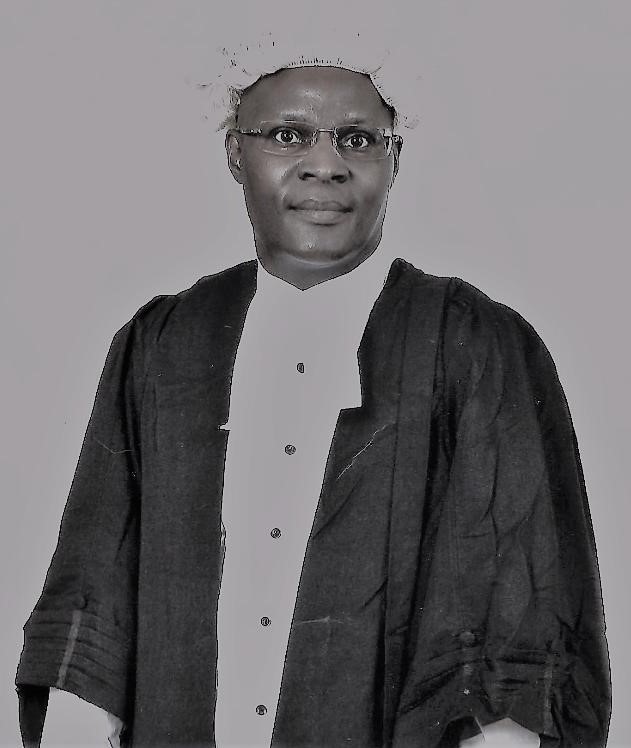
Mr. Caxton Peter Kasozi-Batende

By Caxton Peter Kasozi-Batende, caxton26@yahoo.co.uk

There will be a host of new ideas galloping around Uganda’s lawbook, seeking admission but each must first win its spurs. The judge’s function is known to preserve the innocents but we live in a time of existence of some judges in the judiciary service who are not neutral players but instead are politically parasitic. This does not mean that no judges are capable of being politically unparasitic, the concern is that they are manipulatable by the state or by the bigwigs in the state, or by the organs of the state to justify remanding incomunicado an accused or sentence an accused on what is into light confession acquired through duress or threats to confess to falsely implicate an accused to uttering in court fabricated information. But the judges are conscious of their limitations in making rulings.

Developed states introduced the ideology of protecting a witness’s identity from being disclosed to the defendant. Withholding the name and address of persons giving evidence against the defendant.  The court may also decide that the defendant cannot be present in the courtroom while the protected person is giving evidence. The prosecution alleges that people who were asked to help the police were assured by the latter that their identities will never be disclosed.

The idealogy became extended to the International Criminal Court (ICC), the International Criminal Tribunal for Rwanda (ICTR), in the Special Court for Sierra Leone (SCSL), in South Africa and Uganda.

The challenge in the African states is that of the integrity of the criminal justice system. It is very easy for a party having a personal vendetta to allege fabrications against someone, the police use bargains or bribery for fabrications to be the information that the courts rely on. Police induce confession through torturing until the tortured agrees to cooperate with the police to say to the court what is been told to say. In other scenarios, the state’s organs exert pressure on the police or judge to rule the case in favour of the state’s prosecution team. It is not news that there is corruption among police officers and police influence over the judiciary in the administration of justice.

Witness anonymity is an incidence where the prosecution seeks the court to order that the identity of the witness is not disclosed in or in connection with the proceedings. This may involve the withholding of the witness’s name and that the witness may use a pseudonym, may be screened, may have their voice modified or may not be asked questions which might identify them.

The rationale is to protect informants from finding themselves or their families in danger if their identities were disclosed, or to protect the sources through which the information was obtained, so that not to jeopardize future operations of information gathering, the source would dry up, in the situation of undercover police persons.

The basis upon which the witness anonymity aspect was proposed is that the prosecution has a vital role to play in delivering fair trials. In developed countries where that principle is used, the police abandon continuing with the case, once the police detect that the likelihood exists for the allegations to be untrue. Unlike in African countries, the police itself foremost is behind the making up of the case against the arrested. 

I am mind-hurt seeing the things I talked about in conversation praising the NRM’s capture of power eroded away. Uganda has slipped back into what were the days during Idi Amin’s and Milton Obote’s time in power. An ordinary person does not feel secure anymore.

In summary, a defendant in a criminal trial is entitled to know the identity of witnesses who seek to incriminate him. To be able to exhume previous convictions /“bad character” of the anonymous witness as one example. Exhume previous contradictory assertions by the witness in other cases as another example. Evidence of contact between the anonymous witness and the accused is another aspect worth, not overlooking, this could bed police officers who have played a significant part in the investigation. The circumstances in which the anonymous witness came to the prosecution’s notice is another aspect worth unearthing.

In conclusion, it is of the essence for Uganda’s Constitutional court to arrive at a position Uganda should not simply copy to its legal book the principle of anonymity-witness used in the developed states. The courts in Uganda need to rule that  “an anonymity order should be regarded as the special measure of last practicable resort”. Otherwise, a list of miscarriages of justice would floodgate. The concern of credibility of the accuracy of the information needs to be at the foremind of the constitutional court and Supreme Court. The cornerstone must be giving a fair hearing as a right in the interest of justice, to the satisfaction of the court in the course of providing a defendant with a fair trial.

Uganda is having persons who get to know about what is done in countries where the doctrines of separation of powers, rule of law and democracy, are 98% clearly noticeable, in developed countries a Head of State is interrogated by the police. You cannot bribe a policeman in those countries. You can recall Ex-Prime Italy’s Prime Minister Bori Silvio Berlusconi’s bribery and sex scandal trial, France’s ex-president Nicolas Sarkozy’s corruption scandal trial,  Benjamin Netanyahu Ex- Isreal’s Prime Minister trial, Boris Johson Partygate scandal investigation and penalty fine by the police, Criminal probe against Donald Trump, Corruption probe against Ex-President Zuma and Bill Clinton about the Monica Lewinsky sex scandal.

In conclusion, in such countries, the state, a state’s organ nor the police or member of the public can easily be pinned on an innocent person. Because allegations are subject to rigorous scrutiny by the police and the Crown Prosecution Service, as well as the judges enjoy the freedom of independence. The dynamics in countries whose criminal legal process system is less influenced by corruption are different from countries where anyone can walk to the state prosecutor and the judge and impose an influence on the way a case should be handled.  

The writer is a legal practitioner in the United Kingdom.

Caxton Peter Kasozi-Batende

caxton26@yahoo.co.uk

WhatsApp: +2567550142644

Stories Continues after ad

Police registers 866 accidents in the last two weeks

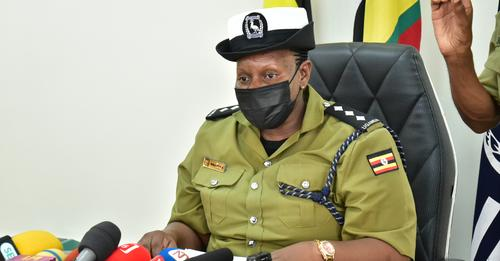
ASP Faridah Nampiima

The Assistant Superintendent of Police (ASP) Faridah Nampiima has revealed that 866 accidents were registered in the last two weeks. Of the 866, 292 crashes were fatal, 380 were serious, and 194 were minor.

She noted that the highest contributor to these crashes is reckless driving, reckless pedestrians, over speeding, among others.

Police are on the eighth day of their boda-boda operation, mainly targeting crash helmets and reflector jackets. The operation resulted in impounding of 12,217 motorcycles countrywide. Out of these, 10,167 riders have been issued EPS tickets, and the operation continues.

“Those who don’t have the right of way but pretend to and drive recklessly, the operation is still ongoing, and whoever is a culprit will be taken to court. We encourage the public to observe discipline while using the roads,” she said.

She applauded the general public for the support and the riders who have complied and called upon those who are yet to comply to do so.

Stories Continues after ad

Strengthen community-level Public-Private partnerships for effective pandemic preparedness

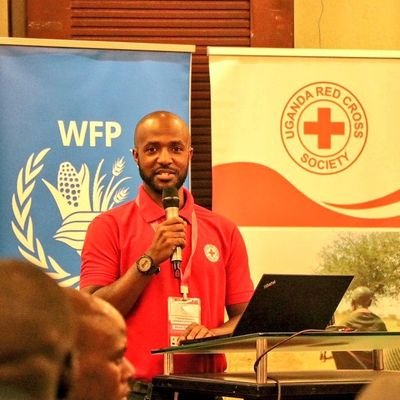
Brian Kanaahe

By Brian Kanaahe

On 20th September 2022, Uganda health authorities declared an outbreak of Ebola disease(EVD) – the first Ebola disease outbreak caused by the Sudan virus in Uganda since 2012, according to the World Health Organization(22nd Sep 2022). The declaration followed the confirmation of an Ebola patient from the Madudu sub-county in Mubende district, central Uganda. On 25th September 2022, the Ministry of Health announced a cumulative number of 18 confirmed and 18 probable cases had been reported from Mubende, Kyegegwa, and Kasanda districts, including 23 deaths, of which five were among confirmed cases.

The President, while addressing the country, announced a localized plan to strengthen active surveillance, amidst other restrictions that were previously deployed to curb the spread of COVID-19, including the closure of entertainment joints and places of worship.

“There will be a curfew in Mubende and Kasanda districts starting from 7 pm to 6 am. Public, and private transport and Boda Bodas are not permitted to move in Mubende and Kasanda districts to curb Ebola. People traveling across Mubende and Kassanda are permitted to move only after obtaining police clearance and not allowed to stop or pick up a person in the two districts,” he said.

It is a time like this that we must reflect on our level of preparedness in an all-compass public health investment to anticipate, prepare, and efficiently respond to such pandemics at the Individual, Community and National levels.

We know what to do as a country. Uganda has invaluable hands-on experience handling such pandemics and has offered technical support to other nations who have in the past suffered from such public health concerns. The true tongue-in-cheek question is how do we sustain such a public health system in a resource-constraint environment are in or better yet, we’ve been conditioned to believe we’re in to prepare for the inevitable – the next pandemic?

Partnerships are the low-hanging fruits. It looks obvious but the challenge is whether we are deliberate to make this work sustainably at the local level. How many communities have multi-hazard community action plans? How many districts have multi-hazard contingency plans? To what extent are they funded? How much of that funding comes from the local community public-private partnership innovations? In the case of EBV, Ministers of Health and government representatives from nine African countries recently met at a High-Level Emergency Ministerial meeting on Cross Border Collaboration for Preparedness and Response to Ebola Disease Outbreaks in Kampala, hosted by the World Health Organization. Well-structured public-private partnerships designed with communities at the center, harnessing the power of young people, striking the balance between soft support (training, mentorships, coaching, continuous medical education) and hardware support (Logistics Personal protective equipment)encourage the heightening of health surveillance system and ease the flow of information and coordination of a concerted effort.

As a Pracademic, I am happy to see Academic institutions starting to move in sync with national health issues. We are now living in an era where research is directly tied to pertinent healthcare issues being faced in our communities. This, however, comes with a sustained level of investment. It is a fact that a lot of the information utilized during the COVID-19 pandemic was adopted from the knowledge gained through the investment in HIV, Tuberculosis and Malaria research over the past 20 years. We, therefore, need to see more of this as we learn to anticipate and prepare for effective responses to pandemics.

Finally, information is a major piece of the puzzle. As we prepare for another pandemic, we need to ensure that all information disseminated to diverse groups is consistent, clear, straightforward, and where possible, in as many local dialects as possible. Platforms such as radio, which has the highest consumption statistics in Uganda, and social media are invaluable mediums in ensuring the proper information reaches its targeted consumers.

The writer is a doctor (public health in Disaster nexus enthusiast) and is the Director of Disaster Risk Management at the Uganda Red Cross Society.

Stories Continues after ad

Richard Ocira and Pauline Achai Shine at MTN Kampala Marathon Wheelchair Race

L-R Lorna Lamono (2nd place women), MTN's Somdev Sen, Pauline Achai (1st place women) and Florence Acen (3rd place women)

The long-awaited MTN Kampala Marathon kicked off this morning with the 10km wheelchair race, ahead of the other races scheduled for next Sunday, the 20th of November. The MTN Kampala Marathon has for many years led the way in promoting, endorsing, and showcasing the very best wheelchair race in the country since the inception of the marathon.

Wheelchair racing is open to athletes with any qualifying type of disability, amputees, spinal cord injuries, cerebral palsy, and partially sighted (when combined with another disability).

Unlike the previous (2019) MTN Kampala Marathon that featured the wheelchair race on the same day as the other races, this year, a special date was set for the wheelchair race as was the norm in the earlier marathons, to give the wheelchair race the prominence and recognition that it deserves.

Despite the early morning showers that hit Kampala this morning, the wheelchair race attracted 20 participants who were flagged off by UAF and MTN Uganda officials at the Lugogo by-pass for a 10KM race around Kololo, a Kampala suburb and back through Jinja Road to finish at the Lugogo by-pass.

Paul Okello the organizing secretary of the Uganda Athletics Federation expressed his excitement over the return of the MTN Kampala Marathon following a two-year break and thanked the participants who turned up for the wheelchair race.

“I thank the participants who turned up today for the wheelchair race and I would like to remind all the people with disabilities to take interest in this race as disability is not inability. We are also working towards acquiring more race wheelchairs as they are costly and a major hindrance to the people who would like to participate in this race,” Okello said.

According to Somdev Sen, MTN Uganda Chief Marketing Officer, the wheelchair race

“We are happy to see that more and more people are embracing the wheelchair race. I hail all the women and men who took part in the wheelchair race of this year’s MTN Marathon whose proceeds shall go to improving newborn and maternal health services in the country,” Somdev said.

In first place was Richard Ocira, an electronic repair and maintenance expert based in Gulu city. He won Shs3 million.

“In 2019 I was in second place so this year, I am happy to have won this year, after waiting for 2 years. The weather (rain) was good for me and I just raced without minding who was behind me,” Opio said upon crossing the finish line, minutes ahead of the second winner.

In second place for the men’s category was the 2019 defending champion, Kevin Mubiru, a fourth-year computer science student at Makerere University. He urged people with disabilities to keep exercising for better mental and physical health. Mubiru won Shs1.5Million shillings.

In third place was Brian Mugabe, a nursery teacher at Mulago Beupa learning site who was participating in the MTN Kampala Marathon for the first time. He won one million shillings.

On the women’s side, Achai Pauline, a retailer based in Gulu city claimed the first position for the 4th time in a row, earning herself a cash prize of Shs3 million.

“I thank MTN Uganda for involving us people with disabilities in the MTN Kampala Marathon. It makes us feel seen and acknowledged,” Achai said.

In second place was Lorna Lamono who won 1.5 million while her colleague, Florence Acen won Shs1 million for her 3rd place position.

All 6 wheelchair race winners shall receive their prizes on Sunday 20th November along with the other winners in the upcoming races.

Proceeds from this year’s Marathon shall be used to upgrade maternal and newborn services in four selected health facilities across the country. The beneficiary health facilities include Kisenyi and Kawaala health facilities in the suburbs of Kampala plus those in Kachumbala (Teso sub-region) and Kabong (Karamoja sub-region)

The MTN Kampala Marathon has over the years raised over Shs4 billion and benefitted several causes such as helping expectant mothers with maternity kit, resettling people displaced by war in northern Uganda, delivering clean water and improving sanitation in communities/schools, and most recently, improving maternal in health facilities.

The other races of the MTN Kampala Marathon, including the full marathon (42Km), half marathon (21Km), 10Km race and 5Km fun run will be held on Sunday 20th November starting at the Kololo independence grounds.

The MTN Marathon pledges to continue playing its role in connecting and uniting Ugandans to causes that make a difference in the lives of thousands (if not millions) across the country. The 2022 MTN Kampala Marathon is powered by Huawei, Stanbic Bank, Rwenzori, Vision Group, NBS Sport, the Kampala Capital City Authority-the host city and the Uganda Athletics Federation- the technical partners.

Stories Continues after ad

Ambassador Ssemuddu hails Under-20 national team for defending CECAFA

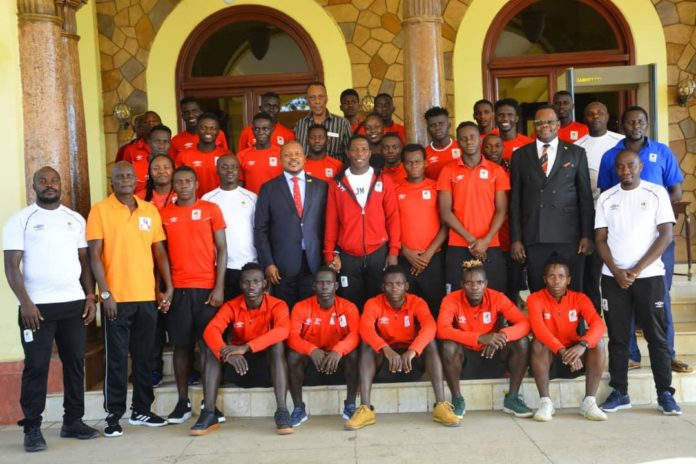
Ambassador Ssemuddu hailed the young players for their zeal and commitment

The Ambassador of Uganda to Khartoum, Sudan, Dr. Rashid Yahya Ssemuddu has hailed the U-20 Uganda National Team, The Hippos for coming victorious as Champions of the Central of East and Central Africa Football Association (CECAFA) and therefore qualifying for the Under 20Africa Cup of Nations (AFCON) – Egypt 2023.

In the U-20 AFCON qualifiers for the CECAFA finals that took place on Friday, November 11th, 2022 at Al-Hilal Stadium, Omdurman – Khartoum, Sudan, Uganda beat South Sudan 2:1 to qualify for AFCON 2023 and retained the regional crown.

Other countries whose team have qualified that Uganda will have to face for the U20 Continental Cup includes Libya from North Zone (UNAF), Zambia from South Zone (COSAFA), Senegal from West B Zone (WAFU-UFOA B), and winners from the finals of West Zone A (WAFU-UFOA A) and finalist from Central Zone (UNIFFAC).

Ambassador Ssemuddu hailed the young players for their zeal and commitment that has enabled them to raise the flag of Uganda higher noting that as players they are the best Ambassadors for Uganda who are promoting and popularizing the Pearl of Africa for positive reasons.

He encouraged them to maintain a high level of discipline both in the field and in communities wherever they live, travel and play as celebrities who carry the flag of our country at all times.

The Ambassador emphasized the importance of sports as a good profession that should be taken seriously just like any other profession that enables actors to earn lots of money to make a living, and promote growth and development while keeping oneself physically fit, morally upright and medically healthy.

Dr. Ssemuddu praised the Government of Uganda for investing in Sports through strategic planning at the highest level of policy formulation and implementation, budget prioritization with effective leadership of the NRM Administration under a President who cares greatly about the Bazukulus, Yoweri Kaguta Museveni and the Ministry of Education and Sports managed by the Janet Kataha Museveni with Sports docket placed under youthful State Minister, Peter Ogwang an active soccer player and champion of inter-parliamentary sports.

“With our Government, the future is indeed secured,” he noted.

With gratitude to the Federation of Uganda Football Association (FUFA), Ambassador Ssemuddu conveyed his appreciation and congratulatory message to FUFA President the Eng. Moses Hassim Magogo through the team leader Hajji Juma Abdullahamid. He expressed admiration for the U20 Manager, Coach and the entire FUFA Team for their hard work, commitment and dedication to building a strong team of players.

The Ambassador, together with the Head of Chancery; Mr. Dickson Ogwang and the Accounting Officer David Wamono officially welcomed the players on arrival to Sudan on 26th October.

He was physically present at the Stadium for all Uganda Matches and Joined the CECAFA defending Champions Flanked by Uganda Embassy Officials including the Defense Attaché, Brig. Gen. Fred Karara in celebrating Uganda’s victory at Al-Hilal Stadium, Sudan.

Ambassador Dr. Ssemuddu wished the team success in their AFCON bid come 2023 and bed them farewell for their journey out of Khartoum aboard Ethiopian Airlines for Entebbe when they traveled in a celebrative mood departing at dawn, Saturday, November 12th, 2022.

Stories Continues after ad