Stanbic Bank
Stanbic Bank
27.6 C
Kampala
Stanbic Bank
Stanbic Bank
Home Blog Page 493

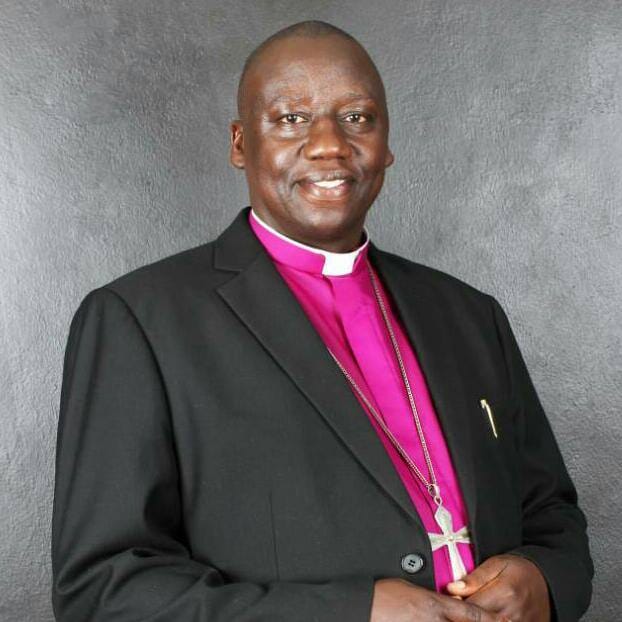
Bishop Twinomujuni praises Tayebwa’s stance on homosexuality, abortion

Rev. Johnson Twinomujuni

The West Ankole Diocese Bishop, Rev. Johnson Twinomujuni has backed Deputy Speaker Thomas Tayebwa’s firm position on homosexuality and abortion, describing both practices as unchristian.

Bishop Twinomujuni, a vocal cleric and a critic of homosexuality also praised Tayebwa’s resolve to protect the Ugandan and Church values and moral fibre intact amid mounting pressure from the western world.

“We can’t thank our dear Rt. Hon. Tayebwa enough!! It takes more than gallantry to be that bold and solid amidst such a [ACP-EU] meeting,” Bishop Twinomujuni wrote in WhatsApp group “West Ankole Diocese” containing church and other leaders who hail from the diocese.

“Those claps in the background are evidence, and so should give us confidence that we have many more in the world whose moral fibre is still intact. In the struggle against perversion from godliness, we are not alone! Human wrongs should never be upheld as rights! Nobody has a right to do wrong,” the cleric added.

Last week, Tayebwa made Uganda’s position against homosexuality very clear at the 61st session of the African, Caribbean and Pacific States Parliamentary Assembly and 42nd Session of the ACP-European Union Joint Parliamentary Assembly (ACP-EU JPA) in Maputo, Mozambique

“I heard someone saying that LGBT, Homosexuality and Abortion are human rights, which must be respected universally, I just want to assure you, they can never be accepted in Uganda. I’m the Deputy Speaker of Parliament and I can assure you that the Parliament I lead will never pass laws that are against our values,” Tayebwa said receiving thunderous applause from delegates.

Tayebwa also maintained that Ugandan values can never be exchanged for Western funding, and insisted that, “it can never be accepted in Uganda”.

Tayebwa was responding to calls by the European Union under the Post Cotonou agreement to respect abortion, homosexuality and LGBTQ as human rights that must be respected universally.

“We have discovered that with the Post Cotonou agreement, there are hidden clauses concerning human rights. Clauses to do with sexuality, promotion of LGBT/homosexuality and clauses to do with abortion,” he said.

“We are a society that is not ready for homosexuality and we are a society that is not ready for abortion. As Africa, we believe that the institution of the family is at the core of whatever we are doing,” Tayebwa said adding that, ’the EU is demanding that we take a certain root, they should also know the character of our society’.

Religious leaders under the Inter Religious Council of Uganda, the umbrella association of religious bodies in the country have previously asked Parliament to block attempts that seek to promote homosexuality, abortion and LGBTQ practices.

Stories Continues after ad

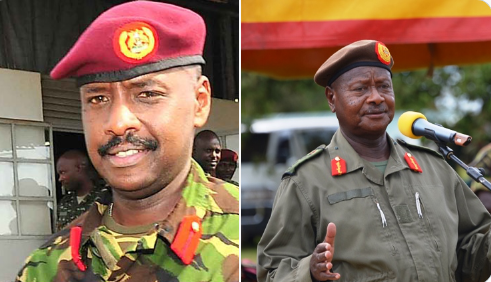
Muhoozi calls for firing of Presidential media staff over confidential leaks

First son Gen Muhoozi Kainerugaba, President Museveni

General Muhoozi Kainerugaba has called for the dismissal of President Yoweri Museveni’s social media handlers for sharing information, he says is not meant for the public.

“The people who are in charge of my father’s social media accounts should be fired! This kind of information is classified!” he tweeted.

His comment followed tweets by Museveni’s official twitter account showing videos of an attack the Ugandan AirForce carried out on the Allied Democratic Forces (ADF) rebel group in the Democratic Republic of Congo.

Muhoozi felt that his father’s social media handlers revealed a little too much on what he termed as ‘classified information’.

In a video posted on his twitter account, President Museveni revealed that on Friday 4th November 2022, with the permission of the DRC Government, the Uganda Airforce attacked and destroyed a big terrorist camp of ADF.

“I am becoming a tweeter on this occasion because it is important for the Africans and East Africans to know the capacity Africa possesses that can help it to solve these chronic security problems,” the President said.

“The enemy, in desperation, has now fled beyond the limit of exploitation (the boundary of our operations). The ignorant terrorists do not know that within just minutes-not hours- we can reach with deadly fire, many areas, far beyond the line of the limit of exploitation.

“Hence, on Friday, they got their deserved reward. Wherever they go, we shall reach them as long as the Congo Government allows us to operate with them. Congratulations to the UPDF and congratulations to the Government of DRC and the Army of Congo.”

In November last year, the Ugandan army and the Congolese forces of FADRC launched strikes on ADF camps in the thick Eastern DRC forests marking the start of an operation named “Shujaa”, a Kiswahili word for bravery.

Stories Continues after ad

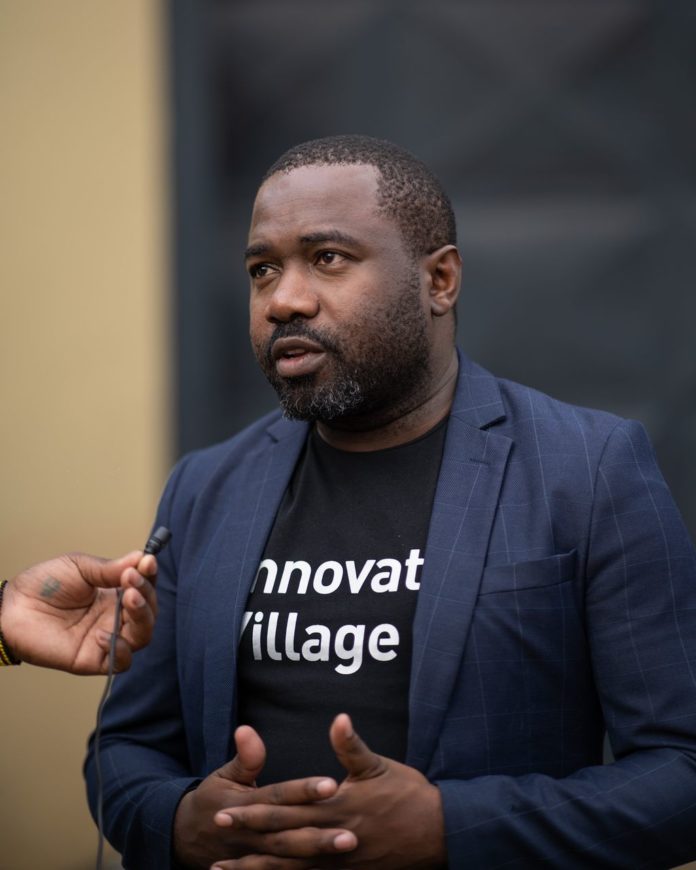
UgandaAt60: Innovation Village launches ‘I Pledge’ campaign to inspire a movement of commitments to build Uganda

Japheth Kawanguzi

To commemorate sixty years of Uganda’s Independence celebrated under the theme: A declaration of African interdependence and our shared destiny, The Innovation Village has launched a new campaign dubbed “I pledge” to inspire a movement of pledges that contribute to the socio-economic transformation of Uganda.

Situated at the heart of  Ntinda business area, the Innovation Village is a haven for innovators and entrepreneurs using technology to solve our society’s most challenging issues. As the haven, the village strategically embodies avowal of importance to the technology industry and asserts it as a legitimate industry, worthy of recognition in Uganda.

It is under this precedent that the Innovation Village decided to launch the I pledge to reaffirm its commitment to build a resilient innovation and entrepreneurial ecosystem in Uganda.

Speaking at the launch Japheth Kawanguzi said, as Ugandans, it’s our collective responsibility to build a nation we all are proud of. The “I Pledge” campaign is intended totally a movement of pledges from industry leaders and young people with the hope that their voices and commitment can be heard and implemented as we set the pace for the spirit of patriotism in motion.  

Kawanguzi said, “As the Innovation Village, we want to re-echo our promise to the entrepreneurs to always create platforms, partnerships and digital opportunities that can be leveraged to build solutions and develop interventions that promote and solidifies a culture of innovation in Uganda”

While making his pledge Fabrice Rulinda, Mayor of Entebbe Municipality promised to better Entebbe city and improve its road infrastructure before the end of his term. Ron Kawamara, the Chief Executive Director of Jumia Uganda pledged to become more curious to leverage emerging technology to digitally transform our economy and drive impact.

Maria Matembe, a seasoned politician pledged to support, mentor and influence young people and always fight injustice and discrimination, especially among women and young people. Joram Muzira, director JMM Fashion committed to supporting young fashion designers, artists, producers, and creative innovators to fully realize and utilize their talents to make a living.

Sixty years of Uganda’s independence is a celebration that gives us the opportunity to showcase Uganda’s heritage, diversify culture and shared destiny through the eyes of talented innovators, creatives, or makers. In collaboration Vodo Arts Society, we have facilitated the painting of the UgandaAt60 mural by different young and talented artists. The mural which is painted on the exterior side of the MoTIV wall fence along Old- Port bell Road is an extraordinary masterpiece that signifies the sixty-year walk of Uganda’s Independence Journey. Coded with symbols of our freedom, rich heritage, and innovation of our young artists, Kawanguzi said.

Adding, engraved within our DNA of becoming East Africa’s melting pot for innovation culture and entrepreneurship, we pledge to continue being purveyors of Uganda’s technology and creative sector that offers a unique taste of the experience of what the sector has to offer in sharing ideas, inspiring young people and contributing to socio-economic transformation,” Kawanguzi added.

Stories Continues after ad

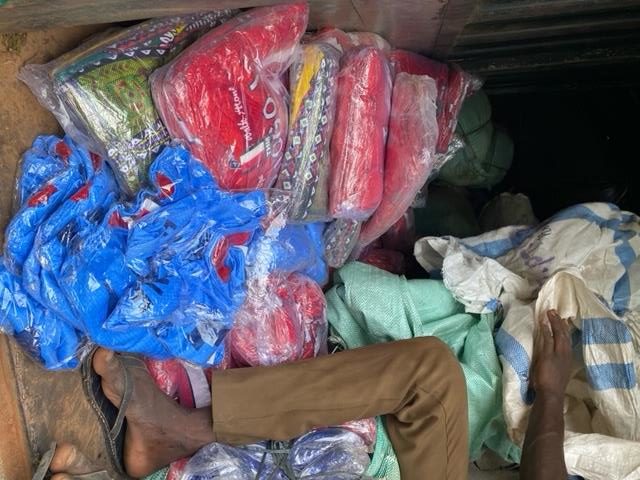
URA intercepts truck with smuggled textiles in Busitema

The URA enforcement team in Busitema has impounded a truck registration number UBH 675D that had been loaded with smuggled goods.

After so much chase, the truck was intercepted in the wee hours. Upon physical verification the, team recovered; 180 pieces of boy’s jean trousers, 442 pieces of girls tops, 308 pieces of boy’s t-shirts and 8800 pieces of Kids Sports Jersey t-shirts among others.

And has been the norm, the drivers always take off to avoid additional penalties. For this particular truck, the driver attempted to speed off but could not match URA’s team. He instead swerved into the nearby trench and disappeared in the nearby hills.

Isaiah Okoche, one of the URA Customs officers who was part of the operation noted that another driver was hired to drive the truck and goods to the station.

Even with such notorious characters, URA continues to intensify tax education awareness, especially on the dangers of smuggling to the individual, the community and the economy.

Despite the ramifications of concealing goods on the Government, businesses and society, the smugglers and their tricks are not dying out.

URA has also invested heavily in intelligence guided operations leveraging the use of Non-Intrusive Inspection technology at the different border points and field intelligence enforcement operations to match their “intelligence”.

Stories Continues after ad

EULOGISING: Kashillingi made a great contribution – Museveni

Lt Col (Rtd) Ahmed Kashilling


I first met Ndugu Kashillingyi in January, 1982, at Kanyaanda when I had just returned from my external trip of the 6th of June to the 9th of December, 1981.

He introduced himself to me as somebody who had been in the old Army.  We normally used those Comrades from the former Armies for training. That is how people like Kanyankore, Emmy Ekyaruhaanga, Rwamukaaga, etc. helped in importing regular Army skills into our Guerilla force.

In combat, Kashillingyi operated directly under me from the 24th of December, 1984 to the 9th of January, 1985.

On the 22nd of December, 1984, I left Sebuguzi, near Kapeeka, with a large force of 1,500 fighters and the unarmed “commandoes” that would carry the captured weapons and materials and arm themselves from the same. 

 We started crossing River Mayanja at 1400 hours but never completed the crossing until 0020 hours on the 23rd of December, according to European counting of hours and days.  

However, in the African way of counting, we started crossing at saa nane za muchana (the 8th hour of the day) and completed the crossing at the 8th hour of the night of the 22nd of December, 1984.  This meant that our plan of the long jump of entering Kyamusisi in the night was now compromised. 

 We, indeed, passed though Kiryokya Trading Centre during the morning and the UPC elements quickly informed Kampala that a large force of Guerrillas, with Museveni personally in command, was on the move – going somewhere.  In fact, even some of our stragglers were captured by the UPC youth leaders and gave the Government the same version.

However, on account of our security-conscious work methods, the ordinary soldiers did not know where we were going.  Consequently, the UPC started deceiving themselves and the Country that Museveni was “running away”, going to Zaire (Congo).  

We were monitoring all this through my signallers under Bunihizi and Lukyamuzi.  We entered our bush camp of Kyamusisi at around mid-day and we cooked and ate.  However, I decided not to take chances.  I, therefore, divided the force into 2 groups: 700, all armed fighters, to proceed under Saleh, by secret, night marches, and attack Kabamba; the remaining 800, only 300 of them armed, to remain with me, directly commanded by Kashilingyi and deceive the Government that we were going to the North East, towards the Mayanja valley.  24th night, Saleh left with his force.  

Christmas day, 1984, I stayed in the Kyamusisi camp with the 800 and Kashillingyi.  We must have left on the 26th of December, 1984 to re-cross Hoima road, in broad daylight, near Temanakali and head for Kamugabo and Kayonza.  The detachment of the Government soldiers at Bukomero was helplessly watching us.  They dared not attack us.  We spent the night at Kamugabo and moved to Kagembe, maybe on the 27th of December.  

On the 28th of December, the Government forces attacked us and Kashillingyi in Command repulsed the attack.  After a day or so, I decided to move to Kagaari, Dr. Sebuliba’s Farm.  The guerilla doctrine: constant mobility, constant vigilance, constant mistrust.  

It was while we were at Kagaari, around 1400 hours, on New Year’s Day, 1985, that our reliable informant, the UNLA signaler, informed us by sending a message to his fellow UNLAs, that Kabamba had been overrun by a powerful guerilla force, they are still occupying the barracks and had beaten off all the counter-attacks from Mubende.

We did not have to wait for Saleh’s message.  The following morning, the 2nd of January, 1985, we started moving until the 9th of January, 1985, when we linked up with Saleh at Birembo where Kashillingyi handed over operational command to Saleh.

Kashillingyi, therefore, made his contribution to our struggle and we salute him.  Yesterday and today, I spoke to some of his children such as Halima, Busingye and others and conveyed to them our condolences.  May his soul rest in eternal peace.

Yoweri K. Museveni Gen. (rtd.)

Stories Continues after ad

Nyulya FC emerge champions of Butiki League season two

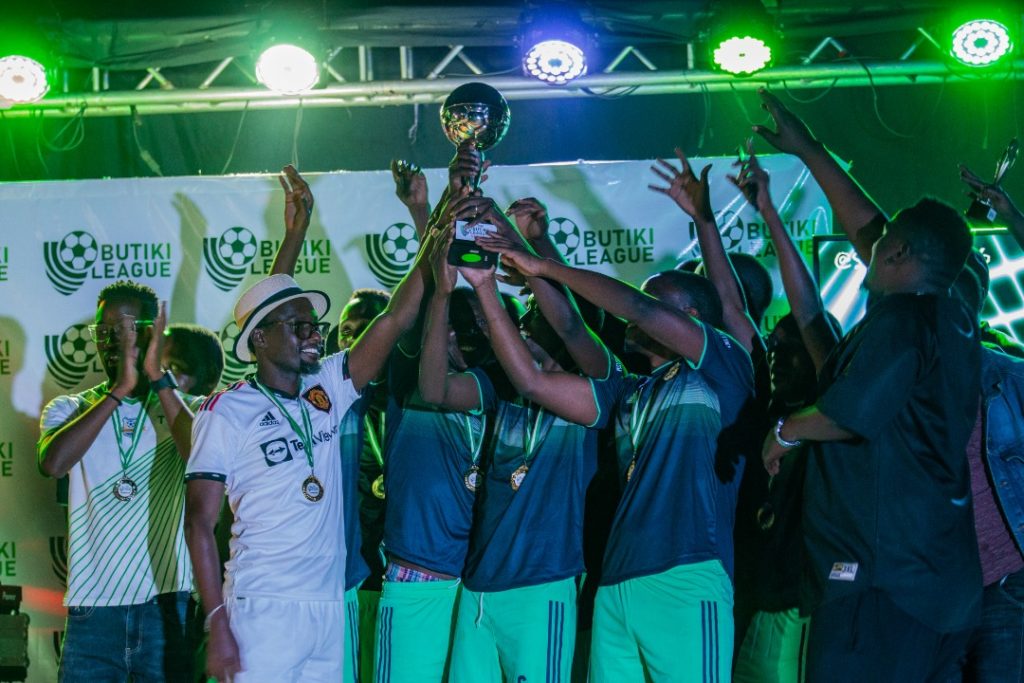
Chief guest, Counsel Julius Galisonga handed over the trophy to champions, Nyulya FC

Nyulya FC were crowned champions of the second season of Butiki League. A number of 16 teams participated this season.

The grand finale happened on Saturday 29th October 2022 at St Henry’s sports center, kabalagala with a huge turn up.

Nyulya FC, a cohort of 1999-2004 emerged victorious with 36 points and 8 points above second-placed Kasadhakawo FC while Bugoma FC came third. Nyulya FC was unbeaten in all the games played.

Nyulya FC sharpshooter, Webster was the overall top scorer with 20 goals and he walked away with a golden trophy. His counterpart Lwanga Joseph was the best goalkeeper with 10 clean sheets from 14 games.

“The entire class has been one team. The engagement goes on to grow by the day in different aspects of life. The class has supported the team financially and we have been able to facilitate our players coming from upcountry,” Muwanguzi Dan, captain of Nyulya FC told RabSports.

“Consistency has been critical for our success. As a class, we used to be very competitive in school and occasionally organized our competitions. We know each other’s strengths and weaknesses and we mitigate them. Our focus has always been winning every game and we didn’t waiver from it,” he added.

The finale was graced by Counsel Julius Galisonga Kibande, founder of Galisonga and Co. Advocates as the Chief Guest and he took the onus of presiding over the trophy to the champions and he pledged to support the Butiki League in any way.

At the culmination of all games, the highly anticipated select match between Butiki legends and the Butiki league champions kicked off. The legends shocked the crowd as they edged past the Butiki league champions in a 3-2 win.

Season three of The Butiki League will kick-off early next year.

Table standings at the end of season 2

  1. Nyulya FC
  2. Kasadhakawo FC
  3. Bugoma FC
  4. Aredo FC
  5. White man FC
  6. Mines FC
  7. Jungle FC
  8. Oweina FC
  9. Gayembe FC
  10. Gwasaime FC
  11. Makaya FC
  12. Guntu FC
  13. Blue dollar FC
  14. Pizza Gaddafi FC
  15. Winter FC.
  16. O-five FC
Stories Continues after ad

Kashilling was a General who never became one – Besigye

Lt Col (Rtd) Ahmed Kashilling

Former Forum for Democratic Change (FDC) leader Dr. Kizza Besigye has eulogized fallen bush war soldier Lt. Col. Ahmed Kashilling who was passed away on Thursday morning. Kashilling’s death was announced by Security Minister Gen. Jim Muhwezi.

Besigye said Kashilling’s last years have been painful and deserved to be a General but never became one.

“Lt Col Ahmed Kashilling, the General that never became, has departed. His last years have been very painful- deserted by his comrades and most of his family!” Besigye said.

“He told me painful stories fairly recently. He came on a Bodaboda to Nsambya, where I was. Most urgently, he needed Shs50,000 for medicine! He told me that he was writing a book. I hope someone will find it and have it published. Sad,” he added.

Gen Henry Tumukunde, a bush war veteran who has served in various capacities in the army and government,  also praised the deceased saying his contributions to the struggle will always be remembered.

“I greatly mourn the passing of yet another gallant Commander of the Resistance, Col. Ahmed Kashilling. His notable contributions to the struggle will always be remembered. My heartfelt condolences to the family, the people of Rukungiri, UPDF and the nation. RIP Comrade Commander!” Tumukunde said.

Government accorded Kashilling a military burial and he will be buried today in Rubabo, Rukungiri District.

His son Hussein Kashiling says he has left over 100 children.

Kashilingi, RO/040, joined the NRA bush war in 1981. Alongside Mugisha Muntu, Joram Mugume, Ivan Koreta, Jim Muhwezi, Kahinda Otafiire, Steven Kashaka, Pecos Kuteesa, Julius Chihandae and Peter Kerim; he is listed in the UPDF Act as one of the 15 senior officers as at January 1986. Others are; Fred Mwesigye, Andrew Lutaaya, Gyagenda Kibirango, Samson Mande and Amin Izaruk.

Kashilingi’s first known major operation happened around 1982. He commanded fighters who raided Nakaseke Hospital for medical supplies for rebels. They abducted most of the medical personnel of the hospital, including the Medical superintendent, Dr. Ronald Bata.

Stories Continues after ad

FUFA amends Rule to field more foreign players in a match

Vipers players

The Federation of Uganda Football Associations (FUFA) has announced the amendment of Article 19 (2) (V) of the FUFA Competitions Rules (FCR) where only three foreign players could be fielded in a FUFA competition match.

The maximum number of foreign players permitted to play has now been increased to five.

The rule is set to mainly benefit Vipers SC which qualified for the CAF Champions group stage scheduled for next year after eliminating former champions TP Mazembe from DR Congo.

This will help the Venoms use and rotate the available players across all competitions.

Vipers bolstered their squad with at least five Congolese nationals including Gracia Mpongo Mbombo, Darcy Mbaka Kipoyi, Rodriguez Shamamba, Alfred Macumu Mudekereza and Olivier Osomba. They also added one Nigerian forward Abubakar Lawal.

“Considering that our clubs are starting to compete in group stages of CAF Inter Club competitions and yet their probable competitors use more foreign players, the Executive has directed to increase the number of foreign players for FUFA Competitions from three (3) to five (5),” Fufa said in a communique.

“This will, among others, enable our Clubs in the CAF Inter Club Competitions use such players in FUFA Competitions as well.”

The amended rule reads: “A Club shall be allowed to field a maximum of five (5) foreign players in any single FUFA Competition match. Relatedly not more than one (1) of the five (5) may be a goal keeper”.

Stories Continues after ad

Global health agencies outline plan to support Uganda’s response to Ebola outbreak

Health partners visiting Ebola-affected areas

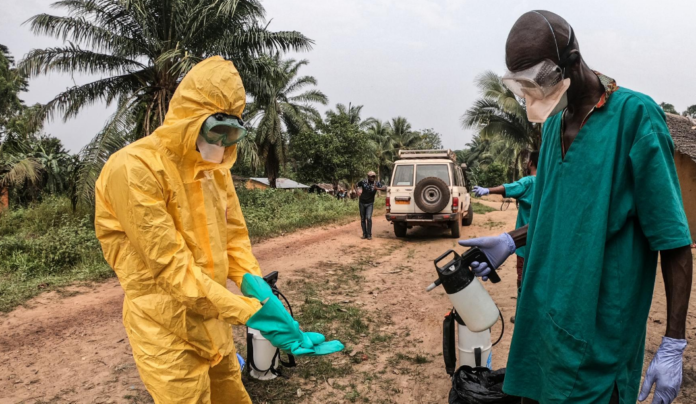
Following the declaration of an Ebola outbreak in Uganda on 20 September 2022, the outbreak has now spread to seven districts (Kasanda, Kyegegwa, Bunyangabu and Kagadi districts beyond the original epicenter in Mubende district, and then to Kampala City and Wakiso).

The government-led response has activated the Incident Management System in order to control the outbreak. In support of the Ministry of Health-led efforts, CEPI, Gavi and WHO have outlined a plan to accelerate research during the outbreak, to ensure access to investigational doses, and to facilitate scaling up and access to any subsequent licensed vaccine.

Vaccination is usually one of the response interventions in such an outbreak, however, there are currently no licensed vaccines (or therapeutics) for Ebola disease caused by the Sudan ebolavirus (SUDV), though there are several candidate vaccines which appear to be suitable for evaluation in a clinical trial during this outbreak.

By embedding research at heart of the outbreak response, we can achieve two goals: to evaluate potentially efficacious candidate vaccines, and to potentially contribute to end this outbreak, and protect populations at risk in the future.

The Ministry of Health has designated the Makerere University Lung Institute to conduct vaccine and therapeutics clinical trials. The clinical trial to evaluate candidate vaccines against this ebolavirus is co-sponsored by the Ministry of Health in Uganda and WHO, and involves support from partners. A Principal investigator from Makerere University Lung Institute will lead the vaccine trial.

WHO, CEPI and Gavi are providing support to ensure that sufficient doses of candidate vaccines are available for the trial and beyond. If sufficient doses can be made available, the aim of the vaccine trial would be to establish how effective the candidate vaccines are in diverse populations.

The vaccine developers and funders who will make the candidate vaccines available include the University of Oxford and the Serum Institute of India, the Sabin Vaccine Institute and the US government institutions Biomedical Advanced Research and Development Authority (BARDA) and National Institutes of Health (NIH), as well as International AIDS Vaccine Initiative (IAVI) and MSD.

Moreover, there are other organisations committed to supporting the overall response, including Africa Centres for Disease Control and Prevention (Africa CDC), UNICEF, non-governmental organizations, donors, and regulators including the African Vaccine Regulatory Forum (AVAREF).

Goals of the collaboration

The following goals have been identified for the organizations’ efforts; these are likely to evolve in response to the outbreak.

In the short term, supporting the Ministry of Health of Uganda’s outbreak response efforts as needed to control SUDV and, under their leadership, support a randomized clinical trial to evaluate one or more candidate vaccines as part of the response to the outbreak.

In the mid-term, allocating resources to plan for and to reserve sufficient manufacturing capacity to scale up the production of candidate vaccines (even before they are licensed), potentially by establishing a risk-sharing mechanism. This may also involve manufacture of additional vaccines at risk during the trial to ensure that doses of a vaccine found to be efficacious vaccine can be made available to end the outbreak as quickly as possible.

Over the longer term, exploring pathways to ensure that licensed SUDV vaccine(s) are available via the Ebola stockpile, which is enabled and funded by Gavi and managed by UNICEF on behalf of the WHO-coordinated International Coordinating Group (ICG) mechanism on Vaccine Provision, potentially using innovative market shaping mechanisms.

Furthermore, committing to developing a mechanism to ensure equitable access and funding for SUDV vaccines research, outbreak response and preventive vaccination. Also, to provide support for development and evaluation of next generation vaccines.

Global research and development collaboration in response to Ebola outbreaks

The actions taken by the Ministry of Health in Uganda and its partners build on past collaboration and experiences responding to Zaire ebolavirus outbreaks (another Ebola virus species), on COVAX lessons learned, and on working on other vaccine stockpile mechanisms.

A commitment to encourage availability of doses for the candidate vaccines for clinical trial and beyond. In 2014, the Gavi Board approved a funding envelope for accelerated access to Ebola vaccines including eventual procurement of licensed vaccines, vaccine delivery and support for recovery in affected countries. Gavi subsequently signed an Advance Purchase Commitment (APC) agreement with Merck, securing the commitment to achieve and maintain availability of 300,000 doses of investigational vaccine doses until licensure and WHO recommendation.

Integrating clinical research in the outbreak response. Together with the Ministry of Health in Guinea, WHO was part of a broader coalition of countries and partners which worked to assess candidate Ebola vaccines in the context of the West Africa Ebola outbreak caused by Zaire ebolavirus species.

In 2014, a WHO-led global consortium rapidly initiated the necessary Phase 1 trials (VEBCON) and a randomized Phase 3 clinical trial in Guinea led by the Ministry of Health and WHO with several other partners which generated the evidence on the efficacy of the rVSV- ZEBOV Ebola vaccine. Additional clinical trials to evaluate various vaccines were conducted in 2015 by the Ministries of Health of Liberia and Sierra Leone and with the support of the US National Institutes of Health, The US Centers for Disease Control and the London School of Hygiene and Public Health among others.

The experience of the West Africa Ebola outbreak catalysed the establishment of the WHO R&D Blueprint for epidemics by the World Health Assembly in 2015 after CEPI in 2016.

Deploying vaccines with proven efficacy yet unlicensed as part of the outbreak response. After 2015 and before its licensure, the proven effective yet unlicensed vaccine was successfully deployed as part of the response to Ebola outbreaks until 2021 under the leadership of the Ministries of health and with support from WHO, Gavi, UNICEF and other partners. In all the outbreaks since 2016 Ministries of Health, WHO, and several partners have also collected additional evidence on the efficacy of the rVSV-ZEBOV Ebola vaccine. Despite the challenges, during the 2018-2020 outbreaks in Equateur, North Kivu and Ituri provinces of the Democratic Republic of the Congo, over 320,000 people at risk of Ebola (contacts, contacts of contacts, and health care and front-line workers in affected areas) received a safe and effective vaccine.

Creating a mechanism to ensure availability and access to licensed vaccines. In 2019, the Gavi Board approved funding for the establishment of a global stockpile of licensed Ebola vaccines, administered via the ICG mechanism – initially with investigational doses and then licensed vaccine for Ebola Zaire – but with potential to include other vaccines, depending vaccine availability and following WHO recommendations. Stockpile of licensed doses have since been used to combat recent smaller outbreaks in the Democratic Republic of the Congo and Guinea.

A global, end-to-end collaboration to promote equitable access in support of countries’ strategies and needs. Beyond Ebola, the lessons from the COVID-19 response, including the establishment of the Access to COVID-19 Tools (ACT) Accelerator and key learnings from the vaccine pillar COVAX, are particularly important for the field of vaccine R&D, manufacturing, delivery and country and community engagement.

Stories Continues after ad

EU avails Shs18.5 billion for renewable energy

Lennart  Deridder, Acting Head of Cooperation  EU Delegation.

European Union has launched the ElectriFI facility that will further improve access to finance in the Ugandan renewable energy sector.

ElectriFi is an impact fund bridging the financial gap in terms of equity, quasi-equity and debt to private companies investing in rural electrification, commercial and industrial captive power, productive use of energy, e-mobility and independent power producers, amongst others.

Established in partnership with European Union Delegations and host governments, ElectriFI Country Windows offer dedicated funding for selected countries, in line with national objectives.

In December 2020, the EU and EDFI ElectriFI agreed on establishing a dedicated ElectriFI Country Window for Uganda, with a specific funding package of EUR 5 million (Shs18.5 billion), to be invested in renewable energy companies active in Uganda.

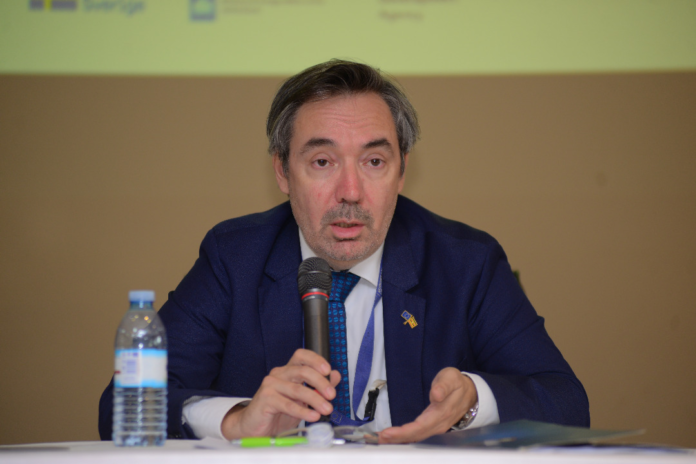
“Today’s launch of the Uganda Country Window will enable Uganda’s capacity to usher in its electricity generating potential and step up its efforts to mobilise renewable energy resources while tapping into private sector funding. This support provided by the European Union will contribute to Uganda’s efforts to unlock significant economic, social and environmental development opportunities and to tackle various challenges such as loss of forests, biodiversity and soil fertility due to the massive use of charcoal,” said Lennart Deridder, Acting Head of Cooperation  EU Delegation.

In the last five years the EU has set up a programme to support Uganda’s energy sector worth more than 100 million EUR that, with a Team Europe Approach together with its Member States, has leveraged an additional one billion EUR. 

EDFI ElectriFI, the EU Electrification Financing Initiative, is a facility that is funded by the European Union and it invests in projects providing access to reliable, affordable and sustainable electricity and energy services in developing countries.

EDFI ElectriFI is managed by EDFI Management Company on behalf of the 15 European Development Finance Institutions (DFI).

Stories Continues after ad