Stanbic Bank
Stanbic Bank
24.8 C
Kampala
Stanbic Bank
Stanbic Bank
Home Blog Page 500

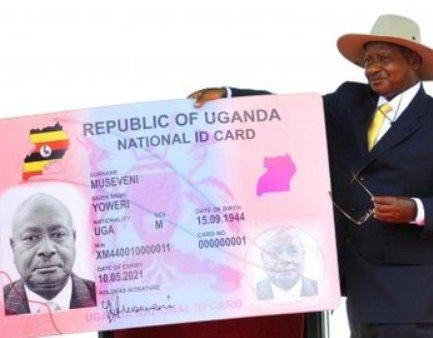
Parliament to probe new firm over digital National IDs

A sample of the National ID

Parliament’s Committee on Defence and Internal Affairs is considering investigating a new firm contracted by the Government to print ‘smart’ and ‘digital’ national identity cards.

In 2018, government entered into a joint venture with Veridos, a German company to set up a printing facility for digital identity documents for a period of 15 years.

This comes after the expiry of the contract of Muhlbauer High Tech International, another German firm that was hired in 2010 to set up the ID printing system that is currently being used by the National Identification and Registration Authority (NIRA) to print national IDs.

While meeting officials from Muhlbauer High Tech International led by the firm’s Vice President, Matthias Karl Kohler, the defence committee Chairperson Rosemary Nyakikongoro, wondered why government is investing in new ID machinery yet there is one that is still operational.

“Why would government invest in this machinery, abandon it and go for another one? If they said Veridos is printing from here [in Uganda], do they have a factory here? So it is up to us [MPs] to get interested in finding out how far and how capable they are to do mass enrolment for the IDs,” Nyakikongoro said.

She said there is a need to look into the operations of the new firm to ensure they have the capacity to meet the needs of the government as far as mass enrolment, and printing of smart national IDs is concerned.

“We want services at the end of the day and if the smart ID is expensive, then why would we go for it yet we can upgrade the system and go for a cheaper one? We know our economy; so as a committee, we need to interest ourselves in the operations of Veridos because we have not interacted with them or even looked into what they have been doing since the time they won the contract,” she added.

According to Nyakikongoro, NIRA had complained that the printing system provided by Muhlbauer was inflexible and vendor-locked and this limited them from upgrading to a required standard.

However, Muhlbauer’s Karl Kohler denied the allegations before the committee, saying the system they handed to NIRA is open source with all the software for modification or upgrading.

He blamed the slow printing of national IDs on the lack of maintenance of the equipment.

“Since 2018, no maintenance has been done on those machines. Once those machines are not maintained and serviced then it is likely to delay the printing process,” Kohler said adding that the US$16 million machinery is not fully utilised and only operates at a capacity of about 50 per cent.

He added that before their contract expired, they were providing free maintenance services with a 100 per cent warranty on wear and tear.

Kohler also urged government to consider installing a data recovery and backup system to cater for any eventualities which could lead to permanent loss of citizens’ data.

Mubende Municipality Member of Parliament Bashir Lubega, called for an investigation into the possible conflict between NIRA and the former contractor, Muhlbauer which could hamper the effective implementation of the National Security Information System (NSIS) project.

“As a country, we need to investigate factors that underpin the discrepancies between these two entities because it seems we are being made to feast on lies from either side,” Lubega said.

According to Muhlbauer’s statistical report, by the end of 2015, about 90 per cent of Ugandans (16 years and above) had been enrolled for national IDs, and no other country in Africa had recorded such success.

By 2019, 26 million citizens had been enrolled and 17 million national IDs had been issued.

Stories Continues after ad

Gov’t losing Shs342 million per day to unpaid road contractors

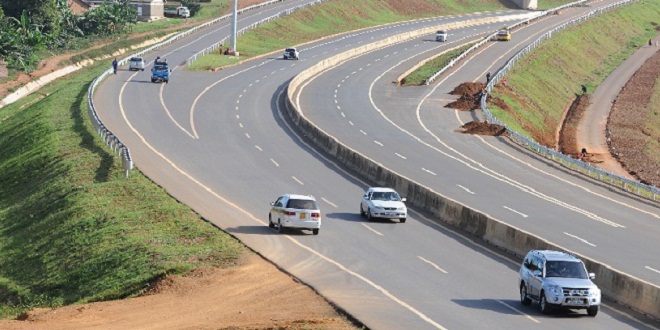
Entebbe Expressway

Uganda National Roads Authority (UNRA) says that it is paying up to Shs342 million daily in interest to project contractors who have not been paid for their work.

This revelation was made by the UNRA Executive Director, Allen Kagina, who was appearing before the finance committee on Tuesday, 22 November 2022 over the impact of the inadequate cash limit for the half year of Financial Year 2022/2023.

Kagina told MPs that UNRA closed the financial year with total arrears of Shs528 billion including Shs89.5 billion for road maintenance which is generating interest.

She said that the Government released Shs689 billion against a requirement of Shs1.2 trillion.

“The arrears position has increased by 145.75 per cent from Shs215 billion at the end of the Financial Year 2020/21 to Shs528 billion at the end of the Financial Year 2021/2022. This is largely attributed to the budget suppression at 77 per cent of the approved Government of Uganda budget that was released,” Kagina said.

She added that for failure to pay the debt, they will incur nugatory expenditure that includes interest expenses, idle equipment, and reduction in the works by the contractors.

Kagina further told the MPs that this will also lead to failure to acquire land for the different projects in time and failure to sign contracts whose procurements have been completed.

MPs were shocked to know that government was losing Shs342 million daily to interest on debts that are not being paid.

Kabula County MP Enos Asiimwe, said there is a need to clear the arrears as it was causing losses to the government and tasked UNRA to explain how the interests came about.

“If you can give us a table of how this money has got to this point, and which companies are demanding this money, and the communication between you and finance demanding this payment – we need to know who is not doing his job,” he said.

Otuke County MP Paul Omara, said Shs342 million in interest lost daily by government is a huge blow to the economy and sought to understand where the main cause of the problem is from UNRA.

Relatedly, the MPs also tasked UNRA to explain its failure to rehabilitate the Kamdini-Lira Road and the Karuma-Pakwach Road which have been in a sorry state and negatively impacted on service delivery and transportation.

Kagina told the MPs that road works on the Kamdini-Lira Road will start this week, while the procurement process for the Karuma-Pakwach Road construction has started.

She told MPs that the challenge with road construction is that there are numerous commitments to construct the roads compared to the available resources and requested them to stop lobbying for more roads until the planned ones are completed.

Stories Continues after ad

CSOs call for streamlining of SRHR services

Civil Society Organisations (CSO) have called for streamlining of access to Sexual and Reproductive Health and Rights (SRHR) services for adolescents without parental consent.

Chapter four of 1995 of the constitution of Uganda espouses these core principles, freedoms and rights however for many individuals, groups and communities in Uganda; the protection of such basic human rights remains unfulfilled promises.

At the heart of SRHR is the right to dignity and personal liberty which centers on the autonomy of a person. Ideally, every person should have the freedom to make independent decisions in their lives free from coercion, intimidation, or fear. Equally freedom from nondiscrimination and the right to equality is fundamental and critical to the realization of SRHR.

At least 21.5 percent of pregnancies in East Africa are adolescent pregnancies. Adolescent girls who are pregnant are five times more likely to face maternal mortality. One of five teen girls is a mother.

Rose Wakikona, a Senior Attorney at Women’s Link Worldwide said the government should align the national laws and policies with the principal of nondiscrimination as integrated within international human rights by decriminalizing health care services that are specifically needed by women like abortion.

“We want the government to develop laws and policies that speak to the realities of citizens by considering the data and statistics to address needs instead of developing laws and policies that merely reinforce ideological standards,” she said.

They claimed that SRHR should be considered and programmed for looking at all human beings including men and gender-expansive persons.

She urged the government to develop laws and policies that speak to the current realities of citizens by considering the data and statistics to address needs instead of developing laws and policies that merely reinforce dialogical standards.

The CSOs claimed that negative biases attached to a person’s HIV status, criminalization of HIV criminalization of consensual sex, critical reproductive health needs for women and stand as significant impediments to the realization of human rights among young people, women, sex workers and marginalized communities.

Stories Continues after ad

Experts tip bankers on observing ethical codes of conduct

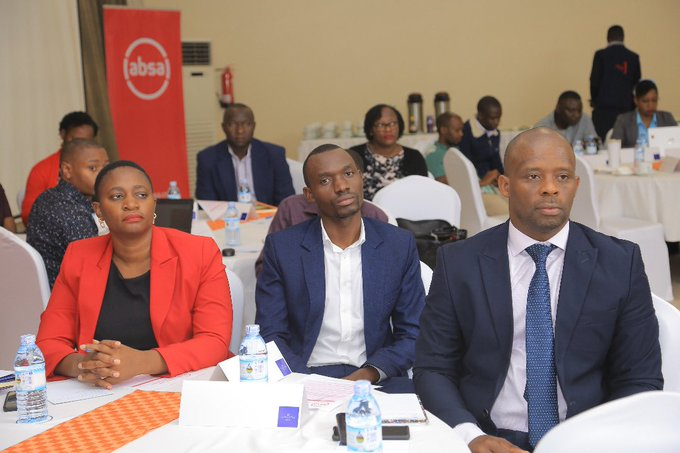
Experts in the banking sector have called on financial institutions to observe ethical codes of conduct for thriving businesses. The clarion call was made by Dr. Tumubweinee Twinemanzi, Executive Director of Supervision at the Bank of Uganda.

Speaking during the dialogue on Conduct and Ethics in the Financial Services Industry at Protea Hotel, Tumubweinee said ethics is central to how banks but build trust. “If you don’t have ethics, you can’t build trust. The banking sector doesn’t sell loans but trust, If you don’t have ethics in how you handle customers and how you use their money, you lose trust.”

“Ethics is so important because it sets the tone for the governance culture in a financial institution. Imagine a situation where you don’t have ethics, you are going to fail on two fronts of governance component and trust,” he said.

He said if you look at the economic circumstances where economic recovery is slow, we have all these factors buffeting the economy, inflation, geopolitical tensions, Russia, Ukraine, and M23 in Congo. Amongst all these problems, the shareholders of these institutions are putting pressure on institutions to generate revenue and in that the employees may violate working ethics.

“We work closely with employee relations where we take employee relations with us in some positions, and we transparently share the investigations and the themes and what has happened to some of the employees. The only way to build trust is you need to be transparent in our behaviors.”

Mumba Kalifungwa, Managing Director, Absa Bank Uganda said banking is a relationship of trust; “the need to show our customers that their deposits are safe and we stand for high ethical standards. We aim to create awareness about the importance of ethics in our institutions as bankers as well as in the financial services industry.”

He said there will always be pressures where people are put in a position of compromise. But the importance of having ethical guidelines and speaking to the topic of ethics is to bring awareness to say that when there is no adherence to ethical guidelines where you choose to compromise, there will be consequences which may result in imprisonment, people losing their source of livelihood, and all sorts of negative connotation.

“The financial services industry is built on the trust of stakeholders. When Senior Management and Board set the right tone, it builds trust and value with customers, employees and other stakeholders which in turn leads to a thriving business. As they say, forewarned is forearmed. And that is the whole essence of why we are taking the lead to support the dissemination of the importance of ethics in creating a sustainable business,” he said.

He said organizational justice is tracked within the organization because it improves the speed of culture and it reduces retaliation.

He urged banks to have communication mechanisms such as Whatsapp to stimulate speaking up, and whistle-blowing and make sure that there are interventions or treatment plans to deal with the type of pleasure that is feeling in the sector that they are in and integrated ethical decision-making into hiring processes.

Stories Continues after ad

MPs irked by slow set up of Shs325 billion innovation centre

MPs on the committee touring the behind schedule Shs325 billion innovation centre in Kiruhura District

Parliament’s Committee on Science, Technology and Innovation has called for the expeditious completion of the Shs325 billion Technology Engineering and Innovation Centre in Kiruhura District, western Uganda.

The project is financed by the Export-Import Bank (EXIM) of China US$84.7 million loan acquired in 2016.

The committee chairperson, Remigio Achia, said equipment to support the establishment of the National Institute of Technopreneurship (NIT) also referred to as the National Science, Technology, Engineering and Innovation Skills Enhancement Project (NSTEI-SEP), has been brought to the site before completion of construction works, putting government at risk.

‘It is now over a year since this equipment was delivered by the contractor. Their warranty and guarantee will expire before they are tested or used which will make repairing them expensive for government; what was the sequence of events? Why did the equipment come first before the centre was set up?” asked Remigio.

MP Remigio and his committee were on a fact-finding visit to assess progress of the loan absorption and other government initiatives in the region between 16 and 18 November 2022.

A fleet of machinery and equipment totaling to 217 units was received from the project contractor a year ago. The equipment is in the parking yard awaiting completion of the training centre which is scheduled for May 2023.

The Shadow Minister for Science, Technology and Innovation, Gorreth Namugga, voiced her frustration with the long and unwinding nature of construction works, which she said is worsening the country’s unemployment crisis, which would have been improved by the operationalisation of such centres.

“…the loan was signed in 2016. It is now six years and construction for the training centre is still on going,” she said.

The shadow minister, also Mawogola County South MP, added that in order to manage unemployment, such projects must be prioritised and completed on schedule.

Upon completion of the project, local companies which have been unable to participate in key infrastructure projects due to lack of heavy duty engineering equipment will soon benefit from the operationalisation of a fleet of equipment and machinery procured for training, leasing and rental.

The project coordinator, Eng. Apolot Okimat, said the facility being setup is to support locally based Ugandan companies to undertake key infrastructural projects by building their capability to participate in key infrastructure projects in the country.

The project engineer, Denis Kiyingi, told MPs that the initiative will also support the development of functional infrastructural facilities in districts and municipalities.

Eng. Kiyingi added that the centre is intended to enhance the innovativeness of Ugandans through innovation and design hubs which will act as learning and production workshops, and that once completed, the centre will retool and up-skill over 1,500 Ugandans every year. The trainees shall do on job training to develop working confidence.

These will include the youth, craftsmen and construction technicians, machinery operators, automobile engineers, agricultural engineering and mechanisation, industrial and civil construction.

Apac District Woman MP Betty Engola asked the project implementers to furnish the committee with trainee recruitment procedures to check if it caters for all regions of the country.

The committee also visited the Banana Industrial Research and Development Centre and the sericulture farm (silk production) in Bushenyi and Sheema districts respectively.

Stories Continues after ad

President Ruto urges EAC troops to enforce peace in DR Congo

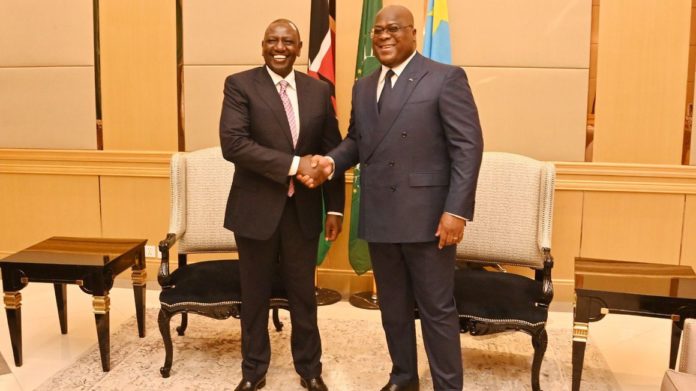
William Ruto poses with Felix Tshisekedi in Kinshasa, Democratic Republic of Congo

Kenyan President William Ruto on Monday said the East African Community (EAC) troops deployed in the Democratic Republic of Congo would ‘enforce peace’, not ‘keep’ it.

In an apparent clarification on the mandate of the East African Community Regional Force (EACRF), Ruto suggests the new mission departs from traditional peacekeepers by ensuring those who don’t comply are dealt with.

It was the first time an EAC leader had clarified the role of the troops, which have been arriving in eastern DRC since two weeks ago, to combat the rebel menace, including that of the M23.

Ruto spoke in Kinshasa, the capital of the DRC, his first visit since he was elected president. He met with his host President Felix Tshisekedi with whom they discussed various issues for about an hour.

He insisted his troops are taking part in the DRC’s security mission to help “restore” peace in the troubled east of the country.

“We are acutely aware that we have many peacekeeping troops in DRC. But from where we sit as a region, we do not think there’s so much peace to keep,” Ruto said.

“That’s why it is necessary for a peace enforcement contingent under the East African regional force. That is the mandate upon which the Kenyan troops in the context of the East African regional force are operating.”

In UN parlance, missions with enforcement capabilities, such as the African Transition Mission in Somalia (ATMIS), have mandates to defend installations and civilian sites but can also crack down on armed groups or terrorists, neutralise or force them to surrender.

The new EACRF is not a UN mission, but its concept of operations must adhere to global standards of war.

Ruto, who was on a one-day official visit to Kinshasa, reiterated what his senior government officials had claimed before: That the conflict in eastern DR Congo was hurting everyone in the region.

“Kenya reaffirms its support to restoring peace and sustainable stability in the eastern Democratic Republic of the Congo and the region at large,” he said after the two met at the presidential palace in Kinshasa.

“Without peace, no country or individual can have the space to prosper.”

Some Congolese had been raising questions after the statements by the force’s commander Maj-Gen Jeff Nyagah, who said that the first priority for resolving the conflict in Congo is “the political option with the Luanda and Nairobi processes currently in place.”

The Kenyan military officer had told the media at their outpost in Goma, eastern DRC, “only after diplomacy and the disarmament process have failed will military force be used.”

The public opinion in eastern DRC has been that authorities do not negotiate with M23, which are seen as the cause of the latest population displacements. The UN last week said at least 13,000 people had been forced out of their homes as the rebels engaged Congolese troops near Goma.

The two leaders also discussed bilateral issues, including trade and cooperation on agriculture, energy, infrastructure and finance.

They agreed to form a joint committee to elevate their bilateral relations, signalling the first attempt to implement some of the past pacts the two countries had signed.

A communique from Kinshasa said the committee should be up and running as soon as possible, led by technocrats from respective ministries.

Stories Continues after ad

Busoga United docked three points for fans hooliganism

UPL logo

Busoga United FC have been deducted three goals and three points and also lose the abandoned game to Express FC by forfeiture following their acts of hooliganism at Kakindu last week.

Busoga United now slip to 14th with 3 points while the Red Eagles climb to 5th with 14 points, same as BUL, Vipers and SC Villa and just three points adrift of leaders Wakiso Giants.

They have also have been slapped with a five-game suspended ban.

The home fans were found guilty of throwing stones at match officials that saw the game end prematurely after Allan Kayiwa had given the Red Eagles a lead late in the game.

“Busoga United has been sanctioned for breaching Article 31 of the FUFA Competitions rules,” read part of the statement signed by Deo Mutabazi.

“Busoga United has lost UPL Match No. 52 that was played on Wed 16.11.2022 at Kakindu Stadium by forfeiture.”

“Busoga United FC has also been handed an immediate three (3) points and three (3) goals deduction from those already accumulated by the club this season.”

“Busoga United has also been handed a suspended 5-home match ban to be played in a closed and neutral stadium outside Eastern Regional Football Association, but already licensed this season for UPL matches should they breach Article 31 again,” the communication added.

Meanwhile, club’s chairperson Diana Nyago has also been summoned to the disciplinary committee for further investigation.

“Busoga United FC Chairperson Ms. Nyago Diana has been forwarded by FUFA CDP to the FUFA Investigations Chamber for her actions during the UPL Match between Busoga United and Express FC.”

“Match reports indicated that Ms. Nyago Diana denied Express FC access to the dressing room exchanged abusive words with the coaches of the away team.”

“She further denied the kits man of the away team access to the field of play at about eight minutes to warm up time.”

“The Chamber shall pronounce itself on the matter upon conclusion of the investigations,” it concluded.

Last week, SC Villa and Blacks Power were also punished by the FDP in a bid to stop hooliganism.

Stories Continues after ad

Ssemogerere accorded 17-gun salute despite widow’s plea to disassociate him from guns

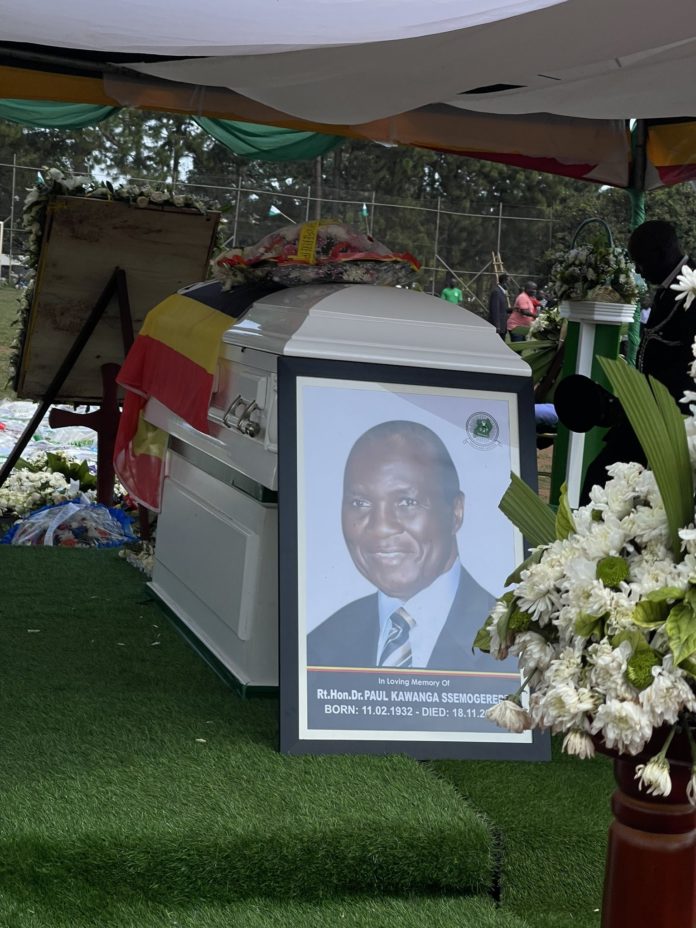
The casket Dr. Paul Kawanga Ssemogerere at his home in Nkumba

The former Democratic Party President, Dr. Paul Kawanga Ssemogerere was accorded a 17-gun salute as he was laid to rest today at his ancestral home in Nattale-Nkumba despite a plea from the widow Prof. Germina Namatovu Ssemogerere to disassociate the late husband from guns.

In her speech, Prof. Namatovu Ssemogerere asked the state not to accord her husband a gun salute during burial, because he never wanted to associate with guns while he was alive adding that he was a peaceful man.

“My husband detested anything related to guns, no gun salute for him,” Mrs Ssemogerere said.

However, government went ahead and gave him a 17-gun salute in respect to his services as a former Prime Minister of Uganda.

Ssemogerere died on Friday, November 18, 2022 at the age of 90 at his home in Rubaga Division in Kampala.

President Yoweri Museveni on Saturday directed that Dr. Paul Kawanga Ssemogerere should be accorded an official funeral.

Ssemogerere served as President General of the Democratic Party for 25 years after succeeding Benedicto Kiwanuka. He was also a two-time presidential candidate, first in 1980 against former President Milton Obote and in 1996 against the incumbent President Yoweri Museveni.

Stories Continues after ad

World’s biggest festival of light and art attracts over 2.5 million visitors

Arne Quinze, Oasis, 2022. Image courtesy the artist. Photo © Noor Riyadh 2022, a Riyadh Art program

Noor Riyadh, the world’s biggest annual citywide festival of light and art, is expected to have welcomed over 2.5 million visitors in the Saudi Arabian capital city, attracting local communities from families to artists, students, professionals and international audiences from across the globe.

With more than 2.5 million international, regional and local visitors having enjoyed the event to date, additional visitors are set to visit Noor Riyadh’s accompanying exhibition ‘From Spark to Spirit’ at JAX 03 (JAX District), which runs until February 4, 2023.

They can also continue participating in the festival’s program of over 500 special activities, which include tours, talks, workshops, family activities and music. Some of these are available online and via the app allowing the festival to be enjoyed by a wider audience outside of Riyadh and Saudi Arabia.

On November 3, 2022, 190 artworks and installations illuminated 40 citywide locations, showcasing immersive site-specific installations, monumental public artworks, ephemeral sculptures, art trails, virtual reality, building projections and drone shows transforming Riyadh into a dazzling night-time ‘gallery without walls’.

Renowned names in light art were brought together with an expanding roster of emerging and established local artists many for whom light was a new artistic medium within Saudi Arabia.

This year, the festival included at least 90 new commissions from international artists such as Daniel Buren, Shohei Fujimoto, Douglas Gordon, Tadashi Kawamata, Alicja Kwade and Jean-Michel Othoniel. They were joined by Saudi artists such as Ahaad Alamoudi, Abdullah AlOthman, Daniah Al Saleh, Rashed AlShashai, Sarah Brahim, Bricklab, and Muhannad Shono.

Artists from 40 countries as far and wide as Madagascar, Uganda, Japan, Puerto Rico, Turkey, Poland, France, United Kingdom and United States, were selected to display significant works of light art under the theme ‘We Dream of New Horizons’. With the festival co-curated by Hervé Mikaeloff, Dorothy Di Stefano and Jumana Ghouth, the theme centered around a sense of hopefulness for the future, with connotations that are positive, optimistic and reflective of a confidence in renewal and transformation. 

Speaking on the conclusion of the citywide installations, Riyadh Art Program Executive Director, Khaled Al-Hazani, said: “We are delighted that Noor Riyadh has created unique moments of joy across the city, nurtured artistic talent and delivered awe inspiring immersive experiences, providing visitors with an opportunity to appreciate world-class light artworks and rediscover the city of Riyadh in a new light. We look forward to bringing together a global community of visitors to Noor Riyadh’s accompanying exhibition and shedding light on the artists, curators and community engagement initiatives enriching Riyadh’s thriving art and culture landscape.”

The festival’s accompanying world-class exhibition entitled ‘From Spark to Spirit’ continues until February 4, 2023 at JAX 03 (JAX District), Riyadh, curated by Neville Wakefield (lead curator) and Gaida AlMogren (associate curator). The exhibition traces the role light plays in shaping our relationship to a world in which light itself has become a signal of change, exploring themes such as the ‘Technologies of Light’, ‘Architectonics of Light’ and ‘Consciousness of Light’.

Just as the Light and Space Movement, which began in California in the 1960s, reflected changes in the established order, this exhibition explores a landscape of light inflected by the rapid cultural transformations shaping the Middle East. While the exhibition acknowledges the histories that have been shaped by the experience of West Coast America and the West in general, the show is structured as a cultural dialogue.

Neville Wakefield, the exhibition lead curator, said: “As explored in ‘From Spark to Spirit’, it is evident that light in this world can be seen as an integral means of communication. We are now connected to each other by screens – by the light of information. We communicate with one another through the direct manipulation of light to form words and images that together map a collective consciousness, bringing us together in an era of rapid technological and cultural transformation.”

Exhibition artists include Alicja Kwade, Claudia Comte, Daniah Alsaleh, Diana Thater, Doug Aitken, Eli Joteva, Gisela Colón, Haroon Mirza, Hmoud Alattawi, Huda Al-Aithan, Jac Leirner, Jason Ting, Jim Campbell, John Edmark, Larry Bell, Lina Gazzaz, Maryam Tariq, Moath Alofi, Nasser Al Shemimry, Nasser Al Turki, Norma Jeane, Phillip K. Smith III, Refik Anadol, Dr. Saad Al Howede, Theories of Imagination (TOFI), UVA (United Visual Artists), Walaa Fadul, Dr. Zahrah Al Ghamdi, Zarah Hussain and Zeinab Alhashemi.

Noor Riyadh was the first of the Riyadh Art programs to launch, inaugurating what is becoming the project’s legacy of transforming Riyadh into a gallery without walls. Comprising of 10 programs, delivering more than 1,000 public art installations across the city created by local and international artists, and supported by two annual festivals, including Noor Riyadh, Riyadh Art is working to transform the capital into a vibrant, cosmopolitan city and enrich lives through creative joyful experiences, in line with Saudi Arabia’s Vision 2030 goals.

Stories Continues after ad

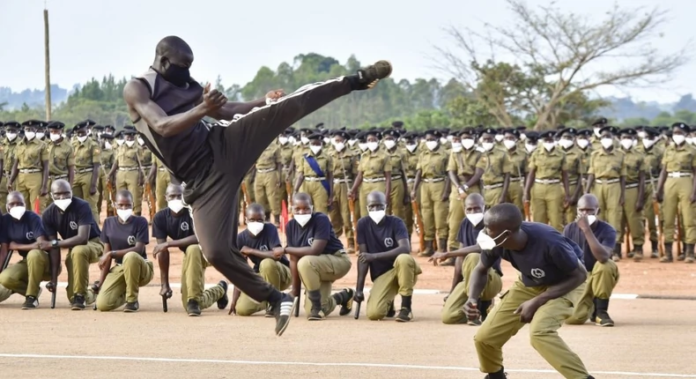
Uganda Police release list of successful candidates for recruitment

Police training

Uganda Police has released a full list of successful candidates who have been selected to join the Force. 

“We are pleased to inform you that the Uganda Police Force has issued the list of individuals who have been shortlisted,” Police said.

Police guided all candidates to check their names at the local District/Divisional Police Headquarters to see if they were successful.

The shortlisted candidates are required to report to the Police Training School Kabalye on 28th November 2022 to begin the Initial Police Recruit Training Course.

The shortlisted applicants will be required to report to the quarantine centers. “At the quarantine centers, they will be thoroughly screened for Covid-19 symptoms and instructed on Covid-19 awareness and safety procedures,” Police added.

1088 have been recruited as Probationer Police Constables-General Duties while 209 as drivers.

All successful applicants will do an oral and written interview, during which they will be required to exhibit a wide range of personal traits and attributes that are required to become a UPF officer.

These qualities include the highest levels of personal integrity, excellent communication skills, personal effectiveness, shown physical health, a realistic understanding of a police officer’s roles and responsibilities, problem-solving skills, and a strong drive for personal improvement.

FULL LIST: LIST-OF-SUCCESSFUL-CANDIDATES-GENERAL-DUTIES-AND-DRIVERS

Stories Continues after ad