Stanbic Bank
Stanbic Bank
18.5 C
Kampala
Stanbic Bank
Stanbic Bank
Home Blog Page 527

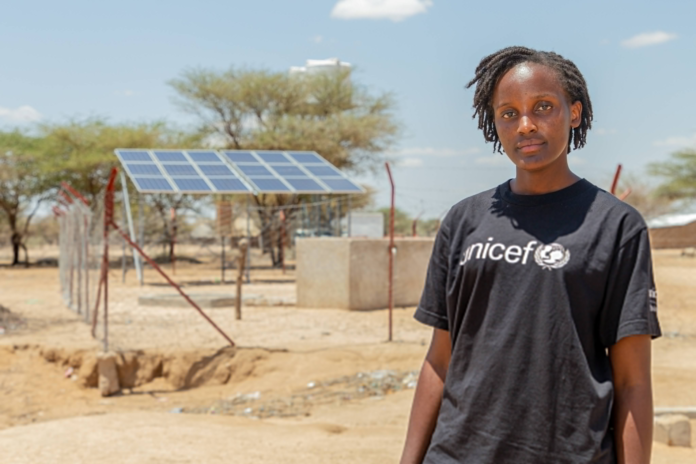
Climate activist Vanessa Nakate named UNICEF Goodwill Ambassador

Vanessa Nakate

25-year-old Ugandan climate activist Vanessa Nakate has been appointed as the newest UNICEF Goodwill Ambassador, affirming her collaboration with the organization and recognizing her outstanding global advocacy for climate justice for current and future generations.

Nakate traveled last week with UNICEF to Turkana Country in north-western Kenya to see firsthand the impacts of water and food insecurity caused by the worst drought in the Horn of Africa in 40 years. On her first trip with UNICEF, she met with communities on the frontlines of the climate crisis, including mothers and babies receiving lifesaving treatment for severe acute malnutrition and families benefiting from solar-powered water supply systems.

“As a UNICEF Goodwill Ambassador, it will be my first responsibility to bring the voices of children and marginalized people into conversations where they were previously excluded. This role with UNICEF will provide me with more opportunities to meet children and young people in the places most affected by climate change and an expanded platform to advocate on their behalf,” Nakate said.

“In Kenya, the people I met told me about the impact of climate change and drought on their lives, with four consecutive failed rainy seasons depriving children of their most basic rights. One community had not received any rainfall for over two years. This is more than a food and nutrition crisis, it is yet another dimension of our worsening climate crisis.”

UNICEF’s appeal to improve families’ long-term resilience in the Horn of Africa region – and therefore help stop drought devastating lives for years to come – is currently just 3 percent funded.

Nakate began her activism in January 2019 with a protest with her siblings and cousins on the streets of Kampala, inspired by Greta Thunberg. She continued to protest every week, becoming a well-known face in a movement of young people “striking” for the climate around the world. In 2020 she came to further global prominence when she was cropped out of a news photo she appeared in alongside Thunberg and other white climate activists. Nakate’s response to the incident, in which she said the news outlet “didn’t just erase a photo, you erased a continent”, made international headlines.

“As a young African woman, I have had to fight to be heard by the media and decision-makers. While I am fortunate to have a platform now, I intend to continue fighting for others. The children on the frontlines of the climate crisis, like those I just met in Turkana, Kenya, are the people for whom I will fight in my new role with UNICEF,” said Nakate.

Nakate has since used her platform to advocate for climate justice to include every community, especially those from the most affected places. She founded the Rise Up Movement, a platform to elevate the voices of African climate activists, as well as a project to install solar panels in rural Ugandan schools. She has addressed world leaders at the COP25 and COP26 climate summits and appeared on the cover of TIME magazine.

“I am excited to welcome Vanessa Nakate to the UNICEF family as our newest Global Goodwill Ambassador,” said UNICEF Executive Director Catherine Russell. “Vanessa’s work to drive climate action that benefits the communities most affected by the climate crisis aligns directly with UNICEF’s mission to drive change for every child. We hope her appointment as a UNICEF Global Goodwill Ambassador will help ensure that the voices of children and young people are never cut out of the conversation on climate change  and always included in decisions that affect their lives.”

Globally, approximately 1 billion children – nearly half the world’s 2.2 billion children – live in one of the 33 countries classified by UNICEF’s Children’s Climate Risk Index as at “extremely high risk” of the impacts of climate change, threatening their health, education, and protection, and exposing them to deadly diseases. The top ten countries are all in Africa.

Nakate joins the ranks of other recent high-profile supporters such as actor Priyanka Chopra Jonas, recording artists Katy Perry and Angelique Kidjo, Syrian refugee, and education activist Muzoon Almellehan, and, most recently, UNICEF’s youngest-ever Goodwill Ambassador actress Millie Bobby Brown.

Stories Continues after ad

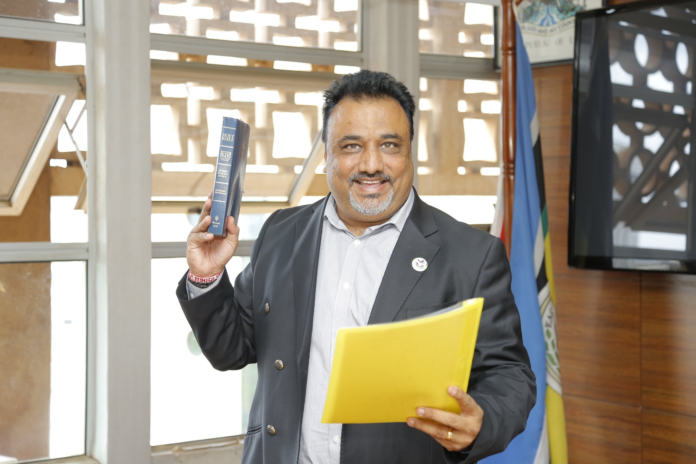
Bernard Oundo swears in as President of Uganda Law Society

Bernard Oundo has this morning been sworn in as the president of Uganda Law Society. He was sworn in at Kampala Serena Hotel along with eight members of the council who were elected on the 10th Sept 2022.

Oundo defeated five candidates in a hotly contested election. He garnered 1056 votes as his closet rival Diana Ninsiima Kibuuka who polled 723 votes.

Other candidates who were in the race included; Diana Angwech (151 votes), Chemisto Shuib Kubai (133votes) Olyvia Kyalimpa(52 votes), and Mugagga Mukuve Karemire (15 votes).

He will serve along with Diana Angwech (Vice president), Isaac Atukunda (Secretary), Isaac Newton Kyagaba (Treasurer), Obedo Deo Gracious (Executive Council Representative Eastern region), and other members.

Speaking after swearing in Oundo said he will be a President for all. “It doesn’t matter whether you voted for me or not, I won’t even remember if you didn’t vote for me, am here to serve. Let’s commit to supporting each other and achieving our common goals for our society.”

He applauded the outgoing Executive Council for all the work they have done and pledged to continue to build on the foundation they have laid.

“We commit to deliver on our pledge to promote the rule of law and good governance as well as members’ welfare and legal aid services. To government we pledge to be a constructive partner to advise, guide, and work with you in line with our mandate as a society,” he said.

He said as Uganda Law Society’s commitment to protecting the Rule of law, to promote access to justice for all Ugandans is paramount he committed to the public that ULS will stay true to its mandate and we shall do our job as required.

The former president Pheona Wall said, “I want to celebrate all the council members that I have served with during my time as Outgoing ULS president.”

“Thank you to the ULS Membership, you have been with us, you have built the ULS House during the Covid-19 period, and you responded when we wanted to rescue our members, Thank you all,” she said.

Stories Continues after ad

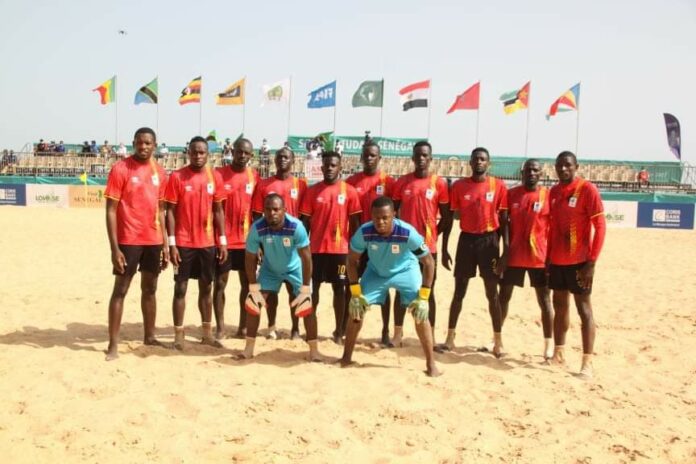
Sand Cranes draw Senegal, Egypt in 2022 Beach Soccer AFCON

Sand-Cranes team

The first round of the Beach Soccer Africa Cup of Nations Mozambique 2022, scheduled for 21-28 October, will be hotly contested.

Defending champion Senegal will share the stage with Uganda Sand Cranes, who participate in their second Beach Soccer AFCON after having been semi-finalists in 2021, Madagascar, winner of the tournament organized in 2015 in the Seychelles and also Egypt, bronze medalists in 2016 and 2018.

The Sand Cranes will be managed by Swiss legendary beach soccer coach Angelo Schirinzi.

Hosts Mozambique have been placed in group A. They are joined by Malawi, who will be taking part in their first Beach Soccer AFCON, Nigeria who were bronze medalists in 2015 and finalists in 2016 and 2018, and also Morocco, regular participants in the finals and bronze medalists in the last edition.

The groups of the final tournament were revealed on Friday following the draw held in the Mozambican capital Maputo.

The tournament will take place in the town of Vilankulo, known for its seaside resort and picturesque landscape, an enchanting tourist spot.

Group A: Mozambique, Malawi, Nigeria, Morocco

Group B: Senegal, Uganda, Madagascar, Egypt.

Stories Continues after ad

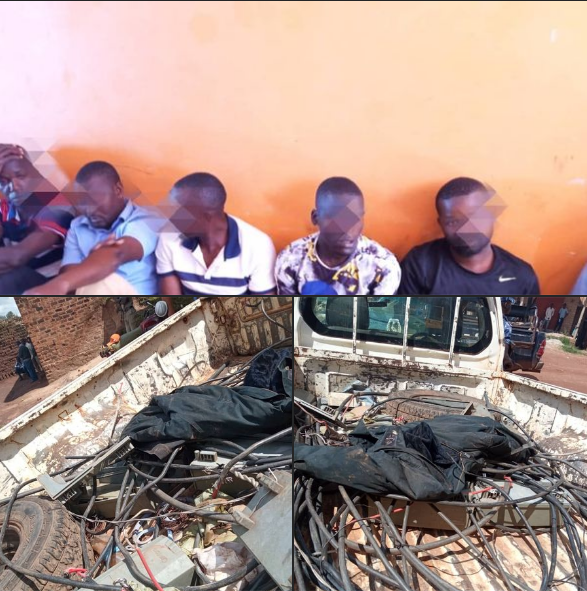
14 held for electricity infrastructure vandalism in Mityana

Police in Mityana are holding 14 suspects in connection to the vandalism of electricity infrastructure. The suspects were arrested in a joint intelligence-led operation with the Ministry of Energy on Thursday.

They were arrested at Suremax guesthouse where they have allegedly been keeping the stolen electricity property.

ASP Racheal Kawala, the PRO Wamala region police said they recovered exhibits including; 20 Stayrodes, Conductor wires of 5mtrs, Stay wire of 100mtrs, 10 Umeme overcoats and 18 Stay insulators.

Other exhibits 30 dead ends, 20 Turn tackles, 1 Umeme safety boot and 1 Umeme disconnection book. A CIU (yaka meter), Single cabin UAT 124H amongst other properties all belonging to UMEME.

The suspects have been identified as Mpungu Robert 41yrs, Kasuja Peter, Bitamuzi Richard  Kampala association advocates and Nangobi Lydia all alleged employees of Kampala associated advocates.

Other suspects are Nsamba Charles a Boda boda cyclist, Damba Joshua a staff of UMEME, Bogere Becker unemployed, Sakwa Benard 24 unemployed, Bonny Joseph 37-year-old formerly UMEME staff, Katongole Bruno electrician, Sebyooto Muwanga Ignatius 48yrs UMEME driver, Nakiboneka Grace 30yrs manager Suremax, Golooba Edward a farmer and the owner of SureMax guesthouse.

“They will be charged with interference with meters, works or public lamps section 85A of electricity Amendment act 2022 among other charges. We are currently interrogating the suspects and inquiries are ongoing,” Kawala said.

A Shs1 billion fine or a 15 years jail term awaits anyone who is found guilty of vandalising electricity infrastructure following the passing of the Electricity (Amendment) Bill, 2022. MPs passed the bill on Wednesday, 13 April 2022.

Stories Continues after ad

KCCA begins engagements with leaders on voluntary provision of land

Kampala Capital City Authority (KCCA) has started engagements with community leaders and affected persons to voluntarily provide the right of way for the construction of 69.70km of roads in the city.

Under the Kampala Roads Rehabilitation Project (KRRP), which is a $288m African Development Bank project, KCCA is to begin the rehabilitation of 29 roads and junctions in the city.

The roads will be complete with associated drainage works including improvement to 22 traffic junctions, 123km of Non-Motorised Traffic facilities, commercial vehicles parking places, Bus depots, public toilets, markets along project roads for women vendors, installation of 1,600 energy efficient streetlights, and tree planting.

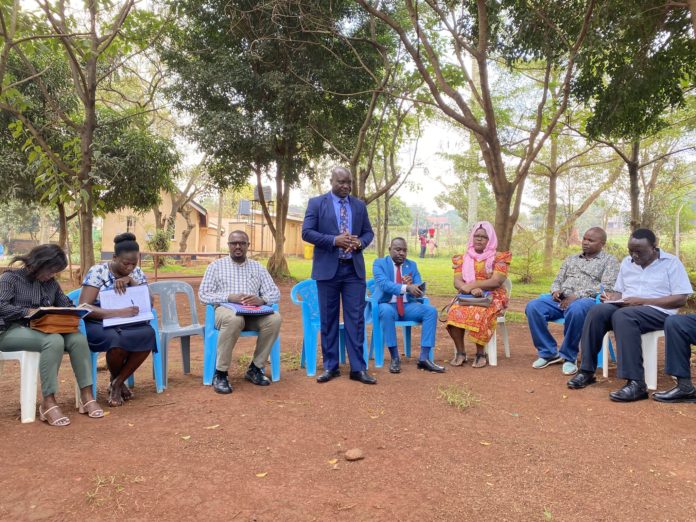
On Thursday, the KCCA Safeguards team led by Gerald Ahabwe, the Project Social Development Specialist held an engagement with LCI leaders of the affected areas in Nakawa division.

“This is not the first time for, land and property owners around Kampala to be asked to provide space on their land for road construction. We hope you will support this project and make it a success,” Ahabwe said.

Under the KIIDP Project, land owners voluntarily provided right of way which led to the success of the project.

Ahabwe explained that government secured funds for the road construction but it is constrained on resources to fully finance and compensate land owners within a given timeframe.

“Before construction starts, each property owner assents by signing a Consent Agreement. Discussions and further negotiations for severely impacted properties is also carried out,” Ahabwe said. 

It should be noted that people who will sign voluntary consent forms allowing road construction through their land at zero compensation are eligible for compensation for their developments on the affected land.

This is to mitigate acute loss of individual income and well-being.  Residents with minimal impact on their properties such as moving of a perimeter wall, fences or driveways will have the affected development re-instated by the project.

The affected areas in Nakawa Division are along, Old Portbell road, Spring road and New Portbell roads which are all under Lot II of the KRRP.

Nakawa Division Mayor Paul Mugambe commended KCCA for considering improving roads in Nakawa but challenged the Authority to be transparent in delivery of services.

“Compensation is not possible, that is why KCCA is calling upon us to voluntarily give land for the right of way. This is our road, and this is our city let us support the initiative. But KCCA must come clean,” Mugambe said.

The project is aimed at tackling congestion in the city of Kampala through improvement of road network, upgrading of traffic junctions, and enhanced drainage capacity to mitigate flooding on the streets.

Ben Kalinda, the LCI Bugolobi rallied fellow leaders and affected persons to be patriotic and offer KCCA the land.

“We should all love our country, and any development that comes we should support it as patriotic citizens. The issue of compensation is political, they need to be handled in a transparent way,” Kalinda said.

The Public consultations are aimed at sharing information about the project, obtaining information about the concerns, needs and priorities of the affected persons, obtaining cooperation and participation of the affected persons, ensuring transparency while carrying out the land acquisition activities.

The KRRP is expected to benefit at least 1.6 million people including: commuters, businesses and transporters passing through the city regularly, poised to experience improved transport efficiency.

Some targeted roads include;
Lot I: Wamala road Lubaga, Luwafu road Makindye, Kabega  Makindye, Muteesa1 Lubaga, Old Mubende Lubaga, Kigala Lubaga, Kayemba road Lubaga

Lot II – Nakawa, Old Portbell and, Spring road, New Portbell road.

Lot III: 5th Street, 6th Street Central division, 7th Street Central division, 8th street Central division, Sir Apollo Kaggwa road Central, Muzito road Lubaga, Suuna 1 & Ssuuna2 Lubaga, Kabalagala Junction Makindye

Lot IV: Kasubi Northern bypass Lubaga, Queens way Central, Salama Munyonyo Makindye, Kyebando ringII Kawempe, Kisasi ring Nakawa

Lot V: Mugema road Lubaga, Masiiro road Lubaga, Ssentema road Lubaga, Nsambya Halton Makindye​.

Stories Continues after ad

Busitema University’s under staffing shocks MPs

Legislators sitting on the Public Accounts Committee (PAC) – Central Government were stunned to learn that Busitema University is operating with 29 percent of the requisite academic staff.

The top management team of the university were on Thursday, 15 September 2022 appearing before the committee presided over by the vice-chairperson, Sarah Opendi, over queries from the Auditor General’s report for financial year ended 2021.

University Secretary, Abert Mutungwire, told the committee that they are understaffed despite being a science-based institution, adding that there are only 99 academic staff, translating into 29 percent of the required minimum of 50 percent.

To cover up the manpower gap, Mutungwire said that they straightway required 150 staff, especially lecturers and senior lecturers to properly cover their six campuses.

“We need them across the board but more specifically in the Faculty of Engineering, Faculty of Medicine, Faculty of Agriculture, and Faculty of Natural Resources and Education and Science,” he said, adding that that several staff were due for promotion after attaining PhDs.

“We have 20 cases of those who are senior lecturers but now qualify to be associate professors. We have 10 cases of professors and 30 cases of lecturers who want to be promoted to senior lecturers,” he said.

He further revealed that they had been subdued by the finance ministry’s instruction to only recruit to replace departing staff.

However, Members of Parliament on the committee questioned how the university was operating with 400 staff across all the six campuses and also raised concern over the quality of graduates being produced.

The committee tasked the team to produce evidence of their request to add more staff and the ministry letters on new recruitment.

Michael Mawanda, the Igara County East MP, said that the core mandate for the university is teaching and learning but he is shocked that the university has a 29 percent staffing level.

“This is the area we would like to interest ourselves in, because the knowledge you impact on students will have a far reaching consequence on the people. When you have a 29 percent staffing, then the output will be lacking and more so, you have separate campuses,” he said.

Isaac Modoi, the Lutseshe County MP, said that understaffing may compromise on the quality of the graduates.

The university also decried underfunding of the capital budget to support infrastructure expansion, saying that only Shs2.3 billion of Shs9.6 billion is given to them annually. As a result of the COVID-19 pandemic, the entity only collected Shs4.9 billion as Non-Tax Revenue of the anticipated Shs6.5 billion.

Stories Continues after ad

Uganda Airlines: MPs should blame the law, not Museveni and Bamuturaki

Jennifer Bamuturaki

MPs on Parliament’s COSASE continue to harass Uganda Airlines CEO Jennifer Bamuturaki Abwooli on allegations that she fraudulently got that posting.

Bamuturaki was appointed by President Museveni based on the existing law that may not discriminate when it comes to such appointments. The president has been appointing executives for government agencies over three decades now.

The Uganda Airlines Act of 1976, Chapter 323 [8], which commenced on May 17 1976, rests the powers to appoint the CEO of the national airliner into the hands of the reigning president. 

COSASE MPs led by Joel Ssenyonyi seem to have ignored this legislation, which reads, “The Corporation shall have a general manager, who shall be appointed by the President for such period and upon such terms and conditions as the President may determine. The general manager shall be the chief executive officer of the corporation and shall devote the whole of his or her time to the duties of his or her office.”

The Act gives the CEO of the airline powers to control funds generated. The general manager shall be responsible for the management of the funds, property and business of the corporation and for the administration, organization and control of the staff of the corporation.

The law does not call for advertising the job of the airlines’ CEO in the local or international newspapers. So, according to watchers following the interface between COSASE, and Bamuturaki and others at Uganda Airlines, the issue of Bamuturaki not sitting for an interview before getting the job does not rise, but her appointment was boosted by the fact that she had been serving at the same company in a senior position and therefore was expected to deliver, and sources say she was on the right track.

Museveni, it is said, based on the same law governing the local airline Zambian Cornwell Muleya, who unfortunately left the company unceremoniously, and fighting government in court.

There is concern that Museveni’s letter of appointing Bamuturaki was hidden for some good time, meaning there are people who did not want Museveni’s choice, which is illegal because the law gives the president the liberty to appoint whoever he is pleased with. The Headquarters of Ministry of Works and Transport might have mafias who were thinking otherwise, but it said Museveni who now is not happy with COSASE wants those bad people revealed.

Writing to works minister Gen. Katumba Wamala, Museveni said he appointed Bamuturaki based on reports of her good performance in the previous position at the same company.

“According to my intelligence, Jennifer Bamuturaki has performed well in quite a hostile environment. I, myself, was flown by the new CRJ-900 to Nairobi and back the other day by the very able young pilots from Soroti with the capable air-hostesses. I direct that you give Jennifer Bamuturaki a substantive appointment for 3 years,” reads part of the president’s letter to Gen. Katumba.

Now, instead of implementing the president’s directive, a clique of mafias at the works ministry hid this letter from Jennifer for three months and used that time to instead contract, very fast a consultancy firm to conduct a search for a new CEO! PWC was paid a whooping Shs98.1 million for the job.

Someone was trying to disregard Museveni’s appointment  by advertising for a job in an advert ran on June 24, 2022, almost three months after Museveni had already directed, in writing, that Jennifer be confirmed.

All in all COSASE, is not fair and now trying to find fault in anything that Bamuturaki has done in her new post. Watch this space, Museveni will retain Bamuturaki as Uganda Airlines CEO.

Stories Continues after ad

Tayebwa condemns EU Parliament’s motion on Uganda and Tanzania to stop the East African crude oil pipeline

Deputy Speaker, Thomas Tayebwa.

The Parliament of Uganda has condemned the motion for a resolution by the European Union Parliament that calls on Uganda and Tanzania to stop the development of the oil and gas projects in the East African region.

The August House claimed that the resolution is based on misinformation and deliberate misrepresentation of key facts on environment and human rights protection. It represents the highest level of neo-colonialism and imperialism against the sovereignty of Uganda and Tanzania.

During the plenary, the Deputy Speaker of Parliament Thomas Tayebwa said that EU’s motion seeks to curtail the progress of Uganda’s oil and gas developments and by extension, the country’s socio-economic growth and development.

He stated that it also seeks to deny Ugandans and East Africans the benefits and opportunities of the oil and gas sector. This represents the highest form of Economic Racism against developing countries, given that:

“Various member states in the European Union continue exploring, developing, and have increased the production and use of fossil fuels in recent months. There are over 9000 oil and gas production licenses in the USA, including plans to drill in Alaska and the Arctic Sea. 53 licenses have recently been issued in the North Sea and Germany has revived its coal plants.  In addition, western countries are seeking to import gas from African countries.  All this is in a bid to ensure energy security in their respective states. Is energy security a preserve for only the European Union? Does Uganda not have the same right?”

The propaganda largely targets the 1445-kilometer East African Crude Oil Pipeline, which will run for 296 kilometers in Uganda. The EACOP represents less than 0.1% of the operational global pipeline network of 1.18million Kilometres.

Tayebwa said it is imprudent to say that Uganda’s oil projects will exacerbate climate change, yet it is a fact that the EU block with only 10% of the world’s population is responsible for 25% of global emissions, and Africa with 20% of the world’s population is responsible for 3% of emissions. “The EU and other western countries are historically responsible for climate change. Who then should stop or slow down on development of natural resources? Certainly not Africa or Uganda.”

He said over 70% of the persons affected by land acquisition for the projects have been compensated or resettled and are undergoing livelihood improvement projects in agriculture, financial literacy, and vocational skills, among others. Efforts to fully compensate all project-affected persons are ongoing, with cooperation from the local communities and leaders. The land is not utilized by the projects before the compensation processes are concluded, and any related grievances are addressed through a participatory process.

“Colleagues, we are all aware that our Country has been gifted with sizeable oil and gas resources that are already generating and creating value for our people in terms of employment, provision of services and goods, technical and another skilling. These resources will also generate significant revenues for the State, and support petrochemical industrialization and the development of other sectors of the economy such as agriculture, tourism, manufacturing, and health, among others.  Also, aware that this House has approved significant investment in Oil Roads and other infrastructure to support the development, it is pertinent that as we have done in the past, we address efforts that aim at frustrating the sovereign right to exploit our resources,” he said.

He said like many African countries, Uganda is a developing country and a sovereign state that has its unique development needs and priorities. “I, therefore, call upon the European Union Parliament to withdraw the motion for a resolution that is against the UN Charter that provides for Uganda’s right to self-determination and sovereignty over its natural resources. This House and through responsible Committees will continue providing oversight, to the oil and gas sector. As such, there is no justifiable basis for the EU Parliament or any other institution to recommend that we leave our resources in the ground for these reasons.”

Stories Continues after ad

City advocate writes to Museveni over Computer Misuse Act

President Yoweri Museveni

City Lawyer and cyber law practitioner Allan Bariyo has written to President Museveni over the Computer Misuse (Amendment) Bill, 2022 expressing the threat it poses to the digital rights and the likely contradiction with the other cyber laws.

The said Bill, which sought to amend the Computer Misuse Act 2011, was passed by Parliament on September 9th and sent to the president for assent.

Moved by Kampala Central MP Muhammad Nsereko, the bill enhances the provisions on unauthorised access to information or data; prohibit the sharing of any information relating to a child without authorisation from a parent or guardian; prohibit the sending or sharing of information that promotes hate speech among others.

Bariyo says the bill, if assented to in its present form, the resultant law would threaten the right to access information electronically, freedom of speech & expression over computer networks, thereby contravening a number of constitutional provisions, including, but not limited to Articles 29 and 41 of the Constitution. The latter provisions guarantee the right to access information and freedom of speech & expression.

He writes in the letter that in the endeavor to give life to Article 41 of the Constitution of the republic of Uganda, ten years after the promulgation of the aforestated constitution, the legislature, alive to the advancing technology, deliberately provided for access to electronic information.

However, The Computer Misuse (Amendment) Bill, 2022, seeks to enhance the provisions on unauthorised access to information or data; to prohibit the sending or sharing of information that promotes hate speech; to provide for the prohibition of sending or sharing false, malicious and unsolicited information.

He said in unclear manner, the amendment bill seeks to amend section 12 of the principal Act to prohibit the recording of voice and videos.

“Your Excellency, as a legal practitioner who is alive to the provisions of the constitution, the cyber laws in force and some of the treaties which Uganda is party to, it is of great concern that if the said bill is assented to, the resultant law would inter alia and in summary; Threaten the right to access information electronically, Endanger the enjoyment of the right to freedom of speech & expression over computer networks, Negatively impact electronic transactions and online trade, The same would have a toll on the local computing industry advancement, which is already threatened by the principal Act, and The resultant law would equally usher in possible contradiction among cyber laws,” he writes.

Article 2(2) of the Constitution provides for supremacy of the constitution of the Republic of Uganda and enjoins parliament to make laws that are consistent with provisions of the constitution. It follows that while drafting any legislation aimed at giving effect to, or setting frontiers for enjoyment of any constitutional right in public interest, or in light of the rights enjoyed by others, thorough regard must be given to the relevant constitutional provisions affecting the proposed law.

The framers of the constitution, after phrasing the subsequent article catering for the fundamental right to fair hearing, immediately provided for the freedom of speech & expression under Article 29 of the same constitution. Under article 41 of the constitution, the same framers created the right to access information. The aforementioned rights cross to electronic information and freedom of speech and expression over computer networks.

Bariyo says the same constitution, under article 43 (2) bars parliament from enacting laws that limit the enjoyment of the fundamental rights, access to information, freedom of speech and expression inclusive.

“The proposed limitation on the enjoyment of the said rights goes beyond what is acceptable and demonstrably justifiable in a free and democratic society, and what is provided in the Constitution,” he writes in the letter.

He adds that the proposed amendment would have an effect of contradicting some provisions of the Access To Information Act, 2005, Computer Misuse Act, 2011, The Electronic Transactions Act, 2011, The Contracts Act, 2010, The Civil Procedure Act Cap 71 and the rules there under with provisions of the Electronic Transactions Act, 2011, Computer Misuse Act, 2011 and The Contracts Act, 2010.

“The proposed amendment, especially clauses seeking to prohibit unilateral voice and video recording, disguised as ‘unauthorised recording’, and sharing of information about another person electronically, if passed into law in their present form would contradict certain provisions of the Electronic Transactions Act, 2011. Consequently, such a law would complicate execution of certain contracts and doing business electronically.”

Section 14 of the Electronic Transactions Act, 2011 permits formation of a contract by electronic means. The latter includes data message, the category where voice and video recordings lie. The said law provides that a contract shall not be denied legal effect merely because it is concluded partly or wholly by means of a data message. The same applies to any electronic message.

Such recordings have been of material relevance in both criminal and civil proceedings to prove existence of certain facts. Whether the recorded party had knowledge that he/she was being recorded at the time is immaterial.

The advocate says sharing information about other people electronically during execution of contracts, is relevant for purposes of conducting due diligence. “The proposed amendment ought to be revised to be alive to the aforestated reality. Technology should be used to aid business as opposed to stifling the same. Equally, every cyber legislation ought to be alive to the aforestated fact.”

The proposed amendment seeks to fatally criminalise unilateral recording of such data, thereby directly whittling the application of the said provisions.

“Thus any desirable amendment to the principal Act ought to be crafted in a manner that would not give unscrupulous contracting parties leeway to evade their obligations under the respective contracts by threatening the recording parties with criminal complaints.”

Further, an unclear law prohibiting voice and video recording would inter alia see the legality of recording with CCTV Cameras on buildings, streets and offices, hang in balance, regardless of the vital necessity of such recordings.

“It would not be rational for a law to prohibit a person from recording what transpires in his or her premises, including offices and homes. If such a law must pass, the exceptions thereto ought to be clearly spelt out therein,” Bariyo writes.

He adds; “As such we invite your thorough scrutiny of the said bill before you [President Museveni] assent to the same. Out of trust, the legislature is vested with enormous power to make laws. The same ought to be exercised cautiously. The said bill was not adequately debated. We thus invite your indulgence.”

“Sensitive to the taxpayers’ money, where I belong, we ought not to pass a law with knowledge, or reasonable suspicion that the respective constitutional petitions to challenge the same are already lined up.”

“As such, my prayer is that your good office, with the legal assistance of the learned Attorney General should give particular attention not only to the passed bill but also the cyber laws in force for further guidance to the nation.”

Stories Continues after ad

Sanjay Tana swears in as the Chairperson of Board of Directors for Kilembe Mines

Former MP Tororo Municipality, Sanjay Tana has been sworn in as the Chairperson of the Board of Directors for Kilembe Mines Ltd.

Tan and other members of the Board including; Gilbert Mujogya Atwooki, Edwin Kugonza, Eng. Nobert  Semitala, Dr. Ruth Sengonzi, Mr. Candiga Eric, and Former MP Kasese District Loice Biira Bwambale were sworn in yesterday at the Ministry of Finance, Planning and Economic Development.

The swearing-in ceremony was presided over by State Minister for Minerals Peter Lokeris and State Minister of Finance for Investment and Privatization, Anite Evelyn.

Tana pledged to consult the old board and the ministry to revamp the various revenue sources and make it attractive for the investors to put in money and make a value-for-money proposition.

According to East News, the appointment of the new board followed the government’s decision to revamp the mines. Early this year, the Minister of Energy and Mineral Development, Ruth Nankabirwa said that the government had embarked on the redevelopment of Kilembe Mines.

She said the redevelopment is facilitated through the Ministry of Finance, Planning and Economic Development together with the Estate of the Late Sir George David Kamurasi Rukiidi III, the management of Kilembe Mines Limited-KML, and the Ministry of Energy and Mineral Development.

The mine is located in Kilembe, a suburb of the town of Kasese, in the foothills of the Rwenzori Mountains in the Western Region of Uganda.

Kilembe Mines is Uganda’s largest copper mine, with estimated deposits of copper in excess of 4,000,000 tonnes and an undetermined amount of cobalt ore. There are approximately 2,800 acres (1,100 ha), of unexplored acreage at the site.

In July 1950, two Canadian mining companies, Frosbisher Limited and Ventures Limited, formed a joint venture, named Kilembe Mines Limited, whose objective was to mine copper from under the Rwenzori Mountains near Kasese. Kilembe Mines Limited built and operated a copper smelter in Jinja and maintained offices in Kampala, the country’s capital. Other assets include a housing estate for staff in Kasese and the 5MW Mubuku I Power Station in the Rwenzori Mountains.

In 1962, Kilembe Mines Limited was acquired by Falconbridge of Africa, who sold it to the Government of Uganda in 1975. Copper extraction ceased in 1982 due to dilapidated equipment, high inflation, and insecurity.

In 2013, after nearly 30 years of dormancy and after several failed attempts to privatize the mine, a consortium led by Tibet-Hima Mining Company Limited, won the competitive bid to manage, rehabilitate and operate Kilembe Mines Limited for 25 years from 2013 until 2038.

In exchange for those rights, the consortium paid cash down payment of US$4.3 million and is expected to make an annual payment of US$1 million until the end of the concession. Also, the consortium will invest US$135 million into rehabilitating and improving the mine and will increase the capacity of Mubuku I Power Station to 12MW. In addition to the cash payments above, the Ugandan government will receive royalties on the minerals extracted as well as taxes from Kilembe Mines Limited’s business operations.

Stories Continues after ad