Stanbic Bank
Stanbic Bank
21 C
Kampala
Stanbic Bank
Stanbic Bank
Home Blog Page 537

Pesapal upgrades core system to accelerate payment security

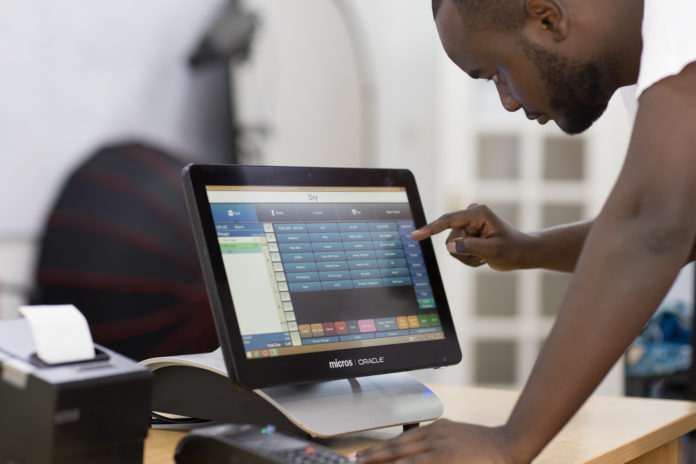
Pesapal has upgraded its Application Programming Interface (API) to Pesapal 3.0, allowing for the delivery of enhanced security features as well as an improved user experience for merchants and consumers across all markets.

As part of the API upgrade to Pesapal 3.0, Pesapal has adopted the 3-D Secure processing for card payments and introduced Sim Tool Kit (STK) for mobile money payments. These new components of Pesapal 3.0 have improved the UI/UX for not only end-users but also developers. Additionally, these changes specify the use of multiple options for step-up authentication eliminating instances of fraud and chargebacks.

Commenting on the upgrade, Pesapal Executive Director Agosta Liko said as e-commerce booms in East Africa, Pesapal continues to invest in innovative technologies to maintain a high level of confidence among consumers and merchants.

“With the explosive growth in e-commerce, it has become more critical than ever for businesses of all sizes to have robust protection and a clear view of their API suite. We are excited about the promise offered by Pesapal 3.0, and the new features enable us to bring value-added services to the market,” Mr. Liko said.

“By meeting the global standard for electronic payments, we are able to materially deal with the risk, leading to an increase in consumer confidence in using credit and debit cards or even mobile money on eCommerce platforms.”

3-D Secure (3DS) is a payment protocol designed to provide an additional layer of protection to help prevent fraud by enabling consumers to authenticate themselves with their payment card issuers when making purchases on digital channels. It also provides merchants and issuers with a seamless way to authenticate cardholders for eCommerce transactions before authorizing them.

Pesapal is committed to providing an integrated and advanced payment experience, ensuring it offers solutions that meet its customers’ day-to-day needs.  Since 2009, Pesapal continues to offer a secure payment environment while complying with the highest safety standards.

Stories Continues after ad

Kabuleta launches new political party

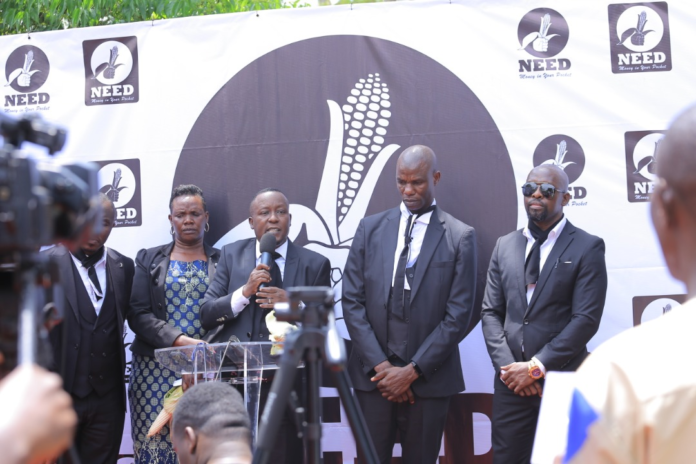
Former presidential candidate Joseph Kiiza Kabuleta, has launched National Economic Empowerment Dialogue (NEED) as a political party in Uganda.

Last year, Kabuleta launched NEED as a political organization that would carry an ideology in a bid to take over the leadership of this country. NEED is transitioning from the People’s United Movement (PUM), a political party that was established in October 2005. The party symbol, a cow has since been changed to maize. The party colors have remained black and white.

During the delegate’s conference which was held yesterday at NEED offices in Bugolobi, Kabuleta was elected the party president. He will be deputized by Evelyn Rakel. Kabuleta named Asuman Odaka as the party Secretary General, and Mulangira Juuko Nakibinge as the Secretary of publicity.

According to Kabuleta, in 2020, he was approached by Shadrach Ogemba, the president of PUM who persuaded him to join the party because they had the same ideology, which he did.

Speaking at NEED offices in Bugolobi, Kabuleta said they chose economic empowerment as their creed because it is the truest form of empowerment and we know that our oppressors have built a population that is dependent on them for sustenance and is therefore easy to subjugate.

“One year later we are taking one bold step forward launching NEED as a political party,” Kabuleta said.

 “I know that the love we have for this country is shared by millions of Ugandans. We meet them every day and they express their dismay at the direction the country is taking. But the one thing we do not share with many is the despondency, the sense of resignation that I see in many quarters,” he said.

Kabuleta said them plunders know that their time is up. In public, they speak like they are tightening their grip on power but in private they hope that they can be allowed to retain their loot after Ugandans have reclaimed their country.

“I know there are many people in diverse sectors who choose to hold onto the system and even oil it not because they don’t see its evil but because of an unknown future. They don’t know what it holds for them.”

He said the change that NEED proposes will be to the benefit of everyone. It is not the kind of change that causes disruption, disorder, or that seeks to settle old scores. That is not who we are. We are not vindictive people. In our relentless pursuit of a bright future for all Ugandans, we shall have little time to indulge in the past.

“Some people from the forces; army police and intelligence have intimated to me that they signed up to protect their nation but found themselves serving the interests of one family. We shall give them an opportunity to do exactly what they signed up for with an appreciation, better remuneration and improved working conditions.”

As the Party, Kabuleta said their priority will be the millions of destitute people dispersed across the country. We believe that is possible to empower people and put money in their pockets without giving them handouts.

Stories Continues after ad

Thousands of Exhibitors arrive at UMA Lugogo for International Manufacturers Expo

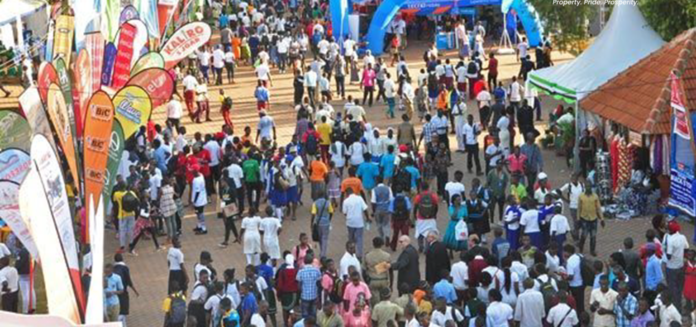
Thousands of local and international manufacturers, traders and distributors from various sectors have converged for the annual Uganda Manufacturers Association Trade Expo which started on Monday at Lugogo at UMA exhibition grounds in Kampala.

The theme of the trade fair according to organizers is “Business recovery by harnessing local sourcing and deepening value chain integration”

This will be the 28th Uganda International Trade Fair (UGFT) and it will take place for the first time after 2 years, following disruptions of COVID-19 pandemic.

The organizers say, this year, the Trade Fair is expected to attract an average of 300,000 visitors, including high profile individuals such as Heads of State, Politicians, Executives and celebrities.

The Uganda Police have said that although there are no specific threats directed towards the event, it can however, be a magnet for serious security concerns and reassured the organizers and the public that security and safety at the Trade Fair is guaranteed.

The Expo will end on 10th October 2022 and President Yoweri Kaguta Museveni is expected to be the Guest of Honor at the closing ceremony.

It is one of the biggest calendar events in which manufacturers showcase their goods and services to more than 300,000 people from within and beyond Uganda who visit the UMA show ground in Lugogo, Kampala. 

A number of companies have leveraged on the trade fair over the years to enhance their product category graduating from startups to large companies. 

Mr Daniel Birungi, the UMA executive director, said the theme seeks to cast a spotlight on industrialists, who, even as they have been impacted by Covid-19, have exhibited resilience and progressive recovery.  

“This theme doubles as a call to the government and the general public to support local companies as a catalyst for full economic recovery,” he said. 

UMA also noted that such trade fairs are one of the ways through which Uganda can expand its industrial capacity to create employment and expand government revenues. 

Stories Continues after ad

Uganda defines priorities and needs in Ebola Response Plan

Health partners visiting Ebola-affected areas

The Ministry of Health and health development partners in Uganda, including the World Health Organization (WHO), have launched the country’s Ebola response plan at the Sheraton Hotel in Kampala, highlighting planned activities, priority needs and gaps.

Bringing together the country’s health diplomatic corps, the high-level meeting discussed the current status of the outbreak, the country’s preparedness to respond and contain the outbreak, and outlined the priorities and needs of the Ebola response as outlined in the national response plan.

“The national response plan we have presented today will serve as a blueprint for all partners, donors, and stakeholders to engage and contribute to the detection, response, and immediate containment of the Ebola outbreak in Uganda,” said Dr. Jane Ruth Aceng Acero, Uganda’s Minister of Health.

Dr. Aceng explained that the plan was developed in line with the guidance provided in the Emergency Preparedness and Response Standard, to develop core capacity to prevent, detect and respond to public health emergencies, building on country experience and current best practices.

“The increase in the number of Ebola cases in the country is of concern. Increased resources and sustained and coordinated actions among all stakeholders are essential to fight this pandemic. I call on all health development partners to mobilize additional resources to help Uganda fight this epidemic.” Dr Yonas Tegegn Woldemariam, WHO Representative to Uganda.

Since the Ebola outbreak was declared by Ugandan health authorities on 20 September 2022, the country has so far recorded 31 cumulative confirmed cases and 6 deaths, with a case fatality rate of 19.4% as of 28 September 2022.

In response to the outbreak, the country has taken immediate measures at both national and sub-national levels to strengthen all pillars of the response. The country activated the incident management system and the National Multi-Stakeholder Task Force (NTF) chaired by the Ministry of Health and co-chaired by WHO to effectively coordinate the response.

The NTF enabled the immediate mobilization and deployment of technical, financial, and operational resources to the affected districts, including Mubende, Kassanda, and Kyegegwa.

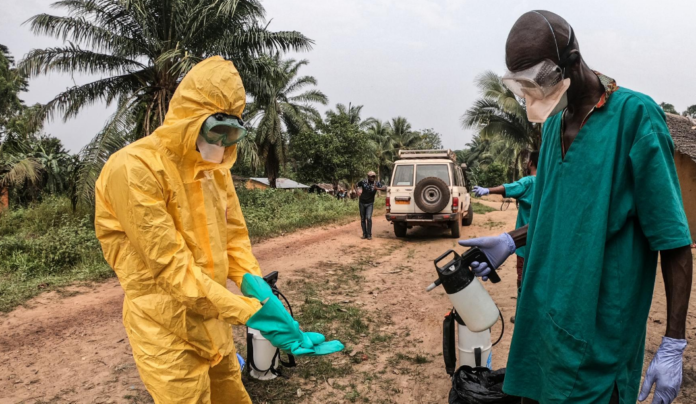
With support from its health partners, including the United Nations System, Uganda activated District Task Forces (DTFs) in ten high-risk districts, trained and deployed Rapid Response Teams (RRTs) and Village Health Teams (VHTs), and provided the Mubende Regional Referral Hospital with infection prevention and control equipment, including three Ebola kits capable of handling more than 300 Ebola patients.

“The efforts made so far are important but need to be intensified if we are to end this pandemic today. I count on each of you to mobilise more resources in your respective capacities to end the Ebola pandemic in our country,” Dr Jane Aceng added.

There have been seven previous outbreaks of the Sudan ebolavirus, with four occurring in Uganda and three in Sudan. Uganda last reported an outbreak of Sudan ebolavirus in 2012. In 2019, the country experienced an outbreak of Zaire ebolavirus. The virus was imported from the neighboring Democratic Republic of the Congo which was battling a large epidemic in its northeastern region.

There are at least six candidate vaccines against Sudan ebolavirus which are in different stages of development. Three of them have Phase1 data (safety and immunogenicity data in humans) and the remaining are in the preclinical evaluation phase.

Stories Continues after ad

Sylivia Mulinge, MTN Uganda’s first female CEO assumes office

Mulinge Sylivia, MTN Uganda CEO

MTN Uganda’s new and first female Chief Executive Officer (CEO) Sylivia Mulinge, who was appointed in June 2022, has officially started work today. She joins MTN Uganda from Safaricom PLC, a leading provider of converged communication solutions in Kenya, where she served as Chief Consumer Business Officer for the Group. 

Mulinge takes over office from Andrew Bugembe MTN Uganda CEO who has been in an acting capacity since August when Vim Vanhellepute left to take up a new assignment in West Africa as the MTN Group’s Chief Operations Executive, a newly created role to oversee Liberia, Guinea-Conakry, Guinea-Bisau and Congo-Brazzaville.

She inherits an MTN that is Uganda’s largest telecom and largest company by revenue. She however, has to deal with a relentless Airtel Uganda which although second in market share has been profitable for over five years in a row.

Shareholders who have had a taste of some good dividends after MTN’s first year of listing will be very anxious to see if Mulinge can keep their pockets happy.

MTN Uganda staff have welcomed the new CEO Mulinge Silvia at the new company headquarters along Jinja road. Where staff showcased the diverse Ugandan cultures as they welcomed her to the Pearl of Africa.

“It is a great pleasure to be at MTN Uganda. Thanks to MTN Staff for showcasing the beautiful pieces of Ugandan culture this morning. I am looking forward to being in Uganda. Asante Sana,” Mulinge appreciated.

She joins MTN Uganda to support the accelerated execution of its Ambition 2025 strategy which is through selective partnerships and leveraging the MTN brand as the most trusted and valued in Africa and will be supported and funded through enhanced cost and capital expenditure efficiencies.

At her appointment in June, Ralph Mupita the MTN Group president and CEO described Mulinge as a seasoned executive who brings with her a passion for transforming customers’ lives using technology.

Stories Continues after ad

Police summons MP Alioni for assaulting officer during EALA elections

MP Alioni with the ballot box entering parliament.

Police has summoned the Member of Parliament for Aringa South in Yumbe District, Mr. Yorke Alioni Odria, for assaulting an officer who was on duty at Parliament on Thursday last week during the East African Legislative Assembly (EALA) elections.

Fred Enanga, the Uganda Police Spokesperson, said the summons were sent through the Office of the Rt. Hon. Speaker of Parliament for the Legislator to appear at the CID Headquarters on October 4, 2022 at 10am.

“You all remember very well that the MP, Alioni Odria is alleged to have acted in a disorderly manner at Parliament on the 29th of September, where he attacked and punched a police officer who was on duty, that is ASP Ssenge Alex without any legal justification, causing injury to his right ear, and the side head,” Enanga said.

The MP was allegedly frustrated with the conduct of the elections after some members were granted permission to vote early due to personal reasons.

Odria shouted at the top of his voice and ran towards a police officer whom he later grabbed and punched. “Vote rigging, vote rigging, vote rigging,” Alioni was heard saying before allegedly punching the officer.

“You all witnessed how violently he grabbed the ballot box and took it to the main building in disregard of the parliamentary electoral procedures,” Enanga asserted.

He was however stopped by the OC of Parliament and other officers.

“So, for us, the best way to understand his motive for the unprovoked assault is to listen to him. And the first step also towards justice for the senseless act of violence against the officer is us reducing the statement of the MP into a written statement,” Enanga added.

“Of course, the police management has come out to strongly condemn attacks on police officers. And this continue to highlight some of the dangers that police officers face every day while performing their duties.”

The hotly contested election attracted 28 candidates for the nine seats. The EALA representatives were elected after more than seven hours of campaigning, voting, and tallying during a sitting on Thursday.

The six NRM MPs retained their seats; Rose Akol (422 Votes), James Kakooza (405 votes), Paul Musamali (401 votes), George Odongo (403 votes), Dennis Namara (415 votes) and Mary Mugyenyi (367 votes).

Amongin, former Ngora district Woman MP and one of Uganda’s representatives to the Pan African Parliament, polled 338 votes, while the former Buyende district Woman MP, Kadogo Babirye secured 383 votes. DP’s Gerald Siranda polled 233 votes.

Stories Continues after ad

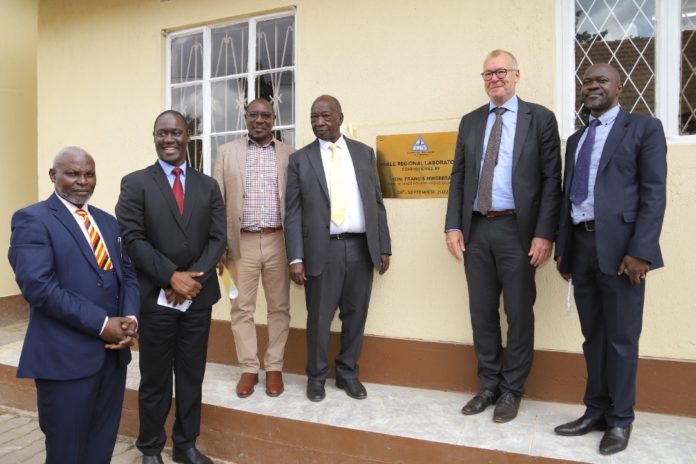
UNBS opens 2nd regional food safety laboratory in Mbale City

UNBS opens 2nd regional food safety laboratory in Mbale City

Uganda National Bureau of Standards (UNBS) has opened its 2nd Food Safety Laboratory in Mbale City to provide Conformity Assessment and Quality Assurance of products manufactured in Eastern Uganda.

According to Mr. David Livingstone Ebiru, the Executive Director of Uganda National Bureau of Standards (UNBS), this is part of the Bureau’s Strategic Plan to decentralize Quality Infrastructure and other Standardization Services to other parts of the Country.

Similar Testing Laboratories were commissioned in Gulu City in July, 2022, to serve Northern Uganda, with the next one planned for Western Region in the near future. He thanked Trade Mark East Africa (TMEA) and the Danish Government for providing the critical equipment worth USD 4,455,283 for UNBS Regional Testing Laboratories and promised to put them to optimum use.

Mr. Ebiru urged all Enterprises involved in any form of Production, Processing and Value Addition to take advantage of the decentralized Quality Infrastructure to enhance the quality and safety of their products by seeking certification services (Q-Mark) from UNBS before putting them on the market.

He informed those involved in Export Trade that the Bureau is currently spearheading harmonization of common Standards within the East African Community (EAC) and African Continent in order to facilitate market access of Ugandan made products to the East African Community (EAC) and the African Continental Free Trade Area (AfCFTA).  He also urged the Micro, Small and Medium Enterprises (MSMEs) to seek certification services from the Bureau if their businesses are to remain competitive and sustainable.

Mr. Charles Musekuura, the Chairperson of the National Standards Council pledged to continue with the Bureau’s Agenda of taking Standardization services to every Region in order to reduce the cost of doing business and support production, trade and consumption of quality products across the country.  

The Minister of Trade, Industry and Cooperatives, Francis Mwebesa welcomed the Bureau’s initiative of taking its services nearer to the people despite the constraints in resources and pledged his support to complement the effort. He noted that Quality Standards are critical in supporting the Government’s Industrialization Agenda, the Buy Uganda Build Uganda (BUBU) Policy, Imports Substitution and Export Promotion Strategies and urged all Enterprises engaged in any form of production, value addition and trade to embrace quality standards by dealing in quality and safe products in order to protect public health and safety.

Mr. Mwebesa observed that, with the decentralization of Testing Laboratories to the Regional Offices, accessibility to UNBS services will be enhanced, the cost of doing business reduced and overall level of compliance to quality standards should improve.

The Deputy Danish Ambassador to Uganda, H.E Henrik Jespersen, thanked the Bureau for putting the support extended to the best use and hoped that this will significantly contribute to the safety and quality of Ugandan made products on the market, as well as support other Government Programs such as Agro-Industrialization, Manufacturing and Private Sector Development which are critical for the country’s Economic Transformation.

He urged UNBS to prioritize vulnerable Enterprises, especially MSMEs which are owned by Women and Youth in order to empower them to produce safe and quality products which are competitive on the market for their livelihoods. She tasked the Enterprises to take advantage of the decentralized Testing Facility to improve the quality of their products in order to benefit from the Regional and Continental Markets such as EAC and AfCFTA, including exports to other International Markets like the European Union (EU). 

The Trademark East Africa (TMEA) Senior Director for the East and Central Region, Mr. John Ulanga thanked UNBS for being a dependable and trusted partner in facilitating trade and investments by putting the support so far given to the best use and for the intended purpose. She pledged to continue supporting UNBS in its effort towards making standardization services cheaper and easily accessible to the public through decentralization.

The Regional Laboratories will be testing a wide range of products, both food and non-food items such as edible fats and oils, milk and milk products, water, fruits and vegetables, cereals and cereal products, grains and animal products, among others.

Stories Continues after ad

Burkina Faso’s military leader agrees to step down after coup

Burkina Faso military takeover

Burkina Faso’s military leader, who was ousted in a coup on Friday, has formally agreed to step down, religious and community leaders said.

They said the country’s new self-declared leader, Capt Ibrahim Traoré, had accepted Lt Col Paul-Henri Damiba’s resignation and conditions he had set.

The announcement followed attacks on French institutions, after it was reported that Lt Col Damiba was sheltering at a French military base.

Unconfirmed reports say he is in Togo.

Russia and France are engaged in a battle for influence in several former French colonies in West and Central Africa.

Pro-Russian slogans were chanted and Russian flags waved by supporters of the new junta leader Capt Traoré on Sunday.

He regards former colonial power France as an ally of the man he ousted, and has spoken of his willingness to work with new partners to fight Islamist insurgents – and analysts believe that could mean hiring Russian mercenaries.

The head of the Russian mercenary Wagner group, Yevgeny Prigozhin, has welcomed the takeover.

Burkina Faso controls as little as 60% of its territory, experts say, and Islamist violence is worsening.

The African Union has demanded the return of constitutional order by July 2023 at the latest, agreeing with the regional group Economic Community of West African States (Ecowas) that the ousting of leader Lt Col Damiba was “unconstitutional”.

But Ecowas has since praised “the various parties in Burkina Faso for agreeing to a peaceful settlement of their differences”, as days of power struggles came to an end without bloodshed.

No statement has been released by Lt Col Damiba directly.

But religious and community leaders said Lt Col Damiba himself had offered his resignation “in order to avoid confrontations with serious human and material consequences,” according to quotes cited by AFP news agency.

They said Lt Col Damiba had set seven conditions for stepping down – including a guarantee of his security, an agreement to continue with efforts at national reconciliation and a continued respect for the guarantee of returning to civilian rule within two years.

The deposed colonel had himself ousted President Roch Kaboré in January, saying that he had failed to deal with growing militant Islamist violence.

Many citizens in Burkina Faso have not felt safe for some time.

The Islamist insurgency broke out in the country in 2015, leaving thousands dead and forcing an estimated two million people from their homes.

This is Burkina Faso’s ninth coup since independence from France in 1960.

Stories Continues after ad
African climate summit opens in DR Congo

Environment ministers

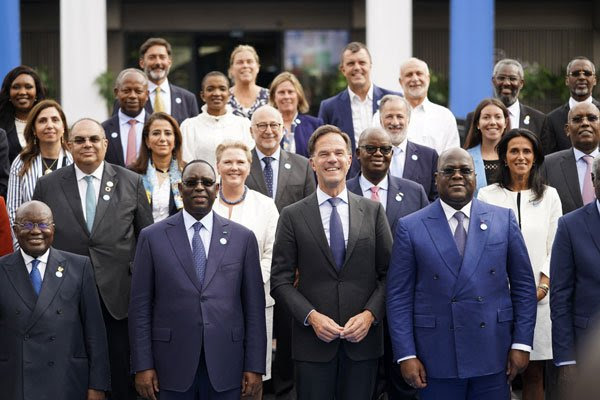
Environment ministers from about 50 countries will gather in the Democratic Republic of Congo on Monday for a “pre-COP27” climate summit, with rich nations likely to come under pressure to raise spending to combat climate change.

The talks in the DRC’s capital, Kinshasa, are informal but meant to allow various countries and green groups to take stock of political positions ahead of COP27, the United Nations climate gathering of world leaders in Egypt next month.

An opening ceremony will take place in the Congolese parliament building in Kinshasa, followed by discussions on mitigating climate change, and providing funding for countries already damaged by global heating and severe weather events. 

Delegates from about 50 countries are expected to attend the talks, including United States climate envoy John Kerry. 

“The emphasis will certainly be on support from industrialised countries to countries in the south,” a Western diplomat stated.

The last UN climate summit, COP26 in Glasgow in November 2021, reaffirmed the goal, agreed in Paris in 2015, of limiting the rise in the Earth’s average temperature to well below 2.0 degrees Celsius above pre-industrial levels and pursuing efforts to limit it to 1.5C.

That goal may already be beyond reach as the Earth’s temperature is already 1.2C higher than before the Industrial Revolution of the 19th century. 

Poorer countries had pushed at Glasgow for a financial mechanism to address losses and damage caused by climate change. 

But wealthier nations, the largest polluters, rejected the call and the participants agreed instead to start a “dialogue” on financial compensation for damages.  

Egypt, which is hosting COP27, has made implementing the pledge to curb global heating the priority of the November summit. 

Poorer countries are again likely to remind their richer counterparts of the need to increase financial support. 

The latter have so far failed to deliver on their promise to provide $100 billion a year to help developing countries limit climate change. 

Demands for climate justice were front and centre of a protest in Kinshasa last month, where young Congolese activists chanted slogans and demanded that world leaders take swift action rather than repeat old promises.

The Congolese government is also expected to drive home the message that it requires funding to protect its vast rainforests, which act as a carbon sink. 

Around 30 billion tonnes of carbon are stored across the Congo Basin, researchers estimated in a study for Nature in 2016. The figure is roughly equivalent to three years of global emissions.

However, the central African nation in July launched an auction for 30 oil and gas blocs, ignoring warnings from environmentalists that exploiting them could harm ecosystems and release vast amounts of heat-trapping gases. 

One of the poorest countries in the world, the DRC argues that drilling for oil and gas could help diversify its economy and benefit the Congolese people. 

Stories Continues after ad

CAF re-opens bids for Afcon 2025 after stripping Guinea of hosting rights

AFCON Trophy

The Confederation of African Football has re-opened bidding for the 2025 Africa Cup of Nations after stripping Guinea of the right to host the competition.

Caf president Patrice Motsepe was in the Guinean capital Conakry last week when he announced that the 24-team tournament will be removed because of a lack of suitably advancing infrastructure and facilities.

“The 2025 Nations Cup allocated to Guinea will not take place there because we’re not yet ready in Guinea,” said Motsepe in a news conference after meeting the leadership of Guinea’s transitional government.

Guinea has had nearly a decade to prepare for the finals, having originally been named as host of the 2023 Nations Cup in 2014, prior to then being asked to host in 2025 instead.

The political situation in Guinea, which has been under military rule since a coup last year, had led to concerns over security and organisation for its Nations Cup hosting.

“Caf is going to ask to receive new bids because the infrastructure and facilities are not appropriate or ready for Caf to host the 2025 Nations Cup in Guinea, and that’s the basis of the decision,” Motsepe said.

“The Confédération Africaine de Football (“CAF”) Executive Committee (“EXCO”) met on Saturday 1 October 2022 in Algiers, Algeria and announced the re-opening of bids for the TotalEnergies Africa Cup of Nations 2025,” a statement by the football body read.

The 2021 and 2023 tournaments were subsequently pushed back a year owing to unsuitable weather conditions in both countries in June-July, meaning the 2021 finals in Cameroon took place at the start of this year while the Ivorian edition has moved to January-February 2024.

Stories Continues after ad