Stanbic Bank
Stanbic Bank
19 C
Kampala
Stanbic Bank
Stanbic Bank
Home Blog Page 538

Cranes pooled with DRC, Senegal, Ivory Coast for CHAN 2022

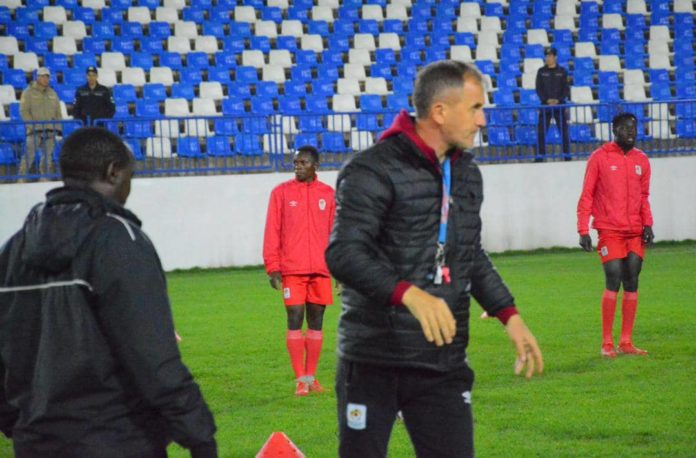
Micho in training

Uganda Cranes learnt their opponents they will face at the forthcoming African Nations Championship 2022 in Algeria.

The draws for the biennial tournament were held in the host nation, Algeria over the weekend.

Uganda had a strong delegation at the function led by FUFA President and CAF Executive Member Moses Magogo Moses, FUFA CEO Edgar Watson, Coach Milutin Sredojevic and National Teams Manager Patrick Ntege.

The team was pooled in Group B alongside two-time champions DR Congo, Cote D’Ivoire and Senegal.

Head Coach Sredojevic Micho in his reaction to the draw indicated this was a fair draw and hopes Uganda to perform well.

“We can say this is a fair draw for Uganda. Before the groups were made, we prayed not to be put in groups with three teams, avoiding hosts Algeria and then Morocco,” he told Fufa media before adding,” this doesn’t mean that team that Senegal, Dr Congo and Ivory Coast are any weak. We have to get the best of preparations before the tournament starts.”

“It is important that the League back home has started and we shall have time shortly before Christmas when the first round is finished. That will give us ample time to start preparations early enough.”

This is the sixth successive time that Uganda Cranes will be playing at the final tournament having featured in the 2011, 2014, 2016, 2018 and 2020 editions. The tournament is played by only home-based players.

In group A, host Algeria will lock horns with 2014 CHAN winners Libya, Ethiopia and Mozambique.

Group C includes defending champions Morocco, Sudan, Madagascar and Ghana.

Groups D and E are made up of three teams each and feature Mali, Angola and Mauritania on one side and Cameroon, Congo and Niger on the other.

The Championship will take place from 13 January to 4 February 2023.

Stories Continues after ad

UWEC set to establish regional wildlife centers

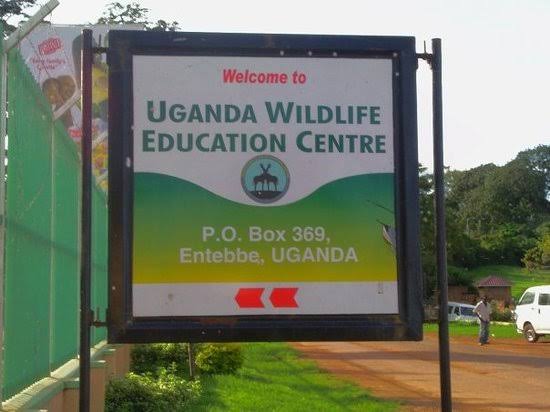
The Uganda Wildlife Conservation Education Centre –UWEC is set to establish regional model satellite wildlife centers across the country.

Speaking on the sidelines of the event at which UWEC was celebrating 70 years of existence, James Musinguzi, Executive Director of the entity, said they have worked with the National Forest Authority which has allocated land to them in urban forest reserves to establish zoos and educate the public on rescuing wildlife in several regions. The regions include Mbale, Gulu, Mbarara, and fort portal.

As the latter celebrated at Sheraton Hotel this week, Diamond Trust Bank sponsored UWECs 70 years’ celebration events with 30 million shillings. Other sponsors were Centenary bank with 5mn and AWF-10mn among others.

Musinguzi thanked the supporters and said: “These contributions will help in ensuring that conservation, and tourism, reach the local person through establishing satellite centers or zoos normally found in urban areas. To be able to target those communities in far areas and make them sustainable,” said Musinguzi.

He added: “A number of wildlife animals have been captured in those areas and concerned residents have to drive all the way to Entebbe to bring them for rehabilitation. We think that for us going to these areas, we shall be doing a good job in terms of conserving wildlife and avoiding human conflicts.

 In addition, Musinguzi noted that children’s conservation centers will be established to educate children about conserving wildlife.

Commenting on this initiative, The Minister of State for Tourism, Martin Magarra, said if the culture of conservation is imparted to young children, they will take on the good practices in the future.

“For instance, when these young students go there and get to understand the importance of conservation at a young age, then we are creating people who will advocate for conservation. In the long run, the challenges of poaching will be prevented,” said Magara

The tourism demand curve has gradually moved upward since records show that UWEC has received 3,000 visitors since 2021.

 Musinguzi said that the journey has had smoke and mirrors since 1952 as an animal orphanage and therefore this journey is worth celebrating.

He remarked that there has been a lot of transformation since 1952 whereby the exhibits of animals have been rebranded, forests, lakes, and above all animal welfare is in good care

Musinguzi invited all Ugandans to join the UWEC team as they are involved in way forward activities after these celebrations. These include; school outreaches, the veterinary camp for dog’s vaccination, the children’s conservation education camp, and the conservation marathon among others.

Stories Continues after ad

Six companies win 2nd ICGU corporate governance awards 2022

It was a display of glitz and glam as the Institute of Corporate Governance of Uganda-ICGU unveiled the winners of the second Corporate Awards 2022.

The event took place at Mestil Hotel Nsambya this week, sponsored by different companies including Diamond Trust Bank, Vision Group, and Grant Thornton ltd, among others.

According to Micheal Mugabi, the President of ICGU, the aim is to build national capacity in corporate governance, maintenance laws of the country, and membership development.

“As the council and stewards of corporate governance; we would like to have legislation in entities as they embrace internationally developed standards of good governance practices. That way we will have leverage in promoting sustainable enterprises,” said Mugabi.

The highlights of this event were the top six companies that won under the different categories that included: SMEs, Large Private Sector, banks, Insurance, Public sector, and NGOs.

Milton Obote foundation emerged as the winner from the SMEs category, Compassion International Company was the winner from the NGO category, and Jubilee Life Insurance emerged as the award winner in the Insurance Category.

The other winners were: Electricity Regulatory Authority emerged the Winner from the Public Sector Category, Stanbic Holdings Limited won from the large private category and NCBA Bank won the award from the Bank Category.

Geoffrey Kihuguru, the Chairman Awards, and Recognition Committee said many enterprises that picked up after the pandemic effects were because they had adhered to good corporate governance practices.

“Great nations are built by great institutions which are managed by people who embrace good corporate practices. It is important to note that this year the institute resolved to introduce a modern trend of organization self-assessments as opposed to expert business assessments.

He noted that over 350 organizations were reached out to, presenting assessment opportunities.

“The rankings indicated the level of implementation of CGP principles but there is still room for improvement,” said Kihuguru.

All distinguished companies that voluntarily participated were assessed on their operations specifically in accountability, transparency, integrity, responsibility, compliance, and excellence. On governance (board processes, board contributions, board independence. Board diversity, environmental, social, Governance-ESG strategy, and the board oversight role).

DTB and several companies that engaged in this initiative were rewarded with certificates of appreciation for embracing and taking part.

However, Mugabi noted that the level of acceptance by companies to be assessed is still very low. He implored entities to come on board next year to gain experience and knowledge of operating better.

 Patrick Ocayire, who spoke on behalf of Parliament and the Ministry of Finance and Economic Development, commended ICGU for bringing a platform that allows both the public and private sectors to be assessed, benchmarked, and ranked on compliance and adherence to international best practices of corporate governance.

“In this economy, corporate governance plays a big role in turning entities into high-income earners. Records from Uganda’s Success view show that up to 60% of registered companies do not survive their second birthday and this is mainly attributed to poor governance,” said Ocayire.

The annual corporate governance Awards normally present an opportunity for different organizations to be assessed on the best practices of good governance and ensure the sustainability of entity operations in Uganda.

These awards were launched under the theme: “Corporate Governance; Recognizing Adherence to Best Practices.”

Mugabi thanked all the organizations that joined ICGU in support for the operations.

Stories Continues after ad

The conflict of Ukraine and its impact on African countries

By Dr David Matsanga in London

Dear African Heads of State,

Peace Greetings

I write this letter as a caution to you Africa Heads of State on the Russia-Ukraine conflict. Three years ago when I landed at London Heathrow Airport I noticed something strange.

Chinesse Airline crew were wearing masks. I asked the crew of the airline I traveled on why they had no masks and the answer was very intetesting. Few weeks later I returned to Africa and wrote a caution letter to African Heads of State on covid-19. The rest is history. Africa was not prepared.

Today again I am writing this letter to alert my African people to be alert. It is time to start preparing for a long and protracted crisis that will soon affect the entire African continent. The return of the cold war and Ukraine-Russia crisis.

First the crash of a pound sterling in United Kingdom and Russia signing a decree that has annexed the territories that they allegedly claim belonged to them are good signs to alert African leaders to what is coming for our people.

The three-headed crisis of conflict, Covid and climate change will create a geopolitical Cerberus of sorts, blocking progress during a time when Africa is just recovering from the COVID menace.

The Covid-19 pandemic destroyed most of the economies of African countries because, Africa could not trade or export its raw materials to outside markets . This was the time of pushing forward but the conflict in Europe has dealt us another blow .

I must add that mirroring these triple threats, African leaders must start exploring three areas in which the global cost of living crisis is unfolding: energy, inflation and food.

The current crisis is a blow to Africa as the continent races to build resilience before the onset of drought, famine and conflicts in Ethiopia, DRC, Burkina Faso, Libya and other countries.

African Heads of State must look beyond the short-term shocks of inflation and be prepared about the dangers ahead. I go on record to warn that weaponizing trade and fiscal policy by European countries could have more serious implications for Africa.

I recall that the number of hungry people in Africa and the world was already at record-breaking levels before the war in Ukraine pushed tens of millions more people to the brink. This becomes a timebomb to Governments in Africa.

I note that Africa’s role in supporting Russia has come under fierce criticism from USA and some western nations which have sent threats of imposing sanctions on leaders and countries that openly support Russia in this war.

It is important to note that African Heads of State MUST call for an urgently meeting to look at possible ways of pursuing their own version of foreign policy to avoid uprisings and street demonstrations.

I see a huge impact of the instability of energy supply and closure of supply chains that will affect Africa. There are those being experienced in the UK and around the world which must be an opportunity to accelerate the clean energy transition.

Heads of State take heed. Prepare for the events that are not our own making

Thanks to Your Excellencies,

God bless Africa,

Thanks.

The writer is a Political Scientist, International relations and conflict Resolution expert, also practices as an investigative journalist based in London and Africa.

Stories Continues after ad

Ten District officials detained over corruption allegations

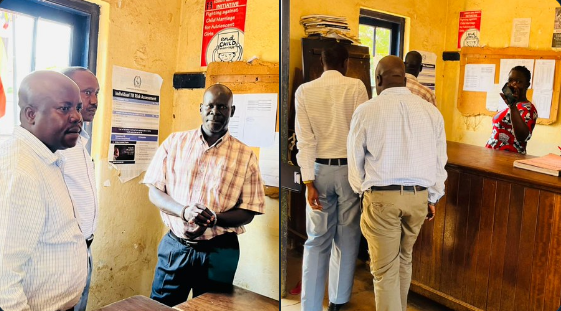
Some of the detained officials

The State House Anti-Corruption Unit in liaison with Police has arrested ten district officials in Fort Portal, Kabarole and Soroti on allegations of corruption and abuse of office.

Five land officials in Fort Portal and Kabarole district were arrested for allegedly conniving to sell government land at Millane access, along protected boundaries of River Mpanga, to a businessman. The officials approved an application without inspection.

The suspects detained are; the Chairperson Area Land Committee Mr. David Baguma, Senior Physical Planner Mr. Samuel Musana, District Staff Surveyor Mr. Simon Kugonza, Senior Staff Surveyor Kabarole Ministry Zonal Office – Mrs. Sumini Nansubuga and Secretary District Land Board Kabarole Mr. Jessy Bwango.

Additionally, two suspects; Principal Education Officer Mr. Richard Alituha and Head of Finance Mrs. Annet Kirungi have been arrested on allegations of mismanagement of over Shs180 million Capitation Grant for Fort Portal City Schools and Tertiary Institutions for Financial Year 2021/22. Police said two other more suspects are still at large.

In Soroti, three district officials were also arrested on allegations of abuse of office and causing financial loss as a result of inflating the District payroll.

It is alleged that over Shs500 million was paid to ghost workers and ghost pensioners by the officials.

The suspects are; Internal Auditor Mr. Micheal Okello, Human Resource Officer Mr. Charles Oonyu, and Principal Human Resource Officer Mr. Simon Okanya, who has been reported before on several cases for extorting money from pensioners under the pretext that they have been over paid by government.

Stories Continues after ad

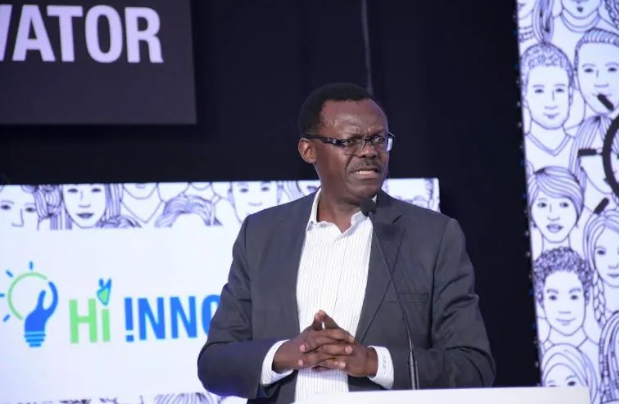
NSSF, Ideawake partner to support Ugandan Innovators and Entrepreneurs

NSSF Deputy Managing Director, Patrick Ayota

The National Social Security Fund (NSSF) has partnered with Ideawake, a global innovation software company, to expand access to the NSSF Hi-Innovator programme to more entrepreneurs across the country.

In 2021, the Fund launched the NSSF Hi-Innovator programme, an innovation initiative in partnership with Mastercard Foundation that aims to create an environment where indigenous Small and Growing Businesses can be supported to mature into viable businesses. Outbox Uganda is the lead implementing partner.

The programme targets to impact over 75,000 entrepreneurs and provide seed funding to 500 budding businesses and create over 132,000 jobs over 5 years.

The NSSF Deputy Managing Director Patrick Ayota said that the Ideawake platform will be used to streamline applications from entrepreneurs into the Hi-Innovator Programme, as well as enable them reorganize these businesses to become attractive to funders and investors.

“We see Ideawake as a critical technology component of the Hi-Innovator programme from application to evaluation and support to prepare the business for seed funding. This end-to-end automation will enable us to enhance the programme to more deserving entrepreneurs across the country,” he said.

The Ideawake Chief Executive Officer (CEO) Coby Skonord said that their expertise gained over the years across several countries will enable NSSF Hi-Innovator to accelerate its reach.

“Ideawake is already powering many innovation programmes in 39 countries including Germany, the United States of America, Italy, Honduras,Mexico, Brazil, Canada, Oman and in over 185 cities. We are very excited to help NSSF Uganda turbocharge the success of its innovation program and foster continued growth for businesses and entrepreneurs in Uganda,” Cobysaid.

Ayota also said Ideawake will be leveraged by the Fund to catalyze its internal innovation program and continuously engage its over 500 employees to deliver value to its members.

“The essence of our Hi-Innovator Programme is to create our own future through internal and external innovations while helping entrepreneurs grow their budding businesses. Ideawake is the ideal partner on this journey,” he added.

Since its launch in May 2021, 32 businesses have received seed funding and technical assistance worth over Ushs 3.6 billion through the Hi-Innovator Programme, helping to sustain and improve over 20,000 work opportunities for young people in Uganda.

Stories Continues after ad

Ntungamo college principal arrested for sexual harassment, cries defamation

The suspect, Gaston Twesigye

Police in Ntungamo district is holding a college principal over allegations of sexually harassing his female students after numerous complaints about his conduct, and the last victim who acted as the whistle-blower for the arrest.

The suspect, Gaston Twesigye, principal of Ntungamo Comprehensive Vocational College, is reported to having made a habit of asking sexual favours from his female students and employing punitive measures when his advances were rejected including: withholding their examination results, holding their examination papers and giving them unfounded retakes, among others.

The Rwizi Regional Police spokesperson Samson Kasasira, confirmed the arrest saying that Twesigye was apprehended yesterday Thursday September 29, at the Resident District Commissioner (RDC) office where he had been summoned to answer for the allegations.

“The principal was arrested on September 22 from the RDC’s office where he had gone to respond to the allegations. The RDC ordered his arrest after finding out that he was a habitual sexual harasser. We have since preferred sexual harassment charges against him ahead of his arraignment in court,” he said.

Twesigye’s recent victim recounts the tricks and threats that he used to try to get her to give in to his advances and to punish her for rejecting him.

Ronah Natukunda, a student pursuing a certificate in Records and Information Management at the college, said that Twesigye once declined to submit her examinations to the Uganda Business and Technical Examination Board (UBTEB). She would go for months without collecting her results because Twesigye insisted that she collect them in the late evening hours.

“One day he chased me out of the examination room claiming I had a fee balance that I needed to first clear. It took the intervention of some lecturers for him to allow me in, an hour later. I spent a year at the college without being able to see my own examination results apart from being told by friends since it was a college practice for students to get their results personally from their lecturers. When I would go for mine, he would tell me to come in the evening which was a bit tricky,” Natukunda said.

However, in his defence, Twesigye claims that the allegations have been fabricated by his competitors to destroy his reputation.

“I do not know what these girls are saying. I know someone must have used them just to tarnish my name because I cannot do something like that,” he said yesterday.

Following the arrest, other students came out to testify against Twesigye, with some providing evidence.

The RDC, Geoffrey Mucunguzi, confirmed the complaints and evidence saying that Twesigye is waiting in police custody to be arraigned in court.

Stories Continues after ad

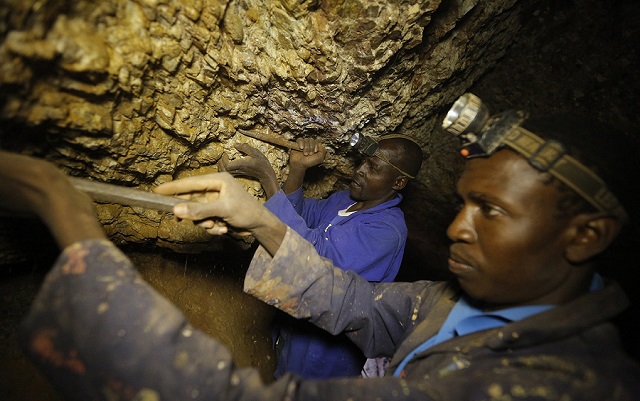
Will Uganda’s newest gold deposit change the face of mining?

Gold-Miners

In July the Ugandan Government said exploration surveys in the country had revealed vast estimated gold deposits of around 31 million tonnes. Of the behemoth find, around 320,158 metric tonnes are refined gold, with an approximate value of $12.8tn.

The discovery, identified by aerial surveys, could be a boon for Uganda, which is currently a net importer of gold. It will also likely make “significant waves” in the global gold market, according Jon White, director of Gold Traders, a London-based firm which buys and sells the precious metal.

Yet this disruption could bring as many challenges as benefits, from oft-heard concerns within the sector about international mining projects failing to deliver benefits to local people, to more unique issues, such as potential disruption of the global gold industry in general.

Overseas investment

A licence for production of part of the gold deposit has already been granted to the Wagagai Gold Mining Company, a Chinese firm. The Uganda Investment Authority announced a ground-breaking ceremony at the mine in October last year, and noted at the time that Wagagai’s initial investment reached $50m, including for a refinery, which has since risen to $60m.

The Ugandan Government is looking to develop domestic mining within its borders to boost the economy. Through the Uganda Free Zone Authority (UFZA), a government agency established for the purposes of creating opportunities for export-oriented investments, is trying to attract foreign investors to sector, which is otherwise dominated by informal mining, by offering tax incentives.

The Wagagai mine and refinery has been granted a ‘free port zone’ under the UFZA, making it exempt from import and export tax. The move may well encourage investment, but has led some to question how the country will benefit – or whether it will benefit enough – from the project.

New legislation

Uganda hopes rewards will come through its newly-overhauled mining code, the Mining and Minerals Bill, which parliament passed this February and is waiting to be signed into law by the president. The code will see the establishment of the Uganda National Mining Company, which, under the new bill, will hold 15% free equity in all large and medium mining ventures, as well as have the right to buy up to 20% of extra shares in the mining ventures at the commercial rate.

 “The new law is intended to provide a robust, predictable and transparent legal regime, improve mining and mineral administration and business processes, ensure efficient collection and management of mineral revenues, promote value addition to minerals and increase mineral trade,” the government has said.

However, gold experts Aaron Hoddinott and Alexander Smith of Pinnacle Digest noted that such legislation introduces the threat of nationalisation to the deposits. This is not uncommon in other countries, and raises the prospect of the vast riches of the deposits becoming tied to the whims of the national government.

The bill is also intended to end widespread informal mining, from which the government receives no revenues. Under Ugandan law people can be convicted, imprisoned and face fines if caught illegally mining. Critics have said the move will render more than 20,000 miners effectively jobless, as well as impacting on those indirectly making money through the informal sector, raising question as to who will truly benefits from this vast gold discovery.

Delivering domestic benefits

In response, the government has appealed to gold mining investors to use local labourers and train them where necessary to help in the fight against poverty. Uganda’s GDP per capita is currently just $858.1, more than just 18 countries in the world, according to the World Bank.

Wagagai’s activities are expected to create 3,000 direct jobs, though the specifics remain unclear, and the company will construct a new refinery, valued at $200m according to the government.

However, the work of refineries in the region has been dogged by allegations of corruption, posing a threat to local security and dissuading foreign investment.

In March, the US imposed sanctions on Belgian businessman Alain Goetz and a network of companies tied to him, including the African Gold Refinery in Uganda. The refinery was set up in 2014 but is accused of being involved in the illicit movement of gold from the Democratic Republic of Congo.

Challenges remain

Smith and Hoddinott have also argued that the validity of the gold reserves in Uganda first need be proven, with geophysical and geochemical surveys and analyses done to date representing only “step one of 20 exploratory steps needed”.

Furthermore, the development of any new mining deposit in Uganda isn’t without its risks or challenges; mining activities by both Chinese and other firms in Karamoja, where much of the gold said to be identified is located, have in the past created tensions with local communities.

Mining in the region has been subject to a Human Rights Watch investigation, which was critical of miners for environmental damage caused and not providing compensation for those whose land was impacted by the work.

The government has tried to address such tensions in the new bill by providing for the participation of host communities in the entire decision-making chain of mining, including information on licences, environment and social impact assessments provided both at the national and local government levels. It also states that training and employment should be prioritised for host communities. However, it remains to be seen how this will work out in practise when the bill finally becomes law.

For foreign mining firms looking to operate in Uganda there will also likely be political and corruption risks to consider. Uganda joined the Extractive Industries Transparency Initiative in 2020 but is yet to be assessed.

Potential growth and potential disruption

Globally, White says there has been a decline in the value of gold, particularly in the US market, as the strength of the dollar increases, and this discovery could ultimately undermine its value further.

 “The bottom line is larger gold reserves tend to lower the value of the metal, due to the increased supply,” White says.

Yet gold remains a safe haven for investments, and is still valued for its ability to protect investors from economic volatility caused by new economic policies or geopolitical shifts.

 “Therefore, it’s likely that by the end of 2022, when this newly discovered gold will begin to be refined and sold, it will certainly boost the Ugandan economy and bring about a significant shift in the global market,” he continues.

“Whether this will cause prices to rise, or fall will depend on how easy it is to supply this new stock of gold, the economic and political situation at the time, and global interest rates and inflation levels.”

Smith and Hoddinott’s take is that extraction at the deposits are not ”even close to a done deal” and will likely be difficult to get out the ground. They went on to point out that the world only produces around 3,000 metric tonnes of gold annually and 80 – 100 grams of gold per ton, as is claimed for this reserve by the government, is “insane” and “extremely optimistic”. Indeed, $12tn exceeds the entire market cap of all gold mined ever.

If there was more evidence of the deposits’ existence, they add, it could see the price of gold drop by “50% overnight,” however, echoing White’s sentiment, and highlighting the uncertain future of these vast gold deposits.

Stories Continues after ad

Nakasero Hospital launches first therapeutic hypothermia treatment center in Uganda

Dr Atwine with consultants from the Connecticut Children’s Medical Centre & University of Connecticut, Chairman of the Board, Dr Be Mbonye and the Chief Executive Dr Simon Luzige

Nakasero Hospital and Connecticut Children’s Medical Centre and the University of Connecticut; USA, have launched the first Therapeutic Hypothermia Treatment Centre in Uganda at an event held on the hospital grounds.

The therapeutic hypothermia treatment center was launched by the Permanent Secretary of the Ministry of Health Dr. Diana Atwine.

“Neonatal hypothermia is a medical condition that occurs when a baby’s temperature progressively drops below 35C (normal body temperature is around 37C). It is a medical emergency that if not urgently treated in hospital, may lead to disability or death,” Dr. Atwine said.

She said its symptoms may be pale, clammy, blotchy skin, and sometimes a rash, poor feeding, fast breathing, moaning cry, cold hands, and feet. Emergency care may be a warm bath, wrapping the baby in thick warm clothes, or warm beverages to help raise body temperature; as you go to the hospital.

“We thank the team at Nakasero Hospital for the contribution towards provision of health services to Ugandans. Specifically, we thank you for this and similar initiatives. It is selfless that they considered not only their staff but other health workers like from Kawempe Hospital,” she said.

According to Dr. Ben Mbonye, Chairman of the Board, Nakasero Hospital, the center caters to babies that have  Hypoxic Ischemic Encephalopathy(Birth Asphyxia) meaning that a number of babies that would otherwise be left helpless will now have access to treatment that can save their lives and also offer them a chance to lead a normal life.

There was also a training workshop conducted during this two-day event primarily for the nursing staff through didactic lectures as well practical aspects of therapeutic hypothermia.

Birth asphyxia is among the leading causes of neonatal mortality in Uganda. Therapeutic hypothermia significantly reduces mortality and neurodevelopmental disability in babies that have had hypoxic-ischemic encephalopathy (birth asphyxia).

A Therapeutic hypothermia center will open at Nakasero hospital starting in October 2022. The center will be equipped with the first servo-control therapeutic hypothermia devices in Uganda.

“We invited Pediatricians, Obstetricians, Pediatric Senior House Officers as well as nurses from both the private and public hospitals in Kampala including Mulago Hospital, Kawempe Hospital, Naguru Hospital, Nsambya Hospital, Mengo Hospital, and Rubaga Hospital,” he said.

 “We believe that the training will equip the clinicians with knowledge on the treatment of Birth Asphyxia and we also hope that Therapeutic Hypothermia Treatment Centers can be established across the country,” he said.

Stories Continues after ad
Kasaija lauds Ham Kiggundu for setting up modern food processing unit

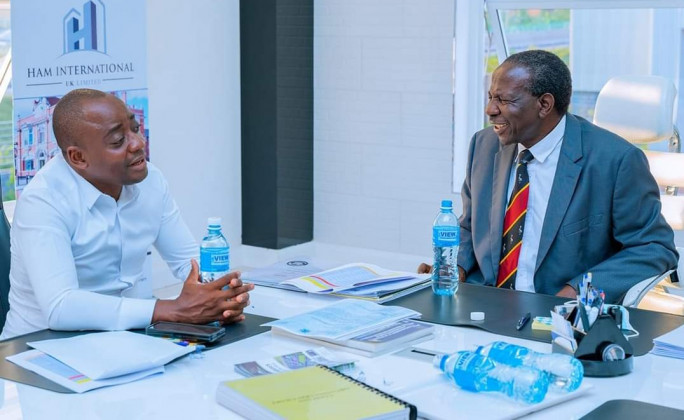
Minister-Kasaija-and-Hamis-Kiggundu

The Minister of Finance and Economic Planning, Matia Kasaija has hailed businessman Hamis Kiggundu for setting up a modern food processing unit that is creating thousands of jobs and opportunities for the Ugandan youths.

Kasaija made the remarks on Wednesday, September 28, during a courtesy visit and tour of the Ham Agro-Processing Plant located in Akright Estate – Bwebajja along the Kampala-Entebbe Expressway.

Speaking to the NewVision after the visit, Mr Kasaija thanked the businessman for investing quite a good amount of money in establishing the food processing unit and commended the idea of building more specialized processing plants in the major agricultural zones across the country.

“He is outing up silos, processing up plants and bringing up some ecosystems to make the process very green. He has a showroom where the products he would have added value will be showcased. It’s a commendable job and if I can have more 20-30 Ugandans doing a similar thing around the country, then the future will be very bright”, Kasaija said.

Through his Ham Agro-Processing Industries, Kiggundu has set up an integrated agro-processing industrial park and plans to set up 10 important crop and livestock production zone locations in Uganda.

Kiggundu says he decided to set up the agro-processing industries and planned to build more specialized processing plants in the major agricultural zones across the country in the future, in line with the crop and livestock resource endowments specific to each agro-ecological zone of the country.

He adds that his main goal is to promote agro value addition mainly through assessing, sorting, quality analysis, managing, packaging and marketing local produce domestically, regionally and internationally.

The vast complex was built at Shs 440 billion and according to Kiggundu, who recently took the minister on the tour of the plant, the plant processes and adds value to various crops from across the board ranging from fruits, vegetables, cereals and other plants for both local consumption and export.

For example he will set up milk and meat processing units in Mbarara and Karamoja sub region; maize and sugar mills in the Hoima Masindi region, another plant in West Nile and the North, Eastern and Central.

“This will create more employment opportunities and boost incomes for communities across the country while boosting production and foreign exchange earnings as all the excess produce will be value added first then exported,” Kiggundu said.

Kiggundu’s integrated agro-processing industrial park is a dedicated cluster of large, medium and small scale food processing units. The plant will be facilitated with common basic and modern infrastructure such as, internal roads, cold storage units, food laboratory, effluent treatment plant.

Uganda has 10 agro-ecological zones comprising of: North-Eastern Dry lands; North-Eastern Savannah Grasslands; North-Western Savannah Grasslands; Parra Savannahs; Kyoga Plains; Lake Victoria Crescent; Western Savannah Grasslands; Pastoral Rangelands; South-western Farmlands; and the Highland Ranges.

Kasaija becomes the second government official after Minister of State for Investments Hon Evelyn Anite to visit the businessman’s plant in a period of five months.

Minister Anite in her visit at the facility in April lauded Kiggundu for creating jobs and opportunities for young people.

“Thank you Ham for investing in Uganda & for creating jobs. It was nice listening to a young and focused young Ugandan investor. As a government, we promise to support the post harvest handling for export & the entire project,” Anite said.

Stories Continues after ad