Stanbic Bank
Stanbic Bank
17.7 C
Kampala
Stanbic Bank
Stanbic Bank
Home Blog Page 549

Prof Edward Rugumayo appointed Mountains of the Moon University Chancellor

Prof Edward Rugumayo

President Yoweri Museveni has appointed Professor Edward Rugumayo Bitanyaine as the Chancellor of Mountains of the Moon University.

According to a statement issued by the university secretary Dr .Edmond Kabagambe, Professor Rugumayo has been appointed to serve as the university Chancellor for a four-year term of office.

Professor Rugumayo’s appointment follows the recommendation of the University council, based on section 30(1) of the universities and tertiary institutions Act, 2001 (as amended).

“We are thankful to the His Excellency the President of Uganda and the University Council for recognizing professor Edward Rugumayo Bitanyaine’s distinguished services as a politician, diplomat, author, academic and environmentalist and granting him the opportunity to serve Mountains of the Moon as its first chancellor as a public university,” the letter reads in part.

His appointment comes two months after the university was taken over by the government as a public institution.

Mountains of the Moon University is the 10th Public University in Uganda found in Kabarole district that became a Public University effective 1st July 2022 established under The Universities and Other Tertiary Institutions Act as S.I. No. 2 of 2022 of Parliament of Uganda.

https://bit.ly/3QbThjU

Rugumayo together with Fr. Albert Byaruhanga, Prof. Oswald Ndoleriire, Justice Seith Manyindo, Hon. Tom Butiime among others mooted the idea that started Mountains of the Moon University (MMU) in 2005. He has been the Chancellor and Chairperson Board of Directors of MMU since 2005 when the University was private and licensed by National Council for Higher Education (NCHE).

Professor Rugumayo attended Galihuma Primary School in Kyenjojo and Nyakasura School, before being admitted to Makerere University in the mid-1950s.

In 1958, he was given a scholarship to study in the United Kingdom.

Rugumayo holds a Diploma in Education from Chester College in the United Kingdom and a Bachelor of Science in Botany and Ecology from the University of London.

After the Uganda National Liberation Army (UNLA) and the Uganda National Liberation Front (UNLF) captured power, Rugumayo became the chairman of the National Consultative Council (NCC), the parliament of the time.

He served as Minister of Education 1971, Chairman of the National Consultative Council in 1979, Uganda’s first Ambassador to South Africa in 1996, Minister of Internal Affairs in 1999 and Minister of Tourism, Trade and Industry in 2000.

Stories Continues after ad

African health ministers convene for region’s flagship public health meeting

Uganda's Health Minister, Dr. Jane Ruth Aceng.

Health ministers and health representatives from 47 African countries will meet in Lomé, Togo either in person or virtually for the Seventy-second session the World Health Organization’s (WHO) Regional Committee for Africa. The Regional Committee is the WHO decision-making body that convenes once a year to discuss and endorse regional policies, activities and financial plans to improve people’s health and well-being.

More than 400 participants, including WHO Director-General Tedros Ghebreyesus, WHO Regional Director for Africa Dr Matshidiso Moeti, Ministers of Health and senior health ministry officials from the 47 Member States, representatives of the African Union, United Nations agencies, civil society, bilateral and multilateral organizations and other development partners are expected to attend this annual flagship event.

On the eve of the 72nd Session of the WHO Regional Committee for Africa, WHO and the Government of Togo hold the Walk the Talk event to encourage everyone to be physically active and make healthy lifestyle choices.

The 72nd Session of the WHO Regional Committee opens with remarks from Faure Essozimna Gnassingbé Eyadém, President of Togo, Minata Samate Cessouma, Commissioner for Health, Humanitarian Affairs and Social Development for the African Union, Dr Tedros Adhanom Ghebreyesus, WHO Director-General and Dr Matshidiso Moeti, WHO Regional Director for Africa.

African health ministers will review and are expected to endorse a new strategy to boost access to the treatment of severe noncommunicable diseases at district hospitals.

A panel of African health ministers from high-burden countries, medical professionals and leaders from international organizations aim to bring sickle cell disease out of the shadows and urge stronger national prioritization, especially with budgets.

Insights on what has and has not worked for strengthening health systems to simultaneously maintain essential services while responding to the COVID-19 pandemic will be followed by what investments and actions are needed to ensure the full range of quality medical products and health technologies to achieve universal health coverage and respond to future public health emergencies in Africa.

African health ministers are expected to endorse a new strategy that aims to reduce the health and socioeconomic impacts of health emergencies, incorporating lessons from the COVID-19 pandemic.

This event will highlight a call to action by the African Union and WHO, in collaboration with the Elizabeth Glaser Pediatric AIDS Foundation and the Stop TB Partnership. The partners are urging African countries to ensure a holistic and comprehensive response that ends the suffering of childhood tuberculosis.

This high-level event will feature updates on activities regarding the wild poliovirus type 1 cases (WPV1) reported in Malawi and Mozambique as well as on ongoing response to non-wild variant poliovirus in the African Region. After the outbreak update, presentations will focus on polio priorities, including surveillance and transition as well as on the need to strengthen routine immunization in the Region. Active discussions will follow on the ongoing threat of polio in Africa as well as a call to action that member states recommit to ending polio in Africa for once and for all.

Health Ministers are expected to endorse an updated strategy that will revitalize action on environmental determinants of human health. It integrates recommendations from the WHO manifesto for a healthy recovery from the COVID-19 pandemic.

Stories Continues after ad

WHO, Ministry of Health train 29 Emergency Responders in prevention and management of viral hemorrhagic fevers

WHO

The World Health Organization (WHO), in collaboration with Uganda’s Ministry of Health, has commenced a five-day training for 29 emergency responders from five African countries. The training scheduled for 15th to 19th August 2022 at the Commonwealth Resort Hotel Munyonyo is intended to build regional capacity to respond to the unpredictable nature of outbreaks of Viral Hemorrhagic Fevers in the region.

Funded by WHO, participants are from Uganda, Zambia, South Sudan, Rwanda, and Tanzania and they will be trained through the newly updated manual on the management of Viral Hemorrhagic Fevers, which includes the use of approved drugs.

“It is essential that health workers are well informed on the revised management of viral hemorrhagic fevers (VHF) for future epidemics, to save lives and appropriately reduce transmission through adequate and appropriate infection control,” said Dr Paska Apiyo, Consultant Physician at the Gulu Regional Referral Hospital.

In his opening remarks, The Incident Manager for the WHO Country Office in Uganda, Dr Charles Njuguna said that “effective preparedness for unpredictable outbreaks of viral hemorrhagic fevers is crucial for a rapid response to these diseases, which have caused catastrophic loss of life and other resources in the region.”

One of the recent viral hemorrhagic fevers in the region was the Ebola outbreak declared in the Democratic Republic of Congo on April 23, 2022, which ended three months later with four confirmed cases and one probable case, all of whom died.

Operational preparedness for imminent risk is part of the broader context of emergency preparedness and the need for countries to build longer-term capacity to manage public health events, including viral hemorrhagic fevers (VHFs).

The Member States, with support from WHO and its partners, are seeking to invest more in long-term emergency preparedness capacity so that they are better prepared to manage future epidemics and other public health emergencies. Along with case management preparedness, there is a need to protect frontline health workers in the most at-risk districts in the country through vaccination against Ebola Virus Disease (EVD), an initiative that WHO is also pursuing.

“Proactive operational preparedness pays off by reducing the public health impact of emergencies, reducing the cost of response and recovery, and serves as a long-term investment in the health system’s capacity to manage health emergencies as per the International Health Regulations 2005,” Dr. Charles stressed.

In addition, the establishment of temporary and/or permanent treatment centers is essential to meet the highly required safety criteria for health care workers and the community.

The Republic of Uganda, which has long been one of the epicenters of the Ebola epidemic, is well positioned, given its existing structures for Ebola and other viral hemorrhagic fevers, to provide training for health care professionals.

This training is part of WHO’s existing support to countries to prevent and combat endemic diseases and health emergencies such as yellow fever, malaria, monkeypox, and disasters including floods, famine, and drought.

Stories Continues after ad

Corruption, connivance caused Isimba plant shutdown

Minister of Energy and Mineral Development, Ruth Nankabirwa

Lawmakers have said that corruption and connivance are to blame for the shutdown of Isimba hydropower plant. 

The Members of Parliament were responding to the statement by the Minister of Energy and Mineral Development, Ruth Nankabirwa on the emergency shutdown of the plant.

The 183 megawatts Isimba Hydropower power plant in Kayunga district experienced a shut down on Monday, 8th August 2022. 

Nankabirwa told the MPs that the plant flooded because of maintenance works. 

“One of the generating units was out of use to allow the contractor to undertake routine maintenance. At the time of the incident, the scheduled works included installation and testing of equipment supplied by the contractor for safe access to the powerhouse,” said Nankabirwa. 

She said that as the operations and maintenance team at the Uganda Electricity Generation Company (UEGCL) was attempting to create a safe working environment within the powerhouse working area, a malfunction occurred, causing flow of water into the powerhouse. 

“Consequently, dam safety procedures were automatically triggered to ensure the safety of staff, protection of equipment and production and prevention of potential dam failure. Investigations are underway to establish the cause of this incident,” Nankabirwa said. 

She reassured MPs that appropriate measures are being undertaken to restore power production within three weeks. 

“In these three weeks, we have decided to use the manual mode; the plant has two systems, automated and manual. Within three weeks, we will begin the generation but not in full capacity, full capacity will start in six weeks,” she said. 

The Minister also clarified that the country’s installed power generation capacity is 1378.1 megawatts, which indicates excess generation relative to the country’s peak system demand of 900 megawatts, including 50 megawatts of power export to Kenya. 

“It is important to note that without major breakdowns on the system like loss of a major generation facility as we have experienced with Isimba Hydropower plant, Uganda’s current total generation capacity is sufficient to meet our current electricity demands,” she said. 

Nankabirwa added that power from some of the plants is not fully evacuated due to lack of transmission and distribution infrastructure. 

Bugabula County South MP, Maurice Kibalya however asked the Minister to take keen interest in the actual cause of the total shutdown, saying that it was intentional. 

“The issue that happened was not flooding; the issue was technical and there are chances that they are intentional. Pick interest in the cost of thermal after shutdown of Isimba, you will see. Some of these things are not by accident and mistake,” said Kibalya.

Abigaba Cuthbert (NRM, Kibale County) said that by generating more than what the country consumes, the country is investing much money and yet it cannot be consumed. 
“In engineering studies, it means that our engineers are not doing us a good job, so there is a problem. That is why I want to side with my brother Kibalya that they are either in some kind of sabotage or possibly the ministry has run out of competent engineers to manage the system,” he said. 

Kigorobya County MP, David Karubanga said that the minister fell short of divulging the actual cause of the total shutdown. 
“When there is a flood, it is either failure on power supply and watering pumps or leakages overpowering the dewatering system. I also join other colleagues who want to say that construction of power dams has been a big problem,” he said. 

Agnes Atim Apea (NRM, Amolatar district) said the shutdown shows ineffectiveness and poor planning of electricity generation. 
“If you know the capacity of electricity generation and one plant shuts down, I do not see how it affects the whole system. Every year we appropriate more than Shs100 billion for energy, how do you start generating what you know you cannot evacuate. It is either connivance or corruption,” she said. 

Aringa South County MP, Yorke Alioni Odria questioned why the country is generating power in excess and yet some parts of the country like West Nile have shortage of power supply. 
“ The minister should come out clearly on this. She needs to tell Parliament the way forward; we are not going to get loans and the money is not utilised. The country is losing. It is not a joke, this country is going down because people are not sincere,” he said. 

Lillian Aber (NRM, Kitgum District) also asked the minister to pay close attention to contractors, saying that most of them do not deliver. 

“The minister should take keen interest and ensure that contracts are given to people who deliver. We have had the issue of installation of transformer and it has taken four years. Suppliers let us down in terms of quality,” she said. 

Kimaanya-Kabonera Division MP, Abed Bwanaki called for a thorough investigation into the energy sector. 

“81 percent of Ugandans are not on the electricity grid yet power is the driver of the economy but people cannot access power,” he said. 

The Deputy Speaker, Thomas Tayebwa referred the matter to the Committee on Natural Resources and gave a three weeks’ ultimatum for presentation of the report. 

“Please ensure that you do not interfere with ongoing repair works; we do not want Parliament to be used as an excuse. This is a dam we commissioned not more than two years ago and we know the rain patterns. How can we say we never foresaw such a situation, can we remedy it?” he said.

He also urged the Minister to address the mismatch between consumable capacity, installed capacity and generation capacity. 

“We are misled as a country and especially when it comes to paying dimmable energy costs in excess of hundreds of billions every financial year. Because why do you sign an agreement, you start paying and you do not plan for evacuating that power. That is poor planning,” he said.  

Stories Continues after ad

Four detained for child trafficking as 220 street children are rescued

KCCA officer takes a street kid off the street in Kampala

Four people have been arrested in Kampala for using children to beg and encouraging them to stay on the streets.

Anah Nalukude, Brenda Nakiru, Maria Longol and Santa Anyango were arrested during a children rescue operation by Kampala Capital City Authority (KCCA) on August 18, 2022.

At least 220 children, mostly from Karamoja, were picked from various parts of Kampala and taken to Masulita children’s home for rehabilitation.

The children were mainly picked from their hot spots around Jinja Road traffic lights, Wandegeya, Nakulabye, and Bakuli.

The KCCA Director for Gender, Production, and Community Services Godwin Gumisiriza says that there are more operations to rescue street children and designed strategies targeting perpetrators behind the crime. 

“We are going to intensify the operations to have children taken to secure places. We are going to be arresting and prosecuting those involved in child trafficking and abuse,” Gumisiriza says.

In June, KCCA launched the Child Protection Ordinance 2022 to protect children from abuse including child labor and trafficking.

The ordinance prohibits acts that encourage children to stay on the streets such as giving them food, money, and clothing.

The law provides for imprisonment for six months or a fine of two currency points (sh40,000) for anyone who contravenes the law.

The ordinance gives KCCA the responsibility to rescue children whose rights are being abused and begging on the streets.

It also provides that any infant used for or child found begging or soliciting shall be rescued and committed to the custody and the care of the probation and social welfare office.

“As the leadership of Kampala Capital City, we call upon everyone in the City to desist from the above acts against children. Anyone that commits these offences shall be handled in accordance to the law,” urged Gumisiriza.

The Ordinance provides for the prohibition of exploitation of children and related matters.

The ordinance was developed on the realization that children in Kampala were still facing several challenges including harmful or hazardous employment that include begging on the streets during day and night, food vending, bar and restaurant attendants, hawking general merchandise, employment as domestic servants, sale of harmful drugs, alcohol or any other intoxicating substance to mention but anew.

At the beginning of August, KCCA rescued 260 children off Kampala streets and transported them to Koblin Youth Rehabilitation Centers in Napak district where the children hail from.​

Stories Continues after ad

Museveni approves Charter for Victoria University

Victoria University

Victoria University has applauded President Yoweri Museveni for signing and approving its Charter. The University’s Charter was signed by the President on July 31, 2022.

“We do appreciate and salute the President, the First Lady and Hon. Minister of Education and Sports, Mrs. Janet Museveni, the National Council for Higher Education Executive Director, Prof. Mary Okwakol; and her entire team for recognizing and authenticating the growth that Victoria University has undertaken in the last few years,” the University said in a statement.

A charter is granted to universities that have demonstrated high quality in staffing, teaching and learning, research output, technology and practical-led learning, infrastructural development, and good governance, among other issues. For any institution to be accredited, the president and NCHE must be satisfied after a series of inspections and visitations.

According to the Universities and other Tertiary Institutions Act (2001), a charter is “granted by the President as evidence that the university meets the requirements and standards of academic excellence set by the NCHE.” Furthermore, a “chartered university,” as defined in section 103(a) of the same Act 2001 as amended, is a university comparable to a public university.”

This makes Victoria University the 11th private university in the country to be chartered out of 32 private universities in Uganda.

Victoria University, is one of the best universities in Uganda, and stands out as a centre of academic excellence. It offers a fresh and intellectually stimulating environment that nurtures critical thinkers.

The university was opened in August 2010 and has the capacity, the facilities and determination to revitalize higher education in Uganda and in the region.

It is committed to playing a leading role in bringing and developing high quality, student–centered learning opportunities based on standards of excellence that are unique, innovative and difficult to match.

It is centrally located in the heart of Kampala City and on the main public transportation routes coupled with ample parking space.

Stories Continues after ad

Kingfisher project affected persons get water treatment plant

The Kingfisher project affected persons have received Buhuka Gravity flow scheme rehabilitation project, is a community water and sanitation project.

The project is aimed at providing safe and clean water to the five villages of over 13,000 residents in Buhuka flats which is the host community for the Kingfisher Development area where CNOOC Uganda Limited operates.

The project was started in February 2022 and the rehabilitation contract was awarded to SAMKA, a fully Ugandan company. Substantial completion of the project was achieved on 6th July 2022. This project included the making a detailed design of a new distribution network that incorporates some of the old scheme.

This distribution network is made up of 14km of HDPE pipes that supply water to Nsunzu A, Nsunzu B, Kyakapere, Nsonga A, and Nsonga B. The other part of the design includes a water treatment plant, a power/chemical house and the water treatment system which includes the intake unit, aerator tank, coagulator tank, sedimentation tank, sand filter and the clear water tank that is treated using chlorine to make it safe and then pumped off for distribution to the stand taps constructed in the villages and the community market water supply system.

The water is abstracted from river Masika for which the National Environment Management Authority granted a license for abstraction of 180m3 an equivalent of 9000 twenty liter jerry cans of water per day for treatment and supply to the community. For sustainability and ease of making the project fully community run and owned in future, the electronic equipment of the facility are run on renewable energy which is solar that is abundant in the area. The facility has an array of 38 solar panels.

Enoth Tukamushaba the project engineer described the project as a very big contribution to the community that will improve the livelihoods of the user community; he also said that three local residents from Kyakapere, Nsunzu and Nsonga have been trained in operation and maintenance of the facilities. This is to ensure that even when the SAMKA engineers handover and leave the project to the community, the community can fully and ably run it.

Residents that have used the water from the new system have described the water as a very considerable improvement from previous water sources that were unreliable and whose water safety was not guaranteed. They are happy to be able to have clean water taps near their homes.

The LCI chairman of Nsonga A village, Babihemaiso Dismus expressed the same views as the community saying that the livelihoods of the community members has greatly benefitted from the project. They stressed the benefit of prevention of various water borne diseases that had pledged the villages in Buhuka flats like typhoid, dysentery and other skin diseases. This therefore makes the community better.

 “We have set up water user committees that will be in charge of monitoring the water distribution system and maintenance of good working conditions of the taps in the different villages.”

Mr. Chen Zhuobiao, President, CNOOC Uganda Limited said that CNOOC Uganda Limited will remain a dependable partner in improving the livelihoods of the host communities and this is a continuation of the different projects undertaken by CNOOC Uganda Limited in that regard.

He urged the community to take good care of the facilities to ensure that the project runs for many years to come. He applauded the local leaders that have rendered support for the different projects aimed at improving the standards of living of the area and for the continued support to CNOOC Uganda Limited in its operations.

He reaffirmed CNOOC Uganda Limited’s commitment to being a good neighbor and always striving to create Win-Win relationships with the local community. Mr. Chen concluded his speech saying that “CNOOC Uganda Limited is committed to the efficient and effective development of the Kingfisher Development Area in a healthy, safe, environmentally friendly and sustainable manner.”

Mr. Peter Banura LCV Kikuube District commended CNOOC Uganda Limited for always paying attention to the community needs and lending a hand, especially in things that improve the wellbeing of the community.

Banura lauded CNOOC Uganda Limited for strictly following the laws of the country and international best practices while implementing the project.

Stories Continues after ad

Agribusiness Development Centre launches a business accelerator program 

Agribusiness Development Centre launches a business accelerator program 

The Agribusiness Development Centre powered by dfcu limited and Rabo foundation has launched a Business Accelerator Program (BAP) that will attract Agribusinesses getting out of ideation phase and offer them a business acceleration opportunity which should enable these enterprises to attract markets and funding for growth and sustainability of their operations.

BAP will enable 350 agribusinesses (40% women-led) to become self-sufficient & create at least 350 new jobs, Link at least 50% of these agribusinesses to financing and markets.

The program aims to link at least 50 of these businesses to affordable Green Finance and technical assistance.

The objective of this partnership is to be able to collectively contribute directly to the five SDGs: 5- Gender equality; 7 – Affordable Clean Energy; 8-Decent work and economic growth; and 17- Partnerships for goals 

Mathias Katamba, dfcu Bank CEO noted that dfcu has worked closely with ADC to create the Business Accelerator Program whose main objectives are to support business improvements and facilitate the necessary linkages for growth and sustainability.

“Since its inception, dfcu Bank has made continuous commitments to support a wide base of customers that include; SMEs, women entrepreneurs, Investment Clubs. Our partnership with ADC is part of a joint mission to grow, build and promote the prospect of a sustainable future.

Agribusiness is the future of Uganda, and this partnership will help us continue to fulfill our commitment to serve and build this sector.”

The program cohorts shall be thematic to consider varied hindrances to agribusiness growth as well as harness opportunities for business acceleration. The themes under consideration over two years, shall be; key value chains; greening agribusinesses; Oil & Gas opportunities for Agribusinesses; Youth in agribusiness with the first cohort premised on a theme of gender inclusivity in agribusiness development.

“We hope to Influence youth& women inclusivity in the leadership of at least 50% businesses at the end of the program. The learners will also be exposed to peer and networking opportunities through learning visits to experts in varied fields.” Josephine Mukumbya, Executive Director, ADC.

Why the “Women in Agribusiness” as the first cohort?

Women make up to 52% of the labour force and are an important talent to help Uganda meet its development goals especially in entrepreneurship and micro, small and medium enterprises growth. However, it is generally known that women face more challenges than men in starting, managing, and growing their enterprises as they are more likely to be impeded by a lack of the necessary capacities, skills, and resources. They are more disadvantaged than men due to legal impediments and others [Women’s Entrepreneurship Development in Uganda, Enock Mugabi, 2014 copyright International Labor Organization]

Therefore, a Business Acceleration Program (BAP) targeted for women-led agribusinesses will build their capacity and investment readiness to access financing from investors and financial institutions.

Promoting entrepreneurship and innovation coupled with the growth of Agri-SMEs will help women develop greater economic prosperity. With the training experience and unique position of ADC having dfcu Limited and Rabo Foundation as their member partners, we believe it will open more opportunities for the women led agribusinesses under the first cohort which is now open on all online channels of ADC and dfcu.

Stories Continues after ad

Hunger Crisis: Children in Karamoja take younger siblings to school for food

Children in Karamoja take younger siblings to school for food

Parents in north-eastern Uganda are sending toddlers of pre-school age to school with their siblings to share their free school meal as increasing numbers of families have no food at home, according to Save the Children.

More than 40 per cent of people are now going hungry in Karamoja region, one of Uganda’s poorest and most marginalized regions that are predominantly a pastoralist community, the child rights organisation said.

Karamoja, that borders Kenya and South Sudan, is reeling from a combination of extreme weather, disease and armed gang attacks which have driven more than half a million people to crisis levels of hunger.

Last year communities in Karamoja were hit by floods and landslides. This year’s rainy season, between March and June, was likely the driest on record since 1981 with this harsh drought  decimating crops and livestock and causing water shortages.

The situation in the rural north eastern region has deteriorated in recent years. In June 2020, 27 per cent of households experienced food shortages which increased to 30 per cent in April 2021, and reached 41 per cent in April this year, with the crisis worsened by the war in Ukraine driving up food prices.

Save the Children said more than 91,600 children and 9,500 pregnant or breastfeeding women in Karamoja are suffering from acute malnutrition and need urgent treatment.

Across the Horn of Africa, four failed rainy seasons have led to the worst drought in 40 years, leaving more than 18.6 million people facing an alarming hunger and malnutrition crisis which is extending across the East Africa region to Uganda, South Sudan and Sudan.

Natalina, 10, who goes to a community school supported by Save the Children in Karamoja, walks there with her four-year-old and two-year-old sisters, the youngest strapped to her back. She said: “Every day, I come to school with two of my siblings. One is four years old while the other is two years old.

“I share my food with my two siblings because they’re not yet old enough to be in school, so I’m the only one who receives food.”

Emmanuel works as a teacher at another school supported by Save the Children in Moroto, Karamoja. He said: “When families do not have food and younger children follow their siblings to school, it not only reduces concentration but also gives older siblings the added burden of caring for children instead of studying.”

Save the Children’s Country Director in Uganda, Strinic Dragana, said: “The fact that families are sending their pre-school children to class with their siblings just so they can eat is a major cause for concern. We know that in some schools, there are up to 200 siblings tagging along to get a meal.

“We’re doing what we can with the little resources available but more needs to be done, especially now that schools have broken up and children have been sent home for August holidays with no food.

“Karamoja reflects a bigger global crisis. The next generation is bearing the brunt of a global hunger crisis and climate emergency that it did not contribute to. We’re calling on the government and the international community to make more funds available to support families and children suffering from this hunger crisis in northern Uganda.”

The climate crisis is making extreme weather events such as drought and flooding more frequent and severe, Save the Children said. The child rights organisation’s research with Vrije Universiteit Brussel, Born into the Climate Crisis, shows that children born in 2020 will face 2.6 times as many droughts and 2.8 times as many floods throughout their lifetimes as those born 60 years ago.

Save the Children is providing food assistance to over 40 schools in Karamoja and cash vouchers worth Shs 150,000 (US$40) every month to families with extremely malnourished children to buy food. But for many families sending young children to school with their older siblings is the only way to ensure the children have at least a meal day.

Stories Continues after ad
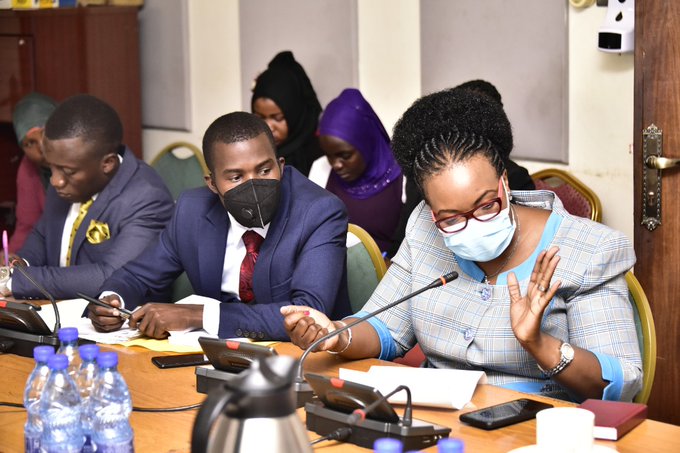
Uganda Airlines CEO Bamuturaki has no academic transcript, lost UCE result slip

Uganda Airlines CEO Jennifer Bamuturaki (in white) appearing before COSASE

The newly appointed Chief Executive Officer (CEO) of Uganda Airlines Jennifer Bamuturaki has no academic transcript and the Uganda Certificate of Education (UCE) result slip.

Appearing before the Parliamentary Committee on Commissions, Statutory Authorities and State Enterprises (COSASE) earlier today, Bamuturaki said she pursued a Bachelor’s degree in Social Work and Social Administration (SWASWA) and graduated in 1994.

She however shocked the committee when she said that ever since she graduated in 1994 from Makerere with a degree in SWASWA; she never got her academic transcript 28 years later. She also said she lost her UCE result slip.

MPs expressed concern over Uganda Airlines CEO Jenifer Musiime Bamuturaki’s change of names. In 2019 she registered a deed Poll changing her name to Jenifer Arnold Lenkai. She says however she didn’t conclude on the process of changing names, as she changed her mind.

The committee also learnt that Director Commercial at Uganda Airlines according to the job description is supposed to have a degree in Business Administration or Commerce, but the current holder only has certificates from IATA, and most of the studies are still ongoing.

👉🏻 https://bit.ly/3QbThjU

Bamuturaki was in July appointed the CEO of Uganda Airlines after serving in acting capacity for six months. Her appointment was confirmed by Gen. Edward Katumba Wamala, the Works and Transport Minister in a letter dated 5th July 2022 to the chairperson of the Uganda Airlines board.

She was named CEO after the suspension and sacking of Cornwell Muleya, some board members and staff over allegations of corruption and mismanagement of the National airline.

According to COSASE, the CEO of Uganda airlines had to have among other a bachelor’s degree and a post graduate-diploma. MPs learnt that Uganda Airlines CEO Jennifer Bamuturaki didn’t meet the minimum academic requirements at the time of appointment. She only had a B.A SWASA and lacked post graduate training.

Shs is currently pursuing a post graduate-diploma in Public Administration at Makerere University.

On Tuesday, the committee Bamuturaki on how she got appointed as Aide to the acting CEO and yet she had no appointment letter and was not being paid a salary. The committee also questioned how she rose from Aide to CEO.

Jennifer Bamuturaki however said she was not among the 40 Ugandans who applied for the job. “On the day I was going to apply, that is when I was appointed,” she said.

Herbert Kamuntu, board member of Uganda Airlines said when Uganda Airlines advertised for the position of CEO, Atleast 40 Ugandans applied. However, following a presidential directive to appoint Jennifer Bamuturaki, the whole process was halted.

Stories Continues after ad