Stanbic Bank
Stanbic Bank
18.5 C
Kampala
Stanbic Bank
Stanbic Bank
Home Blog Page 617

CAOs bypassing district councils on budget scrutiny

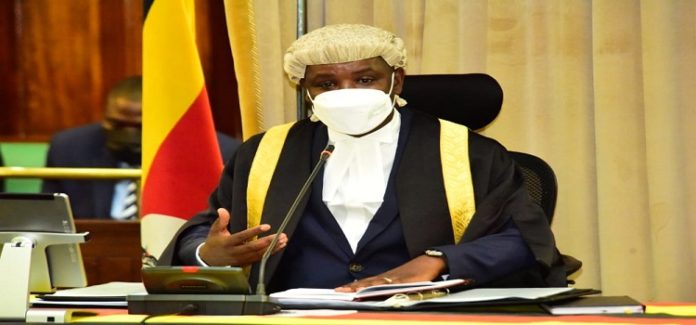
Deputy Speaker Tayebwa

The Deputy Speaker of Parliament, Thomas Tayebwa, is perturbed by reports that Chief Administrative Officers (CAOs) are undermining the powers of district councils by submitting budgets to the finance ministry without scrutiny by the councils.

Tayebwa said he had received reports from district councillors and speakers revealing that the district budget proposals presented to Parliament were not scrutinised by their respective district councils.

“Yesterday, I had calls with speakers and councillors of some districts and they said they will be having council meetings by the end of May to approve their budget.  I wondered whose budgets local governments are going to present to the Ministry of Finance when we already have budget proposals,” said Tayebwa.

He added: “Parliament is considering the budget proposals and we already have consolidated budget proposals and even the Committee on Public Service and Local Government has already presented budgets of the local governments. So, now whose budgets are local governments going to scrutinise?”

Tayebwa made these remarks while chairing the plenary sitting on Thursday, 05 May 2022.

He warned that such a practice distorts the whole concept of decentralisation where districts are required to determine their funding priorities. “So where does this take us on issues of decentralisation? It is like waking up now to find that the finance ministry is already implementing the budget that we have not yet approved,” he said.

The Deputy Speaker pledged that Parliament will defend the powers of local governments in budget appropriation. “The way we protect our powers of appropriation is the same way we should protect those of local governments,” he said.

Hon. Raphael Magyezi, the local government minister has been summoned to explain to Parliament the budget process in local governments and why the CAOs are undermining the powers of district councils.

Stories Continues after ad

Experts punch holes in proposed rental income tax

Finance committee chairperson, Hon. Keefa Kiwanuka (C) and his deputy, Hon. Jane Pacuto (R) at a previous meeting

Tax consultants have cautioned Parliament on the negative implications on the proposed rental income tax amendments for the Financial Year 2022/23.

The advisory was given by Joseph Okuja from Libra Advocates and Consultants at a meeting with Committee of Finance to elaborate the proposed income tax amendments proposed by government in the proposed budget on Thursday, 05 May 2022 at Parliament.

Okuja told the MPs that the proposed increment in the rental income tax is segregating individuals from companies putting it at 12 per cent up from 7.5 per cent for individuals and at 15 per cent after deducting expenses against the rental income for companies.

He said that the proposal undermines the current structure of income tax which is aimed at being progressive. This, he held, means that the more an individual earns the more they pay.

“In this amendment, rental tax for individuals is regressive setting the same percentage for all rental earners regardless of the amounts they make,” Okuja stated.

Okuja said that the amendment does away with a threshold on the rental income tax, putting small and big landlords at the same level of taxation.

“Before, the law exempted those earning less than Shs2.8 million annually before last year from rent which established the aforementioned figure as the threshold for rental income tax,” he added.

Okuja noted that the tax also serves unfairly to the companies that are landlords leveling a higher tax on them because it disregards the fact that the owners or directors of the companies are individuals who are to meet the expense eventually.

He also pointed out that the law creates a loophole of tax avoidance for partnerships and trustees who own rental property by not catering for them.

“If I co-own a property with someone else that is rented out, we neither fall under the category of an individual nor a company and therefore, we do not have to pay rental tax,” he added.

Hon. Basil Bataringaya (NRM, Kashari North County) asked the consultants for their view on the best course of action in considering the amendment.

“How best should we approach the amendment to see that the country still makes revenue from rental income tax while encouraging individuals to continue to invest in housing and commercial buildings to solve the housing problem?,” he asked.

Okuja responded that the law should be equitable and progressive charging the same rate to all groups invested and dependent on their earnings.

Stories Continues after ad

Muhoozi Birthday Celebrations: I propose internal (Primaries) elections to choose the most popular and pro-people UPDF Candidate 

Gen Muhoozi Kainerugaba at Kololo Independence Grounds talking to the crowd for his birthday run

This is an open letter to Uganda’s hungry opportunists who crowded my son Lt. Gen. Muhoozi Kainerugaba during the latter’s birthday-cum political launch for presidency of this fragile state at various venues around the country and I caution the son to beware of the ecstatic revelers at his own peril.

I met the now Gen. Muhoozi at age 12 in 1986 with the rest of the first family when they were booked by the Kenyan government at my internship five star Utalii Hotel at the Muthaiga/ Thika Road in Nairobi Kenya while on their return to Uganda for the first time after the NRA took power in January.

Opportunists tend to fabricate pretexts to gain advantage by hook or crook, they dishonestly tempt especially the unsuspecting victims. I can say without the slighted fear of contradiction that the launch was a very damaging start and conclusion at the same time. I saw about 30% of those same opportunists propping up the former Prime Minister John Patrick Amama Mbabazi (JPAM) in 2015/2016 and later dumped him after exhausting his life’s fortune. Some even went with his motor vehicles to date. I would have advised if I was part of the strategists that the “launch” be extended to April 2024 for this is special because it is called Jubilee. I do challenge any doubting Thomases to narrative that since now even serving military officers are allowed to talk and practice politics publically/ openly, I propose internal (Primaries) elections to choose the most popular and pro-people UPDF Candidate. I offer the short list below:-

East – Gen. Charles Angina, Jeje Odongo, Francis Chemo, Sam Okiding, David Gonyi, Joshua Masaba.

North – Charles Otema Awany, Fred Tolit, Dick Prit Olum, Andrew Guti

Central – Gen. Katumba Wamala, Joseph Musanyufu (hails from Bushenyi-Editor), David Ssejusa, Sam Kawagga

West – Muhoozi Kainerugaba, Ivan Koreta, David Kasura Kyomukama, Wilson Mbasu Mbadi, Akandwanaho Caleb.

See the illustrations below also:-

Case I: We have all probably heard the story of the Frog and the Scorpion.

The Scorpion which could not swim one day came down to the edge of the stream and noticed a Frog sitting there.

“Would you be willing to give me a ride on your back across this stream?” asked the Scorpion. “Do you take me for a fool?” That no sooner would I get to midstream than you would sting me?” the Frog replied. “Now why would I do that?” The Scorpion asked. “If I stung, we would both drown.” The Frog thought for a moment and decided that the Scorpion actually made sense.

So he let the Scorpion climb aboard and began swimming across the stream. Half way out the Scorpion jabbed the Frog with a vicious sting. As they both floundered in the water, the Frog gasped “you fool why did you do that? Now we are both going to draw.”

“I know” the Scorpion answered sheepishly as he sank beneath the surface. But you see I can’t help it. It’s just my nature, said the Scorpion.

Case II: A Southern Californian newspaper, several years ago had carried the following article which again has a direct bearing on the leaders we have in Uganda. A young man who lived in the Western states had never done anything (criminally) wrong. Picking up a revolver, he shot and killed his opponent. He was arrested, tried and sentenced to hang. Because of the innocent life he had previously lived, his relatives and friends got up a petition for him. It seemed as though everyone wanted to sign it. Before long other towns and villages had heard about it, and people all over the state eagerly endorsed the petition.

At last it was taken to the governor who happened to be a Christian and tears came to his eyes as he looked at the large baskets filled with petitions. He decided to pardon the young man. So, writing out the pardon he put it in his pockets, then dressed in the garb of a clergyman and made his way to the prison. As the governor approached the condemned cell, the young man sprang to the bars.

“Get out of here” he yelled, “I don’t want to see you.” I have heard enough religion at home and seven of your kind have visited me already.” “But” interrupted the governor “wait for a moment young man, I have something for you, let me talk to you”

“Listen” Exclaimed the young man in anger, “if you don’t get out of here now, I will call the guard and put you out.” As the governor went away, a warden then came to the young man to tell him that the departing man was actually the governor who had come to pardon him. The day came for the young man to die. “Tell all the young men of America that am not dying because of a crime, not because am a murderer. The governor pardoned me. Yes we can with strategy not opportunism

NABENDEH WAMOTO S.P (0776-658433)

Email: simonwamoto@yahoo.co.uk

Stories Continues after ad

Is Kenyan Monitor boss facing deportation?

NMG Managing Director Tony Glencross

Intelligence has submitted a report to the Directorate of Immigration in regard to the conduct of Mr. John Wanjohi, the General Manager Finance at Nation Media Group Uganda.

Nation Media Uganda (NMG) owns Monitor Publications Limited, NTV, The East African newspaper among a host of other media related activities.

Wanjohi is being accused of segregation in his work place by favouring fellow Kenyans at the expense of Ugandans and it is said that he was behind many changes that have rocked both Monitor and NTV-Uganda with the latest being Pressbox.

Sources in Intelligence/security circles told Eagle Online that Wanjohi orchestrated the recent changes where he recommended the sacking of senior Ugandan editors and managers while leaving fellow Kenyans.

“Our work was basically to look at the allegations levelled against him which we verified and the report has been handed to Immigration for action,” said a security source.

It is further alleged that Wanjohi labeled some senior reporters/managers who had vast sources within government and more so security as spies for the government whom the newsroom shouldn’t be employing.

“Why would a foreign national be interested whether one is a spy of the state or not? What is his intention in categorizing employees whom he found in place?” a state operative posed a question.

This is not the first deportation that Mr Wanjohi faces as he has been deported before by Tanzanian authority over similar allegations of segregation and mistreatment of Tanzanian nationals while working at Citizen/ Mwananchi a media subsidiary of NMG.

Sources at NMG told this website that the genesis of the problem is the NMG Managing Director Tony Glencross whose leadership skills are wanting and therefore, has left Wanjohi to run the show.

“He doesn’t respect anybody and rubbishes other leaders as if it is his parent’s company. Imagine in the recent strategic meeting, the editor refused to submit their workplan because he is always refusing to fund activities of the editorial department and that is why we couldn’t. Of course his major advantage is the inefficiency of the MD,” said a source at the Namuwongo based newsroom.

Wanjohi’s dominance over other MPL bosses is said to be backed by NMG CEO Stephen Gitagama in Nairobi.

Stories Continues after ad

WHO reveals shocking extent of exploitative formula milk marketing

Milk

Formula milk companies are paying social media platforms and influencers to gain direct access to pregnant women and mothers at some of the most vulnerable moments in their lives. The global formula milk industry, valued at some US$ 55 billion, is targeting new mothers with personalized social media content that is often not recognizable as advertising.

A new World Health Organization (WHO) report titled Scope and impact of digital marketing strategies for promoting breast-milk substitutes has outlined the digital marketing techniques designed to influence the decisions new families make on how to feed their babies.

Through tools like apps, virtual support groups or ‘baby-clubs’, paid social media influencers, promotions and competitions and advice forums or services, formula milk companies can buy or collect personal information and send personalized promotions to new pregnant women and mothers.

The report summarizes findings of new research that sampled and analyzed 4 million social media posts about infant feeding published between January and June 2021 using a commercial social listening platform. These posts reached 2.47 billion people and generated more than 12 million likes, shares or comments.

Formula milk companies post content on their social media accounts around 90 times per day, reaching 229 million users; representing three times as many people as are reached by informational posts about breastfeeding from non-commercial accounts.

This pervasive marketing is increasing purchases of breast-milk substitutes and therefore dissuading mothers from breastfeeding exclusively as recommended by WHO.

“The promotion of commercial milk formulas should have been terminated decades ago,” said Dr Francesco Branca, Director of the WHO Nutrition and Food Safety department. “The fact that formula milk companies are now employing even more powerful and insidious marketing techniques to drive up their sales is inexcusable and must be stopped.”

The report compiled evidence from social listening research on public online communications and individual country reports of research that monitors breast-milk substitute promotions, as well as drawing on a recent multi-country study of mothers’ and health professionals’ experiences of formula milk marketing. The studies show how misleading marketing reinforces myths about breastfeeding and breast milk and undermines women’s confidence in their ability to breastfeed successfully.

The proliferation of global digital marketing of formula milk blatantly breaches the International Code of Marketing of Breast-milk Substitutes (the Code), which was adopted by the 1981 World Health Assembly. The Code is a landmark public health agreement designed to protect the general public and mothers from aggressive marketing practices by the baby food industry that negatively impact breastfeeding practices.

Despite clear evidence that exclusive and continued breastfeeding are key determinants of improved lifelong health for children, women and communities, far too few children are breastfed as recommended. If current formula milk marketing strategies continue, that proportion could fall still further, boosting companies’ profits.

The fact that these forms of digital marketing can evade scrutiny from national monitoring and health authorities means new approaches to Code-implementing regulation and enforcement are required. Currently, national legislation may be evaded by marketing that originates beyond borders.

WHO has called on the baby food industry to end exploitative formula milk marketing, and on governments to protect new children and families by enacting, monitoring and enforcing laws to end all advertising or other promotion of formula milk products.

Stories Continues after ad

Gov’t runs out of new Passports

Passport

The Directorate of Immigration Control (DCIC) under Ministry of Foreign Affairs is not printing passports due to shortage of booklets.

According to sources, the crisis is a result of overwhelming demand of the new passports after government banned use of old booklets that expired on April 4th this year, TrumpetNews reveals.

Three years ago, the immigrations department had announced it would ban the use of old passports.

Ever since, the machine-readable passports were declared valid for international travel and were replaced by international East African e-passports, there has been delay in acquiring new ones.

The crisis has generated frustration among those intending to travel abroad for business, medical checkups, visits and emergencies.

Whereas many Ugandans have been affected by the shortage, labour companies are mostly counting huge losses.

Sources say, the crisis erupted due to lack of enough preparedness after declaring the machine readable passports invalid.

“This is what happens to most of our government bodies. They effect policies well knowing they are unprepared,” said a source.

The Permanent Secretary of Immigrations Brig Johnson Namanya couldn’t respond to messages when reached for explanation.

Whereas some other top officials at Jinja road based office denied there was shortage of booklets in the passport office, they admitted that they have a huge challenge in delivering the passports from the day of applying.

“Somehow we are overwhelmed by the demand but we are trying to manage that,” one of the top officials said.

Others attributed the crisis to incompetence. In the past, acquiring an express passport would take two days, now it’s three weeks to one month.

This means it is very hard for an individual to respond to an emergency abroad when he or she doesn’t have new East African E-passport.

Simon Mundeyi, the new internal affairs spokesperson denied there was shortage of booklets. “We are printing passports normally sir,” he said.

He said this speculation is being fueled by the brokers who are out to fleece the public of their money. However Mundeyi acknowledged there is a delay in delivering express passports.

“About express, it is true we got a challenge having received so very applicants for the same service. 138 labor companies applied for express passports and this overwhelmed our capacity but we have since increased our work stations and this is being handled well,” he said.

Stories Continues after ad

Cattle rustlers will lose appetite for the gun – Museveni

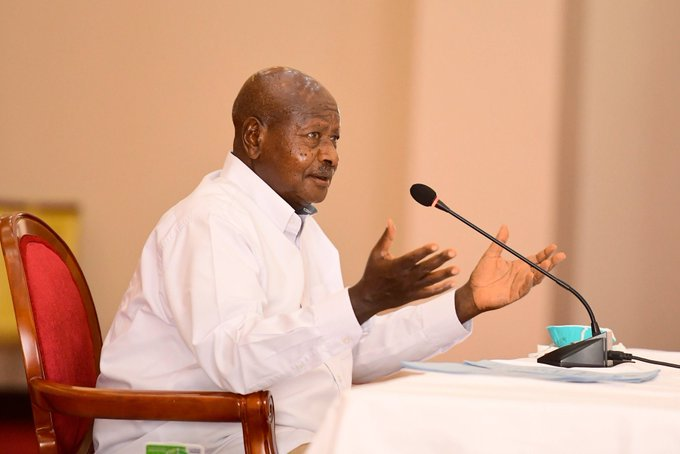
President Yoweri Museveni

President Yoweri Museveni has vowed to make the cattle rustlers in Karamoja ‘lose appetite’ for the gun by building and equipping a stronger guard force at Labwordong in Agago district.

Speaking shortly after passing our 2,610 Local Defence Personnel who have been undergoing training at the Labwordwong Training School in Agago district, President Museveni said the cattle rustling that has re-emerged in the region will stop.

“We had removed the 5th division for training and they took advantage of that. But now we have brought it back. It will help make the rustlers lose appetite for the gun,” he said.

President Museveni who is also the Commander in Chief of the UPDF had earlier, despite a heavy down pour, witnessed field craft and shooting range demonstrations by the new recruits before inspecting a guard of honour and a match past by the new recruits.

“I am very happy to come here in Labwordong. I was here long time ago when fight Karimojong. I thank you for remembering to turn it into training wing. I am also happy that the leaders here and elders gave land to army to train. We shall compensate you for the land don’t worry. We need to use the land for training. The training security wing here; it’s good for the army and it’s also good for security,” he said.

The President said with the big number of trainers, the school now needs a guard force.

“One you have got a big number of people here, those who disturb security will not come. We need a guard force to contribute to security of this area. It will also contribute to the economy of the area. These people are here, government buys food for them, they get salary and go to shop for other essentials here. The community benefits,” he said.

The President commended the army leadership for putting the training school here and pledged to support the facility in the construction of new classrooms, instructors’ houses and improving the shooting range.

According to the Labwordong Training School Commandant Lt. Col. George Stephen Eyoku, the 2657 trainees including 516 females were voluntarily mobilized by the national recruitment team of the UPDF in October 2021 for 24 weeks. 47 trainers however failed to finish the course.

“Our objective is to train young energetic Ugandans with values, norms and ideological orientation of the national army. The development of character mentally and physically is key. They are trained to serve their country diligently. The Army wants a fit you rather than a sick you,” he said.

The Deputy Chief of Defence Forces Lt Gen Peter Elwelu commended the training school instructors for a job well done and welcomed the trainees to UPDF.

“You are welcome to the UPDF family. Here the army is not a job, it’s about service to our people. It is important to look at it from that angle otherwise you will be disappointed. If you are to stay in the UPDF, do your work and do it well. It is not about pay but service,” he said.

Stories Continues after ad

14.9 million excess deaths associated with #Covid-19 in 2020 and 2021

Covid-19 testing kits

New estimates from the World Health Organization (WHO) show that the full death toll associated directly or indirectly with the #Covid-19 pandemic (described as “excess mortality”) between 1 January 2020 and 31 December 2021 was approximately 14.9 million (range 13.3 million to 16.6 million).  

“These sobering data not only point to the impact of the pandemic but also to the need for all countries to invest in more resilient health systems that can sustain essential health services during crises, including stronger health information systems,” said Dr Tedros Adhanom Ghebreyesus, WHO Director-General. “WHO is committed to working with all countries to strengthen their health information systems to generate better data for better decisions and better outcomes.”

Excess mortality is calculated as the difference between the number of deaths that have occurred and the number that would be expected in the absence of the pandemic based on data from earlier years. 

Excess mortality includes deaths associated with COVID-19 directly (due to the disease) or indirectly (due to the pandemic’s impact on health systems and society). Deaths linked indirectly to COVID-19 are attributable to other health conditions for which people were unable to access prevention and treatment because health systems were overburdened by the pandemic. The estimated number of excess deaths can be influenced also by deaths averted during the pandemic due to lower risks of certain events, like motor-vehicle accidents or occupational injuries. 

Most of the excess deaths (84%) are concentrated in South-East Asia, Europe, and the Americas. Some 68% of excess deaths are concentrated in just 10 countries globally. Middle-income countries account for 81% of the 14.9 million excess deaths (53% in lower-middle-income countries and 28% in upper-middle-income countries) over the 24-month period, with high-income and low-income countries each accounting for 15% and 4%, respectively. 

The estimates for a 24-month period (2020 and 2021) include a breakdown of excess mortality by age and sex. They confirm that the global death toll was higher for men than for women (57% male, 43% female) and higher among older adults. The absolute count of the excess deaths is affected by the population size. The number of excess deaths per 100,000 gives a more objective picture of the pandemic than reported COVID-19 mortality data.

“Measurement of excess mortality is an essential component to understand the impact of the pandemic. Shifts in mortality trends provide decision-makers information to guide policies to reduce mortality and effectively prevent future crises. Because of limited investments in data systems in many countries, the true extent of excess mortality often remains hidden,” said Dr Samira Asma, Assistant Director-General for Data, Analytics and Delivery at WHO. “These new estimates use the best available data and have been produced using a robust methodology and a completely transparent approach.”

“Data is the foundation of our work every day to promote health, keep the world safe, and serve the vulnerable. We know where the data gaps are, and we must collectively intensify our support to countries, so that every country has the capability to track outbreaks in real-time, ensure delivery of essential health services, and safeguard population health,” said Dr Ibrahima Socé Fall, Assistant Director-General for Emergency Response. 

The production of these estimates is a result of a global collaboration supported by the work of the Technical Advisory Group for COVID-19 Mortality Assessment and country consultations. 

This group, convened jointly by the WHO and the United Nations Department of Economic and Social Affairs (UN DESA), consists of many of the world’s leading experts, who developed an innovative methodology to generate comparable mortality estimates even where data are incomplete or unavailable. 

This methodology has been invaluable as many countries still lack capacity for reliable mortality surveillance and therefore do not collect and generate the data needed to calculate excess mortality. Using the publicly available methodology, countries can use their own data to generate or update their own estimates. 

“The United Nations system is working together to deliver an authoritative assessment of the global toll of lives lost from the pandemic. This work is an important part of UN DESA’s ongoing collaboration with WHO and other partners to improve global mortality estimates,” said Mr Liu Zhenmin, United Nations Under-Secretary-General for Economic and Social Affairs. 

Mr Stefan Schweinfest, Director of the Statistics Division of UN DESA, added: “Data deficiencies make it difficult to assess the true scope of a crisis, with serious consequences for people’s lives. The pandemic has been a stark reminder of the need for better coordination of data systems within countries and for increased international support for building better systems, including for the registration of deaths and other vital events.”

Stories Continues after ad

17 set to retire from UPDF Armoured Brigade

The Ministry of Defence and Veterans/UPDF retirement and discharge documentation team has interfaced with 17 officers and militants of Armoured Brigade Headquarters at Kassajagirwa in Masaka.

“Retirement is a break in service as you prepare to join the Active Reserve Force,” Col Griffins Kantinti the Brigade Operations and Training Officer (BOTO) reminded the impending retirees and dischargees in his address to them.

According to Col Kantinti, Armoured Brigade is a combat support arm that is deployed around all Divisions, Formations and Units. So, some of the impending retirees and dischargees under this Brigade have already been documented or will be documented from their respective formations where they are still providing that support element.

He urged the retirees to keep living with pride for having served under the mighty UPDF and particular important combat arm, the Armoured Brigade, whose slogan is “JOGOO WA MEDANI” (King of the Jungle), come passed 31st July 2022 the intended retirement day.

The BOTO also urged the impeding retirees to remain active, shun all factors and characters that could create instability in the Country, remain patriotic and loyal to the UPDF leadership, the Commander in Chief and the country.

The Commissioner Human Resource of the Ministry of Defence and Veteran Affairs MODVA Mr Anguzu Cox Alfred applauded the impending retirees and dischargees for diligently serving the nation and for their loyalty to the UPDF, its leadership and the country.

He asked them to remain good will Ambassadors of the UPDF and to remain financially upright. “Don’t get excited over the big sums of your gratuity, it is your money you have accumulated over the years in service so spend it wisely,” he cautioned.

The sensitization and documentation team is now on its second leg of the exercise in Western and South Western Uganda having accomplished work in Eastern and Northern Uganda.

Stories Continues after ad

Opec Prime cites malice in botched Naguru-Nakawa satellite towns

Opec Prime’s director, Hassan Kimbugwe, appearing before the adhoc committee

Officials from Opec Prime Properties Ltd, a company formerly contracted to develop ultramodern satellite towns in the Naguru-Nakawa housing estate, have told Parliament of a litany of frustrations they faced in their attempt to deliver the same in the capital, Kampala.

Opec Prime was awarded a contract and land in 2006 to construct 1,747 flats, bungalows, commercial buildings, a five-star hotel, a referral hospital, schools, houses of worship and recreational facilities in the estate.

However, before they could mobilise, their contract, extracted from a Public Private Partnership Agreement, was terminated in 2019 by Cabinet over alleged financial and technical incompetence.

Following allegations that part of the land had been irregularly given out to some investors, the then Deputy Speaker, Anita Among, constituted an ad hoc committee to investigate the matter.

According to Opec Prime’s director, Hassan Kimbugwe, while appearing before the Hon. Dan Kimosho chaired ad hoc committee investigating the illegal sale of land in the Naguru-Nakawa estate on Thursday, 05 May 2022, said the grounds on which their contract was terminated were baseless and out of malice by some government institutions.

“You can imagine, after winning the bid and signing agreement in 2006, it took five years to get the tittles of the land we were allocated,” said Kimbugwe.

Andrew Tendo, a consultant with Opec Prime said that since the project inception in 2006, Opec Prime has been involved in endless court cases, alongside delays by government to approve commencement of works.

“We constructed a slab upon approval by Kampala Capital City Authority but after construction, KCCA wrote to us that where the slab was constructed has been earmarked for a bus lane and that we should move it, yet for the past 10 years the bus lane has never been constructed,” said Tendo.

He explained that although Opec Prime had initially agreed to construct and sell off apartments at a subsidised price, government later on allocated part of their land to the Aga khan University, rendering the project unprofitable.

Kimbugwe added: “Once they gave away land to Aga Khan and still expected the developer to give out apartments at a subsidised price, it could no longer make any sense. The agreement was that we develop the land, recoup our profit and then give out the apartments at a subsidised price.”

MPs questioned Kimbugwe on why they did not oppose the government move to allocate land to the Aga Khan University in court and further wondered whether it was not a sign of financial incompetence to develop the land.

“Did you really have adequate money to build that satellite city? Government could have given them [Aga Khan University] land somewhere else?” asked Hon. Sarah Opendi (NRM, Tororo District Woman MP).

Bugiri Municipality MP, Asuman Basalirwa, asked Opec Prime why they would illegally lease government land to individuals as alleged by witnesses who appeared before the committee.

“The third parties are making complaints that you gave away government land. Did the law allow you to give out land?” asked Basalirwa.

Kimbugwe reiterated that Opec Prime was as per the agreement with government, allowed to sub lease to fellow co-developers who would express interest in developing structures within Opec Prime’s master plan.

He appealed to Parliament to consider visiting Opec Prime’s projects in other countries like Greece, United Kingdom and Germany among others.

Stories Continues after ad