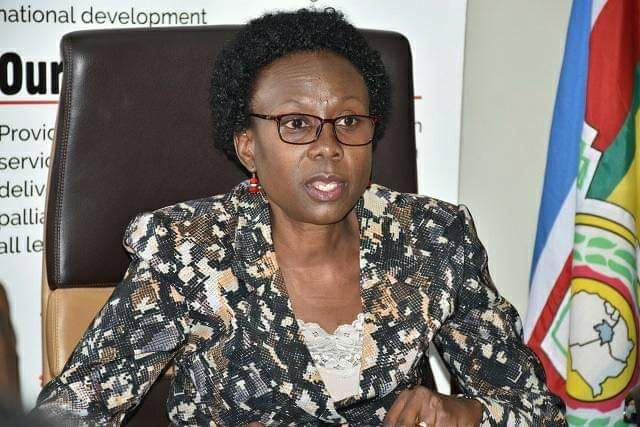
The Health Minister Dr. Jane Ruth Aceng has withdrawn her expression of interest to stand for the position of Speaker in the 11th Parliament.
On Tuesday, Aceng and 12 others from the ruling party National Resistance Movement (NRM) were nominated to replace Jacob Oulanyah who died on Sunday.
Aceng said in a statement on Wednesday morning; “Whereas it’s my constitutional right to contest and eligible to be elected the Speaker of Parliament in accordance to Article 82 (2), I have taken a decision to withdraw my intention for the same.”
“I’ve taken a decision to withdraw my intention to stand for the Position of Speaker of Parliament of Uganda. I have not had enough time to consult my party leadership, colleagues and family,” announced on Twitter on Wednesday morning.
“It is public knowledge that, pursuant to Article 82(4) of the Constitution, there is urgency to fill the position of Speaker, since the demise of Our beloved brother; the Rt.Hon. Jacob L. Oulanyah. However, as a candidate, I have not had enough time to consult my party leadership, not made enough consultations with fellow colleagues and even my family and therefore, I feel it is only proper that I step down.
“I wish to thank my party the NRM for the acceptance and the support I have received since the time I expressed my interest, my colleagues and all Ugandans for the trust they have put in me through their supportive messages to my candidature.
“I pledge to continue serving my nation in my current capacity as the Minister for Health diligently and with loyalty to my party.”
Her withdrawal leaves 12 members in the race. They are; Deputy Speaker Anita Among, Deputy Attorney General Jackson Kafuuzi, Tororo Woman MP Sarah Opendi, Arua Central MP Jackson Atima, Dokolo South County MP Felix Okot, Lwemiyaga County MP Theodre Ssekikubo.
Others are; West Budama South MP Jacob Oboth-Oboth, Kagoma North legislator Alex Kintu Brandon, State minister for Sports Denis Hamson Obua, Masindi District’s Florence Akiiki, Agago’s John Okot Amos and Bugahya County MP Pius Wakabi Rujumba.
The party shall elect its flag bearer in the upcoming speakership race on Thursday, March 24, 2022 in a special caucus meeting at Kololo Ceremonial Grounds.
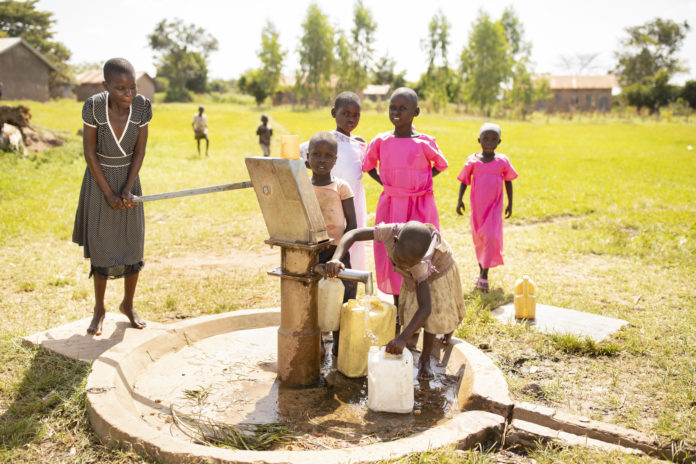
Children access clean water at a well installed by ChildFund in Butaleja District
ChildFund International and Davis & Shirtliff have partnered to increase access to clean water for communities in four African countries. The four most vulnerable to water scarcity African countries include; Uganda, Ethiopia, Kenya, and Zambia.
The two organizations will collaborate to deploy sustainable water solutions to provide clean and safe water to marginalized and under-resourced communities by employing innovation and technology. This partnership will focus on borehole installation rehabilitation, installing water storage tanks, installing electric and solar-powered pumps, solarizing existing water pumps, water testing technologies and services, and implementation of water-related interventions in public schools.
The partnership combines Davis & Shirtliff’s technical expertise as a leading supplier of water and energy-related solutions with ChildFund’s experience in implementing development programs in marginalized and under-resourced communities, to address water scarcity due to physical shortage, irregular supply, or a lack of adequate infrastructure.
According to the UN World Water Development Report 2019, on a global scale, half of the people who drink water from unsafe sources live in Africa, while in Sub-Saharan Africa, only 24% of the population have access to safe drinking water. United Nations Sustainable Development Goal No. 6 urges nations to ensure that water is clean, accessible, reused, recycled, and protected.
“This partnership could not have come at a better time when many communities are reeling from the effects of climate change, manifested by frequent droughts leading to food and water insecurity. Not to mention the COVID-19 pandemic which has demonstrated the importance of adequate access to clean water in preventing diseases. Through this partnership, we intend to solve the water crisis by leveraging technology to empower communities living in arid and semi-arid areas with sustainable water solutions,” said Chege Ngugi, Africa Regional Director of ChildFund.
As a start, Davis & Shirtliff and ChildFund have drilled and equipped 4 boreholes in Samburu and Marsabit counties in Kenya to provide over 30,000 people, 7 schools, 2 health facilities, and animals with clean water.
“This partnership will enable us to make water affordable and accessible to more people, no matter where they live. Our goal is to achieve real impact on people, the communities they live in, the society, and ultimately our planet to preserve it for future generations,” Edward Davis, Davis & Shirtliff Managing Director said.
Davis & Shirtliff is working with communities, development organizations, governments, and other stakeholders to uncover a wide variety of solutions to enable a safe, affordable, and ample water supply now and for generations to come.
Col Abdul Rugumayo Assumes Office Of The Deputy Chief Of Military Intelligence
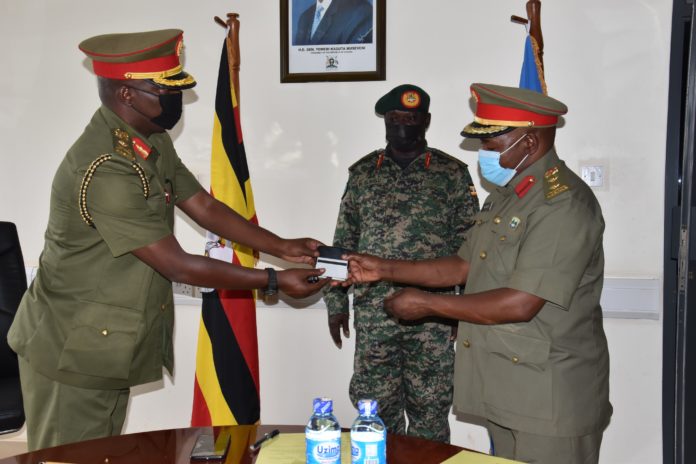
The Deputy Chief of Defence Forces (D/CDF) Lt Gen Peter Elwelu on Tuesday presided over the handover-take over ceremony of the Deputy Chief Military Intelligence; from Brig Gen Charles Asiimwe to Col Abdul Rugumayo following the latter’s appointment by His Excellency the President on the 17th March 2022.
Gen Elwelu stressed that “Work is work” urging for comradeship, teamwork and tasked members to support each other to achieve the ultimate goal as they work. “Always live as brothers but not enemies,” he said.
He cautioned against the young generation that thinks it has seen it all and wants to realize everything very quickly.
He advocated for vigilance at all times while saying the state hasn’t reached where it is supposed to be. “Once intelligence sleeps, the country is blind,” he added.
He thanked the outgoing Deputy Chief for doing great work for the time he served in the institution and urged members to work hard and leave in place a stable country for the young generation to take over.
He wished the incoming Deputy Chief the best of success at work with his senior the CMI and the rest of the comrades as they work for the country the region and the continent at large.
In his remarks, the outgoing Deputy Chief of Military Intelligence Brig Gen Asiimwe congratulated the incoming Deputy Chief upon his appointment to the office.
This was while handing over a report to acquaint the incoming with the formal duties of CMI, the general security situation both internal and external of the country and military intelligence and its organizational structure among others.
Col Abdul Rugumayo pledged availability in terms of work, time and priority for the army and state, given the experience that he has attained in administration while serving his country.
He added that he is honoured to be among the few identified, selected and seconded by the army leadership to take over the office. He thanked God for seeing him rise in rank and other activities and also thanked the army leadership for the faith always entrusted in him.
In attendance were Chief of Military Intelligence Maj Gen James Birungi, Chief of Joint Staff of Uganda Police Force Maj Gen Abel Kandiho, Assistant Deputies CMI for Intelligence Counter Intelligence and International Affairs Brig Kabuye, Col Julius Mbaine and Col Yunus Bagada, Heads of Department and UPDF Senior Officers.
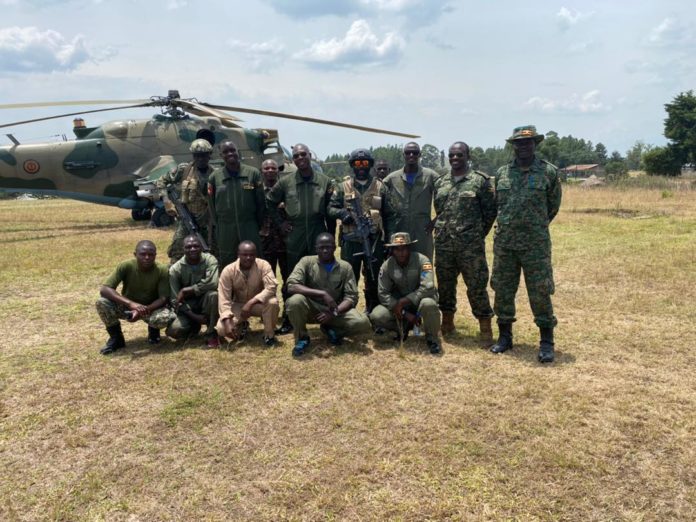
The Commander of the Land Forces, Uganda People’s Defence Forces (UPDF), Gen Muhoozi Kainerugaba has warned the Karamojong warriors and cattle rustlers that they are coming with hell for them after they killed three geologists and three soldiers.
The three geologists working with Ministry of Energy and Mineral Development and soldiers were killed by suspected Karamojong warriors.
“My Karimojong brothers! We have begged you to stop the life of robbery and violence. We have begged you to stop attacking your neighbours but to no avail! You have refused all our appeals! Well, now we are coming and hell is coming with us!” Muhoozi warned.
The bodies of three geologists and the three soldiers were recovered by the army after they were killed by suspected warriors.
The geologists were working with Ministry of Energy and Mineral Development while the UPDF soldiers had escorted the geologists.
The six are said to have been killed in Lotisan Sub-County, Morton district by a joint group of Turkana and Matheniko warriors and guns taken away from them.
The group was mapping surveys on Minerals and included a Makerere University student who was doing her internship with the Ministry.
The ongoing joint security forces operation, code named “Usalama Kwa Wote” against illegal guns and ammunitions in Karamoja sub-region has so far led to the recovery of 17 illegal guns, 1724 warriors arrested and 316 have been prosecuted.
The Commandant of the Anti-Stock Theft Unit (ASTU) in Karamoja Elias Kasirabo explained that the security forces will continue to put out of action any enemies of peace in the sub region irrespective of the changing tactics from the warriors.
The operation has also recovered 170 illegal riffles, 2232 Rounds of Ammunition and 15,558 stolen cattle since its inception in July 2021.
‘Usalama Kwa Wote’ loosely translated as ‘Peace for All’ aims at the total restoration of peace and security in Karamoja sub-region.
Thirteen candidates have picked nomination forms from the National Resistance Movement’s (NRM) Electoral Commission offices at the headquarters in Kampala seeking to replace Jacob Oulanyah as Speaker in the 11th Parliament.
They include the incumbent Deputy Speaker Anita Among, Deputy Attorney General Jackson Kafuuzi, Tororo Woman MP Sarah Opendi, Arua Central MP Jackson Atima, Dokolo South County MP Felix Okot, Lwemiyaga County MP Theodre Ssekikubo.
Others are; West Budama South MP Jacob Oboth-Oboth, Kagoma North legislator Alex Kintu Brandon, State minister for Sports Denis Hamson Obua, Health Minister Jane Ruth Aceng, Masindi District’s Florence Akiiki, Agago’s John Okot Amos and Bugahya County MP Pius Wakabi Rujumba.
The ruling party shall elect its flagbearer in the upcoming speaker race on Thursday, March 24, 2022 in a special caucus meeting at Kololo Ceremonial Grounds.
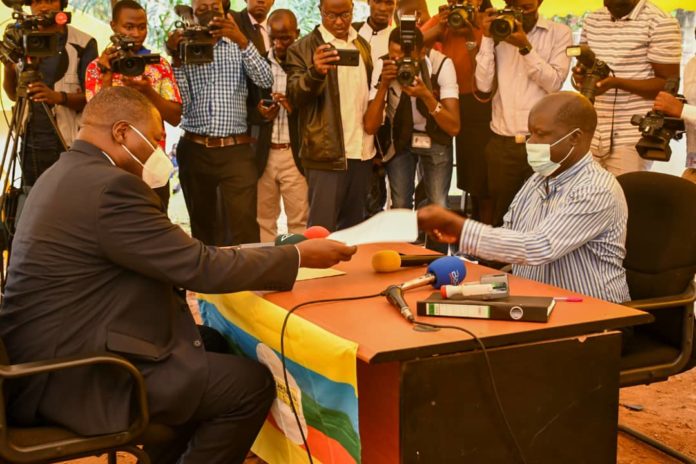
“When COVID- 19 struck, Equity Group sought its true north, its purpose and commitment to support its members. The Board and Management decided to focus on saving lives and livelihoods, giving dignity, and expanding opportunities for wealth creation while keeping the lights of the economies on.
Against a backdrop of uncertainty, the Group focused on supporting customers and in the process increased and accelerated loan disbursements and growth by over 29% and 23% for the two years respectively while the economy was plummeting to a GDP growth rate of negative 0.1% from a high of 5.8%. Equity was committed to save the businesses of its customers while maintaining livelihoods. As the COVID-19 pandemic mutated into a social, humanitarian, and economic crisis, Equity Group rolled out social investments of Kshs 5.8 billion to complement Government’s health and social responses in the East and Central Africa region. Equity Group MD and CEO Dr. James Mwangi served on the Kenya National Emergency Response Fund for COVID-19 Board as Chairman of the Health Committee.
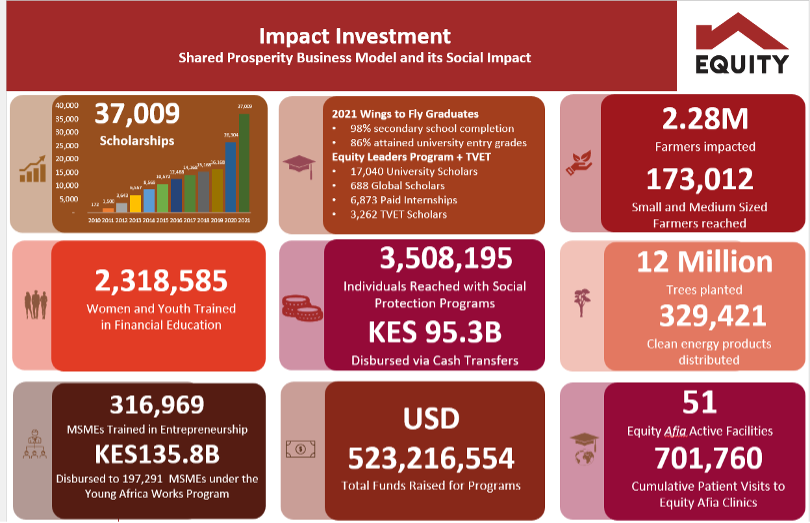
Equity Group Chairman Professor Isaac Macharia served as the Chairman of the Board’s Health Technical Advisory Committee while Dr. Joanne Korir, Equity Group Foundation’s Head of Health, served as the Committee Secretary. The Group leveraged on its Equity Afia clinic network to spearhead a COVID- 19 health awareness campaign for staff and customers, keeping the doors of its 51 clinics open and cumulatively recording over 701,000 patient visits. The Group, jointly with Mastercard Foundation and Dr. Mwangi’s family contributed Kshs 1.7 billion of which Kshs 1.3 billion went into the COVID-19 health response focused on building capacity, including repurposing and funding local manufacturers to establish PPE manufacturing facilities, and supporting 116 National Referral, County and faith-based hospitals with free PPEs and comprehensive supplies in Kenya. This was accomplished over the last 2 years in collaboration with the Kenya COVID-19 Emergency Response Fund Board.
Under the coordination of the Kenya Medical Association, the funding also helped to scale up the psychosocial wellness and case management program for frontline medical workers. In Rwanda, Equity Group supported the Government in its COVID- 19 testing and tracking measures through a Ksh100 million initiative to provide testing kits, while in Uganda, the Group presented logistics support to the national emergency response centre. In the Democratic Republic of Congo (DRC), 41 hospitals received Kshs100million in PPE support to safeguard healthcare workers. Kshs 428 million went into supporting 14,600, Wings to Fly and Elimu scholars in Secondary Schools and TVET scholars through provision of a monthly allowance of between Kshs 3,500 to Kshs 4,000 for the 9 months that schools were closed while also providing them with a solar panel, a radio and a charger to enable them to continue their studies and to charge their phones which kept them engaged with their teachers, classmates, and the educational broadcast programs.
To strengthen resilience and expand economic opportunities for young people and women, Equity Group Foundation (EGF) scaled up capacity building for Micro, Small and Medium Enterprises (MSMEs) through provision of Financial Literacy, Entrepreneurship Training and Digital Literacy under the Young Africa Works (YAW) program in partnership with Mastercard Foundation. This resulted in 436,000 MSMEs being enrolled into the program, with over 316,000 of these MSMEs cumulatively trained, 200,000 MSMEs accessing Kshs 136 billion in loans and 1.2 million jobs created. To date EGF has provided Financial Literacy training to over 2.3 million youth and women to enhance their financial inclusion.
Our initiatives in Energy and Environment kept young people gainfully engaged in tree nurseries where Equity sourced seedlings to plant 12 million trees to date. More than 329,000 households were reached with clean energy solutions, domestic water harvesting and storage as well as household water purifier initiatives. In the mission to transform agriculture, over 2.2 million farmers and micro small and medium agriculture enterprises were supported with various interventions and partnerships, to access financing to expand their scope, scale, resourcefulness, and capacity in Food & Agriculture production. To cushion small holder farmers from access challenges presented by COVID-19 restrictions, the bank collaborated with like-minded partners to distribute inputs through a digital technology innovation – the E-Voucher system. Cumulatively Kshs 1.9 billion worth of inputs have been distributed to 91,000 farmers through agro dealers enrolled in the system. In leveraging partnerships to expand Social Protection, Equity worked with Governments, development partners and global foundations to extend safety net payments reaching 3.5 million people cumulatively.
EGF is scaling its initiatives in the subsidiaries. In education, to cement the objective of creating the next generation of leaders, the Equity Leadership Program (ELP) was rolled out in the Democratic Republic of Congo, DRC and Rwanda with 131 scholars and 32 scholars respectively on boarded for internship, coaching, and mentorship. This marked the regionalization of the ELP program.
In social protection, through Cash Transfer Programmes, the Group provided inclusive financial services through fully fledged bank accounts and biometric smart cards to millions of marginalized and vulnerable households living in Uganda, Rwanda, and South Sudan. Equity leveraged innovative delivery models to co-create enrolment and payment solutions for Elderly Persons, Orphans, Persons with Severe Disabilities, Persons living in ASALs, Internally Displaced Persons, Refugees and other vulnerable segments.
EGF under its Enterprise Development & Financial Inclusion pillar is replicating its MSMEs capacity building initiatives across the region to enhance Financial Inclusion. Under the YAW-Uganda program, Equity bank Uganda trained 18,341 MSMEs in financial education and disbursed loans worth Kshs 420 million to over 3,700 youth ventures. EquityBCDC, under the Mastercard Foundation (MCF) and Financial Sector Deepening (FSD) Fund for Financial Inclusion program, trained over 1200 women owned MSMEs.
To enhance regional expansion into Rwanda, Uganda, DRC and Tanzania, EGF scaled up its operations in Food & Agriculture and started establishing private public partnerships jointly with various development partners to drive the growth of the sector.
In support of the economy during the COVID-19 crisis, the Group waived mobile banking transaction fees amounting to Kshs 2.9 billion and Kshs 1.2 billion of loan rescheduling fees to enhance disposable income of clients while easing cost of living pressure to low-income households. The Group rescheduled loans amounting to 32% of all client loans to support businesses to survive, and households to realign to new and emerging opportunities. The shareholders paid the price for two consecutive years foregoing dividends to backstop the risk of uncertainty and enable the Group to enhance its capital buffers. International financial and development partners worked with Equity to strengthen its capital buffers through USD 265 million of Tier 2 capital, and partial credit guarantees in a credit risk sharing mechanism for sectors adversely affected by COVID – 19. “This fortified our capital buffers and increased our ability to support our customers, enhanced liquidity buffers to 64% while mitigating cashflow risk during the uncertain times,” said Dr. James Mwangi while releasing the results.
After 2 years of operating in a COVID-19 environment, Equity has emerged as the regional financial sector market leader as defined by financial parameters; balance sheet, asset size, profitability, customer base and market capitalisation at the Nairobi Securities Exchange. Equity has emerged stronger, transformed, and registered record financial performance and has strengthened its social contract with society, remaining focused on its purpose while learning valuable lessons;
Human resilience through innovation and creativity; humanity has in a record time developed a COVID-19 vaccine giving hope to overcome the health crisis.
Sustainability is built on social contract of shared prosperity.
You can do good while doing well and the two are not mutually exclusive; purpose can be profitable if executed sustainably on an appropriate business model.
Business can be a force for development if it operates with a twin economic and social engine and can achieve sustainability and harmony with society when the two engines are in sync and parity.
The power of a compelling and inspiring purpose helped to rally the staff, customers, and other stakeholders against adversity. The Equity Group family has an excellent track record in this regard and was able to overcome the fear of uncertainty and COVID-19 related deaths to carry on the purpose of saving and transforming lives, giving dignity while expanding opportunities for wealth creation and keeping the lights of the economies on.
A crisis is an opportunity to innovate and act expeditiously to facilitate and support customers; never waste a crisis.
Equity Group has recorded superior performance for the year ended 31st December 2021 despite the challenging operating environment characterised by a global COVID-19 pandemic.
Profit After Tax increased by 99% to Kshs 40.1 billion from Kshs 20.1 billion with Profit Before Tax recording a growth of 134% to Kshs 51.9 billion up from Kshs 22.2 billion the previous year. The Group has recommended a record dividend pay-out of Kshs 3 per share totalling Kshs 11.3 billion which is a 50% jump from previous dividend pay-out after earnings per share grew by 98% to Kshs 10.40 up from Kshs 5.20 the previous year.
Net interest income grew by 25% to Kshs 68.8 billion up from Kshs 55.1 billion. This was driven by a 23% growth in loan book to Kshs 587.8 billion up from Kshs 477.8 billion and an 81% growth in investment in Government securities to Kshs 394.1 billion up from Kshs 217.4 billion. Non funded income grew by 15% to Kshs 43.6 billion up from Kshs 37.8 billion driven mainly by trade finance, payment channels and foreign exchange trading income. Trade finance registered a 55% growth in revenue to Kshs 3.2 billion up from Kshs 2.1 billion.
Despite zero rating mobile transaction offerings, transaction income grew by 37% to Kshs 10.4 billion up from Kshs 7.6 billion on the back of E-commerce and Merchant banking business. Foreign exchange trading income grew by 33% to Kshs 8.3 billion up from Kshs 6.2 billion driven by diaspora inflows that grew 37% to reach Kshs 383.5 billion up from Kshs 279.4 billion.
Total income grew by 21% to surpass the psychological USD 1 billion mark to record Kshs 112.4 billion up from Kshs 92.9 billion the previous year. Despite a 24% growth in staff costs to Kshs 19.1 billion, growth in other operating costs to Kshs 36.5 billion up from the Kshs 30.6 billion, total costs recorded a decline of 16% to Kshs 60.5 billion down from Kshs 71.9 billion driven by an 81% decline in loan loss provision to Kshs 4.9 billion down from Kshs 25.9 billion the previous year. Portfolio at risk declined to 8.3% down from 11% with non-performing loan coverage increasing to 98% up from 89%. In absolute terms, total non-performing loans declined to Kshs 44.5 billion down from Kshs 50.6 billion.
Total Assets grew by 29% to Kshs 1.305 trillion up from Kshs 1.015 trillion driven by a corresponding 29% growth in customer deposits to Kshs 959 billion up from Kshs 740.8 billion resulting in excess cash being deployed in low yielding government securities at 9.6 %, while cost to income remained fairly constant at 49.1% up from 48.5%. Return on Average Equity expanded to 26.1% up from 15.3% while Return on Average Assets grew to 3.5% up from 2.3% on the back of benefits of economies of scale and efficiencies of digitisation and a shift of business model from fixed costs to variable cost resulting in the enhanced returns.
The bulk of customers’ engagement and consumption of banking products and services is now on digital channels of internet and mobile on self-service devices delivering 24-hour banking experience and convenience. Banking has largely shifted from where you go to what you on do on your devices compressing geography and distance.
The Group’s offensive and defensive strategy has led to achievement of the twin objective of securing the future while securing market gains of customer consolidation. Equity Group has now strategically positioned itself as a systemic regional diversified business in six countries with the dominant market in Kenya contributing only 59% and 63% of the Assets and Revenues respectively. Strict adherence to IFRS 9 has led to full recognition of lifetime risk in the Asset portfolio with provisions for portfolio at risk being 98% and at 128% with credit risk guarantees.
“We have strengthened our business model to achieve an embedded shared value concept in our twin engine of social and economic aspirations and deliverables. We have scaled our social and environmental impact investments in capacity building and enhancement through education, health, and entrepreneurship training,” said Dr. Mwangi, adding, “We have strengthened our participation in formalising and integrating the informal sector in the real economy with the formal supply chains and ecosystems of agriculture, micro, small and medium enterprises. To strengthen the social contract of shared prosperity, Equity is celebrating the strong social brand and exceptional performance by offering 2,000 comprehensive Wings to Fly scholarships for 4 years at an anticipated cost of Kshs 2 billion representing shared prosperity with host communities.”
The Group has a positive outlook of the future. We have launched a Marshall Plan ‘Africa Recovery and Resilience Plan’ with a seed fund of USD 6 billion equivalent to Kshs 690 billion to act as a stimulus for the private sector. The ‘Africa Recovery and Resilience Plan’ is built on a platform of collaboration and cooperation for Public Private Partnerships to transform the region through value addition and ecosystem development in 5 key areas:
Primary sectors of Food and Agriculture, and extractive sectors
Manufacturing and Logistics
Trade and Investments
Micro Small and Medium Enterprises
Social and Environmental impact investments
The strategy aims at funding and financing 5 million businesses and 25 million households to reach 100 million people in Africa and to create 50 million jobs both directly and indirectly. By offering its rails and capability to drive this ambition, Equity hopes to be equally transformed to sustain its growth trajectory that has led it to sustain 10-fold growth every five years and to exponentially grow value for its shareholders.
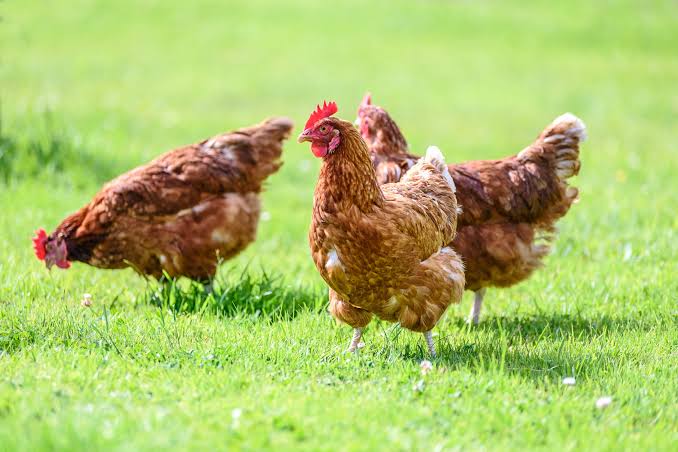
Majid Al Futtaim, the leading shopping mall, communities, retail and leisure pioneer across the Middle East, Africa and Asia, commits to only sell cage-free eggs across its Carrefour franchise in the region under a newly signed animal welfare policy.
The Company is working towards a 100% cage-free shell egg private label assortment across all markets it operates in by 2030 and all national brands by 2032.
Developed in partnership with The Humane League, the first-of-its-kind commitment goes beyond what legislation prescribes and contributes to further improvements in farming conditions in the region.
Under the new Farmed Animal Health and Welfare Policy, Majid Al Futtaim will promote alternative and more sustainable housing systems, such as cage-free, outdoor access systems, free-range systems and organic.
In driving much-needed change across regional markets and raising awareness on the topic of animal welfare, the company is committed to working with suppliers to increase its offerings of cage-free shell eggs in Carrefour’s assortment.
“Under our long-held commitment to leading in all the markets in which we operate, Majid Al Futtaim Retail is proud to provide its customers with products that comply with the highest quality and safety standards, and that have been produced by socially and environmentally responsible means,” said Hani Weiss, Chief Executive Officer, Majid Al Futtaim Retail.
“This announcement is the region’s first Farmed Animal Health and Welfare Policy to state overarching business commitments and positions on crucial welfare standards. As a result of today’s announcement, our customers can expect the highest animal health and welfare standards from Carrefour throughout the region. We are dedicated to working responsibly in this area and will continue to make progress by supporting best practices across our supply chains.”
This commitment seeks to deliver a number of potential advantages to the wider society as a result of adopting higher welfare farming.
Cage-free egg production offers consumers a host of benefits, including improved health, reduced mortality, higher product quality, enhanced disease resistance and reduced medication, lower risk of foodborne diseases, farmer job satisfaction and a contribution to corporate citizenship efforts.
“Majid-Al Futtaim’s announcement to exclusively source cage-free eggs for all its Carrefour retail operations will help to reduce the suffering of countless hens,” said Aaron Ross, Vice President of Policy and Strategy at The Humane League. “This policy demonstrates that Majid Al Futtaim has true courage of their convictions, cutting-edge market intelligence, and strong relationships with customers and suppliers.”
Across all its markets, Majid-Al Futtaim is working hand-in-hand with industry, government and business partners to help transform the market in pursuit of sourcing cage-free eggs for its Carrefour operations, and ensure that 100% of its private label products come from non-genetically modified animals by the end of 2023.
The company has further committed to annually reviewing its cage-free progress and disclosing developments to remain transparent in the challenges faced and success achieved in pursuing its policy goals.
The 2032 date for all Carrefour regional operations will provide a conservative ten-year phase-in period in consideration of the unique challenges in some regional markets.
Majid Al Futtaim will work closely with national brand suppliers, industry partners and other stakeholders on systematic changes towards higher animal health and welfare standards in the respective markets.
The policy also stipulates multiple important points relating to the general health and wellbeing of animals, including freedom from hunger, thirst and discomfort by providing an appropriate environment. Freedom from pain, disease, injury, and freedom to display normal behaviour. Freedom from fear and distress by ensuring conditions and treatment which avoid mental suffering. And finally, freedom to undergo positive experiences by providing appropriate conditions to experience positive emotions and encourage natural behaviour.
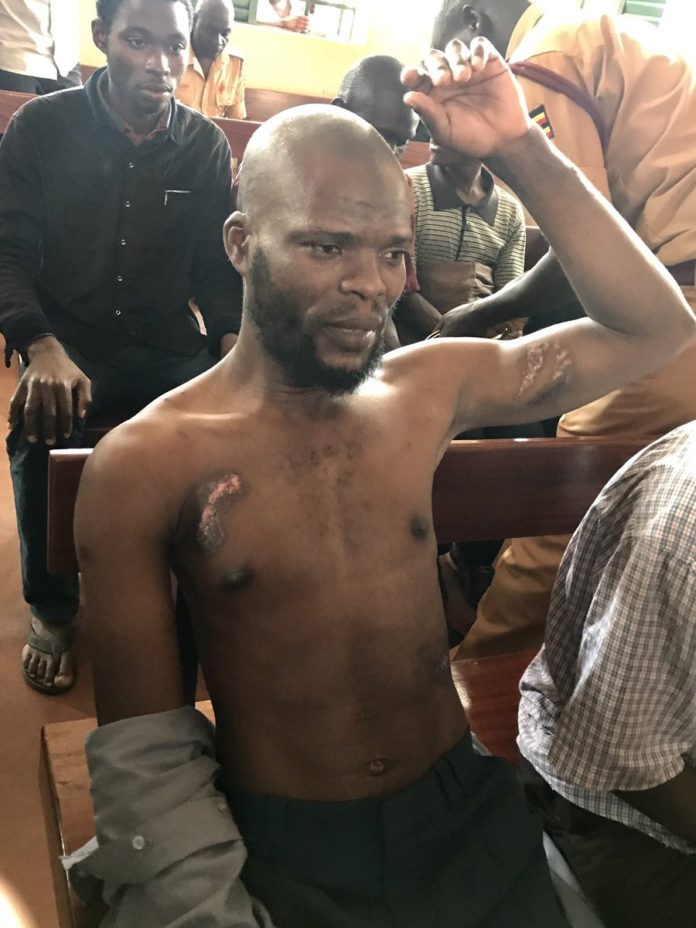
The Ugandan government has failed to hold to account security officials, who have unlawfully detained and tortured hundreds of government critics, opposition supporters, peaceful protesters, and others, Human Rights Watch said in a report released today.
The 62-page report, “‘I Only Need Justice’: Unlawful Detention and Abuse in Unauthorized Places of Detention in Uganda,” documents enforced disappearances, arbitrary arrests, unlawful detention, torture, and other ill-treatment by the police, army, military intelligence, and Uganda’s domestic intelligence body, the Internal Security Organisation (ISO), most in unlawful places of detention in 2018, 2019, and around the January 2021 general elections.
“The Ugandan government has condoned the brazen arbitrary arrests, illegal detention, and abuse of detainees by its officials,” said Oryem Nyeko, Uganda researcher at Human Rights Watch. “Urgent steps are needed to help victims, to hold abusive security agents to account, and to end this specter of impunity and injustice.”
Though the authorities have sometimes acknowledged these abuses, they have done little to end them or to provide justice to the victims and their families. The victims face persistent physical, mental, and economic problems during and after their detention, as well as obstacles to obtaining justice.
Between April 2019 and November 2021, Human Rights Watch interviewed 51 people, including 34 former detainees, witnesses of abductions and arrests, government officials, members of parliament, opposition party members, diplomats, human rights activists, and journalists in Uganda’s capital, Kampala.
Former detainees described how security officials flouted criminal procedures during arrests and while holding the detainees in custody. Security officers accosted victims at their workplaces, homes, or on the streets and forced them, sometimes at gunpoint, into unmarked vehicles, usually Toyota Hiace vans, locally known as “Drones.” Victims were detained in a variety of unauthorized locations. In many cases, they were held in so-called safehouses, intended for use to protect witnesses, but instead used as makeshift detention centers run by the Internal Security Organisation. In some cases, detainees were taken to an island on Lake Victoria, or held in vehicles, an underground room in the parliament building, and military barracks. A man who was detained by Internal Security in a safe house in Kyengera in 2019 said: “I saw three military tents and two State House pickups and three other vehicles, [full of] of victims just like me, but I didn’t know that when I was entering there. I thought it was someone’s home.”
On February 5, 2020, the Parliamentary Committee on Human Rights released a report from investigations it had opened the previous year into allegations that ISO officials had abducted and illegally detained more than 400 people. The report confirmed that government security agencies were detaining and abusing people in “safehouses.” The committee recommended that the relevant agencies investigate the allegations further. But the government has taken no steps to carry out the recommendation or otherwise end the unlawful, abusive practices.
In the two months before the January 2021 general elections, and for several months afterward, incidents of abuse spiked. In Kampala, and its surrounding districts, the security forces arbitrarily arrested, and sometimes forcibly disappeared government critics, opposition leaders and supporters, and alleged protestors. While the authorities have released some detainees in the course of the past year, the whereabouts of many have not been revealed.
Former detainees said that security officers denied them access to lawyers or family and tortured, beat, and shackled them, and gave them electric shocks, and injections of unidentified substances. Some detainees, men and women, experienced rape, and sexual torture during their detention.
A woman who had been held by internal security in a safehouse said that an official raped her twice, and other officials also tortured her: “I was tied up – they called it ‘Rambo’ – I was crucified. I was in pain. I stayed [in that position] for 12 hours. I was removed at 1 a.m. in the night. [My body] was swelling before I was taken inside.”
Security officers accused some detainees of assassination attempts of high-profile government officials, spying, and colluding with rivals of President Yoweri Museveni to oust him from office. Others said they were accused of crimes such as burning down a school or stealing motorcycles. In nearly all cases of unlawful detention documented, victims alleged that security officers stole and extorted money from them or their families during arrests or as a condition of their release.
On several occasions, security officers ignored court orders to release detainees, or rearrested people who had been released on bail.
Both Ugandan and international law prohibit, in absolute terms, arbitrary detention, enforced disappearances, and torture. Uganda’s 1995 Constitution provides that an arrested or detained person should be held in a legally recognized detention facility. The Prevention and Prohibition of Torture Act of 2012, and the Human Rights (Enforcement) Act of 2019, further criminalize torture and provide for personal liability for public officers who commit human rights violations. However, no one has yet been convicted under any of these laws.
Ugandan authorities should close all unlawful detention centers and investigate all reports of abuses, including enforced disappearances, arbitrary detention, torture, rape, and other forms of sexual violence, and ensure that all those found responsible are held to account, Human Rights Watch said. Uganda’s international partners should speak out publicly about these serious violations and urge the government to ensure justice for victims.
“The Ugandan authorities, as a matter of urgency, need to reform the police and other security agencies to dismantle the structures that have enabled these horrific abuses to occur and go unpunished,” Nyeko said. “Anything short of a complete overhaul will only perpetuate the culture of impunity and hinder the creation of rights-respecting and accountable security services.”
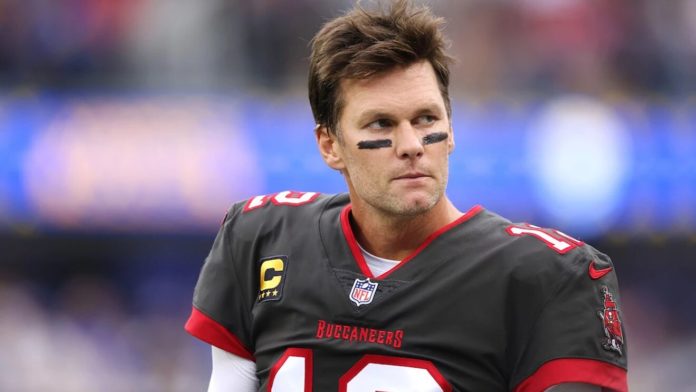
Tom Brady can’t seem to make up his mind about retirement. First, he came out signaling his retirement shortly after the Tampa Bay Buccaneers came up short in the NFC Divisional Round of the NFL playoffs. Then, in a shocking turn of events that even expert picks couldn’t have predicted, Brady would announce that he had unfinished business on the football field to deal with.
When Brady suits up for the NFL 2022-23 season, he will be 45 years old. He will also be the oldest player on the field, beating the next oldest player by five years. While age didn’t stop Brady from winning Super Bowl 55 at the age of 43, Brady will need all the protection he can get to survive the grueling NFL season. He will have, at the least, 17 regular-season games to go through before a possible playoff run with the Buccaneers.
Does Brady Have Enough in the Tank for Another Super Bowl Run?
Brady holds just about every record you can imagine for a quarterback. He also is the only NFL player to have seven Super Bowl rings, giving him more stones than Thanos has for his Infinity Gauntlet. Brady has also shown that he can win a Super Bowl in his 40s, making a possibility of another Brady Super Bowl appearance very likely.
Brady also has a drive that many other players don’t have inside themselves. He strives to be a champion every season he sets foot on the field. That championship drive inside Brady is what has helped him become a seven-time Super Bowl champion. He also wants to prove his haters wrong when they say he doesn’t have anything left in the tank for one more Super Bowl.
The Sixth-Round Pick from Michigan University Has a Championship Breed
Brady didn’t start his championship-winning career in the NFL; it goes back to the days he would come in as backup quarterback behind Brian Griese at the University of Michigan. In the 1997-98 NCAA Football season, the Michigan Wolverines would have an undefeated season, becoming co-national champions with the Nebraska Cornhuskers. Brady would fill in for Griese in games that were out of reach for opponents.
Brady would complete 12 passes on 15 attempts for 103 yards for the season. While Brady wasn’t the leading factor of the Wolverines championship season, he did get a taste of what it was like to be a champion. When the Patriots took a chance on Brady in the sixth round of the NFL draft, Brady made it a mission to prove to every team that passed him up that they made a mistake.
Brady Has Turned the Super Bowl into the Brady Bowl
During his past 22 seasons in the NFL, Brady appeared in ten Super Bowls. So it would be pretty easy to suggest that Brady was going to be in the Super Bowl almost every other year. While Brady hasn’t won every Super Bowl he has been in, he lost twice to the New York Giants and once to the Philadelphia Eagles; he has been in the Super Bowl for a large portion of his career. That is what has made some people start calling the Super Bowl the Brady Bowl during his career in the NFL.
Brady has also had great moments in the Super Bowl during his career. From last-minute game-winning drives to a miraculous comeback from behind victory, Brady has done it all when he’s been in the Super Bowl. That is what makes Brady so unique: he continually gives fans these great moments in the Super Bowl every time he is there.
Brady is the Iron Man of the NFL
While the Brady doubters will say he is too old or too slow, Brady shows that he continuously plays at the highest level, despite his age. Nothing seems to be slowing Brady down from his winning ways and his drive to be the best player in all of NFL history. That helps make Brady the Iron Man of the NFL, as he has come back to the gridiron for one more season in hopes of winning his eighth Super Bowl ring.
The legislation has changed tremendously over the years for gambling or placing bets online. For Africa, finding an online casino could be a tough task for some, especially since it is the second largest continent on Earth with many different countries having their own legislation.
Different influences of other countries and cultures have helped shape the idea behind their beliefs of online gambling.
First you have to find which areas will accept gambling or allow online casino play. Below you can see just how it applies to certain African areas.
Gambling in North Africa
Influenced by European culture, North Africa is a desert mainland. It has very little to no gambling whatsoever due to Islamic religious beliefs dominating the population.
In Morocco, the legislation is slightly different as there is one land based casino. Back in 1952, they opposed a strict belief that is against casinos and gambling and opened their own casino.
With official legislation in 2002, the area has progressed in that regard and the casino is mainly used as a tourist attraction. In addition, online casinos have developed too.
Gambling in Central Africa
Central Africa is composed of seven different countries known as Cameroon, Chad, Congo, Central African Republic, Democratic Republic of Congo, Rwanda/Burundi and Gabon. Every one of them except Gabon believe in strict policies to avoid gambling.
Gabon has mostly adopted the practice of gambling and has used its methods to prosper. They have a handful of land based casinos that are regulated and the use of online casinos are currently being used.
Gambling in West Africa
Gambling here is a mixed bag of results, as some territory areas either oppose it or embrace it. If you live in Benin, Ghana, Senegal, Sierra Leone or Togo, then you are allowed to enjoy gambling, especially online.
Gambling in East Africa
This section of Africa has similarities compared to the Northern part, but gambling is more appealing. Uganda is somewhat in a gray area in terms of legal gambling and other ventures. Most areas are pro-gambling in casinos and online.
Gambling in South Africa
South Africa has gambling roots dating back to 1996. This legislation has grown since 2008 and welcomes gambling to all residents in the surrounding areas. Zambian is the best tourist destination for this region with improved quality of gambling.
Most Popular Online Gambling Sites
PlayOJO Casino is the most popular online casino for South Africa natives. This online casino features over 1900 casino games, a variety of payment methods, and awesome player rewards
There is a gaming section dedicated to new games and has some of the most appealing selection out of other online casinos in Africa. In addition, there is a jackpot section where players can specifically try to play games that offer a lump sum payout.
Springbok Casino
This casino is a close competitor to PlayOJO, with no deposit bonuses, lucrative welcome bonuses, and even a long list of preogressive slots to play. They do not have as many games as the other top online casino but they do offer some competition.
They have slightly over 450 games, so not as much to choose from, but the variety is a bit different. These feature many slots to choose from and some table games. In addition, some jackpot games offer high payouts that are appealing.
Casino Tropez
If either of those options above did not suit your needs, you could look into Casino Tropez. If you are a high roller, you might like the appeal of this online casino.
They feature over 800 slots, a huge live dealer section, big deposit bonuses for large amounts, and daily leaderboards for certain games. In addition, they have been around since 2001 and provide one of the most reputable online casinos around.
To newer players in Africa wanting to get their feet wet with online casinos, this might not be a great first option since the amount of games could be confusing. However, it can still provide some fun if you take your time.
They also feature their own mobile app that you can download and play on the go. This makes them an attractive choice for players wanting to play anytime they want and anywhere they want.