Stanbic Bank
Stanbic Bank
26.8 C
Kampala
Stanbic Bank
Stanbic Bank
Home Blog Page 717

Judiciary deploys new Deputy Registrars, shuffles 14 Judicial Officers

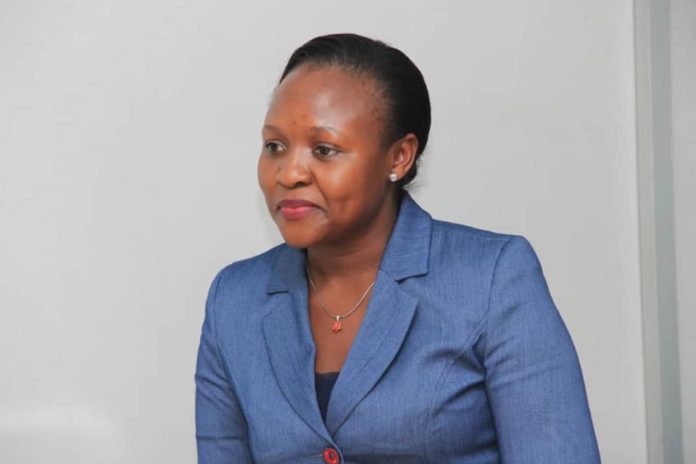
Judiciary’s Chief Registrar Sarah Langa Siu

The Judiciary has deployed the six newly-appointed Deputy Registrars and transferred 14 other judicial officers to various parts of the country.

The deployments and transfers announced include two deputy registrars, three assistant registrars, and nine Chief Magistrates. The changes have also seen four Chief Magistrates assigned additional roles of caretaking other magisterial areas.

According to a statement signed by the Chief Registrar, Sarah Langa, Fort Portal Chief Magistrate Kule Moses Lubagula will now care take of Kyenjojo magisterial area while Samuel Twakyire, the Mbarara Chief Magistrate will take charge of Isingiro as well.

The other chief magistrates affected are; Moses Baligeya Mufumbiro of Kiboga will now be caretaking Hoima whereas Kaggwa John Francis of Mubende will be overseeing the Mityana magisterial area.

Langa said the changes and assignments are part of the routine transfers in the judiciary intended to boost service delivery in the courts as well as address the staffing gaps in the magisterial areas.

With the changes, six newly appointed deputy registrars have also been deployed are; Ayo Miriam E. Okello, Ereemye Jumire James, Mponye Kolya Sarah, Agwero Catherine and Borore Julius Kyaka.

In the transfers, deputy registrar Mary Babirye will be moving from the Mediation Registry to the Supreme Court while Assistant Registrar, Dr. Lubowa Daniel, has been transferred from Arua High Court circuit to the Mediation Registry.

Other re-deployments indicate that Chief Magistrates; Dr. Singiza Douglas Karekona will be heading to Buganda Road while Elizabeth Akullo Ogwal will be taking over Nakawa magisterial area.

The Chief Registrar said the deployments will take immediate effect, while the transfers will take effect on January 1, 2022.

Stories Continues after ad

Central Bank courts MPs over legislation

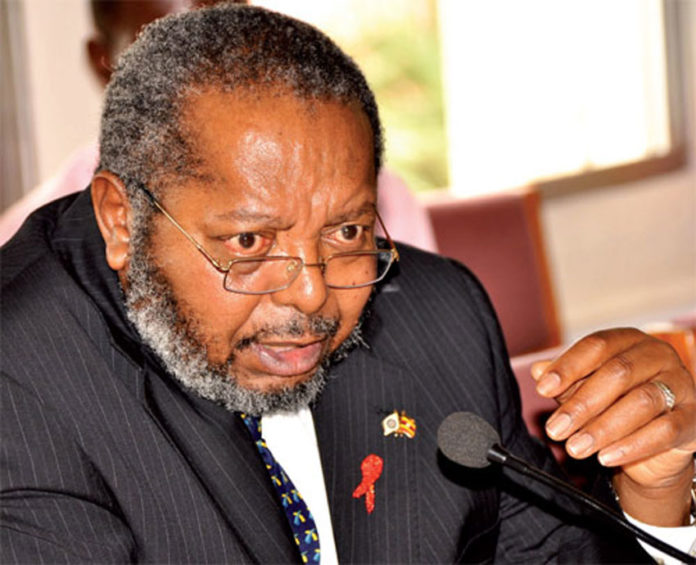
Late Emmanuel Tumusiime-Mutebile

The Bank of Uganda (BoU) is counting on MPs to support legal frameworks that ensure and reinforce its independence and accountability.

Speaking at a BoU engagement with legislators, the Executive Director of Bank Supervision, Dr Tumubweine Twinemanzi, said there was an urgent need for a customer protection and competition law.

He noted that the existence of a legal framework supporting faster resolution of disputes, contract enforcement and punitive penalties would go a long way in encouraging the providers of financial services to expand their activities.

“This would provide a wide array of options in the realm of financial products for the ordinary person,” he added.

In response, Hon Polycarp Ogwari (Ind. Agule County) asked Bank of Uganda to devise interventions in poor loan repayment due to the COVID-19 pandemic.

“The economy nearly ground to a halt affecting incomes of many businesses and this has in turn affected loan repayment. Let BoU devise solutions for these citizens to exert through the banking sector,” Ogwari proposed.

He also added that as Members of Parliament, they are willing to pass legislation that would aid the smooth running and operations of the Central Bank and the Government at large.

Amuru District Woman Representative, Lucy Akello commended Bank of Uganda for supporting Agency Banking as it supports bank transactions where banks do not exist, especially in rural areas.

However, she proposed to the BoU officials to devise means of boosting electronic cash transactions through the available electronic transaction platforms.

“In Kenya, next door, more often transactions are made through mobile payments to the point that you can make transactions with a street merchandise vendor that are electronic; this is something we ought to propagate in our society,” Akello said.

Stories Continues after ad

Museveni appoints new ambassadors, drops Kiyonga

Paul Amoru, the new ambassador

President Yoweri Museveni has appointed and dropped ambassadors in a reshuffle he announced on Sunday.

According to the statement issued by State House, President Yoweri Museveni has dropped the former Defence minister Dr Crispus Kiyonga from his earlier position as Uganda’s ambassador to Beijing.
He has been replaced by Oliver Wonekha who has been the country’s representative to Rwanda.

Uganda’s new ambassador to Rwanda is Maj Gen (Rtd) Robert Rusoke who retired from the army this year. He was also the head of Covid-19 national security team.

In other changes, Uganda’s Ambassador to Tanzania, Richard Kabonero has been dropped and not reappointed.

He recently had a quarrel and accused Uganda’s Special Representative to New York, Adonia Ayebare of interfering with the work of other ambassadors in their countries’ of operation.

Kabonero has been replaced by the former Nyabushozi MP Col Fred Mwesigye.

According to the changes, the former MP Paul Amoru is now Uganda’s Ambassador to Pretoria while the former Deputy Chief of Defence Forces, Lt Gen Charles Angina is the new Uganda’s Deputy Ambassador to Egypt.

Stories Continues after ad

We are not dumping soil in Lake Victoria – Ruparelia Group

Ruparelia Group of Companies have come out and said they own the Kitubulu beach project but it is not true they had dumped soil into Lake Victoria.

For over week, a video captured by a woman showed soil allegedly dumped near the lake by trucks.

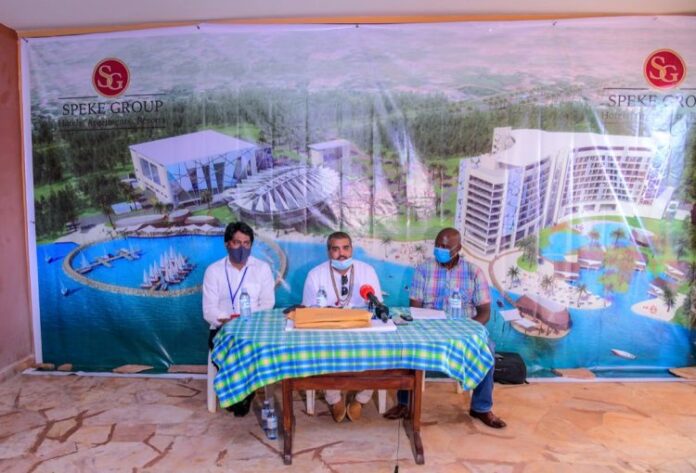
The Managing Director of Ruparelia Group of companies, Rajiv Ruparelia confirmed that they were working within the acceptable confines of the National Environmental Management Authority (NEMA) and the width of their land.

The place under development is Kitubulu formerly Ssese Gateway beach, located in Katabi Town Council in Entebbe.

“The video alleging we are filling part of the lake with soil is not true. It is being played by selfish politicians,” Rajiv said during a press conference held at Kitubulu.

“When you take a look at our title, we have not entered even an inch into the lake. In fact the lake ate into our acreage that we had at the time of purchasing this land but we won’t extend it,” Rajiv said adding they are one of the prominent groups acclaimed for environmental protection.

Ruperelia group announced ground leveling currently being done was paving ground for a Shs 3.6 trillion leisure and accommodation park that will be known as the Speke Resort Convention Centre Entebe.

It will be a 350 room resort and convention centre, with 4 restaurants, marina for 50 boats, 10 presidential suites, Convention Centre with carrying capacity of 3500 persons, additional conference facilities of upto 1500 persons, small conference and meeting facilities, 3 wedding grounds and parking space for 1500 cars.

Residents of Kitubulu who donned white t-shirts said they welcomed the ongoing developments.

“Our economy wants more investments. There should not be any sabotage,” they said.

NEMA issued a 99 year long certificate dated July 17 to Speke Resort Convention Centre Entebe clearing use of 15 acres of land at Kitubulu, Katabi Town Council Entebbe.

Ruparelia Group is involved in education, real estate development and management, hotels, resorts, floriculture and broadcasting among others.

Stories Continues after ad

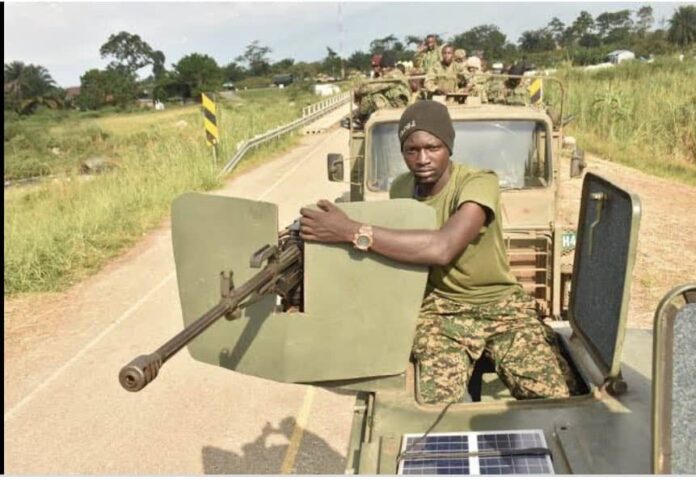
UPDF capture 34 ADF terrorists in Congo

At least 34 Allied Democratic Force (ADF) terrorists have been captured in the current Uganda People’s Defence Forces (UPDF) and FARDC Shujja operation in the Democratic Republic of Congo (DRC).

Last month the two Forces launched joint air and artillery strikes against ADF camps.

The FRDC and UPDF bring to the attention of the public that since the launch of the operation against the ADF terrorists and their local auxiliary forces, the situation remains calm on ground.

According to a statement released by BrigGen Flavia Byekwaso, the spokesperson of UPDF and Kasonga Cibangu Leon-Richard, the spokesperson of FRDC, the two Forces are currently engaged in road construction and rehabilitation works to facilitate and further secure the movement of soldiers and the displaced civilian population, particularly on Mbau- Kamango and Mobili axes, Kamango-Semuliki- Beni.

In order to to gain the loyalty of the population and reverse the harmful propaganda instilled by ADF and their allies, the FRDC and the UPDF have launched a vast awareness campaign and are carrying out civil-military action which are already bearing fruits.

“The two Forces bring to the attention of the opinion that the preliminary results of the air strikes and artillery of November 30, 2021 show that 31 Congolese hostages released 34 ADF terrorists captured and four enemy camp destroyed.” The Forces said in a joint statement.

The forces emphasised that in the conduct of operations, units respect human rights, international humanitarian law and the rules of engagement.

Stories Continues after ad

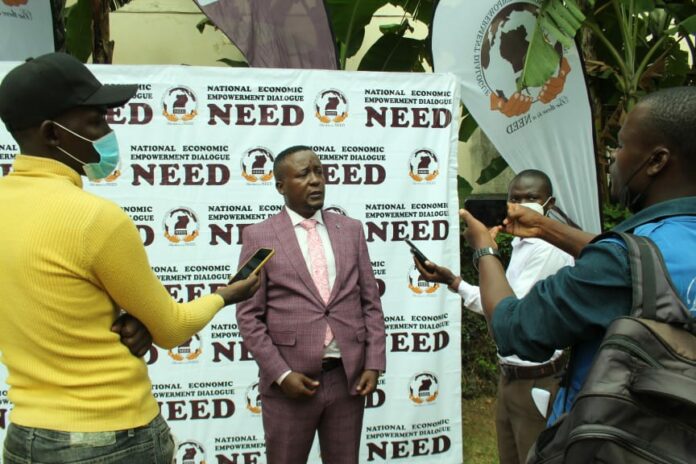
Kabuleta cautions Bugisu people against embracing government programs that make them more poorer

The National Economic Empowerment Dialogue (NEED) leader Joseph Kizza Kabuleta has cautioned Ugandans to desist from being distracted by some government programs that are making them poorer.

He says government has a tendency of coming up with unsustainable poverty elleviation programs such as emyooga, bona bagagawale and parish model with an aim of confusing and sidetracking ordinary Ugandans from fighting for their vast natural resources which are being enjoyed by a few greedy people in power.

To say this, Kabuleta, a former presidential candidate was addressing NEED delegates and the locals of Bugisu subregion on Friday during his nationwide sensitization campaign premised on protecting Uganda’s national deposits that could be used by citizens to elleviate themselves from poverty.

He urged them to wake up and fight for their wealth which is being systematically stolen by a few political elites in the country.

“Its high you stopped being diverted by government through some of its useless programs that make you poorer. Uganda is a rich country endowed with vast natural resources and you have all the rights to that wealth. You should fight and benefit from them so that poverty becomes history,” Kabuleta said.

He also criticized government for ‘killing’ the coffee market yet most the people in Bugisu depend on coffee farming for survival.

“Bugisu region has the best Arabica coffee and its being grown, its being marketed but the people who are growing it are very poor and they are not getting its money-worth. So the purpose of NEED is to bring people into the realisation of what wealth they should expect from the things that are theirs naturally. Bugisu is a very rich region, its rich in minerals like uranium, mercury and gold. The region is also rich in agricultural produce like coffee; it has one of the best coffee in the world. It also has other things like tourism potential with Mountain Elgon and so many other things,”the politician asserted.

” So our purpose is to see why there’s such a dichotomy between the wealth that people have and their livelihood. How could they be so poor amidst so much wealth. The people who have been stealing the wealth of Bugisu and keeping them poor are the people giving them useless subjects to talk about especially those that divert them rather than concentrating on talking about the wealth that they have and why they shouldn’t be partakers of that wealth. If minerals are coming from here why shouldn’t the people of Bugisu be partakers of that wealth and why are they poor yet they are rich?” Kabuleta further wondered.

On the other hand, Bugisu people lead by their cultural leader Umukuka of Bamasaba Jude Mike Mudoma called upon government to get them a ministry of Bugisu like that of Karamoja for easy service delivery.

In September this year, Kabuleta launched NEED- a political movement aimed at promoting economic empowerment among Ugandans.

Unveiling the political movement, the former journalist said NEED is constituted of politicians who currently hold no office but have influence in their respective sub-regions and are able to start meaningful discussions that shall see Ugandans fight for their resources.

Stories Continues after ad

Former Simbamanyo House owner Peter Kamya rushes to pay court filing fees after whistleblower exposed him

Peter Kamya.

The former owner of Simbamanyo House, Mr Peter Kamya has rushed to pay the court filing fees after a whistle-blower exposed him.

City lawyers from Walusimbi & Co. Advocates, who also double as representatives of Meera Investments in the property row between Equity Bank and Architect Peter Kamya of Simbamanyo Estates petitioned the High Court seeking an audit of the court filing fees, indicating that the embattled businessman had repeatedly defaulted fees.

“We are in receipt of a letter written by M/s Walusimbi & Co. Advocates to the Deputy Registrar – Commercial court on 30th November 2021 regarding payment of filing fees,” reads part of the letter from Kamya’s lawyers of Byenkya, Kihika & Co. Advocates.

“As a result of the contents of the letter, our client obtained a fresh assessment from the cashier – commercial court for filling fees and the same was computed at Shs 81,750,000. The said amount has since been paid by our client as filing fees,” the letter reads.

In August 2012, Equity Bank Uganda and Equity Bank Kenya extended a loan worth $10 million to Simbamanyo to finance the construction of a hotel in Luzira and also to take over Kamya’s prior loan from Shelter Afrique. The funds came from both Equity Kenya and Uganda.

Kamya continued to receive money from the rent payments but did not remit any for his loan obligations.

Equity Bank Uganda Limited began foreclosure proceedings against Simbamanyo to recover the outstanding loan.

The bank seized Simbamanyo House and Afrique Suites Hotel on Mutungo Hill in Kampala last year after the city tycoon Peter Kamya and his Simbamanyo Estates failed to clear loans to a tune of $10.8m (about Shs40 billion).

The High Court recently ruled that Kamya should pay a total of Shs1.3 billion as legal costs to Equity Bank (Shs600m), Meera Investments (Shs400m), and Luwaluwa Investments (Shs300m). Kamya is again seeking legal redress over a matter that was deemed closed.

Stories Continues after ad

UNAIDS calls for overcoming pandemics by respecting human rights for all

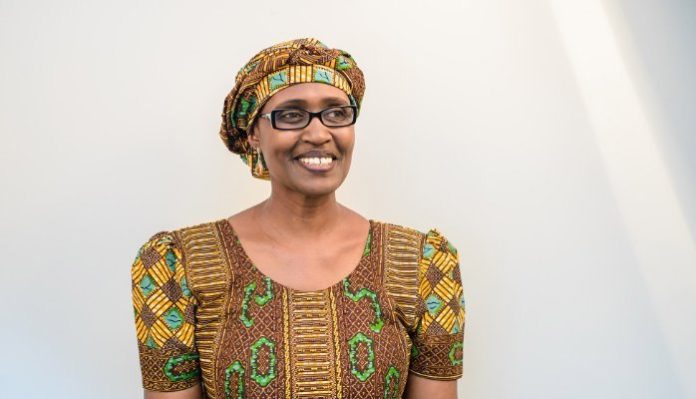
UNAIDS Executive Director Winnie Byanyima

UNAIDS has called for concrete action to prevent and respond to systemic human rights violations that create and exacerbate inequalities.

“We live in one of the most unequal times in history,” said the UNAIDS Executive Director, Winnie Byanyima. “What the HIV pandemic had already revealed, COVID-19 has again confirmed: crises and disasters are felt most strongly along the fault lines of society. Those who experience systemic discrimination and inequality are pushed further and further behind.”

Equality and non-discrimination are cornerstones of human rights. The Sustainable Development Goals made them a central element of the global development commitments that call on countries to reduce inequalities, including by removing the drivers of inequalities, such as discriminatory laws and policies.

Multiple and intersecting inequalities that drive the HIV epidemic are a result of human rights violations. Although new HIV infections globally have declined by more than 30% since 2010, progress has not been shared equally. In some countries, access to combination prevention tools such as pre-exposure prophylaxis and harm reduction services has resulted in progress among the most vulnerable groups of people, but in many others criminalization, marginalization, stigma and discrimination are leading to increased HIV incidence. However, during the past five years, countries that took a criminalizing approach to key populations made less progress in HIV testing and treatment.

In 2020, 65% of new HIV infections were among these key populations, driven by harmful laws, policies and discriminatory social norms that punish, stigmatize and force underground key populations and fail to make available or accessible the prevention, treatment and harm reduction services that could so easily be used to stop HIV transmission and mortality.

Six out of seven new HIV infections among adolescents aged 15–19 years in sub-Saharan Africa are among adolescent girls. This is in part because their right to education is not fulfilled on an equal basis with boys, their right to health is breached when comprehensive sexuality education is not provided and their right to bodily autonomy and security of the person is denied when states fail to address harmful gender norms.

In many contexts, international trade agreements conflict with human rights obligations by enforcing excessive intellectual property protections, creating artificial barriers for low- and middle-income countries to access affordable health products, impeding the production and distribution of generic medicines and hampering efforts to support the research and development of innovative health technologies that meet public health needs.

“This is a time of parallel and converging crises: multiple pandemics, climate change and continued economic shocks. In the past two years we have seen how profoundly systemic and structural inequalities deepen and widen during times of adversity. We cannot simply weather these crises—we must prevent them from happening. We will only succeed if we make the fundamental structural changes to create a more equal and stronger society, capable of meeting the challenges of today and tomorrow and leaving no one behind.  We must dismantle the structures that violate human rights and create and deepen inequalities.” UNAIDS said

“We must strengthen access to health services by eliminating user fees and promoting policies to ensure that health technologies are considered global public goods, not commodities. We must replace coercive and punitive approaches to emergencies, including to pandemics and to health and other pressing societal issues generally, with enabling, supportive and non-discriminatory solutions.” UNAIDS said

  1. The organisation said: “We must radically transform our concepts of gender to ensure substantive gender equality for all and enable people of all genders to flourish and participate in society on an equal basis. And we must take action to ensure that the rights of women are girls in all their diversity are realized through concrete measures and investments, not just promises.”
Stories Continues after ad

Parliament passes East African Crude Oil Pipeline Bill 2021

oil pipes

The full implementation of the oil pipeline project in Uganda has been boosted by the passing into law of the East African Crude Oil Pipeline (EACOP) Bill, 2021.

The bill, with 46 clauses, seeks to facilitate the execution of Uganda’s obligations under the Intergovernmental Agreement and the Host Government Agreement.

The legislators and the Ministry of Energy and Mineral Development were boxed into reaching a consensus by Deputy Speaker Anita Among in regard to among others, the recommendation by the Committee on Environment and Natural Resources charged with handling the bill that in Clause 36 of the bill, the Minister would annually report to Parliament on the status of the Decommissioning Fund.

The committee chairperson, Dr Emmanuel Otaala, said this was intended to support the oversight role of Parliament over the Fund which is essentially a public fund.

The MPs further amended the bill giving the National Oil Company the authority to construct infrastructure that is supportive to the functioning of the oil pipeline after consultations with the host state.

The Act which will have the force of law after the President assents to it will provide for the tariff regime applicable to the project during the different phases of operation including the construction and operation period.

It will also empower the government and the Uganda National Oil Company to pay the transportation tariff in kind, ensure that the project obtains required authorisations in a timely manner as well as grant and protect land rights of the project including land acquisition.

Additionally, the law will define the local content regime applicable to the EACOP and ensure that Ugandan citizens and enterprises benefit from the project. It will also guarantee third party access to the pipeline and define the tariff to be paid.

Earlier, MPs had raised concern about the failure to compensate Ugandans affected by the construction of the US$5 billion oil pipeline despite the project kicking off.

During debate of the bill, it emerged that the project affected persons supposed to be compensated to the tune of Shs 45 billion had not been paid.

Stories Continues after ad

Congolese refugees torn between returning home and remaining in exile

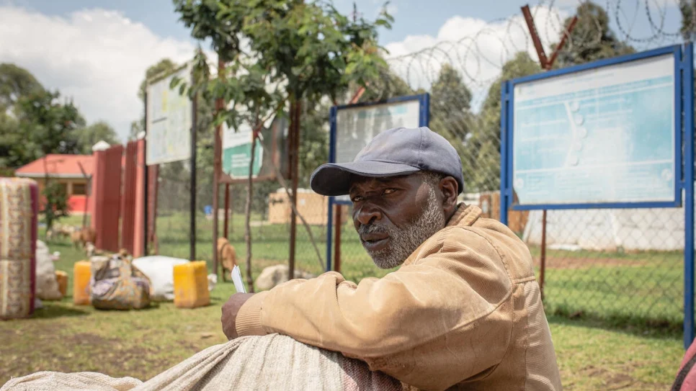
Mongera Bahiira, 60, sits in a small patch of shade at the Nyakabande transit centre in Kisoro, Uganda, surrounded by his wife and six of his 13 children. The rest are young adults who remained in eastern Democratic Republic of the Congo (DRC) with their own families.

“I am worried about them. I don’t know if I will see them again,” said Mongera.

He and his family were forced to flee with whatever belongings they could carry after their village in Masisi, in North Kivu province’s Rutshuru Territory was attacked by armed militia in early October. They hitched a ride on a truck that took them to Bunagana town, near the border with Uganda, where they stayed with relatives for about a month.

But when fighting between the armed groups and Congolese armed forces broke out in the villages surrounding the town on 8 November, the Ugandan government opened the border – which has been closed due to COVID-19 restrictions and allowed those fleeing the violence to enter.

“It’s the first time I am seeking refuge in Uganda and I hope we will be helped,” said Mongera.

UNHCR, the UN Refugee Agency, Ugandan authorities and partners provided assistance to 11,000 Congolese who crossed into the country, relocating over 1,000 of them including Mongera’s family to Nyakabande transit centre.

A few days later, some 10,000 people crossed back into the DRC after Ugandan and Congolese security officials informed them that it was safe to return. Among them was Enoch Twaza, 50, who decided to return to his home in Bunagana, despite his wife Jennifer’s initial reluctance.

“We left a lot of property behind, and we have been assured it is safe to return. If the situation escalates, we shall come back to Uganda,” the father of eight explained before his departure.

Jennifer was not convinced that it was safe for them to go home and was in favour of waiting a couple more weeks, but finally agreed and helped lead the family’s livestock back across the border.

Joel Boutroue, UNHCR’s Representative in Uganda said the sudden movement of Congolese asylum seekers into Uganda is an indicator of “how volatile and unpredictable the situation is in eastern DR Congo.”

The unstable situation has left Alivera Nyamakabambelle torn between staying and returning home. The 84-year-old fled with her family of seven at night, leaving the sound of bombs and gunshots behind.

“If I had my way, I would go back, but my family wants to stay and as I have no one back home to take care of me, I have to stay too,” she said dolefully. Her granddaughter, Tusenge Wema, nodded firmly.

“Going back home any time soon is not an option. We shall stay in Uganda and start a life here,” said the 23-year-old, who is among the 1,000 or so of the recent arrivals from the DRC who have decided to remain for now.

Many of those who returned told UNHCR staff in DRC that their property was looted while they were gone, including food supplies and livestock, leaving them in a precarious situation and in need of humanitarian assistance.

UNHCR’s Boutroue said more resources are also needed to support Uganda, which is the largest refugee-hosting country in Africa with over 1.5 million refugees.

“We need more support to expand our emergency preparedness and capacity to receive new arrivals, as the likelihood of renewed violence and forced displacement is very high,” he said, noting that the capacity of Nyakabande transit centre will be increased to accommodate up to 10,000 people.

He added that those who choose to stay will be assisted until they are ready to return home.

Stories Continues after ad