Stanbic Bank
Stanbic Bank
23.3 C
Kampala
Stanbic Bank
Stanbic Bank
Home Blog Page 721

Vivo Energy launches ‘120 days of extra cheer’ promotion

Vivo Energy launches '120 days of extra cheer' promotion

As the country gears up for the festive season, Vivo Energy Uganda has put up prizes worth half a billion shillings for its customers in a promotion dubbed ‘120 days of extra cheer’.

The ‘120 Days of Extra Cheer’ promotion will offer customers the chance to win prizes and rewards after purchasing Shell FuelSave Unleaded or Diesel.

To participate, motorists who purchase Shell FuelSave Unleaded or Diesel worth Shs 50,000 for a car or Shs10,000 for a motorbike, stand a chance to win  Shs 1Million worth of fuel for up to 60 customers and full car service from Bosch for up to 60 customers.

“The festive season is a time of cheer for many of us and often comes with extra costs that may sometimes dampen the times we want to fully enjoy with friends and family. This can be made easier with the difference of extra, which you are guaranteed to get from Shell FuelSave Unleaded or Diesel through extra savings, extra engine cleanliness and protection. Travel is one of the costlier expenditures throughout this period and with this campaign, we are making it easier by catering to our customers’ fuel and car service costs with our attractive rewards,” said Moses Kebba, Marketing Manager, Vivo Energy Uganda.

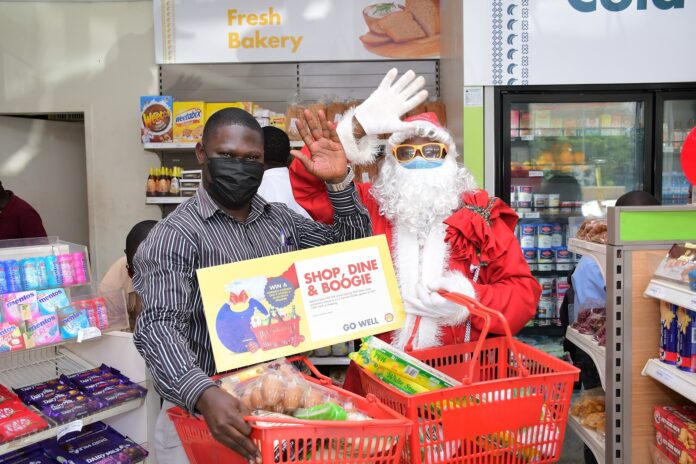
Similarly, customers can win rewards for purchases of over Shs 40,000 made at Shell Select shops and purchases of Shs 50,000 made twice at participating KFC and Java House restaurants located at Shell service stations through the ‘Shop, Dine and Boogie’ promotion.

“Come and meet Santa Claus at our Shell service stations and stand a chance to win various prizes or be among the lucky winners to participate in a store dash at our Shell Select shops. We will also be giving away Bluetooth speakers to lucky customers who participate in the promotion,” Kebba added.

The promotions will take place at all Shell service stations throughout the country from 24th November 2021 to 23rd February 2022.

“This promotion allows us to spread the festive spirit and joy while enabling our customers to make savings and enjoy the difference of extra at Shell. Additionally, our Shell FuelSave Unleaded fuel will ensure our customers have a safe, affordable and enjoyable Christmas period,” Kebba said.

Prizes up for grabs are worth over Shs 500 million, targeting to reward over 30,000 customers in both the ‘120 Days of Extra Cheer’ and the ‘Shop, Dine and Boogie’ promotions.

Stories Continues after ad

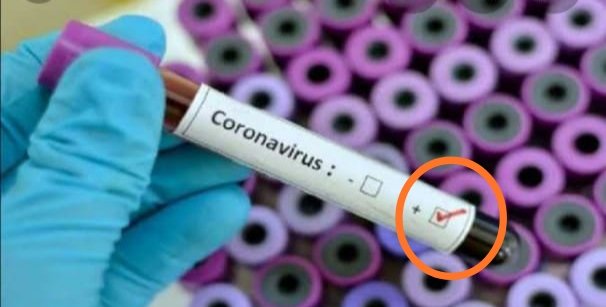
Africa steps up Omicron variant detection as #Covid-19 cases rise in southern Africa

Covid-19 testing kits

African countries are stepping up measures to detect and control the spread of the Omicron variant as weekly new COVID-19 cases in the continent rise by 54% due to an upsurge in southern Africa.

In Africa, the Omicron variant has now been detected in four countries, with Ghana and Nigeria becoming the first West African countries and the latest on the continent to report the new variant. So far, Botswana and South Africa have reported 19 and 172 Omicron variant cases, respectively. Globally, more than 20 countries have detected the variant to date. The two southern Africa countries account for 62% of cases reported globally.

Omicron has a high number of mutations (32) in its spike protein, and preliminary evidence suggests an increased risk of reinfection, when compared with other variants of concern. Researchers and scientists in South Africa and the region are intensifying their investigations to understand the transmissibility, severity and impact of the Omicron variant in relation to the available vaccines, diagnostics and treatment and whether it is driving the latest surge in COVID-19 infections.

Southern Africa has recorded a surge in cases, mostly driven by South Africa. For the seven days leading to 30 November, South Africa reported a 311% increase in new cases, compared with the previous seven days. Cases in Gauteng, the country’s most populous province, have increased by 375% week on week. Hospital admissions rose 4.2% in the past seven days from the previous seven days. And COVID-19-related deaths in the province jumped 28.6% from the previous seven days.

While new COVID-19 cases are rising in southern Africa, they dropped in all other subregions during the past week from the previous week.

Working with African governments to accelerate studies and bolster the response to the new variant, World Health Organization (WHO) is urging countries to sequence between 75 and 150 samples weekly.

“The detection and timely reporting of the new variant by Botswana and South Africa has bought the world time. We have a window of opportunity but must act quickly and ramp up detection and prevention measures. Countries must adjust their COVID-19 response and stop a surge in cases from sweeping across Africa and possibly overwhelming already-stretched health facilities,” said Dr Matshidiso Moeti, WHO Regional Director for Africa.

The emergence of Omicron is rattling countries around the globe and underlines the importance of pandemic preparedness – the focus of a special session of the World Health Assembly that wrapped up this week. Countries agreed to launch a global process to draft and negotiate a convention, agreement or other international instrument under the WHO Constitution to strengthen pandemic prevention preparedness and response.

In South Africa, WHO is deploying a surge team to Gauteng Province to support surveillance, contact tracing, infection prevention and treatment measures. Botswana is boosting oxygen production and distribution, which are essential for the treatment of critically ill patients.

Additional epidemiologists and laboratory experts are also being mobilized to boost genomic sequencing in Botswana, Mozambique and Namibia. WHO has mobilized US$ 12 million to support critical response activities in countries across the region for the next three months.

African countries are also refining operational plans for stronger disease surveillance and investigations.

In Africa, vaccination rates remain low. Only 102 million people, or 7.5% of the population, is fully vaccinated. More than 80% of the population still needs to receive a first dose.

Only five African nations have reached the WHO global target for countries to fully vaccinate 40% of their population by the end of 2021. Botswana could become the sixth if its current vaccination rates are maintained. Just three other African countries have enough vaccine supplies to meet the targets but, at the current pace of uptake, they will be unable to do so.

“The combination of low vaccination rates, the continued spread of the virus and mutations are a toxic mix. The Omicron variant is a wake-up call that the COVID-19 threat is real. With improved supplies of vaccines, African countries should widen vaccination coverage to provide greater protection to the population,” Dr Moeti said.

Operational planning and funding challenges, vaccine delivery as well as communication and community engagement bottlenecks have hindered the efforts to widen vaccinations in some African countries. WHO and its partners are supporting countries to scale up vaccine delivery and uptake, including intensified assistance to roll out more than 5 million doses at risk of expiring by the end of the year due to having been donated with a short shelf life.

Stories Continues after ad

Muhammad Ssegirinya granted Shs1 million Cash bail

Muhammad Ssegirinya

Buganda Road Court Grade has granted bail to Kawempe North MP Mohammed Ssegirinya. The ailing and frail MP is battling charges of inciting violence.

Appearing before Grade One Magistrate Doreen Olga Karungi, via video conferencing, Segirinya was ordered to pay Shs 1 million Cash bail and his two sureties each directed to sign Shs 10million non-cash bond.

The magistrate directed the Office of the Director of Public Prosecution (DPP) to avail all evidence they intend to rely on during trial to Ssegirinya’ s Lawyers led by Shamim Malende, to prepare his defense.

Ssegirinya was arrested in March and remanded to Kitalya prison. Prosecution avers that alleges that on 22nd March 2021 at Mini price in Kampala District, Ssegirinya and others still at large did an act calculated to incite violence against other persons by holding placards demanding for their Presidential victory; Free Mubiru James; Free Nubian Lee; Free Eddie Mutwe by reason of their political opinions.

The MP was admitted at Mulago Referral hospital after his health deteriorated. He had been detained at Kigo prison and later transferred to the Murchison Bay hospital in Luzira, the national referral hospital for prisoners.

The MP is currently is facing separate charges of terrorism contrary to section 7 (1) and (2) (d) and (d) of the Anti-Terrorism Act 2002 in count one, aiding and abetting terrorism contrary to section 8 of the Anti-Terrorism Act 2002 in count two, murder contrary to sections 188 and 189 of the Penal code Act in Counts three, four, five and attempted murder contrary to section 204 (a) of the Penal code Act. The accused were last month committed to International Division Of High Court for trial.

In September Masaka High Court Judge Nakintu Victoria released Ssegirinya and his counterpart Ssewanyana on Shs 20 million cash bail each and bonded each of their sureties with Shs 100 million non-cash.

The two were re-arrested moments after being released from Kigo government Prison. They were arraigned before Masaka Chief Magistrate Charles Yeitesi who slapped them with new charges of murder allegedly committed at Kissekka village in Lwengo district.

Prosecution alleges that Ssewanyana, Ssegirinya and others still at large on 2nd August 2021 at Kisekka B Village, Kankamba Parish, Kisekka Sub-County in Lwengo district with malice aforethought killed Bwanika Joseph.

Stories Continues after ad

#Covid-19: South Africa new cases double in 24 hours as Omicron spreads

Peace Piwang, Chief Human Resource Officer of Housing Finance Bank receiving the COVID-19 jab.

Health officials say the new coronavirus variant Omicron has now become dominant in South Africa and is driving a sharp increase in new infections.

Some 8,500 new Covid infections were registered in the latest daily figures.

That is almost double the 4,300 cases confirmed the previous day.

Omicron has now been detected in at least 24 countries around the world, according to the World Health Organization (WHO).

South Africa was the first country to detect the highly mutated new variant. Its National Institute for Communicable Diseases (NICD) has said more than 70% of all the virus genomes it sequenced last month have been of the new variant.

Saudi Arabia and the UAE are among the latest countries to have confirmed their first cases of Omicron. Others including the UK, US and Germany have also seen people infected by the new variant.

Many questions about Omicron remain to be answered, including how much protection current vaccines provide.

The WHO has categorised it as a “variant of concern”, and says early evidence suggests it has a higher re-infection risk.

Earlier this week, countries around the world restricted travel from southern Africa as details of the spread emerged.

This prompted South Africa’s foreign ministry to complain that it was being punished – instead of applauded – for discovering Omicron.

South Africa’s President Cyril Ramaphosa also said he was “deeply disappointed” by the travel bans, which he described as being unjustified.

WHO chief Tedros Adhanom Ghebreyesus later warned that blanket Covid measures were penalising southern Africa.

New infections are expected to increase in what is now the beginning of the fourth wave in South Africa, and the national health department says there has also been a slight increase in hospital admissions.

Most of the people who have been hospitalised in South Africa had not been vaccinated against coronavirus, according to the NICD.

There are no vaccine shortages in the country, and Mr Ramaphosa has urged more people to get jabbed, saying this remains the best way to fight the virus.

Stories Continues after ad

NSSF Hi-Innovator innovation program gets Startup Champion Awards

Robert Muwanga, NSSF Innovation Services Manager (R) receiving the start-up champion public sector award from Opolot Julius Programme officer KAS Uganda.

National Social Security Fund (NSSF) has won the Startup Champion award in the Public Sector for their Hi-innovator program, an innovations initiative, at the Startup Uganda 2021 awards held on 26 November 2021.

This is in recognition of the Fund’s efforts in supporting startups and entrepreneurs in Uganda, beating off competition that included various government ministries and agencies.

Hi-innovator is an Innovation initiative by the Fund in partnership with Mastercard Foundation’s Young Africa Works program, aimed at creating an ecosystem where the innovation of Small and Growing Businesses in Uganda can be harnessed and supported to mature into viable businesses.

“This recognition is confirmation that the decision we took to invest in the Hi-innovator initiative was the right one. The award further positions the Fund as a development partner in Uganda’s entrepreneurship space. We are now more energised to support efforts in averting the high attrition of SMEs,” said Patrick Ayota, the NSSF Deputy Managing Director.

The program has so far skilled 1,500 entrepreneurs from 136 businesses countrywide. It has also provided grant funding and business development and market support to more than 28 businesses in the agricultural value chain.

“Through this initiative, we are not only providing a pathway to the creation of jobs for women and youth in Uganda, but also providing them with grant funding to boost their businesses. We look forward to reaching more than 75,000 entrepreneurs and creating at least 132,000 work opportunities in the next five years,” Ayota added.

The Startup Uganda awards were part of the recently concluded Kampala Innovation Week organized by Startup Uganda, an association of innovation and entrepreneurship support organization working towards strengthening startup support ecosystem and sector, in partnership with the United Nations Capital Development Fund (UNCDF). They recognize trailblazing innovations that have created solutions for Uganda challenges.

In the past few months, the National Social Security Fund has also been recognized in the International Customer Experience awards and the International Property awards for the Solana Lifestyle and Residences project in Lubowa. It also emerged Gold winner for the Report of the year at the Financial Reporting awards held last month.

Stories Continues after ad

IGG orders interdiction of Uganda Land Commission secretary

IGG Beti Kamya

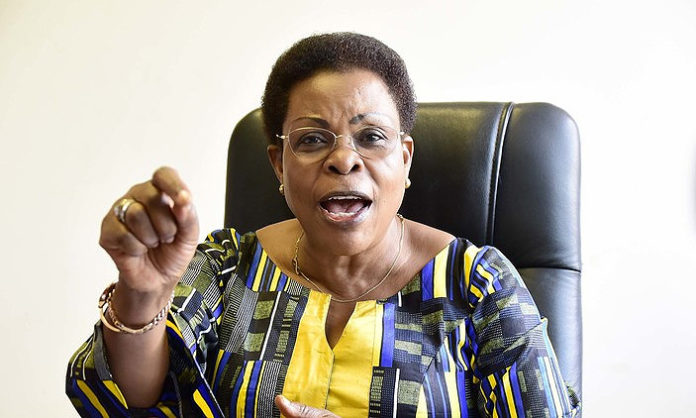
The Inspector General of Government, Ms Beti Kamya, has ordered the interdiction of the Secretary for Uganda Land Commission (ULC), Ms. Barbarah Imaryo.

Kamya said preliminary investigations into the management of ULC provide sufficient grounds for her to continue with the investigations to their logical conclusion. Ms Imaryo has been asked to pave way for the investigations into alleged cases of abuse and misuse of commission resources.

In a letter dated December 1, 2021 to the Minister of Lands, Housing and Urban Development, Judith Nabakooba, the IGG said Ms. Barbarah Imaryo should step aside so that she is not able to interfere with the investigations.

“You are therefore directed/ordered, as the Supervising Minister, to interdict or cause the interdiction of Ms Barbarah Imaryo from her duties as Secretary of Uganda Land Commission with immediate effect,” Ms Kamya wrote.

“Besides, public interest demands that a public officer under investigation for abuse of office be interdicted from exercising powers and functions of his/her office for fear that s/he might interfere with investigations,” Kamya wrote.

The IGG may, during the course of his/her duties or as a consequence of his or her findings, make such orders and give directions as are necessary and appropriate in the circumstances.

Stories Continues after ad

The Innovation Village, Mastercard Foundation launch the 2021 DevScape

In efforts to understand the state of Uganda’s technology landscape, The Innovation Village in partnership with the Mastercard Foundation yesterday, released the developer survey report dubbed ‘DevScape’ to analyze the current state of the developer landscape in Uganda and find ways to harness tech talent and nurture young developers.

The DevScape report sought to understand the number of developers, their demographics, region, gender and age; their engineering journey, coding methods and languages; and levels of education, area of specialization, and experience. A total of 1,288 developers were surveyed, including anyone who builds and creates software and applications. The survey also included software developers, computer programmers, programmers, software coders, and software engineers.

Currently, Uganda is experiencing a digital technology evolution. Software development and Innovation Technology (IT) have become influential in affecting how businesses, organizations, and various sectors operate when developing products, improving service delivery, and solving problems affecting consumers.

“The digital space in Uganda is young yet growing fast. Today, digital technology is undoubtedly playing a key role in creating work opportunities for young people by removing geographical barriers. In the roll out of its Young Africa Works in Uganda strategy, the Mastercard Foundation has identified the digital sector amongst its priority sectors in Uganda with the goal of attracting more young people,” said Renita Nabisubi, Digital Economy Lead, Mastercard Foundation.

Speaking during the virtual launch, Wilson Kiggundu the Chief Technology Officer at The Innovation Village said findings from the survey showed that 73.4 percent of developers in Uganda are under the age of 30 with 79.5 percent living in the central region of the country. “This implies that Uganda’s developer population is young and has the potential to grow. For this to occur, we require the joint efforts of the technology ecosystem, talent pool of developers, and innovation hubs to mentor and train these young developers,” he said.

The tech industry remains male-dominated with the results from the report showing that only 23.4 percent of the developers are female. “While the number of females in the tech space remains low, we are moving in the right direction. The Innovation Village has put a lot of effort to encourage females to become developers and to learn coding through the Women in Tech series and the Code Queen program,” added Kiggundu.

While 63.1 percent of developers became coders in a professional capacity after attaining technical skills in computing, information technology, and programming, with the evolving nature of the industry and access to the internet, there are various ways one can learn coding. 29.9% of respondents stated that they learned how to code from online courses. The majority of developers become full-stack developers, which means they are able to do both front-end and back-end development.

Today, with a large pool of online resources, both free and paid, it is possible for anyone interested in embarking on a software engineering journey to start learning. “Other learning avenues for developers in Uganda include boot camps and hackathons. Developer groups also play a role in creating interest and providing a foundation for software engineers.

According to Japheth Kawanguzi, Team Lead at The Innovation Village, “With today’s disruptive environment, we can no longer ignore how technology has grown and infiltrated many economies, including ours. We cannot advance without software developers and information technology expertise. Developers offer us more than websites and applications.

Their skills take our businesses to new heights of integration and enable our customers to experience us easily, conveniently, and inclusively. We need to collaborate and work together to recognize this talent pool and support its growth.”

Stories Continues after ad

HIV/AIDS services must remain crucial during the #Covid-19 outbreak

Dr Yonas Tegegn Woldemariam

This year’s commemoration of World AIDS Day occurs in a complicated terrain where essential services have been disrupted by the COVID-19 pandemic. Under the theme “End Inequality, End AIDS. End pandemic” this day is more than a call for a balance in health interventions to give all patients the chance to have equitable access to health services.

HIV AIDS has been prevalent in Uganda for more than thirty years, with the prevalence among adults 15-49 years standing at 6.0% (UPHIA). In the early 2000s, there were about 80,000 annual deaths due to HIV. With the interventions of the Uganda HIV Commission set up in 1992 and its technical and financial partners, including the United Nations in Uganda, which accompanied the implementation of national action plans to fight against HIV, the country in 2020 recorded 22,000 annual deaths according to the report of the commission.

In the same year, Uganda recorded 38,000 new HIV infections including 12,000 adult men, 21,000 adult women, and 5,300 children, which is a very large reduction from the alarming number of new annual cases observed in the 1980s and 1990s.

COVID-19 could reverse the hard-won gains in the fight against HIV in Uganda.

The reorganization of the health system that the country has undergone during the COVID-19 pandemic, the increasing need for partner funding to help Uganda respond effectively to the pandemic, the implementation of lock-down and social distancing measures have had an impact on HIV and AIDS prevention and control services in Uganda.

COVID-19 has led to the reduction of 30% in the use of HIV testing services in communities and health facilities; the initiation of antiretroviral therapy has decreased by 31% between April and June 2020 alone; between December 2019 and June 2020, viral load coverage has decreased from 96% to 85%, and CD4 access decreased from 31% to 22%.

These observations challenge us all in our efforts to achieve the SDG3 in the country which is access to good health and well-being for all.

I commend the Ugandan government for adopting the “Test and Treat” policy – the global standard for HIV treatment that states that anyone who tests positive for HIV should promptly start on antiretroviral treatment. We welcome this important step forward in ensuring that free treatment for all is the practice throughout Uganda.

In August 2020, the Uganda AIDS Commission (UAC) launched a five-year national strategic plan on HIV/AIDS. The Health sector has also updated the Health sector HIV/AIDS strategic plan that aims at reducing HIV incidence and HIV related mortality by 50% by 2023.

Today, the response to HIV is guided by the UNAIDS “95-95-95” metric, which aims for 95% of HIV-infected people to know their status, 95% of those diagnosed to receive antiretroviral therapy (ART), and 95% of those on treatment to achieve viral suppression.

In Uganda, according to the Uganda AIDS Commission’s 2020 report, 91% of people living with HIV know their status. Of these, 90% are on antiretroviral treatment. And, of those, 82% are virally suppressed. This is a plausible advance in the fight against the disease in the country, but we must remain vigilant about the resurgence of cases.

With COVID-19, people living with HIV appear to be at elevated risk for virus-related illness and death. There is a need to evaluate our public health interventions in the country in order to provide balanced support in the testing and management of HIV patients.

We must ensure that everyone, everywhere, has equal access to HIV prevention, testing, treatment and care, including COVID-19 vaccinations and services.

HIV services must remain crucial during the COVID-19 pandemic. We need to make our efforts more visible in the fight against HIV in Uganda. The strategic plan 2020 -2025, is a tool that we must make good use of.

On this World AIDS Day, the WHO Regional Director for Africa Dr. Matshidiso Moeti urges governments to prioritize investment in health funding for community-led, human rights-based, gender transformative responses. We must boost our essential health workforce, and secure equitable access to life-saving medicines and health technologies.

The distribution and allocation of medical personnel and funding to the response to COVID-19 should take into account the management of other diseases in the country, including HIV. We must all be involved in this fight if we want HIV to be among the low-level endemic diseases by 2030.

We must work for equitable access to health services to end HIV and prevent future epidemics in the country.

The writer is the WHO Representative in Uganda

Dr Yonas Tegegn Woldemariam

Stories Continues after ad

NRM is bigger than any member, Kigongo tells divided Kayunga party leaders

Hajji Moses Kigongo and Rosemary Sseninde at Kayunga yesterday.


As the unresolved differences between Kayunga Woman Member of Parliament Aidah Nantaba and the district NRM chairman Karisa Karangwa continues to crack the party into two visible camps, NRM National Vice chairman, Al-Hajji Moses Kigongo has warned that no individual should take themselves to be more important than the party.

Kigongo said this yesterday Wednesday afternoon that internal bickering and infighting has paralysed the party support in Kayunga.

He was meeting NRM leaders from Ntenjeru South Constituency at Forest Complex hotel in Nazigo town council in Kayunga district where the top NRM team is camped to rally support for the party flag bearer in the LCV by-election, Andrew Muwonge.

“Uganda and NRM are bigger than personalities. Don’t think if you are not around, things in the party won’t move. NRM is very strong that even if one person is not round, it won’t stop us from operating,”Kigongo said.

The race a total of six candidates, Nantaba the district NRM Women League chairperson is campaigning for the independent, Majid Nyanzi against the official party candidate Muwonge.

In a separate interview, Nantaba told  Eagle Online that she “can’t support someone (read Muwonge) who is moving in the company of land grabbers.”

“I am a Ugandan and citizen and voter in Kayunga. I have the right to choose the right candidate to lead an area where I live…..we can’t leave our district to wolves – the land grabbers,” Nantaba said in an audio message.

She asserted that her choice to support Majid Nyanzi was premised on the fact that he shall not be used by the land grabbers.

“Whoever is in the company of land grabbers, I feel, should not be given chance to lead,” she added.

But Al-Hajji Kigongo notes that it is wrong for some leaders to think that everything must rotate around them by recruiting party supporters to help them fight personal wars.

“Why do you want to be fighting each other every time? You are leaders who should bring people together other than dividing them. Avoid divisions,” said Kigongo.

The NRM first vice chairperson also warned the party leaders against politics of violence and abusing each other.

“I implore you to practice mature politics. Dont abuse anyone. Rally the public to support the NRM candidates. Let us protect the peace that NRM ushered by canvassing support for the party. Take part in government programs and your people.”

Hajji Kigongo asked that each of the 200 leaders gets at least 10 supporters as the starting point to rally support for the party.
“Let us vote for NRM candidates so that Kayunga returns to our hands,” he urged.

The NRM director for Mobilisation, Rosemary Sseninde said the party leadership is in Kayunga to ensure victory for their candidate.

“We are here working as a team to ensure we deliver victory . I ask you the leaders in Ntenjeru South that chance comes once. This is our time to ensure our own takes charge of the district. Let us rally behind Andrew Muwonge,” Sseninde said.

She added, “We were not able to win the LC5 seat in the general election because of our internal fights. NRM leaders fought the party candidates but this time round the people of Kayunga have got the chance to vote a leader who hails from the party that Ugandans gave mandate. Let us vote for the NRM candidate.”

She also urged the party leaders against being recruited to the various cliques which she said don’t take the party forward.

The NRM chairman for Kawonawo zone, David Kiyaga said it is incumbent on all people of Kayunga to vote for the party flag bearer in the forthcoming by-election.

“Let us move village to village canvassing support for the party. Everyone wishing good for Kayunga, be it from opposition or from NRM, the person to vote for the LC5 seat is Andrew Muwonge,”Kiyaga said.

Kayunga NRM politics is polarized by two camps of Nantaba and Karangawa with each trying to pull the other down.

Stories Continues after ad

Uganda’s war on terror, war of ideas

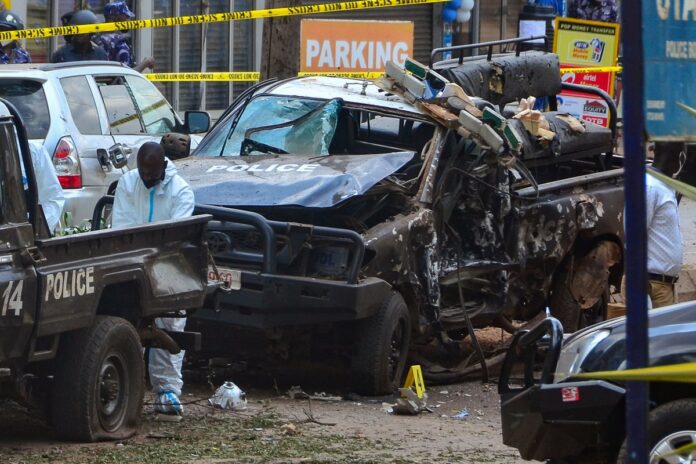
SCENE OF CRIME: Remains of bomb blasts at Kampala CPS.


The spate of killings of prominent and ordinary Ugandans were treated as low level criminality by the public until Tuesday 16th November when two suicide bomb attacks in the Central Business District of Kampala pointed to their daring and the metamorphosis of the criminals into terrorists. The attacks brought home to Ugandans the trepidation and fear of suicide bombings.

Amidst the bone chilling chest thumping by the dreaded Islamic State for the attacks and the finger pointing among the security apparatus to ADF insurgents, it is becoming clearer to the populace that we are in earnest, into the War On Terror. This will be a protracted war which we must win as a society.

Ugandans are pinning their hope on the UPDF and law enforcement bodies to weed out these indoctrinated mass murderers. But we should not overemphasize the military dimension of defeating terrorism and understate the significance of our enemy’s beliefs, ambitions and ideological frame of mind. Ideas are critical to recruiting young people into terrorism.

It is ideas which will decisively contribute to the success more than military and intelligence actions. Words matter and if shrewdly put in the mouth of an accomplished orator, they draw throngs to them evoke action and words linger long after they have accomplished their goal to inspire others.

The war of words the Uganda government should start in tandem with the military aspect is not without precedent. During the cold war, the United States established RFE (radio free Europe) and Radio Liberty to counter Soviet propaganda. The messages aired in Russian and other slavic languages changed minds and put communism on the back foot. These messages inspired Lech Walesa’s Solidarity Movement in Poland to rise up. History is awash with successful ideological campaigns- from struggles against slave trade in the nineteenth century to fascism and communism of the twentieth century

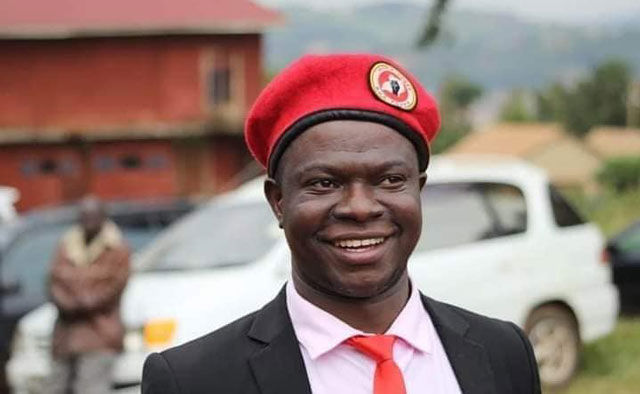
The war of ideas is gaining more traction as political and religious figures like NUP’s Hon Kyagulanyi and Prince Nakibinge and other voices are branding state response to these attacks ‘a war on Islam’. If ADF and Islamic State were set up to further the establishment of the Caliphate then one would suppose that their rank and file have to be Muslims which explains the name of suspects arrested, captured or killed by security forces.

The war on terror in Uganda will be a war of ideas not between the Government of Uganda and Islam or the Muslim community rather the war of ideas in the Muslim community itself. The suicide bombings detonated and brought to the mainstream salient tensions that have been simmering underneath for years. The role of government in this war will be to encourage Muslims to speak openly against the extremists’ views and make extremist ideology less attractive. These jihadists insist that each Muslim has a personal duty to fight to establish proper Islamic government in this world by killing Islam’s enemies.

President Museveni has made it clear that his government is not at war with Islam or the Muslim Community but a resurgent insurgent ADF terror network that has a warped knowledge of Islamic ideas and vocabulary to put itself at war, not only with all non Muslims, but virtually with all Muslim Ugandans too. Muslim concepts like the duty to wage jihad (holy struggle a term the extremists interpret in a militant fashion) and the requirement to kill apostates. These elements are used to brew intense, resentful, accusatory and violent ideology with the power to intoxicate and exhilarate Muslims.

In this war of ideas, government needs to better understand the ideological battlefield, it needs to identify the most influential voices in the Muslim community to oppose jihadist violence, it needs a clear strategy to find clerics, journalists, educators and politicians throughout the Muslim community in Uganda who are opposed to terrorist violence and find ways of amplifying these moderate voices, these should be empowered financially to improve their ability to communicate their messages through print, broadcast and internet especially social media.

A terrorist leader has a tough job to indoctrinate young people to overcome the natural human aversion of killing children and to destroy ordinary people going about their daily business let alone blowing himself up. The difficulty of indoctrination is one of the enemies key vulnerabilities. Victory in this war will depend majorly on fighting the ideas that the enemy is using to recruit and indoctrinate new terrorists

  • Jackson Kagiri Nixon.

Foreign Affairs scholar and Administrator

(0702712507/0775466870)

Stories Continues after ad