Stanbic Bank
Stanbic Bank
17.7 C
Kampala
Stanbic Bank
Stanbic Bank
Home Blog Page 799

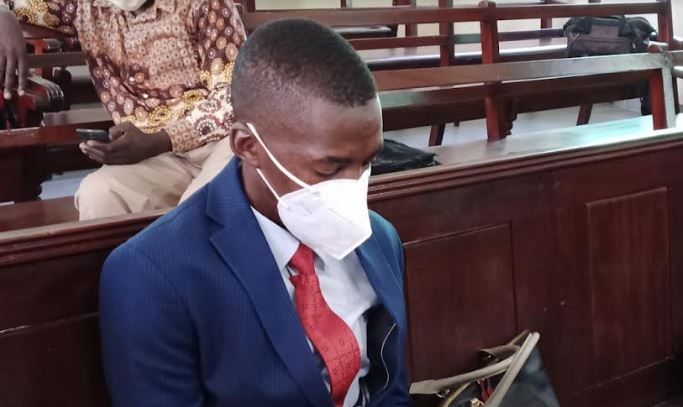
Betrayal in the city! How Lumbuye was netted.

Just like the story of the last supper on the night before Christ’s crucifixion is reported in four books of the New Testament (Mathew 26:17-29, Mark 14:12-25, Luke 22:7-38 & 1 Corinthians 11:23-25).

This photo shows NUP Principal’s brother Mikie Wine in a recent visit to Turkey having a meal with renowned NUP propagandist Fred Kajubi Lumbuye aka Chemical Ali who is now currently reported to have been secured in Uganda’s security agencies(ESO-External Security Organization).

A tale of how Mikie Wine’s intentional social media post set up and notified CMI(Chieftaincy of Military Intelligence) & ESO on where to start from and who to start with helped govt’s intelligence links to Lumbuye’s hide out in Turkey. It was not easy for Uganda’s government security to get closer to Lumbuye since he was confident of his surveillance drones until Mikie Wine connected that gap.

But why would Mikie Wine betray Lumbuye after all that trust he gave Mikie because Lumbuye has never or hardly accepts to post a pic with his friend or a colleague and always posts and delivers his message livestream as a single individual?

Stories Continues after ad

Museveni congratulates gold winner Peruth Chemutai

Peruth Chemutai

President Yoweri Museveni has congratulated Peruth Chemutai for winning gold in women’s 3000m steeplechase finals at the ongoing Tokyo 2020 Olympic Games.

The President via his twitter handle @KagutaMuseveni,  said Chemutai has made her country, Uganda proud.

“I congratulate Peruth Chemutai upon winning gold in the women’s 3000m steeplechase at the Olympic Games in Tokyo and becoming the first Ugandan woman to do so. The country is extremely proud of you. Kongoi!”

Chemutai became the first female Olympic gold medalist for Uganda in a time of 9:01:45 at Olympic Stadium beating Curtney Frerichs of the United States who won silver in 9:04.75 and Hyvin Kiyeng of Kenya secured the bronze in 9:05.39.

“I am feeling great. Today I made it. It is the first time Uganda gets gold medal in 3,000m steeplechase. I am so happy to be an Olympic champion,” said the 22-year-old.

It was a race that threw the rule book out of the window, in terms of how one usually paces themselves for this event.

While Chemutai led at the 1,000m mark, Frerichs made the brave move to break away early and create a sizable gap between herself and the Ugandan runner.

But Chemutai never lost hope. She made her move as the bell rang for the final lap, chasing down Frerichs before crossing the line in a new national record and writing herself into the history books.

“I thought about going in the front of the race, but the American girl (Frerichs) came in front. Wotus 500m remaining, I just decided to go and I went hard until the finish,” said Chemutai in Tokyo.

Stories Continues after ad

Olympics: Chemutai wins Gold for Uganda

Peruth Chemutai

Ugandan athlete Peruth Chemutai has won Gold in the women’s 3000m steeplechase at the Olympics in Japan.

The 22-year-old becomes the first Ugandan female gold medalist having set a national record of 9:01.45.

Courtney Frerichs of the United States took the silver medal, with Kenya’s Hyvin Kiyeng taking bronze.

It is Uganda’s third medal at the ongoing Olympic games in Tokyo after Joshua Cheptegei’s Silver and Jacob Kiplimo’s Bronze in the 10,000-meters.

This becomes Uganda’s third Gold medal at the Olympic Games after John Akii-Bua in 1972 and Stephen Kiprotich in 2012.

Stories Continues after ad

Violence in schools leads to $11 trillion loss in lifetime earnings

Courtesy photo

A new report from the World Bank and the End Violence Partnership to Learn Global Initiative shows that violence in and around schools severely impacts educational outcomes, and society pays a heavy price as a result, with an estimated $11 trillion loss in lifetime earnings.

The study, Ending Violence in Schools: An Investment Case, which was released together with the new strategy of the Safe to Learn initiative, finds that violence in schools including physical, emotional, and sexual violence is widespread in most countries. It profoundly affects students’ experience in schools, leading to, among others, lower grades, and more absence from schools, fewer friendships, and less trust in teachers. This contributes to children dropping out of school and learning less in school, leading, in turn, to losses in earnings in adulthood. Violence in schools also has a wide range of negative effects not only for mental health and psychological well-being, but also for multiple physical ailments. It is furthermore associated with risky behaviors, from using drugs and alcohol to having sex at a younger age.

“All the investments we make in education become irrelevant if children aren’t safe at school,” stressed Jaime Saavedra, Global Director for Education, World Bank. “Preventing violence is not an easy public policy. It requires the complex interweaving of actions at the school, community, and national levels. To underpin this undertaking, it is essential that countries have the political will to drive change. The evidence from the Investment Case and collective action from partners will be key in driving this change.”

Violence in schools is pervasive, but rigorous evaluations of a range of interventions show that it can be reduced through innovative programs. Many tested programs have high benefits-to-cost ratios. This is, for example, the case for anti-bullying programs such as Olweus and KiVa.

“Ending violence in schools is possible, a smart investment, and there are proven interventions to do it.  We need to create a movement to make change happen, and Safe to Learn is there to catalyze and support action at scale,” emphasized Howard Taylor, Executive Director of the Global Partnership to End Violence Against Children.

To address this urgent issue, the report recommends interventions along the life cycle starting in early childhood and continuing in primary and secondary schools. Many of those interventions have multiple benefits. For example, programs to boost socio-emotional learning improve students’ prosocial behaviors and learning. Collaborative learning techniques also improve students’ learning, relationships, and positive perceptions of themselves. In addition to particular interventions, national policies and “whole school” approaches are needed one example is the Good School Toolkit in Uganda, which involves the whole school to promote behavioral change.

According to the report, ending violence in school is not only the right thing to do, it is also a smart investment. The data shows this in terms of the costs associated with violence in and around schools, but also in terms of multiple benefits for girls’ and boys’ learning, their well-being, and their future adult lives.

According to Saavedra, “Understanding the scope of the issue must push us all to renew our commitment to ensuring that all students have access to safe learning environments. This is an imperative if we are to collectively respond to the learning crisis. It won’t be solved if we don’t address in parallel the children’s rights crisis that the global pandemic has unveiled all around the world. With the Investment Case and the Safe to Learn Strategy never before have we been better prepared to respond to this pressing challenge.”

Stories Continues after ad

Uganda to host Diplomatic Conference on adoption of protocol for voluntary registration of Copyright

Hon. Henry Oryem Okello, State Minister for Foreign Affairs addressing the media at press briefing

The African Regional Intellectual Property Organization (ARIPO), with support from the Government of Uganda through the Uganda Registration Services Bureau (URSB) and the European Union Intellectual Property Office, is organizing a Diplomatic Conference for the Adoption of the Draft Protocol on Voluntary Registration of Copyright and Related Rights to take place in Kampala, Uganda from 20th to 28th August 2021 at Speke Resort in Munyonyo.

The Diplomatic Conference will be attended by Ministers in charge of Intellectual Property from the 20 ARIPO Members States, Heads of Industrial Property and Copyright and Related Rights Offices from the ARIPO Member States.

Today, the State Minister of Foreign Affairs, Hon. Henry Oryem Okello, the Deputy Attorney General Hon. Jackson Karugaba Kafuuzi & the URSB Registrar General, Mercy Kainobwisho addressed a media briefing about the upcoming conference at the Uganda Media Centre in Kampala.

“As the Ministry of Foreign Affairs, we are hopeful that the conference will enhance Uganda’s cooperation with Member states on issues related to Intellectual Property and Copyright. Studies by the World Intellectual Property Office (WIPO) show that the creative industry contributes greatly to GDP as well as employment to countries,” Hon. Henry Oryem said.

“I would like to congratulate the Ministry of Justice and the Uganda Registration Services Bureau (URSB) on this milestone and invite Ugandans to participate fully in this international event and follow proceedings across media platforms,” he added.

The Diplomatic Conference will be preceded by an Experts’ meeting that will bring together Copyright experts from the ARIPO Member States on 20 and 21 August 2021 and the 11th Extraordinary Session of the Administrative Council of ARIPO from 22 to 26 August 2021.

Hon. General Jeje Odongo while delivering his remarks said there were many opportunities for Uganda to reap from hosting the conference. “As the Ministry of Foreign Affairs, we are hopeful that the conference will enhance Uganda’s cooperation with Member states on issues related to Intellectual Property and Copyright. Studies by the World Intellectual Property Office (WIPO) show that the creative industry contributes greatly to GDP as well as employment to countries,” the Minister said.

The Attorney General on his part said the adoption of the protocol would support the country’s nascent creative industry. “It is very timely for Uganda to host this conference on copyright because the outlook is changing and the choices of employment are also different. We have a young population that has devoted itself to the arts and creativity industry. Through adoption of this protocol, Ugandans shall be able to have their works registered and protected internationally, benefit and earn from their works, enable Government to maintain a register of voluntary copyrighted works which ultimately will lead to better appreciation of the role of the creative industry in promotion of socio economy development.”

Mercy Kainobwisho, Registrar General gives her remarks during the media brief at the Uganda Media Centre.

The Protocol will establish a Regional Voluntary Registration of Copyright and Related Rights, create and maintain a Regional Database for Copyright and Related Rights for the ARIPO Member States.

The Registrar General on her part said having a regional voluntary registration of Copyright and Related Rights in Africa will contribute to a conducive environment to ensure respect for the copyrighted works. “Adoption of this protocol in Kampala gives visibility to Uganda and is also in line with the Government’s sustained plans to grow intellectual property & related rights for economic growth. As you may recall, Cabinet approved and passed the National Intellectual Property Policy in May 2019, and it was officially launched by H.E the President in September 2020. Realization of the objectives of the National IP Policy 2019 is very key. URSB has been engaging all stakeholders and providing knowledge needed as part of the implementation process.”

The regional voluntary registration of Copyright and Related Rights will also enhance cooperation between national copyright offices to achieve the Protocol’s purpose. The national registration systems often hold valuable information on creativity from legal and economic perspectives and provide statistics on authors, performers, right holders, and their works, recordings, and productions in their countries. The statistics are important to be included in the regional database thus contributing to the regional statistics on creative industries.

The ARIPO 20 Member States are Botswana, The Kingdom of Eswatini, The Gambia, Ghana, Kenya, The Kingdom of Lesotho, Liberia, Malawi, Mauritius, Mozambique, Namibia, Rwanda, Sao Tome and Principe, Sierra Leone, Somalia, Sudan, Uganda, United Republic of Tanzania, Zambia and Zimbabwe.

Stories Continues after ad

Rosemary Mukami assumes office as new World Bank Country Manager for Uganda

Rosemary Mukami Kariuki

The new World Bank Country Manager for Uganda Rosemary Mukami Kariuki has assumed office. Ms. Kariuki will lead an active portfolio currently at US$3.9 billion in commitment comprising 27 projects in 21 national and six regional operations.

She succeeds Tony Thompson who has completed his three-year tour of duty in Uganda and moved back to the World Bank Group headquarters in Washington, DC. Her appointment comes at a time when the government of Uganda is confronting both the immediate and longer-term health and economic impacts of the COVID-19 crisis.

Under her leadership, the World Bank Group will continue to work closely with the Government of Uganda and other stakeholders to provide innovative products and services that respond to its diverse development challenges and contribute to achieving sustainable economic growth and poverty reduction, with a specific emphasis on COVID-19 recovery.

Ms Kariuki has over 30 years’ experience in development planning, local government and decentralization, infrastructure development, water supply and sanitation, climate change, and disaster risk management. She has a strong track record of serving clients in different capacities around the globe.

Prior to this new assignment, Ms. Kariuki has held several leadership positions in the World Bank, serving as the Country Manager for Zimbabwe; Global Lead for Urban Development and Poverty; Practice Manager for Urban Development for Sub-Saharan Africa; Sector Manager for Urban Development and Water Supply in East and Southern Africa; Lead Specialist for Water Supply and Sanitation in Sub-Saharan Africa; Sector Leader for Sustainable Development in Tanzania, Burundi, and Uganda; and Program Coordinator for Local Government activities in the Philippines.

Ms. Kariuki holds a master’s degree in Urban and Regional Planning from the State University of New York and has also undertaken several short courses from different institutions such as the London School of Hygiene and Tropical Medicine and the London School of Economics.

Stories Continues after ad
MTN rewards its 15 millionth subscriber with Shs15m

Jamirah Nalukwago

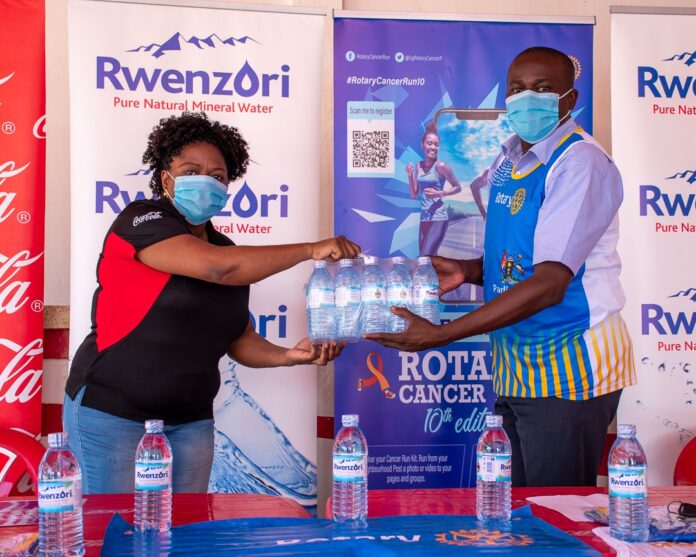
MTN Uganda has handed over Shs15 million to its 15 millionth customer, Jamirah Nalukwago, a resident of Kyanuuna village in Busunju county in Wakiso district.

The cash prize to the 15 millionth customer is MTN Uganda’s way of celebrating the big milestone while at the same time thanking customers for embracing the ever-growing network. Now with 15 million customers, MTN has further reinforced its number one position as Uganda’s biggest and most preferred network.

Wim Vanhelleputte, the MTN Chief Executive Officer handed over the UGX 15 million dummy cheque to Nalukwago in a press conference held today at the MTN Headquarters along Jinja Road in Kampala.

While handing over the symbolic Shs15 million dummy cheque to Nalukwago, Wim Vanhelleputte thanked her for choosing MTN.

“You made the right choice by joining the biggest and the best network. Senkyu (thank you) for being the unique customer who joined the network a few days ago, as the 15 millionth customer. We are very happy that you made the right choice and we are happy to celebrate with you the unique history of our company,” said Vanhelleputte to Nalukwago.

The overwhelmed Nalukwago who could hardly believe her luck, being one of the newest customers on the MTN network, said that she chose MTN because of its clear network and good services.

“I am too too happy! I decided to buy an MTN line because of the MTN Senkyu loyalty program and its clear network. MTN is the best Network in the world,” said Nalukwago while receiving her cheque. She was accompanied by her husband, Ibrahim Kakaire and their two children.

In line with MTN’s #GoodTogether belief that fosters the spirit of togetherness and sharing, Nalukwago gets to pocket Shs 5 million as the winner and share the remaining UGX 10 million with her loved ones. Nalukwago chose to share her winning with her husband, mother, father and siblings among others, who will all receive their money from MTN through MTN MoMo.

“I will use part of my winnings to construct a house and to start a business,” said Nalukwago who has until now, been a stay-at-home mom.

According to Wim, reaching the 15 million customer milestone is a great achievement for MTN Uganda and it goes to show that more people are embracing the benefits of a modern connected life that MTN delivers.

“We made 10 million customers in 2017. And now in 3 and a half years, we now have another 5 million customers bringing our subscriber base to 15 million customers,” said Vanhelleputte who attributed the significant growth partly to the growing population of Uganda but also importantly, MTN’s commitment to better service delivery.

Vanhelleputte further noted that the achievement of 15 million customers is simply the beginning of yet another race to the next milestone as MTN is intent on giving everyone in Uganda the benefits of a modern connected life. The CEO lauded the management and staff of MTN Uganda as well as the MTN subscribers, the Government, and regulator as well as technology partners for their support to MTN in achieving this 15 million customer milestone.

Stories Continues after ad
UPSKILL: What Digital Marketing tells us about the future of work

Aaron Musoke, Upskill associate taking students through the masterclass sessions at the innovation village

The 42-day lockdown in Uganda having come to an end. While the first lockdown was the first of its kind for Ugandans, the second lockdown founds us a little bit wiser in surviving and thriving against the odds of this pandemic.

Talking of thriving, at UPSKILL, a digital services marketplace that matches highly skilled talent with industry in new ways, there has been a hive of activity from discussions about the state of digital marketing in Uganda, flash talks about necessary skills to establish oneself in this service to masterclasses meant to improve one’s digital skills.  Digital marketing encompasses online marketing approaches that exist to digitally connect a company with prospective customers. It covers a broad range of tactics from the business website itself to online branding assets, digital advertising, email marketing, online brochures, banner and popup ads, among others. Research by LinkedIn rates digital marketing as one of the top ten jobs with the largest openings.

UPSKILL’s sessions on influencer marketing, digital marketing strategies, search engine optimization, advertising on social media and many more to come are happening at a time when the digital economy and e-commerce are high on the list of things that will drive prosperity. According to the Global Review on E-commerce released by the United Nations Conference on Trade and Development (UNCTAD) in 2021, digital solutions are very vital for the continuity of economic and social activities remotely. In the past year, digital platforms have been helpful for telemedicine, telework and online education, enabling people to stay connected while social distancing. The global report further notes that there has been a growth in e-commerce in developing countries too.

UPSKILL partnered with Bakash Media Foundation to build a digital marketing community for youths, marketing practitioners, corporate companies and, Small and Medium Enterprises (SMEs) through this time. In a campaign dubbed the “#42DaysOfDigitalMarketing”, digital marketing enthusiasts got the opportunity to engage and learn from industry experts and influencers as well as equipping businesses with the knowledge on how to build their brands online.

The campaign was launched on July 2, was intended to promote a series of online activities that engage each of these different people. These activities will culminate into UPSKILL’s Digital Marketing Intensive Program that will be launched in September 2021.

Bakash Media Foundation, the partner in this campaign, has two years of experience as an education platform that gathers resources for young people who are stepping out into the professional world. It gathers literature and professional opinions from seasoned professionals in various career fields and then links the youth to this information.

The Co-Founder and Administrator of the company, Bruno Komuburuga speaks of the necessity of a community that connects young people and SMEs to digital marketing expertise. “Career guidance is essential for the future of work. It is important that young people who are planning to pursue various career paths make informed decisions. From this campaign, we hope that the youth in higher institutions of learning will be introduced to the opportunity-laden world of digital marketing,” he said.

Further commenting on these 42 days of digital marketing, the Senior Associate of UPSKILL, Aaron Musoke says, “In terms of education, young people have to realize that education has moved on from the public arena to the personal.  In light of the global pandemic, the world more than ever is moving to the digital economy faster than before.”

Musoke adds, “What UPSKILL is doing for young people with small businesses and corporate companies is to help them join the world of Digital Marketing through the 42 Days of Digital Marketing. Even with arcades and shops closed down, a business can still go on, because online makes this possible.”

Speaking to the expert who held the class, Co-Founder and E-commerce Director at Kweli Shop, Stephen Obeli says while he is pleased by the feedback, he is not surprised that the session is set to yield much for those interested in SEO.

“Many people have reached out to me on email, Twitter, LinkedIn and other platforms to tell them more about SEO or to give feedback on how it is working for them. I think, finally, people are realising that SEO is one of the crucial parts of digital marketing and not social media as they always thought. People are also realising that SEO doesn’t require much once you have the skills and knowledge. With that, I feel that the campaign has been effective,” Obeli said.

With the 42-day campaign now over, UPSKILL has trained 445 people. More sessions about Photoshop, blogging, graphics design, media monitoring, social listening, leveraging LinkedIn and YouTube for business growth are in the pipeline. Musoke observes that the 42 days tell us much about where Uganda needs to focus its efforts to utilize the opportunities presented by the digital economy.

“The campaign has been a big success so far. With each session we have had not less than 50 people in attendance. That shows me that we are doing something right. The feedback from the attendees is encouraging especially on topics like Influencer Marketing, Search Engine Optimization (SEO) and Digital Strategy. I think that this campaign’s success can be attributed to the current state we are in. After experiencing a second lockdown, more than ever, the youth, small businesses and corporations, have understood that the world has moved online. If you want your business to survive, you have to go digital. It could be a website or social media but your business has to get online and you have to get digital skills.”

Equipped with the knowledge and skills from seasoned professionals, Musoke believes that the youth will seize the Future of Work against any and every odd.

Stories Continues after ad

Cranes coach Micho names his backroom staff

Micho with Livingstone Mbabazi

New Uganda Cranes head coach Milutin ‘Micho’ Sredojević named his backroom staff during his official unveiling as he begins his second stint on a three-year contract.

Micho will work with Frenchman Franck Plaine as director of performance, Addis Worku as the video analyst, Charles Livingstone Mbabazi (assistant coach).

Fred Kajoba Kisitu will be the goalkeeping coach while former Cranes captain Geofrey Massa as the team manager and the physiotherapist will be Ivan Ssewanyana.

Their first task will be to try and get Uganda off to a decent start in the 2022 World Cup qualifiers in September.

Micho termed his second home coming to Uganda as emotional, thanking the FUFA top brass for the presented opportunity.

“It is an emotional time to return to Uganda. Greetings to every single Ugandan with a highest degree of respect. I thank the previous coaches Sebastien Desabre, Mathias Lule, Johnathan McKinstry, Charles Livingstone Mbabazi and Abdallah Mubiru,” Micho said.

“I will give particular attention to details; build attack and consolidate on the solid defence. I want to pay back with fanatic hard work. I am here serve, deliver and give back to the people. I am working to see that Uganda is back in the top five of African football.”

Head coach: Milutin Sredojević

Director of performance: Franck Plaine (France)

Video Analyst: Addis Worku (Ethiopian)

Assistant coach: Charles Livingstone Mbabazi

Goalkeeping coach: Fred Kajoba Kisitu

Team manager: Geofrey Massa

Physiotherapist: Ivan Ssewanyana

Stories Continues after ad

Innovative and Inclusive Accelerated Education Programme launched to support children in refugee settlements

Uganda's State Minister for Primary Education Hon. Dr. Joyce Moriku Kaducu signs the INCLUDE banner to officially launch the project

The Uganda Education Consortium, together with the European Union and the Government of Uganda, have launched the second phase of the INCLUDE initiative for refugees and the host communities.

The consortium will support children in refugee and host communities to access safe, quality and inclusive learning opportunities, support safe return to school and ensure the psycho-social well-being of learners.

Atleast 15M children in Uganda have been affected by COVID 19 related school closures. This includes at least 600,000 primary and secondary aged refugee learners. More than 275,000 out of school primary and secondary school aged children have also been affected. The uncertainty caused by the pandemic and prolonged periods of absence from school will increase the likelihood that children will not return to school when they open.

INCLUDE will respond to the current context over a period of 21 months in Kyaka 11, Kyangwali, Nakivale Imvepi and Rhino Camp refugee settlements. Through the project, the consortium will work closely with the Ministry of Education and Sports, the office of the Prime Minister, UNHCR and communities to ensure that all children can return to school as soon as possible in a safe manner. This will be achieved by prioritising the provision of additional safe learning spaces, recruitment of additional teachers and the expansion of the double shift approach while preparing for schools to reopen, as foreseen by the Ministry of Education and Sports and the Ministry of Health’s Standard Operating Procedures.

The program will ensure safe, equitable and inclusive access to remote learning opportunities, including through innovative approaches such as Can’t Wait to Learn and, thereby, contribute to continuity of learning. The project will help ensure that children who often miss out on school are supported through activities that focus on their mental health and psychosocial wellbeing, support to children with disabilities and young mothers, and cash for education transfers that remove social economic barriers access.

“The EU is proud to renew its engagement in the Ugandan refugee education sector through Phase 2 of the INCLUDE programme. This project will contribute to increased safe access to quality education to out of school children living in refugee hosting areas, improving their wellbeing. Every year, the EU allocates up to 10% of its global humanitarian budget to education projects around the world.” Said Bruno Rotival, Head of the EU’s Humanitarian Aid Office in Uganda.

Education protects children from poverty, violence and abuse and helps them laugh, learn, eat, play and grow. For this reason, the Education Consortium and its partners believe that education cannot wait and look forward to enabling children in refugee and host communities to continue their education.

The Education Consortium led by Save the Children, has 15 members who implement projects, funded by ECHO and Education Cannot Wait, that contribute to the implementation of the Education Response Plan(ERP) for refugees and host communities. The ERP is the first of its kind worldwide and was developed to help respond to the huge needs in what is Africa’s biggest refugee education crisis.

INCLUDE will be implemented by Save the Children, Finn Church Aid, Nowergian Refugee Council, War Child Holland and Humanity and Inclusion, under the leadership of the Uganda Education Consortium Management unit. Partners will work in close collaboration with the Ministry of Education and Sports, the Office of the Prime Minister, the Unites Nations High Commission for Refugees and the district governments.  The project is supported with generous funding of EUR 7,000,000 from the EU.

Stories Continues after ad