Stanbic Bank
Stanbic Bank
18.3 C
Kampala
Stanbic Bank
Stanbic Bank
Home Blog Page 813

Emirates customers can pack more into their Africa trip with updated free baggage policy

Emirates-A380-Aircraft

Emirates’ customers flying to and from any of the airline’s destinations in Africa can now pack in more into their trips.

Effective 9 August 2021, customers travelling in First and Business class on any Africa route can check in up to 64kgs of free baggage (two pieces of 32kgs each), regardless of where in the Emirates global network they are headed to or travelling from.

Customers flying in Economy class on Saver, Flex and Flex Plus fares, can enjoy up to 46kgs of free check-in baggage allowance (two pieces of 23kgs each), while those on Special fares will have one free check-in bag of up to 23kgs.

Whether it is essential business items, travel souvenirs or gifts for loved ones, Emirates’ new generous allowances and simplified free baggage policy for travel to and from Africa, provides customers with additional peace of mind to plan and enjoy their travels.

Emirates continues to lead the industry with innovative products and services that address traveller needs. It’s recent customer care initiatives include generous and flexible booking policies, an extension of its multi-risk insurance cover, and helping loyal customers retain their miles and tier status.

Keeping the health and well being of its passengers as top priority, Emirates has introduced a comprehensive set of safety measures at every step of the customer journey. The airline has also recently introduced contactless technology and scaled up its digital verification capabilities to provide its customers even more opportunities to utilise the IATA Travel Pass this summer.

Emirates currently operates flights to over a dozen cities in Africa.

As international borders reopen and travel restrictions ease, Emirates continues to expand its network safely and sustainably. The airline has resumed passenger services to over 120 destinations, recovering close to 90% of its pre-pandemic network. Customers can enjoy convenient and seamless connections to the Americas, Europe, Africa, Middle East, and Asia Pacific via Dubai.

Stories Continues after ad

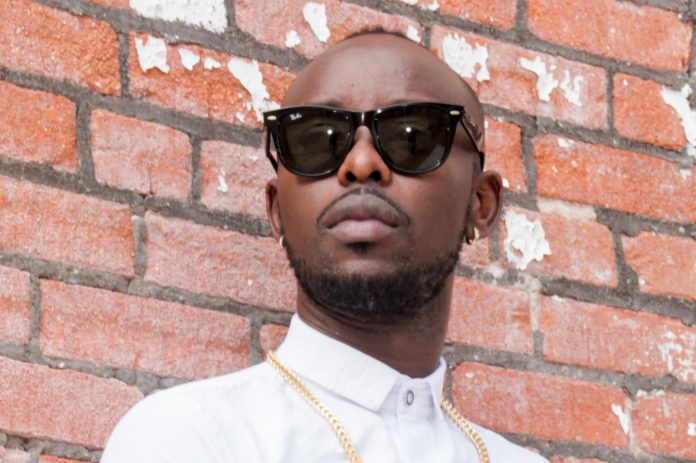
Eddy Kenzo involved in nasty road accident

Eddy Kenzo

Musician Edirisa Musuuza commonly known as Eddy Kenzo has been involved in a nasty road accident around Maya, along the Kampala – Masaka highway on Thursday morning.

In a Facebook post which he later deleted, Eddy Kenzo revealed that he was with two of his friends when the accident occurred.

“We had a frightening car accident. The road was wet and slippery due to rain and when we reached Maya theirs was a bump in the road next to Stabex Petro station that caused my car to skid in a remarkable fashion,” Kenzo said.

He added;”It did a 180-degree spin in the middle of the road, facing the wrong way!We then landed into a trench next to the Petro station. This happened today morning and all the three people in the car survived without any damage. We thank the good Lord for his protection.”

He later posted, “We got an accident earlier today but we thank God for the protection we are all okay.”

Kenzo reportedly sustained injuries including a broken arm but was rushed to a hospital to receive first aid and further treatment.

Stories Continues after ad

FUFA sets dates for Big League playoffs

Fufa technical centre where playoffs will take place

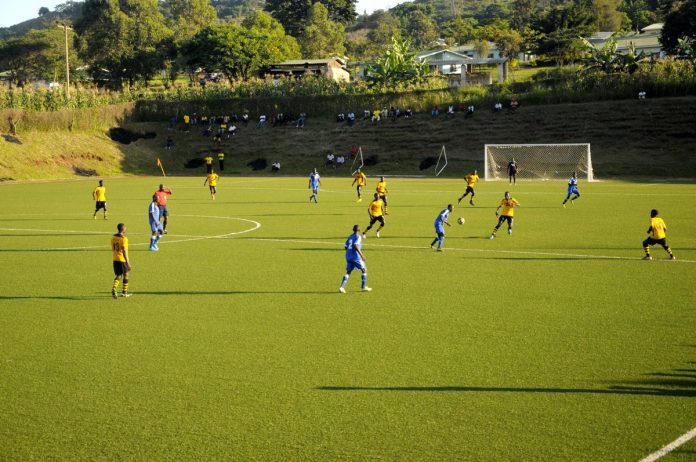
The FUFA Big League Promotional Playoffs have been scheduled to be played from 15th to 17th August 2021 at FUFA Technical Center, Njeru.

Nyamityobora will battle Jinja’s Gaddafi in one of the semifinals while Bukedea’s Blacks Power will take on Proline FC in the other.

The winners from the respective two semifinals will contest in the final to decide the 16th club that will play in Uganda’s top tier league, the Uganda Premier League.

Tooro United FC from the Rwenzori group and Arua Hill Sports from the Elgon group are the two clubs that earned direct promotion from the FUFA Big League.

The release of the StarTimes Uganda Premier League fixtures has been set for 20th September 2021.

The official pre-season tournament (Pilsner Super 8 tournament) will be held from 15th to 30th September 2021.

The 2021/22 Uganda Premier League season is expected to kick off on 15th October 2021.

MYDA, Kitara FC and Kyetume are the three clubs that got relegated from the top tier last season.

Stories Continues after ad

MPs reiterate need for sports funding

MPs

Members of Parliament are concerned about Government’s failure to prioritize the sports sector calling for more funding and construction of facilities across the country.

Ntungamo Municipality MP, Hon. Yona Musinguzi said the Ministry of Education and Sports gave a tender to reconstruct the Nakivubo Stadium four years ago, to a city businessman whom he says has failed to complete the project.

“The tender was given to Hamis Kiggundu who has built arcades and malls all around the stadium, with little work done on the stadium itself. If he has failed over all these years, why shouldn’t the tender be cancelled and given to someone else?” Musinguzi asked.

He added that the process was flouted with no competitive bidding.

”A discussion and agreement between Kiggundu and officials from the Ministry of Education and Sports was signed torevamp the Stadium,” he added.

The MP raised the concern as legislators congratulated Uganda’s Peruth Chemutai who had just won gold in the women’s 3000m steeplechase at the Tokyo Olympics.  This was during a plenary session chaired by Deputy Speaker, Anita Among on 04 August 2021.

Hon. William Chemongis (NRM, Kween County) said that Parliament provides time for discussions on some of the challenges faced by athletes.

“These men and women who represent the country in these competitions face a lot in their preparations for regional or international competitions,” Chemongis said.

Among directed the Ministry of Education and Sports to present a full report on the progress of the Nakivubo Stadium that has been under construction for the last five years.

Stories Continues after ad

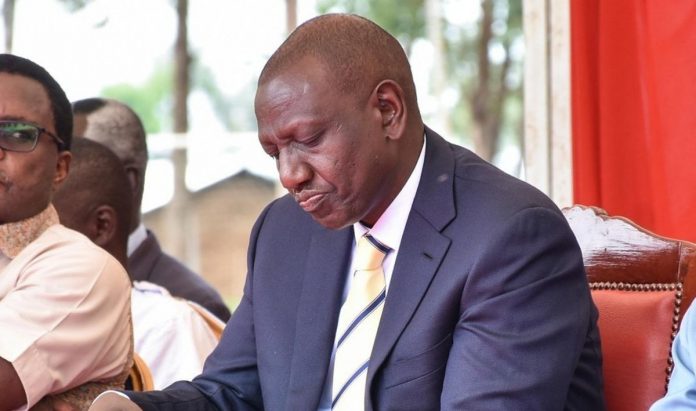
William Arap Ruto: The politics of betrayals and personal legacies

WHAT NEXT? Kenya's Deputy President William Ruto


By  Nabendeh S.P Wamoto


The Kenyan President Uhuru Kenyatta and his deputy Dr. William Ruto debacle is a climax of what is known to be politics of betrayal not only in Kenya but in all Africa where irreconcilable political differences and rebellions are the order of the day and because of for example of the aforementioned situation militarism has become a lucrative industry in the third world nations and a very profitable investment.

I have taken time again to review president Yoweri Kaguta Tibuhaburwa Museveni’s biography “SOWING THE MUSTARD SEED” and Kenya’s Joe Khamis’ “POLITICS OF BETRAYAL”. It took Museveni sixteen years to write the story of his own personal role “In the struggle for freedom and democracy in Uganda over the past 30 years”, Then Museveni believed that it is him alone and his colleagues who could sow the mustard seed of freedom and democracy in Uganda in the 1970s – 1980s after first cleaning the land of the rocks and weeds of a CORRUPT systems of Idd Amin and Milton Obote. Museveni for example writes as school boys in western Uganda between 1965 and 1966, he and his friends Eriya Kategaya, Valeviano Rwaheru, Martin Mwesiga and Mwesigwa Black were “staunchly anti-Obote” (P19) and that he himself hated Obote at the time because the latter frustrated the East African Federation idea against the support of Mwalimu Nyerere (RIP) and Mzee Kenyatta (RIP) (P18).

I would recommend that each and every East African reads the two books MUSTARD SEED and POLITICS OF BETRAYAL concurrently. In his book President Museveni gives no credit to Uganda’s nationalism in the attainment of the country’s political independence and doubts whether there was any Ugandan nationalism before him and views the situation as if all was darkness in Uganda until God willed that let there be Yoweri Museveni and then suddenly all was light in Uganda. Museveni accuses Obote of being unscrupulous and cites the way in which Obote misled the traditionalists in Buganda and there after reneged over the same issues (P19). The tone in the book is self satisfaction and self congratulation regardless of his close comrades most of them from Bugisu and south-western Uganda. He personally sounds hostile on everybody else. President Museveni seems to have had low opinion of practically all his lecturers at the University of Dar-es-salaam, condemns then DP leaders as lacking a dynamic leadership, conservative men/women with limited perspective, and then UPC leadership were generally an uncouth breed who were anxious to get rich as quickly as possible using State apparatus. (P45) and that Y.K. Like was averse to democracy which is almost the same today.

For example the support that NRM enjoys from private business men/women is a blessing in disguise. Ironically, the relationship between the State and business entities creates glamour for paybacks through illegal tenders, tax evasion tendencies and the shadow NRM local politicians enjoy and are not ready to overhaul the present status quo. The mustard seed is also a record of Museveni’s ideological development from youth to the present. The author (Museveni) admits that he was possessed since his college days at Dar-es- salaam, WITH THE CONTROL OF THE ARMY as a solution to political and economic power. He however reserves much of the venom for Obote who NRM demonized throughout the book as the major cause of all problems of Uganda since independence. The book also condemns the establishment of a working relationship between the UPC and Kabaka Yekka saying the alliance was opportunistic and sectarian but he doesn’t tell the readers what could have been done given the independent constitution which attempted to marry a monarchical and authoritarian regime with then a parliamentary system and characterizes the period 1962-1971 as a time of intrigues and corruption, with no meaningful development. According to author Museveni, by the end of Amin’s rule in 1979 about 500,000 Ugandans had died many of them Acholi and Langi (P45) and says that this is the “high price Uganda paid for a corrupt, mismanaged and sectarian army” (P41).

Closely looking at the evidence presented in President’s book, it is obvious that Museveni sees himself as the Earnest ‘Che’ Guevara ( legendary South American guerilla leader) and gives details of war strategies, plans and battle tactics ending up with a kind of guerilla WORKBOOK/manual which he expected other progressive African leaders to adopt in order to “Sow the Mustard seed” in their countries. The Mustard seed has already found its way in the neighborhood considering good students like Gen. Paul Kagame in Rwanda, the late Laurent Desire Kabila of the Democratic Republic of Congo who applied the war scriptures of this manual in their countries. Kagame was of course an officer in the National Resistance Army (now UPDF) of Uganda and many of Kabila’s Tutsi tribe operating in the Congo are actually Ugandans of Rwandese origin who have been through this training workbook of war. The current conflicts in Uganda about which the Mustard Seed author had pontificated at length in this war manual could be ignited by new nationalist ideologies such as Dr. William Arap Ruto of Kenya hence the current political empathy.

At the moment only one side of the story is being heard yet the question is to what extent has the autograph (manual) contributed to the present military upheavals in the East African Community region?

Freud once said “The smaller the difference between two people, the larger it was bound to loom in their imaginations”. This effect, which he called the narcissism of minor difference, is especially visible in Region today.

Nabendeh S.P Wamoto (+256776658433)

simonwamoto@yahoo.co.uk

Stories Continues after ad

Museveni clears Mid-term access to NSSF funds

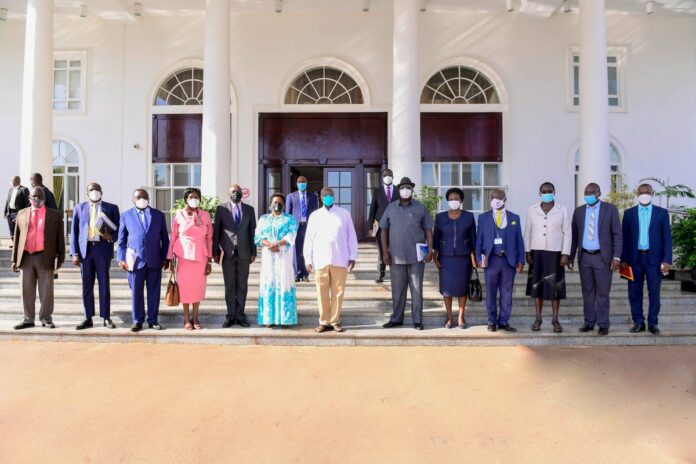
President Museveni and team at State House Entebbe.


President Yoweri Museveni has agreed to the workers mid-term access to their saving in the National Social Security fund and directed the Minister for Gender, Labour and Social Development Betty Amongi to make changes to the bill and return it for consent.

Using dramatic backdrops and biblical sayings, the President noted if this does not work out, it will be a lesson learned together.

“You remember Shakespeare’s play The Merchant of Venice? Shylock with his my pound of flesh whether you die or what! For the NRM not to be that Shylock and since these people think this is the solution, lets go ahead. If it doesn’t work out we shall see..learn together instead of being like shylock,” the President said.. before adding, “You go, I wash my hands. I have become Pontious Pilate!
Shylock is a fictional character in William Shakespeare’s play The Merchant of Venice, a Venetian Jewish moneylender.While in St. Matthew’s gospel, Pontius Pilate ‘washed his hands before the multitude, saying, I am innocent of the blood of this just person’. This was to show the crowd he did not want Jesus dead, but ordered his death because that is what the people wanted. He was washing his hands of the responsibility.

According to the Statement from State House, It has been agreed that somebody who is 45 years and has saved for ten years can access up to 20% of their savings. The commencement date will be set in the statutory instrument, supervision of the fund is by the Ministry of Finance, while the NSSF MD is a member of the Board of directors.
Conflicting information and change in wording regarding the National Social Security (Amendment) bill forced the president to push a major decision on the workers mid-term access to today.
The workers representatives attended the meeting, representatives from the Ministry of Finance led by the Minister Matia Kasaijja, the MD of NSSF Richard Byarugaba members of NOTU and COFTU.
The President said he was more concerned about destroying the viability of the fund.
“The fear was if you do that, you degrade huge money put together and which the fund is using to invest instead of going abroad to beg. Also a worker may end up getting less by 30 million at his retirement,” he said.
According to the NSSF MD Richard Byarugaba, the fund collects Shs125 billion a month, Shs1.5 trillion per year and pay up to Shs900 billion for members qualifying in other benefits.
However, Minister Amongi Betty said they had delved into all the issues and their conclusion is that, it would not have a substantial impact on the depletion of the fund because the fund is Shs 15 trillion and they need between Shs800 billion to Shs1 trillion to handle mid-term access at a go.

“We agreed to schedule it. We don’t pay all at a go but about 20% of members in a certain period and have also have a criteria like age and amount saved,” she said.
The Minister of Finance Matia Kasaija said they had already done brief to the president on how they are going to handle this including formation of regulations that will govern the way the money will get out.

Every month, institutions deduct 5% of employees’ salaries as contribution to NSSF, the employers tops it up with 10% while NSSF earns them 12%.
NSSF is a government agency responsible for the collection, safekeeping, responsible investment and distribution of retirement funds from employees in the private sector who are not covered by the government retirement scheme.

Stories Continues after ad

Betrayal in the city! How Lumbuye was netted.

Just like the story of the last supper on the night before Christ’s crucifixion is reported in four books of the New Testament (Mathew 26:17-29, Mark 14:12-25, Luke 22:7-38 & 1 Corinthians 11:23-25).

This photo shows NUP Principal’s brother Mikie Wine in a recent visit to Turkey having a meal with renowned NUP propagandist Fred Kajubi Lumbuye aka Chemical Ali who is now currently reported to have been secured in Uganda’s security agencies(ESO-External Security Organization).

A tale of how Mikie Wine’s intentional social media post set up and notified CMI(Chieftaincy of Military Intelligence) & ESO on where to start from and who to start with helped govt’s intelligence links to Lumbuye’s hide out in Turkey. It was not easy for Uganda’s government security to get closer to Lumbuye since he was confident of his surveillance drones until Mikie Wine connected that gap.

But why would Mikie Wine betray Lumbuye after all that trust he gave Mikie because Lumbuye has never or hardly accepts to post a pic with his friend or a colleague and always posts and delivers his message livestream as a single individual?

Stories Continues after ad

Museveni congratulates gold winner Peruth Chemutai

Peruth Chemutai

President Yoweri Museveni has congratulated Peruth Chemutai for winning gold in women’s 3000m steeplechase finals at the ongoing Tokyo 2020 Olympic Games.

The President via his twitter handle @KagutaMuseveni,  said Chemutai has made her country, Uganda proud.

“I congratulate Peruth Chemutai upon winning gold in the women’s 3000m steeplechase at the Olympic Games in Tokyo and becoming the first Ugandan woman to do so. The country is extremely proud of you. Kongoi!”

Chemutai became the first female Olympic gold medalist for Uganda in a time of 9:01:45 at Olympic Stadium beating Curtney Frerichs of the United States who won silver in 9:04.75 and Hyvin Kiyeng of Kenya secured the bronze in 9:05.39.

“I am feeling great. Today I made it. It is the first time Uganda gets gold medal in 3,000m steeplechase. I am so happy to be an Olympic champion,” said the 22-year-old.

It was a race that threw the rule book out of the window, in terms of how one usually paces themselves for this event.

While Chemutai led at the 1,000m mark, Frerichs made the brave move to break away early and create a sizable gap between herself and the Ugandan runner.

But Chemutai never lost hope. She made her move as the bell rang for the final lap, chasing down Frerichs before crossing the line in a new national record and writing herself into the history books.

“I thought about going in the front of the race, but the American girl (Frerichs) came in front. Wotus 500m remaining, I just decided to go and I went hard until the finish,” said Chemutai in Tokyo.

Stories Continues after ad

Olympics: Chemutai wins Gold for Uganda

Peruth Chemutai

Ugandan athlete Peruth Chemutai has won Gold in the women’s 3000m steeplechase at the Olympics in Japan.

The 22-year-old becomes the first Ugandan female gold medalist having set a national record of 9:01.45.

Courtney Frerichs of the United States took the silver medal, with Kenya’s Hyvin Kiyeng taking bronze.

It is Uganda’s third medal at the ongoing Olympic games in Tokyo after Joshua Cheptegei’s Silver and Jacob Kiplimo’s Bronze in the 10,000-meters.

This becomes Uganda’s third Gold medal at the Olympic Games after John Akii-Bua in 1972 and Stephen Kiprotich in 2012.

Stories Continues after ad

Violence in schools leads to $11 trillion loss in lifetime earnings

Courtesy photo

A new report from the World Bank and the End Violence Partnership to Learn Global Initiative shows that violence in and around schools severely impacts educational outcomes, and society pays a heavy price as a result, with an estimated $11 trillion loss in lifetime earnings.

The study, Ending Violence in Schools: An Investment Case, which was released together with the new strategy of the Safe to Learn initiative, finds that violence in schools including physical, emotional, and sexual violence is widespread in most countries. It profoundly affects students’ experience in schools, leading to, among others, lower grades, and more absence from schools, fewer friendships, and less trust in teachers. This contributes to children dropping out of school and learning less in school, leading, in turn, to losses in earnings in adulthood. Violence in schools also has a wide range of negative effects not only for mental health and psychological well-being, but also for multiple physical ailments. It is furthermore associated with risky behaviors, from using drugs and alcohol to having sex at a younger age.

“All the investments we make in education become irrelevant if children aren’t safe at school,” stressed Jaime Saavedra, Global Director for Education, World Bank. “Preventing violence is not an easy public policy. It requires the complex interweaving of actions at the school, community, and national levels. To underpin this undertaking, it is essential that countries have the political will to drive change. The evidence from the Investment Case and collective action from partners will be key in driving this change.”

Violence in schools is pervasive, but rigorous evaluations of a range of interventions show that it can be reduced through innovative programs. Many tested programs have high benefits-to-cost ratios. This is, for example, the case for anti-bullying programs such as Olweus and KiVa.

“Ending violence in schools is possible, a smart investment, and there are proven interventions to do it.  We need to create a movement to make change happen, and Safe to Learn is there to catalyze and support action at scale,” emphasized Howard Taylor, Executive Director of the Global Partnership to End Violence Against Children.

To address this urgent issue, the report recommends interventions along the life cycle starting in early childhood and continuing in primary and secondary schools. Many of those interventions have multiple benefits. For example, programs to boost socio-emotional learning improve students’ prosocial behaviors and learning. Collaborative learning techniques also improve students’ learning, relationships, and positive perceptions of themselves. In addition to particular interventions, national policies and “whole school” approaches are needed one example is the Good School Toolkit in Uganda, which involves the whole school to promote behavioral change.

According to the report, ending violence in school is not only the right thing to do, it is also a smart investment. The data shows this in terms of the costs associated with violence in and around schools, but also in terms of multiple benefits for girls’ and boys’ learning, their well-being, and their future adult lives.

According to Saavedra, “Understanding the scope of the issue must push us all to renew our commitment to ensuring that all students have access to safe learning environments. This is an imperative if we are to collectively respond to the learning crisis. It won’t be solved if we don’t address in parallel the children’s rights crisis that the global pandemic has unveiled all around the world. With the Investment Case and the Safe to Learn Strategy never before have we been better prepared to respond to this pressing challenge.”

Stories Continues after ad