Stanbic Bank
Stanbic Bank
24.9 C
Kampala
Stanbic Bank
Stanbic Bank
Home Blog Page 870

Students petition Parliament over lecturers’ strikes

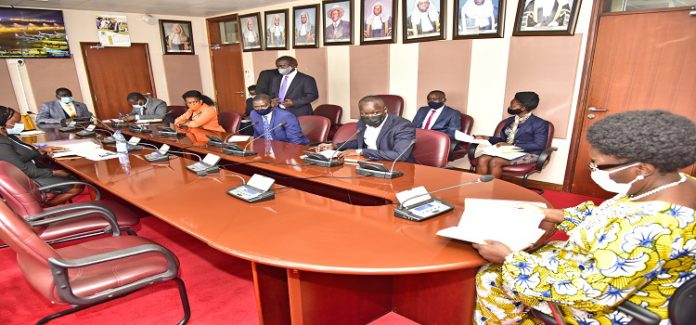
Speaker meeting with members of the Uganda national students association

The Uganda National Students Association (UNSA) has petitioned Parliament following the continued strike by lecturers in the nine public universities.

The students led by Ezra Byakutangoza presented the petition to the Speaker of Parliament, Rebecca Kadaga Tuesday, 09 March 2021 saying that Parliament needs to check government programmes in regard to students’ welfare and academics.

“The lecturers have prolonged the industrial action and considering the time we wasted during Covid lockdown, the students are suffering and losing more time,” he said.

Byakutangoza added that many institutions were closed and the government has encouraged electronic learning, which has ended up being for just a few that can afford.

“Many students lack gadgets, data and even network for those who are upcountry is an issue. With the vaccine we are praying that it is more effective to be in school with the help of the vaccine,” he said.

He cited many situations where schools increased their fees after opening of schools. He also noted that many young girls have dropped out of school due to pregnancy or early marriages.

Kadaga said that as Parliament, they would pressurize the Ministry of Education and the Committee on Education to see how they can handle the impact on the young people.

“The impact of closing schools has been big and it is a problem in many places and fortunately now there is a vaccine,” she said adding that, “the excuse of keeping students at home will be no more as they can be able to interact in class. We shall continue to advocate for more internet so that all students can be able to access an education.”

Stories Continues after ad

Helicopter hovers over NUP offices as Bobi Wine declares he won presidential election with 54.19%

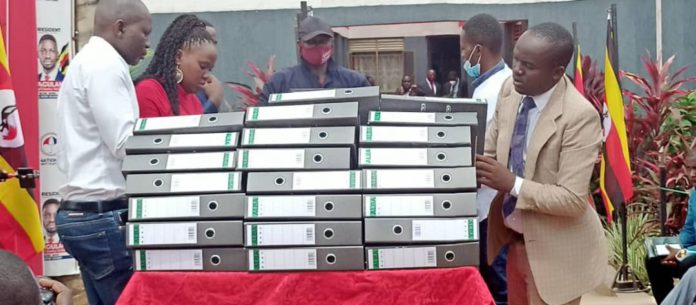
Some of the box files containing DR forms displayed by Bobi Wine

Former National Unity Platform Presidential (NUP) presidential candidate Robert Kyagulanyi Ssentamu aka Bobi Wine has declared that he won the just concluded election with 54.19 percent.

The singer revealed a few days after withdrawing the presidential election petition in which he challenged President Yoweri Museveni’s victory on grounds that the election was not free and fair.

Parading box files containing 2584 declaration of result forms of the 34684, the singer said he won the election despite the intimidations, arrests and torture of his supporters.

“From the DR forms in our possession, it is clear that we won the election with 54.19% of the total valid votes cast. We won the January 14, 2021 election. The Special Forces Command (SFC) soldiers wearing Electoral Commission t-shirts and caps stood side by side with Byabakama as he read Election results. We even saw him stammering in fear as he read out the winner,” he said.

In the meantime as he addressed the press, a police chopper was seen hovering over NUP offices. In tandem, there was heavy deployment in Kampala and Kamwokya as the Bobi wine announced his next move after withdrawing the petition from the Supreme Court.

He called on people to rise up and demonstrate against what he dubbed as stolen victory and the continuous kidnappings of Ugandans by the security operatives. He demanded for unconditional release of his supporters and Party members who were arrested and detained before and after January elections.

On Thursday 14th January, 2021, the Electoral Commission conducted presidential elections where Ugandans exercised their constitutional rights of choosing a president who will lead them through a five year term. Uganda has a total 18,103,603 registered voters and 34,684 polling stations however only 10,350,819 people turned up to vote.

The presidential election which comprised 11 candidates was won by President Yoweri Museveni Tibuhaburwa Kaguta who got 6,042,898 (58.38%). His closest opponent Kyagulanyi Robert Sentamu got 3,631,437 votes (35.08%).

On 1st February 2021, Bobi Wine petitioned the Supreme Court challenging President Yoweri Museveni’s victory in January general elections saying that the election was not free and fair.

He contended that throughout the campaign period the People of Uganda generally, and more particularly his supporters endured untold suffering, torture, degrading and inhuman treatment on the orders of Gen Museveni. He cited the dark days of 18th and 19th November 2020 which saw over 50 innocent, unarmed citizens murdered in cold blood by the police and military.

Last month the Supreme Court declined to receive over 200 pieces of evidence from his lawyers who were led by Anthony Wameli. The court registrar Harriet Ssali Lukwago said the Supreme Court could not receive the affidavits because they were filed beyond stipulated time as agreed during the pre-hearing session held last month.

“Among the rejected evidence included the affidavits of the NUP secretary general Lewis Lubongoya, videos of pre-ticket ballots, and evidence of various polling stations where the incumbent got 100 percent. At Lwaweba polling station where they claim that Museveni got 100 percent seven of my relatives who votes from that station didn’t vote, two pregnant women were in the labour ward and two were arrested,” Bobi recounted.

In February Supreme Court chaired by the chief Justice Alfonso Owiny-Dollo dismissed the MPs petition where he sought to adduce more grounds to support his 26 claims of election fraud, for which he wants president-elect Yoweri Kaguta Museveni annulled.

In the fresh grounds, Bobi contended that Mr Museveni was not qualified as Candidate and could not lawfully Contest in the Presidential Elections being a person in command of military and police contrary to Presidential Elections amendment Act and the Constitutional Amendment

In tandem, the Bobi Wine asked Justice Owiny Dollo, Mike Chibita to back off from hearing the matter because of a clear conflict of interest. He said Chief Justice represented Museveni as his lawyer in the presidential petition filed by Dr. Besigye in 2001 and the former DPP Chibita is Museveni’s former private secretary for seven years.  However, justice Dollo declined to recuse himself from the bench.

Stories Continues after ad

Kenya’s leading resort enters partnership with Uganda Airlines

Baobab Beach Resort & Spa

Kenya’s Baobab Beach Resort has entered into a mutual partnership with Uganda’s newly revived national Carrier the Uganda Airlines which will see the airline flying travellers from Uganda to one of the world’s greatest beach destination, Diani Beach in Kenya.

The partnership will see the two parties flag off a joint rate for travellers intending to visit the seaside.

Priced at 166 USD per person per day in a double room, the package will include return flights from Entebbe to Mombasa, cater for breakfast, lunch, afternoon tea and dinner, regular drinks and even Airport transfers from Mombasa’s Moi International Airport to the resort and back.

The package also features more enticing activities like an escorted nature walk along the resort’s nature trail, Day & night entertainment by the Jambo team, and free late departure.

Bookings will only be on request basis and subject to flight ticket availability while guaranteed reservation will only be by advance payment.

Other offers within the package include 10% discount on all water sport activities and 10% discount at the Afya Bora Spa. As Easter is around the corner, Ugandan travellers are encouraged to travel to Diani as the package offers them a considerate Easter supplement.

Flights on Uganda Airlines are in economy class and travellers are reminded to ensure that they comply with health and safety regulations both in Uganda and in Kenya on departure from Entebbe as well as when returning home.

Baobab Beach Resort & Spa cemented its reputation as the definitive all-inclusive family resort that families around Africa and beyond find paradise when looking for a family- friendly holiday retreat.

Evidently, its serene natural beauty, paired with a remarkable location, lends itself perfectly to an unforgettable and truly relaxing escape. Set within 80 acres of tropical gardens, a tidal lagoon and a 700m stretch of pristine beach frontage, you would be forgiven for thinking you had escaped to your own private island when you stay at the Baobab Beach Resort & Spa.

Stories Continues after ad

Ssemujju Nganda declares bid to contest for Speaker of Parliament

Ssemujju Ibrahim Nganda

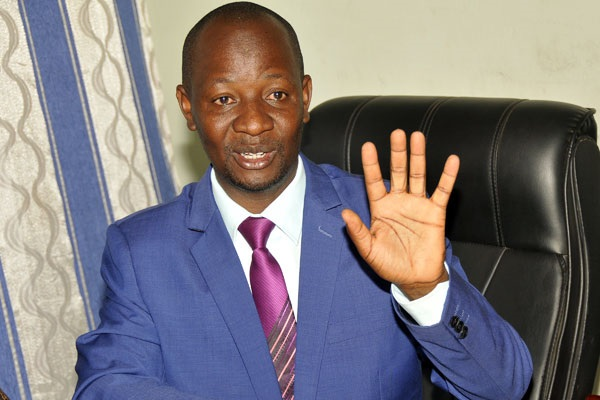
Kira Municipality MP Ibrahim Ssemujju Nganda has officially declared his intention to contest for the office of the Speaker of Parliament in the 11th Parliament.

The MP made the revelation while talking to the press in Parliament on Tuesday morning.

According to Ssemujju, he has been in parliament for two terms hence he is capable of leading the parliament while in his third term.

The Forum for Democratic Change- FDC spokesperson and Opposition Chief Whip is set to battle it out with the incumbent Rebecca Alitwala Kadaga and her deputy, Jacob Oulanyah.

Kadaga, one of the longest serving legislators in the Ugandan parliament has been speaker of parliament for 10 years having taken over from Edward Kiwanuka Ssekandi in 2011.

The new Speaker and Deputy Speaker of Parliament will be elected in May by the Members of Parliament after their swearing-in.

Stories Continues after ad

AFCON U-17 tournament cancelled

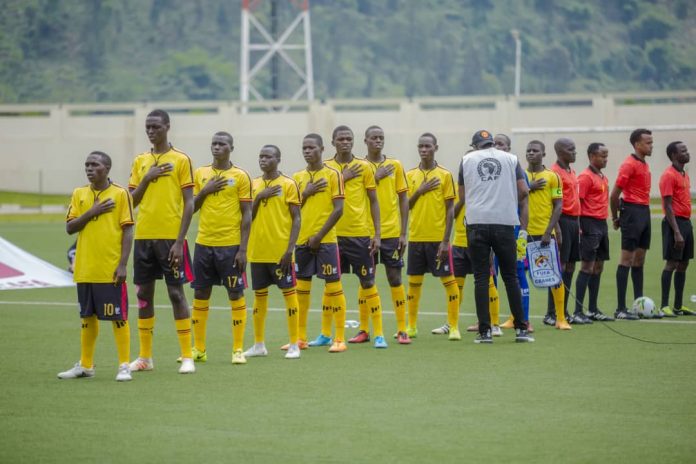
uganda cubs

The CAF Emergency Committee met on Monday, March 08, 2021 in Rabat, Morocco to decide on the holding of the 2021 U-17 Total Africa Cup of Nations.

The Committee was made aware of the constraints faced by some of the participating member associations as well as the host country including the fact that the coronavirus pandemic continues to present significant challenges for the organization of international sporting events.

Taking into account the cancellation by FIFA of the Under-17 World Cup for which the U-17 CAN was no longer qualifying, the Committee further noted: The resurgence of the Covid-19 pandemic, increased restrictions on international travel and uncertainty about the evolution of the situation.

For all these reasons, the Committee decided to cancel the 2021 edition of the Total U17 Africa Cup of Nations.

Hosts Morocco were to kick off the event that was supposed to take place from 13th to 31st March 2021 facing U-17 CECAFA champions Uganda Cubs in the opening match in Rabat.

Stories Continues after ad

SFC holding scores of missing Ugandans

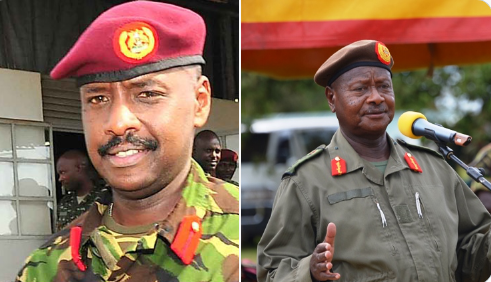
First son Gen Muhoozi Kainerugaba, President Museveni

President Yoweri Museveni has revealed that the Special Force Command (SFC) under the leadership of first son Gen Muhoozi Kainerugaba is holding scores of missing Ugandans who were reportedly kidnapped by plain clothed armed security operatives.

Since November last year, the country has witnessed a number of kidnappings by both armed plain clothed men and security personnel traveling in Toyota Hiace commonly known as drones. Most of the victims have since not been arraigned before courts of law nor released on police bond.

Last week, the Minister for Internal Affairs Minister, Gen. Jeje Odongo named 177 persons under its custody. The group had been declared missing by relatives. However after the tabling of names, more families came out and said that names of their relatives are missing on the released list.

And yesterday, the president said SFC is holding 51 people after it released two.

“The disappearances are a consequence of the essentially treasonable acts of elements of the opposition.  It is dishonest for anybody to talk about the mistakes, if any, of the Security Forces without talking about the origin of the problem: treason, using terrorism by the opposition.  Criticize the Army if justified, but also criticize those taking the unconstitutional road of terrorism, intimidation, sectarianism etc.” Museveni said

Museveni said that the group is helping them to expose the whole criminal scheme of elements of the opposition plus their local parasite and foreign backers.  “It is too bad for the traitors.  These poor youth gave us the whole scheme and they are now our friends.” he said

Below is Museveni’s statement

MISSIVE BY PRESIDENT YOWERI MUSEVENI KAGUTA ON SECURITY

“O you People of Little Faith

In the Book of Mathew Chapter 8, Verses 23 to 26, Jesus, while rebuking the winds, said: “Why are you afraid, O you people of little faith?  This was as a consequence of lack of faith when the boat they were sitting in was being swamped by the waves and His disciples were afraid that they were going to perish.

These thoughts bring me to the events in Uganda where the different elements of the UPDF and Police have been criticized for brutal conduct and use of excessive force.  The criticism is good and necessary in a free society like Uganda.  However, that criticism should be honest and balanced. The NRA/UPDF came on the scene of Uganda in 1986.  Before that, there had been the tribal armies of the kingdoms of these areas, the colonial Army of the British and the post-independence neo-colonial Armies (Uganda Army, UNLA etc.).

All those Armies were famous for beating people, looting (okwaaya), raping women, killings, destruction of property (raiding cattle, destroying buildings etc.) and more.  Kampala and the other towns of Uganda were massively looted in the 1979 war.  Some of the companies, such as UGIL – the maker of the famous Yamato shirts – never recovered, after that.  UGIL was jointly owned by UDC and Mzee Kashiwada, a very useful Japanese businessman.  NRA captured major towns of Uganda such as Fort-Portal, Mubende, Kiboga, Kasese, Kamwengye, Bushenyi, Ibanda, Mbarara, Kabaale, Masaka, Kampala, Jinja, Tororo, Mbale, Gulu, Lira, Arua etc.  Quote for me a number of incidents of lootings, beatings or killings during that take-over of Uganda by the NRA, if you are honest.  If there are none or there are very few, what is the reason for that?  The reason was that somebody had taught them that good soldiers are like good surgeons.  A surgeon uses a knife, just like the butcher does. However, the surgeon’s knife only goes for the tumor, for the cancer.  It does not cut anyhow.  If you cut anyhow, you are, then, a butcher.  Even for cancer, you do not always have to use the knife always.  If chemotherapy and radiation can do, you avoid the knife.

Therefore, the NRA/UPDF always goes for the armed enemies that are not willing to surrender.  These are the ones that will and should be attacked.  An armed enemy can be armed with a gun, a knife, a panga or a hammer.  One million people were killed in Rwanda using machetes.

This is the uncontested heritage of the NRA/UPDF.  Sometimes, mistakes occur like the people who died at Bucoro, Mukula or Mukongoro. Eventually, however, those mistakes get discovered.  Why?  It is because Uganda, eversince the NRM came to power, is a free society, with elected structures (the LCs) everywhere.  These structures will bring up those mistakes and nobody will intimidate them because we protect them. Once those isolated mistakes are discovered, they are addressed appropriately.  Sometimes, those mistakes happen because of inadequate briefing to the soldiers.  Where mistakes are intentional, we act harshly against the mistake makers.

All Ugandans know the problems emanating from our cultures in relation to handling crime.  Take beating thieves or wrong doers, for instance. The untrained Ugandans, believe in their proverb. It goes: Akabwa akabii, kagumya mugoongo gwaako – a stealing dog, pays with its back. That is why mobs kill thieves with mob justice.  Wife beating.  Corporal punishment for children in homes or even in Schools. It is this culture that the NRA had to fight. When there are lapses, however, you may get regression into incorrect ways of handling wrong doers.

Indeed, a few years ago, I had to remind, in writing, all the security personnel, the incorrectness and unproductivity of applying beatings on wrong doers or the use of extra-judicial killings. Those actions stopped that time.  With the recent allegations, I have already sent out written reminders of our doctrine and why.  While it is correct to be concerned when there are arrests and when people are not brought to Court quickly, it is tendentious, dishonest and malicious to compare these mistakes to Amin’s time or present the situation as incurable.  In the Book of Ephesians 4:15, it says: “Speaking the truth in love should be our primary guide in criticism. Godly criticism is true and loving.  It comes from a humble, caring heart that wishes the best for the other person. It is not bitter, condescending, insulting or cold-hearted”.

Ugandans, therefore, be assured that, like in the past, such mistakes will be identified and corrected.  Moreover, with our new campaign, the new actors will absorb the NRA-UPDF culture of their predecessors.  However, those who criticize the UPDF should start with the criminals.

The arrests, termed “disappearances” by some, came as a consequence of the myopic plans by the enemies of Uganda that started some years ago with the killing of the Moslem Sheikhs, Joan Kagezi, Policemen Kawesi and Kirumira, Kiggundu, the women in Nansana, the women in Entebbe, the women in Zana, the killing of Susan Magara, the killing of Abiriga, the New Years’ killings of Kisojjo in Masaka, the attacks on factories, the killing of Nagirinya etc. etc.  Those criminalities caused us to make my address to Parliament, on the 20th of June, 2018, where I outlined new anti-crime measures, including the installation of cameras and the massive recruitment of LDUs.

That crime wave was defeated.  Indeed, a number of criminals were either killed or arrested.  Those killed include: those that attacked the Security personnel during the riots as already referred to above.  Those arrested and being tried include: those who attacked the Police Woman with a hammer, those who undressed women wearing NRM T-shirts and those who were involved in organizing and executing the riots of November, 2020.  Those killings, even at that time, had a political element about them. There appeared to be an attempt to demoralize the people of Uganda and make them believe that NRM has failed to sustain its long record of maintaining peace in the country.

When the time for elections approached, the new campaign was that if anybody continued to support the NRM, he or she would either be killed, attacked or his property would be damaged e.g. destroying people’s crops (kusawa ebirime like the confused Kabaka Yekka did in 1961/62 against the DP supporters).  Particularly, in some parts of Buganda, on the radios and social-media, vicious sectarian campaigns, were launched, trying to divide the people of Uganda.  Even though it was COVID-19 time, some opposition candidates made it clear that for them, they would not obey the directives of the Ministry of Health and the mobilization was that should law and order agencies touch these untouchables, there would be an insurrection.  Young people were being trained in insurrection tactics.  In the meantime, threats against NRM supporters (okuhayira, okwewelela) were intensified and actual attacks started.  “Yemwe abatusibye ko omusajja, mugenda kutulaba” – “You NRM supporters are the ones that have made Museveni to continue in power. You will see the consequences”, were the threats.  “Yes, sir, we are, indeed, the ones that have kept Museveni and NRM in power”. “How, then, do you, in the same breath, call him a dictator?” “A dictator kept by us in power – so much that you have to threaten us with death to force us to abandon him!!” If you want to change my political position, persuade me.  You have no right to intimidate me. Then, actual attacks on NRM supporters and the destruction of the posters of the candidates these opposition supporters did not like, intensified.  In all this, the Opposition was assisted by corrupt elements in the Police Force.

At Katale in Kawempe, when NRM supporters went to complain to the Police about the intimidation by the opposition, they were told: “That is politics.  We do not involve ourselves in politics”!!

The Opposition and their foreign backers thought that their schemes of hijacking the destiny of the people of Uganda by installing a quisling regime in Uganda, was now water-tight.  In this, they were being supported by the parasite elements within Uganda – those who never work, but want wealth and power, including the new comprador (agents of foreign interests) bourgeoisie who want our country to remain as a supermarket for foreign products and resent our rapid industrialization.  In future, we shall say more about these traitors.

All this was a serious miscalculation by the quislings.  In particular, they forgot two factors: the freedom fighters that liberated and defended Uganda in the past and the masses of Uganda who resent foreign meddlers and sectarian parasites.  The heroic Armed Forces, the UPDF, entered the picture, starting with the 20th of November, 2020.  The Commandos, the Military Police, the LDUs, other elements of UPDF etc., started operations in Kampala and crushed the insurrection, killing a number of terrorists, such as Semanda Joshua of Makerere Kivulu, who was shot by a woman Commando, the idiot was trying to attack; Serunjoji Alex of Nakivubo channel etc.  There are other criminals that died in those confrontations that we are still trying to identify.  Many arrests were made, but many were released.  By the time I made my broadcasts on this and other issues on the 13th of February, 2021, SFC was still “holding” 53 persons.  Since that time, 2 persons have been released, one had a problem of TB.  The other 51 have been with SFC, helping them to expose the whole criminal scheme of elements of the opposition plus their local parasite and foreign backers.

Too bad for the traitors. These poor youth, gave us the whole scheme and they are now our friends. “Omukwano guvwa mungabo”, remember traitors, our proverb.  Or you have forgotten our proverbs!!  Whatever is done in secrecy, will be proclaimed on the roof tops, it says in the Book of Luke Chapter 12, Verse 3.  Therefore, traitors, local parasites and their foreign backers, be informed that the forces that liberated Uganda and have defended it ever since, are there and will always do their duty.  When it came to two days before the voting day, about 24,000 soldiers of the UPDF were deployed in most of the 2,184 Sub-counties of Uganda to defeat the scheme of the undemocratic opposition which was not to allow the elections to take place because they knew that they would lose, unless they intimidated the citizens and stopped them from coming to vote as they did in Kampala.  How would they, then, account to their foreign funders? That scheme failed and elections were held in total peace. Even after the elections, there was total peace.  We were ready to crush any insurrection or disruption by the undemocratic groups.

The second factor was the patriotic people of Uganda who resent sectarianism and foreign meddling in our affairs. I thank the sectarian spokesmen and their foreign backers for campaigning for the NRM and for me.  The more they de-campaigned and demonized the NRM and myself, the more they woke Ugandans up.  The Ugandans, then, said: “OK. We now know who are behind this scheme” and they massively voted against the scheme, the poor organization of the NRM managers and greed of some of them, notwithstanding. Especially for the uninformed foreigners, it is not in their interests to keep bumping (kutomera) into issues of Africa.  It is interesting for me to hear ordinary Ugandans saying: “Abazungu bagala kutabura ensi yaffe, kubanga tuzudde amafuta” – “The Whites want to bring upheavals in our country in order to steal our oil”!!  It rhymes with what I keep hearing in Congo from the Runyoro-Hema speakers of Bunya, Mbooga etc. They say: “Abajungu tibarikugonza obusinge omunsi yaitu” – “The Whites do not want peace in our Country”.  In other parts of Eastern Congo, they speak in Swahili:  “Wazungu hawataki amaani kwa Congo” – “The Whites do not want peace in Congo”.  By “Whites” – “Bazungu” – they are referring to some representatives of Western Countries, the UN etc.  It is in the interest of those actors, to change that image.

Therefore, “the disappearances” are a consequence of the essentially treasonable acts of elements of the opposition.  It is dishonest for anybody to talk about the mistakes, if any, of the Security Forces without talking about the origin of the problem: treason, using terrorism by the opposition.  Criticize the Army if justified, but also criticize those taking the unconstitutional road of terrorism, intimidation, sectarianism etc.

Yoweri K. Museveni Gen. (rtd)

Stories Continues after ad

Executive Director of Absa Group dies of #Covid-19

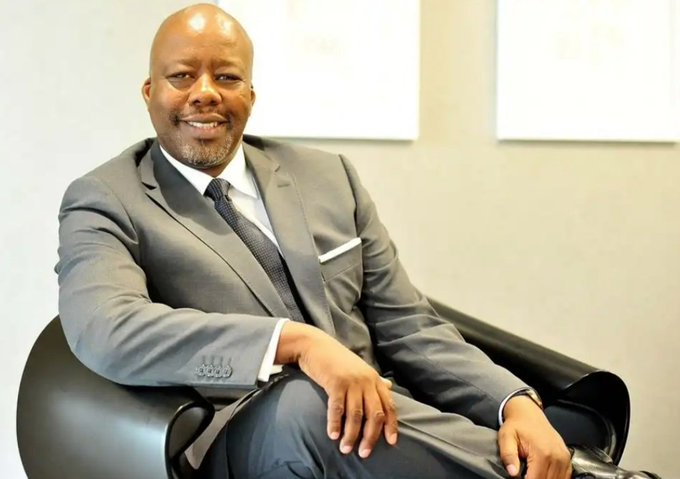
Peter Matlare

The Executive Director and Deputy Group Chief Executive of Absa Group Peter Matlare has passed on.

“It is with profound sadness that the Absa Group announces the passing of our Executive Director and Deputy Group Chief Executive Peter Matlare on 7 March 2021 due to COVID-19-related complications,” the bank announced.

Peter joined the Absa Group Limited board as an independent Non-Executive Director in 2011. In August 2016, he was appointed Group Deputy Chief Executive Officer, as well as Chief Executive responsible for Absa Regional Operations, covering our presence on the continent outside of South Africa.

“He played a key role in overseeing our regional operations and safely leading our banks through the major Separation from Barclays and rebrand to Absa,” Wendy Lucas-Bull, Absa Group Limited Chairman said.

Peter has made a significant contribution to the Group, and Absa has lost a dedicated leader, a visionary and an amazing human being. More recently, Peter’s leadership was critical in ensuring that the Separation from Barclays, a complex multi-year project which also included the largest single data and systems migration in Africa, was successful across Absa’s operations on the continent.

“Peter was a seasoned corporate executive, a good leader, inspirational, and passionate about his work, always strongly invested in the success of our continent. I will miss his friendship, collegiality, guidance and wise counsel,” said Daniel Mminele, Absa Group Chief Executive.

Speaking to this tremendous loss, Mumba Kalifungwa Managing Director Absa Uganda said, “I will personally miss Peter for his leadership flair, his passion for results and deep love for Africa and its people. We have lost a father, friend and brother who I will miss dearly.”

Stories Continues after ad

We must overturn the inequalities that hold women back – Winnie Byanyima

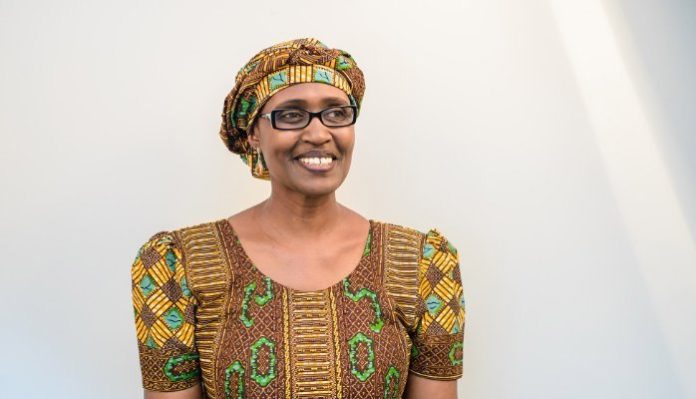
UNAIDS Executive Director Winnie Byanyima

Women leaders have provided a guiding light for the world in responding to the Covid-19 crisis, from heads of government to coordinators of grass-roots social movements. They have reminded the world how crucial it is to have critical numbers of women, in all their diversity, in positions of leadership.

But the Covid-19 crisis has seen progress towards equality pushed back. It has widened the gap between women and men in wealth, in income, in access to services, in the burden of unpaid care, in status and in power.

Up to 20 million more secondary school-aged girls could end up out of school following the crisis. Many may never go back to school or have access to skills and economic opportunities, and will be at greater risk of violence, poor health, poverty and more.

Two and a half million more girls are now at risk of child marriage in the next five years. There has been a dramatic increase in violence against women.

Pandemics such as Covid-19 and HIV magnify the fissures in society and exacerbate vulnerabilities. Gender-based and intersecting inequalities and violence hold back the lives of women and girls all over the world.

The pandemic has brought into sharp and painful focus that even before COVID-19 an estimated 34 million girls between the ages of 12 and 14 years were out of school, one in three women globally reported having experienced physical or sexual violence and women the world over worked longer hours for less or no pay.

Women who were already stigmatized are among those who are being hardest hit by the impacts of the pandemic. The sudden loss of the livelihoods of sex workers and their lack of access to health care and social protection have intensified their vulnerabilities, especially for those living with HIV. Many female migrants and precarious workers adversely affected by the pandemic are excluded from government relief and protection programmes, as well as health services. Stigma, discrimination and criminalization put transgender women, and women who use drugs, at heightened risk of HIV and other sexually transmitted infections, and hold them back from accessing HIV prevention, treatment and care services.

Recovery strategies cannot be gender-blind or gender-neutral: they must overturn the inequalities that hold women back.

Together, UNAIDS, UN Women, the United Nations Children’s Fund, the United Nations Educational, Scientific and Cultural Organization and the United Nations Population Fund have convened a broad movement, Education Plus, to work with governments to secure the transformative changes that will enable all of Africa’s adolescent girls to be in school, safe and strong. That includes all the girls who have been pushed out of school during the COVID-19 crisis and those who were excluded from school even before the crisis hit.

Overcoming the COVID-19 crisis, and ending new HIV infections and AIDS-related deaths, both require that we close in on the inequalities that drive vulnerabilities. The new global AIDS strategy 2021–2026 puts the rights and multiple and diverse needs of women and girls across their life cycle at the centre of the response: from preventing vertical transmission to providing access to quality education in safe and supportive environments to ensuring comprehensive sexuality education and holistic sexual and reproductive health services.

Gender inequality is not only wrong. It is dangerous. It weakens us all. A more equal world will be better able to respond to pandemics and other shocks; it will leave us healthier and safer and more prosperous.

Progress on gender equality has never been automatic. It has never been given, it has always been won.

We are inspired by the women’s movements leading the struggle for equality. The United Nations stands alongside you to advance a world where women and girls in all their diversity will thrive and take their rightful places as equals.

This International Women’s Day, let’s support and celebrate women taking the lead.

Winnie Byanyima is the Executive Director of UNAIDS and Under-Secretary-General of the United Nations.

Stories Continues after ad

Keeping up with the nursing/midwifery trends

Judith Hope Kiconco

It’s March, the second last month of the first quarter of the 2021 and we are still in challenging times full of uncertainty due to Covid-19. There is little to cling on as the world keeps moving and waits for no man. Unplanned eventualities such as pandemics, political tension, financial hardships are worsening the already worrying circumstances. Like everyone else, nurses and midwives are also in this struggle. So how do we keep up? What do we have to do to stay relevant, to keep up with the times and serve to the best of our abilities.

The State of the World’s Nursing Report 2020 cites nursing workforce as the world’s largest single occupation in the health sector and a foundation of the inter-professional health teams that deliver on the promise of health for all.

According to the World Health Organisation, ‘Health for All’ does not mean an end to disease and disability, or that doctors and nurses will care for everyone. It means that resources for health are evenly distributed and that essential health care is accessible to everyone. A lot of factors such as resources, leadership, policy need to align for this to be a reality but as nurses and midwives, we can do our bit by keeping up with the trends in the profession and abreast with the changing needs in health.  Below are some of the trends to look out for that would enable us to maximize our potential amidst the challenging times we live in.

There is an increased need for specialized nurses globally. Specialization is not only beneficial for career growth of an individual but also shaping the future of healthcare industry. Cliff Aliga, a Lecturer at Agha Khan University and Critical Care Nurse says specialization provides a nurse with an opportunity to become an expert in a specific area and they can ably influence practice, education, and health outcomes from a knowledgeable standpoint. A specialized nurse has increased clinical confidence, great decision-making ability, and increased job satisfaction Cliff adds drawing from his experiences as a critical care nurse having trained from Europe six years ago.

We should embrace online nursing education. For the past few years, our current lifestyle and the economy have dictated that both work and study are equally important. The education system has been flexible enough to cater for this with all sorts of programs to enable learners achieve both study and work with ease. The modular, evening and weekend have always been handy and of late the online education offered by some institutions like Makerere University School of Public Health (MaKsph) has bridged this critical gap. Several nurses have already benefitted from these and they are here to stay. Take advantage of the online programs both national and international to further your education.

There is Increasing the need for doctoral education. Uganda had its first PHD nurses more pronounced in 2007 and they had been trained from abroad.  Today there are about 10 nurses with PHDs in country, but this number will hopefully continue to grow bigger. Nurses have realized that they partake in decision-making through higher education because with more knowledge comes empowerment, refined skills, and confidence to discuss issues pertinent to nursing with colleagues, partners and governments says Dr Rose Kyalo Nabirye. Dr. Nabirye is one of the few PHD nurses and former dean school of Nursing College of Health Sciences Makerere. She adds that Uganda benefits from PHD nurses through their work in different institutions such as universities, government departments, research institutions etc.  She however notes a challenge that PHD nurses in Uganda have not yet managed to win big grants to set up research programs as our medical doctor colleagues.

Let’s familiarize ourselves with telehealth: This is where technology meets medicine and is also termed as telemedicine.  2020 saw the growth of Telemedicine globally including in Uganda. Service providers like The medical concierge Group(TMCG) have excelled at this and no doubt with the current trends, telemedicine is going to greater heights. As nurses we need to familiarize ourselves with the do’s and don’ts of telemedicine including but not limited to the rules of informed consent and the increased need for privacy of health-related information.

Like they say, if it does not challenge you, then it will not change you, kudos to the nurses who have already taken up the challenge of matching up the current trends in nursing and for those who are yet to take it up, it’s never too late.

Happy International Year of Health and Care workers !

Judith Hope Kiconco

Nurse and Public Health Specialist

Stories Continues after ad

WOMEN’S DAY: “The Future is Female”

Ms Abejja.


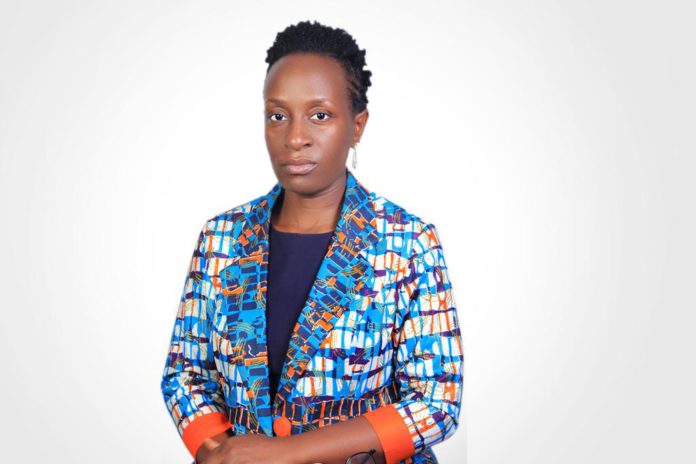
Ms. Anne Abeja, Housing Finance Bank Company Secretary


The theme of International Women’s Day 2021 is “Choose To Challenge” The premise of this theme is the simple belief that from challenge comes change and people all over the world can choose to challenge gender bias and inequality in the world.

Besides challenging gender bias, we can also seek out and celebrate women’s achievements as we continue to create an inclusive world.

Today we feature Ms. Anne Abeja, the Company Secretary at Housing Finance Bank and celebrate her achievements throughout her career.

Briefly tell us about yourself (Name, background, current position at HFB)

My name is Anne Abeja. I am a the Company Secretary and Chief Legal Officer at Housing

Finance Bank. I am an Advocate of the High Court of Uganda and other Courts of Judicature, a Governance Professional and Fellow of the Institute of Chartered Secretaries and Administrators, United Kingdom.

I hold a Master’s Degree in Business Administration from the Eastern and Southern African Management Institute (ESAMI), Arusha, Tanzania, a Bachelor of Laws Honours Degree from Makerere University, Kampala and a Post-Graduate Diploma in Legal Practice from the Law Development Centre, Kampala. I have attended a number of Leadership Programs such as the Bulletproof Manager and Executive Leadership Program and CEO Apprenticeship by Strathmore Business School and CEO Summit.

Talk to us about your career journey? When and how did you get into banking?

I took the opportunity to perform odd jobs during my school vacations. While in Secondary school, I took on Clerical roles at Uganda National Examinations Board and while at and Post-University, the roles ranged from volunteering at the Legal Aid Project of the Uganda Law Society to doing voice-overs at Radio one while at the Law Development Centre. These roles enabled me to appreciate the values of hard work and respect.

After Law school, I began my career at the Firm of Byenkya, Kihika and Company Advocates, where I had had the opportunity to conduct the Clerkship program in order to earn my Post-Graduate Diploma in Legal Practice. I later worked at the Swiss Procurement Company (SWIPCO) a 3rd Party Government Procurement Advisory Agency, following which I joined TOTAL, then Monitor Publications Limited where I grew through the ranks to Company Secretary. I then joined Housing Finance Bank (HFB).

Interestingly, my journey with HFB began while I was at the University. I initially held an account with a Bank that closed and I lost money in the process. I decided that before I open a new account, I will do my research thoroughly, once bitten, twice shy. I later identified a Bank that was indigenous, stable and solid due to its shareholding and that is how I became a customer of Housing Finance Bank. When an opportunity arose to join the Bank, it was not a difficult decision for me to apply for the role of Company Secretary as I had already had a chance to interact with the bank as a customer and I had enjoyed my experience. My interviews were successful and here I am.

I was contented to take on new and exciting challenges and exposure in the Finance Industry after the exciting times in the Multi-media and Oil and Gas industries (downstream).

Executive positions in Uganda’s banking sector have for a long time been taken up by men, what are your thoughts about his fact and do you have any tips for women who are just starting their journey in this sector?

I say, there is a time for everything. There was a period when majority of Executive positions in Uganda’s Banking Industry were taken up by foreign nationals. This situation has changed significantly over the years and we now have most Executive positions in the industry taken by highly skilled and experienced Ugandans. Today, we also have a large percentage of such roles taken up by ladies and more are in the pipeline. Watch this space! The future is female, and not just for the Banking industry.

For Ladies starting out in this and other sectors, I say, you are as capable as the next person or better. Stay ahead of the game by learning every day, volunteer for assignments at work and in your community, improve your skills, read on any subject, be aware of your environment, be vulnerable when you need to, be authentic, treasure your values and be bold and confident, Life is a journey which you should enjoy, pray and be grateful. Never take no for an answer,  have me-time to take care of yourself, have time for your family and friends, look the part, be purposeful and intentional in all you do and above all, take on a mentor to guide you in your personal development.

Being in such an influential position is a huge responsibility. Talk to us about some of the challenges, lessons and successes.

The successes for me stem from my own contentment when I delight a customer, both internal and external. When I impact on someone positively and create a delighted and happy customer for whom I have provided a timely solution to their satisfaction, that for me is success right there.

The challenge is the fast-paced nature of the Finance industry. It makes prioritizing quite challenging as the day changes like the Irish weather. One has to be flexible and very organized. One also has to have solutions ready at the fingertips. The industry is highly regulated and so there are a myriad of Laws and Policies that one must operate within yet be flexible enough to meet a Customer’s dynamic needs.

One of the greatest lessons is that the customers’ needs  are what one must address in a timely manner otherwise they can easily resort to another financial provider at the click of a button.

What has been your greatest achievement from a career perspective?

Receiving two awards in recognition of outstanding performance on the same occasion as an individual and for the Uganda Bankers’ Association Legal Committee which I had the opportunity to Chair in 2019/2020.

The impact of #Covid-19 has put a lot of pressure on families and working women have had to make huge sacrifices. How can organizations innovate and do more to support women better?

Whereas the impact of the #Covid-19 pandemic has had a devastating impact on the world, it has also given us the opportunity to press the reset button and transform the way we work and live. For example, most parents, particularly mothers are having to balance home-schooling, office work and other responsibilities.

Organizations that have not already done so, should embrace enhanced use of technology, remote and shift working and provide resources to enable new ways of working as well as flexible working hours. The law almost always follows innovation. Organizations that have not already done so should amend their policies to suit the changing times and provide for ways of adequately measuring productivity.

As Uganda joins the rest of the world to celebrate International Women’s day, what changes would you want to see and message would you send out to women who are aspiring to challenge the status quo in whichever career or workplace that they have chosen?

In alignment with this year’s International Women’s Day theme, #ChooseToChallenge, we need to remember that there is strength in numbers. As women, let us support each other more as we push boundaries to challenge the status quo in all spheres of life.

One quote for the road, “Be the woman that fixes another woman’s crown without telling the world that it was crooked”.


Stories Continues after ad