Stanbic Bank
Stanbic Bank
17.2 C
Kampala
Stanbic Bank
Stanbic Bank
Home Blog Page 874

Sudan, Egypt air forces hold new combat drills over Nile Waters

Egyptian_mig-29m_medium_fighters_st_photo-0a716

The Sudanese and Egyptian armies are conducting new joint air exercises with the participation of special operations units, four months after similar drills.

On November 15, 2020, the two armies launched joint air exercises, dubbed The Nile Eagles1, in Sudan’s Marawi military airbase, north of Khartoum.

The Nile Eagles 2, which aim to build up capabilities and to carry out joint operations involving special forces, come amid the growing tensions in the region over the filling of the Ethiopian dam and border dispute with Sudan.

In a press statement on Wednesday, the Egyptian Army Spokesman Brig-Gen Tamer al-Ruffai said that the two armies were conducting the second joint air exercise at Meroe airbase in northern Sudan.

According to the al-Ruffai, the participating forces carried out several joint sorties to attack enemy targets and protect vital sites, with the participation of a group of multi-task fighters.

He added that the special forces carried out exercises on storming, concealment and camouflage operations, and to carry out attacks from different positions.

In a press statement on Wednesday, the Egyptian Army Spokesman Brig-Gen Tamer al-Ruffai said that the two armies were conducting the second joint air exercise at Meroe airbase in northern Sudan.

The Military Media of the Sudanese army issued a statement saying that the chief of staff Lt Gen Mohamed Osman al-Hussein paid a visit to the airbase and met with the forces participating in the joint drills.

Preparations for war

Maj-Gen Amin Ismail, a military expert and lecturer at the Sudanese Higher Security Academy said that the ongoing drills should be considered as a part of the expected scenarios due to the stalemated negotiations on filling and operating the Renaissance Dam.

“There is an option to negotiate and reach an agreement, and there is the option of military action against the dam. So, this (second) option requires to be prepared and the exercises are one of these preparations,” he told Sudan Tribune on Wednesday.

Ismail pointed out that the manoeuvres are also a message to Ethiopia that Sudan and Egypt are ready for military action. Also, it is also a message to the international community that “if it does not intervene effectively, the two countries will turn to the option of war,” he stressed.

Sudanese foreign minister told the U.S. Envoy Donald Booth that they stopped the nine-year direct talks because they are no longer trust Ethiopia which Khartoum backed in the past hoping they can broker an acceptable compromise for the three parties.

The unilateral first filing was the turning point between the two countries as Khartoum did not expect that Addis Ababa will deprive them of water for three days and not alert them to protect the two downstream dams.

Stories Continues after ad

World Cup Qualifiers: Uganda Cranes to play against Mali, Kenya and Rwanda

The World Cup Trophy since 1974


The Uganda Cranes will shift focus to the forthcoming Africa 2022 FIFA World Cup Qualifiers that will get underway in June this year.

The Cranes are pooled in Group E alongside Mali and neighbours Kenya and Rwanda.

The quest for a first ever appearance at the global showpiece will begin with a trip to Nairobi to face Kenya between 5th-8th June 2021.

Uganda will then return to action with a home fixture against Mali on match day two. The dates will be between 11th to 14th June.

Match day three and four will be a double header against Rwanda with the first leg coming between 1st to 4th September in Kigali before facing off in Kampala in a space of two-three days.

The penultimate game will see Uganda host Kenya in the first week of October and later end the group phase with a trip to Bamako, Mali between 10th to12th October.

The group winner after six games will go into the final qualifying phase that will have nine other group leaders.

There will be a draw for the final ten teams and the five winners on aggregate will represent Africa at the 2022 FIFA World Cup in Qatar next year.

2022 World Cup Fixture

Group E

Match day 1

5th – 8th June, 2021

Kenya Vs Uganda

Match day 2

11th – 14th June 2021

Uganda Vs Mali

Match day 3

1st – 4th Sept 2021

Rwanda Vs Uganda

Match day 4

5th – 7th Sept 2021

Uganda Vs Rwanda

Match day 5

6th – 9th Oct 2021

Uganda Vs Kenya

Match day 6

10th – 12th Oct 2021

Mali Vs Uganda

Stories Continues after ad

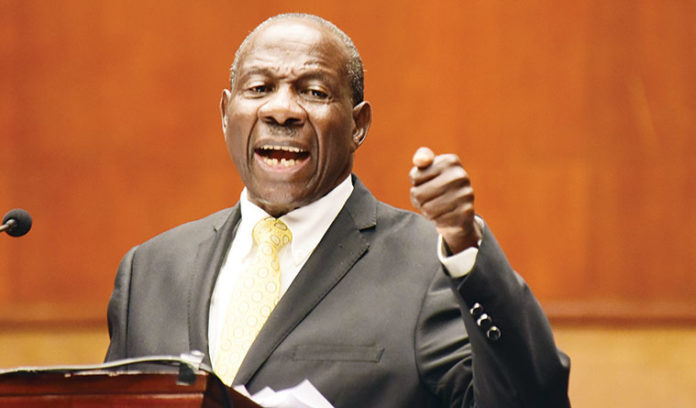
Gov’t moves to introduce new taxes on cars and internet users

Finance Minister: Matia Kasaija.


Government has, through Finance Minister, Matia Kasaija, tabled proposals for the new tax laws, which will see motor vehicle owner’s part with an annual license fee paid by 31st of January.

The Traffic and Road Safety Act (Amendment) Bill, 2021 seeks to impose, under clause 14.A, a license to permit ownership of “a motor vehicle, trailer or engineering plant.”

To use the vehicles specified above on the road, one must possess a license, not to be confused with a driver’s’ license. Failure to have the license, proposes the new law, could see one jailed for two years, pay a fine of Shs2 million, or suffer both imprisonment and fine.

The minister tabled the proposals, an annual fee, to be determined by the Minister of Works and Transport by Regulations, is also to be met by a vehicle owner.

Failure to pay the annual fee, will lead to a fine of Shs200, 000 accumulating every day from the date the fee was due for payment – 31st of January.

Clause 14B (3) proposes such a fine to be regarded as debt due to the government by the defaulter.

To incentivize the electronic receipting, the finance minister proposes in the Value Added Tax (Amendment ) Bill a refund of 5 percent of taxes to “a person rather than a taxable person and is issued with an electronic receipt or invoice or several electronic receipts or invoices worth ten million shillings within a period of thirty consecutive days.”

Under the Tobacco Control Act (Amendment) Bill, 2021, tobacco leaf exporters are proposed to bear a tax of $0.8 per kilogram exported out of Uganda, a move intended to encourage the establishment of local tobacco processing plants in the country.

For those dealing in the export of processed gold, the Mining (Amendment) Bill, 2021 seeks to levy $200 per kilogram, while those exporting other unprocessed minerals are to part with a tax at the rate of 1 percent of the value of the mineral in issue.

The levy of a paltry one per cent comes as a shocker to watchers of the mining industry, who expected a higher levy to discourage the export of unprocessed minerals and in turn aid local industrialization.

The noise from the fish maw industry has also attracted the attention of the taxman, who The Fish (Amendment) Bill now seeks a Shs7000 levy on every kilogram of fish maw exported out of Uganda.

The lucrative industry has in recent years seen increased activity on the lakes, pushing dealers in the fish maw industry into constant cat and mouse chase with security forces deployed to salvage depleting fish stocks in the country.

Those who export wheat bran, cotton cake, maize bran and any other by-products of the milling industry will, if the External Trade (amendment) Bill comes into force, contend with a US$0.4 per kilogram of such item exported out of Uganda.

In proposals under the Excise Duty (Amendment) Bill, 2021, the taxman targets the alcohol industry a Shs230 per litre or 30 per cent increase in the charge on opaque beer, whichever is higher.

Clause 4 seeks to increase the levy on all locally produced alcoholic beverages at a rate of Shs 230 per litre on or 30 per cent, whichever is higher.

Even nonalcoholic drinks, provided they contain yeast and bacteria, will under clause 4(c) pay a Shs250 per litre tax or 30 per cent more of the existing tax, whichever is higher.

Internet data, except data for provision of medical and educational services will, under clause 4(f) pay an additional 12 per cent of taxes on the fee charged.

The Tax Procedures Code (Amendment) Bill, 2021 seeks to allow for the appeal of the decisions of the High Court, arising from appeals from the Tax Appeals Tribunal, to proceed to the Court of Appeal and the Supreme Court, except that in the case of the Supreme Court, only points of law will form the basis of appeal.


Stories Continues after ad

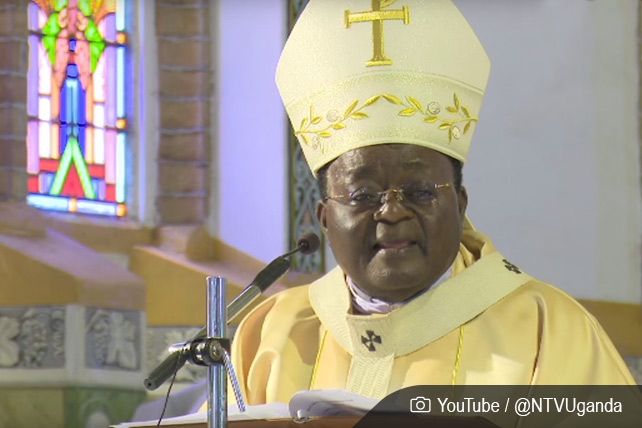
BREAKING: Archbishop Kizito Lwanga dead

RIP: Archbishop Cyprian Kizito Lwanga

The Archbishop of Kampala, Cyprian Kizito Lwanga is dead

The Secretary General of Uganda episcopal Conference Msgr John Kauta has confirmed the sad news to Eagle Online.

In a statement released by the Archbishop’s office, it says the Archbishop was found dead in his room in the morning.

“With deep sorrow, I hereby inform you that our beloved shehard, the Archbishop of Kampala archdiocese, His Grace Cyprian Kizito Lwanga has been called to the house of the Lord. The Archbishop was found dead in his room this morning. We pray that the Almighty  and Merciful God may grant him eternal rest”.

The statement “We condole with all of you dear people of God especially the clergy, Religious and Lay faithful of Kampala Archdiocese and the late Archbishop’s family . May the Almighty God strengthen us all in this very difficult time” reads the statement signed by Fr. Pius Male Ssentumbwe, the Chancellor

Wait for details 

Stories Continues after ad

Affordable medical care in offing as Health Insurance Bill passes

Medical care in Uganda

Ugandans are to be cushioned against the high cost of healthcare offered by private health-care providers following the passing of the National Health Insurance Scheme Bill, 2019.

Seen as a giant leap in strengthening the health system, the Bill that caters for only residents or citizens of Uganda, awaits presidential assent to have the effect of law.

MPs passed the Bill on Wednesday, 31 March 2021, in a sitting chaired by Speaker Rebecca Kadaga, despite calls by the Ministry of Health to withdraw the Bill from the House.

According to Hon. Robinah Nabbanja, the State Minister for Primary Healthcare, some key stakeholders in the private sector were not in agreement with provisions of clause 5 of the Bill pertaining to contributions and benefits to the National Health Insurance Scheme.

Clause 5 of the Bill that caters for the functions of the National Health Insurance Scheme has been amended to register members and beneficiaries of the Scheme, design and implement the health benefits package delivery mechanism as well as formulate and issue guidelines on contributions, quality assurance and health service provider arrangements.

“The Ministry [Health] in collaboration with other key stakeholders is undertaking further consultations and analysis of a premium based on the interim actuarial study conducted National Insurance Regulatory Authority in collaboration with the Ministry of Health 2019,” said Nabbanja.

However, Hon. Sarah Opendi who previously served as the Primary Healthcare, told fellow legislators that the Ministry had carried out wide consultations on the Bill before tabling it to Parliament in 2019.

“We know that government does not have adequate resources to put into healthcare so with the small contribution from the citizens, we shall be able to meet all these health expenditures that government is supposed to meet,” Opendi said.

Members of Parliament supported the Bill saying it would go a long way in enabling all Ugandans be able to afford good health services, citing the phasing out health centre IIs which will likely further distance persons in rural areas from health facilities.

“We should do a little more in health than what we are doing right now and this Bill will go a long way in ensuring that. We should not deny our voters from getting onto the national health insurance,” said Hon. Betty Aol Ocan, the Leader of the Opposition in Parliament.

“This is a good financial management system because it fights the corruption in our health system and improves its functionality,” added Hon. Stephen Mukitale (Ind. Buliisa County).

Among the proposed amendments to the National Health Insurance Scheme Bill, 2019 is in clause 2, which will make it mandatory for all health facilities to be accredited before enrollment as service providers to the scheme and ensure guaranteed quality services and accountability.

The clause will also provide for the payment of contributions to the Scheme by contributors like self-employed Ugandans or those employed by the public or private sector, and exclude contributors aged below 18 years.

Clause 8 of the Bill is another key aspect that has been amended to provide for nine directors on the Board of the Scheme, down from the originally proposed 11, with the chairperson appointed by the Minister for Health.

The Board will constitute members from the Ministries of Finance, Health, Gender, Labour and Social Development, as well as representatives from trade unions [NOTU and COFTU], National Social Security Fund, private health service providers, the Federation of Uganda Employers and the Insurance Regulatory Authority.

A new clause has been added in part five of the Bill before clause 21, which stipulates government’s obligations in national health insurance including provision of adequate funding for the Scheme and ensuring that all Ugandans have access to health services, among others.

Clause 21 of the Bill has been amended to make government liable to make contributions on behalf of indigent persons; indigents being persons deemed by the Board to be unable to pay a contribution and are registered as such.

A new clause in the Bill has been inserted after clause 27(4), to provide for the establishment of the National Health Insurance Fund where funds of the Scheme will be kept, including contributions from government and members of the Scheme, income on investment, fees, fines and penalties as well as interest on dues.

Another new clause has been inserted into the Bill after clause 57, to ensure that nothing in the Act, when assented to, shall affect the existence and operations of community based health insurance schemes, save that the Minister for Health may issue guidelines for their proper function.

Stories Continues after ad

Disgruntled PWC staff sues his bosses over torture

barack

Staff at Price Water Coopers-PWC Uganda are reportedly discontented and complaining of things like favoritism, failure to heed the provisions of the firm’s own HR Manual, intrigue and financial exploitation by way of underpayment amidst being overworked by the audit firm.

There is simply too much pressure on each and every employee to deliver so much client work in such a very short time, a thing that could even impact on the quality of the resultant audit or even tax advisory reports. The firm has over 160 employees some of whom are compelled to stay in office up to 2am (basically to work over time without attracting any allowances) because the organization is fatally understaffed.

There are also concerns that, whereas the firm officially collects colossal sums of money from its wealthy clients like USAID, Global Fund, Gavi, the UN Agencies involved in refugee operations, URA and almost all commercial banks in Kampala, the employees who do the actual donkey work are paid peanuts.

It has now taken much courage for a one Barak Tulinaomubeezi, who has opted to challenge the PWC imprudent and draconian management decisions in court, and has become an instant hero for many aggrieved employees quietly grumbling.

Lodged by Isaac Ssemakade’s Center for Legal Aid, a Bombo Road-based law firm renowned for spearheading such litigation on behalf of the vulnerable employees seeking to take on their giant employers, the instant complaint shows that Barak’s woes began in July 2020 and the whole thing later escalated at the beginning of 2021.

Apparently, the relevant managers at the firm considered Barak undesirable and generally developed negative bias towards him after realizing he had a journalism background. They considered him a rumor-monger who potentially might blow up the company’s cover and expose its closet skeletons someday.

According to the formal complaint papers from the Sezibwa Road-based KCCA Labor Office perused by Mulengera News, Barak was frustrated through denial of work assignments which created an impression he was non-performing because at the end of the day, in a setting like PWC, one’s output can only result from executing the roles he or she has been assigned. In the instant case, the psychological and emotional torture clearly aimed at frustrating the 28-year-old Barak into resignation out of PWC was orchestrated by a one Norbert Nuwahereza who is the staffing manager of the PSG department where he falls.

Barak’s case relates to constructive dismissal whereby the very proud and stinking rich PWC partners and top managers don’t believe in outright dismissal of employees. Once they are tired of you, for one reason or another, they will use your relevant manager to mistreat and cause you to emotionally become broken and dismiss yourself through voluntary resignation.

Norbert Nuwahereza would make occasional phone calls just to mock and bully the young man who never understood why the manager was always out to get him. That it was a well calibrated work place campaign aimed at frustrating Barak into resignation and it was orchestrated by Nuwahereza with the acquiescence of other superiors like PWC Human Capital Manager (basically HR) Shivan Karemera, Clive Mayombwe, partner Dowson Kalemba and Uthman Mayanja, the lawyer’s complaint on the KCCA file asserts in part. That this sustained campaign of witch hunt escalated mostly between 8th January and 19th March when Barak got overwhelmed and proclaimed his resignation.

The written complaint filed by Center for Legal Aid, dated Friday 23rd March highlights ways in which the PWC has breached several provisions of the Constitution and the Employment Act regarding the Barak mistreatment. That Barak wasn’t only victimized but was also subjected to very malicious and embarrassing performance appraisal sessions (technically known as PIP) yet his apparent underperformance resulted from his immediate supervisor’s curious refusal to assign him work.

The law firm further contends that their client Barak was also “unjustifiably denied one month’s pay in lieu of notice and four months’ pay as severance allowance on cessation of employment among other terminal benefits.” That even when the firm is theoretically known to be among the best when it comes to enforcing excellent pro-staff values, policies and standards, PWC managers threw everything to the wind in order to fix Barak, the lawyers further assert. That all this makes PWC liable to paying colossal sums of money in compensation to atone the detriment Barak suffered as a result of the wrongful actions of the 5 managers who the lawyers sarcastically refer to as the “five bullies” in their documentation on behalf of their client.

That Barak suffered not only emotional distress but also unwarranted disruption in his career and financial progression. That the very humiliating ordeal the young man endured at the hands of the indifferent PWC managers resulted into loss of dignity and personal self-esteem. That he also endured huge financial anxiety because the servicing of the salary loan he had contracted with one of the city banks was disrupted and made complicated because of the very anomalous circumstances under which the impugned managers made impossible his continued stay in the PWC employment.

The KCCA Labor Officer is being implored to urgently inquire into Barak’s complaint, general grievances and the conduct of the 5 PWC managers and accordingly make the appropriate orders to atone the detriment the young auditor has endured due to fault not of his own. The young man, who sources say is determined to go all the way even if it means sacrificing himself so that future employees lead a more productive life working with PWC, is also demanding billions of shillings in compensation. The almost unprecedented litigation risks badly bruising PWC’s otherwise very good image and globally-acclaimed brand status.

According to KCCA’s Labor Officer Irene Nabumba, Francis Kamulegeya in his capacity as PWC Senior Partner has since been dully written to and notified about Barak’s complaint and an opportunity to deescalate things through the firm diplomatically engaging with their aggrieved employees still exists. Nabumba’s office will only launch full scale investigations into the complaint on getting notification from Barak’s lawyers that path hasn’t yielded.

Nabumba says Kamulegeya and other PWC partners (Uthman Mayanja, Dowson Kalemba, Pamela Natamba & Cedric Mpa Obusingye) have up to Thursday 6th April to resolve the issue internally or else her Labor Court commences full blown inquiry to the total detriment of the PWC brand reputation. By 6th April, Kamulegeya is supposed to have written back notifying KCCA Labor Officer Nantaba of the steps being taken thus far to amicably respond to and address Barak’s grievances.

To earn better, one must get promoted first and there is widespread discontent that promotions processes aren’t adequately transparent as some of the managers (supposed to recommend people for promotion) are accused of favoring their relatives, friends, cronies and sometimes girlfriends. There is a manager who is famous for only assigning curvaceous girls work on all projects that come through him leaving many wondering why average-looking girls are never perceived to be brainy enough by this sexpest manager. The situation is even worsened by the fact that the four partners can’t easily be accessed by the aggrieved lower rank employees who must channel their concerns through the very managers causing this aggrievement.

Stories Continues after ad

Artificial Intelligence and Its 6 New Trends That You Can See in 2021

Artificial Intelligence is a scientific and engineered approach to make a computer, or an intelligent machine think and learn as smartly as competitively as humans do. AI is to apply the technicalities of human thinking, critical reasoning, and logic to intelligent software systems and make them replicas of the human thought process and problem-solving characteristics.

AI and 2020

Before the global pandemic in 2020, the world had just started imbibing the culture of AI – Artificial Intelligence and its branches like Automation and ML – machine learning. But after COVID – 19, AI and its streams have heavily impacted how we conduct business through smart machines and self-teaching algorithms and the constant fight against the outbreak.

AI indisputably is the king of trends that have changed how humans live, play, and work. The updated technologies that will help people in 2021 to rebuild their lives and to rethink business priorities and strategies are widespread and accepted globally.

Components of Artificial Intelligence

AI is intangible, and its primary objective is to improvise on computer applications and functions. These functions are replicas of human expertise of applying problem-solving, learning, reasoning, analyzing, and scrutinizing.

AI consists of

  1. Automated Learning
  2. Planning
  3. Knowledge Reasoning
  4. Problem Solving
  5. Linguistic Intelligence and Natural Language Processing
  6. Robotics
  7. Computer vision and Perception

Objectives of Artificial Intelligence in 2021

There are long-term goals associated with the artificial intelligence sector.

  • The objectives of AI are planning, representation of knowledge and experience, learning, language processing, realization, critical reasoning, and ability to influence and deploy objects.
  • The approach of AI revolves around computational intelligence, statistical methods, and AI traditional coding.
  • Computers use AI in the field of psychology, science, philosophy, mathematics, and linguistics.
  • Sophisticated software tools are used to work on AI research related to artificial neural networks and mathematical optimization, applying methodologies based on economics, probability, and statistical data.

The Enhanced Need for Artificial Intelligence in 2021

  • The primary purpose of developing Artificial Intelligence is to enable machines to think and find solutions like human beings, especially after COVID-19. This is to apply algorithms to complex issues and resolve them in a computer-friendly manner.
  • To enhance human thinking and logic and come with alternate resolutions. Also, to cater to questions like how much does artificial intelligence cost and what is the applicability of AI in Industries and businesses.
  • To create systems that are experts in their arena of explicating intelligent behavior and have the expertise to plan, learn, explain, demonstrate, and advise further, just like humans do.

6 New Trends of Artificial Intelligence That You Can See in 2021 

The primary focus of AI in 2021 will be on improving stakeholder experience besides improving the efficiency or effectiveness of operations.

The AI trends expected in 2021 are:

1. AI talent will remain tight, and it will promote self-directed IT

Talent supply is expected to be a key issue along with the accelerated adoption of AI in 2021. AI solutions will be self-correct and self-heal solutions that will be able to resolve any malfunctions in a proactive way, thus mitigating the downtime of a system.

2. AI structures unstructured data and the focus remains on AI ethics and standards. 

AI will facilitate RPA and NLP to leverage machine vision and natural language and to structure unstructured data such as images or emails. The demand for ethical AI is still a top priority besides technicality.

3. IT pushes AI at a larger scale, and it becomes explainable.

Organizations will start executing their AI and ML models into production and to scale. This will enable more data regulations, and AI trust will be pivotal.

4. AIOps gets big and Augmented processes to enter the picture.

AIOps and Augmented processes are given leverage to improve the decision-making and functionality of key processes. This provides an end-to-end digital experience, empowers cross-team collaboration, and integrates seamlessly into the wider collective intelligence and the whole AI system.

5. Voice- and language-driven intelligence takes off.

AI will enable NLP and ASR – automated speech recognition capabilities, and check agent quality, continued compliance, and customer intent understanding.

6. AI and cloud become interdependent.

Artificial intelligence is adopting cloud solutions through which vast amounts of data will be generated, applied, and supercharged.

Let’s quickly go through various trends that AI can exercise and promote in the coming year.

1. Robotic Process Automation (RPA)  

Many organizations today are turning to RPA as it streamlines business processes and reduces costs. Further, it helps in automating tedious business processes, thus enabling their employees to provide better, faster resolutions.

2. Conversational AI

AI-powered chatbots using NLP – natural language processing and ML – machine learning provides a more human-like interaction, which is known as Conversational AI. This generates personalization, responsiveness, and customer experience’s reach.

3. The role of AI in Healthcare

AI is helping the healthcare sector through Big Data with high accuracy. For example, it can be extensively used to identify COVID patients, develop thermal cameras, create mobile applications to monitor individual temperatures, and many more.

4. Increase in demand for ethical AI

There is an enhancing demand for ethical AI, and it is at the top of the list

5. AI for knowledge breach and Cybersecurity 

AI will be of huge assistance to the security department, supporting it against malicious activities.

6. The combination of the Internet of Things with AI (AIoT)

The confluence of AI and IoT is on the rise, and we will see more products resulting from this amalgamation through host mobile app backend programs like Siri and Alexa.

7. Reinforcement Learning

RL or Reinforced learning is a unique application of deep learning that enhances the effectiveness and efficiency of data.

8. Quantum AI 

Quantum supremacy is applied to measure the Qubits for use in supercomputers, which help in solving problems, data interpretation, and forecasting trends quickly

9. AI-Powered Business Analysis and Forecasting

To deeply understand market needs, hyper-automation is combined with cognitive automation AI solutions that help in processing real-time alerts. Abilities like forecasting and analysis are enabled using content-intelligent technologies and AI-supportive practices.

10. Edge Computing 

Edge computing is a great cost-effective, time-saving, and consumer-satisfaction generating service that provides gadgets with servers and data storage and allows them to put data into them.

11. Rise of a Hybrid workforce

The human workforce is expected to work with digital assistants, and automated bots post the COVID-19 pandemic. This will lead to more collaborative experiences with AI.

Conclusion

AI’s spectrum is broad, and to scale new heights, big and small organizations must find ways to leverage AI-powered solutions and stay up-to-date with emerging trends.

Thus, we say that Artificial Intelligence is all about creating super-intelligent machines that can eventually surpass the brightest of human intelligence. It includes vehicles like drones, art like poetry, mathematic algorithms and theorems like chess, search engines like Google search, online advertisements, image recognition, virtual assistants like Alexa and Siri, and many other applications related to healthcare, video games, finance, business, and automotive and many other fields.

AI is a vast concept and comprises lots more. It’s a never-ending story of upgrades, updated technology, and excellence in intelligence.

Stories Continues after ad

Cutting the red tape in trade procedures; the role of the trade information portal

Uganda Trades portal

It has often been said that “Information is power”. In 2015, when Tashobya, a trader from western Uganda wanted to export his eggs to Comoros, nobody warned him that he might have to visit more than four institutions seeking both information and licenses. Eggs already in a warehouse, he made phone call after phone call, paid one agent after another and still was met with frustration. If only he had had a convenient source he could access to learn what he needed to do.

A few years later, a trade information portal was built and traders like Tashobya and others could have all their questions answered.

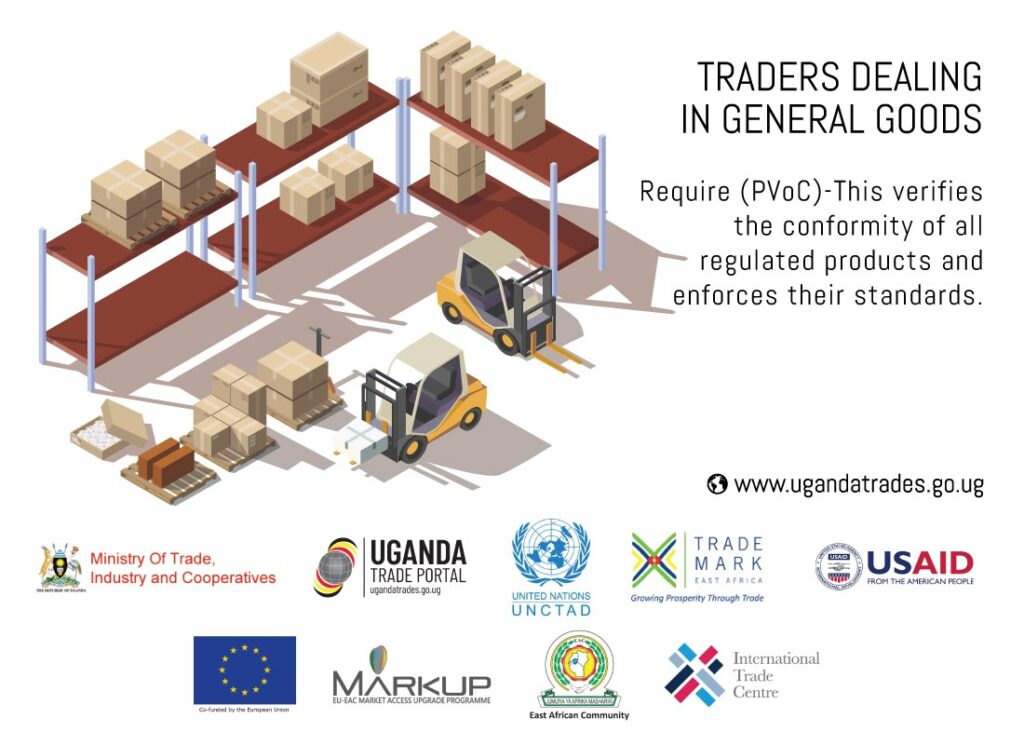
The trade information portal is Uganda’s one stop shop for information on trade related businesses. The portal gives access to step-by-step procedures from user point of view guiding traders on licenses, pre-clearance permits and clearance formalities issued by government agencies.

The development of the portal is premised on the Trade Facilitation Agreement which came into force on 22 February 2017 where two thirds of World Trade Organisation (WTO) members ratified the agreement, Uganda inclusive. The east African member states of Kenya, Rwanda, and Tanzania have developed similar platforms to enhance trade in the region.

Many businessmen in the import sector have had to pay a surcharge to Uganda National Bureau of Standards because they did not know the need to and later on how to obtain a Pre Verification of Conformity certificate (PVoC). The lack of information can be costly.

UGTrade-Portal-News-Artwork-Xpress-times

The platform will play a critical role in informing the traders on how  the movement, release and clearance of goods, including goods in transit is done.  Promotion of transparency in customs regulations and administration, promotion of cooperation among agencies dealing with clearance of goods, promotion of electronic systems in documentation and clearance of goods and Streamlining of fees and knowledge of charges and taxes is what the trade portal aims to achieve.

Developed and implemented by the Ministry of Trade Industry and Cooperatives (MTIC), in partnership with East African Community (EAC), Trade Mark East Africa, USAID, United Nations (UN) and International Trade Centre, the platform is facilitating trade by enabling the traders to access all the information regarding the documentation, procedures, fees, and charges that are  needed before the traders go into the clearing Process.

The Portal enables traders to access and obtain trade related information on a single platform and this will significantly reduce the time and cost of accessing information in the business community.

It will enhance Uganda’s export, first to the regional markets, where over 60% of the country’s exports go and facilitate  the Micro, Small and Medium Enterprises who constitute over 70% of Uganda’s exporters to trade easier. Visit the portal; https://ugandatrades.go.ug/  

Marketing support provided by the MARKUP programme, a regional development initiative for the EAC funded by the EU.

Stories Continues after ad

Emirates Skycargo becomes first air cargo carrier to deliver 50 million doses of #Covid-19 vaccines

Emirates Skycargo

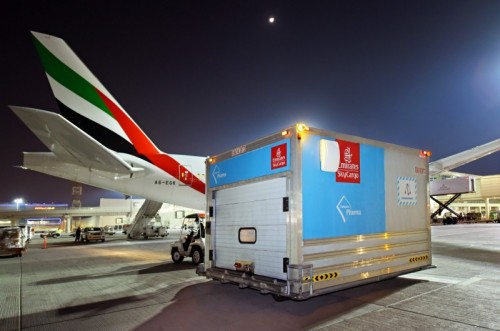
In the run up to World Health Day (7 April), Emirates SkyCargo has become the first airline cargo carrier in the world to have transported more than 50 million doses of COVID-19 vaccines on its flights. The carrier has also transported more than 100 tonnes of syringes across the world to support the delivery of vaccines.

Since the start of international distribution late last year, Emirates SkyCargo has transported over 220 tonnes of COVID-19 vaccines, equivalent to more than 50 million doses, on more than 150 flights from manufacturing locations to 50 destinations on its network through Dubai. Overall, the carrier has transported six different kinds of COVD-19 vaccines.

In March, Emirates airline delivered 864,000 doses of the COVID-19 vaccine in the first batch from the global COVAX initiative created to ensure that low -and middle-income countries have fair access to the vaccine. This was part of the 3.5 million doses of the AstraZeneca vaccine that was allocated to Uganda by the COVAX facility to be delivered between March and June 2021

Watch a video about Emirates SkyCargo’s COVID-19 vaccine distribution milestone.

Nabil Sultan, Emirates Divisional Senior Vice President, Cargo, said: “Emirates SkyCargo is proud to have reached the 50 million COVID-19 vaccine delivery milestones just ahead of World Health Day. As a socially responsible global air cargo carrier, our actions over the last year have always been directed at helping communities across the world, and especially those in developing nations, recover from the devastating impact of the pandemic. We have been leading the global air cargo industry’s efforts and working with our partner organizations in Dubai to rapidly distribute COVID-19 vaccines through Dubai to the rest of the world.”

Emirates SkyCargo has remained agile and dynamic throughout the COVID-19 pandemic, responding quickly to maintain international connectivity for essential goods across the world. The carrier was one of the first in the world to deploy passenger aircraft for cargo only flights in order to transport PPE, medical equipment, pharmaceuticals and food. Over one year, Emirates SkyCargo had operated more than 27,800 flights and transported over 100,000 tonnes of essential commodities.

As early as October 2020, Emirates SkyCargo set up an EU GDP certified dedicated airside hub for distribution of COVID-19 vaccines at its hub in Dubai. With its sophisticated infrastructure and extensive storage capacity, Emirates SkyCargo positioned itself to fly in large quantities of COVID-19 vaccines from manufacturing locations, store the vaccines in Dubai and then regularly replenish vaccine supplies to developing nations with limited cold chain infrastructure through its cargo flights.

In January 2021, Emirates SkyCargo joined hands with leading Dubai-based entities, DP World, International Humanitarian City and Dubai Airports to form the Dubai Vaccine Logistics Alliance to harness the strategic strengths of Dubai as a major global distribution hub for COVID-19 vaccines. In February 2021, Emirates SkyCargo signed an MoU with UNICEF to prioritise transportation of COVID-19 vaccines in support of the COVAX facility which is aimed at equitable global distribution of vaccines.

With its fleet of modern and efficient all wide-body aircraft and a network that currently spans more than 130 destinations across six continents, combined with the strategic geographic location of its state of the art GDP certified Dubai hub, Emirates SkyCargo is a key global player in the secure and rapid global distribution of COVID-19 vaccines.

Stories Continues after ad

Qualified teams to Africa Cup of Nations, Cameroon 2021

Afcon trophy

Twenty-three of the 24 teams for the 2021 Africa Cup of Nations tournament in Cameroon have been confirmed.

The last qualifying team; either Benin or Sierra Leone will be determined in June. The two did not play in Freetown on Tuesday because of the Covid-19 test results that ruled out five Sierra Leone players.

The fixture has been rescheduled for the May 31-June 15 international window, with Sierra Leone trailing Benin by three points in Group L and needing a victory to overtake them and qualify.

Comoros and the Gambia qualified for the first time, increasing to 44 the number of countries who have qualified for the premier African national team competition.

Democratic Republic of Congo and South Africa were the highest profile casualties, the failure of Uganda to secure a third straight appearance was the most spectacular. Zambia also missed out this time.

The tournament was scheduled to take place between 9 January and 6 February 2021 but on 30 June 2020, CAF moved the tournament to January 2022 following the effects of the COVID-19 pandemic.

Qualified teams: Cameroon (hosts), Algeria, Burkina Faso, Cape Verde, Comoros, Ivory Coast, Egypt, Equatorial Guinea, Ethiopia, Gabon, Gambia, Ghana, Guinea, Guinea Bissau, Malawi, Mali, Mauritania, Morocco, Nigeria, Senegal, Sudan, Tunisia, Zimbabwe.

Stories Continues after ad