Stanbic Bank
Stanbic Bank
19 C
Kampala
Stanbic Bank
Stanbic Bank
Home Blog Page 881

Whistleblower petitions Museveni over corruption at BoU, wants former officials prosecuted

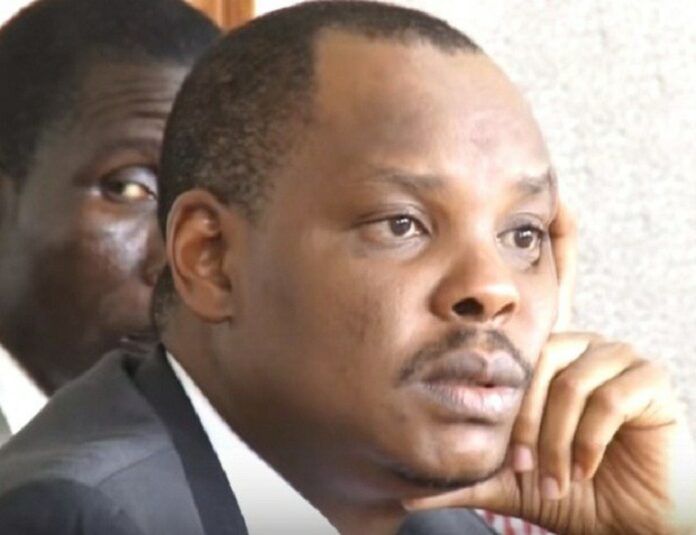
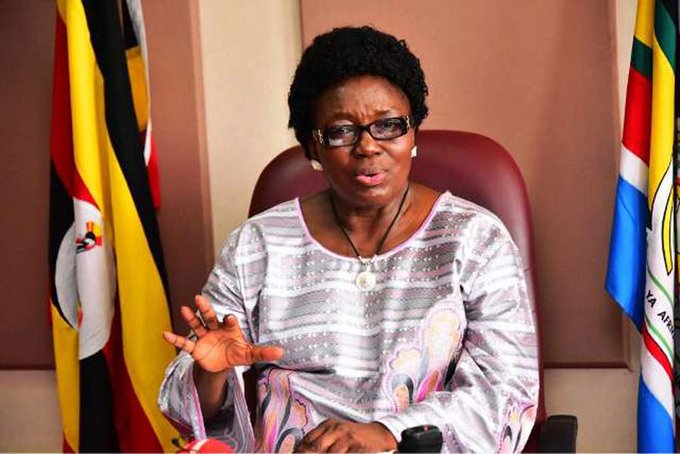
Justine Bagyenda and Louis Kasekende

A whistleblower has petitioned President Museveni seeking to investigate and prosecute former executives of Bank of Uganda (BoU), over allegations of involving themselves in corruption and the fraudulent sale of seven defunct banks.

The petitioner, Sam Brian Kakuru, wants Museveni to institute an investigation into the operations of former Bank of Uganda Deputy Governor Dr Louis Kasekende and Justine Bagyenda, the former BoU Executive Director in charge of bank supervision over what he calls the ‘illegal closure’ of the banks according to evidence of the COSASE report of 2019. Others are current officials; Benedict Ssekabira and Margaret Kasule.

“Your Excellency as you may be aware that it’s now almost three years since COSASE committee of the parliament closed its investigations into the irregular sale of seven defunct banks, with recommendations to hold culpable the implicated officials, but nothing yet has been done. A forensic parliamentary audit by the Committee on Commissions, Statutory Authorities and State Enterprises (PAC-COSASE) discovered that the three – Kasekende, Bagyenda and Sekabira, profited from the botched closure of seven commercial banks and other fraudulent acts during the process,” part of the petition reads.

Kakuru writes; “Your excellency, there has been overwhelming evidence according to COSASE report of 2019 all over citing corruption scandals in the central bank to mention but a few; fraudulent closure of 7 defunct banks, irregularities on appointments within the Bank Of Uganda, conflict of interest in bidding processes in construction of bank of Uganda currency centers, among others in the bank of Uganda.”

He adds that in the committee report, it recommended that the relevant arms of government like the Inspectorate General of Government (IGG), Directorate of Public Prosecution (DPP) and the Financial Intelligence Authority (FIA) take interest in how the trio acquired astronomical wealth.

“Following the above background, we have petitioned the DPP, IGG severally on then irregularities in the closure of seven defunct banks prompting the call for further action but all in vain,” he says.

“It is very clear as per the COSASE report that the said officials abused their authority by doing whatever they did in contravention of section 90 of the Financial Institutions Act and other relevant laws,” Kakuru adds.

He says that he feels let down as no action has been taken against the alleged culprits as they petitioned on the same matter to CID police, IGG and DPP upon advice from the anti-corruption court of the high court of Uganda to carry out investigations and prosecute them.

“As petitioners and concerned citizens we served our petitions on the same subject matter to CID police, IGG and DPP upon advice from the anti-corruption court of the high court of Uganda to carry out investigations and prosecute the alleged culprits in the fraudulent closure of 7 defunct banks however as petitioners we feel let down as no action has been taken against alleged culprits,” he says.

“Creditors and owners (shareholders) of the defunct banks that is International Credit Bank (ICB), Greenland Bank and Cooperative Bank and Crane Bank among others whose properties were taken over and sold by Bank of Uganda fraudulently and at giveaway prices are still waiting for Justice thus justice delayed is justice denied.”

“Under your directive the anti-corruption agencies should take action on the above subject matter since they are already in receipt of the above complaint and available reports pinning the culprits in the Bank of Uganda saga.”

“The police is also supposed to investigate, how certificate of titles belonging to former clients of the above three defunct banks ended up in the possession of city lawyers, yet they were originally in the possession of the central bank, following the closure of the respective banks,” he writes.

Stories Continues after ad

Nubian Li, Eddie Mutwe further remanded to Makindye military prison

Nubian Li and Eddie Mutwe.

Makindye General Court Martial has again denied bail application filed by the head of National Unity Platform Presidential’s (NUP) Robert Kyagulanyi Sentamu aka Bobi Wine’s Private security team, Edward Ssebuufu aka Eddie Mutwe, singer Buken Ali aka Nubian Li and 36 other supporters.

Edie Mutwe and Nubian Li are part of the 124 people who were arrested in Kalangala District last year in December where Bobi Wine had gone to converse for support ahead of the concluded January presidential elections. The group had been released by the Masaka and Kalangala magistrate court. Only 88 were released.

This year they were arraigned before General Court Martial and leveled with charges of illegal possession of four rounds of ammunition. Through their lawyers led by Mr Benjamin Katana and Joseph Turyamusiima, the group applied for bail.

Appearing before the court chairman Lt. Gen. Andrew Gutti, their application has again been turned down on grounds that they will continue to incite violence if released.

Prosecution avers that all the accused and others still at large on January 3, at Makerere Kavule Kigundu zone, were found in possession of four rounds of ammunition which is a monopoly of the Defense Forces. However, at the time of the said offence, most of the suspects were in Kitalya Prison where they had been remanded by Masaka chief magistrates Court in December last year.

Stories Continues after ad

Stanbic Bank ordered to pay Shs400 millon over conduit company created by its employees

Stanbic Bank

The Commercial Division of High Court has ordered Stanbic Bank (U) Ltd, to pay Shs400 millon after its top employees created conduit company dubbed Myriad Investment Club limited and hence grabbing mortgaged properties and sold them among themselves.

The shareholders of Myriad Investment Club limited include; Kenneth Kitungulu (Executive and head Global markets Stanbic Bank), Lawrence Kaweesa (Global Business Manager Stanbic Bank), Allan Muhinda (interests dealer Stanbic Bank), Daisy Nitwe (Treasury sales dealer Stanbic Bank).

The others are; Emmanuel Rukeeba (head analytics and products Stanbic Bank), Maureen Kembabzi Katwebaze (works with Stanbic IBTC Bank Nigeria) and Thaib Lubega (Formerly Treasury Manager Stanbic Bank).

In 2017, Macdowel limited mortgaged its properties on plot 1, 3, 4, 5 and 6 closes, Luzira to Stanbic Bank Limited as security for a loan. The company at times failed to pay loan instalments on time and decided to go for Consent judgement to clear the loan by 30th June 2020. The company claimed that they paid off the loan but the bank has declined to release its titles.

It was revealed that Kenneth Kitungulu and Daisy Nitwe signed the sale agreement as the buyer’s directors. The sale agreement was drawn by the bank’s legal department, colleagues of the buyers/ directors/ shareholders.

The agreement bears a stamp of head BPP Credit, Stanbic and signature of Denis Lugoloobi, a senior manager Credit evaluation signing for the bank.

According to section 39 (2) and (3) of the mortgage Act, sale of mortgage property by a bank to its employees, is a crime punishable for not less than 24 months in prison.

Upon that the company ran to the High Court challenging the matter in which its properties were grabbed by Bank employees and sold among themselves. It also petitioned the Police CID to investigate the matter. The company claims that its properties were undervalued in that they were sold at Shs 1billion yet the actual value of the property is Shs 4billion.

And today, Justice Richard Wejuli Wabwire penalized the Bank and ordered it to pay over Shs 400millon to Macdowel limited.

“I could not turn a blind eye when employees of Stanbic Bank circumvented the law to the disadvantage of their esteemed customers,” he said in his ruling.

“It is very clear from the evidence on record contained in the affidavits in support of this application and rejoinder that the shareholders of the 2nd respondent (Myriad Investment Club)…..are employees of the 1st respondent (Stanbic Bank) on February 3, 2020, opportunistically incorporated a sham or conduit company in the name of 2nd respondent (Myriad), with a hidden motive of purchasing the securities, of the applicant (Macdowel),” he ruled.

Stories Continues after ad

Museveni to grace Janani Luwum day

Late Archbishop Janani Luwum

President Yoweri Kaguta Museveni is set to grace the 44th Janani Luwum day celebrations which will take place tomorrow at Mucwini, Kitgum district.

In 2015, President Museveni gazetted February 16th as Archbishop Janani Luwum Day, a public holiday for the country to celebrate the life of the late bishop who was killed on February 16, 1977 under orders of former President Idi Amin after the late clergyman blamed the dictator for his regime’s cruelty. Official accounts Bishop Luwum say he died in a car crash, which is disputed as it is said to have been stage managed.

The Most Rev. Dr. Stephen Samuel Kazimba, Archbishop of the Church of Uganda, will preach on the day’s theme, “Life in Its Fullness,” from John 10:10.

Who is Archbishop Janani Luwum?

Janani Luwum was born in 1924 in Mucwini, Chua, to Eliya Okello and Aireni Aciro. His father was a convert to Christianity. Janani was sent to school and eventually became a schoolteacher. In 1948 Janani accepted Jesus Christ as his personal Lord and Saviour. His conversion was so deep that he gave up teaching to join Church ministry full-time. He became very active in the East African revival movement, and became a lay reader, then a deacon, and then a priest in 1956.

He taught at Buwalasi Theological College and later became its Principal. In 1969 he was consecrated bishop of Northern Uganda. Janani Luwum’s leadership focused not only on preaching and spreading the Word of God, but also on the holistic development of people and communities; he repeatedly appealed to Ugandans to live together peacefully and in harmony. He was among the early visionaries for the sustainability of the Church through the Church House Project.

In 1974 Janani Luwum became Archbishop of Uganda, Rwanda, Burundi and BogaZaire (Eastern DR Congo). It was during a time of widespread terror after Idi Amin had overthrown President Milton Obote three years earlier in 1971. Amin had enacted a policy of repression, arresting anyone suspected of not supporting him. Hundreds of soldiers from the Lango and Acholi tribes were shot down in their barracks. Over the next few years, many Christians were killed for various offenses. A preacher who read over the radio a Psalm which mentioned Israel was shot for this in 1972. As Archbishop, Janani Luwum often went personally to the office of the dreaded State Research Bureau to help secure the release of prisoners.

Tension between the Church and state worsened in 1976. Religious leaders, including Archbishop Luwum, jointly approached Idi Amin to share their concern. They were rebuffed. Nevertheless, Archbishop Luwum continued to attend Government functions.

One of his critics accused him of being on the Government side and he replied: “I face daily being picked up by the soldiers. While the opportunity is there I preach the Gospel with all my might, and my conscience is clear before God that I have not sided with the present Government which is utterly self-seeking. I have been threatened many times. Whenever I have the opportunity I have told the President the things the churches disapprove of.”

Early in 1977, there was a small army rebellion that was put down with only seven men dead. Amin, however, determined to stamp out all traces of dissent. His men killed thousands. On Sunday, 30th January, Bishop Festo Kivengere preached on “The Preciousness of Life” to an audience including many high government officials. He denounced the arbitrary bloodletting, and accused the government of abusing the authority that God had entrusted to it. The government responded on the following Saturday (5th February) by an early morning (1:30am) raid on the home of the Archbishop, Janani Luwum, ostensibly to search for hidden stores of weapons.

The Archbishop called on President Amin to deliver a note of protest, signed by nearly all the bishops of Uganda, against the policies of arbitrary killings and the unexplained disappearances of many persons. Amin accused the Archbishop of treason, produced a document supposedly by former President Obote attesting his guilt, and had the Archbishop and two Cabinet members (both committed Christians) arrested and held for military trial.

On 16th February, the Archbishop and six bishops were tried on a charge of smuggling arms. Archbishop Luwum was not allowed to reply, but shook his head in denial. The President concluded by asking the crowd: “What shall we do with these traitors?” The soldiers replied “Kill him now.” The Archbishop was separated from his bishops. As he was taken away Archbishop Luwum turned to his brother bishops and said: “Do not be afraid. I see God’s hand in this.”

The three (the Archbishop and the two Cabinet members) met briefly with four other prisoners who were awaiting execution, and were permitted to pray with them briefly. Then the three were placed in a Land Rover and not seen alive again by their friends. The government story is that one of the prisoners tried to seize control of the vehicle and that it was wrecked and the passengers killed. The story believed by the Archbishop’s supporters is that he refused to sign a confession, was beaten and otherwise abused, and finally shot.

Luwum’s body was placed in a sealed coffin and soldiers secretly transported his desecrated body to Mucwini (his ancestral home and birthplace), and dumped it in a hurriedly-dug grave at the church yard at Wii Gweng on 19th February 1977. The villagers, however, were not satisfied with a sealed coffin. When they opened it, they discovered the bullet holes in his body. In the capital city of Kampala a crowd of about 4,500 gathered for a memorial service at St. Paul’s Cathedral, Namirembe, on 20th February. A grave had been prepared for him three next to that of the 1885 martyred Bishop, James Hannington. At the open grave, former Archbishop Erica Sabiti quoted the words of the angels at the empty tomb of Jesus, “He is not here, He is risen!” Instantly the Martyrs Song burst out with such power that “Glory, glory, hallelujah” was heard from that hilltop far into the city.

In Nairobi, about 10,000 gathered for another memorial service. Bishop Kivengere was informed that he was about to be arrested, and he and his family fled to Kenya, as did the widow and children of Archbishop Luwum.

The effect of Archbishop Janani Luwum’s martyrdom was expressed prophetically in the words of a lady who came to arrange flowers, as she walked through St. Paul’s Cathedral with several despondent bishops who were preparing for Archbishop Luwum’s Memorial Service. She said, “This is going to put us twenty times forward, isn’t it?”

The following June, about 25,000 Ugandans came to the capital to celebrate the centennial of the first preaching of the Gospel in their country, among the participants were many who had abandoned Christianity, but who had returned to their Faith as a result of seeing the courage of Archbishop Luwum and his companions in the face of death.

The assassination of Archbishop Janani Luwum is considered a turning point in Uganda’s history. For the international community, a line had been crossed and they were jolted into an awareness that Amin and his regime had to go. It set the stage for the Tanzanian-led campaign that removed Amin from power two years later.

 “Today I have become a leader in Christ’s army,” Janani Luwum said when he was converted. Prophetically, he went on to say, “I am prepared to die in the army of Jesus. As Jesus shed his blood for his people, if it is God’s will, I do the same.”

Stories Continues after ad

Absa Bank launches mobile capability for business clients

ABSA

Absa Bank Uganda has launched Business Banking capabilities on their Mobile Banking App, empowering business owners to perform multiple business-related transactions on their smartphones.

Without having to visit a branch, users can approve transactions, view statements and complete various other self-service tasks using their smartphones at any time of the day or night.

Speaking about the application, Albert Byaruhanga, Absa Bank Uganda’s Acting Head of Business Banking, said, “The COVID-19 pandemic caused a massive disruption to the country’s business environment, and this has amplified the need for unique digital solutions that can aid recovery, drive growth and in turn improve livelihoods.”

Perhaps the most affected businesses in the country have been small and medium-sized enterprises (SMEs), which, according to the Uganda Business Impact Survey 2020, account for approximately 90% of the entire private sector, over 80% of manufactured output and contribute about 75% to the gross domestic product (GDP).

The sector, having felt the setbacks brought on by the Coronavirus, has had to adapt to the new normal, which has been largely characterised by the evolution to online banking solutions that adhere to global health and safety guidelines while offering cost-effective business solutions.

As such, the government and the private sector have simultaneously promoted the uptake of e-payments and fintech solutions to accelerate economic recovery following the crisis.

Byaruhanga adds, “As a bank, Absa’s focus remains on bringing forth relevant innovation through key digital and other insight-led initiatives. We understand that entrepreneurs need speed and flexibility to grow their business portfolios and the Business Banking capability on our app serves as another digital solution that offers convenience, safety and cost-effectiveness.”

The bank also recently unveiled a ChatBanking function for the bank’s customers to make instant transactions 24/7 on the WhatsApp messaging app.

The function, called “Abby”, is available to all the bank’s account holders with non-business, transactional accounts and allows them to conduct transactions like making payments to beneficiaries, performing transaction search and history and making inter-account transfers.

Stories Continues after ad

Uganda open against Mozambique for maiden taste of U-20 Afcon

Uganda Hippos

The Uganda Hippos (U20) Team will have their first-ever engagement in the AFCON U20 tournament on Monday 15th February 2021 against Mozambique at the Stade Olympique in Nouakchott in Mauritania.

This will be the first time ever that the two countries will be playing at the tournament.

During the pre-match Press Conference, Uganda Hippos Head Coach Morley Byekwaso stated that the players have adapted to the weather and ready for Mozambique.

“We had some problems with the weather here. The wind was too heavy for my players but they have managed to adapt to it. We have made enough preparations to get the best from the match. We respect Mozambique but we are ready and we want to come out victorious,” said Coach Byekwaso.

Uganda Hippos played two buildup matches against Tanzania but won one 1-0 and lost the other 5-3.

This will be the first time Uganda U20 to play a Mozambican team at this U20 level.

The Hippos are the Champions of CECAFA and will play Cameroon in the second game on Wednesday 17th February before the last group game against the hosts Mauritania on 20th February 2021.

On the road to booking a ticket to the final tournament, Uganda finished top of Group B after demolishing Burundi 6-1 and drawing 0-0 with South Sudan. In the semi-finals, they were 3-1 winners over Kenya before trouncing Tanzania 4-1 in the final.

The Group A second match will kickoff at 4 pm.

Players in Mauritania

Goalkeepers:Komakech Jack (18) (Ascent SA), Oyo Delton (Busoga United FC), Ssenyondwa Denis Kaala (SC Villa).

Defenders:Kizito Mugweri Gavin (SC Villa), Semakula Kenneth (Busoga United FC), Musa Ramathan (KCCA FC) Kafumbe Joseph (KCCA FC), Begisa James Penz (UPDF FC), Baligeya Simon (Kibuli SS), Abdul Azizi Kayondo (Vipers SC)

Midfielders: Mugulusi Isma (Busoga United FC), Yiga Najib (Vipers SC), Bobosi Byaruhanga (Vipers SC) Sserwadda Steven (KCCA FC), Eyamu Ivan (Mbarara City FC), Kawooya Andrew (KCCA FC), Asaba Ivan (Vipers SC), Ssekajja Davis (Bright Stars FC), Wabyoona Faisal (Big Talent SA).

Forwards: Bogere Ivan (Proline FC), Ssenyonjo Samuel (KCCA FC), Kakooza Derrick (Police FC), Basangwa Richard (Vipers SC), Bukenya Joseph Kizza (KCCA FC), Ssali Alpha Thierry (Proline FC).

Stories Continues after ad

Over 350 SMEs graduate in business enterprise development from Stanbic Business Incubator

Ms Anne Juuko, CEO Stanbic bank.


The Stanbic Business Incubator has awarded 352 SME’s with certificates in enterprise development program after a three-month completion of the training session in business management, capacity building and upskilling programmes.

Uganda ranked as a top entrepreneurial country in the world with over 160,000 small and medium enterprises (SMEs) that account for 90 per cent of the entire private sector. This sector also employs over 2.5 million people and contributes 20 per cent of GDP and yet 80 per cent of the SMEs do not make it to their second or third birthday.

In 2018, Stanbic Bank took on the responsibility to address this challenge by setting up the Stanbic Business Incubator in Kampala. The training is intended to support SMEs to become more sustainable and help scale up their operations in a professional manner. By the close of 2020, the Incubator had trained a total of 1,216 SMEs and 2,392 individuals to date.

Speaking at the graduation ceremony held at Kololo, Emma Mugisha Executive Director & Head, Corporate and Investment Banking at Stanbic Bank said, “We are pleased to be hosting the fifth graduation ceremony for our Business Incubator. For close to three years now, it has been instrumental in enhancing the capacity for thousands of SMEs.  Our recent research shows improvements in productivity and revenue gains for the SMEs that have completed this training. This positive change is contributing towards the growth and improved performance of SMEs across the country and as Stanbic we are proud to lead this journey.”

The 2020 training was mainly done through a Learning Management System and Zoom. The sessions were blended with self-study for enhanced and more effective learning through content shared on a customized learning platform.

Tony Otoa, Chief Executive of Stanbic Business Incubator said, “We are committed to supporting the SMEs by imparting skills ranging from compliance, corporate governance and business planning and analysis to financial literacy and business ethics among other things. To support continued learning during the #Covid-19 pandemic, we decided to take the training online. This enabled us to deliver at the district level as well.

At the regional level we were able to train in 10 districts across the three major regions of the country. A total of 216 micro small and medium enterprises benefited from the Business Development Services and coaching support.”

He added, “For continued support of the programme, we partnered with the bank and CCX to develop a #Covid-19 information hub where SMEs can access information on how to steer their business through the pandemic, training and funding opportunities.”

Michael R. Senteza of DrimO Investments, a graduate of the program, said the training has not only enlightened him but also redirected his management skills, opened up new opportunities and ventures for his business to expand and reach great heights.

“With the new outlook and refreshed perspective, we see our business developing strategic partnerships and establishment of a strong and sustainable brand that can weather the storms of economic uncertainty through professional structures, planning and compliance” Senteza explained.

Lorna Nsiima of Capital Law Partners and Advocates, another Incubate added; “The Incubator provides an environment where business owners get to learn vital and practical requirements for a business to survive and thrive, not only in Uganda, but in the wider regional and global economies. As a manager, I now have more clarity in regard to our company structure and goals.”

The graduates of the Stanbic Business Incubator entailed a wide range of SMEs in various sectors like construction, transport, logistics, renewable energy, hospitality, agribusiness and manufacturing and consumer goods and services.

Stories Continues after ad

Ugandan women owned SMEs to benefit from $2bn AfDB financing

The African Development Bank’s Affirmative Finance Action for Women in Africa (AFAWA) program has partnered with African Guarantee Fund (AGF) to unlock $1.3 to 2 billion in loans to women-owned Small and Medium Sized Enterprises (SMEs) in Uganda by working with financial institutions to enhance their ability to lend to women.

The move signals the launch of AFAWA’s Guarantee for Growth (G4G) program, which aims to make available up to $3 billion in financing for women entrepreneurs through de-risking and technical assistance measures. Already, financial institutions in Cameroon, Democratic Republic of Congo, Kenya, Rwanda, Tanzania and Uganda are signing on to the program.

“As the implementing partner of AFAWA’s Guarantee for Growth program, we are already observing an increased appetite from banks for this innovative product that seeks to support women entrepreneurs. We have recently signed agreements with leading banks on the continent who are keen to increase their women SMEs portfolio,” said Jules Ngankam, African Guarantee Fund’s Group CEO.

“AGF has always been cognizant of the importance of supporting women SMEs to enable them fully play their role as drivers of economic growth. We are glad the momentum is increasing and that banks are now willing to take on this particular business segment,” Ngankam added.

Guarantee for Growth, which receives support from the Group of Seven (G7) countries as well as the Netherlands and Sweden, has three pillars: boosting access to finance, providing technical assistance to financial institutions and women business owners; and improving the enabling environment for women’s SMEs.

“The signing of the AFAWA Guarantee for Growth program with the African Guarantee Fund is a critical milestone for the Bank to successfully deploy on-the-ground financing instruments better suited to addressing the financing and training needs of women-owned small and medium enterprises in Africa for the growth of their businesses,” said Stefan Nalletamby, the Bank’s Director of Financial Sector Development.

“There is an urgent need to improve the enabling environment with the right regulations in place, to sustainably de-risk the segment,” said Esther Dassanou, AFAWA’s Coordinator. “The Bank will work with regulators to reform the legal and regulatory frameworks affecting women businesses’ access to finance,” she added.

The Guarantee for Growth is also expected to reach an average of 18,000 women small and medium enterprises and create 80,000 direct jobs, Dassanou said.

African women face a $42 billion financing gap, which AFAWA aims to bridge. This is tied to a lack of access to collateral in the form of land and property as well as to knowledge, mentorship, and networks to grow their businesses, which are typically in the informal sector.

“Donor and private sector-support for the overall AFAWA initiative is helping the Bank set ambitious targets for AFAWA Guarantee for Growth program,” said Vanessa Moungar, the Bank’s Director for Gender, Women and Civil Society. “The entire Bank ecosystem will be at play – inviting more financial institutions to sign into the program – ensuring engagement, implementation, and ownership at the market and policy levels,” she added.

Stories Continues after ad

Brig Christopher Bbosa passes out 164 military police officers

The Uganda Peoples’ Defence Forces (UPDF) Chief of Training and Recruitment Brig  Christopher Bbosa has presided over the passout of 164 graduates of military police at Military Police Training School(MPTS) Masindi.

The training that started on 5,2020 was aimed at equipping the trainees with knowledge on how to implement, supervise, enforce lawful orders and maintain general Military discipline by emphasizing Military drills, Military ceremonies within regiments, Units and squadron, re-emphasizing the pro-people stance of the UPDF, among others.

Brig Bbosa congratulated the graduates and told them that the course they had just completed bridges their previous and future career progression.

He noted that Uganda has attained peace and stability, thanking the tireless efforts of the UPDF supported by other security agencies and the peace-loving Ugandans.

However, the country and Africa at large continues to face new challenges in the ever changing current operational environment.

He urged the graduands to venture in research, continuous reading and further training so as to develop individual and collective diverse competences to handle unique encounters.

“The skill demonstrations are a testimony that the trainees have been given a good foundation on which they can build on and such training speaks loudly to the continued professionalization drive in the UPDF”,he added.

He said a lot has gone on in the UPDF in terms of force generation and skills plus proficiencies development, and cautioned the Militants to remain healthy so that they are capable of undergoing further training to match technological advancements. “Hardware and software are key in force generation but we also need smart people,” he said.

The Commandant Military Police Training School Lt. Col. Amon B Kagina congratulated the graduands and advised them to enforce discipline within UPDF Units, Regiments/Squadrons. He appealed to the graduands to go out to their Units, Regiments and Squadrons unlock and put into use what they have been imparted into while undergoing the short but intensive course, and the rest will be history. “Never underestimate your potential while executing assigned tasks, however, be confident but humble while you serve your country Uganda,” said the Commandant.

The commitment and accomplishment of every assigned task is derived from training and self-willingness to achieve the positive results which you were ably given in full dose. To accomplish this, good health, consciousness about any negative behavior like drunkenness, avoidable diseases such as #Covid-19, HIV/AIDS, Hepatitis B and drug addiction should be desisted from, as these shall form the integrated platform upon which good performance and promotion shall be based.

He wished them the best in the course of their duties and urged them to maintain the discipline exhibited while at MPTS and remain focused.

Lt Col Amon B Kagina expressed his appreciation to the UPDF Leadership for the support rendered during the Course of training and that the knowledge imparted to the troops measure up to the expectations of the UPDF Leadership in general.

Stories Continues after ad

Supreme Court blocks release of Geoffrey Kazinda from prison

Former Principal Accountant in the OPM Geoffrey Kazinda

The Supreme Court has stayed the execution of the Constitutional Court ruling which directed for the release of former principal accountant in the Office of the Prime Minister Godfrey Kazinda.

This comes after the Director of Public Prosecutions appealed the Constitutional Court ruling issued on August 7 last year which permanently stayed all corruption proceedings against Kazinda.

Kazinda was arrested in 2012 and charged at the anti-corruption court with corruption related charges which included embezzlement, causing financial loss, forgery and abuse of office.

In November last year, Justice Margret Tibulya found Kazinda of the Anti-Corruption court found him guilty of three counts of forgery, accumulating abnormal wealth and financial loss instituted against him by the Inspectorate of Government back in 2016 and handed him 15 years in jail.

In 2014 he filed a constitutional petition alleging that section 29, 30 and 59 of the trial on indictment articles 89, 90, and 91 of the magistrates courts act contravenes articles 28(9) of the constitution and prayed for declaration to that effect.

In the judgement, Justice Kenneth Kakuru and Ezekiel Muhanguzi delivered in August last year, the court ordered for permanent stay of all proceedings in all criminal cases brought against him in 2013 and 2014. Court also nullified 29, 30 and 59 of the trial on indictment articles 89, 90, and 91 of the magistrates courts act contrary to articles 28(9) of the constitution. He also got another win from the same court when it quashed his conviction on embezzlement and conspiracy to defraud government charges.

In his ruling Justice Stephen Musota said; “a person cannot be prosecuted for the same offenses for which he has previously been acquitted or convicted. Similarly, a person cannot be convicted twice on two different charges arising from the same conduct unless they are significantly different,”

Justice Musota then proceeded to grant all the declarations sought by Kazinda, ordering the Anti-Corruption Court to immediately discharge Kazinda on the charges contained in Criminal Case No. 105 of 2012 and Criminal Case No. 47 of 2013.

Justice Musota, however, noted that Kazinda would still have to battle charges of illicit wealth which were slapped on the former OPM official in 2016. Justices Cheborion Barishaki and Geoffery Kiryabwire also agreed with Justice Musota.

Upon judgement, he petitioned the Supreme Court noting that he was not satisfied with the lower court’s ruling.

The ruling panel of Supreme Court judges was led by Chief Justice Alfonso Owiny-Dollo. The other judges who presided over this ruling are; Justice Arach Amako, Apio Aweri, Faith Mwondha, Tibatemwa Ekirikubinza, Paul Mugamba and Percy Tuhaise.

“In the result, we accordingly grant the application as prayed and order that:  (a) The execution of the majority judgment and orders of the Constitutional Court (Kiryabwire, Cheborion and Musota, JJA/JCC) dated 7th August 2020 in Constitutional Petition No. 30 of 2014 be and is hereby stayed pending the hearing and determination of the intended appeal by the applicant,” Supreme Court ruled on February 12.

“The applicant shall institute the intended appeal without delay.  As this matter is of great public importance, each party shall bear its/ his costs of the application,” the rulings adds.

Full Judgement 

Stories Continues after ad