Stanbic Bank
Stanbic Bank
19.6 C
Kampala
Stanbic Bank
Stanbic Bank
Home Blog Page 934

Makerere gov’t sponsored students protest over delayed food allowance

Makerere gov’t sponsored students protest over delayed food allowance

Makerere University government sponsored students have tasked the administration to explain why they have not received food allowances since the restarting of the semester.

The restarting of the semester follows the President’s directives for closure of all learning institutions in March. The closure aimed at curbing the spread of the deadly covid-19 pandemic. Later in October the president directed for reopening of school for continuing students.

Government sponsored students are given Shs 765,000 every semester though for the past two years this money has been sent in halves.

Earlier in November the continuing students were welcomed back to sit for the end of semester two exams. However, these students have not received food allowances. And yesterday, they angrily gathered at the bursar’s office for answers. Students claimed that they are starving and highly pressed by hostel managers to complete accommodation fees.

“I have spent two days without eating any meals. I survive on water and dry hard corn. It gives me a lot of sensation while reading and the concentration is too low,” a student said.

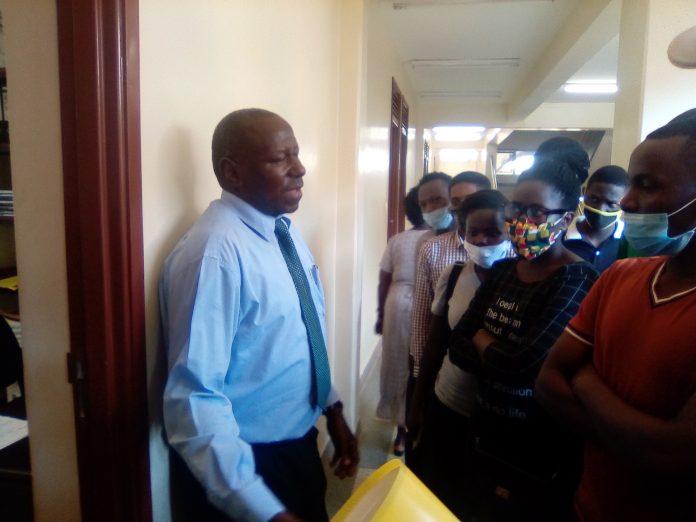
The University bursar, Everest Beinomugisha said that they sent the money to various banks but there are some issues associated with the bank accounts of some students.

“We sent money for all continuing students to their respective banks but we had issues with errors on students’ account numbers. However, we are still handling the matter.” Beinomugisha said adding that “we changed the accounts officer of the University and issues of account errors sprung. But we promise to settle all these problems in the next semester.”

The hungry and angry students could not listen to the bursar instead of seeing messages on their accounts. They decided to force him to prove whether transactions were made however, he never responded.

“I cannot leave your office without my money otherwise I can cause a war here,” one student yelled.

Stories Continues after ad

Fly Emirates expects more than 200,000 this festive season

emirates plane

The latest booking figures indicates that Fly Emirates is expecting more than 200,000 passengers to travel through Terminal three at Dubai International Airport during Christmas holiday.

The busiest day for the airline is today Friday 11 December, although high passenger traffic is expected to start today, and will run through 21 December. More than 200,000 passengers will be arriving into Dubai on Emirates flights during that same period.

Customers are reminded to check the latest travel requirements to their booked destination, and to arrive at the airport at least three hours before their flight departure. Passengers are encouraged to build in extra time in their journey to avoid delays with expected traffic congestion coming into Terminal three.

Passengers physically checking in at the airport are requested to check in no later than three hours prior to departure, regardless of class of travel. Customers who present themselves less than 60 minutes prior to their scheduled flight departure will not be accepted for travel. They can also check in online 48 hours to 90 minutes before flight departure. Those who opt to check-in online are reminded to visit the Emirates check-in counters at the airport to collect their boarding pass and to verify travel documents required for each destination country.

Customers are also urged to use the convenient self-check-in and bag drop kiosks for a more seamless airport experience. The service is available to all destinations except to the US, Canada, China, India and Hong Kong due to additional requirements from these destinations. The 32 new self-service bag drop machines and 16 self-service kiosks complement the desks manned by Emirates check-in agents and will help reduce waiting time during the peak period.

Customers can also utilise Emirates’ biometric path for a contactless journey from specific check-in desks in Terminal 3 to boarding gates, with less document checks and less queuing. Immigration formalities have also been streamlined with biometrics and facial recognition activated at both the smart gates and tunnel.

After checking in, passengers are also advised to make sure they get to their boarding gate on time. Gates open 90 minutes before departure, boarding starts 45 minutes before each flight and gates close 20 minutes before departure. If passengers report late Emirates will not be able to accept them for travel. Check-in and gate closure timings will be strictly followed to ensure flights depart on schedule.

Emirates’ booking policies offer customers flexibility and confidence to plan their travel. Customers, who purchase an Emirates ticket for travel on or before 30 June 2021, can enjoy generous rebooking terms and options, if they have to change their travel plans. Customers have options to change their travel dates or extend their ticket validity for 2 years. Emirates customers, who require a COVID-19 PCR test certificate prior to departure from Dubai, can avail of special rates at clinics across Dubai by simply presenting their ticket or boarding pass.

All Emirates customers can travel with confidence and extra peace of mind with the airline’s industry first, multi-risk travel insurance and COVID-19 cover. This generous cover is offered by Emirates on all tickets purchased on or from 1 December 2020, at no cost to customers. In addition to COVID-19 medical cover, this latest offer from Emirates also has provisions for personal accidents during travel, winter sports cover, loss of personal belongings, and trip disruptions due to unexpected air space closure, travel recommendations or advisories, similar to other multi-risk travel insurance products.

Emirates has implemented a comprehensive set of measures at every step of the customer journey to ensure the safety of its customers and employees on the ground and in the air, including the distribution of complimentary hygiene kits containing masks, gloves, hand sanitizers and antibacterial wipes to all customers. For more information on these measures and the services available on each flight.

Stories Continues after ad

Cranes set to take part in Pre-Chan tournament

Cranes team

Uganda Cranes will join three other nations to play in a pre-CHAN friendly tournament, the Cameroonian Football Federation (FECAFOOT) confirmed.

Uganda received the invitation from the hosts Cameroon, with the other participants being Zambia and Niger. FECAFOOT announced that the teams are expected to arrive on December 29.

The tournament will be held in Cameroon capital, Yaoundé from January 1st to 7th, 2021.

The four nations will use the tournament to prepare themselves for the CHAN 2020 finals that are expected to run from January 16th to February 7th 2021 across four cities in Cameroon.

However, FUFA hasn’t yet officially confirmed their participation in the mini-tournament.

Uganda is pitted in Group C alongside Morocco, Togo and Rwanda for the CHAN tournament.

Unlike the African Cup of Nations (AFCON), the competing national teams in CHAN must be composed of players playing in their domestic league.

Stories Continues after ad

Standard Chartered Bank donates Shs37 million to YouBelong Uganda

YBH team member explains the prescribed medication to the main carer of a returned family member

Standard Chartered has donated Shs 37 million to YouBelong Uganda to implement “PROJECT 500”. The team consists of social workers, psychiatric nurses, and occupational therapists.

PROJECT 500 is aimed at reducing the number of patients admitted in the National Mental Hospital by 500 to reduce congestion/overcrowding and ensure that the hospital’s health workforce has enough beds and equipment to cope adequately with the COVID19 pandemic.

As part of the donation, YouBelong Uganda will procure essential mental health medicines to support the treatment of 500 patients in their homes, train health workers at primary health centers for ongoing and sustainable support of the returned persons, in their mental health recovery and the assistance will also provide upkeep and travel assistance for YouBelong Uganda’ s team of social workers, occupational therapists and psychiatric nurses who provide psychosocial support services to affected individuals and their families.

Regina Mukiri, Head, Corporate Affairs, Brand and Marketing, Standard Chartered Bank Uganda Limited while handing over the donation said; “Our commitment to support various disadvantaged groups in our community is steadfast and it is also a testament to our Brand promise here for good. This latest donation we are making to the National Mental Hospital through YouBelong Uganda will provide short term relief and longer term assistance to persons who are receiving treatment for severe mental illness, to alleviate their struggle and protect them from being adversely impacted by the pandemic.”

“We are delighted to extend a COVID relief donation to persons with mental health challenges as this is a widespread challenge in our community that is often not prioritized yet the impact is far reaching, affecting several lives. We are confident that YouBelong Uganda, our partner NGO implementing “Project 500” has an impeccable track record and we look forward to achieving our objective with them, to alleviate the further spread of COVID 19 in the National Mental Hospital. As Standard Chartered we commit to not only stop at making this donation but actively participate through volunteering to support the successful implementation of PROJECT 500,” she said.

Mr. Byamah Mutamba, the Deputy Chief Executive Officer of YouBelong Uganda said: “We are grateful to Standard Chartered Bank for the $10,000 donation towards PROJECT 500 and for entrusting us with the responsibility to support the National Mental Hospital to curb the spread of COVID 19 in that community. As you might be aware, there are nearly 1,000 patients in this hospital with a 550-bed capacity.”

“We are therefore working hard to move the 500 people out of the hospital as quickly as possible and resettle them back with their families and local communities and minimize relapse and readmissions. We are very aware that COVID19 can bring the work of the hospital to a standstill if it moves through the overcrowded wards so we will do everything we can to ensure we urgently decongest the hospital,” he concluded.

Some patients in the National Mental Hospital were diagnosed with COVID19 and were quickly isolated, and the quarantine worked effectively to curb further spread, however, effort is being made to decongest the hospital to prevent high impact should COVID19 intensify in future.

YouBelong Uganda has adapted a four week pre-discharge assessment process, a 12 week post discharge empowerment plan to a five week pre and post discharge intervention for those without complex needs. For those with more complex needs, the16-week process will continue to apply. All efforts are being made to ensure that data is collected and analyzed for future research purposes.

Stories Continues after ad

VISA extends ‘Sasuza’ campaign into festive season

Visa

Visa, the world’s leader in digital payments, has announced an extension of their Sasuza Visa consumer education campaign that aims to eliminate the practice of surcharging, where merchants levy extra charges on payments made using debit or credit cards at a Point of Sale (POS).

The campaign aims at changing consumer behavior to adopt cards as a form of payment by providing consumer education on the use of Visa cards at point of sale and online. VISA has partnered with Uganda Bankers Association to increase awareness about no merchant surcharging as Ugandans continue to pay with Visa.

‘Sasuza Visa’ now in its second phase, was first launched a few months back at a time when the country had just started battling with the novel Coronavirus pandemic with an aim of encouraging Ugandans to protect themselves by practicing cashless payments, physical distancing and good hygiene practices.

Commenting about the campaign extension, Visa Uganda Country Lead Salma Ingabire expressed her excitement at partnering with these credible entities to amplify the no merchant surcharging message while giving back to VISA users in Uganda.

“Our partners connect more than 61 million merchant locations across the globe and with them, we have been able to positively impact businesses across the country and the globe. I am honored to add Game Stores and Uganda Bankers Association to this list of partners as we continue to help businesses recover after the pandemic,” she noted.

“As we extend the Sasuza Visa campaign, we call upon Ugandans to remember to transact using Visa and not incur any additional charges,” Ingabire added.

Ms. Patricia Amito, the Head Communications and Corporate Affairs at Uganda Bankers Association welcomed the extension of the Sasuza Visa campaign.

“Uganda Bankers Association is happy to work with Visa as we continue to foster financial inclusion and deepen the financial infrastructure in Uganda. Through this campaign, we will continue to teach consumers about the benefits of transacting using their cards and eliminating the assumption that it is more expensive,” she noted.

Approximately a year ago, Bank of Uganda announced that extra charges were illegal and traders should stop levying them. According to the Central Bank, no business owner should set a minimum or maximum amount as a condition to using electronic card payments.

Stories Continues after ad

Police officers equipped with retirement survival skills

Police officers equipped with retirement survival skills

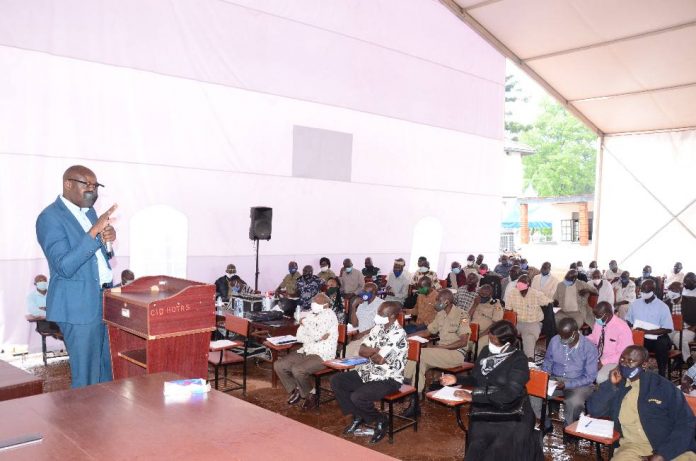
Over 100 officers nearing retirement have been equipped with skills on how to live a better life after their service in the Uganda Police Force.

Drawn from the Kampala metropolitan policing area, the one day workshop ran under the theme “Demystifying the fear of life after retirement from active service” at CID headquarters Kibuli.

While opening the workshop, the deputy Director Human Resource Administration, SCP Musana Godfrey, urged the officers to take retirement as normal.

“Retirement is normal and is a must for all of us regardless of what age you are now. You need to plan at your own in your private life. Do not spend extravagantly what you are earning, make it a habit to save and invest it wisely as that is the only way that will make you live a meaningful life after retirement,” said Musana.

The workshop was organized to help participants understand and plan for life after retirement, understand the concept of retirement, explain the existing retirement policy in the Public service and equip participants with skills and techniques of coping up with retirement demands.

The participants benefited from privately sourced investment experts who guided the nearing retirement officers on the sustainable investments that can make them live comfortably as if they are still working.

Stories Continues after ad

MUBS students to finalize semester with online studies

MUBS main building

Continuing students of Makerere University Business School-MUBS are set to complete their semester two academic year 2019/2020, studying and learning using online platforms.

According to Eldred Kyomuhangi-Manyindo, the school registrar in the letter dated 8th December to heads of departments, faculty deans, regional campus directors and continuing students. Students will resume online studies on 14th December and end on 22 December and the examinations will be done in January 2021.

The registrar said there will be an one hour training session for academic staff on how to use the MUBS e-learning platforms on 10th and 11th December 2020. She adds that students who will not be able to access the online lectures will be allowed to access a recorded version of the lectures.

According to the time table, the second year examination will commence on 4th January and end on 12th January 2021 and first year examination will be offered on 18th and end on 25th January 2021. The semester will end on 29th January 2021.

Kyomuhangi explains that whereas all lectures will be online, examinations will be offered in the typical classroom setting.

According to the National Council for higher education-NCHE, higher institutions of learning are allowed to open up for continuing students, as long as students are able to use open distance E-Learning -ODel which will help them deliver academic services to students without putting them at risk of contracting Covid-19.

Stories Continues after ad

Judiciary prepares staff for retirement

Judiciary Prepares Staff for Retirement

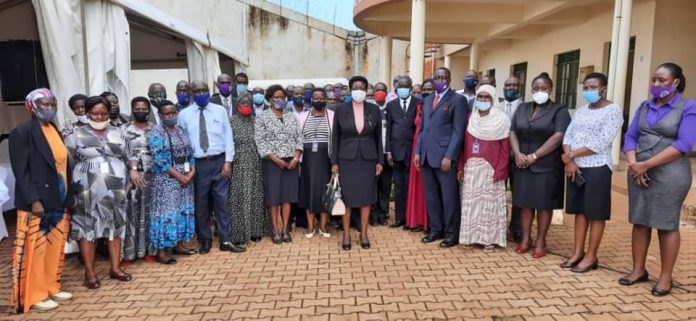
More than 45 administrative staff of different ranks, who are due for retirement, were on Wednesday taken through a one-day pre-retirement workshop.

The training which took place at the Judicial Training Institute in Nakawa was organised by the Human Resources Department and JTI with the objective of guiding on the process of retirement.

The Executive Director of JTI, Justice Damalie N. Lwanga explained the need for the workshop. “The training will equip you with knowledge on how to plan for retirement, retirement-related financial management, exit management and how to keep active and healthy after retirement,” she said.

Justice Lwanga further observed that it was important for one to prepare for retirement as they approach the mandatory retirement age of 60 years as provided for in the Pensions Act.

She reassured the participants that retirement does not mean that one ceases to work or live a productive life but rather switch from active public service to other work and schedules.

Justice Lwanga urged the participants to mentor others to ensure continuity. “As you approach retirement, you need to continue working diligently and think of what legacy you will leave behind. You therefore have a duty to mentor other staff so that when time comes for you to retire, work can continue as you take on new responsibilities outside the formal work environment.”

She thanked the Judiciary Administration for facilitating the training, and JTI as well as the Human Resource Department for coordinating the workshop.

The Principal Human Resource Officer, Ms. Sandra Jackline Ongom, commended the participants for their diligent service.  “We are grateful for your services and that is why we are preparing you for the exit,” she said.

Ms. Ongom urged the participants to keep in touch with the Human Resource Department as there are many processes to be carried out especially when it comes to preparing for benefits.

She also encouraged the participants to share experiences and ideas so as to get knowledge on how well to plan for their retirement.

The participants were taken through several topics including demystifying retirement, exit management in the public service, management of personal finances and business, will writing and retirement planning.

The workshop was facilitated by Mr Bwire Simon (Principal HR Officer Public Service), Mr Bua Victor Leku (Commissioner Compensation Public Service), Mr Charles Ocici (Executive Director, Enterprise Uganda) and HW Moses Gabriel Angualia (Moderator).

Stories Continues after ad

AWAC calls for decriminalization of sex workers

AWAC

The Civil society Organisation, Alliance of Women Advocating for Change (AWAC) has urged legislators to address the legal frameworks which have continued to detriment the rights of sex workers in the country.

Sex workers have since faced higher levels of violence and discrimination and his has hindered them from accessing inclusive health, justice and equal treatment enshrined in article 22, 24, 33 and 44 of the constitution of Uganda and Article 1, 2, 3, 6, 7 and 8 of the Universal Declaration of Human Rights which calls for Free and equal treatment, Freedom from discrimination, Right to life, Right to recognition before the law, Right to equality before the law, and Access to justice.

Speaking earlier today, the executive director of AWAC Macklean Kyomya said government should apply human rights standards to tackle entrenched, systematic, and intergenerational inequalities, exclusion and discrimination against sex workers.

“The existing plight has been intensified by the COVID-19 pandemic, which is associated with isolation, disrupted routines and diminished services have greatly impacted the lives including mental health of Female Sex Workers. They are faced with cultural, social, legal and language barriers to accessing services and information. This consequently compounds their vulnerability thus exposure to violence and exploitation,” she said.

Due to the Covid-19 lockdown and restrictions, sex workers faced increased harassment, arrests, detention, blackmail, and violence from the police and were denied food aid in many districts.

“Sex workers and their children were going hungry and struggling to access condoms, PEP, and treatment for sexually transmitted infections and HIV. Some were reported to have been thrown out of their housing. Young people in particular found it hard to access sexual and reproductive health services, and there was an increase in teenage pregnancies, early marriages, and gender-based violence,” she said.

She said Female Sex Workers living with HIV/TB, physical and mental disabilities including substance induced mental illness and their children emerged as the most vulnerable amongst the vulnerable during this pandemic, bearing the brunt of the inequalities and injustices faced by women and girls on the edges of society.

Female Sex Workers living with HIV have been constrained to discontinue their ARV treatment due to lack of food with which they take their medications causing malnutrition and the loss of lives or incapacitation.

On the same day to mark the international day for human rights, AWAC with the support of our partners in the promotion and protection of human rights launched Sex Workers’ Feminist Advocacy Agenda (SWoFAA). The launch was graced by Sarah Nakku, the community and networking advisor at UNAIDS.

The Agenda seeks to strengthen advocacy on decriminalization of sex work profession and to expand spaces for female sex workers to enhance their rights for Social protection and the promotion. It also intends to accelerated access to integrated universal health care services among female sex workers and other marginalized groups.

Nakku urged them to continue using condoms noting that AIDS is still a threat to our lives.

Stories Continues after ad

2021 Elections to determine investor sentiment and pace of Uganda’s post #Covid-19 recovery

Razia Khan

The year 2021 is likely to be a pivotal year for the economy, with the Final Investment Decision (FID) on oil expected by June. Prior to the FID, elections brought forward by one month to mid-January are likely to determine investor sentiment and the pace of Uganda’s post-#Covid-19 recovery. Political risk is seen as elevated.

Protests following the arrest of opposition leader Bobi Wine in 2020 (accused of flouting #Covid-19 restrictions on the size of political rallies) drew a heavy-handed response from police, with scores killed. A post-election calming of sentiment would likely lend itself to a faster growth recovery.

Ongoing political volatility poses further downside risks to our 4.0 per cent GDP forecast for 2021 (revised from 5.0 per cent prior). We also lower our 2020 GDP forecast to -0.3 per cent (from 3.0 per cent) to reflect the deep contraction in Q2-2020, when a lockdown was imposed. Oil-related developments will guide medium-term prospects.

A positive FID would also see construction on an oil pipeline to Tanzania begin, potentially lifting 2022 GDP growth to 6.0% (5.2 per cent prior).

The COVID crisis will leave Uganda with an elevated debt ratio; public debt is forecast to reach 48 per cent of GDP in FY21 (ends 30 June), from c.40.8 per cent at end-FY20.

While Q1-FY21 revenue beat revised targets, a supplementary budget to cover Covid-19 related spending will cause the full-year deficit to widen. In line with the authorities’ guidance, we revise our FY20 deficit forecast to 7.7 per cent of GDP (from 7.5 per cent) and expect it to widen further to 10.4 per cent (9.0 per cent) in FY21, which covers the election period.

Authorities will seek additional multilateral financing to fund the deficit, alongside increasing the domestic borrowing requirement to Shs4.3 trillion (from Shs3.6 trillion) in FY21. Given closer engagement with the IMF, the FY22 budget (presented in June), will likely focus more on revenue mobilisation. However, we now see a more gradual narrowing of the deficit to 6.8 per cent in FY22 (6.0 per cent prior).

We expect the Bank of Uganda (BoU) to tighten its policy rate gradually post-election, having cut the central bank rate to a record-low 7.0 per cent amid the #Covid-19 crisis.

Although core inflation is likely to remain elevated as economic activity normalises, the Bank of Uganda is likely to look through current strength given the absence of demand-related pressures. We lower our headline inflation forecasts to 3.9 per cent for 2020 (from 4.2 per cent) and 5.7 per cent in 2021 (6.0 per cent). We expect policy tightening to resume around April 2021, but ongoing economic weakness would pose risks to the timing. We now expect only 200bps of tightening in 2021, to 9.0 per cent (250bps prior).

By Razia Khan (Chief Economist for Africa and Middle East, Standard Chartered Bank)

Stories Continues after ad