Stanbic Bank
Stanbic Bank
20.5 C
Kampala
Stanbic Bank
Stanbic Bank
Home Blog Page 970

Dixon Kagurusi promises to uplift Kinkizi West back on the national scene

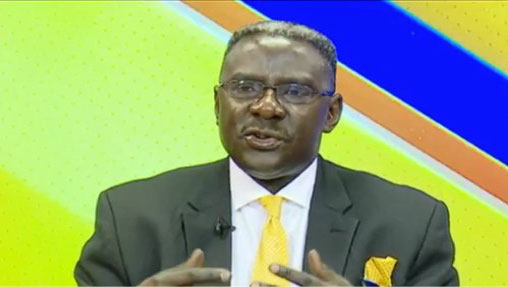
Mr. Dickson Kagurusi


Ampumuza Dixon Kagurusi an independent contestant for Kinkizi West parliamentary seat has promised to uplift the constituency back to the limelight as it was with the former Prime Amama Mbabazi.

Kagurusi was nominated on October 17 at Kanungu district headquarters on an independent ticket after having participated and lost the NRM primaries in 2015.

Kanungu District Electoral Commission (EC) Registrar Ferdinand Mulekezi on Nomination days said that Dixon Ampumuza Kagurusi an independent candidate and Spencer Kansiime Zamaani who was nominated on the National Unity Platform (NUP) were nominated before the closure of the exercise at 5pm.

The Registrar Ferdinand Mulekezi also said that by the close of the nomination exercise, six contestants had been nominated for the Kinkizi West Parliamentary Seat which is the highest number of contestants in one constituency currently.

Dixon Kagurusi who was escorted by Kanungu District Youth leaders vowed to represent the voiceless and empower communities out of poverty and not to serve any mafia system as the current MP does. He also said that once elected, his focus will be to eradicate poverty in their homes so that they can be able to afford education for their children which is a springboard to growth and development of any community.

Dixon Kagurusi also said that his entry into politics is driven by service beyond self and this can be achieved when local leaders are committed to establish the needs assessment for their voters and make a follow up, giving their constituencies what they need to survive over time, call it sustainable growth.

Ampumuza Kagurusi said that he was joining the Parliamentary seat race to win and give the people of Kinkizi West what they really deserve.

Kagurusi also revealed that his symbol will be a watch to symbolize that the time for change is now.

Kagurusi boosts of connections at both national and international level having worked in the media industry for close to 15 years. He is also reported to be well connected within the Kampala establishment, something that gives mileage ahead of his opponents.


Stories Continues after ad

MPs to be elected on January 14 as EC issues guidelines

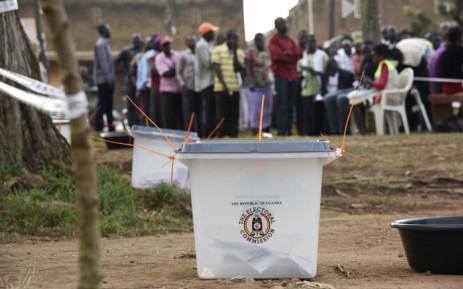
EC-Voting-ballot-box

The Electoral Commission has announced January 14th, 2021 as the date Ugandans will elect their Members of Parliament (MPs).

The electoral body gazetted November 9th 2020, to January 12th 2021, as the campaign period for all nominated MP candidates following conclusion of the nomination exercise.

Addressing the media on Thursday, EC chairperson Simon Byabakama said all campaigns should follow Standard Operating Procedures (SOPs) to guard against the spread of Covid-19.

Byabakama said that campaigns shall be conducted between 7am to 6pm and venue owners must ensure that the campaign/meeting venues are provided with hand washing facilities and sanitizers, and that supporters attending the campaigns/meetings wear face masks at all time, while accessing and exiting the meeting venue.

Candidates may also use the community-based Public Address Systems (kizindaalo) between 7am to 9am and 4pm to 6pm.

Candidates have been advised to identify suitable venues within their constituencies and notify the respective Returning Officers, who will conduct an inspection together with the Police and the District COVID-19 Taskforce to ensure the venue will enable observance of the guidelines issued by the Ministry of Health.

They will, however, be allowed to organise/hold campaign meetings, in a regulated manner, preferably outdoors, with limited attendance of a maximum of seventy (70) persons, to enable the observance of the 2-meters social distancing rule for the persons attending the meeting.

Candidates who use posters are warned against putting them on road traffic signs. Similarly,those who use banners are strongly warned against hanging them on electricity power lines, or in a manner that endangers vehicular traffic and pedestrian movement. Any campaign materials that are wrongly placed will be removed by the relevant Council authorities and Police.

Candidates and their agents have been advised to use non-contact means of communication to interact with the electorate. These include fliers, leaflets, brochures, posters, billboards and banners; radio and television announcements and talk shows; short messaging services (SMS), voice messaging, and new digital media platforms and websites.

In a similar development, EC appointed Monday 2nd and Tuesday 3rd November 2020 as the dates for nomination of candidates for Presidential Elections, 2021.

The nomination exercise will be conducted at Kyambogo University Sports Grounds, starting at 9am and ending at 5pm on each of the appointed dates.

Stories Continues after ad

Housing Finance Bank to offer competitive rates on gov’t securities


Kampala, Uganda – Following its recent appointment as a primary dealer for government securities, Housing Finance Bank Uganda has announced that it will be one of the seven banks that have exclusivity to the primary auction under the competitive bidding where it will buy securities and sell them to investors at very competitive rates on the secondary market.

“As a new entrant in the new primary dealer reforms by Bank of Uganda, we were only appointed a Primary Dealer effective October 1, 2020, and have thought very carefully about our pricing. What I can assure you is that our pricing is going to be very competitive and will give our customers confidence that they have made the right choice,”. Robert Nyehangane (Pictured above) head of Treasury at the bank said

In a media statement, Bank of Uganda announced that from October 1, 2020, competitive bidding in the primary market for government securities would be limited to only seven primary dealer banks.

According to the Central bank, this move was aimed at enhancing liquidity in the secondary market.

Mr. Nyehangane explains that the addition of Housing Finance Bank as a Primary Dealer, shows that it has among all the other banks, demonstrated capacity to effectively carry out the task.

“Housing Finance Bank has a well-defined strategy both generally as a business and specifically with regard to making the market for government securities. We have demonstrated that we can trade these government securities from the volume and value of transactions that we do in both the primary and secondary market. This was one of the criteria for qualification as a primary dealer,” he explained.

The primary market is a marketplace where debt instruments are purchased from the issuer, being government of Uganda through Bank of Uganda, and the Primary Dealers bid for these instruments exclusively for amounts above Shs200 million.

He further explains that the primary auction has both competitive bidding and non-competitive bidding. Competitive bidding is for amounts above Shs200 million, while non-competitive bidding is for amounts below Shs200 million. The threshold basically means that for the amounts below Shs200 million, anyone can still buy securities on the primary market.

These securities are then sold on the secondary market; where anybody buying the Government securities is buying them from a primary dealer.

Why invest in government securities?

According to Nyehangane, government securities are risk free instruments that offer customers assured and good returns on their investments.

“With this investment, you are lending to the government of Uganda which can’t default. So it is risk free and the returns are higher than various investments that you can think of. Most importantly, it’s an investment that you can liquidate at any time you need the money. If you for instance made the investment today and one year down the road you have a challenge, you just approach the Housing Finance Bank which buys it from you and gives the cash back to you.”

“Because bonds are long term investments (up to 15 years). The fear would be that if invest in this security, I have to wait until maturity before I can access the funds but that is not the case because you can sell it and  additionally, bonds have interest coupon payments every six months. So it gives you good cash flows for a long term investment that you have made unlike some other investments where you have to wait until maturity,” he explains.

How do I start investing in these government securities?

  1. All you need to do is to open a savings or current account with Housing Finance Bank if you don’t have one already.
  2. The bank will facilitate the process of opening a Securities (CSD) account with Bank of Uganda
  3. The minimum amount required to invest is Ushs 100,000
  4. Approach any branch near you to initiate the transaction for investments or call us on any of these numbers; 0417 707 510, 0417 707 569, 0417 707 771, 0417 707 619
  5. Investment options include Treasury bills for 91, 182, 365 days or Treasury bonds for 2, 3, 5 10, 15 years.


Stories Continues after ad

German Embassy donates to Uganda Police Force

German embassy donates to uganda police

The Federal Republic of Germany has today donated one brand new single cabin Nissan pickup, 25 video cameras and 1000 chairs to the Directorate of Criminal Investigations Training School at a function held at Police Headquarters, Naguru.

The assortment was handed over to the Joint Chief Of Staff AIGP, Jack Bakasumba, by a delegation from the German Embassy in Uganda, headed by His Excellency Mister Schauer, the Deputy Ambassador of the Federal Republic of German.

In his speech, AIGP Bakasumba, thanked the German government for the strong spirit of cooperation the German government has enjoyed with the Uganda Police Force and Uganda at large.

“This is an enormous support to the Uganda Police Force, for which we shall always remember as an institution. It’s an illustration of the strong relationship that exists between the two sister countries. This support will not only fight crime within Ugandan borders but also across. We pledge to use this equipment professionally and guard against any misuse,” AIGP Bakasumba said.

The German government has previously supported the force in training of crime scene management officers, finger prints, bomb scene management, crime trend analysis, narcotic drug investigations, forensic photography and homicide investigations among others.

AIGP Bakasumba was accompanied by AIGP Grace Akullo the Director CID, AIGP Asan Asan Kasingye CPC, Ag Director Forensics SP Andrew Mubiru, Ag director ICT CP Felix Baryamwisakyi among others.

This donation comes at the time when the UPF is undertaking efforts to professionalize the Force majorly by making Investigations scientific for the better service delivery of the public.

Stories Continues after ad

Absa Bank, IFC train SMEs to boost recovery and business resilience

ABSA

Absa Bank Uganda and International Finance Corporation (IFC), a member of the World Bank Group, have, and navigated the difficult operating environment caused by the COVID-19 pandemic.

The training, held under the Absa SME Academy platform, is in response to the current economic climate and the impact of COVID-19 on SMEs.

Mr. Mumba Kalifungwa, Absa Bank Uganda’s Managing Director says, “The COVID-19 pandemic has left a significant impact on Uganda’s SMEs, with nine out of ten businesses reporting an increase in operating expenses, 38 per cent of micro-businesses reporting no access to inputs, and overall, 83 per cent of businesses reporting a decline in the demand for their products, all of which have affected their cost of doing business.”

A report on the impact of the COVID-19 pandemic on Ugandan SMEs by the United Nations Capital Development Fund (UNCDF) stated that recovery for most businesses affected by the COVID-19 pandemic is expected to take more than three months and possibly until the end of the year. 70 per cent of businesses evaluated estimated their recovery time to last more than three months, while 26 per cent envisaged a recovery period of one to three months. Industries with the longest period of recovery include accommodation and catering (58 per cent); production and supply of utilities (54 per cent); real estate (54 per cent); financial industry (44 per cent); and manufacturing (41 per cent).

The SME Academy will train the directors and proprietors of the Ugandan SMEs in financial-related courses led by IFC-certified trainers, helping the SMEs build their capacity to thrive in the current uncertain business environment.

The initiative was introduced in 2019 as an opportunity for Absa to help businesses address their challenges and improve their skills, such as business management, planning and governance.

Mr. Manuel Moses, IFC Country Manager for Uganda, says, “Supporting smaller businesses is a strategic priority for IFC in Uganda and across Africa, a focus that has become even more critical since the onset of the COVID-19 pandemic. Our partnership with Absa Bank Uganda is designed to strengthen the Ugandan SMEs and, therefore, strengthen the wider Ugandan economy.”

SMEs contributed more than Shs 9 trillion in domestic tax revenue between 2016 and 2019, contributing over 70 per cent of Uganda’s total gross domestic product (GDP) while providing both formal and informal employment to about 45 per cent of the labour force across manufacturing, commerce, services and other sectors.

Mr. Kalifungwa adds, “The banking sector has a critical role to play in post-COVID-19 recovery. Banks have the experience and expertise, for example in conducting risk assessments, which knowledge can be useful to SMEs towards building more sustainable and resilient business models.”

Stories Continues after ad

Over 355 million children survive on less than $1.90 per day

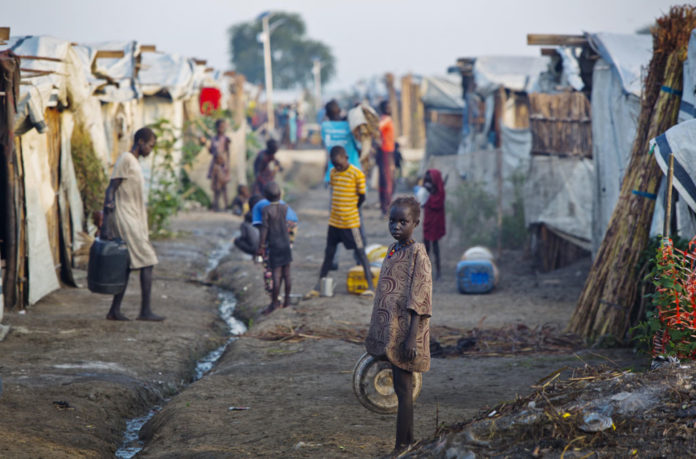
Over 355 million children survive on less than $1.90 per day

The pre-COVID-19 analysis reveals that 356 million children struggle to survive on less than $1.90 a day, two-thirds of them in Sub-Saharan Africa.

The analysis shows that the number of children living in extreme poverty decreased moderately by 29 million between 2013 and 2017. However, UNICEF and the World Bank Group warn that any progress made in recent years is concerningly slow-paced, unequally distributed, and at risk due to the economic impact of the COVID-19 pandemic.

“1 in 6 children living in extreme poverty is 1 in 6 children struggling to survive,” said Sanjay Wijesekera, UNICEF Director of Programmes. “These numbers alone should shock anyone. And the scale and depth of what we know about the financial hardships brought on by the pandemic are only set to make matters far worse. Governments urgently need a children’s recovery plan to prevent countless more children and their families from reaching levels of poverty unseen for many, many years.”

Although children make up around a third of the global population, around half of the extreme poor are children. Children are more than twice as likely to be extremely poor as adults (17.5 percent of children vs. 7.9 percent of adults). The youngest children are the worst off nearly 20 percent of all children below the age of 5 in the developing world live in extremely poor households.

“The fact that one in six children were living in extreme poverty and that 50% of the global extreme poor were children even prior to the COVID-19 pandemic is of grave concern to us all,” said Carolina Sánchez-Páramo, Global Director of Poverty and Equity for the World Bank. “Extreme poverty deprives hundreds of millions of children of the opportunity to reach their potential, in terms of physical and cognitive development, and threatens their ability to get good jobs in adulthood. In the wake of the massive economic disruption caused by the pandemic, it is more crucial than ever that governments support poor households with children now and rebuild their human capital during the recovery.”

Extreme poverty among children has not fallen as much as it has for adults; a larger share of the global poor were children in 2017, compared with that in 2013. All regions of the world experienced varying levels of decline in extreme poverty among children, apart from Sub-Saharan Africa, which saw a 64 million increase in the absolute number of children struggling to survive on $1.90 a day, from 170 million in 2013 to 234 million in 2017.

Child poverty is more prevalent in fragile and conflict-affected countries, where more than 40 percent of children live in extremely poor households, compared to nearly 15 percent of children in other countries, the analysis says. The analysis also notes that more than 70 percent of children in extreme poverty live in a household where the head of the house works in agriculture.

The ongoing COVID-19 crisis will continue to disproportionately impact children, women and girls, threatening to reverse hard-won gains towards gender equality. Social protection measures have a crucial role to play to mitigate coping mechanisms by the poor and vulnerable in both the immediate COVID-19 response as well as the longer-term recovery.

World Bank and UNICEF data suggest that most countries have responded to the crisis by expanding social protection programs, particularly cash transfers. Cash transfers provide a platform for longer-term investments in human capital. Particularly when combined with other child development measures and coupled with high-quality social service provision, cash transfers have been shown to address both monetary and multidimensional poverty and improve children’s health, nutrition, cognitive and non-cognitive outcomes.

However, many of the responses are short-term and not adequate to respond to the size and expected long-term nature of the recovery. It is more important than ever for governments to scale up and adjust their social protection systems and programs to prepare for future shocks. This includes innovations for financial sustainability, strengthening legal and institutional frameworks, protecting human capital, expanding child and family benefits for the long term as well as investing in family-friendly policies, such as paid parental leave and quality child care for all.

Stories Continues after ad

EAC launches 50 Million African Women Speak Networking Platform in Rwanda

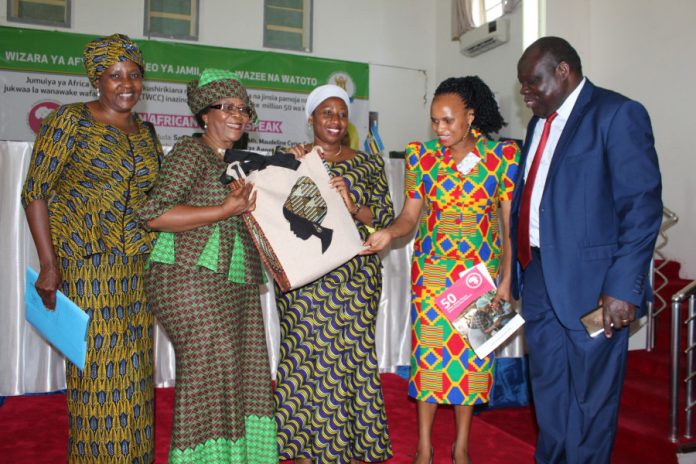
EAC Launches 50 Million African Women Speak Networking Platform in Rwanda

The East African Community (EAC) in partnership with Rwanda has launched the 50 Million African Women Speak Project Networking Platform in Musanze, Northern Rwanda.

The online platform is intended to support women empowerment initiatives by providing African Women Entrepreneurs with access to critical information on financial and non-financial services as well as provide opportunities for business networks among African Women Entrepreneurs.

The launch of the platform in Rwanda was officiated by Professor Jeanette Bayisenge, Minister for Gender and Family Promotion, Rwanda together with Christophe Bazivamo, EAC Deputy Secretary General in charge of Productive and Social Sectors.

Christophe Bazivamo noted that as the world was making a quick change towards leveraging technology to address problems that affect humanity, launching the platform was one way of ensuring that regional development interventions were more transformative.

“Making sure that women in general and rural women, in particular, are not left behind becomes an obligation,” Hon. Bazivamo said.

Technology comes as a tool to solve the issues of unequal intra-household relations and labour distribution while tackling the issue of poverty that women face.

“The 50 Million African Women Networking Platform was initiated to reinforce women’s development and to create stronger, more resilient, and sustainable societies, because he who empowers a woman, empowers a whole society,” the EAC Deputy Secretary-General added.

On her side, Professor Jeannette Bayisenge appreciated the initiative of empowering women using technology. According to her, Rwanda as a country has done a lot to empower women in general and rural women in particular.

The Minister expressed her confidence that the 50 Million African Women Speak Networking Platform will reinforce women’s self-confidence, knowledge, and skills as it also provides room for capacity building.

“This project will promote equitable balance in the sharing of economic and social benefits between women and men, subsequently reinforcing communities,” she said.

In an effort to ensure the target women are conversant with the functionalities of platform, the EAC Secretariat has planned training of trainers programmes on platform use in all Partner States.

The training sessions are designed to equip women champions from different Women networks in each country on the use of the Platform. The trained women are thereafter expected to train other members of their respective organisations and networks.

The EAC Secretariat is also engaging telecom companies and other stakeholders in an effort to address the limited access to smart phones by women in the region.

The Rwanda launch of the Platform was attended by high ranking Government officials, representatives of various Women Networks, UN Women, Care International, Oxfam, and other National & International Organisations.

Accessible at www.womenconnect.org, and covering 38 African states under the EAC, the Common Market for East and Southern African  (COMESA) and Economic Community of West African States (ECOWAS) blocs, the innovative platform aims to economically empower women by providing a one-stop shop for their specific business information needs.

The project is being jointly implemented by EAC, COMESA, and ECOWAS with funding from the African Development Bank (AfDB). Continentally unveiled during the Global Gender Summit in November 2019 in Kigali, Rwanda, the platform enables women in Member/Partner States of the three regional economic blocs and other African countries to find information on how to run businesses, where to access financial services, how to create business opportunities online and where to access training resources.

The platform also gives women an opportunity to showcase their products and connect with a market of millions across the continent, in addition to leveraging opportunities for peer-to-peer learning and mentorship as part of a dynamic online community of entrepreneurs.

Stories Continues after ad

Whose agenda will Ugandans embrace in 2021?

Ambassador Henry Mayega.

Ugandans, in retrospection, have in the immediate past appreciated that whoever sets our national standards and agenda higher than the bar, most especially when it comes to the maintenance of our country’s peace, security and stability stands to win the general elections.

They are always averse to untested pair of hands; which hands are littered everywhere amongst the recessing opposition.  And this is not without a background; it’s an uncomfortable reality to the Kamwokya based and red-hooded haters of peace who of recent have resorted to unorthodox political posturing.  Their earlier ilk plunged our country into an abyss from 1966 to 1986. It would be the greatest folly for Ugandans to embrace those groups whose norms are simply fluid and because of their limited appreciation of our dark past. Fortunately, in our case, our voters’ expectations do not simply shift, they are based on a candidate’s past and present valor.

Prior to the advent of the Yoweri Museveni administration in 1986, we were environed to accept the debilitating and ignominious insecurities from which we were delivered by his safe pair of hands as well as the stoicism and endurance of his compatriots. Ugandan voters, therefore, will not, as they have always done, gamble and choose, in 2021, the opposition whose agenda includes playing by renegade rules of remonstrations like defiance, riotous protests, walk-to-work and the savagery of nailing the 21 year old and NRM supporter, Baker Kasumba’s hands together last year. Already the NRM has six unopposed MPs; that speaks volumes about the party’s strength.

A survey of the opposition’s pack that is seeking the office of chief executive officer of Uganda shows none has what it takes to effectively secure the country in a volatile region bedeviled by insecurities. The western neighborhood simmers with countless insurgencies pulling in all directions just like the northern one.

The southern unhinged neighborhood that, in this age closes its boarders with us to the detriment of East African integration, calls for a tested leadership and robust agenda which Yoweri Museveni does not lack. The President’s ingenuity of upping the nation’s economy from the doldrums of 1970s and 1980s, the restoration of traditional leaders, plus other political interventions like decentralization, involvement of the women, youth, workers PWDs and now the elderly in the last three decades, have, in combination, taken our country notches higher and restored Uganda into the international files of honor.

Bobi Wine and others in the opposition with a cognitive deficit in tow, while enjoying their crowded political canvass, have, so far unknowingly christened the opposition as a chaotic assortment hell-bent to stampede national progress. They have exhibited a general lack of knack to meld their jostling constituencies; they assume that by shouting from our capital’s bully-pulpit of the central business district that will supercharge their political batteries. From there, the public conversation will definitely take the usual course: Yoweri Museveni’s over 30 years of explicable public commission and a record spanning two centuries and three decades, a period of immense positive social-economic and political change are the reasons for his impeccable national and international standing.

His administration, though faced with the challenge of a generational divide, in which a rising cohort characterized by its diversity and exigencies, it has done the most in terms of advancing the youth agenda; that needs to be methodically explained: a burgeoned economy since 1986 has offered countless jobs especially in the private sector, youth representation at all political levels has churned out national leaders in droves, the youth livelihood fund has led to the massification of youth managed small businesses, etc.

The opposition’s mixture of paled fortunes and bravado which makes their rank and file punch above their weight deludes them to become politically rabid; some have kept a stranglehold on that sector and Bobi Wine, a “Johnny come lately,” cannot measure to the high standards set by Yoweri Museveni and that disarms them to a point of playing dirty through riotous protests and social-media-mongering. Such fiendish posturing may be politically satisfying and expedient but it comes with a cost; the Ugandan voter who loves peace is sick of that paralyzing polarization. Which is why the Patrick Amuriat-Bobi Wine couple as compared to Yoweri Museveni is only moonlight by the latter’s sunshine.

Ambassador Henry Mayega

Deputy Head of Mission

Uganda Embassy, Beijing, China

Stories Continues after ad

2021 Afcon qualifiers: McKinstry names 20 foreign-based players for South Sudan double header

McKinstry

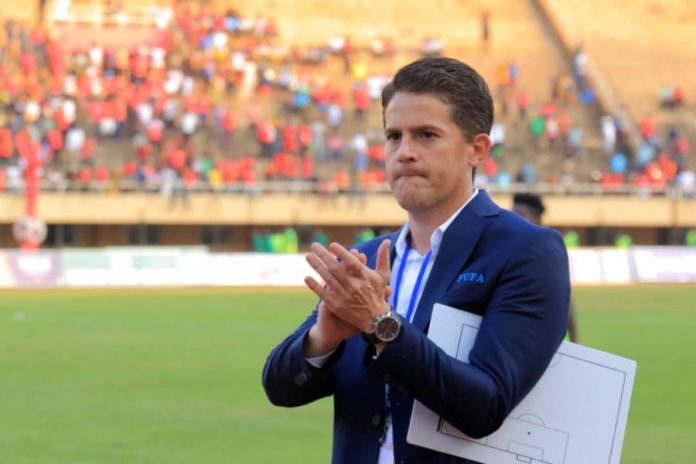
Uganda Cranes head coach Johnathan McKinstry has announced a squad of 20 foreign-based players for the double header against South Sudan in the 2021 Africa Cup of Nations qualifiers scheduled for next month.

William Luwagga, Fahad Bayo, Derrick Nsibambi and Timothy Awany are back in squad after missing out on the Dubai camp while there are two debutants summoned – striker Uche Ikpeazu Mubiru and right back Elvis Bwomono.

Jayden Onen and Allan Katerega are the omissions from the players that travelled to Dubai earlier this month while Bevis Mugabi misses out due to a long term injury he sustained while featuring for his club Motherwell in Scotland.

The foreign based players will later be joined by about five locally based players that will be named.

Uganda will face South Sudan on 9th and 17th November in a double header. The Cranes are top of the table with four points from the opening two qualification games – an away goalless draw against Burkina Faso and a 2-0 win against Malawi at Namboole.

Summoned players

Goalkeepers: Dennis Onyango (Mamelodi Sundowns, South Africa), Jamal Salim (Al Hilal, Sudan).

Defenders: Ronald Mukiibi (Ostersunds FK, Sweden), Nico Wakiro Wadada (Azam, Tanzania), Timothy Denis Awany (Sport Club Ironi Ashdod, Israel), Joseph Ochaya (TP Mazembe, Democratic Republic of Congo), Alex Kakuba (CD Cova, Portugal), Elvis Bwomono (Southend, England).

Midfielders: Michael Azira (Chicago Fire, USA), Khalid Aucho (Misr Lel Makasa, Egypt) Allan Kyambadde (El Gouna, Egypt), Allan Okello (Paradou, Algeria).

Forwards: Derrick Nsibambi (Smouha, Egypt), Emmanuel Arnold Okwi (Ittihad Alexandria, Egypt), Alexis Bbakka (Carlstad United BK, Sweden), Fahad Bayo (Vipers, Uganda), Farouk Miya (Konyaspor, Turkey), William Kizito Luwagga (Shakhter Karagandy, Kazahstan), Uche Ikpeazu (Wycombe, England), Edirisa Lubega (Paide Linnameeskond, Estonia)

Stories Continues after ad

MPs approve Shs3.8 trillion supplementary budget

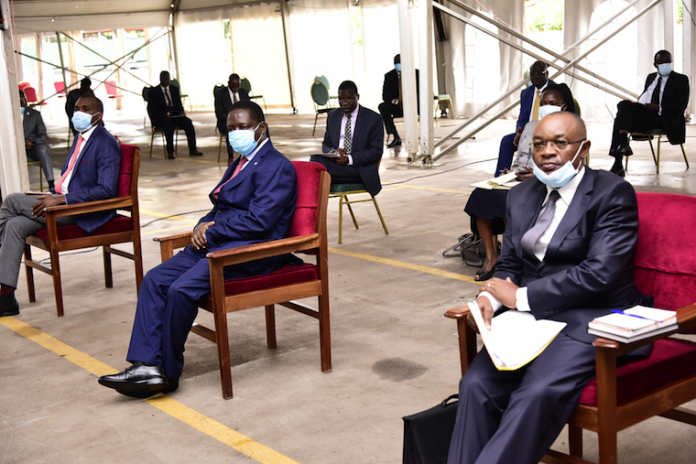
MPs in one of the sittings

Parliament has approved supplementary funding for the Financial Year 2020/2021 worth Shs 3.815 trillion, in line with Article 156 (2) of the Constitution and Section 25 of the Public Finance Management Act.

The funding comes under two schedules – schedule one worth Shs1.363 trillion where the supplementary expenditure requests presented to the House does not require prior approval within the 3 per cent legal limit.

Schedule two of the supplementary funding worth Shs2.063 trillion, and an addendum to Schedule 2 that was laid before Parliament on 6 October 2020 worth Shs389.367 billion; both required prior approval of Parliament.

Parliament in May 2020, approved a total national budget of Shs45.49 trillion for the Financial Year 2020/2021, having appropriated Shs29.99 trillion, and Shs15.49 trillion approved as statutory expenditure.

Presenting a report to Parliament justifying the supplementary funding, Budget Committee chairperson, Hon. Amos Lugoloobi said the supplementary expenditure under schedule one for Financial Year 2020/2021, resulted from the supplementary expenditure for Financial Year 2019/2020 approved by Parliament on the 26 June 2020.

“Time would not allow these funds to be released during Financial Year 2019/2020 and have therefore, been released within the 3 per cent legal limit of Financial Year 2020121. The source of funding the supplementary has been indicated as additional borrowing, a matter that requires a separate resolution of Parliament,” said Lugoloobi.

He also called on government not to alter the original appropriation by Parliament, as a source funding the supplementary.

The Shs3.815 trillion supplementary funding will serve budgets of State House, agencies under the ministries of Finance, Agriculture, Foreign Affairs, Health, Trade Works and Transport Science, Technology and Innovation, Defence and Justice and Constitutional Affairs.

The funding will also cater for additional budgets for Kampala Capital City Authority, Uganda Revenue Authority, Uganda Prisons Service, National Medical Stores, National Agricultural Advisory Services, Director of Public Prosecutions, National Animal Genetic Resources Centre, Electoral Commission, as well as various central government and local government votes.

Speaking to the supplementary funding, Budadiri County West MP, Hon. Nathan Nandala-Mafabi queried the high amounts of money requested by different sectors of the country, to fund deficits.

He cited an additional funding of Shs110 billion to finance the Emyooga Fund, yet Shs120 billion had already been approved by Parliament in a previous supplementary budget.

“The leadership of the Microfinance Support Centre that is supposed to handle the Emyooga is in prison, and we know that Shs 22 billion for teachers is already missing. Who is going to manage this money?” asked Nandala-Mafabi.

He also queried why an additional Shs50 billion under schedule two had been requested by the Health Ministry for Covid-19 response, yet Shs 89 billion had been previously approved by the House.

“With the money we appropriated for Covid-19, those who were above the age of six would have received masks at least three masks by now. Why should we appropriate more money before we get the Shs89 billion?” the Budadiri County West legislator asked.

State finance minister for planning, Hon. David Bahati, said the money provided for in schedule one had already been disbursed to the beneficiary sectors, and thus was not double appropriation.

“Schedule one (Shs1.3 trillion) has already been implemented and spent as requested. Bringing it before the House was a technical way of handling it according to the law,” Bahati added.

Bugiri Municipality MP. Hon. Asuman Basalirwa asked whether the Budget Committee had scrutinised the agreement between Uganda and the Democratic Republic of Congo (DRC), to implement strategic infrastructure projects in the latter country.

According to the Hon. Lugoloobi, the Ministry of Works and Transport requested for Shs200 billion to construct and maintain 223 kilometres of road network connecting Uganda and the DRC, in order to boost trade between the two countries, ease business, and improve people to people connectivity and security.

Basalirwa said the funding to the project was all that was public information, but other details of the agreement were not known by anybody else.

“I say so because so many times, Uganda has had agreements with other governments and international organisations and it has turned out that Uganda has had a bad deal,” said Basalirwa.

The total recurrent expenditure of Shs1.3 trillion shillings under the supplementary expenditure in schedule one, will also benefit 131 districts in the country, whereas four districts will benefit from a development funding of Shs55 billion, under the same schedule.

Stories Continues after ad