Stanbic Bank
Stanbic Bank
27.2 C
Kampala
Stanbic Bank
Stanbic Bank
Home Blog Page 971

BBI report: Changes to Kenya’s political system as post of PM is back

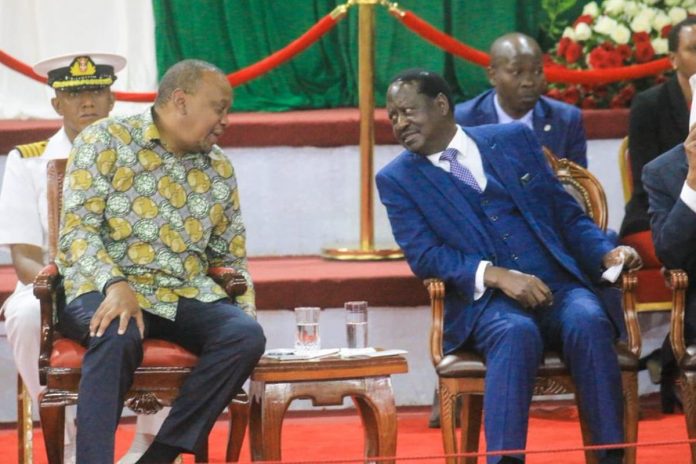
President Uhuru and ODM Principal Ralia Amollo Odinga who championed the proposed changes.

The Building Bridges Initiative (BBI) report was unveiled on Wednesday along with all the bells and whistles that accompany State events of that magnitude.

Spearheaded by President Uhuru Kenyatta and ODM leader Raila Odinga, the document has been touted as the blueprint for Kenya’s journey to becoming a utopia of peace, unity and prosperity, a Kenya devoid of ethnic-based politics and its trivialities.

But what does the BBI report actually say? Here’s a deep-dive into some of the document’s key proposals:

Return of the Prime Minister

The Yusuf Haji-led team that prepared the report says the national executive needs to be expanded to “promote greater inclusivity, and mitigate the drawbacks of the winner-take-all electoral formula.”

How, you ask? By bringing back the office of the Prime Minister (PM), with two Deputy Prime Ministers to boot.

“Stakeholders submitted that the new executive structure, being more inclusive, will not generate the same bitterness and tension as we see when the fight is for the position of the President,” the report says.

The president will nominate/appoint the PM within seven days of his/her election to office.

The PM’s duties shall be to:

(a) be the leader of government business in the National Assembly;
(b) oversee the legislative agenda in the National Assembly on behalf of government;
(c) supervise the execution of the functions of ministries and government departments;
(d) chair cabinet committee meetings as assigned by the President;
(e) assign any of the functions of the Office to the Deputy Prime Ministers; and
(f) perform any other duty assigned by the President or conferred by legislation.

The president can hire or fire the PM at will. The PM can also lose their job through a successful motion of no confidence in Parliament.

The President will also pick the Deputy PMs from among the Cabinet Ministers.

So will the post of Deputy President, currently occupied by William Ruto, go? According to the report, no. This post will be retained, making for an expanded, top-heavy executive.

House power structure

The report proposes that the Constitution be changed to introduce a new House power structure that includes the PM, Deputy PMs and the Leader of Official Opposition, the latter being the runner-up in the presidential election.

This will be the new power structure in parliament, in order of precedence:

(a) Speaker of the National Assembly
(b) Prime Minister
(c) Leader of Official Opposition

Cabinet

The BBI report proposes that Cabinet Secretaries revert to being called “Cabinet Ministers”. The Ministers can also be picked from among members of the National Assembly.

Should a Minister become lucky enough to be named Deputy PM, his/her duties will include deputising the PM in his/her duties and essentially doing whatever the PM asks of them.

Judiciary

The Haji-led team reckons that the judiciary’s accountability to the Kenyan people is not enough. To this end, it proposes the establishment of the office of the Judiciary Ombudsman. This independent officer will be nominated by the president and, when approved by Parliament, sit on the Judicial Service Commission (JSC).

The job of the Judiciary Ombudsman will be to receive complaints about judges, magistrates, registrars and other judicial officers. The ombudsman will also have the power to conduct inquiries into them, and submit periodic reports to the president and parliament.

“The qualifications for appointment as the Judiciary Ombudsman are the same as for the appointment as a judge of the Supreme Court,” the report notes.

“The Judiciary Ombudsman shall hold office for a single term of five years and is not eligible for re-appointment,” it adds.

The current Judiciary Ombudsman’s office falls under the supervision of the Deputy Chief Justice, Ms Philomena Mwilu.

IEBC changes

The report proposes changes in the management structure of the Independent Electoral and Boundaries Commission (IEBC).

“The taskforce recommends that we go to the next election with a clean slate to strengthen faith in the IEBC,” it says, meaning that it is proposing that the current crop of commissioners exit before the 2022 General Election.

The report also proposes that all current senior IEBC officers be vetted. Additionally, it recommends that all IEBC staff be employed on a three-year contract, and that this only be renewed once on condition that their performance was good.

The taskforce also recommends a change in the hiring process of returning officers to make it more rigorous.

“Returning officers should be hired through a similar process to the one used for commissioners, with the involvement of public participation.”

Health services

Among winners of the BBI report’s proposals are healthcare workers. The taskforce has proposed the creation of the Health Services Commission, an agency that will be tasked with making recommendations to government on the management of medics.

The proposal is a win for health workers since they, through the Kenya Medical Practitioners, Pharmacists and Dentists Union (KMPDU), have been lobbying for its creation in order to remove some health functions from county governments.

They want functions such as recruitment, deployment and discipline of medics to be handled by the Commission.



Stories Continues after ad

Kitara FC promoted to the Uganda Premier League

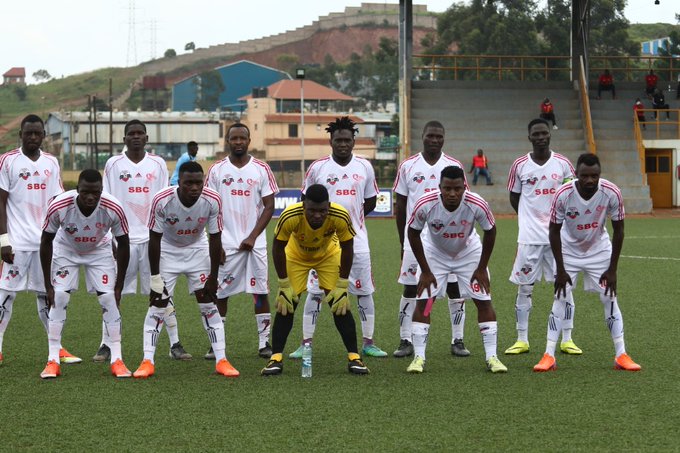
kitara fc team

Hoima-based side Kitara Football Club have sealed promotion to the 2020/21 StarTimes Uganda Premier League.

This was after recording a narrow 1-0 victory over Kiboga Young (formerly Mbale Heroes) in the 2020 FUFA Big League playoffs final played at the Technical centre in Njeru.

Forward Brian Muluuli Mayanja scored the only goal in the 55th minute of the well-contested duel.

They join Malaba Youth Development Association (MYDA) FC and army side Uganda Peoples’ Defence Forces (UPDF) FC who qualified directly when FUFA cancelled the season because of the COVID-19 pandemic.

The FUFA Big League was started in 2009 as the second tier of Ugandan football and three clubs are promoted each season to the Uganda Premier League.

It consists of two groups; the Elgon and Rwenzori group where the table leaders in each qualify directly. The other four (those finishing second and third in both groups) are engaged in a promotional play off.

UPDF were promoted as the Rwenzori group winners while MYDA were promoted as the Elgon group leaders.

The 2020/21 Uganda Premier League season is anticipated to kick off on November 20th 2020 with fixtures to be released in due course.

Proline FC, Maroons FC and Tooro United FC are the three clubs that were relegated from the 2019/20 Uganda Premier League and will play in the Fufa Big League next season.

Stories Continues after ad

Former Burundi President sentenced in absentia for assassination of successor

Pierre Buyoya

Former President of Burundi Pierre Buyoya has been sentenced in absentia to life in prison for the assassination of his successor Melchior Ndadaye in 1993 in a court ruling on Monday.

Buyoya was convicted in a court in Burundi after he was found guilty alongside other 18 high ranking officials for a coup-detat that led to the death of the newly elected president and a civil war that left 300,000 Burundians dead.

Buyoya, rose to power in 1987 with the help of the army and later relinquished his seat to the then democratically elected president Ndadaye. However only four months after his election, Ndadaye, of Hutu origins, and a number of his cabinet ministers were killed in a coup attempt carried out by Tutsi soldiers, that led to years of civil unrest as the two ethnic groups went to war.

Among those convicted with Buyoya are his former deputy presidents Busokoza Bernard and Alphonse Marie Kadege. Three officials were sentenced to 20 years in jail for ‘complicity’ while his former Prime Minister Antoine Nduwayo, was acquitted.

Buyoya went ahead to become Burundi’s president again in 1996 until 2003 and now serves as the African Union’s representative to Mali and Sahel. Sources close to the case say that the accused and his party were sentenced in absentia and only five were present. Lawyers of the former president state that they did not expect the ruling and couldn’t place a plea.

Stories Continues after ad

Standard Chartered Bank, BRAC Uganda partner for continued Empowerment and Livelihood for Adolescents

Regina Mukiri hands over a cheque to BRAC's Dr Matete Owuor

Standard Chartered has announced a donation of Ugx 166,500,000 (One hundred and sixty-six million, five hundred thousand) to BRAC Uganda to support adolescents under the GOAL project.

The six-month project intervention will seek to prevent, mitigate and build the resilience of adolescent girls and community members to enable them deal with the effects of the COVID-19 pandemic.

The Goal project is a community investment initiative which uses sports and life skills education to transform the lives of young women and girls under the Empowerment and Livelihood for Adolescent program (ELA). The project’s objective is to equip girls with financial education and life skills so that they can play active leadership roles in their families and communities. This is done through supporting girls’ ages 9 to 22 years through five modules which are: Be yourself, Be healthy, Be empowered, Be money savvy and Be Independent.

The trainings are conducted by 64 Goal Coaches in 64 clubs in 8 branches were the project is being implemented. Every year a sample size of 1,500 girls are selected to fill in the baseline survey which is used to measure the project success that year.

With support from Standard Chartered Bank Uganda, BRAC started implementing the Goal Programme in October 2014. As of 2019, BRAC Uganda’s Goal project had impacted on the lives of 42,000 adolescent girls in rural and urban communities in 9 districts and established 8 adolescents’ safe houses in 64 villages of Kampala, Mbarara, Isingiro, Lyantonde, Wakiso, Kayunga and Mukono Districts. These clubs are facilitated by 8 trained Goal coaches who are tasked to train and recruit 6,500 adolescent girls and young women to undertake the Goal curriculum training for a period of 10 months.

Regina Mukiri the Head, Corporate Affairs, Brand & Marketing Standard Chartered Bank Uganda Limited while handing over the donation said:

“It is our imperative to support various categories of vulnerable person impacted by the pandemic so we are pleased to now extend a COVID relief donation particularly to adolescent girls under the Goal project. Our priority is to help the girls cope with the effects of COVID-19 pandemic and remain buoyant. This support is critical to extending to some of them the services and support they require. We’re extremely proud to partner with our long-term partner BRAC to roll out the support to these youths.”

Dr. George Owuor Matete PhD, Country Director, BRAC Uganda while receiving the donation said: “This donation from Standard Chartered during the COVID-19 pandemic is timely in ensuring the continuity of the GOAL project implementation. We are very grateful to Standard Chartered Bank for the strong support they have given to the GOAL girls during this period as beyond the monetary contribution, they have also continued to organize a number of virtual engagements with the Goal project beneficiaries to help equip them with necessary coping mechanisms and skills during this pandemic.

“The youths who have participated in the Bank led webinars organized amidst the COVID 19 pandemic mostly appreciated the self-discovery and mentorship discussions and topics such as; How to cope with life during the pandemic, building mental resilience during COVID 19 crisis and the financial education clinics. These sessions have enabled the GOAL girls develop a strong social capital, build resilience and learn new ideas and skills.”

Stories Continues after ad

Court dismisses NUP-Kibalama case

nup supporters

High Court judge Musa Ssekaana has ruled that the National Unity Platform (NUP) is a legally registered political party. The case has been dismissed with costs to the respondents.

The party founder Mzee Moses Nkonge Kibalama wanted the transfer of the party to the leadership of Robert Kyagulanyi Ssentamu alias Bobi Wine to be nullified.

“This court declines to entertain the application since it was not brought under any known procedure and secondly it was made to avoid the time limit of 3 months within which an application for judicial review should have been brought,” the ruling reads in part.

The judge added that the judicial review guidelines or rules equally provide for locus standi and this would have been the threshold before the applicants would seek to challenge actions of a party. It is an abuse of court process.

“This application is dismissed with costs to the respondents I so order,” Ssekaana ruled.

Stories Continues after ad

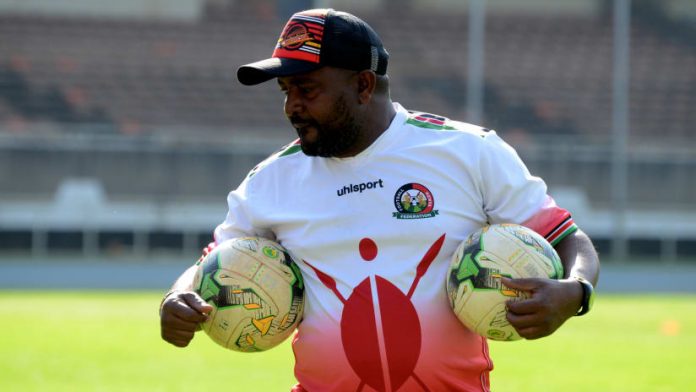
Harambee Stars head coach Francis Kimanzi resigns

francis kimanzi

The coach of Kenya’s men’s national team, Francis Kimanzi, has left his role by mutual consent.

Kimanzi had been in the post for a year, having replaced Frenchman Sebastien Migne.

With national football only recently returning having been suspended due to Covid-19, Kenya’s only game since march was a 2-1 friendly win over Zambia earlier this month.

However they have critical qualifiers for the 2022 Africa Cup of Nations looming, with home-and-away fixtures against surprise Group G leaders Comoros being followed by a huge final game against Egypt.

Some of Kimanzi’s backroom staff have also left their posts.

Kimanzi was in his third term with the Harambee Stars, having also been in charge briefly from November 2008 to January 2009 and then for a longer spell from November 2011 to June 2012.

A statement from FKF read: “Football Kenya Federation has announced the departure of Harambee Stars Head Coach Francis Kimanzi and part of his backroom staff from the national team by mutual consent.”

“The federation is immensely grateful to Coach Kimanzi and his departing members of Staff that include Assistant Coach Zedekiah Otieno and Goalkeeper Trainer Lawrence Webo for their exemplary work, dedication, and unrivaled professionalism, which have strengthened Kenya’s chances of qualifying for the AFCON 2022 final tournament.”

“Moreover, Football Kenya Federation wishes them well in their future endeavors, this even as the search for a replacement to take the national team forward begins in earnest.”

Stories Continues after ad

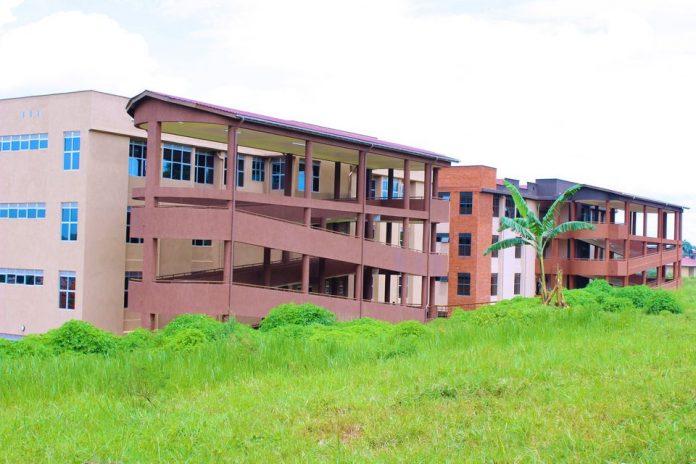
Kyambogo University to engage hostel owners on fees hike

Kyambogo University

Kyambogo University has made it clear that they will deal with hostel owners that have deviated from what they had agreed and hiked the accommodation fees.

Mildred Tibananuka, the Dean of students Kyambogo University says they will not sit and look at their students being charged unfairly yet everything was agreed upon.

This comes after final year students have started complaining that hostel owners have charged them much money compared to what they negotiated with them.

When we visited some hostels, we learnt that there are hostels like Bavana, choice among others which are charging shillings 400,000 to each student for a period of six weeks.

According to Tibananuka, when they met with hostel owners, they agreed that students should be charged not more than shillings 200,000 for only utilities which the hostel owners accepted.

However, Tibananuka told us that it was unfortunate to learn that most hostel owners had deviated from what they had negotiated and agreed on.

She says that they will engage all the hostels that they have learnt that they are over charging students.

Tibananuka urges all the students to remain calm because the matter shall be handled.

Kyambogo University has over 11,943 final year students and the majority of these students stay in private hostels around the University.

Stories Continues after ad

U.S Embassy develops COVID-19 Resource Toolkit for Uganda

COVID-19 Structure

The U.S. Embassy in Uganda developed a ‘COVID-19 Resource Toolkit’ in collaboration with Uganda’s Ministry of Health and other partners in order to expand access to key COVID-19 information and resources across Ugandan society.

The toolkit includes links to videos, public service announcements, posters and other information on COVID-19 signs and symptoms, prevention and care, mask wearing, social distancing, hand hygiene and other health-related information.

“The more people who know how to keep themselves and their families safe, know the appropriate symptoms for which to look, and know how to seek the care and treatment they need, the greater the success we will have in beating COVID-19 together,” U.S. Embassy Chargé d’Affaires Christopher Krafft said on the release of the COVID-19 Resource Toolkit.

He asked community leaders in Uganda to take the COVID-19 communications resources in this toolkit and utilize, implement, and most importantly share them as extensively as possible.

To date, the cumulative COVID-19 cases in Uganda stand at 10,788 with 7,066 having recovered and recorded 97 deaths.

Stories Continues after ad

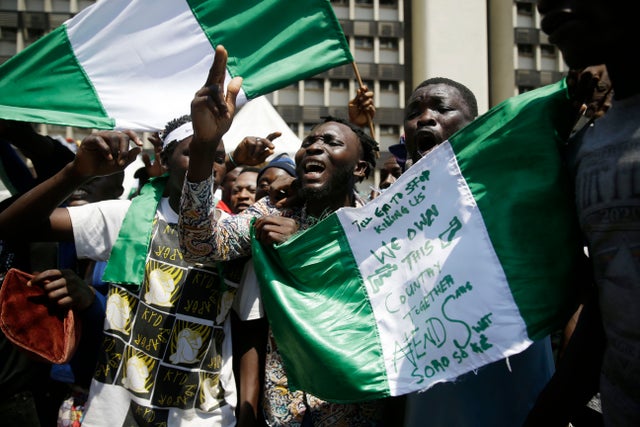
Nigeria: Protesters ‘shot dead’ by security forces in Lagos

protesters in Nigeria

Nigeria’s security forces have reportedly shot dead demonstrators protesting against police brutality in Lagos, according to several witnesses, as authorities imposed a curfew and promised an investigation.

Four witnesses told Reuters news agency that soldiers fired at the protesters who had gathered in the Lekki district of Nigeria’s largest city in defiance of an indefinite curfew imposed hours earlier by the authorities.

Hundreds of people were at the site at the time of the shooting, which witnesses said took place around 7pm local time (18:00 GMT).

“They started firing ammunition toward the crowd. They were firing into the crowd,” said Alfred Ononugbo, 55, a security officer. “I saw the bullet hit one or two persons,” he said.

Inyene Akpan, 26, a photographer, said more than 20 soldiers arrived at the toll gate in Lekki and opened fire. He said he saw two people being shot. Akinbosola Ogunsanya, a third witness, also told Reuters he saw soldiers remove bodies.

Scenes of protesters removing a bullet from someone’s wound and pleading for help were broadcast in a live video on Instagram by DJ Switch, a popular disc jockey.

Amnesty International said it had received “credible but disturbing evidence of excessive use of force occasioning deaths of protesters at Lekki toll gate in Lagos”, adding that it was investigating “the killings”.

Another witness, Chika Dibia, said soldiers hemmed in people as they shot at them.

Video verified by Reuters showed men walking slowly in formation toward demonstrators, followed by trucks with flashing lights, and the sound of gunfire popping. Another video showed the toll gate itself, with a protester waving a Nigerian flag, as people ran amid the sound of gunfire.

In a Twitter post, the Nigerian Army said no soldiers were at the scene of the shooting on Tuesday night.

Lagos State Governor Babajide Sanwo-Olu tweeted pictures of him visiting people in hospital who were victims of what he referred to as the “unfortunate shooting incident at Lekki”.

He said 25 people were being treated for mild to moderate injuries, two were receiving intensive care and three had been discharged.

“As the Governor of our state, I recognise the buck stops at my table and I will work with the FG (federal government) to get to the root of this unfortunate incident and stabilise all security operations to protect the lives of our residents,” Sanwo-Olu said, adding that he would give a state broadcast on Wednesday morning.

Earlier, Sanwo-Olu alleged that criminals had hijacked the protest movement “to unleash mayhem” and announced a curfew in the city.

The state government earlier said it would open an investigation into the shooting. A Nigerian army spokesman did not immediately respond to requests for comment.

Lagos is one of five of Nigeria’s 36 states to have announced movement restrictions in the last two days. Protesters pledged to remain on Lagos’s streets regardless.

“Are you afraid?” a man shouted to the flag-waving crowd from a stage. “We will stay here peacefully,” 32-year-old demonstrator Akin told AFP. “This is our new home.”

Separately on Tuesday, the national police chief ordered the immediate deployment of anti-riot forces nationwide following increased attacks on police facilities, according to a police spokesman.

Tens of thousands of people have been taking to the streets every day for nearly two weeks across Nigeria to demand an end to police violence.

The protests, organised under the #EndSARS hashtag, began with calls to scrap a notorious police unit, the Special Anti-Robbery Squad (SARS), which has long been accused of extortion, torture and extrajudicial killings.

After days of widespread demonstrations, the authorities announced SARS would be disbanded, ordering all personnel to report to the police headquarters in Abuja for debriefing and psychological and medical examinations.

Officials said SARS would be replaced by a Special Weapons and Tactics (SWAT) team.

The announcements have not satisfied the protesters, who see the changes as nothing but a renaming exercise. On Monday, Amnesty said at least 15 people have been killed since the demonstrations began.

Stories Continues after ad

University finalists ask for lowered pass mark

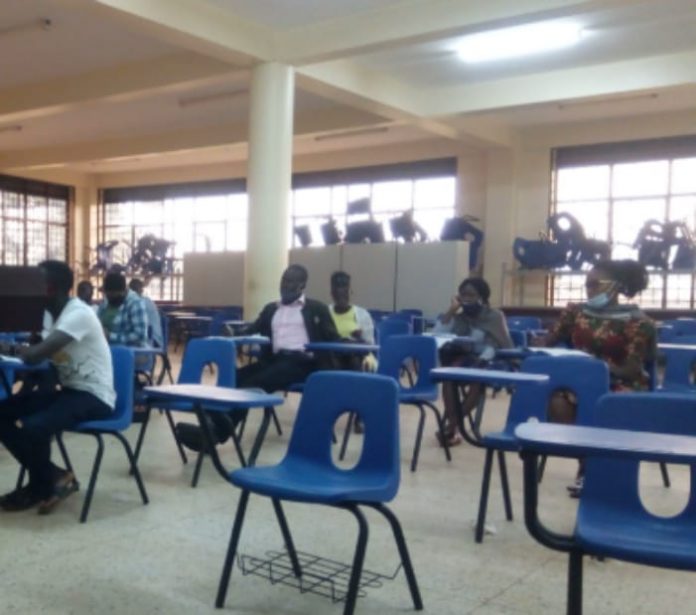
Students in class at Kyambogo university.(photo by Ronard Shabomwe)

Final year students in different universities are requesting the university authorities to lower the grading system in order to enable them pass their examinations.

Universities reopened for final year students last week for a period of not more than six weeks. Four weeks for class work and two weeks for examinations.

The students say that before the closure of the university, they still had course work and tests to do which they are going to do in this remaining period. Therefore, for the shortest period they have, they argue that they should be favored by lowering the marking grades to help pass.

According to Kellen Munguleni a finalist of Kyambogo University, if they are marked and graded as usual, it will be a great challenge for many students since they cannot handle the entire work load in the shortest time given.

She says, if this is impossible, then they should add more weeks to enable them to have enough preparations for examinations.

In universities, a student now needs to score 70-74% and 69-65% to qualify for upper and lower second class degrees respectively. Marks for a pass degree were also raised to 2.9-2.0 from 2.5-1.5. Such a degree now requires a student to score 50-59% marks, while 49% and below is a fail.

The pass mark for each course unit is at 50 percent. Students say this is high now that education is affected by the closure of learning institutions.

Rashid Aluma a finalist from Makerere University explains that as a student he has nothing to do other than reading and getting prepared for anything that shall come on their way.

Aluma says that the university should look into this issue of favoring them by lowering the pass mark from 50 percent to at least 40 percent.

Unlike other universities, Makerere University pass mark for postgraduate students is standing at 60 percent. And the undergraduate student is still at 50 percent. On this, the students say, it is high at this time when everything is affected by the COVID-19.

Peace Twikirize a final year student of Kampala international university notes that this was supposed to be a dead year. She says it will be hard to accomplish all the tests had to finish.

However, Dr Anne Begumisa, the academic registrar of Kyambogo University says the university regulations are not going to change because of the pandemic. Therefore, students should read and prepare enough in this remaining period to pass examinations.

Stories Continues after ad