Stanbic Bank
Stanbic Bank
19.8 C
Kampala
Stanbic Bank
Stanbic Bank
Home Blog Page 972

DPP confirms charges against Kasekende, Bagyenda and Sekabira

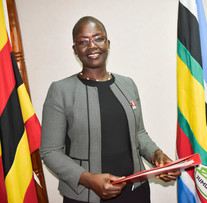
DPP, Justice Jane Frances Abodo.


The Director of Public Prosecutions (DPP) has confirmed charges against the former Deputy Governor Louis Kasekende, former Director of Commercial Banks Supervision Justine Bagyenda and the central bank’s Director for Financial Markets Development Coordination (FMDC) Benedict Sekabira.

In an August 4th letter titled: Prosecution of Bank of Uganda officials to wit Louis Kasekende, Justine Bagyenda and Benedict Sekabira, addressed to a petitioner named Kakuru Sam, the DPP Jane Frances Abodo effectively confirmed that the trio are under investigation.

“This is to acknowledge receipt of your complaint in regards to the above [investigation of Kasekende, Bagyenda and Sekabira]. This letter is addressed to two institutions which are both mandated to direct on investigations. The complaint should be addressed to one institution for proper investigations and follow-up and also to avoid duplicity and wastage of resources, “reads DPP Abodo’s letter.

DPP-letter

Eagle Online understands that DPP was responding to an earlier letter written by CID in regard to the investigations and prosecution of the three officials.

The decision to prosecute the trio comes after the DPP wrote to the Criminal Investigations and Intelligence Department (CIID) requesting that properties that they irregularly acquired due to the closure of seven commercial banks be attached.

A forensic Parliamentary audit by the Committee on Commissions, Statutory Authorities and State Enterprises (Cosase) discovered that the three-Kasekende, Bagyenda and Sekabira, profited from the botched closure of seven commercial banks.

In its report, the Committee recommended that the relevant arms of government like the Inspectorate of Government (IGG), Directorate of Public Prosecutions (DPP) and the Financial Intelligence Authority (FIA) take interest in how the trio acquired astronomical wealth.

Stories Continues after ad

Lions need to be protected to avert extinction


World Animal protection


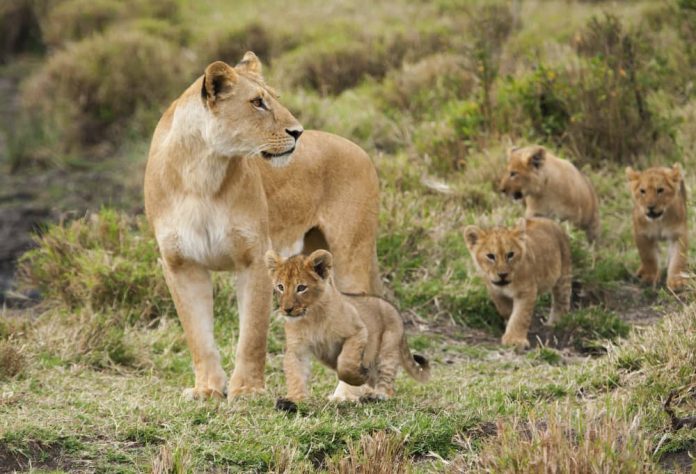
As the world marks World Lions Day today, World Animal Protection warns that the King of the Jungle may soon be extinct if urgent measures are not taken.

Edith Kabesiime, Campaigns Manager at World Animal Protection says, “African lions are facing human and nature induced threats hence the need to prioritize their protection. We have witnessed the population of lions in Africa declined in the last decades as human beings occupy their habitat.

Statistics from the International Union for Conservation of Nature (IUCN) indicate that Africa’s lion population declined from 200,000 in the last century to the current 20,000. Lions exist in 26 African countries. The continent has lost about 90 percent of the carnivore from its original habitat.

Climate change, removal from their habitats for entertainment and poaching to satisfy the traditional medicine industry are some of the contributing factors to decline in wild lion populations. Shrinking of prey base linked to massive hunting has increased their risk of death by starvation.

Captive breeding of lions that has intensified in some parts of Africa is also a threat to their survival. Animal welfare is often not a priority. Lack of adequate basic animal welfare conditions, such as enough water, food, space, shelter and medical care, is sadly a stark reality in most commercial breeding farms. This has been propelled by the urge to make profits through wildlife trade.

African lion has been categorized by IUCN as a vulnerable species amid international trade in its claws, bones and jaws to meet a rising demand for traditional medicine and jewellery.

Wildlife trade is not sustainable. If anything, it is recipe for ultimate extinction and possible outbreak of a future pandemic like what we are experiencing currently.

It is essential for an immediate action to be taken to protect and save lions from future extinction. A ban on international trade in lion’s products coupled with enforcement of laws to deter poaching will help reverse their declining numbers in Africa.

Policy makers need to consider a total ban on wildlife trade. There is need for a coordinated global action to advocate for it as a way of saving Africa’s wild Populations.

At individual level one should distance themselves from wildlife trade ultimately making it socially unacceptable. If we learn anything from the current situation, it is that we need to leave wild animals where they belong – in the wild. We all have a responsibility to make a shift in our behaviour and attitudes towards animals that could save the lives of lions, other wildlife species, millions of people and our economies,” Says Tennyson Williams, World Animal Protection Country Director.

This year’s World Lion Day is marked with keen interest in three objectives; The first is to raise awareness of the plight of the lion and the issues that the species faces. The second is to find ways to protect the big cat’s natural environment. And the third is to educate people on how to prevent human-wildlife conflicts. Humans and large species like cats can live in harmony together, but only if they understand how to do so.


Stories Continues after ad

Kateshumbwa faces arrest over ‘illicit’ wealth

Dicksons Kateshumbwa


Former long-serving Commissioner at the Uganda Revenue Authority (URA) Dickens Kateshumbwa is living on tenterhooks with security tightening the noose around him after he failed to definitively give an explanation over how he accumulated his massive wealth.

Security took interest in the source of Kateshumbwa’s wealth after it emerged that he owns a fleet of long-haul trucks and trailers estimated to be in excess of $1m while he also owns a top Clearing and Forwarding firm.

The Clearing and Forwarding industry is one of the most lucrative and security is following up an intelligence tip that Kateshumbwa used his office of the Commissioner Customs to ensure that all money-spinning clearing and forwarding clearances were managed by his firm, raising questions of conflict of interest.

Kateshumbwa served as Commissioner Customs for over 12 years and was named Commissioner for Domestic Taxes in 2019 as the tax body’s Director General Doris Akol tried to appease President Museveni, who was angry over the skyrocketing corruption at URA.

With the changes not enough to stem the tide of fiddling of tax-payers money at URA, a furious Museveni sacked the DG Doris Akol and replaced her with John Musinguzi Rujooki.

After getting wind that he was next in the firing line, Kateshumbwa threw in the towel and literally jumped before he was pushed.

Unfortunately for Katesh, as he is popularly known, his fate had already been sealed as spies planted at the tax body by President Museveni had already compiled a dossier about him, detailing how he connives with major importers to rake in millions of dollars while leaving the tax purse in red.

When the dossier was presented to President Museveni, he was particularly angered by the fact that had it not been the massive tax evasion at the tax body, Uganda would be in a potential position of funding its budget without taking in huge high-interest loans.

President Museveni told a meeting that he is tired of government technocrats illegally amassing money and then, faced with inquiries, resigning their positions and opting to run for political offices-just like Kateshubwa is running for the Sheema Municipality seat.

Eagle Online reliably understands that, President Museveni has already met Criminal Investigation Directorate boss Grace Akullo and working head of State House Anti-Corruption Unit, Lt. Col. Edith Nakalema about impending arrest and prosecution of Kateshubwa over his source of wealth.

Mr. Kateshumba is currently contesting in the National Resistance Movement (NRM) party primaries. He is facing the Minister of Science and Innovations Dr. Elodia Tumwesigye who sources allege has been lobbying authorities to probe Katushumba’s source of wealth.


Stories Continues after ad

Kasekende, Bagyenda properties to be attached

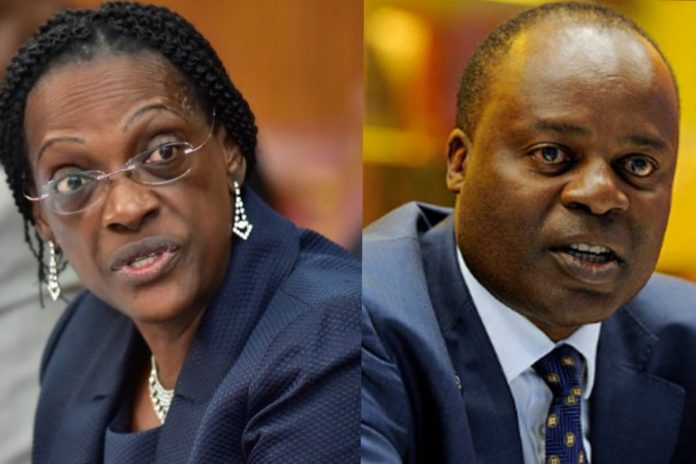
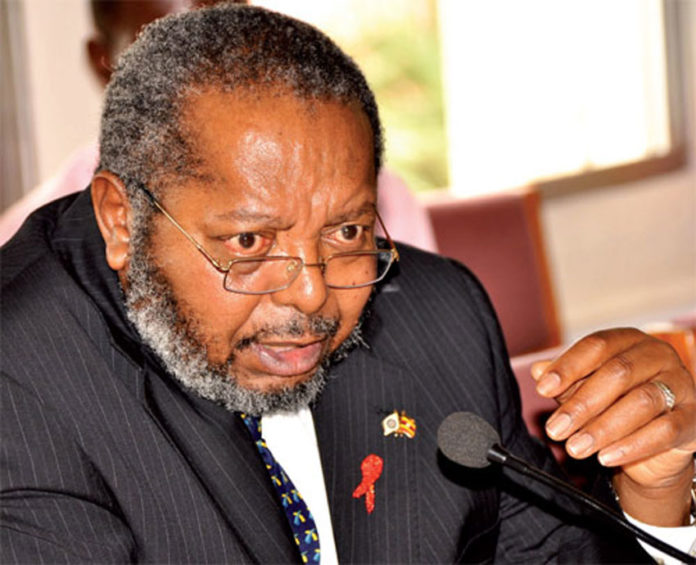
Justine Bagyenda and Louis Kasekende

The troubles of ex Bank of Uganda(BoU) Deputy Governor Louis Kasekende and former Director of Commercial Banks Supervision Justine Bagyenda have deepened further with their properties set to be attached this week.

The Director of Public Prosecutions instructed the Criminal Investigations and Intelligence Department (CIID) to arrest and search the homes of Mr Kasekende, Mrs Bagyenda and Mr Benedict Sekabira, the Director of Financial Markets Development Coordination (FMDC) at Bank of Uganda.

Some of Kasekende’s assets that set to be attached include prime properties in the Kampala suburbs of Muyenga and Kololo and plots of land in Kampala and Wakiso.

Correspondences that have been obtained by prosecutors indicate that most of Kasekende’s prime properties are in the names of his brother, wife and siblings.

The decision by the DPP to sanction the attaching of Kasekende’s properties is supported by a report by Parliament’s Committee on Commissions, Statutory Authorities and State Enterprises (Cosase) that questioned the manner in which he acquired the properties.

During the Parliamentary investigations, Aruu County MP Odonga Otto tabled in before the Committee documents showing how 72 land titles belonging to Kasekende in Kampala and Wakiso were irregularly acquired from closed commercial banks.

The Committee further heard evidence on how Kasekende submitted only six properties to the Inspectorate General of Government (IGG) during the declaration of assets process, massively under-valuing his wealth.

The Parliamentary inquiry also received bank statements showing Mr Kasekende transferred $1m (about Shs 3.7) to Ms Edith Kasekende account by a Chinese firm, Shs 1.9b from MMAKS Advocates and $ 71,000(Shs 262m) that was wired to Kasekende’s account by Tororo District Local Government.


Stories Continues after ad

Mutebile on the spot for appointing relative among other inexperienced Directors

Late Emmanuel Tumusiime-Mutebile

Bank of Uganda (BoU) is experiencing another unrest after Governor Emmanuel Tumusiime Mutebile appointed his relative among individuals for positions advertised following the retirement of several directors and expiry of contracts.

On April 24 BoU internally advertised seven positions which included the Executive Director for Operations and for Information Technology. The other positions were; Directors for Non-Bank Financial Institutions, Medical, Human Resources, Financial Stability and Financial Markets.

According to the source in the Bank, several people applied for various advertised positions to see themselves growing in their respective fields of banking. The source said they were warming to have interviews. To their dismay, the governor halted the process and decided to appoint members from a given click fight others in the Bank.

The BOU Board of Directors insists that the positions should competently be fill however the governor has taken the opposite direction and appointed his close associates.

“The governor was not allowed at time of advertising but the board had reached a conscious and directed human resource department to advertise and seen vacant positions filled. On halting the process, the governor said he has to consult with the president first before letting the Human resource department to go on with the process.” the source said.

Among issues to be discussed, the source said, were BOU act which seeks to trim the Governor’s powers among others. And last month, Mutebile and the board of directors headed to state House Entebbe to meet President Museveni. On reaching the state house, the President dissed them saying that he has a lot of things to do and therefore he did not give them time. He directed them to go and solve in-house issues.

The source said that Mutebile had briefed President Museveni before the group traveled to the state house. Mutebile and sections of individuals are at a loggerheads with board members because of how some activities are carried out at the bank.

The appointed members include; Valentine Ojangole who was appointed Executive Director Operations replacing Marry Katarikawe. Ojangole is the only reported to have minimum requirements.  Jacob Opolot who was appointed Ag economic advisor to the governor replacing Brown Bleach whose contract expired. Opolot is at the level of Executive Director this contradicts the bank’s structures.

The others are; Nakayiza Sincia- director Banking, she replaced Mr. Ojangole. Christine Namanya was reportedly appointed Ag executive director Human Resources and Lawrence Orobo who was appointed to head financial markets and Lumanzi who was brought up by the governor himself was named Ag director non-banks.

“Many of the appointees don’t qualify for those positions according to Bank structures. It is regrettable that it takes long for these issues to be known and BOU decisions are irreversible. The bank is going to its knees if they continue making such decisions,” The source said.

Efforts to reach communication manager in BOU were futile since no one answered our calls.

It should be recalled that in February 2018 Tumusiime-Mutebile made staff changes where he replaced former executive director of supervision Justine Bagyenda with Dr. Tumubweine Twinemanzi.

A committee that was appointed by President Yoweri Museveni to investigate staff changes would later establish that Tumusiime-Mutebile made some transfers and appointed Twinemanzi without consulting other members of the BoU board, a decision they said was wrong as the governor had no powers to make changes single handedly.

Worse still, most of the staff head picked by the governor did not meet the qualifications and experience required for the jobs. For instance, Dr. Tumubweine does not have any experience in commercial banking.


Stories Continues after ad

NURP founders disown Bobi Wine in petition to EC

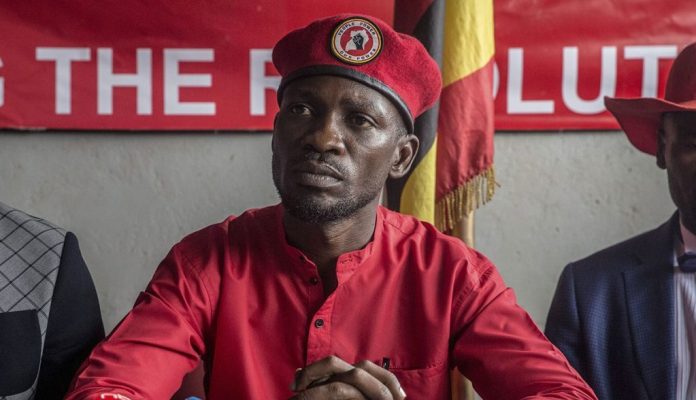
Bobi Wine

Founders of the National Unity, Reconciliation and Development Party (NURP), the party that People Power leader Bobi Wine bought and renamed the National Unity Party (NUP), have petitioned the Electoral Commission saying their party was irregularly bought.

Through their lawyer James Byamukama, the founders of NURP argue that Bobi Wine’s acquisition of NUP was in contravention of the Political Parties and Organisations Act (2005), the law that governs the operationalization of political parties in the country.

In their petition to Justice Simon Byabakama, the EC Chairman, NURP founders questioned the manner in which the party name was changed from   National Unity, Reconciliation and Development Party (NURP) to The National Unity Platform (NUP).

“The resolution amending the party name from National Unity, Reconciliation and Development Party (NURP), as per its certificate of registration issued on 28/02/2004 to The National Unity Platform (NUP) published under General Notice No 838 of 2019 in the Uganda Gazette dated 12/8/2019 and certificate of registration issued on 28/8/2019 without complying with the party constitution,” read their petition.

The petition further states that: “The resolution dated 5/1/2017 illegally nominating someone described in the resolution as the Ghetto President H.E Bobi Wine Kyadondo East MP Hon Kyagulanyi Robert as the party’s Presidential flag bearer in the 2021 Presidential elections, many years before the due time for such nominations and without following the party constitution and national election laws.”

In their petition, NURP’s founders told the EC Chairman that if the electoral body fails or omit to exercise its statutory mandate in the matter, they will have no option but to join the Electoral Commission to legal proceedings intended to restore control of NURP party to its rightful founders and members.

OTHER GROUNDS IN THE PETITION.

The extra ordinary Delegates Conference allegedly held on 14/7/2020 and attended by only 51 unverified members out of a Delegates Membership list of 400 delegates, which rubber stamped Hon Kyagulanyi as the new party president and his associates as party office bearers unopposed without conducting a proper election in violation of the party constitution and provisions in the national constitution.

Under Section 21 of the Political Parties and Organisations Act 2005, the Electoral Commission is under a statutory duty to address and rectify the aforesaid illegalities, hence this complaint.

Stories Continues after ad

2021 General Elections: EC releases SOPs for nomination of candidates

ec chairperson

The Electoral Commission (EC) has released the Standard Operating Procedures (SOPs) for the 2020/2021 General Elections to be followed during the conduct of pre-nomination, nomination and campaign election activities under the covid-19 environment.

EC Chairperson Justice Simon Byabakama explained the SOPs while addressing the press on the progress of roadmap for the 2020/21 general elections. He said the measures and guidelines put in place were approved by the Ministry of Health to prevent the spread of the deadly COVID -19 disease.

On the progress of the roadmap, Byamukama said that EC is conducting elections for Older Persons, Persons with Disabilities (PWDs) and Youth Committees at the Village/Cell level across the country and that the nomination of candidates was successfully concluded on Wednesday 5th August 2020.

“Campaigns started on Thursday 6th and will end on Monday 10th August 2020, and polling for the various Special Interest Groups will take place in all the 68,740 (sixty-eight thousand seven hundred and forty) villages across the country.” he added

Polling for the Village Older Persons Committees will take place on Tuesday 11th August 2020, Village PWD Committees will take place on Thursday 13th August 2020 and for the Village Youth Committees on Monday 17th August 2020.

The elections shall be conducted by voters (members of the respective electoral colleges) lining behind candidates’ portraits or candidates’ symbols or candidates’ agents or the individual candidates of their choice.

All persons participating in the elections shall be required to comply with guidelines issued by the Electoral Commission in accordance with the Government of Uganda and Ministry of Health measures against the spread of COVID-19.

This includes observing social distancing, hand washing, and wearing of masks.

“The SOPs incorporated measures and guidelines put in place by the Ministry of Health and the outcome of consultations made by the Commission with various stakeholders in the electoral process to prevent and combat person to person, person to object and object to person spread of the COVID -19 during the conduct of election activities.” Byamukama said

SOPs for Issuance and Receipt of Nomination Guidelines and Nomination Forms

The issuance of Nomination Papers, soft copies of nomination forms and relevant guidelines have been uploaded on the Electoral Commission website and aspiring candidates may access them using the link www.ec.or.ug.

Hard copies of the nomination papers may be picked from the Electoral Commission Head Office by the aspiring presidential candidates or their agents, and from the offices of the respective District Returning Officers for aspirants to the general Parliamentary and Local Government Council elections, starting on Monday, 10th August 2020.

Both the Election Officials, aspiring candidates and agents, have the obligation to ensure compliance in the wearing of masks, washing of hands, use of sanitizers; and observation of social distancing, during the issuance and receipt of nomination papers.

The Commission further uploaded all the necessary guidelines for the Presidential, general Parliamentary and Local Government Council elections.

SOPs for Collection of Supporters Signatures

Aspiring candidates are required under the respective electoral laws, to collect signatures to support their nominations. However, given that the collection of signatures in support may contribute to the spread of the COVID -19, the following measures have to be followed:

All aspiring candidates and respective agents, while accessing and leaving the homes of the voters required to sign their nomination forms, shall be required to wash hands and wear the recommended face masks.

All voters signing and/or thumb printing a nomination paper shall be required to wear the recommended face masks at all times and wash hands before and after signing and/or thumb printing a nomination paper.

Both the voters and aspiring candidates/agents have the obligation to ensure compliance in the wearing of masks, washing of hands, use of sanitizers; and observation of social distancing.

SOPs for Conduct of Nomination Activities

he Commission shall provide hand washing facilities and sanitizers at all the nomination venues; and the aspiring candidate, proposer and seconder shall be required to wash hands while accessing and exiting the nomination venue.

The aspiring candidate, appearing in person, shall be allowed into the nomination venue accompanied by 2 persons (Seconder and Proposer), who shall be required to wear masks at all times.

Aspiring candidates are advised to use only two vehicles for purposes of his/her nominations; and each vehicle should not carry more than 4 persons, driver inclusive, for a saloon/SUV. Each of the vehicles shall bear a police sticker.

For the avoidance of doubt, the incumbent President, if he is an aspiring candidate, shall use such number of vehicles as is ordinarily attached to his office.

The respective Returning Officers conducting nominations shall be required to wash hands, use gloves and wear the recommended face masks while conducting nominations.

All other election officials and the security personnel deployed at the Nomination Venues shall at all times wear the recommended masks and gloves.

Hand washing with water and soap and use of sanitizers shall be mandatory for all before accessing the Nomination Venues.

All persons accessing the nomination venues shall have their temperature taken and required to go through normal security checks and observe social distancing.

Motor vehicle and motorcycle convoys and crowds of supporters shall not be allowed during the period designated for nominations.

All facilities at the nomination venues – tables, chairs, door handles, etc., shall be sanitized and/or disinfected regularly.

The SOPs for Conduct of Campaign Meetings

Candidates may organise/hold regulated campaign meetings. Conveners of such meetings and venue owners should ensure that measures and guidelines put in place by the Ministry of Health are strictly observed.

Hence hand washing facilities should be available at the meeting and campaign venues during the campaign period.

All the identified meeting venues should be preferably outdoor to enable the observance of the social distancing of at least 2 meters apart for the persons attending the meeting/campaigns.

Conveners of meetings should notify the police authority in the respective area on the identified venues which shall be inspected for suitability in regard to compliance with the Ministry of Health guidelines.

All candidates shall ensure that they comply with the harmonized campaign meetings programmes and that the identified meeting venue enable the electorates comply with the Ministry Health Measures and Guidelines on COVID-19.

For the avoidance of doubt, a candidate’s agent may conduct regulated campaign meetings on behalf of the candidate as permitted to do under the electoral laws, but in compliance with the said Ministry of Health Measures and Guidelines.

Candidates and/or their agents shall ensure that campaign meetings do not go beyond 6pm on each of the campaign days.

All candidates, conveners and venue owners shall ensure that the campaign/meeting venues are provided with hand washing facilities and sanitizers; and the candidates shall ensure that the supporters attending the campaigns/meetings wash hands and at all times wear masks while accessing and exiting the meeting venue.

All candidates are advised to desist from holding mass rallies; conducting processions from one meeting to another. Similarly, convoys and crowds of supporters shall not be allowed outside the designated Meeting Venues.

Hand washing with water and soap and use of sanitizers shall be mandatory for all before accessing and exiting the Campaign Meeting Venues.

All candidates shall ensure that facilities at the meeting venues – tables, chairs, door handles, etc., are sanitized and/or disinfected to mitigate the spread of COVID -19.

Use of Media for Political Campaigns

All candidates shall conduct their media engagements in accordance with the programs submitted to the respective Returning Officers and harmonized by the respective media houses. Accordingly, all nominated candidates are advised to submit to the Returning Officer, a copy of their proposed campaign meetings and media campaign programmes.

All political parties and organizations sponsoring candidates are similarly advised to submit to the respective Returning Officers their political party broadcasts programmes.

The Commission will, through the Uganda Communication Commission require all media houses (privately owned inclusive) to make public their rate cards, availability of time, the broadcasting schedule and cost of presenting their programs and allocate time to the candidates.

Candidates and their agents are encouraged to use other non-contact means of communication, that is, broadcasting, publishing, cell and web-based platforms, to interact with the electorate during the campaign period. This includes fliers, posters, banners, radio and TV announcements, radio and TV talk shows, SMS, voice messaging, new digital media platforms like WhatsApp, Facebook, Twitter, YouTube) and websites.

During the campaign period, candidates may use the Community Based Public Address Systems (kizindaalo) and a program for usage should be communicated by the candidates/agents to the respective Returning Officers.

The Commission shall ensure that all presidential candidates are given equal treatment on State-owned media to present their programs to the people (Section 24 (1) of the Act).

A State-owned media house shall, within fourteen days after nomination day, notify in writing, all presidential candidates of the availability of time, the broadcasting schedule and cost of presenting their programs and shall allocate time to the candidates. (Section 24 (1a) of the Act).

Stories Continues after ad

COVID-19: Places of worship prepare for reopening

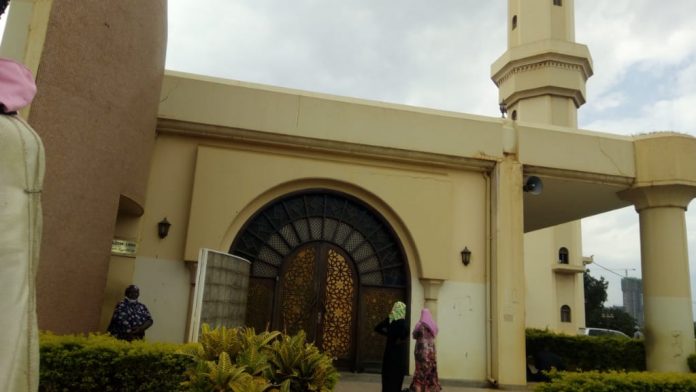
Female Moslims praying at old kampala mosque.

Places of worship are preparing and getting ready for reopening by making sure that by the time they are allowed to operate, they are able to implement the Standard operating procedures-SOPs.

Worship places are among the public places that have been closed for almost six months, after closing their doors due to the coronavirus pandemic.

While the burden of the lockdown has fallen evenly across the population, religious groups have been forced to sacrifice major festivals that punctuate their practice over the year.

Christians were unable to attend Holy Week services; Muslims have experienced Ramadan without communal Iftar meals each day.

Faith leaders like Bishop David Livingstone Kiganda of Christian focus Ministries and other religious leaders, protested and called for churches, mosques, synagogues and temples to be allowed to reopen as other lockdown measures have been lifted.

Following the demand, religious institutions under the Inter-Religious Council of Uganda developed Standard Operating Procedures-SOPs to guide the safe re-opening of places of worship.

Religious institutions are suggesting that the first phase of the reopening should be around the end of August for 21 days accommodating adult and youth congregants, from the age of 12. The first reopening should start with urban areas before spreading to the countryside, according to proposals that were presented to the National COVID-19 Task Force.

The proposed SOPs include, mandatory use of face masks, temperature scanning, and sanitization at entrances of places of worship and maintaining social distancing of two meters from each other. For the Muslims, during Jumu’ah or Duwa Prayers, the SOPs suggest that congregants can be given disposable bags for the individual storage of shoes and other valuables.

Meanwhile, vulnerable members of the congregation, including the elderly, and those with underlying health conditions are advised to stay home and watch the services online.

Collection of gifts, offertory, tithing or any other giving should be limited to entrances while worshipers are entering or exiting the Places of Worship, to limit contact or many people touching on the same surfaces. In the same way, sharing written materials like Bibles, Qurans, songbooks, programs, or other written literature will also be prohibited.

In case of any case identified, the worship centers will have to link up with the area COVID-19 task force and make contact tracing easier, all congregants will be registered.

That every place of worship should keep a register of the worshipers in attendance in a given worship service. The register should contain the names, phone contact, and area of residence of each worshiper for easy contact tracing.

In the same development, the proposed standard operating procedures point out that places of worship will not be allowed to be used for any form of political campaigns.

Meanwhile, Eagle online visited some worship places in Kampala which are fond of holding huge gatherings to find out preparations that worship places have or are putting in place for reopening.

In some places that this reporter visited like Christian life church Kavule, Old Kampala Mosque, St Paul cathedral Namirembe, Christ Embassy church Naalya, St Mary’s cathedral Rubaga, Rubaga miracle center cathedral, among others, are busy holding meetings in preparations for reopening and SOPs like hand wash, sanitizers, information regarding coronavirus pinned on noticeboards among others are already in place.

At all Saints church Nakasero, they have reserved tents outside the church that will be used to ensure physical distancing, they have purchased modern hand wash taps for each gate, register books for recording details, and they are hoping that the new building will also help because it will have enough space.

Rev.Can Rebecca Nyegyenye, the All Saints Nakasero Provost notes that they are moving faster to make sure that by the time they announce reopening, they have everything in place that will help them to implement the SOPs and keep everyone safe.

She also says that for the people like elderly and the sick, they have plans of making a good program.

At all saints, they have marked two-meter space to ensure physical distancing. They have as well put in place thermometer guns for temperature measuring, registers among other measures.

A chart of SOPs at Watoto church in town.

Brave Byarugaba, the all Saints church administrator says that with all the measures they will ensure SOPs are implemented.

At Watoto church in town, they have all the Ministry of Health information showing the SOPs, they have purchased thermometer guns and security officers ensure to measure everyone that accesses the premises.

Daniel Nyombi, a member of Watoto church says that they have been well prepared and they are just waiting for the reopening. However, he notes that these SOPs might work for a few days and people resort to old ways of behaving which can put everyone at risk.

At the old Kampala mosque, this reporter found Muslims in prayers and observing social distance. They have ensured the whole place has taps and there are attendants to direct whoever comes in to wash hands and sanitizers are in every office and at entrances.

Rashid Kiwanuka the information officer supreme council old Kampala mosque says that they have a hand in SOPs that have been proposed, therefore they are ready and prepared for reopening.

However, Hajjat Sanyu Kasoga a member of old Kampala mosque expresses her worries on how these SOPs shall be implemented, yet some are against the Islam faith, like praying together (Jama)-where every moslem that takes part in a prayer service must have their feet connected to the colleague’s feet.

She further appeals that the government should reopen them and they will be sensitized, and to the fellow Muslims, that they should do all it takes to remain safe because these are not normal situations.

However, some worship places like Christ the king in town and house of Prayer Ministries International, there is no sign of preparing for reopening, as churches are still closed and guarded by security guards.

Stories Continues after ad

How Andrew Mwenda has been disparaging and calling Bobi Wine cult leader of a bastard child People Power

mwenda picking forms

Today, a veteran Journalist Andrew Mwenda joined National Unity Platform (NUP), a political Party owned by Kyadondo East MP Robert Kyagulanyi aka Bobi Wine.

The print, radio and television journalist was registered earlier today and picked nomination forms to stand against Bobi Wine. He said he wants to stand against him and defeat him for the party flag bearer in the Presidential race.

“NUP after all are not as radical as I previously thought, I visited their head office, registered as a member, then picked forms to become Presidential candidate. I found Bobi Wine, like Kaguta Museveni, was being treated as the sole Presidential candidate for the National Resistance Movement (NRM) Party.” He tweeted

It all started during the NBS TV’s Round table show when Mwenda said he can all join the party in  bid to challenge Bobi who refers to as an extremist in the race for the party Presidential flag bearer .

Mwenda who has been in and out the state house meeting President Yoweri Museveni, has always said that People Power (NUP) has limited possibilities for growth because it lacks what in marketing is called ‘product differentiation’ from its origin, Defiance.

On 18 August 2018 after the arrest and torture of Bobi Wine in Arua, the former political editor of The Daily Monitor labeled Bobi Wine as radical extremist who has no vision for the Country.

“Ugandans who believe in liberal values need to expose Bobi Wine’s radical extremism and his blind pursuit of power without any values underpinning it. His politics of mobilizing popular anger without organizing it is a danger to our country. His lack of an alternative policy vision only adds to the disaster I am sure he would create if he and his radical extremists got power.” He said

“I am also aware that if Bobi Wine and his radical extremists captured power they would not allow me the freedom to criticize them. He and his supporters don’t stand for anything. They stand against Museveni. They are an intolerant and uncouth group seeking power to settle scores with their opponents.”

“It is absurd radical extremists of defiance and it’s bastard child, people power, are claiming the government has stifled them Yet they are free on social media indulging in unrestrained cyber bullying and on streets thru physical intimidation of opponents,” he tweeted earlier this month.

“Defiance and people power are hilarity fascist groups that should be suppressed if we are to stop the equivalent of nazis taking over power in Uganda. They won’t stop their cyber bullying and street violence unless and until they are stopped,” he tweeted on 3rd August 2020.

Stories Continues after ad
Financing of new cities deferred as MPs demand enabling law

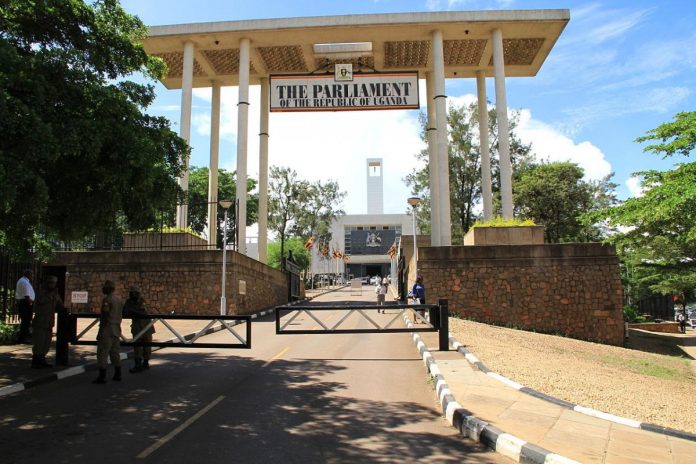
Parliament of Uganda

Parliament has rejected a move by Finance State Minister, David Bahati, to provide finances for running newly approved cities in the country through a motion and instead demanded for a substantive amendment to the Appropriation Act.

Minister Bahati had brought a motion for a resolution of Parliament authorizing Government to transfer funds initially appropriated for municipalities to be given to the newly created cities.

“There is urgent need to provide funds to make the new cities operational,” Bahati is quoted by the parliament website during the House sitting on Thursday 6 August 2020.

Hon. Felix Okot Ogong (NRM, Dokolo South), however, raised an objection, noting that it is unlawful for the Minister to seek to amend the Appropriation Act [which is the legal framework for the national budget] without a specific Bill.

“We have not passed any law operationalising those cities; what is the structure of the cities and how are they going to operate; this is the Parliament of Uganda where we have to follow the law,” said Okot Ogong.

He added: “If you want to vary anything in the Appropriation Act [the budget], it must be by way of an amendment to the law.”

Okot Ogong said the new cities need a new legal framework similar to that of Kampala for administrative propriety.

The hitherto only city, Kampala, operates under the Kampala Capital City Authority Act, like its predecessor the Kampala Capital City Act.

Hon. Cecilia Ogwal (FDC, Dokolo district) said by the time the cities were being created, Government presented Certificates of Financial Implications and therefore they should have been catered for in the recently passed national budget.

Speaker Rebecca Kadaga resolved the impasse by ruling that Parliament would not entertain the motion, instead advising Minister Bahati to come up with an amendment to the Appropriation Act 2020.

“You cannot amend the Appropriation Act by a motion for resolution; we should bring an amendment Bill; first sort out the law because this [motion] is premature; this matter is not properly before this House, go back and reorganize yourselves,” she said.

Minister Bahati had staked his motion on Section 20 of the Public Finance Management Act, 2015, which says “Parliament may, by resolution, authorize the Minister to reallocate funds from a vote to another vote where the functions of a vote are transferred to that other vote.”

Minister Bahati later conceded.

The administration of the new cities, said Bernard Atiku (Ind., Ayivu County), is fraught with administrative uncertainties especially regarding what now happened to the Municipalities.

Stories Continues after ad