Stanbic Bank
Stanbic Bank
17.3 C
Kampala
Stanbic Bank
Stanbic Bank
Home Blog Page 976

Emirates Skywards marks 20 years of excellence, innovation and unmatched rewards

emirates plane

Emirates Skywards, the award-winning loyalty programme of Emirates and flydubai, has marked 20 years of excellence, innovation and unmatched rewards. Over the past two decades, the loyalty programme has continued to grow its membership base by offering value and rich, personalised experiences to its members around the world.

The programme has continually invested to diversify its brand partnerships, and utilise innovative digital technology, so that it can offer its members across the globe with more ways to earn and enjoy rewards, conveniently and via new touchpoints.

The loyalty programme has 27 million members worldwide, of which, more than 32,000 are founding members who joined the programme in 2000 and are still active. In celebration of its 20th anniversary, Emirates Skywards is offering members double Tier Miles on any flight booked by 10 December, for travel until 31 March 2021, while founding members can earn double Tier Miles and double Skywards Miles on any flight booked by 10 December, for travel until 31 August 2021.

Emirates Skywards members come from more than 180 countries, including: 3.5 million members in the United Kingdom, 2.7 million in the United States, 2 million in Australia, 1.9 million in India, and 1.9 million in the United Arab Emirates.

Emirates Skywards has expanded its range of partners over the past 20 years to create new, exciting and exceptional value offerings for its diverse membership base. The loyalty programme currently has nearly 200 partners, including: 16 airline partners; more than 100 hotel partners; 33 financial partners, 22 retail and lifestyle partners, 7 car rental partners.

Earlier this year, the loyalty programme launched skywardsmilesmall.com – introducing over a thousand new ways to earn Miles while shopping online with popular UK and US brands. Expanding its financial partnerships, the loyalty programme has launched the Emirates Skywards Mastercard® in partnership with Barclays – its first Emirates branded credit card in the U.S allowing customers to accumulate even more Skywards Miles on their everyday spend and travel purchases.

‘My Family’ programme, which launched in 2018, has enhanced its features to now accept family members pooling up to 100% of all Skywards Miles earned, not just on Emirates flights – allowing customers to redeem rewards even faster than before.

Members can also earn thousands of Miles with Emirates Skywards Hotels at over 400,000 hotels, in over 900 destinations worldwide and up to 2,500 bonus Miles per night, when using a co-branded Emirates Skywards credit card for payment.

Emirates Skywards’ introduction of personalised offers integrated within the booking flow is an industry-first loyalty benefit, whereby logged-in members can avail enhanced Cash+Miles redemption rates and discounted Miles Upgrades when booking flights directly on emirates.com and the Emirates app. These exclusive offers are tailored to suit each member’s preference – offering vast opportunities to save on travel costs.

Members can enjoy more personalised offerings at their fingertips through four Skywards apps – Emirates app (Skywards section integrated within), Emirates Skywards Go (offering dining and leisure offers in 160 destinations), Emirates Skywards Cabforce (booking taxis in over 100 cities in more than 25 countries), and Skywards Everyday (allowing members to earn Miles instantly when shopping at beauty and wellness stores, dining, groceries, luxury, leisure and entertainment outlets, as well as other services across the UAE). Members can download the Skywards Everyday app from the iOS App Store and Google Play Store.

Emirates Skywards also has a partnership with The Dubai Mall, rewarding members with Skywards Miles when shopping at over 1,300 brands, dining at over 200 outlets and visiting attractions at the world’s largest shopping destination.

With continued travel restrictions due to the COVID-19 global pandemic, Emirates Skywards is offering its members reassurance and flexibility during this difficult time.

Emirates Skywards Silver, Gold and Platinum members have had their tier review dates extended to enable an additional 12 months at their current status.

The loyalty programme has also extended the validity of any Skywards Miles due to expire from April 2020 until 31 March 2021. Members can also redeem Miles up to 11 months in advance for an extensive range of rewards.

As a pioneer in the industry, Emirates Skywards has scooped more than 50 awards over the past 20 years including Best Frequent Flyer Programme from Business Traveller Middle East (2019) and Middle East’s Leading Airline Rewards Programme from World Travel Awards (2019). This year, Emirates Skywards was ranked in the top 10 Best Frequent Flyer Program by USA TODAY 10Best Readers’ Choice 202, recognised for its industry leading initiatives and innovative product offerings.

Stories Continues after ad

Covid-19: Standard Chartered Bank donates Shs74 million to Straight Talk Foundation

Standard Chartered Bank donates Shs74 million to Straight Talk Foundation

Standard Chartered Bank has donated Shs74 Million to Straight Talk Foundation in support of COVID-19 interventions for people living with disabilities.

People living with disabilities are some of the most vulnerable to risks presented by COVID-19 as they may not be able to protect themselves sufficiently or have adequate access to relevant information on prevention measures.

It is in this regard that Standard Chartered Bank has extended a donation of Shs 74 million to Straight Talk Foundation to support people living with disabilities in the fight against Covid 19. The donation will primarily be used for formulation and production of infographic materials to suit persons with cognitive disabilities in an easy-to-read, interpret and understand manner. As well, the donation will be used for production of COVID-19 awareness materials into accessible formats such as braille for ease of quick reference by the visually impaired.

Speaking at the hand-over ceremony, Regina Mukiri, Head, Corporate Affairs, Brand & Marketing, Standard Chartered Bank Uganda emphasized the need for inclusion of people with disabilities to ensure their safety and wellbeing in these COVID-19 pandemic.

“We are delighted to partner with Straight Talk Foundation, a credible NGO to support people living with disabilities in Uganda. At Standard Chartered, we strongly embrace Diversity and Inclusion as a key component of our strategic intent to drive commerce and prosperity through our unique diversity. Disability is one of pillars of Diversity and Inclusion which we are focusing on because persons with disabilities are likely to be severely affected compared to the able-bodied colleagues,” she said.

“Most often they are not given top priority when planning or implementing projects and they are faced with both self-esteem barriers as well as the misconceptions largely from the society that focuses more on what they are unable to do as opposed to appreciating their abilities.  We therefore decided to make an intervention on their behalf because we believe that the donation will impact them positively and help mitigate risks associated with Covid 19. By giving them access to information, it is my firm belief that they will have empowered,” Regina said.

The Ag. Executive Director and Director Programs, Straight Talk Foundation, David Talima, appreciated Standard Chartered’ s gesture, acknowledging that the donation will make a huge difference in improving the health and wellbeing of persons with disabilities in Uganda.

“Despite the effort by the different players to respond to COVID-19 pandemic, little has been done to include those living with disabilities. The visually impaired for example can’t access the ordinarily COVID-19 print messages and similarly the deaf need sign language interpreters for a fair access to news in the electronic formats. We commit to use these resources and our expertise to bridge this gap.”

Standard Chartered Bank, true to its Brand promise, “Here for good” has been standing with its clients, staff and community during this challenging time.  With a heritage of over 108 years of doing business in Uganda, the Bank has remained resilient during good and challenging times. The Bank has to date donated over Shs 1.6bn (USD 450,000) towards the fight against the pandemic and are working in partnership with six NGOs .These include UNICEF, Uganda Red Cross, BRAC Uganda, Child Fund, You Belong, Straight talk Foundation and Brien Holden Vision Insitute.

Stories Continues after ad

Japan contributes US$600,000 towards fighting malnutrition in Karamoja region

Japan contributes US$600,000 towards fighting malnutrition in Karamoja

The United Nations World Food Programme (WFP) welcomed a contribution of US$600,000 from the Government of Japan to boost nutrition and prevent deaths of young children in Karamoja region, where households in two out of nine districts have malnutrition above emergency levels.

“This is a very timely and important contribution,” said WFP Country Director El-Khidir Daloum. “Japan has proved its commitment to supporting Uganda by addressing hunger at critical times through WFP and has played its part in both saving and improving people’s lives.”

Daloum said that Japan in the last five years has made generous annual contributions, giving a total of US$15.5 million including the latest support towards WFP’s work in Uganda.

Combined with other contributions, Japan’s funding will provide 244 metric tons of enriched foods to 26,000 children aged under five, pregnant women and new mothers in the worst-hit Moroto and Napak Districts for at least three months to stop overall malnutrition levels increasing.

An Integrated Food Security Phase Classification assessment found that between February and August, rates of life-threatening malnutrition were above Emergency levels in Moroto and Napak. The rest of the region’s districts were in Alert, meaning they also have relatively high levels of malnutrition.

Poor diets, chronic food shortages, poor sanitation and high levels of diarrhoea and malaria were cited as major contributors to the situation. High workloads for mothers and therefore reduced time for breastfeeding and other childcare were also cited as driving malnutrition.

Above-emergency levels of malnutrition call for blanket feeding, which means providing enriched foods to all children aged under five and pregnant women and new mothers in a specific area whether or not they are diagnosed with malnutrition. Blanket supplementary feeding helps reduce levels of malnutrition and the risk of deaths among young children.

The Japanese funding will enable WFP to reach the most vulnerable young children and pregnant and nursing women in Moroto and Napak with blanket supplementary feeding.

Pregnant and nursing women need more nutrients including minerals and vitamins than other women because of changes in their bodies. Malnourished children also have a greater need for nutrients and are more likely to fall sick because of reduced immunity and are at higher risk of death.

“On June 23, the Government of Japan decided to extend Emergency Grant Aid of US$600,000 to Uganda through WFP in response to the likely damage to crops due to desert locusts, and also to cater for often high rates of malnutrition in Karamoja,” said the Ambassador of Japan, Kazuaki Kameda,

“We very much hope the grant will improve the nutritional condition of children aged between 6-59 months and pregnant and nursing women in a region whose food security is also threatened by locusts and other pests, floods and human and animal diseases,” he added.

Karamoja already has high rates of stunting, where children are short for their age, low on immunity and often mentally impaired. Over 35 percent of children aged under five in the region are stunted. High rates of life-threatening and acute malnutrition combined with stunting put the futures of children at stake.

Stories Continues after ad

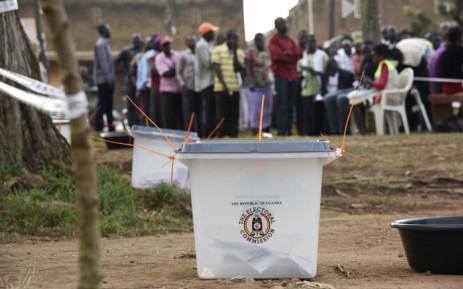
2021 Elections: Nominations for MPs kick off today

EC-Voting-ballot-box

The Electoral Commission has today started nomination of candidates vying for parliamentary seats.

The nominations shall be conducted at the respective district/city headquarters across the country, beginning at 9 am to 5 pm for two days, on Thursday 15th October and Friday 16th October 2020.

Aspirants have been warned against moving with convoys and crowds of supporters.

Each candidate will be allowed a maximum of four people at the nomination venue to prevent the spread of COVID-19.

After nomination, there will be harmonization of campaign programs before the candidates are cleared to start canvassing for support.

Meanwhile, the Police are beefing up security at different nomination centres countrywide as the nominations for the Members of Parliament start.

Stories Continues after ad

Police busts motorcycle robbery gang

Police busts motorcycle robbery gang

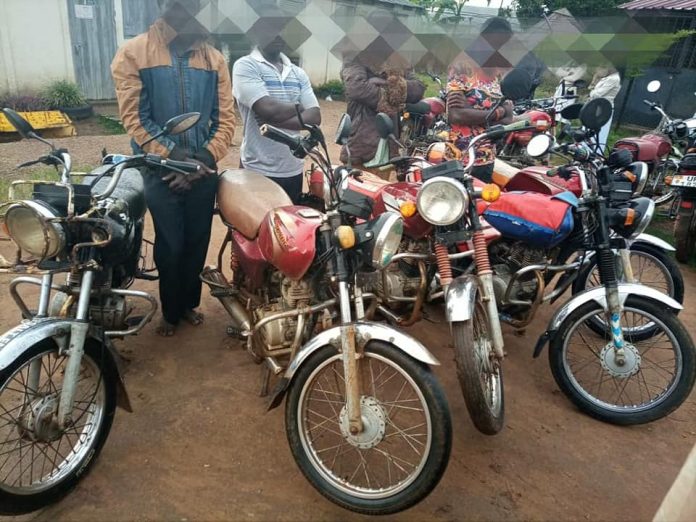
Police in Kakiri have arrested nine suspects and recovered nine motor cycles from notorious criminal gang that have been robbing people in the surrounding areas.

A report of stealing two motorcycles was registered at Bukalanga Police Post under Kakiri Division by one Kiwanuka Elijah aged 33 years old, a businessman and a resident at Kikubampanga zone, Kakiri Town Council in Wakiso District.  That in the night of 30th September 2020 at unknown time, unknown people broke into his house and stole two motorcycles Reg. Nos. UDR 663Q and UDL 710Z all Bajaj Boxer.

Police opened up Inquiries, visited the scene of crime and relevant statements were recorded.

Nine suspects were arrested in connection to this crime.

Nine motorcycles were recovered in the operation with the following registration numbers; UDX 262Q, UDL 710Z, UDX 189U, UDR 663Q, UDR 744R, UEX 962Q, UDH 661D, UEB 978G and UDV 178N.

During the investigations, four forged log books were recovered from the suspects.

Police established that in the night of 30/09/2020, at unknown time of the night, thugs broke in the house of the complainant where he had kept his two motorcycles Reg Nos. UDL 710Z and UDR 663Q and stole those motorcycles and complainant reported the matter to police for assistance.

Fortunately, motorcycle Reg. No. UDR 663Q belonging to the complainant was sold to one Kityo John who incidentally works with the complainant at the same Boda Boda stage in Kakiri Town Council.

The complainant saw his motorcycle with Kityo at the stage and he inquired how Kityo got that motorcycle.

Kityo revealed that he too bought the said motorcycle from one called Mukasa Joseph a mechanic at Kiwawu village in Mityana district at one million shillings (Ugx 1,000,000).

Kityo was brought to police by the complainant together with the exhibit motorcycle Reg No. UDR 663Q where he was tasked by the police to lead them to the whereabouts of the Mukasa Joseph whom he alleged sold to him the said motorcycle.

Mukasa Joseph was arrested at Mityana with the help of Kityo John from where he does his work of repairing motorcycle.

Mukasa Joseph on interrogation, also revealed that he bought the said motorcycle shillings (Ugx 850,000) and on original log book was given to him after the payment.

When Mukasa Joseph was being brought to Kakiri he sighted Kayemba Ibra at Bujuuko Town and Kayemba Ibra was accordingly arrested.Kayemba Ibra the chief architect of this crime was interrogated and revealed to police that he steals and sell both old and new motorcycles from almost every part of the country.

Police managed to arrest seven suspects and recovered seven other motorcycles (Bajaj boxers).

It was also established that Kayemba Ibra deals with a group of thugs, who call themselves using nicknames and code words like “Afande, Kabalazi and others”.

It was also established that Kayemba Ibra was dealing with some unscrupulous employees at URA Nakawa where he could forge log books for all the motorcycles he steals.

One suspect who is an alleged broker at URA Nakawa, was the one who was at the fore front of forging log books for Kayemba.

Upon interrogation, he too claims he could forward the number plates to an employee of URA Nakawa who prints those log books for Kayemba Ibra at a price ranging from thirty five thousand shillings to sixty thousand shillings per log book.

It was also established these logbooks could be packed in envelopes them and delivered to a mobile money attendant near URA where Kayemba could come and pick them from and he pays twenty thousand shillings for keeping those envelopes.

The mobile money attendant was arrested, interrogated but she feigns ignorance at this crime but she claims she could only give Kayemba Ibra those envelopes without knowing the content therein.

Police is in the process to recover all other motorcycles that could still be in the hands of this criminal racket.

Stories Continues after ad

Police impounds 102 vehicles, 98 motorcycles in curfew operation

ASP Luke Owoyesigyire - Deputy PRO KMP

Over 102 Vehicles and 98 motorcycles were impounded by Police in Kampala metropolitan area during the operation conducted in curfew hours.

Luke Owoyesigyire, the deputy spokesperson of Kampala Metropolitan, reveals that they noticed a decline in the abuse of curfew compared to Monday.

The Kampala Metropolitan Police on Monday reinstalled street road blocks to target motorists and road users that allegedly flouted the 21:00hrs imposed curfew time and impounded over 200 vehicles and 600 motorcycles.

He further appeals to the general public to plan their journeys early to avoid being caught on the wrong side of the law.

Owoyesigyire reminded all motorists that the timing of curfew is 9:00PM, adding that some drivers were cautioned while others were issued with express penalty scheme tickets during the night operation.

He says the vehicles and motorcycles were impounded from regions of Kampala Metropolitan East, North and South.

He reiterated that the operation will continue today and appealed to the public to plan their journeys early to avoid being caught on the wrong side of the law.

Stories Continues after ad

Col. Kaka Bagyenda refuses to handover as Gen. Tumwine chases Maj.Katabazi out of meeting

Col. Kaka Bagyenda

There is tension at Internal Security Organisation headquarters as the meeting called by the Minister of Security, Gen. Elly Tumwine to witness the handover from Col. Kaka Bagyenda to Lt. Col. Charles Oluka turned stormy after Kaka failed to show up.

Kaka is reported to have said he had nothing to handover as everything of ISO had been left in office. Eagle Online has reliably learnt that Gen. Tumwine reportedly chased in coming Deputy Director General Maj. Emmy Katabazi saying he was not recognised as  deputy DG.

” Confusion is too much here, Kaka has refused to appear claiming that he has returned everything belonging to iso and so why should he attend. The Minister has chased new Deputy DG, Afnde Katabazi out of the meeting claiming he isn’t a deputy DG”. a source told Eagle Online. The meeting is ongoing and more details will come later.

Stories Continues after ad

Men asked to engage more in HIV/AIDS fight

Minister Esther Mbayo together with officials from Uganda Aids Commission at OPMs office. (PHOTO BY RONARD sHABOMWE)

As Uganda is set to commemorate Philly Bongoley Lutaaya day on Saturday 17th, men have been asked to learn from him and engage in the initiatives that prevent and reduce the accelerating rates of HIV/AIDS infections in the country.

Esther Mbayo the minister in charge of Presidency, asks that men can be at the forefront of fighting against the spread of HIV/AIDS in this country like Lutaaya did, then it would be possible to have it out of Uganda by 2030.

Philly Bongoley Lutaaya, one of Uganda’s greatest musicians, came out openly as having HIV/ AIDS and started preaching about HIV and how each and every one should protect themselves. This was the beginning of Uganda’s success story and Philly gave HIV/AID.

Lutaaya used music to convey a message of hope and to educate the population about HIV/AIDS and how to prevent it. He indeed pioneered the fight against stigma and discrimination of people living with HIV. Today, his song Alone and frightened remains Uganda’s anthem for HIV/AIDS.

Minister Mbayo notes that since men are the decision makers, they should be good examples by testing for HIV/AIDS and encourage their spouses to do the same. Minister Mbayo believes that this will help both men and women to know their HIV status and start on the medication as early as possible.

The ministers added that other initiatives like men engaging in the prevention of mother to child transmission, disclosing their HIV status if they are possible, will as well be of the help.

She however notes that social-cultural barriers continue to widen the gap of gender inequality, thus increasingly making women more powerless in decision making, an act she says contributes to the spread of HIV/AIDS especially when it comes to openly fighting the disease.

Dr Stephen Watiti who has lived with HIV for over 30 years says men have a great role to play in fighting HIV/AIDS because they are the leaders in our societies.

Watiti argues that if a man tests HIV positive and keeps quiet, the disease will eat him up. He adds that men should go for testing and if they test HIV, they should not be in hiding since it does help at all.

 He notes that despite the work Philly Bongoley Lutaaya and other activists, stigma and discrimination of people living with HIV remains a significant barrier in Uganda’s fight against HIV/AIDS which he believes men should come out and fight against.

As a result, many people with HIV delay to be tested, treated, fail to adhere to their medication and therefore cannot achieve viral suppression, a challenge that  Watiti says men should engage in and fight.

Esther Kabashambo, a student at Makerere University who lives with HIV/AIDS explains that even among unmarried youths, especially those dating, a boy is very important in being at the forefront of fighting HIV since girls tend to listen to decisions taken by their boyfriends.

Kabashambo who is also the national miss Y+, a beauty pageant that is organized by Uganda Network of young people living with HIV to fight stigma and discrimination in young people, says men should be the ones cheer leading because women tend to follow them and through that it will be easy to prevent spread of HIV/AIDS in Uganda.

Tezra Lutaaya, a daughter to the late Musician Philly Bongoley Lutaaya explains that men in any society in Uganda have an upper hand in all activities. She adds that her father set a heroic example which men should look up to and fight HIV/AIDS in this country.

Uganda has made significant progress in reducing new HIV infections, HIV prevalence and AIDS related deaths.

In the late 80’s and early 90’s, HIV prevalence ranged from 18 per cent among the general population up to 30 per cent in specific population groups.

It is now at 6.8 per cent for women and 4.2 per cent for men, 2.8 per cent among young women and 1.1 per cent among young men.

There are approximately 1,400,000 people living with HIV and 1,200,000 of these are on treatment. There were 53,000 new HIV infections and about 20,000 AIDS related deaths in 2019 alone.

Stories Continues after ad

Impact of Covid-19 on people’s livelihoods, their health and food systems

food

The COVID-19 pandemic has led to a dramatic loss of human life worldwide and presents an unprecedented challenge to public health, food systems and the world of work. The economic and social disruption caused by the pandemic is devastating, tens of millions of people are at risk of falling into extreme poverty, while the number of undernourished people, currently estimated at nearly 690 million, could increase by up to 132 million by the end of the year.

Millions of enterprises face an existential threat. Nearly half of the world’s 3.3 billion global workforce are at risk of losing their livelihoods. Informal economy workers are particularly vulnerable because the majority lack social protection and access to quality health care and have lost access to productive assets. Without the means to earn an income during lockdowns, many are unable to feed themselves and their families. For most, no income means no food, or, at best, less food and less nutritious food.

The pandemic has been affecting the entire food system and has laid bare its fragility. Border closures, trade restrictions and confinement measures have been preventing farmers from accessing markets, including for buying inputs and selling their produce, and agricultural workers from harvesting crops, thus disrupting domestic and international food supply chains and reducing access to healthy, safe and diverse diets. The pandemic has decimated jobs and placed millions of livelihoods at risk. As breadwinners lose jobs, fall ill and die, the food security and nutrition of millions of women and men are under threat, with those in low-income countries, particularly the most marginalized populations, which include small-scale farmers and indigenous peoples, being hardest hit.

Millions of agricultural workers  waged and self-employed  while feeding the world, regularly face high levels of working poverty, malnutrition and poor health, and suffer from a lack of safety and labour protection as well as other types of abuse. With low and irregular incomes and a lack of social support, many of them are spurred to continue working, often in unsafe conditions, thus exposing themselves and their families to additional risks.

Further, when experiencing income losses, they may resort to negative coping strategies, such as distress sale of assets, predatory loans or child labour. Migrant agricultural workers are particularly vulnerable, because they face risks in their transport, working and living conditions and struggle to access support measures put in place by governments. Guaranteeing the safety and health of all agri-food workers  from primary producers to those involved in food processing, transport and retail, including street food vendors  as well as better incomes and protection, will be critical to saving lives and protecting public health, people’s livelihoods and food security.

In the COVID-19 crisis food security, public health, and employment and labour issues, in particular workers’ health and safety, converge. Adhering to workplace safety and health practices and ensuring access to decent work and the protection of labour rights in all industries will be crucial in addressing the human dimension of the crisis.

Immediate and purposeful action to save lives and livelihoods should include extending social protection towards universal health coverage and income support for those most affected. These include workers in the informal economy and in poorly protected and low-paid jobs, including youth, older workers, and migrants. Particular attention must be paid to the situation of women, who are over-represented in low-paid jobs and care roles. Different forms of support are key, including cash transfers, child allowances and healthy school meals, shelter and food relief initiatives, support for employment retention and recovery, and financial relief for businesses, including micro, small and medium-sized enterprises. In designing and implementing such measures it is essential that governments work closely with employers and workers.

Countries dealing with existing humanitarian crises or emergencies are particularly exposed to the effects of COVID-19. Responding swiftly to the pandemic, while ensuring that humanitarian and recovery assistance reaches those most in need, is critical.

Now is the time for global solidarity and support, especially with the most vulnerable in our societies, particularly in the emerging and developing world. Only together can we overcome the intertwined health and social and economic impacts of the pandemic and prevent its escalation into a protracted humanitarian and food security catastrophe, with the potential loss of already achieved development gains.

Stories Continues after ad

SC Villa to redirect club’s ownership

William Nkemba - SC Villa president

Sports Club Villa Jogoo’s interim committee has today declared what the future holds for the club, as they announced a new leadership structure.

The committee led by Club Chairman William Nkemba confirmed the decision to reposition and redirect during a press conference at the Sheraton Rwenzori Ball Room in Kampala on Wednesday, 14 October 2020.

Nkemba confirmed that Sports Club Villa will now be led by ‘Villa Members Trust’ to be inducted on October 30th.

“We managed to go back to the roots of the club and we now announce the Villa Members’ Trust as the owners of Villa and will be duly incorporated on October 30,” Nkemba said.

According to Nkemba, the membership to the Villa Members’ Trust shall be for those persons who subscribe annually and pay a fee of Shs50,000.

“Current and future assets of SC Villa Jogoo will be owned by the members. It is only the members who will have a say in affairs of the club,” Nkemba Stated.

The trust will be launching on 30th October and will be open till the 31st December 2020.

“The development to start the Villa Members’ Trust has received the approval and concurrence of the founding members of SC Villa,” Nkemba clarified.

The members of Villa Members’ Trust shall be entitled to vote for the club presidency every four years, and hold a season ticket every season to watch all home games.

All those willing to register have been given several alternatives and options as registering at the club’s office in Industrial Area, Kampala and online platforms that will be confirmed later.

The congress which will be composed of not more than 120 members will come with the club executive committee, a president who will be accountable to the sporting success and the club CEO.

The lack of a league title for SC Villa since 2004 has co-existed with leadership inadequacies and ownership issues at the club enduring a very tough period in the last few years with surviving relegation in the 2018/19 season.

The club that started as Nakivubo Boys in 1975, renamed Nakivubo Villa in 1979 and then later come to be known as SC Villa, is now going back to its roots so as to ensure a brighter future.

Meawhile, the team has already started training in preparation for the 2020/21 Uganda Premier League that kicks-off on 20th November under the guidance of coaches Edward Kaziba (head coach), Ibrahim Kirya (assistant), Mubarak Kiberu (goalkeeping) and the trainers’ duo of former players Joseph Nestroy Kizito and Phillip Ssozi.

Stories Continues after ad