Stanbic Bank
Stanbic Bank
17.3 C
Kampala
Stanbic Bank
Stanbic Bank
Home Blog Page 977

 Another blow to Ham as BoU says DTB transaction was legal 

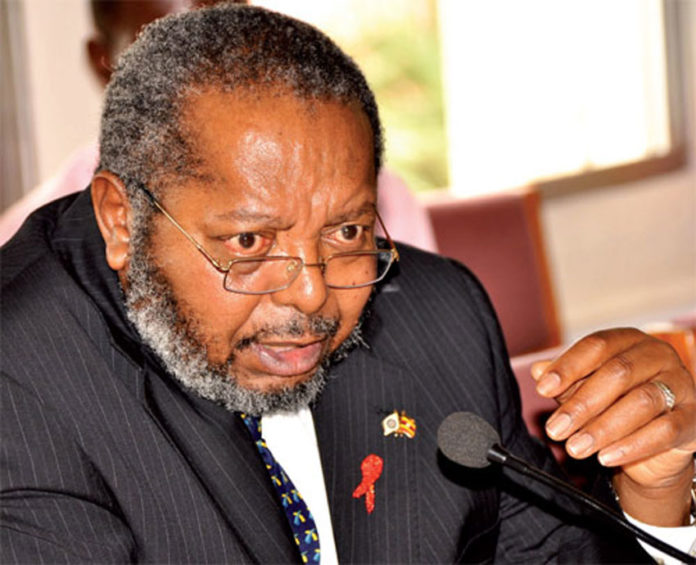
Late Emmanuel Tumusiime-Mutebile

The Bank of Uganda Governor Emmanuel Tumusiime Mutebile has said it is not mandatory for a foreign bank to establish a representative office in Uganda in order to conduct lending or non-deposit activity.

The assertion by Mr. Mutebile means that Judge Henry Peter Adonyo’s recent ruling stating that it was illegal for Diamond Trust Bank Kenya in partnership with Diamond Trust Bank Uganda to lend money to Ham Enterprises in form a syndicated loan is legal.

“Foreign banks’s lending deposits held in jurisdictions other than Uganda are regulated and supervised by their home authorities. It is not mandatory for a foreign bank to establish a representative office in Uganda in order to conduct lending or non-deposit activity,” said Mutebile on Wednesday in a press statement.

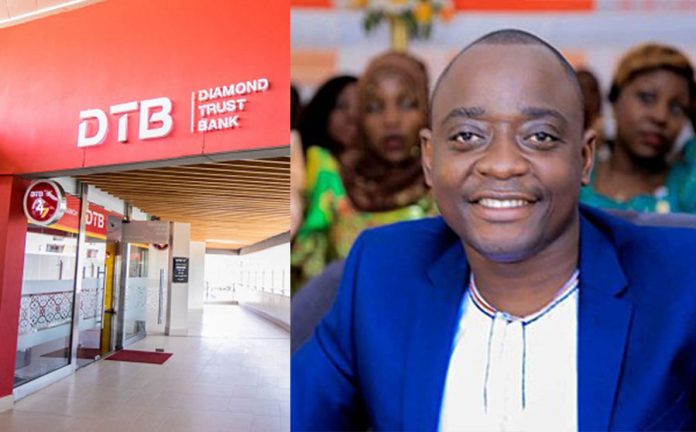
Diamond Trust Bank Kenya and Diamond Trust Bank Uganda loaned over Shs39.7 billion for Ham Enterprises but has defaulted on paying back the loans. Kiggundu acquired the loans in four tranches; US$6.2 million, US3.2 million, US$458, 604 and Shs2.8 billion from Diamond Trust Bank Uganda and Diamond Trust Bank Kenya. The loans were consolidated later over two years ago and were to run from five years, ending August 23, 2023. Instead Kiggundu turned around to sue Diamond Trust Bank Uganda for fraud, alleging that the bank has been deducting his money from his bank accounts to the tune of Shs120 billion.

Court yesterday issued an interim order to stay the execution a decree in the main case where Kiggundu alleges that Diamond Trust Bank Uganda conned him of Shs120 billion, the decree now awaits pending the determination of the main case.

The Principal Judge, Justice Dr. Flavian Zeija delivered the interim order in the presence of M/S K & K Advocates, the lawyers for Diamond Trust Bank Uganda and Diamond Trust Bank Kenya, even though Kiggundu’s lawyers didn’t attend the reading of the interim order, much as they were served.

Tumusiime-Mutebile’s statement has been welcomed by members of the Uganda Bankers’ Association (UBA) who had also castigated Judge Adonyo’s against Diamond Trust Bank Uganda and Diamond Trust Bank Uganda. UBA days ago published a statement that commercial banks in Uganda already have issued about Shs5.7 trillion as syndicated loans and that the money would be affected by the ruling that seemed to support Kiggundu to default on his loan payment obligation.

“We commend Bank of Uganda for coming out to clarify on the issue of syndicated loans in Uganda,” a member of UBA said, adding that commercial banks in the country play a big role in funding even government projects.

Several agencies, government and the private sector say the ruling if upheld could damage Uganda’s drive to become an investment destination, as it would block capital inflows.


BoU-STATEMENT-ON-FINANCIAL-INSTITUTIONS-BUSINESS-REGULATED-BY-BoU-UNDER-THE-FIAA2016

Stories Continues after ad

DTB Vs Ham: Foreign banks, lenders are free to appoint any entity to act as their agent in Uganda

dtb-ham

The governor of Bank of Uganda, Emmanuel Mutebile has said that it is not mandatory for a foreign bank to establish a representative office in Uganda in order to conduct lending or non-deposit-taking activity.

Mutebile said in a wake of the recent judgment delivered by the high court justice Henry Peter Adonyo against Diamond Trust Bank.

In his ruling, justice Adonyo faulted DTB Kenya for appointing its counterpart saying it had no license to carry out financial business in Uganda as per the financial institutions act of 2004. “The act contravenes regulation number five and therefore DTB Uganda is penalized for taking part of illegal business,” he ruled.

Mutebile said Bank of Uganda’s regulatory and supervisory powers only apply to financial institution business conducted by BoU licensed entities in or outside Uganda or activity which should be licensed as such in Uganda. The powers do not extend to activities of foreign banks outside Uganda licensed by foreign regulators.

“International and Regional Development Organizations, Foreign Banks, and other Lenders both local and foreign who may choose to appoint any entity or person to act as their agent in Uganda under general contract law do not require approval from BoU. Such agencies do not fall within regulated agency under the FIA, 2004 and do not require a BoU license.”

In February 2011 and August 2018, Kiggundu sought and offered $4,014,444 and $6,974,600 loans by the banks for construction of commercial properties. To secure the loan Kiggundu mortgaged Kyadondo Block 248, Plot 328 land at Kawuku, FRV 1533, Folio 3, Plot 36-38, Victoria Crescent II Kyadondo and LRV 3176 Folio 10, Plot 923, and Block 9 located at Makerere Hill Road.

DTB Kenya contacted its counterpart in Uganda to collect a loan facility from the Business man..

In March, Ham dragged both banks to court for siphoning over sh120b from his accounts without his consent. He also wanted the court declare that the banks demand for $4,014,444 and $6,974,600, which was advanced to him by DTB-Kenya, is illegal and unenforceable on the grounds that the Kenyan bank had no license to carry out financial business in Uganda.

Stories Continues after ad

Police raids NUP offices

police raid nup offices

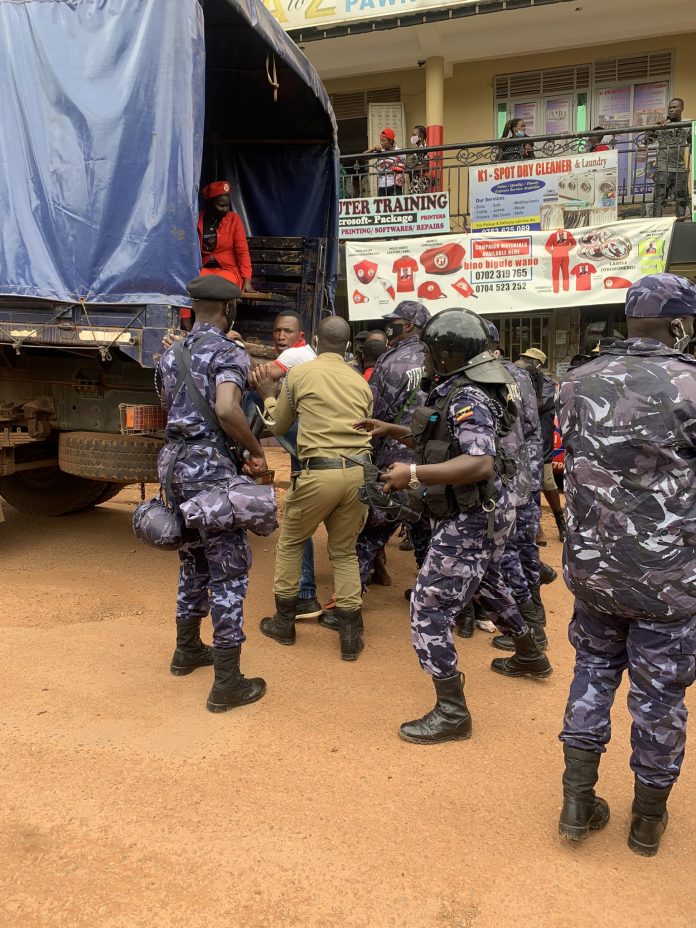
Police has sealed off the National Unity Platform (NUP) head offices, hours after they declared to start a national wide consultations ahead of the 2021 general elections.

The Field Force Unit (FFU) blocked all roads leading to NUP offices and started confiscating red berets, among other attires printed in the party colors, making several arrests.

police at entry of nup offices

Yesterday, the party president who doubles as the Kyadondo East MP Robert Kyagulanyi Sentamu aka Bobi Wine revealed that next week NUP will carry out a nationwide tour peddled at meeting various party leaders to protract ways on how they will conduct their campaigns ahead of the 2021 general elections.

Kyagulanyi who intends to challenge President Yoweri Museveni, is one of a new generation of politicians across Africa who are challenging long-time leaders, hoping to harness deep dissatisfaction among younger, more educated and often urban voters.

police at the nup head offices

Reasons for the raid remain unknown.

Stories Continues after ad

UNBS develops 90 standards in line with the World Standards Day theme

UNBS logo

Uganda, through the Uganda National Bureau of Standards (UNBS) joins the world to celebrate World Standards Day, under the theme; “Protecting the planet with standards”. The day is set aside to recognize and pay tribute to the many experts who volunteer their resources in developing standards for a better world.

As part of its mandate, UNBS develops, promotes and provides information on national standards as well as coordination of regional and international standardization, editing and publishing of standards and information services.

To date, UNBS has developed 3948 standards in the areas of Food and agriculture, Engineering, Chemicals and consumer products and Management and services at national, regional and international levels. In FY 2019/20, 505 new standards were developed to support key sectors of the economy and act as a catalyst for economic growth.

In line with this year’s World Standards Day theme, UNBS has developed over 48 standards on environmental management, 30 photovoltaic/solar standards, seven bio gas standards, two charcoal and charcoal briquette standards, one energy efficient stoves standard and two energy labelling standards in a bid to protect the environment.

Once implemented, these standards promote sustainability, by preparing the ground for renewable energy usage and integration into the electricity grid, paving the way for circular economy processes, including the recycling and reuse of materials, as well as providing benchmarks for energy efficiency in multiple devices and systems. Their broad use therefore, reduces the environmental impact of industrial production and processes, facilitates the reuse of limited resources and improves energy efficiency, thus protecting the planet.

Despite the disruption due the COVID-19 pandemic, UNBS has accelerated the digital transition to improve standards development processes through use of online tools such as ISOlutions, SiMo (Standards management systems and online meeting platforms (Zoom, WebEx and Microsoft teams). Our pilot online meetings and stakeholder engagements have so far been successful and we hope our stakeholders and especially the private sector will be able to transition and increase participation in standards work.

To contribute to the implementation of the Buy Uganda Build Uganda (BUBU) Policy, UNBS is working closely with Micro, Small and medium Enterprises (MSMEs) to improve their products and systems that impact the environment and enable them acquire certification. We continue to witness an exponential increase in the number of Micro, Small and Medium

Scale Enterprises (MSMEs) seeking certification with over 1168 MSMEs registered and 304 MSMEs visited for on-site technical assistance and gap analysis in the financial year 2019/20.

On the other hand, consumers are required to look out for the certification status and labelling information on energy products before purchasing them to ensure that the goods bought conform to the standards that protect the environment.

Consumers are also urged to implement waste disposal instructions on the product label, as part of the concerted efforts to protect the planet.

As Uganda joins the rest of the world in celebrating World Standards Day, UNBS recognises and salutes Ugandan experts who have developed national standards to facilitate trade and protect the consumers as well as the environment. UNBS urges all of us to be responsible consumers and business community that are committed to protecting the planet through compliance to standards.

Stories Continues after ad

Vivo Energy launches ‘Fuel the Feeling’ campaign to deliver premium experience to V-Power customers

Vivo Energy launches 'Fuel the Feeling' campaign

Vivo Energy Uganda has announced a three-month nationwide campaign for motorists who use Shell V-Power, a premium fuel that cleans and protects drivers’ engines, whilst giving the ultimate performance benefit.

The campaign dubbed ‘Fuel the Feeling’ will include a number of activities intended to deliver premium experiences for customers who fuel with Shell V-Power.

“Our customers are thrilled by the enhanced performance that Shell V-Power gives their vehicles. Through this campaign, we want more customers to experience and appreciate the fuel’s capability; and enjoy every moment of their drive whilst using Shell V-Power in their engines. We know that not all fuels are the same, which is why we are committed to providing better fuels to deliver a superior performance,” said Moses Kebba the Vivo Energy Uganda Marketing Manager.

As part of this campaign, code named ‘Power Weekends’, customers will be able to purchase Shell V-Power at the price of regular fuel.

“We are also offering motorists a pit-stop experience through which they will access free engine diagnostics and expert advice by our team of professional mechanics at our service bays. I would encourage our customers to visit any of our participating Shell service stations to benefit from the campaign,” Kebba added.

Vivo Energy Uganda also revealed that its team of National Rally Champions that are sponsored by Shell V-Power, namely Arthur Blick, Ronald Ssebuguzi and Omar Mayanja are its campaign ambassadors.

“As a professional rally driver, I always ensure to choose the best fuel that can enhance the performance of my personal car. Shell V Power delivers this because it is formulated with powerful cleaning molecules that protect my engine, giving me a more exciting drive,” said Arthur Blick.

Shell V-Power Unleaded with a Research Octane Number (RON) of 95 has been tested and proven to enhance performance in your car by Shell fuel scientists and mechanics in conjunction with F1’s Scuderia Ferrari, BMW motorsport and Moto GP Ducati.

In Uganda, National Rally Champions use Shell V-Power because it maintains their engines’ optimal performance with unmatched protection. Shell V-Power has a long-standing history of supporting and contributing to the growth of motor sport through sponsorships of individual rallying talent and sporting events such as the National Rally Championships, Pearl of Africa Rally, Kabalega Rally and the National Motocross championships.

Stories Continues after ad

Rwanda approves growing of cannabis

cannabis

The Rwandan government has approved the cultivation and export of cannabis even as the use of the stimulant for medical or recreational purposes.

The central African nation will begin to receive applications for licenses from investors interested in cannabis, though cannabis consumption in the country still remains prohibited, the Rwanda Development Board said in a statement.

“The regulatory guidelines approved by Cabinet on 12 October 2020 provide a framework for investment in the production and processing of medical cannabis in Rwanda for export to growing global markets. Rwanda will begin to receive applicants for licenses from interested investors for this high-value therapeutic crop,” reads part of the statement from Clare Akamanzi, the CEO of Rwanda Development Board.

The decision has caused confusion with some warning it could be detrimental to the youth if tough controls are not enforced.

“This investment framework does not affect the legal status of cannabis consumption in Rwanda, which remains prohibited. Medical cannabis produced in Rwanda ids solely for export markets. Rwanda is a signatory to all relevant UN conventions relating to narcotics, and will continue to ensure full compliance with international law,” the statement further reads.

The government of Rwanda expects the sector to generate significant export revenues and employment opportunities in high-value agriculture and agro-processing. A special export levy will be introduced to incentive domestic value addition and generate additional government revenue.

Stories Continues after ad

Ham Kiggundu’s celebrations cut short as Court issues interim order to stay execution in DTB case

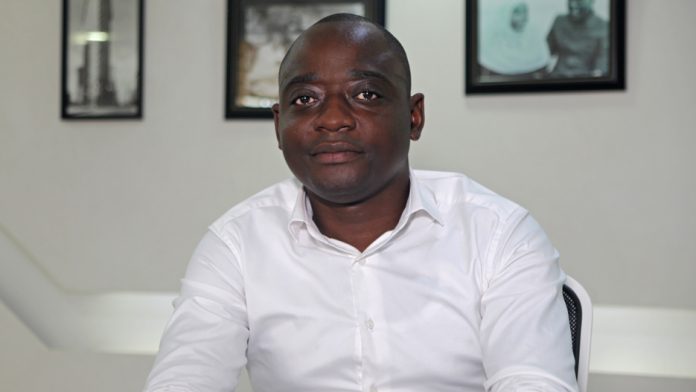
Businessman Hamis Kiggundu.


Businessman Ham Kiggundu’s celebrations have dealt a blow as Court on Tuesday issued an interim order to stay the execution a decree in High Court Suit No.43/2020 and Miscellaneous Application No.654 of 2020.

The stay will allow the pending the determination of the main case where Kiggundu and his companies Ham Enterprises Limited and Kiggs International Uganda Limited sued Diamond Trust Bank Uganda and Diamond Trust Bank Kenya for allegedly deducting Shs120 billion from his account bank account without his knowledge.

The Principal Judge, Justice Dr. Flavian Zeija delivered the interim order on Wednesday in the presence of M/S K & K Advocates, the lawyers for Diamond Trust Bank Uganda and Diamond Trust Bank Kenya, even though Kiggundu’s lawyers didn’t attend the reading of the interim order, much as they were served.

The ruling last unsettled the local banking industry, forcing all chief executive officers of 35 banks and other financial institutions to protest against the ruling that implied the syndicated loans are illegal in Uganda.

The two affiliated commercial banks availed over Shs39.7 billion for Ham Enterprises but has defaulted on paying back the loans. Kiggundu acquired the loans in four tranches; US$6.2 million, US3.2 million, US$458, 604 and Shs2.8 billion from Diamond Trust Bank Uganda and Diamond Trust Bank Kenya. The loans were consolidated later over two years ago and were to run from five years, ending August 23, 2023.

Instead Kiggundu turned around to sue Diamond Trust Bank Uganda for fraud, alleging that the bank has been deducting his money from his bank accounts to the tune of Shs120 billion. His claim was based on his own private audit of the bank accounts, which was contested by the banks and instead Judge Adonyo ordered for an independent audit, but he would later accept kiggundu’s application to have the independent audit halted on grounds that the businessman had to validate the loans given to him at the time he needed the money most.

The Ministry of Finance came out after the ruling saying that they were discussing with international lenders, development partners and private sector players to address the matter. BoU have come out to say that they are waiting to go through the detailed written ruling to respond appropriately. Chief executive officers of all commercial banks in the country are scared by the ruling that outlaws syndicated loans which they say stand at a tune of about Shs5.7 trillion, minus other monies that were being arranged to arrive in the country for use. If that happened, they cry, it would be a disaster for the local banking industry and the Ugandan economy at large.

Legal expert view of syndicated loans

A legal expert who has written about syndicated loans says the case should not have finally determined at the preliminary application level as there were other considerations to be made.

The short formulation, according to the expert, is that the court applies the system of law with which the contract has the closest and most substantial connection. “The question then becomes, which transaction and what are the circumstances of the case?”

He says Ham Enterprises Ltd v DTB case had six key connections:

§ the lender was in Kenya,

§ the loan contract was made in Kenya,

§ the location of the debt (situs) was Kenya;

§ the mortgaged property was in Uganda and the registration of the securities happened in Uganda,

§ the collection agent was in Uganda;

§ the borrower was in Uganda.

still, he says, there are some generally agreed principles. First, he says, the solution adopted by the court should encourage the economic and social development of the country. “That is usually achieved by promoting certainty in commercial transactions, and in turn, respecting the expressed intentions of the parties. Where there is no express choice, the court should not disappoint the parties and should apply a system of law that preserves the contract, rather than striking it down. In other words, the court should endeavour to hold the contract as valid because that is the presumed intention of the parties.”

He further says that: “Without the benefit of knowing what the parties expressly agreed upon and, therefore, what was documented in the choice of law and choice of jurisdiction clause in the Ham Enterprises Ltd v DTB case, and without any evidence displacing the general approaches to the subject, the case was governed by Kenyan law and should have been decided by the appropriate court for the Kenyan city where the loan was made. Further, on this analysis, the court should have been disinclined to apply Ugandan law since that application resulted in the loan contract being declared invalid.”

“To add a qualification to the above, that there will readily be a case where the cross-border lender (DTB (K)) accepts the law and jurisdiction of the borrower (Uganda) for ease of access to, and enforcement of, the security in the borrower’s jurisdiction. This possibility cannot be ruled out in the instant case since the borrower’s relationship bank was DTB (Uganda), the borrower’s counsel were in Uganda, and, to buttress those two elements, the legal systems of Uganda and Kenya are similar.”

He says that some information was not considered by Judge Adonyo. “Regardless of one’s preferred analysis, it is evident that some crucial information was not considered by the court and that this was a complex matter that required a detailed consideration by delving into the merits of the case.”

Stories Continues after ad

Clubs to receive prize money for cancelled 2020 Uganda Cup

Uganda cup trophy

Among the key decisions taken by FUFA last week was to cancel the 2019/20 season of the Stanbic Bank Uganda Cup declaring it null and void with no winner due to the continued COVID-19 restrictions on sports.

A subsequent press conference held at FUFA House in Mengo on Tuesday, October 13, 2020 indicated that despite the Cup cancellation, the main sponsors Stanbic Bank will honour its commitment by paying prize monies to clubs that had progressed to the Round of 16 and the Quarter Finals.

The press conference was attended by the FUFA CEO Edgar Watson, FUFA Executive Committee Member Hamid Juma, FUFA Deputy CEO- Football Decolas Kiiza, communications director Ahmed Hussein and Daniel Ogong, the Stanbic Bank Marketing Manager.

Ogong recommitted Stanbic Bank’s desire to associate with FUFA and the Stanbic Uganda Cup in particular.

“As an organization, we do believe that football and sports in general is part of the society. We therefore believe in financing businesses and impressions, education and sport. Sport in general has potential to employ millions. The Stanbic Uganda Cup is the oldest football competition in the country as it has had its ups and downs. Because of the Coronavirus pandemic for this edition, the money will be issued to the clubs at the earliest time possible,” Ogong said.

Edgar Watson, FUFA Chief Executive Officer (CEO) was excited for Stanbic Bank to pay the clubs at such a material time when most clubs have been affected by the Coronavirus pandemic.

“I wish to extend my appreciation for this gesture from our sponsors Stanbic Uganda. At this time when all clubs are struggling for incomes, we really appreciate for this gesture. We intend to upgrade the Uganda Cup competition with other partners and broadcast live,” Watson remarked.

Decolas Kiiza, Deputy CEO – Football confirmed that there will be no winner because of the pandemic, and KCCA was picked by the Executive Committee to represent the country at the 2020 CAF Confederation Cup.

“The prevailing conditions brought by the COVID-19 pandemic fought the Stanbic Uganda Cup to the cancelled. The decision of KCCA Football Club to represent the country at the CAF Confederation Cup was purely based on the powers granted by the FUFA Executive,” Kiiza stated.

According to FUFA President Eng. Moses Magogo, the Federation had hoped to complete the season but due to the continued restrictions on sports, the Federation reluctantly decided to declare the 2019/20 season of the Stanbic Bank Uganda Cup null and void with no winner.

Prize Money for the Cancelled 2019/20 season will be paid out as follows:

The 6 teams that qualified for the quarter finals will each receive UGX 6 million. The teams are; Proline FC, KCCA FC, Kyetume FC, Light SS FC, Kitara FC and Kataka FC.

The 6 teams that were knocked out at the Round of 16 will each receive UGX 3 million: Kiboga Young FC, Dove FC, Maroons FC, UPDF FC, Tooro Utd FC and Free Stars FC.

And the 4 teams that were yet to play their Round of 16 matches will share the prize money for their ties. Each will receive UGX 1.5 million: URA, Wakiso Giants, SC Villa and Mbarara City.

The details for Corporate Social Responsibility (CSR) attached to the 46th Stanbic Uganda Cup will be communicated.

Stories Continues after ad

Ham Enterprises vs Diamond Trust Bank Uganda case: Ministry of Finance and Bank of Uganda must show they care for the financial sector

By Stephen Hardings Massa


The Ministry of Finance Planning and Economic Development (MFPED) as well as Bank of Uganda (BoU) are key agencies whose activity among others is to ensure a healthy financial sector that can help boost the country’s private sector by availing credit to fund projects that pay taxes to government but also provide employment to the citizens. It is important to note that MFPED supervises BoU which in turn supervises the business activities of commercial banks and other small financial institutions in the country.

As such, the recent court ruling delivered by Judge Henry Peter Adonyo brings the two institutions into play as they are also expected to monitor the financial inflows and outflows out of Uganda through the Financial Intelligence Authority (FIA). Much as Judge Adonyo ruled that it was illegal for Diamond Trust Bank Uganda in partnership with Diamond Trust Bank Kenya to provide a syndicated loan to businessman Hamis Kiggundu’s company Ham Enterprises, MFPED and BoU, are aware that commercial banks in Uganda have been doing that business especially in the country where private sector credit is not readily available locally to fund big infrastructural projects.

Much as Adonyo held that by lending to Ham Enterprises, Diamond Trust Bank Kenya contravened the Financial Institutions Act, 2004, the reality is that it was not direct lending since the Kenyan domiciled bank worked with its affiliate Diamond Trust Bank Uganda that arranged that syndicated loan to Ham Enterprises. Analysts have said that such loan transactions in Uganda cannot happen without the knowledge of MFPED and BoU unless the officials were sleeping over their job tracking the money coming into the country.

Of course MFPED and BoU have come out to say that they are waiting to go through the detailed written ruling to respond appropriately, this should not just be mere words. This is because chief executive officers of all commercial banks in the country are scared by the ruling that outlaws syndicated loans which they say stand at a tune of about Shs5.7 trillion, minus other monies that were being arranged to arrive in the country for use. If that happened, they cry, it would be a disaster for the local banking industry and the Ugandan economy at large.

The two affiliated commercial banks availed over Shs39.7 billion for Ham Enterprises but has defaulted on paying back the loans. Kiggundu acquired the loans in four tranches; US$6.2 million, US3.2 million, US$458, 604 and Shs2.8 billion from Diamond Trust Bank Uganda and Diamond Trust Bank Kenya. The loans were consolidated later over two years ago and were to run from five years, ending August 23, 2023. Instead Kiggundu turned around to sue Diamond Trust Bank Uganda for fraud, alleging that the bank has been deducting his money from his bank accounts to the tune of Shs120 billion.

The above money that Kiggundu claims was fraudulently deducted from his bank accounts was audited by Kiggundu himself, which Diamond Trust Bank Uganda challenged, creating the need for an independent audit by professional firm and Judge Adonyo indeed favoured the latter audit. Why he ignored it after accepting that it be halted for some time to allow time for Kiggundu to validate his loan, is a question that many are asking since he now concentrated on the legality of the loan, and ended up with poor judgement.

Legal expert view of syndicated loans

A legal expert who has written about syndicated loans says the case should not have finally determined at the preliminary application level as there were other considerations to be made.

The short formulation, according to the expert, is that the court applies the system of law with which the contract has the closest and most substantial connection. “The question then becomes, which transaction and what are the circumstances of the case?”

He says Ham Enterprises Ltd v DTB case had six key connections:

§ the lender was in Kenya,

§ the loan contract was made in Kenya,

§ the location of the debt (situs) was Kenya;

§ the mortgaged property was in Uganda and the registration of the securities happened in Uganda,

§ the collection agent was in Uganda;

§ the borrower was in Uganda.

still, he says, there are some generally agreed principles. First, he says, the solution adopted by the court should encourage the economic and social development of the country. “That is usually achieved by promoting certainty in commercial transactions, and in turn, respecting the expressed intentions of the parties. Where there is no express choice, the court should not disappoint the parties and should apply a system of law that preserves the contract, rather than striking it down. In other words, the court should endeavour to hold the contract as valid because that is the presumed intention of the parties.”

He further says that: “Without the benefit of knowing what the parties expressly agreed upon and, therefore, what was documented in the choice of law and choice of jurisdiction clause in the Ham Enterprises Ltd v DTB case, and without any evidence displacing the general approaches to the subject, the case was governed by Kenyan law and should have been decided by the appropriate court for the Kenyan city where the loan was made. Further, on this analysis, the court should have been disinclined to apply Ugandan law since that application resulted in the loan contract being declared invalid.”

“To add a qualification to the above, that there will readily be a case where the cross-border lender (DTB (K)) accepts the law and jurisdiction of the borrower (Uganda) for ease of access to, and enforcement of, the security in the borrower’s jurisdiction. This possibility cannot be ruled out in the instant case since the borrower’s relationship bank was DTB (Uganda), the borrower’s counsel were in Uganda, and, to buttress those two elements, the legal systems of Uganda and Kenya are similar.”

He says that some information was not considered by Judge Adonyo. “Regardless of one’s preferred analysis, it is evident that some crucial information was not considered by the court and that this was a complex matter that required a detailed consideration by delving into the merits of the case.”


The writer is a retired banker, certified economists and auditor.

Stories Continues after ad

URA registers Shs1 trillion surplus in the first quarter of revenue collection

URA's John Musinguzi

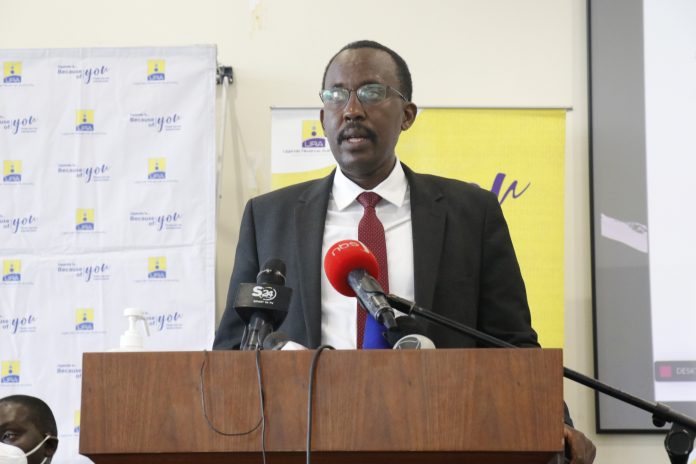
The Commissioner General of Uganda Revenue Authority (URA) John Musinguzi has revealed that the tax body registered a surplus of Shs1 trillion in the first quarter of the financial year 2020/2021.

This financial year 2020/21, URA is expected to collect Shs19.6 trillion, compared to last financial year target of Shs20 trillion.

During the First Quarter, the net revenue collections were Shs4 trillion against a target of Shs2.9 trillion performing at 135.69 per cent. A significant surplus of Shs1 trillion was posted.

“As a tax administration, we recognize that this year has been particularly difficult due to the Covid-19 pandemic. We are doing all we can within our means to support businesses to remain afloat,” Musinguzi said.

According to Musinguzi, despite Covid-19, URA registered Shs64.80 billion revenue growth during the period July to September 2020 compared to July to September 2019. The growth registered in September (8.27 per cent) and August (1.40 per cent) shows a resurgence from the impact of Covid 19. Declines in revenue were posted in April, May, June and July 2020.

“Domestic taxes collection during the first quarter Shs2.4 trillion was collected, performing at 131.66 per cent and Shs590.75 billion above the target. Domestic Taxes registered a growth of Shs51.01 billion (2.12 per cent) during the period compared to the same period last financial year,” he said.

International trade tax collections were Shs1.7 trillion, performing at 138.87% with a surplus of Shs479.79 billion. Compared to the same period last financial year, customs tax collections grew by Shs23.93 billion (1.42 per cent).

“In a special way; I thank taxpayers who continuously fulfill their obligations amidst Covid19 impact. Because of your commitment, we have been able to register great revenue results in the first three months of the financial year.”

He applauded taxpayers who have continuously fulfilled their obligations amidst the impact of the Covid-19 pandemic. “Because Of you, we have been able to register great revenue results in the first three months of the new financial year,” he said.

Stories Continues after ad