Stanbic Bank
Stanbic Bank
28.7 C
Kampala
Stanbic Bank
Stanbic Bank
Home Blog Page 977

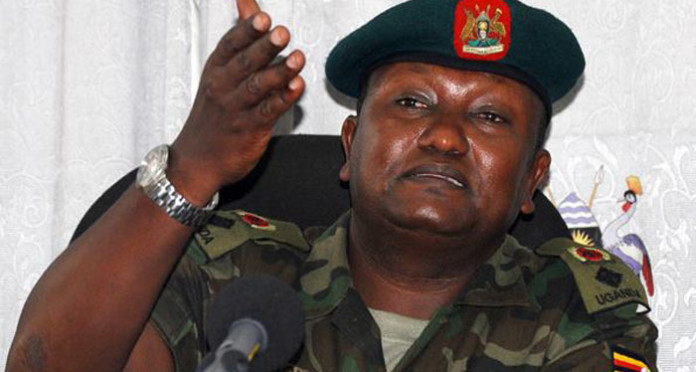
Gen. Museveni reshuffles army

Brig. Kulayigye.

President Yoweri museveni has reshuffled the army and made changes in key positions.

Army Spokesperson, Brig. Richard Kalemire has been posted as Defence Liasion Officer at the East African Community Secretariat and replaced by Brig. Flavia Byekwaso, Former Deputy Chief of Chieftiancy of Military Intelligence Charles Asiimwe has been take to head National Counter Terrorism Centre and replaced by Brig. Richard Otto.


Below is a full list 


1.Maj Gen Sam Kiwanuka- Chief of Production&Welfare.
2.Maj Gen Moses Ddiba Ssentongo_ Chief Mubende Rehabilitation Centre.
3.Maj Gen Hudson Mukasa_Chief of Staff Reserve Forces
4.Maj Gen Francis Okello_Comdt National Defense College.
5.Maj Gen Innocent Oula_Deputy MD NEC.
6.Maj Gen Don Nabasa_Contingent Commander-AMISOM.
7.Brig Gen Emanuel Rwashande _Chief Civil Military Cooperation
8.Brig Gen Stephen Oluka- deployed to OWC
9.Brig Gen George Etyang-OWC
10.Brig Gen Jeff Mukasa_ Director Counter Terrorism
11.Brig Gen William Beinomugisha- 2/ic 2 Division
12. Brig Gen James Kaija_Defense Advisor UK
13. Brig Gen Fred Karara_ DA Sudan
14. Brig Gen Christopher Bbossa_DA China.
15. Brig Gen Mike Kisame_ DA Kenya
16. Brig Gen Joseph Balikudembe 3 Div Commander
17. Brig Gen Simon Ocan- DA Switzerland
18.Brig Gen Michael Kabango_Seconded to AU Peace Support Operations Department.
19.Brig Gen Felix Kulayigye- OWC.
20.Brig Gen Mathew Gureme- Chief of Training
& Recruitment.
21.Brig Gen Richard Karemire _ Defence Liaison Officer(DLO) EAC Secretariat Headquarters.
22.Brig Gen Flavia Byekwaso-Defence Spokesperson
23. Brig Gen Tingira Irumba_ Chief of Policy& Plans
24. Brig Gen Charles Asiimwe _ Commander National Counter Terrorism Centre.
25.Brig Gen Richard Otto_ Deputy CMI
26.Brig Gen James Nambale_ DA Turkey.
27.Brig Gen Robert Ocama-OWC
28. Col Bahoku Barigye- DA Cuba
29. Col Keith Katungi_ Commandant Military Police.

Stories Continues after ad

100 days of Justice Frances Abodo as DPP

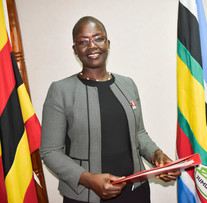
DPP, Justice Jane Frances Abodo.

The Director of Public Prosecution (DPP) Jane Frances Abodo has clocked 100 days in office as DPP since she assumed office in April.

On April = 2, 2020, Justice Jane Frances Abodo was appointed as the Director of Public Prosecutions (DPP) in Uganda. Before her current assignment she served as a High Court Judge, in the court’s Criminal Division, from February 2018 until April 2020.

On taking oath, she pledged to consolidate the gains registered by my predecessors and to meet planned targets, in particular, internal structural re-organization and staffing, re-tooling and re-skilling staff, among others.

Reflecting on the first 100 days, Abodo said together with the Top Management, Senior Management and staff, the office has registered a number of achievements in spite of the challenging times, particularly, in the face of the #Covid-19 pandemic.

“Specialized Units have been established and existing ones re-organized and their reporting mechanism streamlined in order to ensure that the institution has the right skills placed in the right places. Special assignments and Task forces have been created to handle and execute urgent assignments, and improve efficiency” She said

She said during the months of June and July 2020, the ODPP was involved in plea bargaining camps at Masindi, Nakasongola, Gulu, Mbarara and Masaka Prisons. The plea bargaining sessions resulted into 503 convictions from all the five regions visited.

“A new performance reporting template was created for reporting on performance under each departmental objective and target under MPS, SIP, JLOS, Cross cutting issues, other activities etc. This will ensure that all reports including session reports are received, utilised and acted upon.” She said

The ODPP has revamped the electronic mail system to a unified messaging and communication system whose services include email, messaging, chats and calls, tasks, work groups, drive, calendar, time and report, workflow, meeting and briefings. The system will act as a secure platform to protect official communications among the staff of the ODPP.

She lauded members of the Top Management, Senior Management and the staff for their cooperation.

“I thank our stakeholders for their contributions to the realization of the mandate and vision of the ODPP. Together we can make it. Provision of Criminal Justice requires concerted effort. The ODPP cannot effectively execute and deliver on its mandate in the absence of the Executive, Parliament, Judiciary, the Police, the Prisons, and Advocates among others.” She applauded.

Sources within the justice sector told Eagle Online that whereas under her predecessor some cases considered political would sail through without enough evidence, under her leadership, it is becoming hard to propagate a case without substantial evidence.

Stories Continues after ad

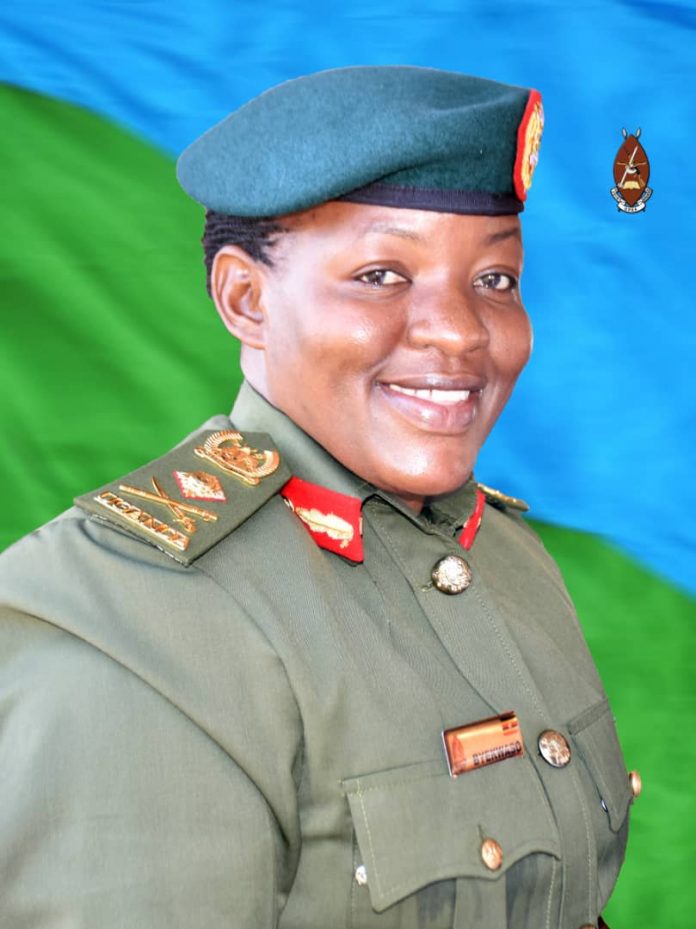
Brig. Flavia Byekwaso appointed UPDF Spokesperson

Brig. Byekwaso

President Yoweri Museveni who doubles as the Commander in Chief has appointed Brig. General Flavia Byekwaso as Spokesperson of the Uganda Peoples’ Defense Forces (UPDF).

Brig.Byekwaso is one of the 10 army representatives in Parliament.

The appointment of the first ever female army spokesperson was announced by the outgoing Spokesperson of UPDF Brig.  Richard Karemire. Nalweyiso has become the first female spokesperson of UPDF.

“Pse join me to welcome Hon Brig Gen Flavia Byekwaso appointed the Defence Spokesperson following the end of my tour of duty. I have been assigned to EAC Secretariat as Defence Liaison Officer.I look forward to working on Integration as the solution for our strategic security”. Brig. Karemire tweeted

Stories Continues after ad

Kabaka urges Ugandans to continue observing Covid-19 guidelines

Kabaka

The Kabaka of Buganda, Ronald Mutebi II has urged all Ugandans to continue observing all guidelines put in place to curb the spread of the deadly Covid-19 pandemic.

Kabaka said during the celebrations to mark his 27th coronation ceremony at Mengo. The 65-year-old monarch’s reign of the biggest kingdom in Uganda began in 1993, upon enthronement as Kabaka of Buganda on July 31, 1993.

The guidelines include; Covering your mouth and nose with tissue or a handkerchief when coughing and sneezing, Washing hands with soap and water or use an alcohol-based hand rub immediately after using the tissue or handkerchief, Maintaining a distance of two meter from anyone who is coughing or sneezing and remind them that they need to have a face mask to avoid infecting others.

The others include; avoiding touching in the eyes, nose and mouth at all times. Hands touch many surfaces including money which can be contaminated with the virus and you can transfer the virus from the surface to yourself, avoiding hand-shakes and hugging at all times and avoiding unprotected contact with dead animals.

He applauded all individuals who have contributed towards the fighting of the virus and urged the government to put emphasis on other diseases like Aids, pressure, Sickle cells, malaria asserting that they too are killing Ugandans.

He expressed his dismay over security officers especially from the Local Defence Unity (LDU) who were recently brutalizing and killing Ugandans in the name of enforcing presidential directives peddled at stopping the spread of Covid-19.

“Everyone has a right, if he/she disobeys the law, it is better to drag him/her to courts of law. It is bad for security officers to punish them with death,” he said

The also noted that Hussein Walugembe, a man who set himself on fire at Masaka Central Police Station (CPS) indicates that youth have lost hope and pledged that his Kingdom will continue to work towards reinstating hope among the youth.

The Kabaka also awarded Dr. Kawanga Semwogerere, Sheikh Hussein Rajab Kakooza, prof Josephine Nambooze Kiggundu, Rev. Canon Samuel Kasujja (he baptized Kabaka), John Yakuze for their distinguished services towards the development of Uganda and Buganda.

Stories Continues after ad

International Netball Federation postpones 2021 Netball World Youth Cup

International Netball Federation (INF) has announced that due to the ongoing COVID-19 pandemic, the Netball World Youth Cup will no longer take place in June 2021.

INF, in consultation with the host country Fiji, considered the factors that would need to be in place for the international event to go ahead in June next year. Given the uncertainty regarding factors such as the control of the COVID-19 pandemic and risk to health, closures of borders to visitors, consideration of quarantine requirements and restrictions on global travel, the decision was made to postpone the event based on its June date.

The announcement comes after the recent decision that the Netball World Youth Cup qualifying events, which were due to take place in Africa, the Americas, Europe and Oceania before October 2020, be cancelled and that INF World Rankings be used to determine the qualifying teams for those regions affected.

The INF will now consult with the netball associations with qualified teams regarding the options for re-scheduling including dates towards the end of 2021 and early 2022.

The Fijian Government have re-confirmed their commitment to hosting the event. The Minister for Youth and Sports, Honourable Praveen Kumar Bala said:

“We remain committed to the sporting aspirations of girls and young women in Fiji and across the netball world. We look forward to hosting this event at an appropriate time when the world is a lot safer, international travel restrictions have eased and when all teams, and Fiji as your host nation, are certain of reaping a just return on their investment into the NWYC 2021.”

The INF Board made the decision in June 2020 to determine the remaining 12 qualifying countries based on INF World Rankings.

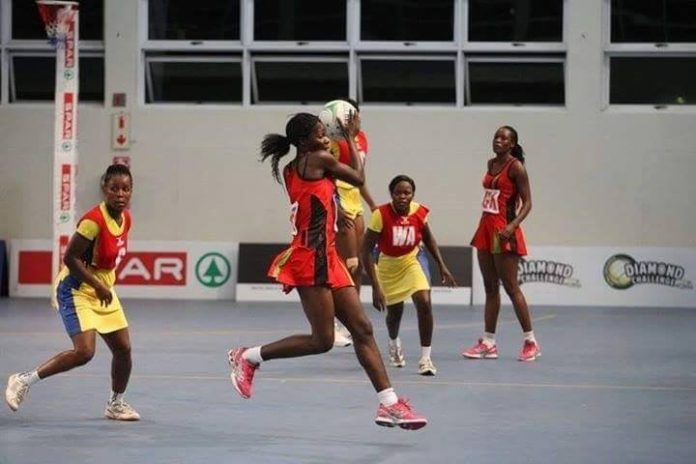
Uganda She Pearls were due to take part in the qualifiers for the Netball World Youth Cup 2021 alongside countries like Australia, England, Fiji, Jamaica, Malaysia, Malawi, New Zealand, Samoa, Scotland, Singapore, South Africa and Wales among others.

The She Pearls came seventh at the Youth World Cup 2017 in Botswana while New Zealand were the champions.

Stories Continues after ad

Byamukama gets 11 years sentence for killing Rafiki Silverback

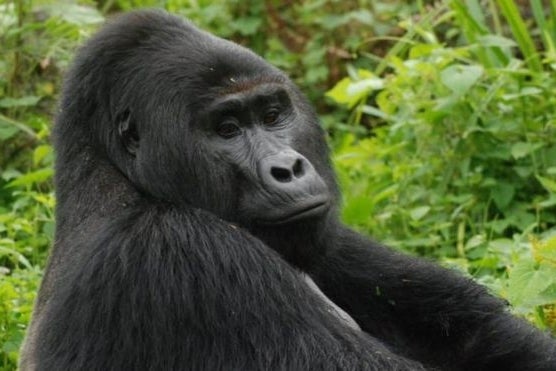
Kabale Chief Magistrate’s Court has sentenced Byamukama Felix to 11 years in prison for killing Rafiki the Silverback of Nkuringo Gorilla group and other wildlife in Bwindi Impenetrable National Park.

Byamukama pleaded guilty to three counts that included illegal entry into the protected area, killing a gorilla and a duiker. The Chief Magistrate His Worship Julius Borere sentenced him to five, six and 5five years respectively to be served concurrently.

In a second case file, Byamukama pleaded guilty to counts of killing a bush pig, being in possession of bush pig and duiker meat for which he was sentenced to five years on each count, to run concurrently after serving the first six years on case file one. He will therefore serve a total of 11 years.

Byamukama Felix is a resident of Murole village, Nteko Parish, Nyabwishenya Sub County, Kisoro District and was arrested on June 4, 2020 following the death of Rafaki a Silverback of Nkuringo group. Upon search, he was found in possession of bush pig meat and several hunting devices including a spear, rope snares, wires snares and a dog hunting bell that were recovered from his home. His three colleagues Bampabenda Evarist, Museveni Valence and Mubangizi Yonasi denied the charges and were remanded to Kisoro prisons.

The Executive Director UWA Sam Mwandha welcomed the court’s decision saying that Rafiki has received justice. “We are relieved that Rafiki has received justice and this should serve as an example to other people who kill wildlife. If one person kills wildlife, we all lose, therefore we request every person to support our efforts of conserving wildlife for the present and future generations,” he said.  Mwandha further explained that the new law (Wildlife Act 2019) is tough and that anyone involved in illegal wildlife activities will face the wrath of the law.

On June 1st, 2020, Rafiki, the silver back of Nkuringo gorilla group was reported missing in the group and on June 2nd, 2020, our team mounted a search for the missing silver back. The body of Rafiki was later found in Hakato area inside BINP.

Stories Continues after ad

2020 FA Cup final preview: Arsenal vs Chelsea

FA Trophy

Arsenal and Chelsea go head-to-head in the Heads Up FA Cup Final on Saturday August 1st, with Wembley Stadium set to stage the all-London affair.

Both clubs have a strong recent history in the competition, and here are some interesting statistics ahead of the big game.

Arsenal are appearing in their 21st FA Cup Final, more than any other side. Indeed, the Gunners have won the competition more often than any other side (13).

Chelsea are playing in their 14th FA Cup Final, with this their seventh appearance in the showpiece since the new Wembley Stadium re-opened in 2007. The Blues have won seven of their last nine Finals, with both defeats in that time coming against Arsenal.

This season’s FA Cup Final will be the latest date a Final has been staged in the competition’s history.

This is the third time Arsenal and Chelsea have faced each other in the Final, with the Gunners winning the previous two (in 2002 and 2017) – no fixture has been played more in the Final (excluding replays).

Arsenal have triumphed in eight of their last nine FA Cup Final matches, including each of the last six in a row. Only Tottenham (seven between 1901 and 1982) have won more consecutive FA Cup Final appearances.

Chelsea have won just one of their last 13 FA Cup games against Arsenal (D4 L8), beating them 2-1 in the 2009 semi-final, courtesy of goals from Florent Malouda and a late Didier Drogba winner.

This will be the third time in the last four seasons that Arsenal will be ending their campaign against Chelsea, winning the 2017 FA Cup Final and losing last season’s Europa League final against the Blues in Baku.

In all competitions, Chelsea have lost just two of their last ten meetings with Arsenal (W3 D5), with the Blues unbeaten against the Gunners in the Premier League this term (W1 D1).

Mikel Arteta is to become only the second man to manage Arsenal in an FA Cup Final having also played for the Gunners in one, after George Graham. He could become the first person to win the FA Cup with Arsenal as both a captain and a manager.

This will be the first FA Cup Final managed by two men who both also played for their teams in an Final since 2012 (Chelsea’s Roberto di Matteo v Liverpool’s Kenny Dalglish). Arteta won with Arsenal in 2014, while Frank Lampard played in five Finals for the Blues, winning four. Indeed, Lampard’s only FA Cup Final defeat as a player was against Arsenal in 2002.

Frank Lampard will be the first English manager to take charge of Chelsea in a major cup final since Glenn Hoddle in the 1994 FA Cup, a 0-4 defeat against Manchester United. The last English manager to win a major trophy with Chelsea was Dave Sexton (1971 Cup Winner’s Cup).

In FA Cup Final history, there have been two players play for both clubs in a specific final fixture – Francis Birley played for Oxford University against Wanderers in 1873, and vice versa in 1877, while Jack Reynolds played for both Aston Villa and West Bromwich Albion in the 1890s. Both Chelsea’s Olivier Giroud and Arsenal’s David Luiz could achieve this, having played for their opponents in the 2017 Final.

Chelsea’s Olivier Giroud has been involved in 24 goals in 30 FA Cup appearances (16 goals, 8 assists). The Frenchman has also had a hand in three goals in four Final appearances in the competition (1 goal, 2 assists), with both his assists being for the winning goal (2014 and 2017).

Giroud will also be aiming to become just the second player to score for and against a specific side (Arsenal) in separate FA Cup Finals after Frank Stapleton, who netted against Manchester United in the 1979 Final (for Arsenal) and then for the Red Devils in the 1983 Final (v Brighton & Hove Albion).

Arsenal’s Pierre-Emerick Aubameyang has scored three goals in just two FA Cup appearances, with the Gabonese striker netting both of the Gunners’ goals in their semi-final victory against Man City.A

Stories Continues after ad

WHO, UNICEF calls on gov’ts to protect and promote women’s access to skilled breastfeeding

The World health organization (WHO) and the United Nations Children’s Fund (UNICEF) has called on governments to protect and promote women’s access to skilled breastfeeding counselling, a critical component of breastfeeding support.

The World Breastfeeding Week will be held under theme; Support breastfeeding for a healthier planet

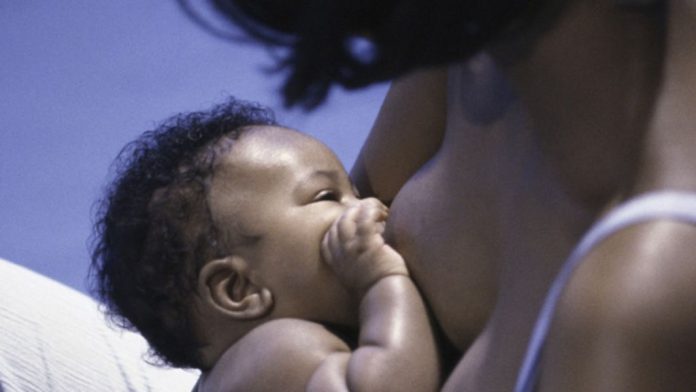
Breastfeeding provides every child with the best possible start in life. It delivers health, nutritional and emotional benefits to both children and mothers. And it forms part of a sustainable food system. But while breastfeeding is a natural process, it is not always easy. Mothers need support both to get started and to sustain breastfeeding.

Skilled counselling services can ensure that mothers and families receive this support, along with the information, the advice, and the reassurance they need to nourish their babies optimally. Breastfeeding counselling can help mothers to build confidence while respecting their individual circumstances and choices.

 Counselling can empower women to overcome challenges and prevent feeding and care practices that may interfere with optimal breastfeeding, such as the provision of unnecessary liquids, foods, and breastmilk substitutes to infants and young children.

Improving access to skilled counselling for breastfeeding can extend the duration of breastfeeding and promote exclusive breastfeeding, with benefits for babies, families and economies. Indeed, analysis indicates that increasing rates of exclusive breastfeeding could save the lives of 820 000 children every year, generating US $302 billion in additional income.

Skilled breastfeeding counselling can be provided by different actors including health care professionals, lactation counsellors and peer support providers, and in a variety of settings– in health facilities or clinics, through home visits or community programmes, in person or remotely.

During the COVID-19 pandemic, it is even more important to find innovative solutions to ensure that access to these essential services is not disrupted and that families continue to receive the breastfeeding counselling they need.

Stories Continues after ad

Parliament okays the creation of 46 new counties

Parliament of Uganda

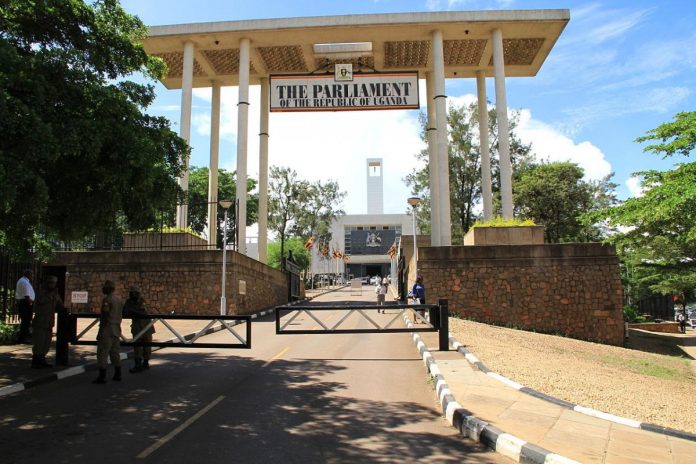
Parliament has passed a motion providing for the creation of 46 new counties, bringing the total number of constituencies to 353.

The Minister of Local Government, Raphael Magyezi, said that although his ministry tabled 15 new counties before Parliament on the 30th of June, 2020, there has been increased demand from the population through their district councils compelling the Cabinet to create additional 31 counties.

“We have done consultations, we have reviewed requests and considered recommendations of the 2015 report of the Parliament Committee on Public Service and Local Government recommending creation of additional counties,” Magyezi told the House chaired by Speaker Rebecca Kadaga on Thursday, 30 July 2020.

Magyezi explained that the yard stick for creating more counties was based on factors such as geographical terrain, the level of economic development and wishes of the people.

This, however, did not please legislators hailing from districts with large populations that have not been catered for in the new counties.

MP Muhammad Nsereko in objection to the motion said government was unfair to districts such as Kampala by creating new counties in areas with small populations.

“Kampala is represented by only nine MPs with one Member of Parliament representing five million people yet Nakawa with 300,000 people has been given a new county. Let us talk of equity, this is injustice” said Nsereko.

Nsereko said that the yard stick for creating new counties leaves a lot to be admired. He wondered why for instance the Sebei sub-region with a population of 350,000 people, would have more representatives than Rubaga Division with a much bigger population.

Kadaga told the legislators, “I know there are districts with bigger populations but there is a procedure used in determining new counties”.

The 46 new counties are curved out of the districts of Kibaale, Katakwi, Agago, lsingiro, Kisoro, Nakaseke, Kiboga, Buhweju, Lamwo, Kakumiro, Nakapiripirit, Mubende, Kwania, Tororo, Jinja, Ngora, Amolotar, Karenga, Napak, Ssembabule, Otuke and Ntungamo.

The others are lsingiro, Bukwo, Kaberamaido, Kween, Namisindwa, Soroti, Serere, Mbale, Yumbe, Kyegegwa, Mitooma, Bududa, Pallisa, Namutumba, Manafwa, Tororo, Apac, Kaabong, Rwampara, Kikuube, Nornoyingo, Bulambuli, Nwoya and Busia.

Relatedly, Parliament passed a motion effecting operationalisation of three cities of Lira, Hoima and Soroti, bringing their commencement dates forward from 31July 2021 to 31 July 2020.

Magyezi, who presented the motion, said this was aimed at enabling citizens in the three cities to take part in the 2021 general elections, which would not have been possible without the alternation of the dates.

Stories Continues after ad

Africa should support #COVID-19 vaccine trials and provide scientific leadership 

Kelly Chibale


By Kelly Chibale


The news that the University of Oxford has developed a coronavirus vaccine that appears safe and has triggered an immune response, is an encouraging step in our long journey toward returning to normality. It also provides the opportunity to join forces to tackle the pandemic and highlight Africa’s scientific leadership.

Africa’s first #COVID-19 case was found in Egypt in February. By May, it had completed its spread across the continent, with Lesotho the final country confirming a case. Today, we are slowly edging towards a million cases while almost 20,000 people have lost their lives.

But how we are impacted goes beyond these numbers. In February you wouldn’t have thought twice about hugging a friend or an elderly relative. Now you hold back, unsure of the risk. And of course, there is the cost to the economy: scores of people have lost their jobs, with thousands fighting for the few that remain.

Social distancing and the restrictions put in place by governments have been crucial in helping us manage the pandemic, but we can’t stay distanced forever.

That’s why the news around the University of Oxford vaccine is so welcome. Never before have we seen such encouraging results so early in the process. While we still have a long way to go before we arrive at a safe and effective vaccine, these results give us hope that a vaccine is possible, and we are on the right path.

Building on these initial results, the University of Oxford trial will now move to expand the number of participants to ensure the results can be repeated across regions and help identify any potential side-effects. South Africa is one of four countries where clinical trials are being held. This is happening as scientists across continents join forces in an array of other vaccine trials. A final vaccine, albeit not guaranteed, may still be many months, (or possibly even years) away, but when it arrives, we can be assured it will be safe and effective.

I have dedicated my career to researching and finding solutions to some of the continent’s most stubborn diseases like malaria and tuberculosis. But never before have I seen so much interest or focus on health science and research. At the same time, we have to debunk misinformation and conspiracy theories. Sometimes, it can be an innocent mistake; misinformation spreads so easily because it taps into our fears and doesn’t need to include any truths. But the impact can be dangerous and damaging.

First, it perpetuates the belief that Africa can’t be a source of health innovation. Second, it could discourage the next generation of researchers – why dedicate your life to science and finding solutions for someone on the Internet to dispute your work and sometimes even slander you?.

More than ever, we need to encourage dialogue between scientists and our communities and share the tremendous benefits of science. The Coronavirus has provided us with a golden opportunity to contribute and participate in a global priority. It is also essential. Africa is genetically the most diverse continent on earth. We need to ensure that the different regions in Africa are part of clinical trials, so that a vaccine and its dosage and frequency is tailored for the use of our specific populations, rather than being brought in from the global North.

Currently, less than two percent of clinical trials globally are conducted in Africa. We need to change this and ensure that African perspectives are considered during the clinical testing of medicines and vaccines. By being active participants, we can help ensure vaccines and treatments will work here. It also gives us capital to demand equal and early access to successful vaccines.

But it also goes beyond this, to something much bigger. We are experiencing a global pandemic, the likes of which has not been seen in over a century. Helping find the solution allows us to build our research institutions and capacity, which, in turn, helps better prepare our infrastructure for future pandemics and creates jobs.

Clinical research requires the services of scientists, nurses, and technologists to name a few, so you can imagine the array of meaningful, knowledge-based opportunities they can create for young Africans not just in direct jobs, but also in indirect jobs. As somebody who grew up in townships and villages, I can vouch for the power of a science-driven job to change the life of a young person.

It is also our responsibility to get involved. As Africans, we cannot demand equitable access or distribution of a vaccine if we do not participate and contribute ourselves. This is an opportunity for African scientists to lead, to earn respect and credibility and to show that we can be at the forefront of doing clinical trials.

Every day I interact with some of the biggest and brightest scientific minds. And it isn’t just in South Africa where I am based. Across the continent there is a cadre of scientists working on solutions to some of Africa’s biggest problems. It is time we celebrated and amplified our scientific expertise. It is time we became more active participants in the global scientific community.

As scientists across the world continue their work, I call upon all citizens in Africa to become partners in the quest for a #COVID-19 vaccine. Only through our joint efforts and trust in science can this virus be defeated.

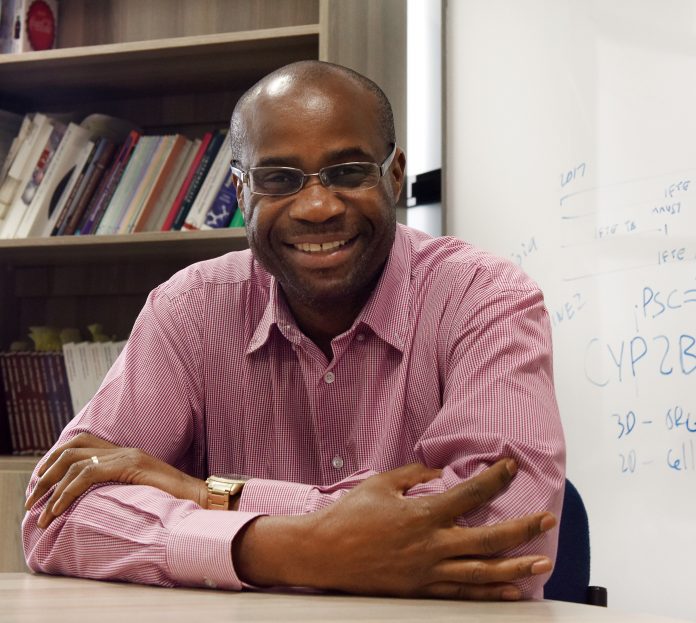
Kelly Chibale, PhD, FRSSAf, FRSC, FAAS, MASSAf is professor of organic chemistry at the University of Cape Town, the Neville Isdell Chair in African-centric Drug Discovery and Development and the founder and director of the H3D Drug Discovery and Development Centre at UCT.


Stories Continues after ad