Stanbic Bank
Stanbic Bank
17.8 C
Kampala
Stanbic Bank
Stanbic Bank
Home Blog Page 980

BoU takes keen interest in Judge Adonyo’s ruling against Diamond Trust Bank Uganda.

dtb


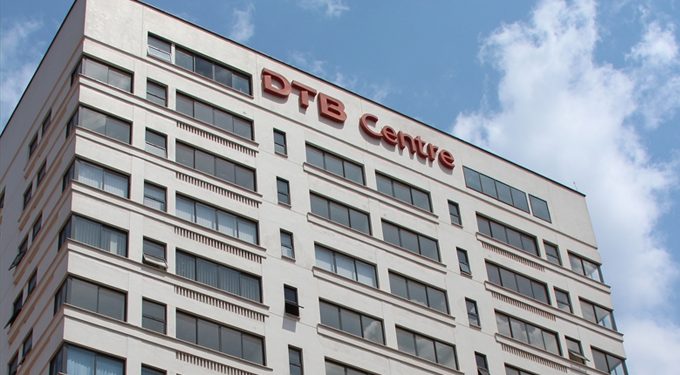
Following Wednesday’s court ruling in which Judge Henry Peter Adonyo blamed Diamond Trust Bank Uganda (BoU) in partnership with Diamond Trust Bank Kenya for giving a syndicated loan to businessman Hamis Kiggundu, the Bank of Uganda has come out to say it awaits a detailed ruling so as it can comment about the ruling that has left the local bankers confused.

“Bank of Uganda…has taken note of the judgment of the Commercial Division of the High Court…involving M/S Ham Enterprises… We await the detailed written judgment of the Court to assess its implications and to determine to determine an appropriate response therefore, including any future actions with regard to the matter,” says BoU Governor Prof Emmanuel Tumusiime-Mutebile.

Yesterday Chief Executive Officers from all the 35 financial institutions under the umbrella of Uganda Bankers Association (UBA), urged BoU, Ministry of Finance, Uganda Revenue Authority, Uganda Investment Authority and the Civil Society amongst a host of others to take keen interest in Judge Adonyo’s ruling that seemed to favoured Kiggundu not to pay a loan owed to Diamond Trust Bank Uganda and its partner Diamond Trust Bank Kenya.

DTB Uganda and DTB Kenya want Kiggundu to acknowledge that he must pay a loan of over Shs39.7 billion which his company Ham Enterprises borrowed to enable him run business activities but then defaulted on paying back the loans. Kiggundu acquired the loans in four tranches; US$6.2 million, US3.2 million, US$458, 604 and Shs2.8 billion from DTB Uganda and DTB Kenya. The loans were consolidated later over two years ago and were to run from five years, ending August 23, 2023.

Judge Adonyo in his ruling, stated that by DTB Kenya lending to Ham Enterprises, it contravened Financial Institutions Regulations No.5 and that DTB Uganda was culpable of breaking the law and therefore deserved punishment for carrying out “unauthorized” activity.

Members of Uganda Bankers Association (UBA), are now up in arms against the ruling and have decided that they will be part of the case when Diamond Trust Bank Uganda appeals in a higher court. This is because the bankers say they already have offered syndicated loans worth over 5.7 trillion and that Judge Adonyo’s ruling could puts that money at the risk of not being paid.

Interestingly, bankers under their umbrella of UBA say the Shs5.7 trillion now at risk excludes the money that was being arranged as a syndicated loan to fund oil pipeline and that this loan has now been halted as a result of Wednesday’s ruling that shocked the banking sector in Uganda and Africa at large. This news website yesterday reported that Stanbic Uganda was in the process of arranging about US$2.5 billion for the oil pipeline meant to transport oil for export from the western district Hoima to the East African coast.

Mutebile says BoU which supervises commercial banks and other financial institutions in the country, remains committed to ensuring a resilient, sound and stable financial sector.

A member of UBA says BoU has done a good thing by coming out to say something about the ruling and that it gives hope banks will be protected from bad businessmen. “Let’s wait for their (BoU) response to the written ruling,” he said.

Stories Continues after ad

EC releases revised programme for nomination of candidates for parliamentary seats

EC boss Justice Simon Byabakama Mugenyi

The chairperson of the Electoral Commission Justice Simon Byabakama has released a revised programme for the nomination of candidates for Parliamentary Elections 2021.

He said the development follows presentations from various stakeholders including the Parliament of Uganda. According to the program, the nominations have been rescheduled from Monday 12th and Tuesday 13th 2020, to Thursday 15th and Friday 16th October 2020.

“The nominations shall be conducted at the respective District/City headquarters across the country, beginning at 9:00am and ending at 5:00pm on each of the appointed dates.” He said

He urged all aspiring candidates in the electoral process to carefully note the revised programme and prepare for nominations in accordance with the guidelines issued for the exercise.

Stories Continues after ad

NRM tribunal overturns ex-Minister Jessica Alupo’s victory

The Minister of Education, Sports, Science and Technology, Jessica Alupo,
Ex- Minister of Education and Sports Jessica Alupo who has been kicked out of the 2021 race.


The National Resistance Movement (NRM) party Electoral Commission has overturned the victory of the former Minister of Education Jessica Alupo.

The ex-Minister had been declared the winner of the NRM flag for Katakwi district Woman Member Parliament

NRM EC Tribunal declared Violet Akurut as the duly elected flag bearer for Katakwi Woman MP Seat. The tribunal chaired by Enoch Barata ruled that Alupo should not have been declared the winner of the September 04 polls because of reported vote rigging and non-declaration of results from her rival’s stronghold.

Reports indicate that Alupo connived with NRM EC registrar Patrick Imeri, to withhold results from Okore Sub-County where Akurut had garnered over 10,000 votes. Alupo also allegedly altered the declaration forms where she claimed to have garnered 16,000 votes yet the entire sub county has less than 2000 NRM voters.

In their ruling, the tribunal confirmed that votes from Okore had been computed by the NRM registrar Imeri despite the fact that he had them. Initially, Imeri had declared Alupo as the winner with over 38,000 votes against Akurut’s 29,000.

“The tribunal finds that the petitioner (Akurut) polled 10,144 votes from Okore sub County and the respondent (Alupo) polled 34 votes and when the results are added to the results released by the District Registrar, the Tribunal finds that the petitioner polled a total of 39,579 votes against 38,616 votes polled by the respondent,” the judgment reads.

Akurut defeated Alupo in 2015 NRM Primaries and 2016 general polls. The latter ran to court, but was defeated in the Court of Appeal which upheld Akurut’s victory.

Stories Continues after ad

Refugees face high risks of violence, sexual exploitation and abuse in Uganda-World Bank

TO BE VERIFIED: Refugees at the Bidibidi Reception Centre in Yumbe, Northern Uganda.


Displaced communities and those that host large numbers of refugees face high risks of violence, including sexual exploitation and abuse, according to a new World Bank assessment.

The recently-launched study, Gender-Based Violence and Violence against Children, Prevention and Response Services in Uganda’s Refugee-Hosting Districts shows that identifying negative impacts that could result from project activities or risks already existing in the communities, and embedding preventive measures could provide better protection and response services.

The assessment was conducted by the World Bank-financed Uganda Development Response to Displacement Impacts Project (DRDIP). According to UNHCR, 81% of Uganda’s 1.4 million refugees are women and children, who are at high risk of gender-based violence (GBV), including sexual exploitation and abuse (SEA), rape, forced and child marriage, and intimate partner violence (IPV).

Host communities face similar challenges. Compared with a national average of 51%, the 2016 Uganda Demographic and Health Survey showed that 64% of women ages 15 to 49 in the refugee-hosting West Nile subregion report having experienced physical, sexual, or emotional violence perpetrated by their current or most recent spouse or partner. In response to the 2018 National Violence Against Children Survey, one in four girls and one in 10 boys reported having experienced sexual violence in the 12 months prior.

According to the DRDIP assessment, the most common causes of violence against women and children in hosting and refugee communities, include poverty, substance abuse, discriminatory gender roles, and widespread acceptance of violence, which are reinforced by social norms. Physical violence, for example, is a widely accepted form of “disciplining” women and children. School violence and the absence of child-friendly and accessible services for reporting and responding to violence against children further increases risk for boys and girls.

Many survivors of GBV and violence against children who live in host communities face various barriers to access essential services health, psychosocial support, justice, and safety due to gaps in the existing referral systems, poor case tracking, and weak coordination among duty bearers, the report notes. GBV and violence against children services offered by humanitarian partners can generate parallel structures for the provision of services, which are not necessarily aligned with or integrated into local and national protection systems.

Prevention programs are fragmented and low in scale, and efforts to address risks factors through the socioeconomic empowerment of women and girls are limited. Despite their common risk factors, programming for GBV and violence against children continue to operate in silos, each with its own funding streams and actors.

“This mapping of violence against children and broader gender-based violence (GBV) services is providing an important evidence base for strengthening services and defining DRDIP’s role in appropriately responding to the risks,” said Margarita Puerto Gomez, Senior Social Development Specialist and World Bank Task Team Leader.

The assessment, which was led by the Office of the Prime Minister and the Ministry of Gender, Labour and Social Development in coordination with the United Nations High Commissioner for Refugees and development partners, and provides several recommendations to strengthen protection against GBV and VAC.

It recommended for Integration of GBV risk mitigation and prevention into the development response to forced displacement, strengthen and enhance multi-sectoral services, including district- and local-level structures and Scaling-up evidence-based community violence prevention approaches to address GBV and violence against children risk factors aligned to District and community structures.


Stories Continues after ad

Tycoon Sudhir buys Simbamanyo House Shs18.5b

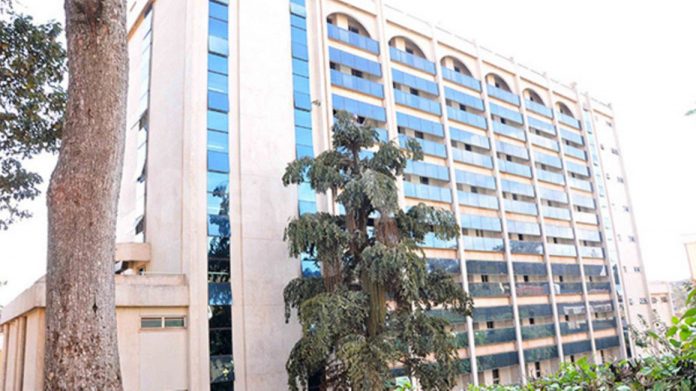
Simbamanyo house which was acquired by tycoon Sudhir Ruparelia.

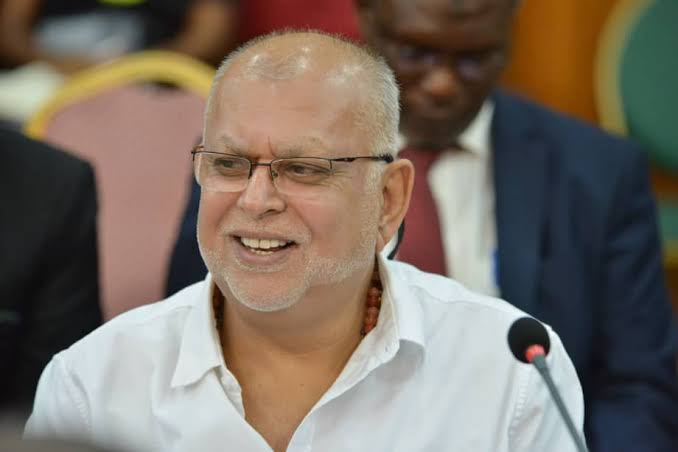
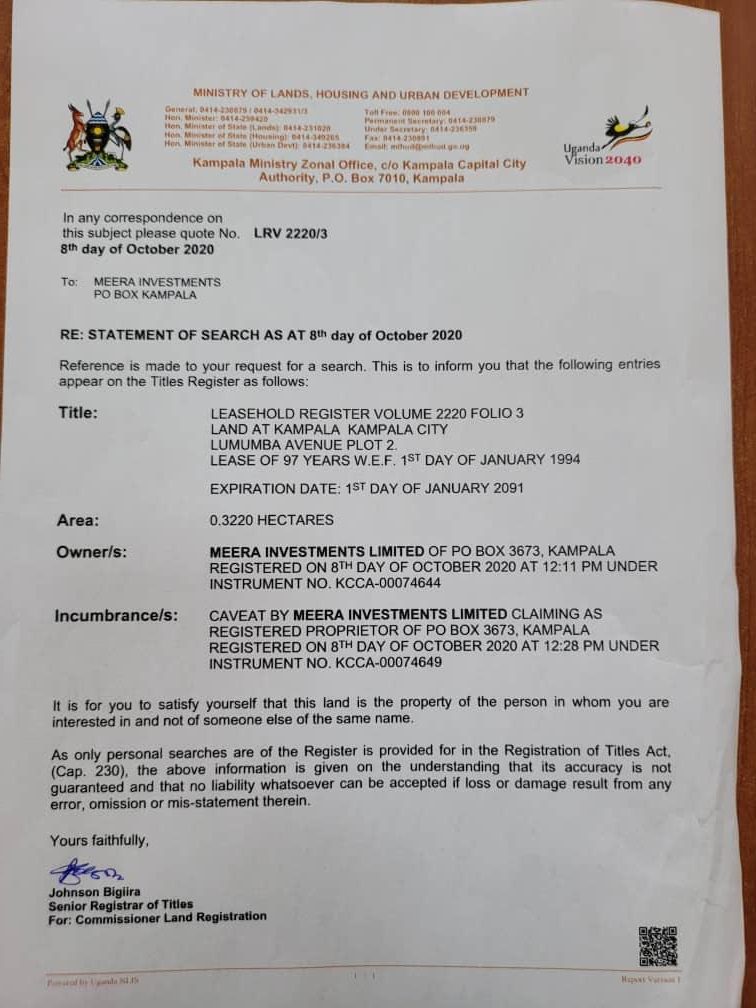
City Tycoon Sudhir Ruparelia has acquired Simbamanyo House located on plot 2 Lumumba Avenue after his company Meera Investment Limited were announced the highest bidders.

The building had been mortgaged by its owners with Equity Bank but after failing to pay, the exercise was conducted through public bidding on October 8 by Equity Bank Limited.

Sudhir Ruparelia, Chairman of Meera Investments Limited.

Meera Investments Limited bought the building at $5 million about (Shs18.5 billion)

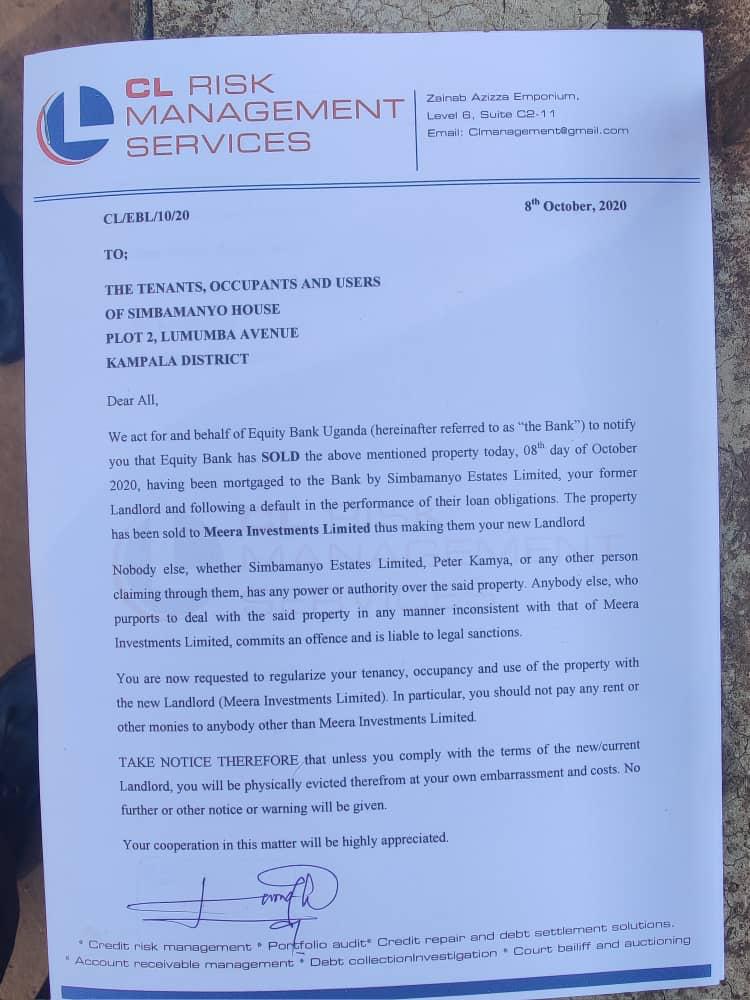
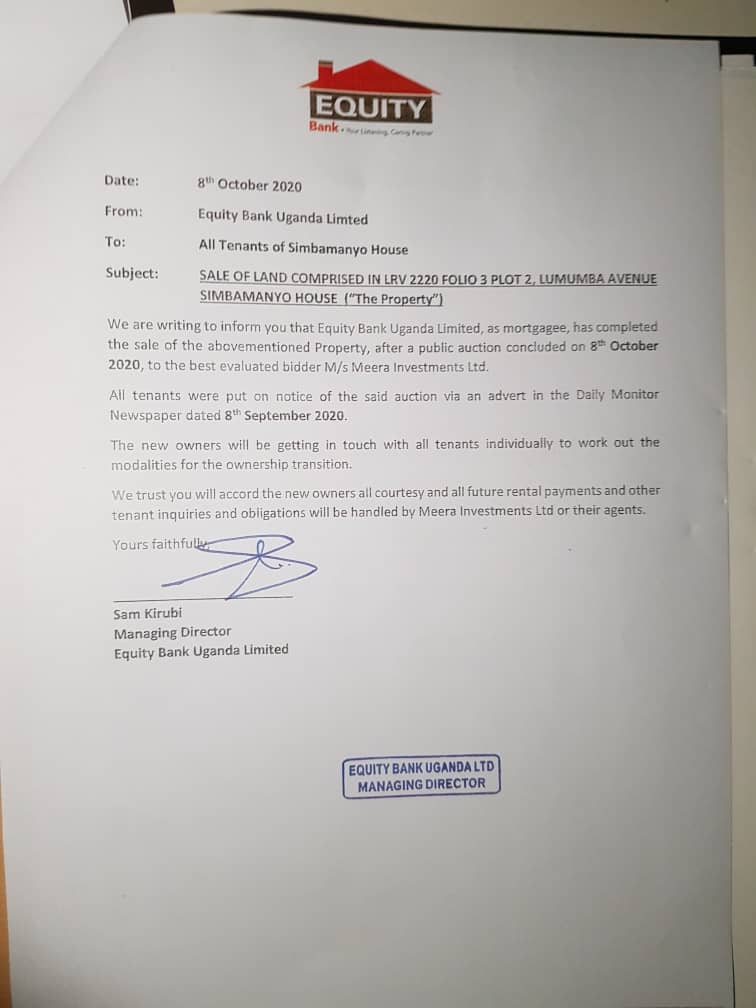
In a letter dated October 8, from Equity Bank Limited to all tenants of Simbamanyo House, the bank informed them of change of management after the public was purchased through public bidding.

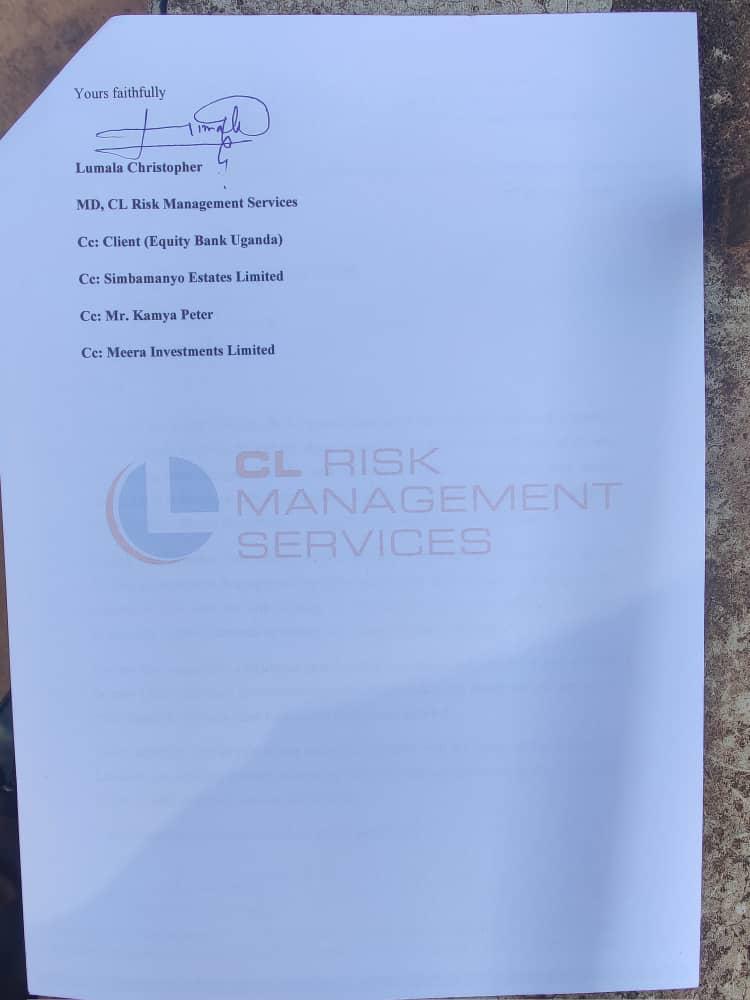
“We are writing to inform you that Equity Bank Uganda Limited, as mortgagee, has completed the sale of the above mentioned property, after a public auction concluded on october 8, 2020, to the evaluated bidder M/S Meera Investment Ltd. All the tenants were put on notice of the said auction via an advert in the Daily Monitor Newspaper dated September 8, 2020.” reads the notice.

It further “The new owners will get in touch with all tenants individually to work out the modalities for the ownership transition. We trust you accord the new owners all the courtesy and all future rental payments and other tenant inquiries and obligations will be handled by Meera Investments Ltd or their agents.

Equity Bank, acting through Katende Ssempebwa & Co Advocate and AF Mpanga, Advocates, had earlier said it would after October 7 proceed to sell properties contained in plots on Lumumba Avenue and Mutungo-Luzira, both within Kampala if Simbamanyo Estates fails to pay Shs11.5 billion.

In a notice published on September 7 in the Daily Monitor, Equity Bank said Simbamanyo had until October 7 within which it must pay at least 30 per cent of the disputed Shs38.6 billion, failure of which it will proceed to sell properties against which the money was advanced.

Simbamanyo had at the close of August put a caveat on the disputed properties, noting Equity Bank was trying to upstage the court process in which it is challenging the sum in dispute and the legality of loans drawn from Equity Bank Kenya.

Simbamanyo is embroiled in a property dispute with Equity Bank Uganda and Equity Bank Kenya resulting from unpaid loans that had been advance to the real estate company.

According to court documents filed in the Commercial Division of the High Court, on August 20, 2012, Equity Bank Kenya and Equity Bank Uganda entered into a loan agreement in which the two banks agreed to advanced Simbamanyo with $6m.

The loans, which would make up a consolidate sum of $8.10m (Shs29.83b) including interest and operational fees, among others, sought to finance the construction of Afrique Suites Hotel in Mutungo, Luzira north east of Kampala and facilitate the takeover of a prior facility advanced to Simbamanyo by Shelter Afrique.

The two banks, details indicate, pooled money together with at least $3.5m drawn from Equity Bank Kenya and $2.5m from Equity Bank Uganda.
However, Simbamanyo Estates is challenging the outstanding sum, saying it is only aware of $7.19m (Shs26.48b).


Simbamanyo Estates is also accusing Equity Bank Uganda of providing Equity Bank Kenya with an illegal cover to conduct business in Uganda where it has no jurisdiction.
The real estate company wonders how, according to court document, Equity Bank and Bank One, which provided bridge financing of ($10m) were drafted into the loan agreement yet Simbamanyo had never applied for any facility from the two banks later alone own a bank account in any of the said financial institutions.

However, in its defense, Equity indicates that Sambamanyo benefited and was aware of every financial transaction that was advanced to it.
Equity also argues that Bank One, based in Mauritius, was drafted into the transaction on the request of Simbamanyo, which had sought to obtain bridge financing of up to $10m.
Court documents indicate that Simbamanyo Estates had sought to offset the outstanding sum in a November 16, 2017 letter to Mr Samuel Kirubi of Equity Bank Group Kenya.


Stories Continues after ad

Nexus Bar owner Ivan Kakooza dead

Late Ivan Kakooza in a T-Shirt chatting with clients at a past event at Nexus Bar.

The owner of the Najjera based popular bar and restaurant Ivan Kakooza is dead

Kakooza died on Friday morning at Mulago hospital where he has been undergoing treatment for sometime. Reports indicate he had stressed related complications.

Kakooza’s businesses were hit hard by the Coronavirus pandemic especially Nexus and his events businesses when government   introduced  Standard Operating Procedures for #Covid-19.

Reports indicate loans from commercial banks which kakooza had secured in expanding his businesses could have caused much stress leading to his death.

#RIPIvanKakooza


Stories Continues after ad

Museveni sacks Kaka Bagyenda, names Oluka and Katabazi as DG/Deputy DG respectively

Col. Kaka Bagyenda

President Yoweri Museveni has sacked Internal Security Organisation (ISO) Director General Col. Kaka Bagyenda and replaced him with Lt. Col. Charles Oluka as new DG for the spy agency.

Museveni further named Lt. Emmy Katabazi who has been ISO’s liaison officer in charge of small arms at Immigration as Deputy Director General.

Lt. Emilly Katabazi

ISO is charged with collection and processing of internal intelligence gathering. Kaka Bagyenda is blamed among other things the raid on MTN data centre last basing on false intelligence and also authoring of fake intelligence reports by thugs he recruited when he returned when he was named DG.

Col. Oluka’s role will be to encounter the influence of Forum for Democratic  Change (FDC) party president Eng. Patrick Amurait who has been chosen as a flag bearer in their Teso sub-region.

Stories Continues after ad

Uganda Bankers Association joins DTB to appeal court’s ruling in favour of Ham

dtb

Uganda Bankers’ Association (UBA), an umbrella organization for financial institutions licensed and supervised by Bank of Uganda is to join Diamond Trust Bank (DTB) in appealing against court’s ruling in the loans case against Ham Enterprises Ltd, owned by businessman Hamis Kiggundu.

Commercial Court head Justice Henry Peter Adonyo on Wednesday ruled that the credit facilities DTB-Kenya offered to Ham Kiggundu are illegal since it is not licenced by Bank of Uganda as required under the law to carry out financial business in Uganda and therefore directed DTB to refund Shs120 billion which was debited from the accounts of Ham plus interest of 8% (shs9.6 billion).

“Uganda Bankers Association has learnt of the judgment delivered yesterday 7th October 2020 in the High Court of Uganda (commercial division) arising from an interlocutory application in H.C.C.S No 43 of 2020 involving one of our members, Diamond Trust Bank  (U) Ltd and related parties.” Reads part of the press release.

Although UBA is yet to receive a copy of the detailed judgement, the ramification of the judgement has sent shock waves across the entire industry and related stakeholders.

The Chief Executives of all the 35 member institutions of Uganda Bankers Association that includes all the tier I commercial Banks the Development Banks and Tier II & III (Micro Finance and Deposit taking institutions) supervised by Bank of Uganda this morning resolved to join DTB in its appeal at the higher court.

“To join Diamond Trust Bank (Uganda) Limited as an interested party in its appeal at the higher court to determine the case on its merits.” Reads part of the resolutions taken by the Chief Executives of all the 35 member institutions.

“To join Diamond Trust Bank (Uganda) Limited to file for a stay of execution of the orders the Hon Justice as ruled yesterday.”

The association also called upon all concerned parties to pronounce themselves on the matter.

“To call upon Central Bank of Uganda to pronounce itself on this matter.”

“To call upon the Executive Arm of Uganda Government through the Minister for Finance, planning and Economic Development and the Attorney General to pronounce themselves on this mater, more so because they are accountable officers for syndicated facilities contracted by Government including where foregoing counter parties are involved and re-assure the financial sector, the international lending partners and entire country of the commitment to continue honoring all debt obligations in line with agreed protocols.”

UBA also called upon esteemed good borrowers and all customers to remain calm as appropriate action is being taken.

“To call upon our esteemed good borrowers and all customers to remain calm as appropriate action is undertaken to address the challenges arising from this specific judgement.”

Stories Continues after ad

UK gives £1.3 million to fight COVID-19 in Uganda

Covid-19 testing kits

The British Government recently released a grant of GBP 1.322 million (Shs6.11 billion) to support various aspects of Uganda’s fight against COVID-19. Activities funded by the UK grant are being implemented by two United Nations agencies, the World Health Organization (WHO) and the International Organization for Migration (IOM).

WHO and IOM are using their respective expertise to help “strengthen and maintain the capacity of the health sector to prevent, prepare for, detect and respond to the COVID-19 outbreak” over a seven-month period.

As the lead implementing agency, WHO will strengthen coordination of COVID-19 preparedness and response activities at national and sub-national level, and surveillance, detection, laboratory confirmation of cases and reporting system for prompt containment of cases.

IOM, meanwhile, will work at border crossing points to ‘prevent and protect against the importation of COVID-19 and provide a public health response at Points of Entry’.

Since March, the government, with technical support from WHO and other UN agencies, has run an internationally acclaimed COVID-19 response, including testing and treatment, contact tracing, quarantining, and public education. DFID has extended support to WHO and IOM to support the national, regional and district response to COVID-19, including in 10 high-risk districts to functionalise the task forces and implement the national contingency plan. These districts are Mbale, Tororo, Mubende, Masaka, Kabale, Wakiso, Iganga, Busia, Kisoro (Kyanika) and Adjumani.

Project activities will include: Recruitment of staff at national, regional and district level to facilitate coordination; Support functionality of the national and district taskforces in high risk and affected areas; orientation of district officials on the Incident management system; Orientation of surveillance teams; Supporting follow-up of contacts of the confirmed cases; sample collection, transportation and analysis at designated laboratories; and procurement of laboratory supplies and testing kits.

Other activities will include; Support supervision and monitoring of screening at PoEs in areas that are likely to be affected by central and district teams; equipment and supplies to support airport/PoE screening; as well as training of border/port health staff (immigration, revenue) on standard operating procedures of infection prevention and control.

The WHO Representative to Uganda, Dr Yonas Tegegn Woldemariam said, “This is a multi-faceted, multi-level intervention that should help strengthen the country’s response. For instance, the project will support an epidemiologist attached to the Incident manager to support the functionality of the preparedness and response mechanism. And specialists will be deployed at regional hubs to provide technical assistance and oversight to build the capacity of the health system and referral network to respond to the outbreak.”

Speaking about the project, IOM Uganda Chief of Mission Mr. Sanusi Tejan Savage said: “As the UN Migration Agency, with increasing mobility we are particularly concerned about mitigating risk of COVID-19 transmission at the border we are pleased to team up with WHO to improve the resilience at our Points of entry to mitigate that risk.”

As of 06 October 2020, Uganda’s cumulative confirmed cases of COVID-19 was 9,260, with 5,588 recoveries and 84 deaths.

Currently, there is a surge in the number of cases identified because of increasing community transmission. While the initial majority cases were registered in the mobility continuum specifically from the transnational truck drivers several measures were instituted to mitigate the spread.

Consequently, Uganda has successfully initialised containment of the spread of COVID-19, with most cases currently identified from the community.

Stories Continues after ad

One stillbirth occurs every 16 seconds – UN estimates

One stillbirth occurs every 16 seconds

Almost two million babies are stillborn every year or one every 16 seconds according to the first ever joint stillbirth estimates released by UNICEF, WHO, the World Bank Group and the Population Division of the United Nations Department of Economic and Social Affairs.

The vast majority of stillbirths, 84 per cent, occur in low- and lower-middle-income countries, according to the new report, A Neglected Tragedy: The Global Burden of Stillbirths. In 2019, three in four stillbirths occurred in sub Saharan Africa or Southern Asia. A stillbirth is defined in the report as a baby born with no signs of life at 28 weeks of pregnancy or more.

“Losing a child at birth or during pregnancy is a devastating tragedy for a family, one that is often endured quietly, yet all too frequently, around the world,” said Henrietta Fore, UNICEF Executive Director. “Every 16 seconds, a mother somewhere will suffer the unspeakable tragedy of stillbirth. Beyond the loss of life, the psychological and financial costs for women, families and societies are severe and long lasting. For many of these mothers, it simply didn’t have to be this way. A majority of stillbirths could have been prevented with high quality monitoring, proper antenatal care and a skilled birth attendant.”

The report warns that the COVID-19 pandemic could worsen the global number of stillbirths. A 50 per cent reduction in health services due to the pandemic could cause nearly 200 000 additional stillbirths over a 12-month period in 117 low and middle income countries. This corresponds to an increase in the number of stillbirths by 11.1 per cent. According to modeling done for the report by researchers from the Johns Hopkins Bloomberg School of Public Health, 13 countries could see a 20 per cent increase or more in the number of stillbirths over a 12 month period.

Most stillbirths are due to poor quality of care during pregnancy and birth. Lack of investments in antenatal and intrapartum services and in strengthening the nursing and midwifery workforce are key challenges, the report says.

Over 40 per cent of stillbirths occur during labour a loss that could be avoided with access to a trained health worker at childbirth and timely emergency obstetric care. Around half of stillbirths in sub-Saharan Africa and Central and Southern Asia occur during labour, compared to 6 per cent in Europe, Northern America, Australia and New Zealand.

Even before the pandemic caused critical disruptions in health services, few women in low- and middle-income countries received timely and high quality care to prevent stillbirths. Half of the 117 countries analyzed in the report have coverage that ranges from a low of less than 2 per cent to a high of only 50 per cent for 8 important maternal health interventions such as C-section, malaria prevention, management of hypertension in pregnancy and syphilis detection and treatment. Coverage for assisted vaginal delivery – a critical intervention for preventing stillbirths during labour is estimated to reach less than half of pregnant women who need it.

As a result, despite advances in health services to prevent or treat causes of child death, progress in lowering the stillbirth rate has been slow. From 2000 to 2019, the annual rate of reduction in the stillbirth rate was just 2.3 per cent, compared to a 2.9 per cent reduction in neonatal mortality, and 4.3 per cent in mortality among children aged one to 59 months. Progress, however, is possible with sound policy, programmes and investment.

“Welcoming a baby into the world should be a time of great joy, but every day thousands of parents experience unbearable sadness because their babies are still born,” said Dr. Tedros Adhanom Ghebreyesus, WHO Director-General. “The tragedy of stillbirth shows how vital it is to reinforce and maintain essential health services, and how critical it is to increase investment in nurses and midwives.”

The report also notes that stillbirth is not only a challenge for poor countries. In 2019, 39 high-income countries had a higher number of stillbirths than neonatal deaths and 15 countries had a higher number of stillbirths than infant deaths. A mother’s level of education is one of the greatest drivers of inequity in high-income countries.

In both low and high-income settings, stillbirth rates are higher in rural areas than in urban areas. Socioeconomic status is also linked to greater incidence of stillbirth. For example, in Nepal, women of minority castes had stillbirth rates between 40 to 60 per cent higher than women from upper-class castes.

Ethnic minorities in high-income countries, in particular, may lack access to enough quality health care. The report cites that Inuit populations in Canada, for example, have been observed to have stillbirth rates nearly three times higher than the rest of Canada, and African American women in the United States of America have nearly twice the risk of stillbirth compared to white women.

“COVID-19 has triggered a devastating secondary health crisis for women, children and adolescents due to disruptions in life-saving health services,” said Muhammad Ali Pate, Global Director for Health, Nutrition and Population at the World Bank and Director of the Global Financing Facility for Women, Children and Adolescents. “Pregnant women need continued access to quality care, throughout their pregnancy and during childbirth. We are supporting countries in strengthening their health systems to prevent stillbirths and ensure that every pregnant woman can access quality health care services.”

Stories Continues after ad