Stanbic Bank
Stanbic Bank
26.4 C
Kampala
Stanbic Bank
Stanbic Bank
Home Blog Page 981

UNEB clears air on ‘clash’ with the Ministry of Education on reopening of schools

UNEB Executive Secretary Dan Odong

UNEB has cleared the air on rumors making rounds especially on social media that it has clashed with the Ministry of Education on the re-opening of schools, and has not set plans for the national examinations.

In a press release from the Executive Secretary, Mr. Dan Odongo, the examination body said it has been brought to their attention of rumours about a clash with the Ministry of Education about the re-opening of schools. UNEB has insisted that the claims are false.

“We would like to clarify that this is not correct. Several media houses have been calling UNEB to find out its state of readiness to conduct the national examinations, and when those examinations would be conducted.

“The response every time has been that UNEB will not make any comments on how ready it is to conduct the examinations until there is an official communication from either H.E The President or the Minister of Education and sports on the re-opening of schools. This doesn’t amount to a ‘clash’!” Part of the statement reads.

The examinations body said it is in preparations to conduct the national examinations at an appropriate time in line with the Ministry of Education revised school calendar that will be published.

“UNEB is proceeding with its preparations to conduct the national examinations at an appropriate time, and in accordance with a revised school calendar which will be published by the Ministry of Education and sports when schools re-open.”

Stories Continues after ad

DTB VS HAM: Why bank is in the comfortable lead

Businessman Hamis Kiggundu.


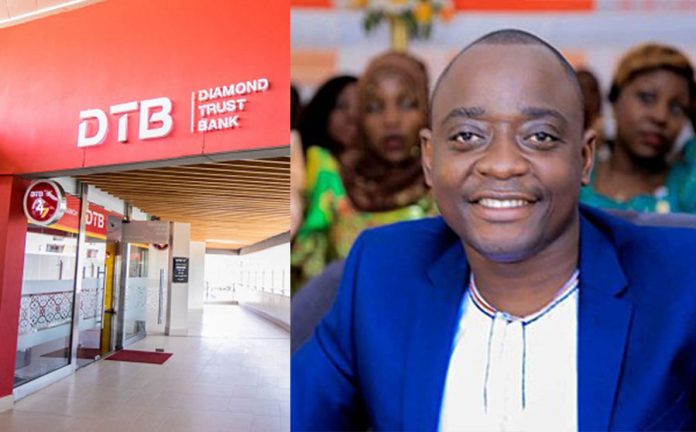
The raging court battle between city businessman Hamis Kiggundu and Diamond Trust Bank (DTB) is raising questions that may in fact leave the “tycoon” even more exposed after it emerged that the case may be a ploy to allow the businessman buy time and find ways of paying back the billions of shillings borrowed from DTB.

In January this year , Ham Enterprises owned by businessman Hamis Kiggundu took Diamond Trust Bank (DTB) to court arguing that the bank had “fraudulently, illegally and irregularly debited huge sums of money,” from its account. It sought to recover Ugx.100 billion,

In its part, DTB had moved to recover monies owed by businessman and his related group of companies. The bank had moved to fast track the material case which it argued was a question of audit to establish whether the businessman’s accounts were wrongly debited as claimed by the plaintiff.

In its bid to have the material case handled expeditiously and without further delays, DTB voluntarily sought to weave the 30% advance payment requirement that would have the businessman deposit close to USD2 Million with the courts before the case could commence. Those privy to this case say that the businessman was unable to raise the money and consequently used legal technicalities to cause adjournment and delay the hearing of the material case.

According to court documents, Kiggundu acquired the money in four tranches; $6.2 Million, $3.2, $458,604 and Ugx2.8 Billion both from DTB Uganda and DTB Kenya between February 2011 and September 2016.  The loans were consolidated later in 2018 and were to run for five years ending August 23 2023.

In a letter dated April 2011 to DTB, Kiggundu acknowledged the debt and promised to pay them by selling his properties in Makerere. Court Documents file by DTB show that Kiggundu was served with reminders and notices but still failed to meet his obligations.

After several adjournments instigated by Ham’s lawyers, the case came up for hearing on August 27 2020.  During the proceedings, a preliminary matter was raised by Ham’s lawyers who filed a separate application for it, alleging that DTBK was carrying out illegal banking business in Uganda by lending money to Ham Enterprises. They also stated that DTBU was facilitating and abetting the illegal conduct of Financial Banking Business in Uganda contrary to the Financial Institutions Act.

Load Syndication

A statement by Uganda Bankers Association (UBA), though not aimed directly on this matter, sought to reaffirm that the banking sector in Uganda was robust and solid but required borrowers to meet the loan obligations so as to allow the industry to continue offering affordable credit to the economy.

The statement acknowledged the process of loan syndication which involves a group of lenders funding portions of loan to a single borrower. Loan syndication often happens when a borrower requires an amount too large for a single lender to provide or when the loan is outside the scope of a lender’s risk exposure levels.

Controversial

Even though the businessman has had a long standing relationship with DTB and other banks and financial institution, there are constant murmurs about his style of doing business which in some circles has raised questions about the source of his funds.

For instance  a number of businessmen and prominent personalities came out openly to deny claims that they were part of Ham’s dispute with DTB.

Businessman Yiga Moosa, who operates from Entebbe and deals with produce amongst other businesses said he was shocked to see his name being dragged into the matter which he says he has no knowledge of. “We have absolutely no issue with DTB Bank and we know they are a reliable and professional partner in business since they have supported us to grow some of our businesses’” he said.

The businessman says he started banking with DTB in 2016 and in 2017, there is a small matter that arose but was settled amicably which in the right way to do business as partners. “I had an issue of delayed repayments with DTB but this matter was resolved and all the payments were settled. I do not see why anyone would now want to drag my name in their own disputes. If anyone is in default, he should pay his obligation or discuss on how to pay since everyone is facing some hardships during this period”.

Questions also abound about his award and handling of the Nakivubo Stadium project which critics say has stalled because Ham failed to pay contractors and other services providers.


Stories Continues after ad

NIRA temporarily closes office in Wakiso due to COVID-19

nira

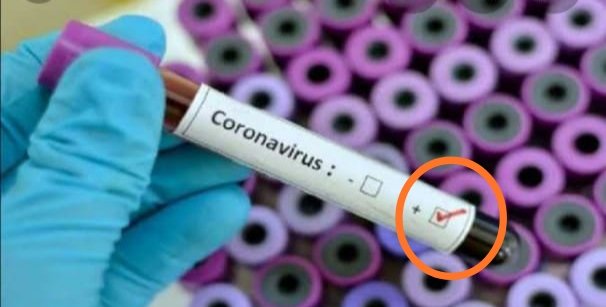
The National Identification and Registration Authority (NIRA), has temporarily closed its Wakiso district office after one police personnel attached to it tested positive for COVID-19.

“As we manage the situation, the NIRA Wakiso district office will be temporally closed to avoid any possible further spread of infections and will be reopened to the public on Wednesday, September 16 once the premises have been disinfected in line with the Ministry of Health guidelines,” reads part of a notice by the NIRA management.

The police officer who is said to have tested positive for the virus is currently under case management.

The issuance of National IDs, birth and death certificates, fresh registration for National IDs, replacement of lost, defaced and damaged National IDs and correction of errors have all been suspended.

“Clients may however all other services from any other NIRA office nearest them except for National ID card issuance for those who registered at Wakiso office,” the statement reads.

Members of the public have been encouraged to continue observing the COVID-19 Standard Operating Procedures (SOPs) and to take necessary precautionary measures stipulated by the Ministry of Health to reduce spread of infections.

As of September 9, the cumulative coronavirus cases in Uganda reached 4,101 with 46 deaths and 1,876 recoveries recorded according to figures from the Ministry of Health.

Stories Continues after ad

CSOs call for domestic funding for effective service delivery among people living with HIV

during the media briefing at Golf Course hotel in Kampala

The Civil Society Organisations (CSO) advocating for Sexual Reproductive Health and Rights (SRHR), AIDS and Gender Based Violence (GBV) have called for domestic funding for comprehensive, efficient and effective service delivery to people living with HIV in the country.

The clarion call was made by the Executive director for the Foundation for Male Engagement Uganda (FOME) Mr. Joseph Nyende at Golf Course hotel in Kampala. He also called for integrated service provision at the various health centers in the country.

According to CSOs, HIV services can provide an effective entry point for the key SRHR and SGBV services such as family planning, cervical cancer screening, post-exposure prophylaxis (PEP) and other SGBV support and maternal health.

The CSOs advocacy coalition for integration, is a group of over 23 organisations working to promote integrated SRHR, HIV, GBV programing and an enabling environment in Uganda. The coalition is coordinated by the FOME with support from Uganda aid information center (AIC).

“By integration we mean that clients should be able to receive medical attention in a one stop center. In this a client can be referred to a different service point but within the same facility to access all the required services,” he said.

Despite the progress toward integration in Uganda, there is inadequate domestic funding for SRHR, HIV and GBV. This according to Mr. Nyende has retarded the serves delivery in the country and this in manifested in continuous stock out of medical supplies.

Martha Nakato from the Uganda Network of Young People Living with HIV (UNYPA) urged the ministry of labour gender and social development to expedite the process of finalizing and approving the national out of school sexuality education framework and the implementation guidelines for adolescents and young people.

“School sexuality education is not sex education. The policy will help guiding school going children and best handle menstrual challenges, and other issues which contribute to the hiking numbers of school dropouts,” she said.

Winfred Ikilai, from the national forum for people living with HIV and Aids network in Uganda (NAFOPHANU) said there is inadequate human resource to support SRHR, HIV and GBV services, recruitment and retaining of health workers remain a big challenge especially in the remote areas.

Stories Continues after ad

How Jacob Kiplimo stunned Ethiopia’s Barega in thrilling 5000m race

jacob kiplimo

Uganda’s Jacob Kiplimo won the 5000m clocking a time of 12:48:63 at the IAAF Golden Spike 2020 Athletics in Ostrava, Czech Republic on Tuesday.

The men’s 5000 was billed as a potential meet (12:48.81) and maybe even world record (12:35.36) attempt for 20-year-old Selemon Barega of Ethiopia. Barega, the 5th-fastest man in history (12:43.02 pb), lived up to his end of the bargain and went out very aggressively with the two rabbits as the first 1k was covered in under 2:30. When the second rabbit stepped off just before 3k (7:41), it was pretty clear the world record wasn’t going to fall but Barega was still on pace for a good time.

Then suddenly, we had a race. Behind Barega, 19-year-old Jacob Kiplimo of Uganda was running his own race. 3.5 laps into the race, he was more than four seconds behind Barega. But at 3k, the gap hadn’t grown any larger; in fact, it had shrunk to under four seconds. With four laps remaining, Barega’s lead was down to three seconds. Just before 4k (10:18.41), Barega’s lead was gone entirely.

Kiplimo kept the pressure on and with two laps remaining he went to the lead. Barega responded and stayed right behind him until the finishing stretch. Coming off the final turn, Barega moved wide to try to pass Kiplimo and fans got to witness a fantastic finish. Watch a GIF of it here.

Barega pulled almost dead even with Kiplimo but in the end Kiplimo got the win in a massive personal best of 12:48.63, which also was a meet record. We timed his last 1600 in 4:02.0 and his last 200 in 27.3 (last 400 roughly 56.3). Kiplimo ended up second as Italy’s Yemaneberhan Crippa (13:02.26) broke the 30-year old Italian record in third, breaking 1988 Olympic 10,000 silver medallist Salvatore Antibo’s 13:05.5.

Coming into the race, Kiplimo’s personal best was just 13:13.64, but that came when he was just 16 years of age at the 2017 Prefontaine Classic. It’s not like Kiplimo didn’t have significant credentials; he did, just not on the track. He was the silver medallist at World XC last year in Denmark, beating the likes of Geoffrey Kamworor and Barega himself handily (Kamworor was third, 11 seconds behind Kiplimo, and Barega was 5th, 32 seconds behind).

The 19-year-old long-distance runner has elevated his profile high enough with three world records (WR) in nine months to add to last year’s 5000m Diamond League (DL) trophy, the World Cross-country title and the world 10000m gold.

Meanwhile, middle distance runner Winnie Nanyondo finished ninth in the 1500m race.

Stories Continues after ad

UPC Chairman Edward Kakonge insists Akena must go


Uganda People’s Congress (UPC) Chairman Edward Kakonge has dismissed claims by Lira Municipality MP Jimmy Akena that the Court of Appeal ruling that nullified his presidency was overtaken by events and cannot be implemented.

In a statement through his Lawyers from Galisonga and Co Advocates, Prof Kakonge wrote that: “the said purported election of Hon. Jimmy Akena, MP, was nullified by the High Court in Misc. Cause No. 086 of 2015, from which Hon. Akena and his group appealed to the Court of Appeal, Vide Civil Appeal No. 020 of 216.”

Prof Kakonge noted that the Court of Appeal in its final Judgment confirmed the decision of the High court in Misc. Cause No. 086 of 2015 and nullified the purported election of Hon. Jimmy Akena.

According to the ruling of the Court of Appeal, Akena was found to be occupying the position of President of the Uganda People’s Congress(UPC) party illegally, and didn’t have any right to manage the affairs of UPC.

The Court ruling also means that the purported delegates’ conference having been held in contravention of a court order issued in the presence of the parties and their lawyers and duly extracted and served on the same day, was duly binding and acting in contravention of the same is illegal and contemptuous of court, which in itself is a crime.

The press statement quotes Prof Kakonge explaining that in the circumstances, nothing legal can obtain from an illegality, to wit contempt of court and of course the express decision of court nullifying the election of Hon. Jimmy Akena, MP.

“Having decided as court of Appeal did, the legal position standing is that Hon. Amb. Olara Otunu and/or any person, in this case. Senior Counsel Peter Mukidi Walubiri hold the reigns of the party and are in the process of effecting the findings of court by among others takings steps to carry out functions under the UPC constitution,” concludes Prof Kakonge.


.

Stories Continues after ad

Where are we headed as a country?

Gen. Tumukunde.


Over the past weekend, the country has witnessed ugly scenes across the country as the National Resistance Movement Organisation conducted its parliamentary candidate primaries election ahead of the 2021 general election. There were reported cases of voter bribery, intimidation and in some cases violence against the candidates and their supporters. Worse still the media was awash with reports of participants acting in a manner contrary to the Ministry of Health #Covid-19 pandemic guidelines. One wonders what will happen during the general elections when opposition political players will be in the field too.

Elections provide an opportunity for a civil democratic society to hold their political leaders to account at regular intervals. If the leaders do not perform to the electorate’s expectations, the electorate is then provided with an opportunity to vote them out.
Unfortunately, elections in Uganda have been reduced to a show of financial might and power by those in positions of responsibility. This presents a very dangerous trend that has been growing over the years, and if it is not addressed, the electoral process shall continue losing credibility and legitimacy.

These most sacred of democratic tenets are being progressively eroded. They have been eroded by a government, which is averse to any differing political views, to the extent that holding such views is criminalised. The process of NRM internal elections, has unveiled the sad reality that as a country, we have become inwardly and institutionally corrupt, militaristic, patronising, and institutions have been misused, especially the security ones that are expected to be politically impartial.

Many who sacrificed to bring this government into power and rid Uganda of dictatorship did not envisage that the situation would deteriorate to this level. I for one, wanted to see a Uganda that respected democracy and the rule of law. A Uganda that was fair for all, a Uganda where every person had a fair chance in life, where people lived in peace and harmony. That is not where we are now. Something drastic must be done to restore normalcy in this beautiful country.

Renewed Uganda (RU) condemns in the strongest possible terms the violence and chaos that we have seen playing out in the length and breadth of this country. Our neighbours and the rest of the world must be looking on mortified at these scenes. Most importantly we, the people of Uganda, must not accept this as the new normal. We must not allow to be drawn into senseless battles that leave us vulnerable to injustice just because a few individuals want to be elected to certain positions.

Uganda is at a crossroads. We have a chance to choose between a political party which prides itself as the harbinger of chaos or a platform that promises a way forward for the Uganda that we all love. Uganda is a great country. I know this. I have had the chance to serve it in various capacities. I have been very proud to wear the uniform of our national institutions, which has now been reduced to aiding political war-mongers to excel in their game.

With the kind of recriminations that we have watched on television and in the mainstream media for the last few days, this is certainly not where Uganda should be. We condemn and reject this approach. We call for a process that is truly democratic, a free environment, and fair playing field so as to enable Ugandans express themselves without fear or favour. Ugandans across the country are a decent hard working population who look forward to a better tomorrow.

We at RU will continue to work relentlessly to bring that reality to Uganda. Until this is achieved, let us continue to be firm and focused on the road before us. It is only a matter of time.

For God and My Country.
Lt Gen (Rt) Henry Tumukunde.

Stories Continues after ad

Gov’t issues SOPs for schools ahead of reopening

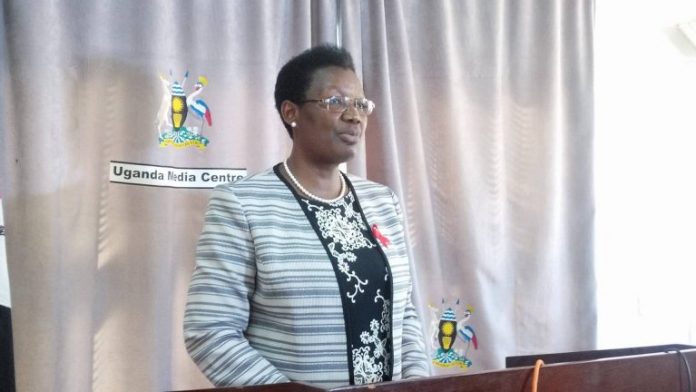
Minister of Education and Sports Janet Museveni

Government has outlined new Standard Operational Procedures (SOPs) for candidate classes, universities and other education institutions for all final year students starting September 20.

In March, President Museveni directed all education institutions to close in order to help reduce on the spread of the deadly coronavirus in the country.

Unlike Kenya which settled for a dead year, Uganda is still optimistic that the academic year can be salvaged.

Government has been gradually easing the lockdown on different sectors as advised by the technical team of scientists and Ministry of Health. A decision has now been taken to allow education institutions to reopen in a phased manner under clear Standard Operating Procedures (SOPs).

Education institutions shall reopen starting September 21, 2020 for candidate classes (P7, S4 and S6) and final year students in higher institutions of learning. Institutions shall follow a revised national education institutions calendar as shall be provided.

Government has further agreed to open International schools as well as per SOPs effectively September 21.

The Ministry of Education and Sports has issued guidelines to help education institutions take the necessary steps in mitigation of the risk of transmission and spread of the disease and to reduce the impact of the pandemic on teaching and learning.

The guidelines, together with the standard operating procedures that have been issued by Ministry of Health, should guide managers of education institutions on what needs to be done to create a safe environment for both learners and staff within the education institutions.

The SOPs are;

Prior to reopening, the management of each education institution serving as quarantine centres shall undertake to ensure that if their institution is disinfected and confirmed as safe for resumption operations. The disinfection shall be done with support of the respective district #Covid-19 taskforce.

The management of all education institutions shall hold a staff meeting to discuss the implementation of the SOPs within the institution and agree on appropriate classrooms and dormitory spaces to ensure physical spacing of two meters between learners in class and in dormitories

Each institution shall constitute a #Covid-19 taskforce of not more than seven (7) members, including two (2) learners and a member of the support staff.

Each class/lecture room shall have a student monitor responsible for promoting compliance to #Covid-19 control and safety measures

All education institutions shall ensure the proper use of facial masks that must be worn at all times. Each learner should have a minimum of two face masks.

Education institutions shall take every precaution to ensure that no learner, who is reported to have entered the country illegally, is allowed into institution premises. Such learners should be reported to the relevant authorities for necessary action.

Education institutions shall restrict entry to their premises by members of the public.

Education institutions should provide extra support to safeguard vulnerable learners, including SNE learners, and learners with identified health conditions.

Institutions should establish or strengthen collaboration with #Covid-19 District Taskforce and social service providers for continuity of critical services in institutions such as health screening, school feeding programs, guidance and counseling.

Each institution should appoint a member of staff from the established #Covid-19 taskforce to be a Community Liaison Officer (CLO). The CLO shall coordinate the institution’s relationship and engagement with the community to promote observance of #Covid-19 control measures.

Institutions should guide and counsel learners against #Covid-19 related stigmatization.

All education institutions should conduct behavior change and health education sessions for staff and learners and provide reminders on safety, in form of posters, on safe behaviour.

Each institution should re-arrange the sitting of learners using all available rooms within the school to ensure the required social distancing. This may include use of libraries, laboratories, dining halls, main halls where available.

Where classrooms have temporary partitions, institutions should remove the partitions to create larger rooms for ample sitting and aeration/ventilation.

Where available, main halls, dining halls and other large rooms should be prioritized for use as classrooms to ensure that available teachers cater for a sizeable number of learners per class. However, there should not be more than seventy (70) learners in a room/hall of any size for a lesson or other purposes.

A foot-operated hand washing facility shall be placed at strategic point of access to each block (and floor where applicable) used by learners and staff.

Safe temporary shelters, such as tents, may be used as classrooms. Open air spaces, such as tree shades may be improvised as temporary venues for some classes.

There shall be no group and close contact co-curricular activities in all education institutions until further notice. Nevertheless, learners should be guided to engage in physical activities while observing the social distancing of at least two metres.

All education institutions shall avoid general assemblies that bring together a large number of students.

There shall be no external mocks or other external examinations organized for students in secondary and primary schools.

Institution heads should ensure that all staff integrate #Covid-19 awareness and prevention messages in every lesson.

There shall be no career days, class days or official visitation days, in education institutions until further notice.

Mid-morning and lunch breaks shall be staggered and fully supervised by the teachers for adherence to social distancing, wearing of face masks and hand washing.

Institutions with large numbers of candidate/final year classes, which cannot be accommodated in the available classrooms at the social distancing of two metres, shall make arrangements to operate either:

Morning and afternoon shifts. Where this is applicable, the morning shift shall end at 12:30pm and the afternoon shift shall start at 2:00pm to allow for disinfection of the affected surfaces before the next shift or

An alternate-day attendance schedule where different streams attend on alternate days as may be deemed appropriate, in a bid to ensure that numbers are manageable.

For boarding institutions, after-class afternoon and evening programmes shall not involve team or group and close contact sports or activities; and they shall be supervised by a dedicated team of staff. Every dormitory shall have a resident tutor to supervise adherence to the SOPs.

Institutions should not keep learners beyond the official school closing time.

Schools that do not employ a qualified and dedicated health worker shall establish a formal collaboration with a health facility within a radius of 5kms for quick response and management of emerging health issues.

Each education institution shall work closely with the district #Covid-19 taskforce to organize basic training for its staff on management of #Covid-19.

Institutions shall build staff awareness and knowledge on #Covid-19 safety measures through regular sharing of accurate information and literature.

Education institutions shall ensure that restrictions are in place to prevent teachers from part-timing in multiple institutions and thereby increasing the risk of spreading infection among institutions.

Heads of institutions should ensure that only staff members who are on duty are present at the institution on a given day.

Stories Continues after ad

UNRA seals Shs500b contract to construct three roads

UNRA ED

The Uganda National Roads Authority (UNRA) has handed over three multi-billion contract documents to two Chinese companies for the upgrading and construction of three roads to a tune of UGX500 billion.

The contract signing ceremony was officiated by UNRA Executive Director Allen Kagina on Tuesday, September 8, at the UNRA Headquarters in Kampala.

The roads are; Kira-Matugga road, the upgrading of Najjanankumbi-Busabala road (11km) with two signalized junctions and solar powered lighting, and the rehabilitation of Masaka Town roads starting along the Kampala-Masaka highway.

The Kira-Matugga road which was handed over to Chongqing International Construction Corporation (CICO) will cost over Shs200 billion and expected to be finished within 36 months.

The new improvements will have provisions of two-metre segregated pedestrian walkways and two-metre segregated cycle lane on each side of the road and boda-boda stages at each of the signalized junctions along Kyaliwajjala-Matugga road together with solar powered lighting along the entire length of the road.

“The land acquisition process for Kira-Matugga road is ongoing and is being managed by the UNRA in-house team. A total of 6.5 km of the right of way have been acquired representing 56.12 percent of the total land area required and the entire right of way is expected to be acquired by June 2021,” said Mrs Kagina.

The rehabilitation of Masaka Town roads with a bitumen surfaced link starting along the Kampala-Masaka highway and terminating on Masaka-Mbarara Highway will cost Shs50 billion. This will help reduce on vehicle operating costs and improve the flow of traffic from Nyendo Trading Center to Masaka Central Business District.

“During construction for the Masaka roads, local people; on average over 200 locals will benefit from employment opportunities working on the road sites and/or various economic activities to support the construction works,” stated Ms Kagina.

The upgrading of Najjanankumbi-Busabala road (11km) with two signalized junctions and solar powered lighting will cost Shs258 billion and this will help reduce dust nuisance along the road and the related health hazards.

“On a very special note, UNRA would like to note that this is an example of a project where we have successfully partnered with the communities along the road corridor to realise a public good. This has been ably exhibited by the Project Affected Persons willingly offering land for the right of way without being compensated. We commend and applaud this community and its leadership for this spirit of partnership,” stated Ms Kagina.

Stories Continues after ad

Flights at Entebbe to resume in October

Uganda Airlines plane at Entebbe International Airport


Entebbe International Airport will begin phased re-opening in October with 13 flights scheduled for 1st October.

In a letter to different Airlines Managers, Al -Hajji Eng. Sooma Ayub,the Aviation and Airport Security Director revealed that flights by Qatar Airlines,Turkish Airlines, Brussels Airlines,Kenya Airways, Royal Dutch Airways, Rwanda Air,Air Tanzania and Ethiopian Airlines are among those cleared to begin passenger flights.

Click on the link below to read:

Phase 1 schedule CAA

Phase 1 of the re-opening of the Airport will run for 3 months from October-November.

As part of the lockdown imposed to curb the spread of the deadly Covid-19,the government closed Entebbe Airport to passenger flights with only cargo flights allowed to fly.

The resumption of passenger flights will be a welcome boost to Ugandans keen on flying for business and medical reasons.

Stories Continues after ad