Stanbic Bank
Stanbic Bank
16.7 C
Kampala
Stanbic Bank
Stanbic Bank
Home Blog Page 983

#Covid-19: Eddy Kenzo returns home after four months in Ivory Coast

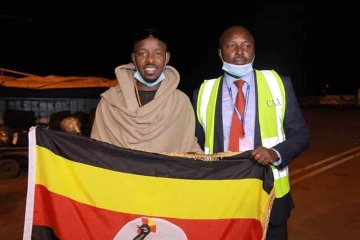
Eddy Kenzo and Uganda Airlines official.

Singer Idrisa Musuza commonly known as Eddy Kenzo, has returned home four months since President Yoweri Museveni ordered for a lockdown in March. The lockdown peddled at curbing the spread of #Covid-19 pandemic.

He arrived this morning at 3.30 am and proceeded to the quarantine center where he will spend 14 days. He lauded the government of Uganda for thinking about them. “Thank you my fans, I am finally home, the party starts after mandatory quarantine,” He said.

Eddy Kenzo came aboard Uganda Airline chartered plane repatriating Ugandans stranded in West Africa.

The singer had traveled to Ivory Coast to perform at the Masa Fest on  March 16, 2020. After his performance, the Tweyagale hit maker chose to stay behind to finish up some projects and just when he thought about flying back to the country, the ban had already been issued.

Late in May the Speaker of Parliament Rebecca Kadaga advocated for his return saying the singer is in dire state and called on the government to help and return him home.

While in Ivory Coast, Eddy Kenzo became the first active Ugandan singer to make one million Instagram followers. The singer has been active for less than 15 years however ,his achievements and following of social media is not compared to any artist in the country.

Despite that remarkable achievement, Eddy lies far behind Ugandan socialite Zari Hassan and Tanzanian singer Diamond Platnumz and other top East African celebrities.

In May this year, the BET award winner scooped Youtube’s Gold Creator Award. He became the first Ugandan to receive the Gold Creator Award. The Award is part of a series of gifts by YouTube to its most popular channels and the fourth most prestigious YouTube Creator Award, given to channels that surpass one million subscribers.

The other YouTube Creator Awards include The Silver Creator Award, Gold Creator Award, Diamond Creator Award, Custom Creator Award and the Red Custom Creator Award.

As he was trapped in foreign land, in June, Kenzo was crowned artiste of the year, on top of best Afrobeat and inspiration song award, he was crowned during the seventh Zzina Awards held live Online.


Stories Continues after ad

MTN to sell 20% of its shares to Ugandans

mtn

Telecom service provider MTN Uganda is set to sell 20 per cent of its shares to Ugandans and East Africans willing to buy them.

Currently, the government of Uganda is forcing all telecom operators, including MTN Uganda and Airtel, to list a fifth of their shares on the Uganda Securities Exchange to allow locals benefit from the sector’s profits. However, Eagle Online has learnt that MTN is negotiating National Social Security Fund to have the fund purchase the shares instead.

According to a source in MTN, the company will soon list its shares and advertise for people to take up shares. The source confirmed the shares will be listed next year.

“Kindly be more patient as soon as we list our shares, it will be advertised. Please note that it is work in progress.” The source said. When asked whether it is part of the conditions as the government renewed its contract, the source declined to reveal.

The development was confirmed by the spokesperson of Uganda Communications Commission Ibrahim Bbosa who said that the shares are limited to Ugandans and East Africans from Tanzania Burundi, Kenya, Rwanda and South Sudan.

This comes at the time when the government had just renewed the telecom’s contract. Earlier this month, the government granted a 12-year operation license extension for MTN Uganda.

MTN Uganda was first granted a Second National Operator License for the provision of telecommunications services on October 20, 1998 for a period of 20 years.

The telecommunication giant paid $100 million for renewal of the license. The license, having expired in October 2018, was followed by protracted negotiations involving the government, UCC and MTN Uganda, culminating in this breakthrough.

Stories Continues after ad

NTV journalist Agnes Nandutu picks NRM nomination forms

Agnes Nandutu

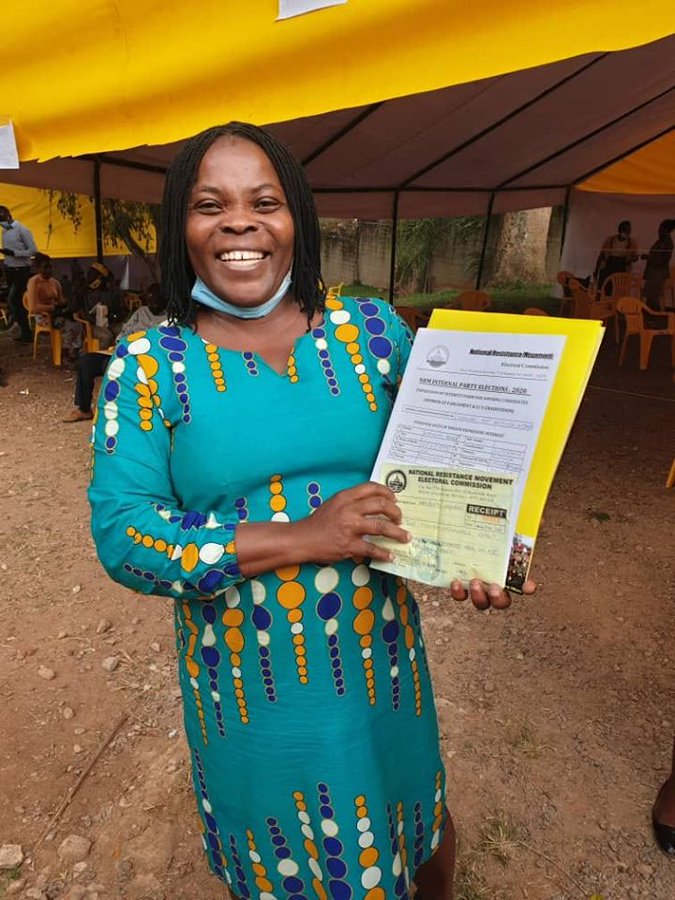
Famous NTV journalist Agnes Nandutu has picked National Resistance Movement (NRM) nomination forms.

The senior political reporter, moderator and a speaker NTV Peoples Parliament, intends to stand as the Woman MP for Bududa District. She adds to a group of senior journalists like Kazibwe Bashir Mbazira, Joel Ssenyonyi who opted to join active politics.

Nandutu served as the president of the Parliamentary Journalist’s Association from 2011 to 2016. She scripts and narrates the popular satire Friday segment called Point Blank on NTV Uganda. In 2011, she received a Christmas gift from The Observer for her NTV show, Point Blank.

She joined Radio Uganda as a reporter. Later, she pursued a diploma in Journalism at Uganda Institute of Journalism and Media studies. She worked at Daily Monitor as a freelance reporter. Between 2002 and 2008, Agnes worked at Impact FM as a staff reporter before she joined NTV Uganda.

Stories Continues after ad

Five Radio Simba employees arrested by Police over a skit

Five Radio Simba employees have been arrested. Four of them are known for their stage name ‘Bizonto’, the five were picked up from the Radio Simba offices in Bukoto early this morning on charges of sectarianism.

They include Julius Sserwanja also known as Kidomoole, Mbabaali Maliseeri (Uncle Luyuguumo) Sssaabakaaki Peter (Omuzinyuuzi) and Gold Ki Matono, also known as Opeto journalist. Three of them are part of the stations morning show which is packaged with satirical skits, mainly linked to the current affairs of the country. One of them Sssaabakaaki Peter Kajabuzi (Omuzinyuuzi), works with the evening show – Mukulikeeyo and one is a Journalist James Kamali who was arrested while taking photos.

The four are part of the Radio Simba morning show, Binsangawano. However, the skit that led to their arrest is not part of the broadcast at Radio Simba, but one of the recorded comedy skits, which are shared on various platforms, including YouTube, and Facebook.

The comedians mockingly prayed for Uganda’s top leaders in a skit titled who are our leaders?  The seven-minute skit which was uploaded on July 15, 2020, has attracted more than 11,000 views on YouTube alone.

In the skit, which starts with a musical, the group members list all persons who are holding key positions in the government, however, pointing out only those individuals from Western Uganda. They, for instance, point out that although the known Inspector General of Police  is Martin Okoth Ochola, the actual police boss is Maj. Gen. Sabiiti Muzeeyi, who also hails from the west.

Section 41 of the Penal Code defines sectarianism as the practice of degrading or exposing to hatred or contempt or disaffection for anyone on the basis of religion, tribe, or ethnic or regional origin by utterance, printing, publication or performance any such act.

According to the penal code whoever engages in such acts commits an offence and is liable on conviction to imprisonment for a term not exceeding five years.

Stories Continues after ad

New COVID-19 Law Lab to provide vital legal information and support for global response

Coronavirus testing kits

The COVID-19 Law Lab initiative gathers and shares legal documents from over 190 countries across the world to help states establish and implement strong legal frameworks to manage the pandemic. The goal is to ensure that laws protect the health and wellbeing of individuals and communities and that they adhere to international human rights standards.

The new Lab is a joint project of the United Nations Development Programme (UNDP), the World Health Organization (WHO), the Joint United Nations Programme on HIV/AIDS (UNAIDS) and the O’Neill Institute for National and Global Health Law at Georgetown University.

Well-designed laws can help build strong health systems; evaluate and approve safe and effective drugs and vaccines; and enforce actions to create healthier and safer public spaces and workplaces. Critically, they are key to effective implementation of the WHO International Health Regulations: surveillance; infection prevention and control; management of travel and trade; and implementation of measures to maintain essential health services.

“Laws and policies that are grounded in science, evidence and human rights can enable people to access health services, protect themselves from COVID-19 and live free from stigma, discrimination and violence,” says Achim Steiner, UNDP Administrator. “The COVID-19 Law Lab is an important tool for sharing good practices on laws and policies.”

The COVID-19 pandemic has seen a vast increase in urgent legislative action to control and reduce the pandemic.

“Strong legal frameworks are critical for national COVID-19 responses,” said Dr. Tedros Adhanom Ghebreyesus, WHO Director-General. “Laws that impact health often fall outside the health sector. As health is global, legal frameworks should be aligned with international commitments to respond to current and emerging public health risks. A strong foundation of law for health is more important now than ever before.”

However, laws that are poorly designed, implemented, or enforced can harm marginalized populations, entrench stigma and discrimination, and hinder efforts to end the pandemic.

“Harmful laws can exacerbate stigma and discrimination, infringe on people’s rights and undermine public health responses,” according to Winnie Byanyima, Executive Director of UNAIDS. “To ensure responses to the pandemic are effective, humane and sustainable, governments must use the law as a tool to uphold the human rights and dignity of people affected by COVID-19.”

The COVID-19 Law Lab is a database of laws that countries have implemented in response to the pandemic. It includes state of emergency declarations, quarantine measures, disease surveillance, legal measures relating to mask-wearing, social distancing, and access to medication and vaccines. The database will continue to grow as more countries and themes are added.

It will also feature research on different legal frameworks for COVID-19. These analyses will focus on the human rights impacts of public health laws and help countries identify best practices to guide their immediate responses to COVID-19 and socioeconomic recovery efforts once the pandemic is under control. It builds off the work of the UHC Legal Solutions Network, which was established to help countries achieve universal health coverage through the implementation of rights-based legal frameworks.

“We need to track and evaluate how laws and policies are being used during the Pandemic to understand what works,” said Dr. Matthew M. Kavanagh, faculty in Georgetown University’s Department of International Health. Katie Gottschalk, Executive Director of the O’Neill Institute for National and Global Health Law at Georgetown University Law Center added, “We must learn lessons from the early stage of pandemic policies to implement the most effective laws going forward – the COVID-19 Law Lab allows us to do just that.”

Stories Continues after ad

FUBA cancels 2020 Basketball season

fuba cup cancelled

Federation of Uganda Basketball Association (FUBA) has announced that it has canceled all the local basketball activities for this year due to the Covid19 pandemic.

The decision to cancel local activities was made during a FUBA Executive Meeting held on Thursday, July 23.

The 2020 basketball season was scheduled to start in April only for the Coronavirus pandemic to breakout in the country.

Uganda will only take part in the 2021 Afrobasket Qualifiers scheduled for November 27-29 in Alexandria, Egypt.

Uganda is in Group E of the qualifiers with Egypt, Morocco and the zone 3 winner.

The resolutions passed at the meeting by the FUBA Executive Committee;

  1. That all 2020 basketball competitions as per the FUBA calendar with the exception of the Afrobasket qualifiers, are hereby cancelled.
  2. That all contractual issues between players and their clubs will be handled in accordance with the contract laws of the country.
  3. That players that had registered with their clubs for the 2020 basketball season, without formal contracts will be handled as per the FUBA rules and regulations of 2020 which provide for a default contract of two years. The two years will, therefore, start from 2021 onwards.
  4. That the executive committee shall use this time to come up with a clear road map and plan for the 2021 basketball season which shall be communicated to all members not later than 31st of August 2020.
Stories Continues after ad

Dolphin Suites unveil friendly offer to customers willing to book entire hotel

Dolphin Suites has unveiled a friendly offer to all its customers willing to book the entire hotel for a day. The offer is put at Shs 4 million per day.

The hotel which is part of the Speke Group of Hotels, is a unique boutique style hotel offering 27 luxurious and comfortable guest rooms with individual balconies overlooking the hillside of Bugolobi and city of Kampala. An Ideal choice for those who want a quiet stay, close to business and corporate houses.

Dol

Located 5 kilometers  from the city centre and 35 kilometers  north from the Entebbe International Airport, the hotel is 500 meters from Village Mall Bugolobi and this offer shopping opportunities to all travelers

It is a perfect ambience that will ensure value for money on the guest’s part. Henceforth, Dolphin Suites has established itself as the epitome of relaxed grandeur, welcoming visitors to the city with stunningly appointed rooms and a host of facilities.

A combination of services and dedication of the trained and motivated staff will make your stay comfortable leaving you feeling home-away-from-home.

dolphin suites

Members, residents and guests can also take time out to relax and de-stress with a little pampering. We offer an array of beauty and relaxation treatments for members to enjoy from a massage to ease any worries away, to a relaxing facial or an invigorating body exfoliation treatment.

The hotel also has an excellent bar, restaurant and outstanding banqueting facilities where one may relax, meet friends or even discuss business.

Stories Continues after ad

World Bank provides $150 Million to enable more Ugandan children access and complete Secondary Education

secondary students.

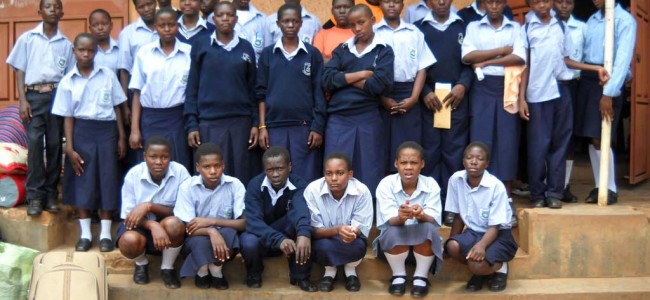
World Bank’s Board of Executive Directors have approved $150 million to enable greater access to higher quality secondary education among Ugandan children in safer and better equipped learning environments that are also supportive of girls’ education. The project is financed by an International Development Association credit of $90 million, and a grant of $60 million from the Window on Host Communities and Refugees.

The Uganda Secondary Education Expansion Project (USEEP) will directly benefit about 2.5 million learners. A total of 116 new lower secondary day-schools will be constructed, and 61 schools will benefit from additional classrooms in underserved districts, creating 70,300 new spaces for learners, including 30,000 in areas hosting refugees. Schools will be fully furnished and equipped to accommodate two streams of students. The project will provide student textbooks and teacher guides, support continuous teacher professional development, and implement an accelerated education program for children who are not currently attending school.

“Uganda needs to expand access to secondary education to enhance its human capital. This is essential if Uganda is to improve the future wellbeing of its citizens while also enabling the economy to grow through their increased productivity,” said Tony Thompson, World Bank Country Manager. “This project aims to provide new school spaces while at the same time creating a conducive learning environment which is safe, promotes students’ personal growth and self-esteem, and increases retention for both boys and girls. It includes special measures to reduce the prevalence of early pregnancies and to assist young mothers to re-enter lower secondary education when they drop out.”

Uganda is a pioneer in Sub-Saharan Africa in implementing policies to achieve universal access to primary and secondary education. Since the introduction of Universal Secondary Education, enrollment has increased at an average of 6 percent annually – growing from a total of 954,000 students enrolled in 2007 to around 1.5 million in 2017. The rate of growth, however, remains low compared to 25 percent in Kenya and 16 percent in Rwanda. Further, the enrollment rate at the secondary level in Uganda has stagnated since 2007 measuring only 28 percent in 2017, much below the rates in neighboring countries. Fifty-nine  percent of secondary schools in Uganda are non-government.

A big percentage of learners drop out or fail to meet the minimum proficiency in reading and mathematics by the time they are completing basic education due to insufficient spaces in public schools and learning aids and low levels of skilled and motivated teachers. Children from poor families and those in underserved areas are less likely to learn, while early pregnancy, child marriage and the high cost of schooling are the main reasons why few girls complete secondary education. In refugee hosting districts, about 11 percent of refugee children are enrolled in secondary education, of which 33 percent are girls; compared to 18 percent for the host communities – far below the national average of 28 percent. Uganda is the largest refugee hosting country in Africa and third largest in the world with nearly 1.4 million refugees.

Uganda’s current budget expenditure on education is among the lowest in the region. During the last five years, education expenditure as a share of the national budget was declining in Uganda, reaching 10% in 2019/20 while the average for Sub-Saharan Africa (SSA) is 16% and has been steadily increasing over the same period.

“Uganda’s school age population is growing very fast increasing demand for quality education. This project is following a new model of expanding secondary education in Uganda that optimizes capital investment as well as recurrent costs while introducing quality measures. We hope that the proposed model will enhance prospects for further sustainable expansion of secondary education in Uganda,” said Kirill Vasiliev, Senior Education Specialist and Task Team Leader.

USEEP complements other World Bank support to improve education in Uganda. The recently completed Teachers and Schools Effectiveness Project (funded by Global Partnership for Education and managed by the Bank) focused on primary education and early childhood development (ECD). As a result of the project, more than 17,000 teachers were trained in early grade reading and 13 million math and English textbooks were delivered improving the pupil-textbook ratio from 14 at baseline to two. About 28% of pupils can read 20 or more words per minute compared to 13% in 2016. An e-inspection system is in place to monitor and support school performance.

A draft Early Childhood Development Policy has developed, while ECD caregivers from more than 2,500 centers have been trained and are providing care to more than 83,000 pupils across the country. A total of 929 classrooms with latrines for both girls and boys and rain harvesting tanks have been constructed benefitting 55,200 pupils. The Uganda Skills Development Project, Second African Centers of Excellence Project and other operations with educational components are currently under implementation.

Stories Continues after ad

Former Tanzanian President Benjamin Mkapa dead

Inter-Burundi Facilitator, former Tanzanian president Benjamin Mkapa.

Dar es Salaam. Tanzania’s former President Benjamin William Mkapa, 81, has died, President John Magufuli has announced.

While relaying the news on Tanzania Broadcasting Corporation (TBC) July 24, President Magufuli said Mr Mkapa died at Dar es Salaam Hospital where he was admitted.

“I call on all Tanzanians to receive the news of his death and to pray for Mzee Mkapa. More information will be released but Mzee Mkapa is no more,” he said in brief television statement.

He also declared a seven-day mourning period. During this time, all flags in the country will be flown at half-mast.

Mr Mkapa led Tanzania from 1995 to 2005 before handing over to Jakaya Mrisho Kikwete.

He was born on November 12, 1938.

Stories Continues after ad

Museveni appoints Lukwago’s Deputy as State Minister for elderly

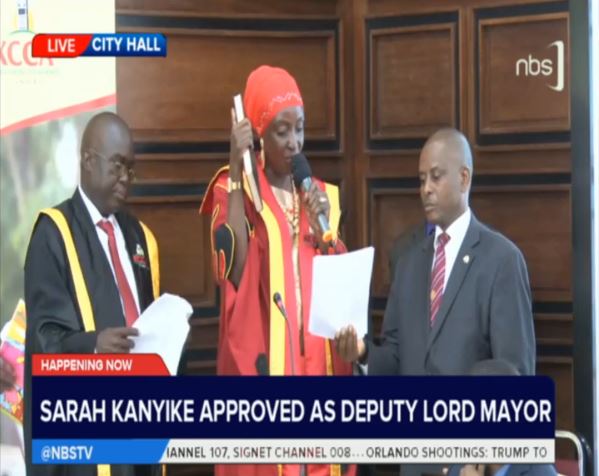
Sarah Kanyike taking Oath as Deputy Lord Mayor Kampala

President Yoweri Museveni has appointed former Deputy Lord Mayor, Sarah Kanyike as State Minister for Disability and Elderly designate.

Ms Kanyike has been Lord Mayor Erias Lukwago’s deputy and she had earlier been appointed as secretary for  Gender designate at city hall.

“Notice is hereby given that the appointments committee is scheduled for Tuesday July 28, 2020 at 10 am in the conference hall A basement floor parliament house to interact with Ms Sarah Kanyike, the presidential nominee  Minister of State for Disability and Elderly” reads a memo from Paul Wabwire, Deputy Clerk to parliament on behalf of Clerk to Parliament.

Meanwhile President Museveni has confirmed the appointment of Kisaka Kiyimba Dorothy as the KCCA Executive Director,Eng Luyimbazi Ssali as Deputy Executive Director and Grace Akullo as Director Human Resource.

In a July 21, 2020 letter, Justice Ralph Ochan,the Chairperson of the Public Service Commission(PSC),told the Public Service Minister Muruli Mukasa that the trio had been confirmed by the President.

“I am pleased to inform you that I have received this morning received an instrument of appointment signed by His Excellency the president making the following appointments,”Justice Ochan wrote.

Stories Continues after ad