Stanbic Bank
Stanbic Bank
19.6 C
Kampala
Stanbic Bank
Stanbic Bank
Home Blog Page 987

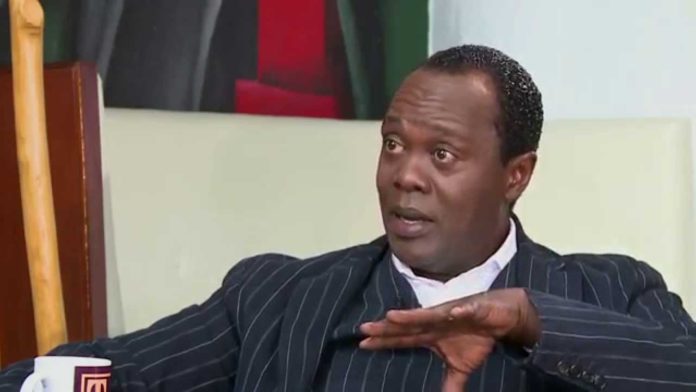
Kenyan Journalist Jeff Koinange tests positive for #Covid-19

Jeff Koinange

Kenyan journalist Jeff Koinange has revealed on Monday that he had tested positive for the Coronavirus.

Via Twitter, Mr Koinange said he was asymptomatic and that he was doing well.

According to the Health ministry, 90 per cent of the infected people in Kenya are asymptomatic hence the shift from hospital to home-based care for a majority of the patients.

Mr Koinange, a journalist by profession, said his family members were fine.

“All my close contacts have been informed. Right now I’m in self isolation,” he said, and thanked his employer, Royal Media Services, for support.

As of July 20, the total number of confirmed #Covid-19 cases in Kenya was 13,771

Health Chief Administrative Secretary (CAS) Rashid Aman also told the daily briefing that the death toll had increased to 238 and the number of recoveries to 5,616.


Stories Continues after ad

LDU refresher training kicks off following series of human right violations

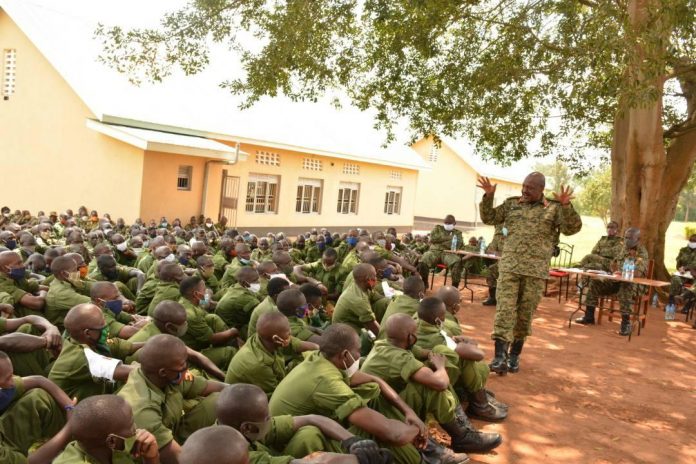
The Deputy Commander Land Forces, Maj Gen Sam Kavuma, has launched training of Local Defence Unit Personnel starting with those of Lubaga Battalion. The launch took place today at Kakiri Barracks where all the personnel of the 10 Battalions of the LDUs operating in Kampala Metropolitan Policing (KMP) Area will undergo weeks of the refresher course.

Maj Gen Kavuma hailed the LDUs for reversing the undesirable security situation that had prevailed in Kampala Metropolitan (KMP) area such as robberies, kidnaps and economic sabotage on factories among others.

“Records show that the LDUs have done great work in KMP. In the last six months alone, over 05 riffles have been recovered by the force, 02 pistols, 04 toy pistols, a number of walkie talkies, several rounds of ammunition of different caliber and other assortment of military stores. These could have been used to gravely destabilize the security of the people in KMP,” he said.

He added that four cars and over 15 stolen motorcycles, together with several household and office items were also recovered by the intelligence guided patrols of the LDUs in KMP in the last one year.

“To maintain this positive trend achieved, the General said that when a battalion of the LDUs are under refresher training, the rest will continue patrolling,” he said.

He noted that much as there are significant achievements registered, in all societies there are usually a few people who fall short of the required standards.

“Nevertheless, over 99% of the LDUs are doing a great job. The few who fell short of the operational standards have been charged in the court as per the laws.” He told the trainees.

“The army you joined a year or months ago has got a history. The NRA/UPDF journey is very long and full of obstacles but we have been successful not by accident but because of our pro-people ideology. It is important that we remind ourselves of this important journey and what helped us reach this far.”

He counseled the militants to watch each other’s back and ensure none strays away from the right NRA historical journey of symbiosis with the people. He added that discipline has been the first gear in the close to the 40 years’ drive of the NRA/UPDF journey.

“In order to stay with us you must observe conscious discipline. There is no short cut,” he said.

He urged the trainees to take the training seriously so as to enhance their professional journey in line with the acceptable ideology of the NRA/UPDF.

Gen Kavuma stressed that all special operations are backed by the mission training and so the current training is a routine in the UPDF. “This training was overdue but we first had to respond to an emergency situation of COVID-19,” he said.

The training will be conducted by the UPDF and Uganda Police Force instructors.  The training program includes political education, civil policing, Law and the role of media in military operations among others. The opening ceremony was also attended by Maj Gen Sam Kawaga the Commander of infantry Division and other Senior Officers.

Stories Continues after ad

As Zimbabwe grapples with sanctions it must also build Political and Economic Bridges to avoid regime change

Writer of the article David Matsanga.


By Dr. David Matsanga in London United Kingdom


Today Zimbabwe is faced with an uphill task of serving its people as result of imposed sanctions. These sanctions have created Structural Challenges. The Zimbabwe Land reforms of 1997 sparked off negative reactions from USA and other European Union nations ending up in imposing illegal sanctions. These illegal sanctions have impacted negatively on the economy of Zimbabwe.

The Elections of 2002 accelerated the road to sanctions that have created an ECONOMIC MELTDOWN in Zimbabwe.  I have written this article not as final solution but as part of the debate on how Zimbabwe can overcome the economic challenges it faces today. Mine is from the bottom of my heart to the Government of Ed Mnangagwa to Change his Economic strategies and perhaps overhaul the Finance docket holistically.

The ugly sanctions imposed by the USA government have destroyed Zimbabwe’s economy as there are no lines of credit for it to use. The suffering of the people of Zimbabwe is not only biting Zimbabweans but to some extent affecting most neighboring African countries that have taken in refugees and economic burden in support of Zimbabwe.

Let me return to structural challenges, which could cause “structural conflict” in Zimbabwe today.  There are serious concerns that the ECONOMIC MELTDOWN could trigger chaos in Zimbabwe.  This could torpedo the reforms that President Mnangagwa wants for Zimbabwe and change the politics of Zimbabwe. President Emerson Mnangagwa finds himself caught up between a hard legal place and a rock that has been denied transformation and reforms because of sanctions from USA.

The President of Zimbabwe and the people of Zimbabwe have tried to tackle these structural challenges but year in year out these challenges have turned into a monster called disillusionment of the masses.  They have created   serious tension and allowed malcontents of ‘regime change’ called NGOs to subvert a nation. Triggered and logistically supplied by George Soros men that the Government has allowed in cabinet. The time prune the mess out of Government is now.

I see a danger where the President of Zimbabwe faces few “immoral cartels” that have held a country on ransom with never ending corrupt regime change mechanisms supplied by George Soros. Looking at Malawi one sees the wind blowing all over Africa where USA CIA outfit of  George Soros could bring chaos in COVID- 19 era. I will say this without fear of contradiction because I love Zimbabwe. My being frank about African issues has earned me enemies but also helped those coloured with political amnesia to seek guidance from my many writings.  I have authored many articles on similar subject in Africa.

Just as I said in 2002 I will say it again in 2020. Sanctions have destroyed the economy of Zimbabwe and demonized the nation .The economy of Zimbabwe therefore it needs a “holistic overhaul strategy”. This will give Zimbabwe a breathing space. It will also help the government to stop the gravy train of disaster that has been hatched by WESTERN powers.

I understand that GDP is the measure of change in value of goods and services produced by each country like Zimbabwe which is determined and consumed on the basis of structural factors that are within Zimbabwe and outside Zimbabwe. If the value of the goods produced is poor and due to bad structural management which is part of structu

ral challenges within the country, no one will consume goods of such a country outside or inside Zimbabwe or worse still buy them.

Zimbabwe needs a combination of good factors in order to increase the GDP. Any moderate African country relies on three factors to survive as a nation: loans and grants from World Bank, IMF, Aid /grants from western countries, and Tax collection.  From the three items mentioned here the loans and grants from World Bank and IMF always come with stringent conditions and at times these could lead to more confusion.

Aid and Grants from donor community comes with several conditions that could lead to regime change mechanisms that the donor syndrome brings with NGOs in Africa. Taxation is the only assured means that Zimbabwe can get its revenue if structural factors are taken into consideration.  Does Zimbabwe have the capacity to collect taxes? Is Zimbabwe having structural challenges in tax collection? Are there items that are taxable in Zimbabwe?  Yes and these are issues that Zimbabweans can debate on until the cows come back home.

If service delivery in all government outlets and inlets are, corrupted by structural challenges, underhand in procurement become a nightmare or bizarre, duplicity of workforce, inflated ghost workers, failures in counterfeit services, failure by civil servants on procedure are poor, nobody will buy such goods. These factors contribute to structural indicators of Zimbabwe.

Zimbabwe like South Africa in Africa has become a country of “tenderers instead of entrepreneurs”. The Minister of Finance whom I thought was going to oversight the economy became an enemy or a conduit of a bad economy. The huge expenditure as opposed to increasing revenue for the government might not stand up and give answers to my readers. Zimbabwe is still faced with insurmountable structural challenges even if huge revenue was collected today that is why Zimbabwe need a COMMAND STRUCTURE OF ECONOMY.

Why has it been so bad up to today? Sanctions have created enemies instead of cohesion. From 2002 to date, Zimbabweans have spent more time and more energy on political showdowns in government itself, from an opposition that wants to oppose everything including death and NGOs that have instructions from foreign masters to derail efforts the government.  

The sanctions factor which was created by external enemies of the people of Zimbabwe muzzles the moral fabric of every citizen of Zimbabwe and has become another factor that Zimbabwe need to do away soonest.

I welcome the “National Dialogue” that President ED Mnangagwa initiated last year as means of resolving some of the contentious challenges that face Zimbabwe. Zimbabwe at the moment needs no wider dialogue to avert a catastrophic regime change route where it is hurtling to.

The nation’s economy needs a “fatigue evaluation strategy” that will help President ED Mnangagwa to assess most economic experiments and projects that have been undertaken by the current Minister of Finance.  Zimbabwe needs to asses as to whether some economic and monetary declarations the have caused disillusionment.

I believe that Zimbabwe can spur the dream of economic integration and development on the continent of Africa.  Zimbabwe needs to look at structural challenges and do a fatigue evaluation that will discuss the question of corruption and morality in its citizens.

The only other solution left fight Zimbabwe economic woos is to holistically overhaul. Then use a COMMAND ECONOMIC STRUCTURE to get rid of the economic malaise .The current proposals don’t work and will not work if the Zimbabwe faces sanctions from the countries that must allow it to trade.  The type of economics that the current Minister uses is VOODO Economics THAT will never help Zimbabwe. The proposal  will help Zimbabwe to check on  the needs of its  people  and gauge  what adds benefit and value to the current system, find out whether there is duplicity of services, what quality and quantity such policies bring to Zimbabwe.

Let the Government of Zimbabwe seal the loopholes used to perpetuate corruption, and finally work on structural challenges that have overburden Zimbabwe. President ED Mnangagwa  and the nation of Zimbabwe must find long term  solutions instead  of relying on the current Minister of Finance  for short term diagnosis of symptoms that have become a” “monster”  to the economy of Zimbabwe.

Finally, let President Mnangagwa know that such short term dangerous prescriptions by the Minister of Finance could bring the masses on the streets of HARARE and that is the last thing this country needs at the moment.


The writer is Political scientist & International Relations with Conflict Resolution Expert bias ,an investigative Journalist and a Pan African based in Surrey London United Kingdom can be contacted via Twitter @Dr.David Matsanga


Stories Continues after ad

DPP gets Personal Protective Equipment to facilitate prosecution of child-related cases

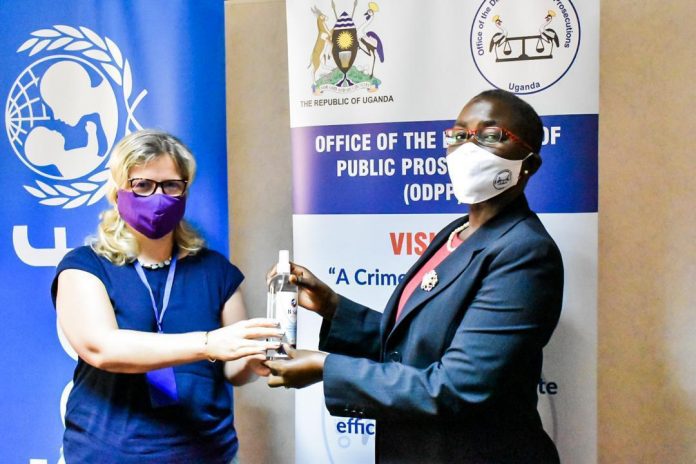
The Office of the Director of Public Prosecutions (ODPP) has received Personal Protective Equipment (PPE) to facilitate the prosecution of child-related cases, from UNICEF.

This took place in a meeting that was held in the ODPP, chaired by the Director of Public Prosecutions (DPP), Jane Frances Abodo. The Representative of UNICEF, Ms. Laura Fragiacomo handed over the PPE to the DPP.

The PPE included 320 sanitizers of 500mls, 320 sanitizers of 250mls, 320 jerry cans of hand washing liquid soap and 100 boxes of hand gloves.

Ms. Samali Wakooli, Assistant Director of Public Prosecutions and Head, Department of Gender, Children and Sexual Offences in the ODPP said the ODPP had partnered with UNICEF to augment the prosecution of child-related cases. “The Handbook on Prosecuting Child-related Cases in Uganda, one of the outcomes of the partnership was being used to train Prosecutors,” she said.

Mr. Vincent Wagona, the Deputy Director of Public Prosecutions, Management and Support Services thanked UNICEF for the partnership, collaboration and cooperation. He promised that the resources would be properly utilized.

The Representative of UNICEF, Ms. Laura Fragiacomo noted that UNICEF and the ODPP had worked closely for over nine years to ensure that children in contact with the law and children in conflict with the law are adequately supported through criminal judicial proceedings in line with the Convention of the Rights of the Child.

She said they had seen tremendous improvement within the ODPP enhancing the capacity of Prosecutors through the Handbook on Prosecuting Child-related Cases in Uganda, initiating child friendly rooms, using anatomic dolls during hearing of children cases; as commitment to ensuring that children realize justice in a friendly process and environment.

In addition, she said COVID 19 had exacerbated significant increase in protection risks for children manifesting in increased incidences of violence against children and others being locked down with their perpetrators in homes. Moreover, the operations of the justice system were drastically reduced since justice actors were not considered critical.

Ms. Laura Fragiacomo commended the ODPP for resuming full operations to ensure that the justice system remains functional, especially for taking part in the ongoing children sessions. She encouraged the ODPP to always pursue child friendly means to ensure justice for children. She said the supply of the PPE was to ensure that the staff within the ODPP safeguard themselves as they continue to pursue the interests of children in Uganda.

The DPP thanked UNICEF for their good working relationship with the ODPP and financially supporting the ODPP executing its mandate towards juvenile justice. She said during the Covid-19 pandemic, the ODPP had been constrained in availing services to children among other vulnerable people.

She pointed out the importance of ensuring the safety of staff while they serve the people. She made reference to the ongoing sessions at the Naguru Remand Home where the Prosecutors have to appear to handle cases of children in conflict with the law, and thanked UNICEF for quickly coming to the rescue of the Prosecutors by providing the PPE.

Stories Continues after ad
Police commends Coca-Cola for prioritizing safety of its employees

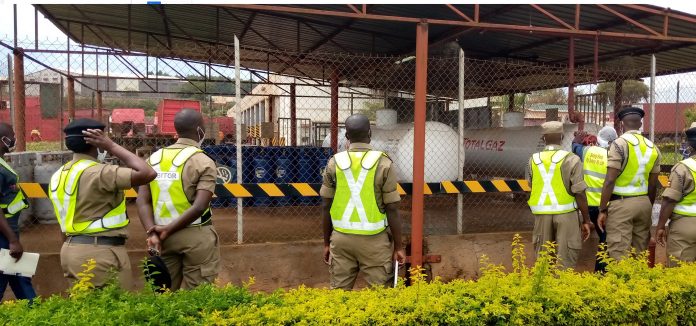
Team Leader explains Operation of Fire Sprinkler System at The LPG Bulk Tank

Police have commended Coca-Cola (Century Bottling Company) for prioritizing the safety of its employees and investing in safety systems for emergencies.

Police officers led by AIP Apollo Okolong, Officer-in-Charge of Fire and Rescue Services at the Kampala Industrial Business Park had gone on a benchmarking visit for the security and safety teams to pick learnings from for use nationwide.

“We thank the management for allowing us to learn, benchmark and familiarize ourselves with fire preparedness and response actions. We have also seen the best COVID-19 and Occupational Safety and Health practices some of which were not familiar to us. We have learnt a lot and we are grateful. As the Uganda Police we say “Asante sana!” he said.

They appreciated company’s well-established systems and procedures for safety at the workplace even before the onset of the Corona Virus Disease (COVID-19) pandemic

Paineto Olweny, Team Leader in charge of Facilities, stressed the importance of emergency preparedness as a key component of employee safety.

“Our fire preparedness and response measures are based on the risks associated within our operation. We have ensured adequate fire detection and suppression systems. For instance, we keep flammable liquids or chemicals in minimum quantities at working environments but use bulk storage away from buildings and people. We maintain adequate storage of water in reservoirs so that if regular supply by National Water is off, our employees are still comfortable,” he said.

“Our business prioritizes the safety and health of the employees, contractors and visitors. That is why we have implemented robust COVID-19 protocols to keep everyone safe every day. With the additional support of the Uganda Police Fire and Rescue Services, now that you have seen all this, we shall continue to keep our workplaces and communities safe and free from fire-associated risks,” said Joseph Onyango, Environment Occupational Safety and Health Coordinator.

Emergency preparedness is very critical in the workplace today; from developing crisis plans and training employees whether it’s a manmade disaster such as fire, emergencies cannot be predetermined.

Stories Continues after ad

I and M bank acquires Orient bank-Uganda

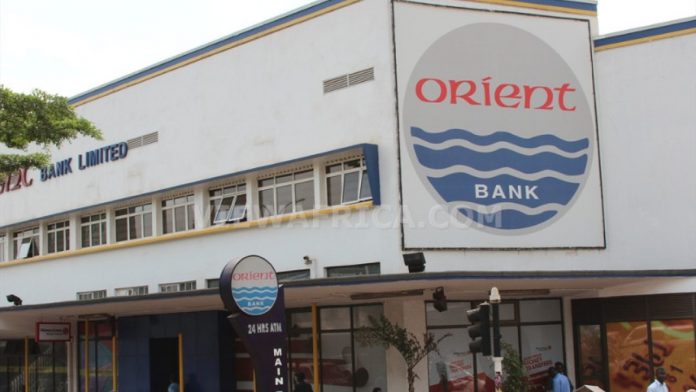
Orient Bank which has been sold to I and M bank.

I&M Holdings PLC has issued a cautionary announcement advising its shareholders of a proposed transaction between the bank and Uganda’s Orient bank Limited, which may affect the value of its shares. In the proposed transaction, I&M plans to acquire 90 per cent of the ownership of the Ugandan bank.

“Shareholders of I&M Holdings Plc are advised that the company has on the  July 17, 2020 entered into an agreement with the shareholders of Orient Bank Limited for the sale and purchase of incorporated shares comprising 90 per cent of the issued share capital of Orient Bank Limited” reads the announcement.

According to company statements of 2019, Orient Bank owns a total asset base of Shs814 billion.

The proposed transaction is subject to regulatory and corporate approval from the Central Banks of Kenya and Uganda, the Capital Markets Authority and company shareholders.

Last year I&M Holdings spent KSh 430.6 million in investments in joint ventures in Uganda and Mauritius.

Orient bank has lately been struggling copying up with the competitive business environment. The bank is also rumoured to have been the watch list of Bank of Uganda for limited cash flow.

Stories Continues after ad

Museveni picks nomination forms for party chairman and Presidential flag bearer

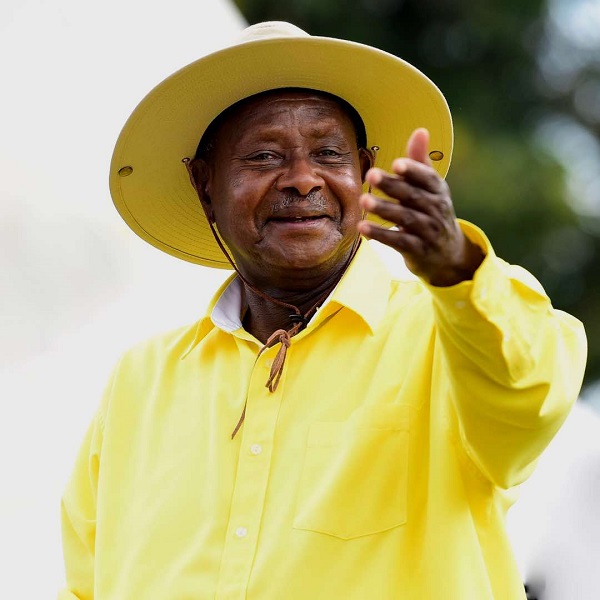
President Yoweri Kaguta Museveni

President Yoweri Kaguta Museveni has picked National Resistance Movement (NRM) nomination forms for the position of party chairman and Presidential flag bearer.

The development has been confirmed by the chairperson of party electoral commission Dr. Tanga Odoi. According to Dr. Tanga, the nomination papers were picked by his lawyers and Personal Assistant and paid Shs 20m as nomination fees for both positions.

In February, 19, 2019 the NRM under the national association of districts and lower local government councils, endorsed President Museveni, the NRM chairperson, as the sole party candidate in the 2021 presidential elections. The sole candidate resolution was passed at Chobe Safari Lodge.

Earlier this month, the Constitutional court threw out a constitutional petition filed by 11 NRM MPs challenging the challenging president Museveni’s sole candidature.

Last month, the electoral commission released a revised road map, banning all mass rallies ahead of the anticipated 2021 general elections. The elections according to chairperson of electoral commission, Justice Simon Byabakama, the move is in line with president Museveni’s directives peddled at curbing the spread of coronavirus.

Last week, the NRM CEC backed Justice Byabakama’s road map and resolved that NRM intra elections shall be conducted by lining up candidates. The agreed that the mode of election will be conducted in observance of the standard operating procedures (SOPs) which were put up by the ministry of health in a bid to curb the spread of Covid-19.

Stories Continues after ad

Elioda Tumwesigye, African education experts push for more virtual learning to cushion against pandemics

education

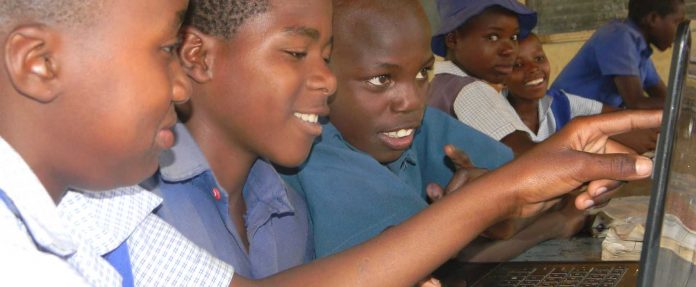
The Minister for Science, Technology and Innovation, Tumwesingye Elioda has said that Africa must develop new education models that feature well-resourced virtual teaching and learning schemes to insulate it against disruptions due to disasters such as the COVID-19 pandemic.

 He said during a webinar hosted by the Association for the Development of Education in Africa (ADEA) said.

Tumwesigye Elioda who also chairs the ADEA Steering Committee, said the pandemic has proven that digital education in Africa is a precondition for Africa’s socio-economic transformation and the survival of its people.

“We must begin working toward a new policy and strategies that will sustain an inclusive and equitable Education for both young people and adults to enable us embrace the new normal in the wake of COVID-19,” said Elioda, who is also the chairperson of the Africa Union’s Special Technical Committee on Science, Technology and Innovation.

The panelists, including Ministers of Education and senior officials of the Bank, called for a new approach to the professional development of teachers to enable them to embrace the new digital delivery model.

ADEA organized the webinar jointly with the African Development Bank Group to share its Country Status Report on the impact of the pandemic on education in Africa. Titled, “Impact of COVID-19 on Africa’s Education: Reflecting on Promising Interventions and Challenges, towards a New Normal,” the Report covered two rapid assessments undertaken by the Association between March and June 2020 in 12 countries.

The webinar attracted around 200 participants, comprising six African Ministers of Education, senior government representatives, development partners and education stakeholders representing the private sector, civil society and youth. The forum also discussed the challenges and best practices of remote learning following the COVID-19 crisis and how countries can safely reopen their learning institutions.

Other key speakers were Ginette Amara Ali Mazicki, Minister of Scientific Research and Technology Innovation of the Central African Republic; Matthew Opoku Prempeh, Ghana’s Minister for Education Leela Devi Dookun-Luchoomun, Minister of Education and Human Resources, Tertiary Education and Scientific Research in Mauritius, Valentine Uwamariya, Minister of Education for Rwanda and Claudiana Ayo Cole, Minister of Basic and Secondary Education in The Gambia.

“Today, more than ever before, we need to adapt as quickly as possible to disasters and emergencies and look for alternatives to advance education and training in Africa,” said ADEA Executive Secretary Albert Nsengiyumva.

Shem Bodo, ADEA Senior Programs Officer, presented the Country Status Report, showing that most countries were coping with the COVID-19 pandemic by adopting mixed channels for remote learning, using print and electronic platforms across all levels.

The report underscored the need for multipronged strategies for learners with special needs such as sign language to interpret television lessons, teleconsulting with physiotherapists and one-to-one virtual classes. It also proposed alternative financing models while embracing greater peer learning and knowledge exchange amongst countries.

Hendrina Doroba, Manager for Education, Human Capital and Employment at the African Development Bank, also shared findings of a related report which examined the impact of COVID-19 pandemic in African on Technical Vocational Education and Training (TVET) Institutions. Among other recommendations, it called for the alignment of TVET content to market needs, taking into account new technology transfer and use.

The webinar called for additional budget support for remote learning, particularly in ICT infrastructure and the deepening of strategic partnerships with development partners, civil society and the private sector.

During the meeting, ADEA presented its new Benchmarking Tool for strengthening countries’ readiness to deploy remote education in future based on lessons from the COVID-19 crisis as well previous emergency situations.

Stories Continues after ad

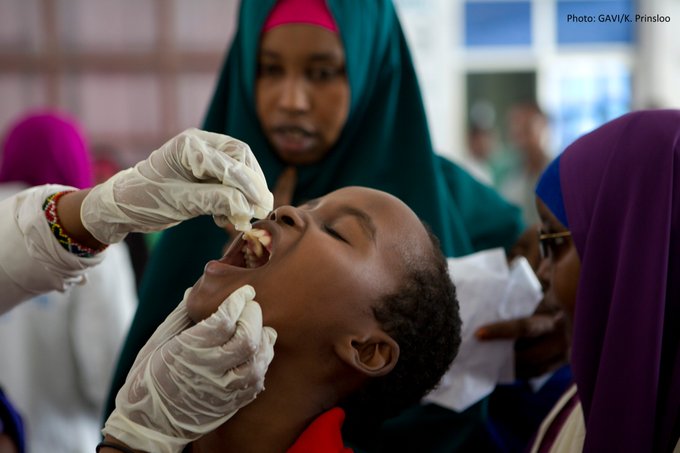
WHO and UNICEF warn of a decline in vaccinations during COVID-19

Vaccination

The World Health Organization and UNICEF has warned of an alarming decline in the number of children receiving life-saving vaccines around the world. This is due to disruptions in the delivery and uptake of immunization services caused by the COVID-19 pandemic.

According to new data by WHO and UNICEF, these disruptions threaten to reverse hard-won progress to reach more children and adolescents with a wider range of vaccines, which has already been hampered by a decade of stalling coverage.

The latest data on vaccine coverage estimates from WHO and UNICEF for 2019 shows that improvements such as the expansion of the HPV vaccine to 106 countries and greater protection for children against more diseases are in danger of lapsing. For example, preliminary data for the first four months of 2020 points to a substantial drop in the number of children completing three doses of the vaccine against diphtheria, tetanus and pertussis (DTP3). This is the first time in 28 years that the world could see a reduction in DTP3 coverage the marker for immunization coverage within and across countries.

“Vaccines are one of the most powerful tools in the history of public health, and more children are now being immunized than ever before,” said Dr Tedros Adhanom Ghebreyesus, WHO Director-General. “But the pandemic has put those gains at risk. The avoidable suffering and death caused by children missing out on routine immunizations could be far greater than COVID-19 itself. But it doesn’t have to be that way. Vaccines can be delivered safely even during the pandemic, and we are calling on countries to ensure these essential life-saving programmes continue.”

Due to the COVID-19 pandemic, at least 30 measles vaccination campaigns were or are at risk of being cancelled, which could result in further outbreaks in 2020 and beyond. According to a new UNICEF, WHO and Gavi pulse survey, conducted in collaboration with the US Centers for Disease Control, the Sabin Vaccine Institute and Johns Hopkins Bloomberg School of Public Health, three quarters of the 82 countries that responded reported COVID-19 related disruptions in their immunization programmes as of May 2020.

The reasons for disrupted services vary. Even when services are offered, people are either unable to access them because of reluctance to leave home, transport interruptions, economic hardships, restrictions on movement, or fear of being exposed to people with COVID-19. Many health workers are also unavailable because of restrictions on travel or redeployment to COVID response duties as well as a lack of protective equipment.

“COVID-19 has made previously routine vaccination a daunting challenge,” said UNICEF Executive Director Henrietta Fore. “We must prevent a further deterioration in vaccine coverage and urgently resume vaccination programs before children’s lives are threatened by other diseases. We cannot trade one health crisis for another.”

Progress on immunization coverage was stalling before COVID-19 hit, at 85 per cent for DTP3 and measles vaccines. The likelihood that a child born today will be fully vaccinated with all the globally recommended vaccines by the time she reaches the age of 5 is less than 20 per cent.

In 2019, nearly 14 million children missed out on life-saving vaccines such as measles and DTP3. Most of these children live in Africa and are likely to lack access to other health services. Two-thirds of them are concentrated in 10 middle- and low-income countries: Angola, Brazil, Democratic Republic of the Congo, Ethiopia, India, Indonesia, Mexico, Nigeria, Pakistan, and Philippines. Children in middle-income countries account for an increasing share of the burden.

There has been some progress. Regional coverage for the third dose of DTP in South Asia has increased by 12 percentage points over the last 10 years, notably across India, Nepal and Pakistan. However, that hard-won progress could be undone by COVID-19 related disruptions. Countries that had recorded significant progress, such as Ethiopia and Pakistan, are now also at risk of backsliding if immunization services are not restored as soon as feasible.

The situation is especially concerning for Latin America and the Caribbean, where historically high coverage has slipped over the last decade. In Brazil, Bolivia, Haiti and Venezuela, immunization coverage plummeted by at least 14 percentage points since 2010. These countries are now also confronting moderate to severe COVID19-related disruptions.

As the global health community attempts to recover lost ground due to COVID-19 related disruptions, UNICEF and WHO are supporting countries in their efforts to reimagine immunization.

Stories Continues after ad

Boda-boda business to know its fate ahead of Museveni’s address

President Museveni.

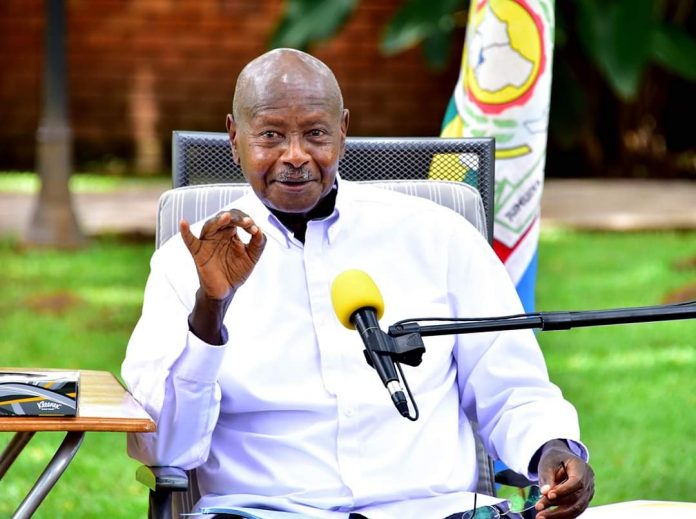
President Museveni will tomorrow Tuesday, July 21st address the nation on the #covid-19 pandemic situation in the country.

In March, President Museveni ordered for closure of all schools, Churches, none-food markets, schools, shops, Salons among other businesses. The lockdown peddled at curbing the spread of the deadly covid-19 virus.

The directive followed the outbreak of Coronavirus in China’s Wuhan City in Hubei Province. The virus has since spread to over 200 countries.  Currently, there are 14,043,176 confirmed cases of COVID-19, including 597,583 deaths, reported to the world health organization (WHO). There are 1062 confirmed cases of Covid-19 in Uganda and zero related deaths.

Since closure of businesses in Uganda, the president has been easing lockdown on covid-19 un-risky business such as shopping malls, transport sector under strict guidelines which include wearing facemasks in public places, washing hands etc.

The president is expected to respond to trader’s pea of opening shopping arcades after staging a protest demanding to be cleared to resume businesses. Last week a joint team from the ministry of health, Kampala capital city authority (KCCA) and police cleared 48 shopping arcades after meeting all required standard operating procedures (SOPs) to re-open for business.

The procedures were put up by the ministry of health in a bid to stop the spread of the deadly virus. The SOPs are wearing face masks, hand washing areas, maintaining social distance, emergency rooms, etc.

The boda-boda industry is also expected to know their plight, four months since the government enforced the lockdown.

Stories Continues after ad