Stanbic Bank
Stanbic Bank
17.3 C
Kampala
Stanbic Bank
Stanbic Bank
Home Blog Page 987

You aren’t above the law: Anti-Corruption Court issues criminal summons against EOC boss Sylvia Muwebwa

The Anti-Corruption Court has issued criminal summons against the Chairperson of the Equal Opportunities Commission Sylvia Muwebwa Ntambi after she failed to appear before the magistrate.

She was summoned by chief magistrate, Pamela Lamunu Ocaya following a request for an extension by prosecution led by Harriet Ongom.

According to summons, is required to pronounce herself before court on 7th October to answer several charges of causing financial loss, embezzlement, corruption, abuse of office and conspiracy to defraud.

The charging of Sylvia Muwebwa Ntambi and nine others follows the lunging of complaints to President Yoweri Museveni calling for his intervention. According to a petition dated 22nd May 2019, the whistleblower accused her of causing financial loss of over Shs200 million through termination of workers contracts and forcing workers to resign and replace them with her relatives and friends.

Since she took over the chairperson-ship of the commission, the whistleblower said Mrs Ntambi has unfairly dismissed over 11 staff, terminated over 10 staff contracts, and four contracts have not been renewed. In 2017/ 2018, the Auditor General advised the commission to employ people on permanent contracts however the chairperson declined and this has since led to financial losses.

They accused her of directing the collection of Shs100 million which they had approved in the commission meeting and the said money was to be used as kickbacks for individuals who worked hard for passing of the commission budget in 2018/19.

“It was paid and collected through individual bank accounts. It was collected and handed over to her at Kampala International University (KIU), Kansanga on 7th March 2019,” the whistle blower said. Despite being chairperson of the commission, Mrs Ntambi is averred to have forced her secretaries to pay her as consultant in production of various reports.

“The money was paid to Prof. Sunday Nicholas Olwor (Shs 14M), Kamahoro Enid (Shs 13M), Nassanga Sarah (Shs 5M), Atukunda Susan (Shs 6M), Mugisha James (Shs 12M), Kwesiga Ronnie (Shs 12M), Kwesiga Ronnie (Shs 10.55M), Sarah Nassanga (Shs 9M), Kwihangana Manasseh(Shs 13M), Prof. Sunday Nicholas Olwor (Shs 9.8M), Kwesiga Ronnie (Shs 9M) and sylvia Muwebwa Ntambi (Shs 13M),” payment slips indicate.

She is also accused of irregular approval of allowances of various members of the commission, using commission vehicle for doing private businesses, irregular recruitment of staff without embracing commission procedures. It is said that she illegally recruited Betty Namazzi, Juma Waira and Petau Isabirye Babirye.

The whistleblower also revealed that the Ag commissioner Jjemba Evans holds two offices as the head of department of compliance and enforcement and research, monitoring and evaluation.

Stories Continues after ad

Stop internal fights – Kamuli NRM politicians told

Trevor Baleke (with money) as he campaigned for party youth flag bearers in Kamuli Municipality.


The ruling National Resistance Movement (NRM) Administrative Secretary for Kamuli District, Trevor Baleke, has warned the party members in the district against internal fights if the party is to continue being strong in Kamuli.

Baleke admitted that it was true NRM was choking on infighting and rumour mongering a thing he warned would reduce the strength of party with time if not worked on on time.

He was addressing reporters who found him at Kamuli Municipal Council grounds delivering logistical support and campaigning for the party flag bearers for Municipality Special Interest Groups Council elections minutes to polls.

Baleke who is also the NRM sub-county chairman of Wankole said during a period like now when the party is being challenged by the opposition, it is unnecessary for its own members to again engage in bickering and infighting.

He was responding to concern raised by one of the reporters who said the party support in the district was split because of its leaders.

The reporter was referring to political fighting between the district NRM chairperson Samuel Bamwole and the Admin.

“There is no fighting between me and my chairman. If there is any war then, I am not aware. What I only think is that we should not accept to mix personal misunderstandings with party business. A chairman is elected while an Admin is appointed by the Secretariat to do administrative work which is complementary to the political duties of the chairman and his executive. Why then should we fight when we are scoring in the same goal?

If there is anyone fighting me as I hear, then such persons should change. They should know we are here for the same purpose – ensuring that we as a party remain on the top,” said Baleke.

During the recently concluded party primaries, Baleke was out of office following an incident in which he was removed from office by some members of the district executive of NRM led by Bamwole on the eve of parliamentary primaries.

Stories Continues after ad

Former Makerere University lecturer sentenced for sexually molesting female student

Rachel Njoroge

The former Makerere University Senior Administrative Assistant Edward Kisuze has been sentenced to a fine of Shs4 million or face two years in prison for sexually molesting Rachel Njoroge.

Kisuze was convicted of indecent assault and sentenced by the Buganda Road Chief Magistrate, Miriam Akello.

“The judgement based on evidence adduced by prosecution. All ingredients of indecent assault were proved beyond reasonable doubt by the prosecution witnesses. The accused is hereby sentenced to a fine of Shs4 million or in default serve two years in jail,” Akello ruled.

Mr. Kisuze was arrested in April 2018 following a photo that went viral on social media, with him allegedly sexually molesting Rachel Njoroge, a student who graduated in January 2018 and had reportedly gone to have her academic credentials certified.

Through his lawyer Kenneth Munungu, Kisuze applied for bail and fled on Shs2 million cash bail as his sureties Dickson Ndaga (his brother) Robert Semanda, Steven Semugela, Jonathan Muyingo were instructed to pay Shs20 million non-cash.

Prosecution averred that Ms. Njoroge was on April 13, 2018 forced into illicit act after she had gone to pick her transcript.

The accused is said to have locked the office and suddenly started harassing her in the due process Njoroge picked out her phone and started taking pictures after realizing that there were no cameras in the office.

Thereafter she reported the case to university administration and recorded a statement with university police leading to suspension of the Kisuze from carrying out university related activities and accessing senate building for stepped-up investigations to thrive.

Stories Continues after ad

East African Court dismisses Male Mabirizi’s petition challenging presidential age limit

Lawyer Male Mabirizi

The East African Court of Justice ( EACJ ) has dismissed the presidential age limit petition filed by lawyer Male Mabirizi.

In May last year, Mabirizi petitioned EACJ to invalidate Constitutional Amendment Act 2018 which endorsed presidential age limit removal in the Constitution.

The petition followed the Supreme Court pronouncement in which majority justices (4:3) dismissed Mabirizi’s appeal, on the premise that minor omissions had no meaningful effect on the process of the entire enactment of the Act.

The then Chief Justice Bart Katureebe, Stella Arach Amoko, Rubby Opio Aweri, and Jotham Tumwesigye upheld the earlier Constitutional Court verdict. The dissenters were Eldad Mwangusya, Lilian Tibatemwa- Ekirikubinza, and Paul Mugamba.

Mabirizi contends that the actions of Parliament, Executive and the Judiciary, contravene provisions of the Treaty for Establishment of the East African Community (EAC). He wanted the article 102 (b) reinstated.

On July 14th 2020, five judges at the Arusha-based court in Tanzania, through video-link, heard the final submissions from Mabirizi and Uganda Attorney General (AG) William Byaruhanga.

According to the judgement delivered by EACJ Principal Judge Monica Mugenyi, the court dismissed the matter and ordered each party to bear its costs.

Court ruled that when the parliament of Uganda passes the law despite irregularities and president assents to it, it becomes binding.

Stories Continues after ad

2020/21 UEFA Champions League group stage draw preview

UCL draw balls

The 2020/21 UEFA Champions League group stage draw is scheduled to take place tomorrow on Thursday 1st October at the RTS studios in Geneva, Switzerland.

The annual draw for the group stages will take place after the last remaining play-off round ties are decided on Wednesday.

As always, there will be 32 teams to be drawn into eight groups of four, with the restriction that teams from the same association or country cannot be drawn against each other.

Bayern return to the 2020/21 competition as holders having beaten Paris in the final in Lisbon to become European champions for a sixth time.

The UEFA Executive Committee decided on 24 September that five substitutions will be allowed for the remainder of the season. Consequently, the number of players allowed on the match sheet will be increased to 23.

Apart from the UCL draw, UEFA will also be using the ceremony to announce the 2019/20 UEFA Best Player in Europe.

Bayern’s Robert Lewandowski is up against teammate Manuel Neuer and Man City’s Kevin De Bruyne for the top award.

UEFA will also award the Goalkeeper of the 2019/20 UEFA Champions League season, Defender of the 2019/20 UEFA Champions League season, Midfielder of the 2019/20 UEFA Champions League season and Forward of the 2019/20 UEFA Champions League season.

Pots

Pot 1: Bayern, Sevilla, Real Madrid, Liverpool, Juventus, Paris Saint-Germain, Zenit Saint Petersburg, Porto.

Pot 2: Barcelona, Atletico Madrid, Manchester City, Manchester United, Shakhtar Donetsk, Borussia Dortmund, Chelsea, Ajax.

Pot 3: Dynamo Kyiv (UKR), Salzburg (AUT), RB Leipzig (GER), Internazionale Milano (ITA), Olympiacos (GRE), Lazio (ITA), Krasnodar (RUS), Atalanta (ITA)

Pot 4: Lokomotiv Moskva (RUS), Marseille (FRA), Club Brugge (BEL), Borussia Mönchengladbach (GER), İstanbul Başakşehir (TUR), Midtjylland (DEN), Rennes (FRA), Ferencváros (HUN)

The group stages get underway in the week of October 19, with six rounds of group games running through to mid-December.

Matchday 1: October 20/21

Matchday 2: October 27/28

Matchday 3: November 3/4

Matchday 4: November 24/25

Matchday 5: December 1/2

Matchday 6: December 8/9

This season’s final will be played at the Ataturk Olympic Stadium in Istanbul.

Stories Continues after ad

Environment at stake, as Uganda loses millions of food

Minister Vicent Bamulangaki with other officials at media center.

Food rights experts have condemned the lack of adequate government measures to tame food loss and waste saying this is detrimental not only to food security but also abets climate change.

They say if the government puts in place some measures to reduce food loss and waste like sensitizing citizens, it can help because many people do not know that food is wasted.

Executive director Food Rights Alliance, Agnes Kirabo explains that if a farmer in Uganda produces 10 kilograms of maize, that farmer is going to lose 1.2 Kilograms, which is close to one and a half kilograms on the farm.

According to her, Kampala alone daily, they collect 750 tons of garbage which is not any other thing but food. That if this food was spared, it would help many people who are suffering in the neighborhoods.

She further notes that for one single tomato to go to waste, that this tomato consumed three litres of water.

“When single orange is thrown in the dustbin, bear in mind that it consumed fifty (50) litres of water,” says Kirabo.

She appeals to Ugandans that as they are trying to fight the Covid-19 pandemic, they should ensure that the available food should be put in right use which will help to them to improve the immunity to fight the virus

“Take responsibility and personal actions as an individual. Consume responsibly and don’t serve a full plate of food which will be left to waste yet others are missing,” she appeals.

Speaking at Media center this afternoon, the Minister for Agriculture, Animal and Fisheries, Vincent Bamulangaki Ssempijja says that while Uganda joins other countries to commemorate the international day of awareness of food loss and waste which is 29th September, it is important to note that the government has put in place some measures to combat this challenge of food loss and waste.

“The government of Uganda has put in place enabling policy frameworks for food loss reduction and these include the constitution of republic of Uganda objective 12 (twelve) which compels the state to take appropriate steps to grow and store adequate food,vision 2040 which underscores the need to reduce food loss and wastage and improve food safety among others.”

He also says that food loss and waste is one of the biggest challenges, for growth of the agriculture sector because it threatens household incomes, food security and nutrition.

Minister Ssempijja gives an example that with 2.8m tons of maize produced in Uganda annually, it is estimated that 17.6 percent is lost, 214,000 tons of millet, 12.4 percent is lost, and 23000 tons of rice, 13.5 percent is lost among others.

Antonio Querido the country representative of the Food and Agriculture Organization of the United Nations, says it is important that people understand that food loss and waste affects the economy of the country and individuals.

Antonio appeals to Ugandans to be plan full and put in good use of all the foods they produce.

Stories Continues after ad

Equal Opportunities boss Sylvia Muwebwa camps at Kadaga’s office as Anti-corruption Court awaits her tomorrow

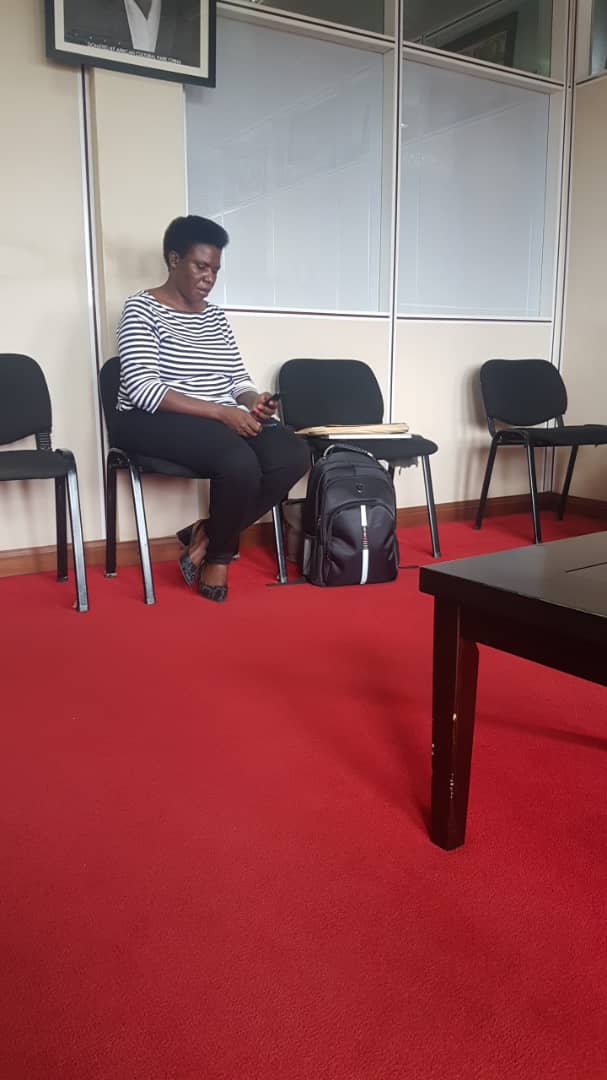
EOC boss Ntambi seated at the Speaker's Chambers at parliament.

The Chairperson of Equal Opportunities Commission (EOC) Sylvia Muwebwa Ntambi has rushed to the Speaker of Parliament Rebecca Kadaga hours after she was summoned to appear before the Anti-Corruption Court in Kololo.

Ntambi faces corruption charges at Anti Corruption Court but has been dodgy. However, Ntambi who is reportedly under pressure was seen at the Speaker’s Chambers at parliament relentlessly making several calls. Sources at Parliament told this website that Speaker Kadaga could have been aware that intervening in the legal battle with the judiciary in trying to plead for her would mean interference in their work and has so far ignored meeting Ntambi.

Mrs Ntambi will tomorrow appear before the Anti-corruption Court to defend herself over abuse of office, embezzlement, conniving to commit fraud among others charges brought against her and nine others.

Reports indicate that Sylvia is seeking for Kadaga’s intervention in corruption charges brought against her. Earlier this month, the nine individual workers of the commission appeared before court and took pleas.

The charging of Sylvia Muwebwa Ntambi and others follows the lunging of complaints to President Yoweri Museveni calling for his intervention. According to a petition dated 22nd May 2019, the whistleblower accused her of causing financial loss of over Shs200 million through termination of workers contracts and forcing workers to resign and replace them with her relatives and friends.

Since she took over the chairperson-ship of the commission, the whistleblower said Mrs Ntambi has unfairly dismissed over 11 staff, terminated over 10 staff contracts, and four contracts have not been renewed. In 2017/ 2018, the Auditor General advised the commission to employ people on permanent contracts however the chairperson declined and this has since led to financial losses.

They accused her of directing the collection of Shs100 million which they had approved in the commission meeting and the said money was to be used as kickbacks for individuals who worked hard for passing of the commission budget in 2018/19.

“It was paid and collected through individual bank accounts. It was collected and handed over to her at Kampala International University (KIU), Kansanga on 7th March 2019,” the whistle blower said. Despite being chairperson of the commission, Mrs Ntambi is averred to have forced her secretaries to pay her as consultant in production of various reports.

“The money was paid to Prof. Sunday Nicholas Olwor (Shs 14M), Kamahoro Enid (Shs 13M), Nassanga Sarah (Shs 5M), Atukunda Susan (Shs 6M), Mugisha James (Shs 12M), Kwesiga Ronnie (Shs 12M), Kwesiga Ronnie (Shs 10.55M), Sarah Nassanga (Shs 9M), Kwihangana Manasseh(Shs 13M), Prof. Sunday Nicholas Olwor (Shs 9.8M), Kwesiga Ronnie (Shs 9M) and sylvia Muwebwa Ntambi (Shs 13M),” payment slips indicate.

She is also accused of irregular approval of allowances of various members of the commission, using commission vehicle for doing private businesses, irregular recruitment of staff without embracing commission procedures. It is said that she illegally recruited Betty Namazzi, Juma Waira and Petau Isabirye Babirye.

The whistleblower also revealed that the Ag commissioner Jjemba Evans holds two offices as the head of department of compliance and enforcement and research, monitoring and evaluation. It is averred that she is using these two departments to siphon money from the commission.

Stories Continues after ad

Standard Chartered Bank, Challenges Worldwide launch Shs920 million Youth to Work programme

Regina Mukiri Head Corporate Affairs Brand and Marketing SCB hands over a cheque of 920 million to Vivian Achan of Challenges Worldwide

Standard Chartered Bank Uganda in partnership with their NGO partner Challenges Worldwide have launched the scale-up of the Youth to Work (Y2W) programme worth Shs920 million.

Youth to Work is a flagship employ-ability programme which was launched last year as part of the Futuremakers by Standard Chartered programme.

Futuremakers is the global initiative driven by the Standard Chartered Foundation (SCF) and has the objectives of tackling inequality and promoting economic inclusion for young people focusing on three pillars: Entrepreneurship, Employability and Education.

In 2019, the Bank and Challenges Group worked together to pilot the approach in Kampala with fantastic results, including 70 per cent of the cohort receiving job placements!

During the virtual launch, Albert Saltson, the CEO Standard Chartered Bank Uganda said; “We know these are challenging times with adverse negative impact on communities and businesses, especially youth and Small and Medium Enterprises as a result of the Covid pandemic. We have stepped up as Standard Chartered with an investment of Shs 920 million towards the Youth to Work programme to further demonstrate our support and leadership.”

Saltson added: “We are confident that by availing young graduates with an opportunity to gain invaluable experience in Small and Growing Businesses (SGBs), we will not only drive positive change for the enterprises that will participate in the programme but to the youth as well. What’s more, the programme not only intends to provide the skills necessary for young people but is also inclusive, providing for people with disabilities to fully participate.”

The Y2W programme structure follows a management consultancy approach as well as incorporating youth skill development. Graduates are enrolled into intensive training on key business consultancy skills using accredited training from the Chartered Management Institute (CMI) before being placed into Small and Growing Businesses where they can develop their training in real-world environments, supporting the enterprises and being supported by Challenges.

The program is peddled to improve the participating SGBs’ operational efficiency and helps young people demonstrate their value for enterprises.

After the placement in SGB’s is done, Challenges continues to accompany them via youth network and ecosystem strengthening activities and 3 months of follow-on support.

Challenges CEO and founder Eoghan Mackie stated that: “There has never been a more important time to safeguard the future of small businesses, the lifeblood of economies all over the world. And there has never been a more critical time to show the power of young people and the role they can play in contributing to the reconstruction process. In the wake of Covid-19, this Futuremakers programme will act as a beacon of hope and a practical demonstration of how we can move forward step by step together.”

While unveiling the 2020 Y2W programme, applications for the programme were declared opened with effect from 30th September 2020 for Uganda.

Stories Continues after ad

WHO partnership to make 120 million quality #Covid-19 rapid tests available and affordable for low and middle-income countries

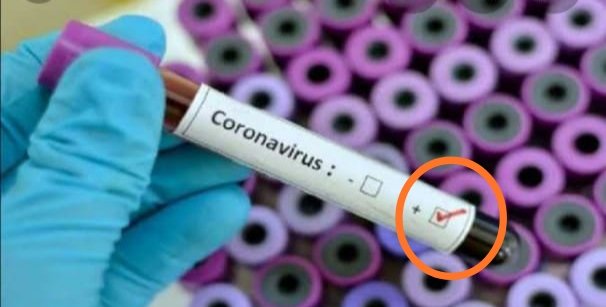
Covid-19 testing kits

The Access to #Covid-19 Tools (ACT) Accelerator has announced a set of agreements to make high-quality #Covid-19 antigen rapid tests available, for low and middle-income countries.

The tests developed by Abbott and SD Biosensor are highly portable, reliable, and easy to administer, making testing possible in near-person, decentralized healthcare settings. Both companies’ tests are faster and cheaper than laboratory-based tests, enabling countries to increase the pace of testing, tracing and treating people for #Covid-19 at the point of care particularly in areas with under-resourced health systems. A number of other Ag RDTs are at various stages of development and assessment.

Organizations involved in the milestone agreement include the Africa Centres for Disease Control and Prevention (Africa CDC), the Bill and Melinda Gates Foundation, the Clinton Health Access Initiative (CHAI), the Foundation for Innovative New Diagnostics (FIND), the Global Fund, Unitaid, and the World Health Organization (WHO).

As part of this comprehensive, end-to-end effort, the Bill and Melinda Gates Foundation has executed separate volume guarantee agreements with rapid diagnostic test (RDT) producers Abbott and SD Biosensor. These two arrangements will make available to LMICs 120 million antigen rapid diagnostic tests (Ag RDTs)  priced at a maximum of US$5 per unit over a period of six months. These tests provide results in 15–30 minutes, rather than hours or days, and will enable expansion of testing, particularly in countries that do not have extensive laboratory facilities or trained health workers to implement molecular tests.

To scale up the Ag RDTs, the Global Fund today announced that it has made available an initial US$50 million from its #Covid-19 Response Mechanism to enable countries to purchase at least 10 million of the new rapid tests for LMICs at the guaranteed price, with the first orders expected to be placed this week through the Global Fund’s pooled procurement mechanism.

FIND and WHO are working together to accelerate appropriate use by supporting implementation research that will optimize Ag RDT use in multiple LMICs, in line with WHO guidance. This includes provision of catalytic volumes of tests to understand how Ag RDTs can best fit into health systems.

Unitaid and Africa CDC will combine resources to initiate the roll out of these tests in up to 20 countries in Africa starting in October 2020. This multi-million-dollar intervention, currently undergoing final sign-off by their Boards, is designed to engage multiple partners active in the #Covid-19 response in these countries, such as CHAI, African Society for Laboratory Medicine (ASLM) and local organizations. This will bolster efforts by the African Union’s Partnership to Accelerate #Covid-19 Testing (PACT) initiative, launched in August 2020 to mobilize experts, community workers, supplies and other resources to minimize the impact of the pandemic on the African continent by testing, tracing, and treating #Covid-19 cases in a timely manner.

Testing is a critical cornerstone of the #Covid-19 response, enabling countries to trace and contain the virus now, and to prepare for the roll-out of vaccines once available. Effective testing strategies rely on a portfolio of test types that can be used in different settings and situations. While molecular tests started to be rolled out within a month of the virus being sequenced, these tests are mainly laboratory based, relying on infrastructure and trained personnel to conduct them. Rapid tests to detect the presence of the virus at the point of care, which are faster and cheaper, are a vital addition to the testing arsenal needed to contain and fight #Covid-19.

WHO guidance published on 11 September 2020 highlights the value of these tests in areas where community transmission is widespread and where nucleic acid amplification-based diagnostic (NAAT) testing is either unavailable or where test results are significantly delayed.  As well as supporting test-trace-isolate strategies, the tests can help identify or confirm new outbreaks, support outbreak investigations through screening; monitor disease trends; and potentially test asymptomatic contacts.

The ACT-Accelerator Diagnostics Pillar is co-convened by FIND and the Global Fund, working closely with WHO and over 30 global health expert partners to accelerate innovation and overcome the technical, financial, and political obstacles to achieving equitable access to effective and timely testing. Such unprecedented global collaboration has enabled development and deployment of the first WHO EUL-approved Ag RDT within eight months of the first identification of the virus. In comparison, it took nearly five years to develop the first RDT for HIV. Several more antigen RDTs for #Covid-19 are currently under WHO EUL review. Overall, the ACT-Accelerator Diagnostic Pillar aims to facilitate the supply of 500 million tests to LMICs within 12 months.

These agreements are critical to fulfil the key objective of the ACT-Accelerator: to ensure all countries, regardless of income, have fair access to new tests and tools to fight #Covid-19. The exceptional speed with which the Ag RDT access package has been created demonstrates the breadth of the impact of the ACT-Accelerator initiative, and this and future achievements in testing will complement similar milestones anticipated to emerge from the Vaccines and Therapeutics Pillars.

Dr Tedros Adhanom Ghebreyesus, Director General of WHO, said: “High-quality rapid tests show us where the virus is hiding, which is key to quickly tracing and isolating contacts and breaking the chains of transmission. The tests are a critical tool for governments as they look to reopen economies and ultimately save both lives and livelihoods.”

Mark Suzman, Chief Executive Officer of the Gates Foundation, said: “Testing is an essential tool in the fight against #Covid-19. We are delighted to join a partnership that will help ensure that the latest, high-quality diagnostics do not just go to the highest bidder but will be available at an affordable price to the world’s lower income countries. In addition, all of the actions announced today point to the growing success of the ACT-Accelerator in catalyzing global cooperation for a fair and effective response to this global crisis.”

Dr Iain Barton, Chief Executive Officer of CHAI, said: “These agreements will help ensure that millions of people in low- and middle-income countries have access to high-quality rapid testing in villages and towns as well as cities. This has the potential to revolutionize government’s ability to respond to the pandemic, enabling quick diagnosis and response to contain localized virus outbreaks before they spread.”

Andrea F. Wainer, Executive Vice President of Abbott’s rapid and molecular diagnostics businesses, said: “Abbott is pleased to bring our Panbio #Covid-19 rapid antigen test and Sympheos digital solution to people and health authorities in low- and middle-income countries through this innovative partnership. We have long been committed to making sure our life-changing technologies are affordable and accessible, and for decades have been supporting many of these countries with our rapid tests for malaria, HIV, hepatitis, and other deadly infectious diseases.”

Hyo-Keun Lee, Chief Executive Officer of SD Biosensor, said: “We, SD Biosensor, are pleased to supply our STANDARD Q #Covid-19 rapid antigen tests for people who really need fast and accurate #Covid-19 diagnosis. Through this partnership, we will keep striving do our best to provide the best quality of #Covid-19 antigen rapid kits for fighting COVID-19.”

Dr John Nkengasong, Director of the Africa CDC, said: “Antigen tests are an important complement to PCR testing, and are crucial to expand testing capacity throughout Africa. The beauty of antigen testing is that it is fast and gives quick results. It will allow healthcare workers to quickly isolate cases and treat them while tracing their contacts to cut the transmission chain.”

Dr Philippe Duneton, Unitaid’s Executive Director a.i., said: “Access to these point-of-care rapid tests with be a game changer in the fight against #Covid-19. We are working to support countries to rapidly deploy and use these new tests in the best possible way. Today’s news shows what the ACT-A partners working together can deliver in our efforts against the Covid-19 pandemic.”

Dr Carolyn Gomes, Special Advisor for the Board, ProActividad, Jamaica, and Alternate Board Member (Developing Country NGOs), The Global Fund “Ensuring equitable access to rapid diagnostic tests is essential for controlling #Covid-19 in all countries and to opening up economies across the world. Ensuring an affordable price is a major step forward.  Tests that can be used at the point of care by front-line workers will greatly facilitate community access to testing. To ensure equity in access for those who need it most, there will need to be much greater support of the ACT-Accelerator and the Diagnostics Pillar in particular. Much more money is needed to meet the needs of the most vulnerable.”

Peter Sands, Executive Director of the Global Fund, said: “This is the ACT-Accelerator in action. It is proof that by working together at a massive global scale, we can develop and deploy a vital new tool to help contain and fight the pandemic. This is not just a new test – it’s the money and the deployment plan to get it to where it’s needed, fast. This is the power of global collaboration.”

Dr Catharina Boehme, Chief Executive Officer of FIND, said: “With this Ag RDT package, the ACT-Accelerator partners have secured much-needed tools for LMICs to dramatically increase #Covid-19 testing. With the financial support of several countries, we have made great progress, but to ensure we reach all those who need testing and bring the prices down, we urgently need substantial funding from public, philanthropic, and multilateral sources.”

Stories Continues after ad

Proprietor of St. Mark’s College Namagoma: #Covid-19 pandemic caught us by surprise

Daniel Mukasa Ddamulira

The founders of private teaching institutions have revealed that they are not prepared to welcome students back to school.

Following the outbreak of the coronavirus pandemic, governments worldwide declared extensive lockdowns in a bid to control the spread of the virus that saw many sectors of the economy.

According to Daniel Mukasa Ddamulira, founder and proprietor of St. Mark’s College Namagoma, in a webinar organized by dfcu Bank for the education sector revealed that #Covid-19 took everyone by surprise, nobody was prepared, and so the schools were equally unprepared for this kind of experience.

“The pandemic broke out almost after we had just enrolled students for the new term especially senior ones and form five students. It was a shock for most of us as we had to break off. It’s like driving onto the highway and as you begin to accelerate with speed, you come to a halt. Initially, we had thought that it would be a short break. Many students left their belongings at schools,” Ddamulira remarked.

The education sector is a very huge sector that employs more than 2 million people both in private and public institutions and supporting more than 15 million students. Given its priority, schools had to find a way to survive in this time as Ddamulira explains.

“We had to reorganize quickly and so soon to make sure we remain relevant to our students. We also had the staff to think about. We had to find quick ways of engaging our students, and in this case, parents were our major link to reach the students. We looked around for an online application that we could use. The quickest that most of us had was WhatsApp. We formed WhatsApp groups because the phones were readily available and many people had them,” he explained.

“Having devised a way to reach the students, there was still another hurdle to overcome. The biggest challenge was figuring out what to teach at this level. Teachers had to be reorganized, align on what to teach and how to teach. The question was  is it revision, additional materials, or are you simply trying to make sure you have good relations with the parents?” Ddamulira recounts.

Despite all these challenges, amid uncertainties, the engagements have gone on. Most of the candidate classes showed enthusiasm in the beginning but the flame was dying off. Now that the president announced the resumption of candidate classes, there is finally some hope. Some parents complained about data costs thus there wasn’t consistency.  To make it worse, a large proportion of the students could not access the internet.

Another key challenge has been staff welfare; different schools have dealt with this issue differently depending on their ability. Some have terminated contracts, giving half salary and others have closed completely. Many schools have had a challenge of liquidity and banks have had challenges on how to deal with this.

Ddamulira appealed to the banks to give schools liquidity so that they can open again. “We expect schools to open officially next year so banks should work with us. Assess clients based on past performances, Schools won’t be closed forever!” he appealed.

Jennifer N Ssewagudde, the Relationship Manager of Dfcu bank, highlighted that dfcu Bank has over the last couple of months restructured over 90 per cent of the credit facilities that these schools were servicing with the bank.

“We saw that their cash flows were constrained knowing that the education sector was the first to be hit because the school business was closed first. Initially pushed it to four months with the hope that schools would be open in the third quarter of the year, but this didn’t happen so we have had to engage our clients and do a second restructure. We have pushed most of the payments to sometime next year – hopefully the first quarter next year,” Ssewagudde said.

Stories Continues after ad