Stanbic Bank
Stanbic Bank
28.5 C
Kampala
Stanbic Bank
Stanbic Bank
Home Blog Page 992

She isn’t clean:Equal Opportunities Commission chairperson charged with corruption

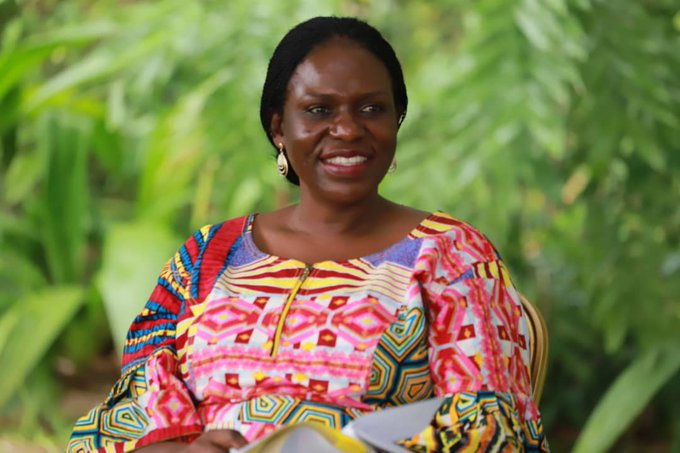
Sylvia Muwebwa

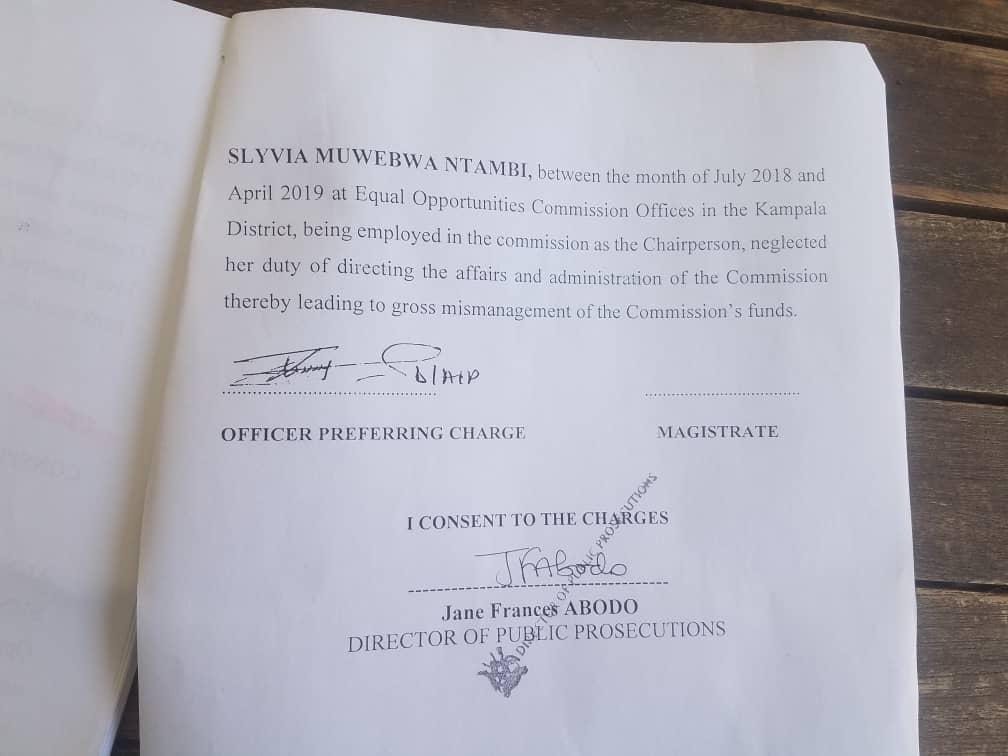
The Chairperson of Equal opportunities Commission (EOC) Mrs. Sylvia Muwebwa Ntambi has been charged with corruption.

Mrs. Ntambi was charged before the Anti-corruption Court in Kololo.

According to Kasamba, his failure to join a clique led by the commission’s chairperson Sylvia Ntambi was the genesis of his troubles, since he was deliberately isolated and openly fought.

He recalls when he was still new at the commission, he received a phone call from the Principal investigation Officer only identified as Kkooza, who was in need of a vehicle to be used by the chairperson on her private duties.

Kasamba, who doubled as the commission’s transport officer explains that he rejected the request because he had only one vehicle which was also needed by a team going to the filed on official duties. Because of this, the Principal Investigation Officer, alleged to be Ntambi’s confidant, told him that he would be punished for insubordination

Ms Ntambi is accused of superintending over unethical practices that have seen staff polarized along tribal lines, which has created a toxic working environment.

The allegations are contained in a petition by a whistleblower to President Museveni detailing cases of unfair staff dismissal, irregular interdiction, resignations and refusal to renew staff contracts amid allegations of tribalism.

In one instance, the petition indicates that in March, she travelled to New York for the Session of the UN Commission on the Status of Women (CSW). For this meeting, she was paid Shs36.8m for 17 days yet the meeting was for 13 days.

Between April 6 and April 16, she is reported to have received Shs27.2m for 12 days of a benchmarking trip in Sweden and Finland, which according to a whistleblower did not take place.

There was also payment in lieu of leave equivalent to Shs13.2million. These payments, according to a whistleblower, have remained unrecovered and unaccounted for since Financial Year 2016/17 to date “due to her domineering instructions”.


Stories Continues after ad

NUP’s Latif Ssebaggala withdraws from Kampala Mayoral race

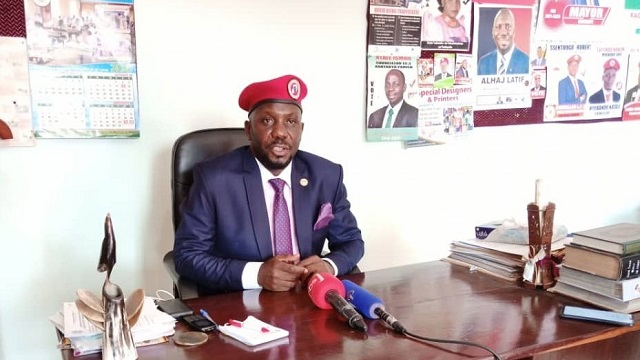
Latif Ssebaggala

The National Unity Platform (NUP) flag bearer for the Kampala Lord Mayoral seat Latif Sebaggala has stepped down days after being successfully vetted.

Sebaggala over the weekend was confirmed as the party flag bearer beating singer Joseph Mayanja aka Jose chameleon. He was vetted by the Executive Board of the party based on political experience, religion and his loyalty to the Party and its principal Robert Kyagulanyi aka Bobi Wine.

He has stepped out of the race, citing the need to maintain unity among party members and for the good of the opposition to steer the Kampala Capital City Authority (KCCA).

“In the best interest of opposition and conflicting interests in NUP and members of NUP supporting other candidates form other political parties, I am stepping down. I remain a member of the National Unity Platform (NUP) and will still give all my support to Robert Kyagulanyi Sentamu for the presidency,” he said.

Last week, chameleon protested NUP’s decision to consider Sebaggala as its flag bear in the 2021 mayoral race saying that Lukwago and Latif have had their time holding public office and should prepare to retire with President Yoweri Museveni in 2021. “It is shameful to be competing with my political grandfathers,” he said.

Ssebaggala was set to face off with FDC’s Erias Lukwago and NRM’s Daniel Kazibwe aka Ragga Dee.

Stories Continues after ad

Ham vs DTB case: Witnesses have criminal history – Bank

dtb-ham

Witnesses lined up by business man Hamis Kiggundu to testify in a case against Diamond Trust Bank(DTB) have a history of fraudulent dealings, criminal activities and abuse of office, an investigation by this website has found out.

Asiimwe Shirley, the former Credit Administration Manager and Namugga Anati Kayita, the former Manager Credit Admnistration, were both dismissed from the bank on charges of embezzlement and causing financial loss of Shs 1.9b.

The duo were charged before the Ant-Corruption Court and are currently out on bail. The two diverted Shs 1.9b from the Credit Department of the Bank.

Clayton Lakony Omona, the former head of Security, Fraud Prevention and Forensic Investigations, is a police deserter who is being hunted by security operatives. Clayton resigned after messing up the bank.

DTB says that Hamis Kiggundu in default on the payment of another $3.662m out of a total loan facility of $4m and another $458,604 on a loan facility of $500,000, as of January 21, 2020.

DTB served him with a demand notice to either pay up or lose the assets that he submitted as collateral security. The bank threatened to attach a plot on Makerere Hill Road and other prime commercial properties.

When DTB dragged Ham Enterprises to court, it requested that Regulation 13 of the Mortgage Act 2012 be imposed upon Ham Enterprises (U) Limited.

The regulation stipulates that if a person is to file proceedings against a Bank they should first deposit 30% of whichever amounts are involved, with the Mortgagee Bank.

While Kiggundu could have succeeded with this, the bank says it will be producing evidence in court soon.

“We wish to clarify the facts of the case which are that Ham Enterprises Ltd, a longtime customer of the Bank, and some of their related entities borrowed money from the Bank which they failed to repay. The Bank then commenced a recovery process together with the customer who made proposals on how to settle the account which were agreed upon,” the bank said.

“However, Ham Enterprises Ltd then filed a suit in court against the Bank with the untrue claim that that the Bank never disbursed loans to them among other entities. DTB filed a defense in turn, and the Bank shall present the evidence in court at the appropriate time.”

Stories Continues after ad

Covid-19: 97% of small-scale farmers in Uganda register a decline in earnings

products of small-scale farmers

New research released by international development organization, Heifer International, revealed 97 per cent of smallholder farmers in Uganda have seen their income drop since the beginning of the COVID-19 pandemic, with 86.6 per cent of farmers seeing their income plunge by more than half. The findings were part of a survey of 448 farmers and interviews with 10 Agri-hubs, four private sector partners and three district local governments.

The survey also showed 87 per cent of farmers reported eating less than three meals per day since the onset of COVID-19, with 31 per cent eating only one meal per day and 40 per cent at times going days without food.

“The report shows that COVID-19 is hitting rural communities around the world hard. We are seeing signs of a hunger pandemic, hot on the heels of COVID-19 and that’s a source of great concern,” said Heifer International President and CEO Pierre Ferrari. “The findings are informing our response to COVID-19 and the investments we are making in support of farmers, ensuring the agribusinesses Heifer International works with can withstand future crises, protecting the farmers who grow the food we eat.”

Heifer International’s programs in 21 countries, including Uganda, support farmers to close the living income gap by building sustainable farming businesses that prevent families from slipping back beneath the poverty line when hardships occur.

“Savings and loans programs provide essential funds for farmers to invest in building their businesses, but they also provide much needed funds at difficult times,” said Heifer Uganda Country Director William Matovu. “This survey clearly shows the importance of strong mechanisms, including community level support systems, to increase the resilience of farmers to withstand unexpected shocks. Building and strengthening these interventions is a core part of Heifer International’s work and is critical to the success and wellbeing of smallholder farming families.”

Food security in the family: Nearly half (48 per cent) of the families that previously ate more than three meals now eat two meals per day; 62 per cent that ate three meals now eat two meals per day; and 39 per cent that ate two meals now eat one meal per day.

Agriculture activities: 79 per cent of all respondents experienced difficulties getting their products to market due to COVID-19 movement restrictions to enforce social distancing. 71 per cent of farmers surveyed also reported limited access to farming inputs, including seeds, feed and vaccines and said the price of farming inputs increased by almost half. 66 per cent of farmers reported other COVID-19 effects on farm or off-farm production, including high transport costs due to the restrictions imposed on nonessential vehicles such as buses, minibuses and private cars, which were all used to transport products to markets before COVID-19.

Domestic conflict and impact on women: The report revealed that 42 per cent of respondents experienced domestic violence or conflict and that 46 per cent of women have lost access to land, utensils or other household items like bicycles since COVID-19.

Coping mechanisms for income losses: The report indicates that a vast majority (96 per cent) of respondents belong to a savings groups or association, however 83 per cent reported that savings have slowed down or stopped indefinitely due to the COVID-19 restrictions. 44.3 per cent of farmers are surviving on savings, while 27.6 per cent have received financial loans from family members, neighbors or friends. 58 per cent of farmers have actually given money to neighbors.

Only 6 per cent of respondents are surviving on business capital, and 73 per cent said they need access to lower interest loans in order to return to business and revitalize their incomes. 34.9 per cent of respondents made adjustments to their businesses to cope with the new challenges, and 37.3 per cent are undertaking casual labor to supplement their incomes.

Stories Continues after ad

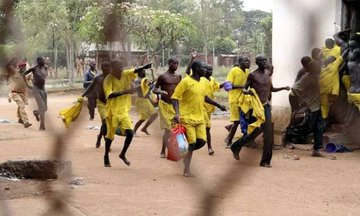
Gov’t puts Shs1.5 million for any gun recovered in Moroto jail break

moroto inmates

The Commissioner General of Prisons, Dr. Johnson Byabasaijja has put a bounty of Shs 1.5 million for every gun recovered from the Moroto jail break. The Dr. Byabasaijja said earlier today when he paid a visit to the broken prison.

Last week, over 219 inmates escaped from the prison after they overpowered prison staff, accessed the armory and took off with AK47 15 rifle guns.

“I have put Shs 1.5 million for every gun recovered and Shs 500, 000 for successful leads to any escapee,” he said.

Upon escaping, bullets rocked Moroto town for over 30 minutes as a combined force of the army, police and prisons engaged the armed inmates. Thereafter two fighter helicopters joined the search over Mount Moroto where the inmates are believed to have been hiding.

The Ugandan borders to Kenya have since been closed to intensify the search for escapees.

Last week, the spokesperson of Uganda Peoples Defence Forces’ (UPDF) Third Division, Maj. Peter Mugisa, three inmates and one of their officers were killed when joint forces that included the police, prison wardens and the UPDF followed the inmates on the steps of Mount Moroto.

He said at least seven inmates have been recaptured and most of the escapees are hard core criminals and cattle rustlers who were nabbed last month. They are currently searching for over 200 inmates.

Stories Continues after ad
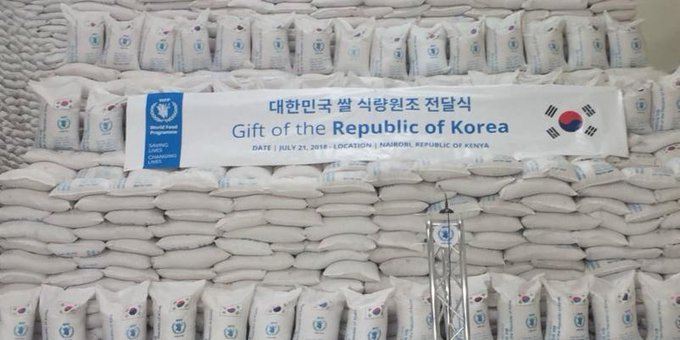
Korea provides rice and funds for refugees and Ugandans threatened by locusts

korea provides rice and funds for refugees and Ugandans threatened by locusts

The United Nations World Food Programme (WFP) has received 5,000 metric tons of rice and US$300,000 in cash from the Republic of Korea to provide much-needed relief assistance to 781,000 people including refugees and Ugandans threatened by locusts.

“WFP is extremely grateful for the continued generosity of the Republic of Korea since 2018 and its appreciation of the immense humanitarian needs in Uganda, which were suddenly made even more complicated by COVID-19,” said WFP Officer in Charge Ryan Anderson.

“This contribution of 5,000 metric tons of rice found us at a crossroads when we were considering whether to make deeper ration cuts for refugees because of a shortage of funding, even as we have evidence that they already face high food insecurity,” he added.

Combined with other contributions, the rice may allow WFP to maintain rations for 1.26 million refugees at the current 70 percent of a full ration for a while. Valued at US$4.3 million, it will also meet cereal needs of 614,000 refugees in seven settlements towards the end of the year.

The additional US$300,000 in cash will enable WFP to meet the relief needs of 167,000 people in the northeastern region of Karamoja, which is the most food-insecure region in the country and is threatened by a combination of malnutrition among its residents, locusts, floods and animal diseases.

“The Republic of Korea is committed to supporting vulnerable groups of people in Uganda, especially refugees fleeing conflict and nationals faced by chronic food shortages and malnutrition,” said Ambassador Ha Byung-Kyoo.

“We also are very pleased to continue making contributions of rice, which we have heard is appreciated by the refugees and contributes to much needed dietary diversity,” he added.

WFP was forced to reduce rations for refugees in April to 70 percent of a full ration because of funding shortages. The economic pressures that COVID-19 has brought on donor capitals has further complicated funding to feed refugees. WFP is putting in place safety measures in 13 refugee settlements to prevent the spread of COVID-19 during food and cash distributions.

The Republic of Korea has contributed rice to WFP in Uganda annually since 2018 in support of 1.43 million refugees – the highest number of refugees hosted by any country in Africa.

The US$300,000 contribution will also contribute to supporting WFP assistance in Karamoja. Even though families in the region were able to harvest some crops in August, despite repeated sightings of locusts between February and July, the very presence of the pests in the region threatens both agriculture and vegetation needed for animals. Relief food helps to cushion families as the government and UN partners work to control the impact of locusts.

Stories Continues after ad

Uganda Airlines to resume its flights in October

Uganda Airlines plane at Entebbe International Airport

Uganda Airlines is scheduled to resume its international flights on October 1st 2020 after five months of six months’ lockdown.

Last week, President Yoweri Museveni lifted the lockdown on air space among others following the closure of Entebbe international airport in April. The closure according to president Museveni peddled at curbing the spread of the deadly covid-19 pandemic.

According to a statement released by Uganda Airlines, the airliner will start its services with destinations in the month of October 2020. The destinations include; Nairobi, Dar-es-salaam, Juba and Mogadishu. Flights to previously served cities include; Bujumbura, Mombasa, Zanzibar will come later.

“Our plans to the Africa Network expansion will continue and we plan to launch scheduled operations to Johannesburg, Kinshasa, Harare, Lusaka and will resume in November,” reads in part of the statement.

The company expressed its commitment to keeping passengers safe, and health through strict adherence to Standard Operating Procedures (SOPs) peddled at curbing the spread of Covid-19 and compliance with the national and international guidelines for safe air travel in light of Covid-19.

Stories Continues after ad
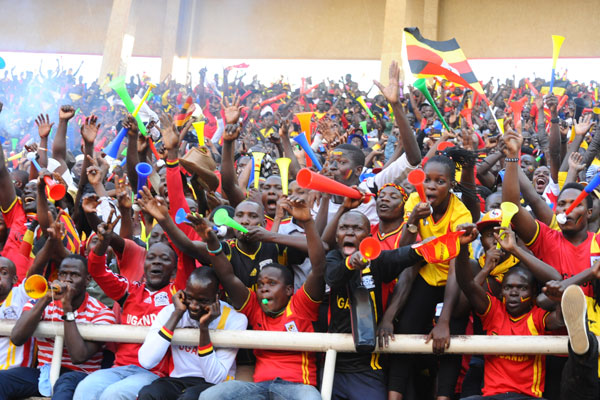
Fufa, NCS to meet after sports was given green-light to resume

Uganda Canes fans at Namboole

The National Council of Sports (NCS) and its 51 member associations, including Fufa, will virtually meet this Friday to find a way forward after sports resumption was okayed.

President Yoweri Museveni on Sunday addressed the nation on the status of Covid-19 and among the containment restrictions lifted, was the suspension on sporting activities.

Football, netball, basketball among other activities categorized under mass gatherings, have been on a lockdown since March 18th.

“Open air activities of sports will re-open provided there are no spectators and the players are tested for Covid-19, 72 hours before,” said the President.

“This test will expire in 14 days. Hence, the sportsmen (and women) will have to repeat the test. With tournaments, teams should be quarantined for the whole (duration) season of the competition,” added Museveni.

Meanwhile, testing at a government facility goes for Shs 240,000 per person, while it is Shs 350,000 and above privately.

According to NCS general secretary, Patrick Ogwel, the above and several other concerning issues including financial implications that come with cost of tests will be discussed at the meeting with federations on Friday.

Fufa have committed to taking care of teams in the different league playoffs.

“We have the Big League playoffs, Regional playoffs and the Women Elite League playoffs first,” Ahmed Hussein, the Fufa head of communications is quoted by the UPL website.

“We shall take care of all the teams accommodation, Covid tests and all involved.”

However, Hussein also admitted that clubs taking on costs for Covid tests will be a huge burden for them.

“Of course as Fufa, we can’t just look on but like I said, we shall need concerted effort from the clubs, us as Fufa and government to help. These will be addressed when we meet with NCS,” he said.

Stories Continues after ad

Cheptegei and Kiplimo lead Team Uganda for 2020 World Athletics Half Marathon Championships

Joshua Cheptegei & Jacob Kiplimo

World 10,000m champion Joshua Cheptegei and world 3000m leader Jacob Kiplimo are among the athletes selected to represent Uganda at the World Athletics Half Marathon Championships Gdynia 2020 on 17th October in Poland.

Cheptegei, the world cross-country champion, broke the world 5000m record at the Wanda Diamond League meeting in Monaco last month with 12:35.36 and is targeting a tilt on the 10,000m mark on 7 October before heading to Poland.

Kiplimo, meanwhile, won the 5000m at the World Athletics Continental Tour meeting in Ostrava with a PB of 12:48.63 and then went on to triumph over 3000m at the Wanda Diamond League meeting in Rome in a world-leading 7:26.64, breaking the Ugandan record and becoming the fastest teenager in history for the distance.

Given their exploits on the track in recent months, Cheptegei and Kiplimo will be among the medal favourites when they take to the startline in Gdynia – despite the fact that both men will be making their half marathon debut.

They are joined on the team by 2009 world U20 cross-country bronze medallist Moses Kibet, Stephen Kissa and Abel Chebet.

Juliet Chekwel, who holds the Ugandan records for 10,000m (31:37.99), half marathon (1:09:45) and the marathon (2:23:13), leads the women’s team.

Doreen Chemutai, Doreen Chesang, Rachael Zena Chebet make up the rest of the Ugandan women’s roster.

Ugandan team for Gdynia

Men: Abel Chebet, Joshua Cheptegei, Moses Kibet, Jacob Kiplimo, Stephen Kissa

Women: Juliet Chekwel, Doreen Chemutai, Doreen Chesang, Rachael Zena Chebet

Stories Continues after ad

EC fails to enforce COVID-19 SOPs in Kampala nominations

Aspirants registering at the gate of Rubaga Division without Observing SOPs.(photo by Ronard Shabomwe)

The Electoral Commission offices in Kampala have failed to observe physical distancing guidelines as they nominate candidates for local council positions.

For a process that started as early as 8; 00 am, several candidates entered the nomination premises without washing their hands as many wore their masks on their chin.

In many of the nomination areas of Nakawa, Kawempe and Lubaga divisions, the numbers were overwhelming and it was impossible for the small offices to contain the candidates let alone enabling social distancing.

In Rubaga division, although there are two washing facilities at the entrance because it is unmanned, several aspirants are seen passing through without washing their hands.

The security personnel who are meant to ensure there is strict adherence to hand washing and standard operating procedures are camped outside the gate and interacting with some of the candidates. No temperature is being checked for all the candidates, and also almost everyone has a mask, many of them have it dressed on their chin.

Candidates and their entourage and all in one tent barely a meter away from each other and the number of people have not also been restricted. There were over 150 people in the premises of the electoral commission.

In Ntinda area, which houses the Nakawa division electoral commission, with over 300 people, the place is congested with people putting on their masks at will. Several candidates also complained about the lack of physical distancing but lacked what to do.

At the entrance, a handwashing facility existed but people washed hands at will.

According to a contestant Hamza Kajimu who had just finalised nominations for the post of Kampala Central LCV, he was surprised at the number of people but also the lack of social distancing. He says a clear strategy should be worked on to avoid any spreading of the virus.

The Returning officer of the area Fredrick Muwaya Tibakuno, however, said that they will try as much as possible to meet the standard operating procedures. He says they were, for instance, installing more hand washing taps.

At Kawempe however, a security officer is at the gate blocking those entering without masks. Some of the aspirants have ended up purchasing masks from nearby shops to enter the electoral commission offices. Many aspirants also put off their masks as they sit and talk to colleagues. The aspirants like in many other areas are also sited close to each other not maintaining social distance.

Stories Continues after ad