Stanbic Bank
Stanbic Bank
28.5 C
Kampala
Stanbic Bank
Stanbic Bank
Home Blog Page 991

South Sudan FA appoints Jean Sseninde as Consultant for Women’s Football

jean_sseninde

The South Sudan Football Association (SSFA) has appointed Uganda Crested Cranes defender Jean Sseninde as their Consultant for South Sudan Women’s Football.

SSFA says that the Sseninde will be working to implement their four year Women’s Football Strategy Sensitization plan starting in the month of October.

“I’ve sent it early to give time to members of the SSFA to inform and prepare all the relevant stakeholders on the dates stated. I have also stated clearly who is responsible for making sure all participants are available for each session. All these will be held virtually via zoom so I am hoping necessary preparations will be made for all participants to participate on stated dates,” Sseninde said in her email to SSFA.

She replied to SSFA’s tweet on her appointment that, “Am humbled for this exciting new opportunity as the South Sudan Football Association (SSFA)

“Women’s Football Consultant. I cannot wait to help take women’s football in South Sudan to another level together with the whole team.”

Jean Sseninde, 27, plays for Queens Park Rangers W.F.C. in the FA Women’s National League South. She works for FIFA as a Consultant for women’s Football development across the world.

The appointment is among the plans South Sudan Football Association has undertaken to develop their Women’s game.

Sseninde also sits on the CAF Women’s Football Committee and is a member of Common Goal organisation and the CEO of Sseninde Foundation.

Stories Continues after ad

MPs oppose re-opening of schools

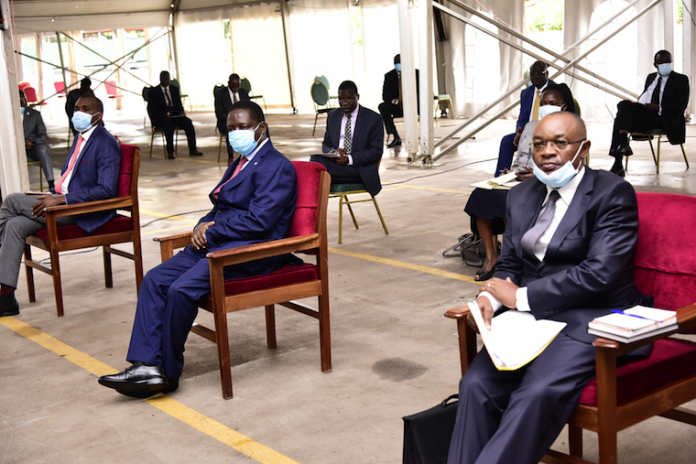
MPs in one of the sittings

Members of Parliament have expressed dissatisfaction at government’s ill-preparedness in regard to the phased re-opening of schools.

President Yoweri Museveni on Sunday, 20 September 2020 during a televised address to the nation, announced that schools would open on October 15, 2020.

The Members were responding to a statement by the State Minister for Higher Education, Dr John Chrysostom Muyingo on government’s level of readiness to re-open schools, starting with finalists, during plenary on Tuesday, 23 September 2020.

MPs said there are numerous gaps within the education and health sectors which if unattended to, will risk the lives of learners and the quality of education.

For instance, government has issued a requirement for schools to procure temperature guns and have a dedicated health worker to screen learners and teachers for Covid-19, which MPs said is not tenable for government schools because they have not been provided with funds.

“During the lockdown, government schools were told to refund capitation grants since they were not operational but government has not refunded the money. How do you expect, for example, schools to buy temperature guns and other minimum requirements?” asked Hon. Joseph Ssewungu (DP, Kalungu County West).

Legislators are concerned that the yardstick for assessing learners during the forthcoming national examinations will be unfair to those from rural areas who did not access learning materials because they lacked electricity, radios and internet.

“If you go to Kampala schools such as Kabojja Junior, teachers have been teaching online yet there are many rural schools where learners did not receive learning materials. So how will you assess these learners using the same yard stick?” Ssewungu questioned.

Members said that government should have carried out an assessment of home schooling and ascertain if learners were prepared for the national examinations.

“In one district, learning materials were delivered at a sub-county which did not have electricity and a printing machine. Government must carry out an assessment of how learning materials were distributed and how effective they were,” added Hon. Mathias Mpuuga (DP, Masaka Municipality).

MPs also think that re-opening schools at a time when the Covid-19 pandemic is on the rise countrywide is an unwise decision, worsened by the uncertain plan on the safety of learners and teachers.

“We know that Uganda has entered another phase of Covid-19 where community transmission is on the rise and it is no longer easy to trace contacts. So, if government is proposing that students should go back to school, are we not risking lives of our children?” asked Hon. Kenneth Lubogo (NRM, Bulamogi County).

The financial implication of the Covid-19 pandemic on proprietors of private schools and parents, MPs said, must be of great concern to government as some parents who have been out of business since March may not afford the school fees.

“What is the fate of parents who had already paid school fees? How will schools take care of the funding gaps? Which budget will they use?” asked Mpuuga, adding that, “if government does not address this, then there will be a conflict between teachers and schools.”

Speaker Rebecca Kadaga, who chaired the plenary, said it was wrong for government to re-open schools without thorough consultation with key stakeholders.

“Government failed on masks. It also failed on e-learning. Now you are forcing re-opening without consulting the key stake holders involved,” said Kadaga.

The Speaker deferred the debate to Tuesday, 29 September 2020 and directed the education ministry to address the MP’s concerns and present the country with a sound plan.

Stories Continues after ad

Uganda confirms five more COVID-19 deaths

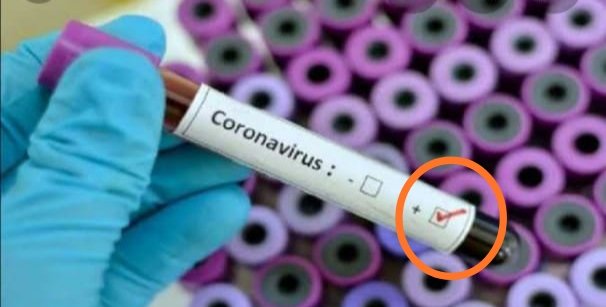
Covid-19 testing kits

Uganda has registered five more covid-19 deaths, Ministry of Health has confirmed.

According to the samples tested yesterday, 167 new cases were confirmed. The cumulative confirmed cases are now 6,879 with 69 deaths and 2,961 recoveries.

The five deaths are from; Kapchorwa (two), Kampala (one), Mbale (one) and Gulu (one).

The confirmed cases were from Kampala (62), Kiryandongo (40), Soroti (seven), Agago (five), Bundibugyo (five), Mbale (six), Gulu (four), Isingiro (three), Bududa (two), Jinja (two), Lamwo (four), Masindi (two), Buikwe (one), Kaberamaido (one), Koboko (one), Kole (four), Luwero (one), Mukono (two), Nwoya (one), Wakiso (one) and Terego (one).

Stories Continues after ad

Covid-19: Uganda’s economy expected to recover – BoU report

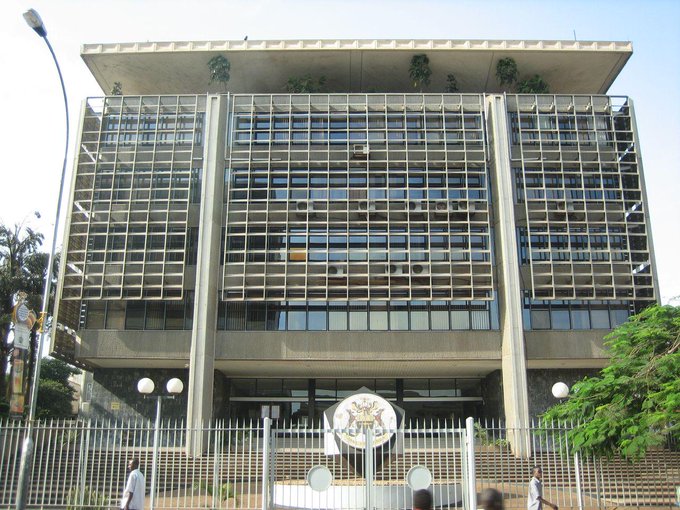
Bank of Uganda

The Bank of Uganda (BoU) State of the Economy report indicates the economy is expected to slowly recover following the lifting of the lockdown. In March, President Yoweri Museveni enforced lockdown on all major businesses, to curb the spread on the long term visitor, Covid-19.

According to the report, COVID-19 pandemic has affected both the demand and supply side of the country’s economy. It shows that the supply will initially recover in line with the easing of containment measures, demand will benefit only gradually from improvements in foreign demand and confidence levels, as well as continued support from fiscal and monetary policies.

“As the easing of the lockdown continues, the economy is expected to slowly recover, reflecting the effects of a slow rebound in both foreign and domestic demand and, subdued confidence on the part of households and firms,” reads in part the report adding that many consumers are expected to be hesitant to resume their previous spending patterns, partly due to fears of contracting the virus and uncertainty about earnings.

BoU notes that even those whose incomes were not affected may increase their need for precautionary savings. Furthermore, low exports of goods and subdued tourism receipts are projected to continue to weigh on economic growth given weaker global demand. Therefore, economic growth in Financial Year (FY) 2020/21 is projected in the range of 3.0-4.0 percent, further increasing to 5.0-6.0 percent in FY 2021/22. Economic growth is consequently expected to remain below the potential growth rate until FY 2022/23.

It shows that the economic outlook remains uncertain, largely because of the unpredictable intensity and duration of the pandemic. The downside risks to the economic growth projection include the possibility of a widespread and perhaps more severe second wave of the virus, requiring a complete lockdown, as well as, the locust invasion.

Uganda remains highly vulnerable to recurring episodes of global financial volatility, stemming either from continued global economic weakness or the uncontrolled spread of the COVID-19 pandemic. In addition, increasing Non-Performing Loans (NPLs) and high lending interest rates could delay recovery of Private Sector Credit (PSC) extensions to pre-COVID levels.

“On the upside, economic growth could turn out stronger than projected if the spread of the virus is contained, or if a vaccine or an effective treatment is available earlier than is currently being assumed. Such a scenario could lead to greater business and consumer confidence, factors which would likely lead to stronger economic growth.”

The path for CPI inflation over the next 12 months largely reflects the influence of containment measures particularly on public transport and increases in prices of imported consumer goods as a result of higher taxes to support import substitution. However, the decline in food crop and energy prices and subdued demand could partly hold inflation down. Core inflation is expected to peak at 6.1 percent in the first quarter of 2021, while headline inflation could peak at 6.2 percent. In the medium term, the inflation outlook depends primarily on the speed and strength at which demand and supply recover.

The reports shows that the balance of risks to the inflation forecast are assessed to be on the upside with core inflation expected to rise above the 5 percent target within 12 months, even though GDP growth is expected to remain below its potential levels. The major upside risks to the inflation outlook include a higher fiscal deficit and a more depreciated exchange rate due to the weakening external position. On the downside, domestic demand may take longer to recover despite the gradual easing of the lockdown.

Given the uncertainty surrounding the inflation outlook and taking into consideration the weak state of the economy in the midst of an unprecedented shock from the Covid-19 pandemic, the BoU maintained the stance of monetary policy and remained watchful of incoming data as to how the outlook unravels.

BoU maintained the CBR at Seven percent in August 2020. The band on the CBR was maintained at minus or plus percentage points, while the margin on the rediscount rate and bank rate was unchanged at 3 and 4 percentage points on the CBR, respectively.Consequently, the rediscount rate and the bank rate were maintained at 10 percent and 11 percent, respectively.

Stories Continues after ad

Court threatens to dismiss Gen Tumukunde treason case

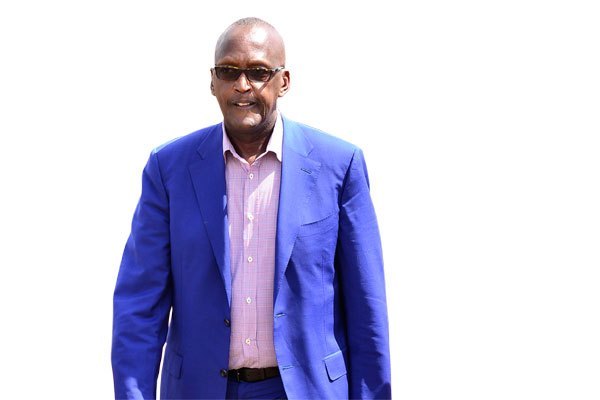
Gen. Tumukunde.

City Hall Court Grade One Magistrate Valerian Tuhimbise has adjourned Rtd Lt General Henry Tumukunde’s treason case to November.

The Magistrate also threatened to dismiss the case after prosecution’s Viola Tusingwire informed court that investigations were still ongoing.

The Presidential candidate appeared before the City Hall court today morning on charges of treason and unlawful possession of firearms and ammunition.

Now the magistrate has given prosecution the last adjournment until November 23rd and if it fails to complete its investigations, she will dismiss the case for want of prosecution due to signs of unreadiness.

Prosecution states that on March 5th, while appearing on a morning show at one of the local TV stations in Kampala, the Rtd. Lt Gen made utterances which were calculated to instigated the Republic of Rwanda to invade Uganda and cause a unlawful change of government.

Prosecution further alleges that on 13th March 2020, security operatives conducted a cordon and search operation at Lt. Gen. Tumukunde’s office along Impala Avenue in the reclusive suburb of Kololo and recovered firearms which the General was allegedly holding with a valid licence.

Stories Continues after ad

UBOS acquires new board of directors

Dr. Albert Byamugisha

Cabinet approved the appointment of new members of the Board of Directors of the Uganda Bureau of Statistics (UBOS).

The new board will be chaired by Dr. Albert Byamugisha, who will serve with six members following the expiration of contract of the previous board on June 30th 2020.

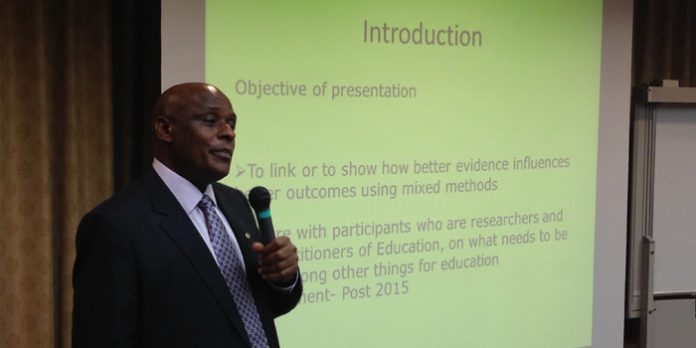
Dr Byamugisha holds a PhD in Monitoring and Evaluation from Kobe University in Japan (2012). He holds a Master of Science in Statistics, University of Sheffield, UK (1992), a PGD in Pure Science, University of Sheffield, UK (1991) and a Bachelor of Statistics and Applied Economics from Makerere University (1990).

Other members on the board are; Dr. Chris Ndatira Mukiza, the executive director of the Uganda Bureau of Statistics, Dr. Joseph Muvawala, the National Planning Authority (NPA) executive director; Dr. Jacob Opolot, a director at Bank of Uganda; Rosette Nakavuma, Bernard Mulengani and Dr. Robert Wamala.

UBoS is the principal data collecting, processing, analyzing, and disseminating agency responsible for coordinating and supervising the national statistical system.

The Bureau’s core business includes, among others, the Production, Coordination and Dissemination of official statistics to support development processes at local and national government levels, including policy, planning, decision-making, monitoring and evaluation.

Stories Continues after ad

Tobacco responsible for 20% of deaths from coronary heart disease

tobacco

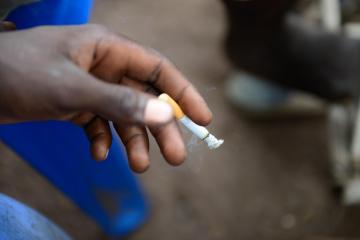
Every year, 1.9 million people die from tobacco-induced heart disease, according to a new brief released by the World Health Organization (WHO), World Heart Federation and the University of Newcastle Australia ahead of World Heart Day, marked on 29 September.

This equates to one in five of all deaths from heart disease, warn the report’s authors, who urge all tobacco users to quit and avoid a heart attack, stressing that smokers  are more likely to experience an acute cardiovascular event at a younger age than non-smokers.

Just a few cigarettes a day, occasional smoking, or exposure to second-hand smoke increase the risk of heart disease. But if tobacco users take immediate action and quit, then their risk of heart disease will decrease by 50 per cent after one year of not smoking.

“Given the current level of evidence on tobacco and cardiovascular health and the health benefits of quitting smoking, failing to offer cessation services to patients with heart disease could be considered clinical malpractice or negligence. Cardiology societies should train their members in smoking cessation, as well as to promote and even drive tobacco control advocacy efforts,” said Dr Eduardo Bianco, Chair of the World Heart Federation Tobacco Expert Group.

The brief also shows that smokeless tobacco is responsible for around 200 000 deaths from coronary heart disease per year. E-cigarettes also raise blood pressure increasing the risk of cardiovascular disease.

Moreover, high blood pressure and heart disease increase the risk of severe COVID-19. A recent WHO survey found that among people dying of COVID-19 in Italy, 67 per cent had high blood pressure and in Spain, 43 per cent of people who developed COVID-19 were living with heart disease.

“Governments have a responsibility to protect the health of their people and help reverse the tobacco epidemic. Making our communities smoke-free reduces the number of tobacco-related hospital admissions, which is more important than ever in the context of the current pandemic,” said Dr Vinayak Prasad, Unit Lead of the WHO No Tobacco Unit.

Tobacco control is a key element for reducing heart disease. Governments can help tobacco users quit by increasing tax on tobacco products, enforcing bans on tobacco advertising and offering services to help people give up tobacco.

Stories Continues after ad

NWSC to serve over 341,000 people in Gulu City and surrounding areas

Gulu Water Supply and Sanitation project.

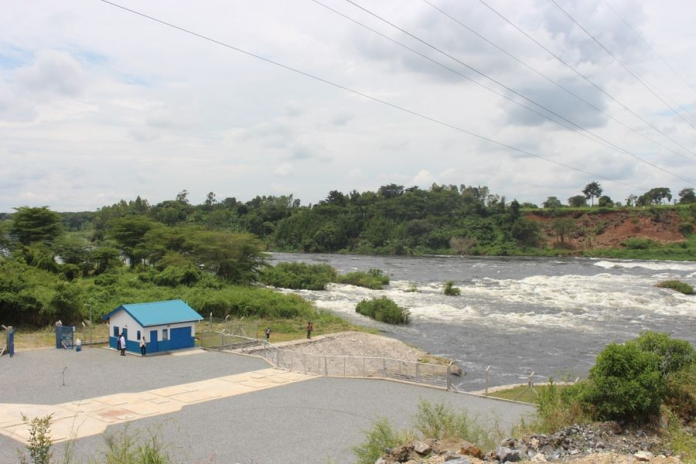
The Government of Uganda through the National Water and Sewerage Corporation (NWSC) is constructing the Gulu Water Supply and Sanitation project.

The project will serve over 341,000 people in Gulu, Karuma, Kamdini, Minakulu, Bobi, Palenga, Koro- Abili and the surrounding areas, drawing water from River Nile at Karuma.

The project encompasses; 72km bulk water transmission main from Karuma to Gulu, 30million litres per day capacity water intake at Karuma and 10million litres per day capacity Nile water treatment plant

The project will have 5.3million litres capacity water reservoirs, Water Pumping station, 42 water borne toilets and Improve access to safe  Sanitation to over 170, 000 people.

Work on the treatment plant, reservoirs and pipeline are expected to commence in June next year and will end by June 2023.

During a tour of the project, the managing director of NWSC Dr. Eng Silver Mugisha said that the corporation is working towards 100% water and sanitation for all residents of Gulu City.

“A few years back, our water source Oyitino dam and the taps in Gulu dried up as a result of the extreme weather conditions in the area. NWSC through GoU support and working with other development partners embarked on plans to boost water supply reliability in the area.” he said

Dr. Silver Mugisha said NWSC is working on both short and long term interventions. The short term interventions already completed include; Upgraded Oyitino dam water storage capacity from 2.7B litres of water to now 4.2B litres of water, Improvd daily water production from 3million litres of water per day to now 10million litres of water supplied and rehabilitated the waste water stabilization ponds.

The others are Constructed a Faecal sludge treatment plant at Cubu, Upgraded existing sewers and laid new sewer mains in Gulu City and Upgraded the Oyitino dam pumping system from 5million litres of water pay capacity.

Stories Continues after ad

MPs pay tribute to Late Hon. Faith Alupo

mps pay tribute

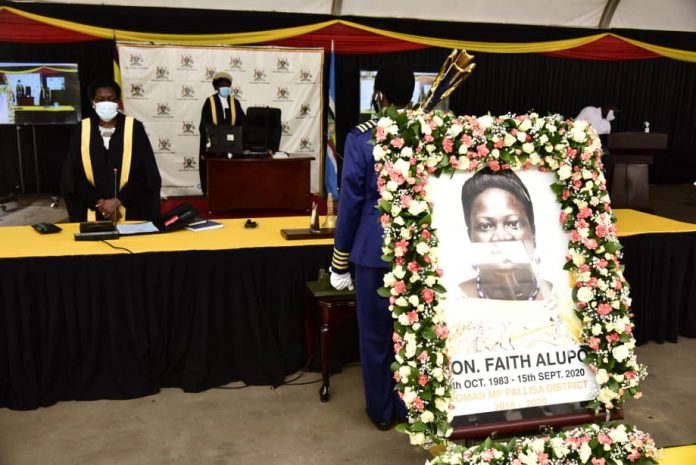
Members of Parliament on Tuesday paid tribute to the late Pallisa Woman MP Faith Alupo.

Alupo, passed away at Mulago Hospital last week, aged 36 with her death being attributed to COVID-19 while others say she died of high blood pressure and diabetes.

The Prime Minister, Dr. Ruhakana Rugunda, in a motion read on his behalf by 2nd Deputy Prime Minister and Minister without Portfolio Ali Kirunda Kivejinja, described MP Alupo as a modest, amiable person.

“The Late Hon. Alupo Faith died at a time when we needed her the most at 36 years; she was a good cadre of the National Resistance Movement; she was a reliable, committed, respectable and committed servant of the people,” said Rugunda.

The Leader of the Opposition in Parliament, Hon. Betty Aol Ocan seconded the motion, extolling Alupo for her efforts to transform her constituency.

“She had started embarking on several projects to support her constituency,” she said.

Ms Alupo’s humility is a virtue that checkered all the speeches made in her memory, a thing MP Andrew Baryayanga (IND, Kabale Municipality), who also seconded the motion, alluded to.

“We can pick a leaf from her calm demeanor and diligence; Uganda has lost a resource in her as a legislator and social worker; I commend her for her noble service,” said Baryayanga.

The Minister of State for Local Government, Hon. Jennifer Namuyangu, urged Parliament to take up the responsibility of supporting MP Alupo’s two children, a matter Speaker Rebecca Kadaga agreed to.

“What do we do to support her family; it is my prayer that we stand with and support the family, especially the young children,” she said.

“We shall take up what Hon. Namuyangu has asked us to do,” said Kadaga, who took a swipe at government for keeping Parliament in the dark in regard to the Covid-19 situation at the Legislature.

“We have had situations where hints are thrown about the Covid-19 status of MPs and staff; as the head of the institution, I waited for a communication from the Ministry of Health to inform me about the Covid-19 status at Parliament, but no one wrote to me,” she said.

On suspicions that MP Alupo succumbed to Covid-19, Speaker Kadaga said: “No one has said anything and that is a difficult situation; I did not know she was sick, I was just informed that she had died.”

The deceased legislator will be laid to rest on Wednesday September 23, 2020 at her home in Ataritoi Village, Ajepet Parish, Gogonyo Sub County in Pallisa district.

Stories Continues after ad

How Saving Is Genuinely Much Simpler Than It Can Seem (With Bonus Tip)

The COVID-19 pandemic has brought savings back into the limelight. Even the most extravagant spenders are now taking stock of their resources and adopting austerity measures.

And why not? The pandemic has spared no one. While some are hit by the virus, others are reeling from the impact of the disruptions caused by it. Only those who have robust savings are the ones who are tiding over the crisis like a pro.

Most people, especially young professionals, rarely understand the right way to save and mostly use their surplus funds to increase assets, often completely overlooking the need to have an account that can take care of urgent needs.

Whether you are a millennial or a seasoned professional, this article is poised to change your approach towards savings. It will also provide you with a few awesome ways to save money. Read on to find out.

Why Do You Need to Save More Than You Spend?

Quite often, you would see people spending more when they are young and saving more as they get old.

As a rule, you must save more when you are young and less as your age goes north. During the early thirties, it’s better to save around 60% of your net monthly income. Keep reducing it by 1% with every passing year.

By taking the latter approach, you can always have a fair amount of money to spend throughout your life.

Let us now look at the top reasons that prompt wise people to save more than they spend, especially during the early part of their professional lives.

  1. Savings help you to deal with one-off emergencies without depending on costly loan options
  2. Savings can come in handy in case of sudden job loss
  3. Savings can help you to fund urgent business needs
  4. Interest income on savings is a foolproof way to make money without working
  5. Savings can provide you with peace of mind

Despite all the benefits that come with savings, sometimes you might need more funds to support you during times of crisis.

In case you need instant funds, the loan eligibility checker can give you a quick check on your loan eligibility and the maximum amount you can avail as a loan.

Availing a loan can also be useful if you do not want to withdraw your term deposits prematurely. Back of the envelope calculations suggest it might be more economical to apply for an instant loan rather than closing your term deposits prematurely.

The Ultimate Tips to Save Money Without Sacrificing Your Dreams

The year 2020 will forever be remembered as a black year in world history. If we still have to find something positive in this year, it has to be the fact the consumer credit has plunged by £7.4bn in April, even as households’ deposits jumped by a whopping £16.2bn. Hence, the UK has woken up to the fact that it is savings, and not spending, that can help them move into the future.

Let’s look at the ways in which you can restructure your financial portfolio.

 

1. Lay Down A Budget

Any well-structured budget has three parts – net income, gross expenses, and surplus.

Net income is your total monthly inflow across all income sources, minus taxes and associated charges.

Gross expenses include fixed and variable costs that contribute to the outflow. While fixed expenses include electricity, gas, grocery, and other such things, variable expenses are one-time expenses like buying a mobile phone or software.

The surplus is the leftover amount you have after factoring in the expenses. It’s prudent to save a major chunk of this amount at a place that will fetch you high returns without compromising on the security.

2. Check the Expense List and Curtail Costs

As you evaluate the expense list, you might discover a few areas where you spend more than you should. For example, you might be an avid shopper whose expense list is replete with items that can easily be avoided.

2020 might not be the best year to indulge in impulsive buying, as nobody knows what the future looks like. Be frugal, and try to curtail costs which may add up to your saving.

Remember that a wise person always spends what is left after saving, and not the other way round.

3. Save When the Month Begins

Quite often, people spend as much as they can or have to and save only what is left by the end of the month. This can be one of the worst mistakes any person may make.

As an informed investor, you must have a pre-decided amount that you need to transfer to your savings account at the beginning of a month. While this habit may seem taxing for the first few months, once you inculcate the habit of saving, your spending will automatically fall in line.

4. Use the ISA Allowance Wisely

Individual Savings Account, or ISA, is an account that does not require you to pay taxes. At present, the allowance is £20,000. You may either invest in Cash ISAs or Stocks and Shares ISAs.

As soon as you or anyone in your family attains 16 years of age, encourage them to open up an ISA account. You may also use the ISA allowance to save up for retirement planning, home purchase, or children’s education.

5. Evaluate the Returns Periodically

Financial institutions often change their interest rates faster than you can imagine.

As a prudent investor, you must check the returns that your account is generating. Set a time-frame for checking the accounts and do not hesitate to shift to a better financial institution that is offering higher rates.

Try to read the terms and conditions carefully before parking your money, though.

6. Never Stash Cash at a No-Notice Account

Experts would often advise you to keep lots of cash in an account that won’t require you to send a notice before withdrawing a large sum. While this can be a nice way to sail over short-term emergencies, when you factor in inflation, this format generates negative returns.

Figure out your requirements in advance and calculate the extra amount. Consider investing it in an account that generates higher returns.

The Bonus Tip – Clear Off Your Bad Debts
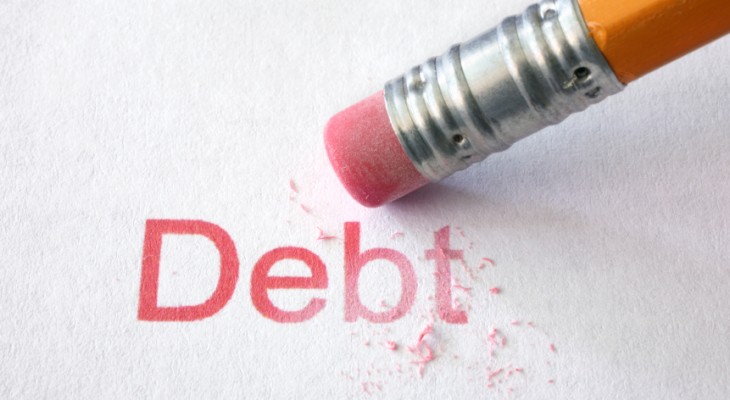
 

Credit cards are a nice way to finance your short-term financial needs without affecting your monthly budget. However, credit cards come in various types.

Sometimes, we don’t remember to settle off the dues with a credit card, which results in bad debt. A person with bad debt can face trouble to apply for a credit card.

In case you are dealing with an issue like this, credit cards for bad credit UK can come to your rescue. Go ahead, settle off your dues, and restructure your financial portfolio.

Conclusion

Saving can be easy if only you know the right way to approach it. Keep an eye on this space to learn more ways to diversify your investments.

Stories Continues after ad